
Introduction
Agricultural runoff drinking water contamination is an important public health and environmental issue that affects rural communities, suburban water systems, and even large municipal supplies. Modern agriculture helps feed growing populations, but it also relies on fertilizers, pesticides, animal operations, irrigation, and soil management practices that can introduce pollutants into nearby water sources. When rain, snowmelt, or irrigation water moves across fields, pastures, and farm facilities, it can carry nutrients, microbes, chemicals, and sediment into rivers, lakes, reservoirs, and groundwater aquifers that may later serve as drinking water sources.
An agricultural runoff drinking water overview must begin with a simple idea: water moves through landscapes, and anything present on agricultural land can potentially move with it. Some pollutants remain dissolved in water, while others attach to soil particles or organic matter. Some travel quickly in surface water, and others slowly seep downward through the soil into wells and aquifers. Because of this, contamination risks vary widely by region, climate, farming practices, geology, and the type of water source involved.
Understanding this subject matters for homeowners with private wells, utilities that manage community systems, farmers seeking to reduce environmental impacts, and families trying to make informed decisions about water safety. Agricultural contaminants can affect taste, odor, and clarity, but the larger concern is often what cannot be seen. Water may look clean while still containing nitrates, pesticide residues, bacteria, or harmful algal toxins associated with nutrient pollution.
Learning how runoff reaches water supplies, what health risks may follow, how contamination is detected, and what treatment options are available is essential for anyone concerned about drinking water quality. Readers interested in broader background can also explore water contamination topics and additional resources on drinking water safety. This guide explains the issue in a practical, evidence-based way, with attention to both immediate health concerns and longer-term water management challenges.
What It Is
Agricultural runoff refers to water leaving agricultural land and carrying with it substances from farming activities. In the context of drinking water, the phrase agricultural runoff drinking water describes the contamination of source water or distributed water supplies by pollutants that originate from crop production, livestock operations, manure handling, and related land uses.
Runoff can occur as:
- Surface runoff, when water flows over the land into streams, ponds, and reservoirs.
- Subsurface flow, when water moves through shallow soil layers and drains into nearby waterways.
- Leaching, when dissolved contaminants move downward into groundwater.
This distinction matters because different pollutants behave differently. For example, sediment and phosphorus often move with erosion and surface water, while nitrate is especially prone to dissolving and leaching into groundwater. Bacteria and parasites may travel through either route depending on soil conditions, rainfall intensity, temperature, and the location of manure or animal waste.
Drinking water contamination linked to agriculture is not limited to one pollutant. Common categories include:
- Nutrients such as nitrogen and phosphorus from fertilizers and manure.
- Pesticides including herbicides, insecticides, and fungicides.
- Pathogens such as E. coli, Cryptosporidium, Giardia, Salmonella, and viruses from animal waste.
- Sediment carrying attached chemicals, microbes, and organic matter.
- Salts from irrigation return flows.
- Veterinary pharmaceuticals and hormones associated with livestock production.
- Metals and trace elements that may be mobilized by land management or waste applications.
In some cases, agricultural runoff does not directly enter a household tap. Instead, it first contaminates a river, lake, or aquifer that serves as a source for a treatment plant or private well. The effect on consumers depends on how severe the contamination is, how often it occurs, and whether the water system has effective monitoring and treatment in place.
The issue is often seasonal. Heavy rain after fertilizer application, spring snowmelt, irrigation return flows, and storms following manure spreading can sharply increase pollutant transport. Drought conditions can also play a role by concentrating pollutants or changing groundwater flow patterns. A helpful companion discussion of sources is available at this resource on causes and sources.
Main Causes or Sources
The major sources of agricultural runoff contamination come from routine farming practices rather than isolated accidents. Even well-managed farms can generate runoff under the wrong weather or soil conditions. The difference is that strong conservation practices reduce both the amount of runoff and the concentration of harmful substances carried into water supplies.
Fertilizer Application
Commercial fertilizers supply crops with nitrogen, phosphorus, and potassium, but when application rates exceed crop uptake or are timed poorly, nutrients can move off fields. Nitrogen, especially in the form of nitrate, is highly mobile and commonly found in contaminated groundwater. Phosphorus often binds to soil particles and is more closely associated with erosion and surface water runoff.
Excess nutrients in drinking water sources can trigger several problems:
- Elevated nitrate levels in wells and aquifers
- Algal blooms in lakes and reservoirs
- Formation of taste and odor issues in source water
- Increased treatment difficulty for utilities
Animal Waste and Manure Management
Livestock operations generate large quantities of manure, which contains nutrients, bacteria, viruses, and parasites. When manure is applied at excessive rates, stored improperly, or washed from feedlots and barnyards during storms, it can contaminate both surface water and groundwater. Fields with repeated manure application may accumulate nutrients beyond what crops can use, increasing the risk of runoff and leaching.
Animal waste is a significant concern because it can introduce microbial contamination into water supplies. This is particularly serious for private wells that are shallow, poorly sealed, or located near fields, ditches, or animal housing areas.
Pesticide Use
Pesticides are designed to control weeds, insects, fungi, and other agricultural threats, but residues can move beyond target areas. Some pesticides dissolve in water, some attach to sediment, and some break down into metabolites that are also environmentally relevant. Runoff and leaching risks depend on the chemical’s persistence, application method, weather after application, and soil properties.
Pesticide contamination is often harder for consumers to recognize because concentrations may be low and there may be no immediate change in appearance or taste. Long-term exposure concerns vary by compound, which is why laboratory testing is important when agricultural influence is suspected.
Soil Erosion and Sediment Transport
Bare fields, intensive tillage, and lack of vegetative cover make soil more vulnerable to erosion. Sediment entering streams and reservoirs reduces water clarity, transports attached phosphorus and pesticides, and can interfere with treatment processes. Sediment can also protect microorganisms from disinfection by shielding them within particles.
Irrigation Return Flows
In irrigated regions, some water applied to fields runs off or percolates below the root zone and later returns to waterways. This water may carry salts, nutrients, pesticides, and trace elements. Over time, repeated irrigation can alter local water chemistry, particularly in arid areas where evaporation concentrates dissolved substances.
Field Drainage Systems
Subsurface drainage tiles help remove excess water from fields, improving crop conditions, but they can also rapidly transport nitrate and other dissolved pollutants into ditches and streams. Instead of allowing contaminants to be filtered slowly through deeper soil layers, drainage systems may create direct pathways from fields to surface water.
Weather and Landscape Factors
Rainfall intensity, slope, frozen ground, soil texture, and proximity to water bodies all influence runoff risk. A single heavy storm after chemical application can move more contamination than weeks of normal weather. Sandy soils are especially vulnerable to nitrate leaching, while steep or compacted soils are more prone to surface runoff and erosion.
Health and Safety Implications
The agricultural runoff drinking water health effects associated with contaminated water depend on the specific pollutant, the amount present, the duration of exposure, and the age or health of the person consuming the water. Some effects are acute and appear quickly, while others may result from long-term exposure at lower levels.
Nitrate and Nitrite Exposure
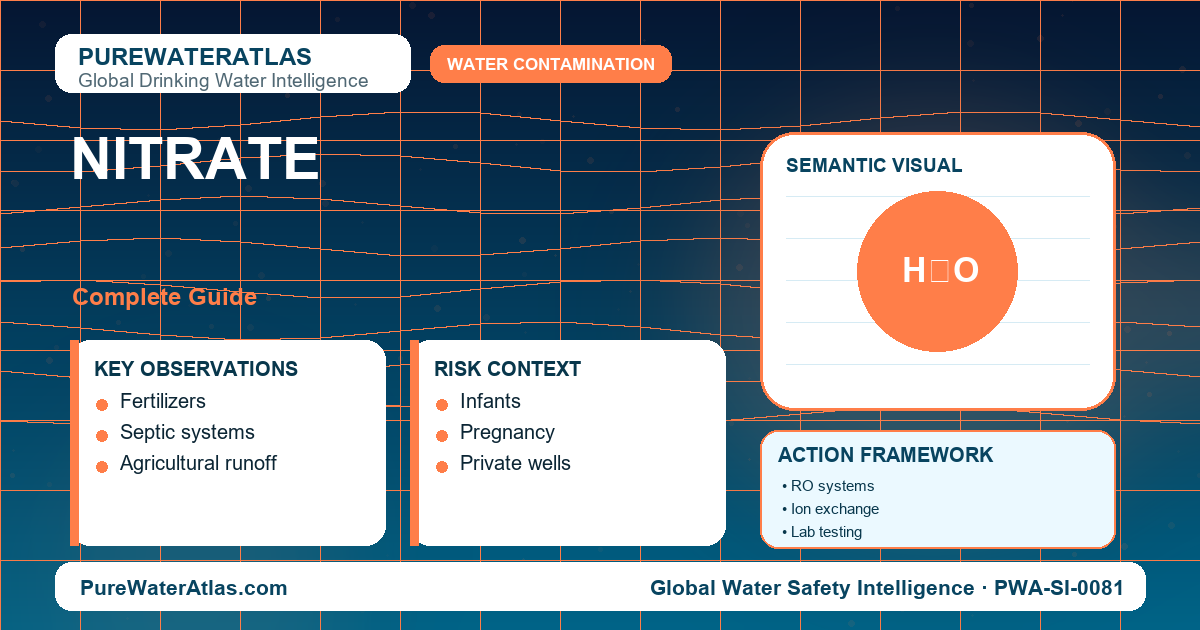
Nitrate is among the best-known agricultural drinking water contaminants. It commonly enters groundwater through fertilizer use and manure infiltration. Infants are especially vulnerable because nitrate can interfere with the blood’s ability to carry oxygen, a condition associated with methemoglobinemia, sometimes called “blue baby syndrome.”
Potential concerns related to elevated nitrate include:
- Particular danger for infants under six months
- Higher concern for pregnant individuals in certain circumstances
- Possible health risks for people with specific medical conditions
- Need for immediate follow-up when test results exceed health-based standards
Pathogens from Animal Waste
Microbial contamination can cause gastrointestinal illness and, in some cases, severe infection. Contaminants of concern include bacteria, viruses, and protozoa from manure and livestock areas. Symptoms may include diarrhea, vomiting, abdominal pain, fever, and dehydration. Young children, older adults, pregnant people, and immunocompromised individuals are at greater risk of serious outcomes.
Pathogen contamination may occur after storms, flooding, or structural failures that allow manure-laden water to enter source water or well systems. Unlike chemical contamination, microbial contamination can create immediate and urgent health risks.
Pesticide-Related Health Concerns
Pesticides vary greatly in toxicity and persistence. Some may cause short-term symptoms after significant exposure, while others are evaluated primarily for potential long-term effects such as impacts on the nervous system, endocrine system, liver, kidneys, or cancer risk. Because pesticide mixtures can be complex and concentrations are often low, interpreting health significance requires chemical-specific laboratory data and regulatory benchmarks.
Harmful Algal Blooms and Toxins
Nutrient runoff, especially phosphorus and nitrogen, can promote excessive algal growth in lakes and reservoirs used as drinking water sources. Some blooms produce toxins that are harmful to humans and animals. Even when toxins are not present, algal overgrowth can create taste and odor problems, complicate treatment, and increase disinfection demands.
Indirect Safety Impacts
Beyond direct toxicity, agricultural contamination can strain water systems in ways that affect reliability and treatment performance. High turbidity, elevated organic matter, or sudden contaminant spikes may challenge treatment plants. Private well owners may face the greatest vulnerability because many private wells are not regularly monitored unless owners choose to test them.
For deeper reading on risks, see this guide to health effects and risks and broader materials on global water quality.
Testing and Detection
Agricultural runoff drinking water testing is essential because many contaminants cannot be identified by sight, taste, or smell alone. Reliable testing helps determine whether contamination is present, whether it exceeds health-based limits, and what treatment or corrective steps are necessary.
Why Testing Matters
Water can appear clear and still contain nitrate, pesticide residues, or microbial contamination. Conversely, cloudy water may result from sediment without necessarily indicating the presence of the most harmful dissolved pollutants. Testing provides the objective information needed to make sound decisions.
Who Should Consider Testing
- Private well owners near crop fields, livestock operations, or manure application sites
- Households with shallow wells or older well construction
- People experiencing changes in taste, odor, or color after storms or seasonal farm activity
- Families with infants, pregnant members, or immunocompromised individuals
- Community water systems drawing from agriculturally influenced watersheds
Common Parameters to Test
A testing plan should be based on local agricultural conditions, but commonly relevant analyses include:
- Nitrate and nitrite
- Total coliform and E. coli
- Pesticide panels targeted to local crop use patterns
- Turbidity
- Phosphorus in source water investigations
- General chemistry such as pH, conductivity, hardness, and dissolved solids
- Specific contaminants such as atrazine or other regionally used compounds
Sampling Considerations
Proper sampling is as important as laboratory quality. Samples should be collected in clean, appropriate containers, often supplied by a certified laboratory. Some analyses require refrigeration, rapid delivery, or preservation methods. Microbial samples are especially time-sensitive. For wells, it may also be useful to test after major rain events, during planting or fertilizer seasons, and at regular annual intervals.
Interpreting Results
Laboratory reports typically compare results to regulatory standards, action levels, or advisory values where available. A result above a maximum contaminant level or health advisory does not simply mean “bad water”; it indicates a need for prompt evaluation, exposure reduction, and possibly treatment, source correction, or use of alternative water. Even results below standards may justify continued monitoring if contamination trends are increasing.
Public Systems Versus Private Wells
Public water systems usually conduct routine compliance monitoring, source water assessments, and treatment performance checks. Private wells, by contrast, are often the owner’s responsibility and may go years without testing. This creates a blind spot in many agricultural regions where contamination can occur gradually and remain unnoticed.
Additional information on methods can be found at this resource on testing and detection methods.
Prevention and Treatment
Addressing agricultural runoff drinking water removal and prevention requires action at two levels: keeping contaminants out of water sources whenever possible and treating water effectively when contamination is already present. Source protection is generally more sustainable and less expensive than relying entirely on treatment after pollution occurs.
On-Farm Prevention Measures
Farm management practices can significantly reduce runoff risks without eliminating productivity. Effective approaches include:
- Nutrient management planning to match fertilizer and manure application with crop needs
- Timing applications carefully to avoid storms, frozen ground, and saturated soils
- Buffer strips and riparian vegetation to slow runoff and filter sediment
- Cover crops to reduce erosion and absorb excess nutrients
- Conservation tillage to protect soil structure and reduce sediment loss
- Improved manure storage and containment to prevent overflows and leakage
- Livestock exclusion from streams where practical
- Constructed wetlands and edge-of-field practices that capture runoff before it reaches waterways
Wellhead Protection
Private well owners can reduce risk by maintaining proper setbacks from fields, manure storage, septic systems, and animal areas. Wells should have secure caps, good casing integrity, and grading that prevents surface water from pooling around the wellhead. Abandoned wells should be properly sealed because they can become direct pathways for contamination into aquifers.
Household and Point-of-Use Treatment
The right treatment depends on the contaminant. No single device removes everything. Examples include:
- Reverse osmosis for nitrate reduction and some dissolved contaminants
- Ion exchange for nitrate under appropriate design and maintenance conditions
- Activated carbon for certain pesticides and organic compounds
- Ultraviolet disinfection for microbial control when water is otherwise sufficiently clear
- Distillation for some dissolved contaminants, though energy use may be high
Boiling water is useful in some microbial emergencies, but it does not remove nitrate and can actually concentrate some dissolved contaminants through evaporation. That is why treatment choice must be based on actual test results.
Municipal and Utility-Scale Treatment
Community water systems may use a combination of treatment processes depending on source water quality. Options can include coagulation and filtration for turbidity, activated carbon for pesticides and taste-and-odor compounds, advanced oxidation, membrane treatment, biological filtration, and disinfection. For severe nitrate problems, utilities may need blending, ion exchange, reverse osmosis, or development of cleaner source water supplies.
Source Water Protection Programs
Utilities and watershed managers increasingly use source water protection strategies rather than relying only on end-of-pipe treatment. These programs may involve collaboration with farmers, land use planning, monitoring networks, and incentives for best management practices in sensitive recharge or watershed areas.
Common Misconceptions
Misunderstandings about agricultural contamination can delay testing and increase health risks. Several myths are especially common.
“If the water looks clear, it is safe.”
Many agricultural pollutants are invisible. Nitrate, dissolved pesticides, and some microbial contamination may not affect color, taste, or odor. Visual clarity alone is not a reliable safety indicator.
“Only surface water is affected.”
Groundwater is also vulnerable, especially to nitrate and some pesticides. Wells in agricultural areas may become contaminated through leaching, poor well construction, or direct infiltration pathways.
“Boiling fixes everything.”
Boiling helps kill many microbes, but it does not remove nitrate, salts, or most chemical contaminants. In some cases, boiling can increase the concentration of dissolved substances.
“Organic farming means no runoff risk.”
Organic systems may reduce certain synthetic chemical inputs, but runoff can still contain nutrients, sediment, and pathogens from manure or soil disturbance. All agricultural land can contribute to water contamination if conditions allow.
“Testing once is enough.”
Water quality changes over time. Seasonal conditions, land use changes, heavy rainfall, flooding, and infrastructure aging can all alter contamination levels. Ongoing testing is often necessary, particularly for private wells.
“Treatment systems work forever once installed.”
Water treatment devices require maintenance, replacement media, and periodic performance checks. A neglected system may fail silently, leaving users with a false sense of security.
Regulations and Standards
Agricultural runoff drinking water regulations involve a mix of drinking water laws, water quality standards, source water protections, agricultural policy tools, and local land management rules. The regulatory picture can be complex because agricultural runoff is often treated differently from direct industrial discharge.
Drinking Water Standards
In many countries, public water systems must meet enforceable limits for certain contaminants, such as nitrate, microbial indicators, and specific pesticides. These standards apply to finished drinking water delivered to consumers, not necessarily to every source water body before treatment. Public systems are generally required to monitor, report, and respond when standards are exceeded.
Source Water and Watershed Protections
Governments may establish watershed-based protections, nutrient reduction programs, wellhead protection areas, and monitoring requirements for vulnerable aquifers and reservoirs. These efforts aim to prevent contamination before it reaches treatment plants or private wells.
Agricultural Runoff as a Nonpoint Source
One of the biggest policy challenges is that runoff from farms is often considered nonpoint source pollution. Unlike a pipe discharge from a factory, runoff usually comes from broad land areas and varies with weather. This makes enforcement harder and often shifts policy toward incentives, technical assistance, conservation funding, and voluntary best management practices, though some jurisdictions impose more direct controls in sensitive areas.
Manure, Nutrient, and Pesticide Rules
Regulatory frameworks may govern how manure is stored, where it can be applied, nutrient management planning, pesticide registration and use, and setbacks from water bodies or wells. Large animal feeding operations may face additional permitting and waste management requirements.
Private Wells and Regulatory Gaps
A major limitation in many places is that private wells are not regulated as public water systems. Owners are often responsible for maintenance and testing, which means contamination can go unaddressed unless individuals take action. Public health agencies frequently recommend regular testing, but those recommendations may not be mandatory.
Why Standards Matter
Regulations provide important baselines for consumer protection, but standards alone do not eliminate risk. Some contaminants are difficult to monitor continuously, some are only tested periodically, and emerging pollutants may not yet have formal limits. For this reason, the most effective protection combines regulation, good agricultural practice, watershed stewardship, and informed water users.
Conclusion
Agricultural activity and safe drinking water do not have to be in conflict, but protecting water supplies requires awareness, monitoring, and prevention. Agricultural runoff drinking water contamination can involve nutrients, pathogens, pesticides, sediment, and other pollutants that move from farmland into rivers, reservoirs, and aquifers. The consequences range from treatment challenges and unpleasant water quality to serious health risks, especially for infants, vulnerable populations, and households relying on private wells.
The most practical response begins with understanding local risks. People living in agricultural regions should know their water source, recognize seasonal vulnerability, and use appropriate testing to identify contamination early. Public systems need strong source water management and treatment capacity, while private well owners need routine laboratory testing and, when necessary, properly maintained treatment systems.
Long-term solutions depend on better land stewardship as much as better water treatment. Nutrient management, erosion control, manure handling improvements, buffer zones, and watershed protection all reduce contamination before it enters drinking water sources. This preventive approach is generally the most effective path for public health, environmental resilience, and sustainable agriculture.
By combining science-based farming practices, regular agricultural runoff drinking water testing, appropriate agricultural runoff drinking water removal methods, and clear agricultural runoff drinking water regulations, communities can reduce risk and build more secure water systems for the future.
Read the full guide: Water Contamination Guide
Explore more in this category: Water Contamination Articles