Introduction
Choosing among the many options for reverse osmosis water filtration best filters can feel overwhelming, especially for homeowners comparing under-sink systems, countertop units, whole-house pretreatment, and replacement cartridges. Reverse osmosis, often shortened to RO, is one of the most effective point-of-use technologies available for reducing a wide range of dissolved contaminants in drinking water. It is widely used in homes, laboratories, food service, and industry because it can remove many substances that simpler mechanical filters cannot.
This article explains how reverse osmosis works, what problems it is designed to address, how to evaluate system quality, and how to maintain performance over time. It also compares RO with other water treatment approaches so readers can make informed decisions rather than relying on marketing claims alone. If you want broader background reading, the resources in water purification and water treatment systems provide useful context, while a more expansive overview is available in this complete guide.
Because water quality varies greatly by region, plumbing materials, and source water type, no single system is ideal for every home. The best solution depends on the contaminants present, flow needs, maintenance habits, and budget. Understanding the fundamentals of reverse osmosis water filtration reverse osmosis technology is the first step toward selecting a system that is both effective and practical.
What It Is
Reverse osmosis is a water treatment process that uses pressure to force water through a semipermeable membrane. That membrane allows water molecules to pass while rejecting many dissolved salts, metals, organic compounds, and other impurities. In natural osmosis, water moves across a membrane from a less concentrated solution to a more concentrated one. In reverse osmosis, external pressure reverses that direction, pushing water from the more contaminated side through the membrane to produce purified water.
A typical residential RO system contains several stages:
- Sediment prefilter: captures dirt, rust, and particulate matter that could clog later stages.
- Carbon prefilter: reduces chlorine, chloramine in some designs, tastes, odors, and organic chemicals that may damage the membrane.
- RO membrane: the core stage that removes many dissolved contaminants, including lead, arsenic, nitrate, fluoride, and total dissolved solids to varying degrees.
- Post-carbon filter: polishes the water before dispensing, improving taste.
- Optional remineralization or specialty stage: may add beneficial minerals back or target specific contaminants.
When people discuss the reverse osmosis water filtration best filters, they are often referring not only to the membrane itself but to the entire treatment train. The membrane does the heavy dissolved-contaminant reduction, but prefilters and postfilters play essential supporting roles. In particular, reverse osmosis water filtration carbon filters are critical because chlorine can degrade many RO membranes, and carbon helps improve both membrane protection and finished-water taste.
Most residential systems are installed under the kitchen sink and feed a dedicated faucet. Some compact countertop units connect temporarily to a faucet or operate with refillable reservoirs, making them suitable for renters or households that cannot modify plumbing. Larger RO systems may feed refrigerators, ice makers, coffee stations, or even multiple sinks. Commercial and industrial systems are engineered for much higher water demand and may include pumps, advanced monitoring, and multiple membrane arrays.
RO systems also create reject water, sometimes called concentrate or brine, which carries away the contaminants that the membrane removes. This is an important design and efficiency consideration. Better systems often include permeate pumps, improved membrane recovery, or tankless designs that can reduce waste and improve production rates.
Main Causes or Sources
Reverse osmosis is not a contaminant itself; it is a response to water quality concerns. To understand whether RO is appropriate, it helps to look at the main sources of drinking water contamination that drive households to install these systems. A more detailed discussion of sources is available here: causes and sources.
Common sources include:
- Naturally occurring minerals and salts: groundwater can contain elevated levels of calcium, magnesium, sodium, sulfate, fluoride, arsenic, uranium, and other dissolved substances depending on local geology.
- Agricultural runoff: fertilizers and manure may contribute nitrate, nitrite, pesticides, and microbial contamination, especially in private wells.
- Industrial pollution: manufacturing and mining can affect water with heavy metals, solvents, and other chemical contaminants.
- Municipal treatment residuals: chlorine and chloramine are commonly added for disinfection. While necessary for public health, they can affect taste and odor and may react with organic matter to form byproducts.
- Corroding plumbing: lead, copper, and other metals may enter water after treatment as water travels through old service lines, solder, or household plumbing.
- Seawater or brackish influence: in some regions, elevated salinity or total dissolved solids make RO especially valuable.
Not every contaminant requires reverse osmosis. For example, simple sediment filters are effective for visible particles, and activated carbon alone can be excellent for chlorine, odor, and some volatile organic compounds. However, when the problem includes dissolved ions or metals, RO often becomes one of the strongest point-of-use options.
Some households turn to RO because of aesthetic concerns such as bad taste, odor, or cloudy ice. Others are responding to water test results showing lead, arsenic, nitrate, or elevated TDS. In private well settings, reverse osmosis is often installed after source-specific pretreatment such as sediment filtration, softening, oxidation, or UV disinfection. The reason is simple: membranes perform best when incoming water is already conditioned to reduce fouling, scaling, and microbial growth.
This is why reverse osmosis water filtration treatment comparison matters. RO is highly capable, but it is not always the first or only treatment stage needed. In many homes, the best system is a combination approach rather than a single device.
Health and Safety Implications
The health value of reverse osmosis depends on the contaminants present in the source water. RO can reduce exposure to several substances that pose significant long-term or short-term risks. For many families, the most important concern is the reduction of toxic metals such as lead or arsenic, or chemical contaminants such as nitrate. More information on these topics can be found in health effects and risks and in broader material on water contamination.
Potential health-related reasons to use RO include reduction of:
- Lead: associated with developmental harm in children and cardiovascular and neurological effects in adults.
- Arsenic: linked to certain cancers and other chronic health effects, especially with long-term exposure.
- Nitrate: a particular concern for infants because of the risk of methemoglobinemia, or “blue baby syndrome.”
- Fluoride: some households seek reduced fluoride depending on local levels and personal preference.
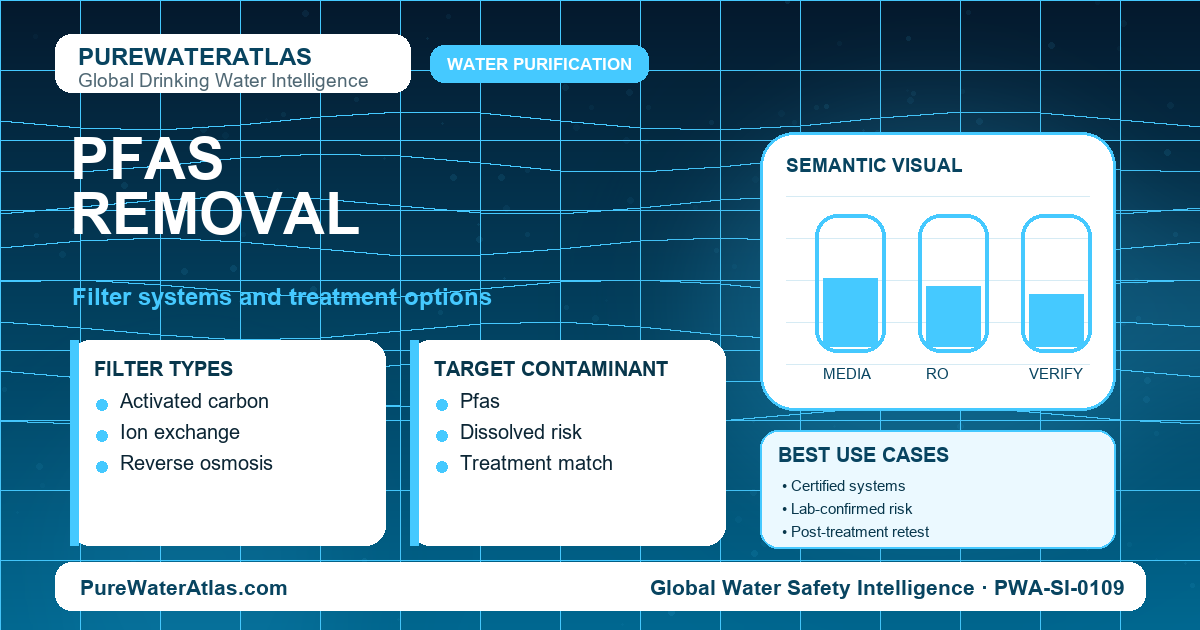
- PFAS and other emerging contaminants: some RO systems can reduce these compounds, though performance varies and certification matters.
- Sodium and dissolved salts: relevant for people in high-salinity regions or those following medically advised low-sodium diets.
At the same time, RO is not a cure-all. Standard residential membranes are not equally effective against every contaminant, and system performance depends on pressure, membrane condition, prefilter quality, and correct installation. Some volatile organic compounds can pass through if carbon pretreatment is inadequate. Microbial contamination may require separate disinfection methods such as UV treatment or chlorination, especially in private well water.
Another common health question concerns minerals. RO water is low in dissolved minerals, which leads some people to worry that it is “too pure” or unhealthy. For most people, the vast majority of essential minerals come from food rather than drinking water. Low-mineral water is not inherently unsafe, but some people prefer the taste of remineralized water. Many modern systems include an optional remineralization cartridge for taste balance.
There are also safety implications related to maintenance. A neglected RO system can lose effectiveness, reduce water flow, or allow bacterial growth within filters and storage tanks. This does not mean RO is unsafe by design; it means that proper upkeep is part of safe operation. In educational terms, a well-maintained certified system is generally a much better choice than an untested, poorly maintained one.
Testing and Detection
The best RO purchase decisions begin with water testing. Without test data, it is difficult to know whether you need reverse osmosis at all, which contaminants to target, or what pretreatment may be necessary. Testing also helps verify that a new system is performing as expected.
There are several levels of water testing:
- Consumer test kits: useful for basic screening of pH, hardness, chlorine, nitrate, iron, or TDS, though accuracy can be limited.
- Municipal water quality reports: annual consumer confidence reports can provide a starting point for public water users, though they may not reflect conditions inside your home plumbing.
- Certified laboratory analysis: the most reliable option for contaminants such as lead, arsenic, nitrate, PFAS, and other regulated or emerging pollutants.
For households on municipal water, testing at the tap is especially important when lead or copper is a concern, because contamination may arise from household plumbing rather than the utility source. For private well owners, routine comprehensive testing is essential because wells are not continuously monitored by public utilities.
Key measurements that help determine RO suitability include:
- Total dissolved solids (TDS): indicates the overall concentration of dissolved substances, though it does not identify which contaminants are present.
- Hardness: high calcium and magnesium can contribute to membrane scaling.
- Iron and manganese: elevated levels may foul membranes and usually require pretreatment.
- Chlorine or chloramine: relevant for membrane protection and carbon filter selection.
- pH: extreme pH may influence corrosion, scaling, and treatment design.
- Specific contaminants: such as lead, arsenic, nitrate, fluoride, uranium, PFAS, or pesticides.
After installation, performance can be checked using a TDS meter and scheduled lab confirmation where necessary. A TDS meter can help track membrane rejection trends, though it is not a substitute for contaminant-specific testing. For example, a lower TDS reading suggests the membrane is functioning, but it does not directly prove that lead or PFAS is below a desired threshold.
Homeowners comparing systems should prioritize products with third-party certifications for the specific claims being made. Independent certification is one of the most useful forms of detection and verification in the buying process because it shows that the system has been tested under standardized conditions.
Prevention and Treatment
Prevention in water quality means reducing contamination at the source where possible and selecting treatment methods that match actual risks. In practical home use, treatment is often the more immediate solution. This is where a thoughtful reverse osmosis water filtration buying guide becomes valuable.
How to choose among the best filters and systems
When evaluating the reverse osmosis water filtration best filters, focus on performance, certification, maintenance burden, and system fit rather than brand marketing alone. Important buying criteria include:
- Certified contaminant reduction: look for standards-based certification for lead, arsenic, nitrate, fluoride, PFAS, cysts, or TDS as needed.
- Production rate: measured in gallons per day; this affects how quickly purified water is made.
- Water efficiency: compare waste-to-purified-water ratios, especially in areas with expensive or limited water supplies.
- Tank vs. tankless design: tanks provide stored water and often quieter delivery, while tankless models save space and may offer faster flow with less stagnation.
- Prefiltration quality: especially sediment and carbon stages that protect the membrane.
- Ease of filter changes: tool-free cartridges and accessible housings simplify upkeep.
- Installation requirements: check drain connection, faucet mounting, feed line compatibility, and pressure needs.
- Operating pressure: some systems require booster pumps for low-pressure homes.
Role of carbon filters
Reverse osmosis water filtration carbon filters deserve special attention because they are often underestimated. Activated carbon removes chlorine and many taste- and odor-causing compounds before water reaches the membrane. Without effective carbon pretreatment, chlorine can damage thin-film composite membranes, shortening lifespan and reducing rejection performance. In some systems, catalytic carbon or specially designed cartridges are used to improve chloramine reduction as well.
Carbon also matters after the membrane. A post-carbon stage improves taste by polishing water before dispensing. In practical terms, this means carbon contributes to both system protection and user satisfaction.
Treatment comparison
A strong reverse osmosis water filtration treatment comparison should explain where RO excels and where other methods may be better suited:
- RO vs. activated carbon: carbon is excellent for chlorine, odor, and many organic compounds, but it does not reliably remove dissolved salts or many metals. RO covers a broader range of dissolved contaminants.
- RO vs. water softeners: softeners reduce hardness by ion exchange but do not purify water in the same way. In fact, softeners are often used ahead of RO to protect the membrane from scale.
- RO vs. distillation: distillation is highly effective but slower and more energy-intensive for home use.
- RO vs. UV disinfection: UV targets microorganisms but does not remove dissolved chemicals. RO and UV are often complementary, especially for well water.
- RO vs. pitcher or faucet filters: simple filters are cheaper and easier to use, but usually less capable against dissolved contaminants.
Filter maintenance
Reverse osmosis water filtration filter maintenance is essential for sustained performance. Replacement schedules vary by source water quality and water use, but general intervals often look like this:
- Sediment prefilter: every 6 to 12 months
- Carbon prefilter and postfilter: every 6 to 12 months
- RO membrane: every 2 to 5 years
- Remineralization or specialty cartridges: according to manufacturer recommendations
- Sanitization of tank and lines: periodically, often during major filter changes
Signs that maintenance is due include slower flow, unpleasant taste, rising TDS after the membrane, reduced tank fill, unusual noise, or leaks. High hardness, iron, or sediment can shorten filter and membrane life, which is why pretreatment and testing matter so much.
In homes with challenging water, the best “RO system” may actually be a multi-step setup: sediment filtration, carbon filtration, softening or iron treatment, then reverse osmosis at the point of use. This layered approach improves reliability and extends membrane life.
Common Misconceptions
Reverse osmosis is surrounded by persistent myths. Clearing them up helps consumers choose wisely and use systems correctly.
- Misconception: RO removes everything and solves every water problem.
Reality: RO is highly effective, but not universal. It may need pretreatment for chlorine, hardness, iron, or microbes, and it should be selected based on actual water conditions. - Misconception: If water looks clear, RO is unnecessary.
Reality: many of the contaminants RO targets, such as nitrate, arsenic, sodium, and lead, are invisible and tasteless. - Misconception: All RO systems perform the same.
Reality: membrane quality, certification, design efficiency, pressure support, carbon stages, and build quality vary significantly. - Misconception: RO water is unhealthy because minerals are removed.
Reality: for most people, dietary intake supplies the minerals the body needs. Some users still prefer remineralized water for taste. - Misconception: Maintenance is minimal.
Reality: every RO system requires regular filter changes and periodic sanitation to remain effective and hygienic. - Misconception: Whole-house RO is always the best option.
Reality: whole-house RO is expensive, complex, and usually unnecessary unless source water has severe salinity or contamination issues. Point-of-use RO is more common and practical.
Another misconception is that high TDS automatically means unsafe water. TDS is a useful screening measure, but it does not identify the specific dissolved substances present. Water with moderate TDS may be perfectly acceptable, while water with relatively low TDS may still contain harmful lead or nitrate. This is why contaminant-specific testing remains more important than a single broad indicator.
Regulations and Standards
Regulatory oversight and product standards help consumers separate credible systems from unsupported claims. In the United States, public drinking water quality is regulated under the Safe Drinking Water Act, which sets limits for many contaminants in municipal systems. Private wells, however, are generally not regulated in the same way, making homeowner testing and treatment decisions especially important.
For reverse osmosis products, third-party standards and certifications are often more relevant than broad advertising language. Important considerations include:
- NSF/ANSI certifications: these standards address structural integrity, material safety, and contaminant reduction claims for drinking water treatment units.
- Performance data sheets: reputable manufacturers provide detailed testing results, operating conditions, replacement intervals, and limitations.
- State and local plumbing codes: installations may need approved air gaps, drain connections, backflow protections, and certified components.
- Utility or regional rules: in some areas, discharge and efficiency requirements may affect system selection.
Consumers should read certification claims carefully. A system may be certified for lead reduction but not for nitrate or PFAS. The best buying decisions match the certification to the actual contaminant concern. A trustworthy seller should be able to explain what the unit is certified to remove, under what conditions, and how often the filters must be changed to maintain that performance.
Standards also matter for installation and operation. Poor installation can undermine even a high-quality unit. Leaks, incorrect drain routing, insufficient pressure, skipped pretreatment, or nonapproved replacement cartridges can all reduce safety and effectiveness. For many households, professional installation is worthwhile, especially when integrating RO with refrigerators, booster pumps, pressure tanks, or well-water pretreatment systems.
Conclusion
Reverse osmosis remains one of the most powerful and versatile point-of-use technologies for improving drinking water quality. For households dealing with dissolved contaminants such as lead, arsenic, nitrate, fluoride, salts, or certain emerging chemicals, a well-designed RO unit can provide a meaningful reduction in exposure and a noticeable improvement in taste. The key is to evaluate the reverse osmosis water filtration best filters in the context of your own water test results, plumbing conditions, and maintenance commitment.
The most effective approach is usually straightforward: test first, identify the contaminants that matter, compare certified systems, and choose a design with appropriate prefiltration, membrane capacity, and maintenance support. Remember that reverse osmosis water filtration reverse osmosis works best as part of a complete treatment strategy, not as a mystery box hidden under the sink. Carbon stages, especially reverse osmosis water filtration carbon filters, are central to membrane protection and water taste. Ongoing reverse osmosis water filtration filter maintenance is not optional; it is how the system continues to deliver the performance you paid for.
Whether you are researching a first-time purchase or upgrading an older unit, a sound reverse osmosis water filtration buying guide always starts with evidence, not assumptions. By combining water testing, thoughtful reverse osmosis water filtration treatment comparison, and attention to certifications and upkeep, homeowners can select a solution that is efficient, practical, and genuinely protective of drinking water quality.
Read the full guide: Water Purification Guide
Explore more in this category: Water Purification Articles