
Introduction
Access to safe drinking water is one of the most important public health achievements in modern society. Yet even in countries known for strong infrastructure and advanced utilities, water safety depends on continuous monitoring, maintenance, source protection, and effective treatment. Discussions about countries with safe drinking water removal often focus on how contaminants are reduced or eliminated before water reaches homes, schools, hospitals, and businesses. This includes physical removal processes, chemical treatment, biological control, and point-of-use filtration technologies.
When people think of “safe drinking water,” they often imagine a simple yes-or-no condition. In reality, water safety exists on a spectrum shaped by source quality, treatment performance, aging pipes, environmental contamination, climate impacts, and operational oversight. Countries with highly rated drinking water systems usually combine multiple barriers: protected watersheds, modern treatment plants, routine testing, strict regulations, and household-level precautions where needed.
This article explains how safe drinking water is defined, where contamination comes from, how risks are detected, and what treatment options are used in different settings. It also explores countries with safe drinking water filtration methods, treatment systems, best filters, maintenance considerations, and overall effectiveness. For broader context on international water conditions, readers may also explore /category/global-water-quality/ and the foundational overview at /countries-with-safe-drinking-water-complete-guide/.
What It Is
Safe drinking water is water that can be consumed over a lifetime without posing significant health risk. It should be free, or present only at acceptable levels, of harmful microorganisms, toxic chemicals, and physical contaminants. It should also have reasonable clarity, odor, and taste, although taste alone does not determine safety.
In practice, safe drinking water is judged against national and international standards for:
- Microbiological safety, including the absence of disease-causing bacteria, viruses, and parasites
- Chemical safety, including limits for arsenic, lead, nitrate, pesticides, industrial chemicals, and disinfection byproducts
- Physical quality, including turbidity, sediment, and color
- Operational stability, such as consistent disinfection residual and proper pressure in distribution systems
The concept behind countries with safe drinking water removal is the ability of water systems to remove or reduce contaminants at multiple stages. “Removal” may mean filtering out particles, adsorbing chemicals onto carbon, exchanging ions, separating dissolved salts with membranes, inactivating pathogens with ultraviolet light, or disinfecting with chlorine or ozone.
Countries recognized for reliable drinking water safety generally do not rely on one single technology. Instead, they use a layered approach often called the multiple barrier principle. This includes:
- Protecting rivers, lakes, reservoirs, and aquifers from pollution
- Treating source water at centralized plants
- Maintaining clean storage and distribution networks
- Monitoring water quality routinely
- Applying additional household treatment where local conditions justify it
Different nations use different combinations of treatment depending on their geography and source water. Mountain-fed systems with low natural pollution may need less intensive treatment than systems drawing from agricultural rivers or densely populated watersheds. Coastal and arid countries may also depend more heavily on desalination, reuse, or advanced membrane systems.
Main Causes or Sources
Even in countries with strong water governance, contamination can enter water supplies from natural and human-made sources. Understanding these sources helps explain why treatment is necessary and why no water system can be assumed safe without proper control.
Common source categories include:
- Microbial contamination from sewage, septic leakage, animal waste, and stormwater runoff
- Naturally occurring chemicals such as arsenic, fluoride, manganese, iron, and radionuclides
- Agricultural pollutants including nitrate, phosphate, herbicides, pesticides, and veterinary drugs
- Industrial contamination such as solvents, heavy metals, petroleum compounds, and persistent organic pollutants
- Distribution system problems including lead from plumbing, corrosion, pipe breaks, and biofilm growth
- Emerging contaminants such as PFAS, pharmaceuticals, and microplastics
Surface water sources like rivers and lakes are often more vulnerable to microbial contamination and seasonal shifts in turbidity. Heavy rainfall can wash pathogens, manure, and chemicals into water bodies, rapidly changing treatment demands. Groundwater is often naturally filtered by soil and rock, but it can still become contaminated by nitrate, arsenic, industrial leakage, or poorly constructed wells.
In many countries, aging infrastructure is a major concern. Water may leave a treatment plant meeting all standards but deteriorate in old service lines, corroded pipes, storage tanks, or premise plumbing. Lead contamination is one of the clearest examples of a problem that often arises in the distribution system rather than at the source.
Climate change is also increasing complexity. Drought can concentrate contaminants, wildfires can alter watersheds and increase ash and organic matter, and floods can overwhelm wastewater systems. As a result, countries with safe drinking water treatment systems must be designed not just for routine conditions but for shocks and long-term environmental variability.
For more on pollutant origins, readers can review /countries-with-safe-drinking-water-causes-and-sources/ and additional background at /category/water-contamination/.
Health and Safety Implications
Unsafe drinking water can cause both immediate and long-term health effects. The severity depends on the contaminant, concentration, duration of exposure, and the vulnerability of the person drinking the water. Infants, older adults, pregnant women, and immunocompromised individuals are generally at higher risk.
Microbiological risks
Pathogens are among the most urgent threats because they can trigger rapid disease outbreaks. Common waterborne organisms include:
- Bacteria such as E. coli, Salmonella, and Campylobacter
- Viruses such as norovirus, rotavirus, and hepatitis A
- Protozoa such as Giardia and Cryptosporidium
Health impacts may include diarrhea, vomiting, fever, dehydration, and, in severe cases, hospitalization or death. This is why disinfection and microbial monitoring remain central to water safety even in developed nations.
Chemical risks
Chemical contaminants often produce slower, cumulative effects. Examples include:
- Lead, associated with developmental and neurological harm, especially in children
- Arsenic, linked to skin lesions, cardiovascular problems, and increased cancer risk
- Nitrate, dangerous for infants due to the risk of methemoglobinemia
- PFAS, associated in ongoing research with immune, hormonal, and metabolic effects
- Disinfection byproducts, which may carry long-term risk if not adequately controlled
Aesthetic and operational concerns
Not all water quality issues are directly toxic, but they still matter. Bad taste, odor, staining, scale, and turbidity can affect public confidence and indicate deeper problems. If people lose trust in tap water, they may switch to less regulated sources or spend unnecessarily on ineffective products.
The broader public health importance of effective removal and treatment lies in prevention. Strong systems reduce disease burden, improve child health, support economic productivity, and protect vulnerable communities. More detailed discussion of risk patterns is available at /countries-with-safe-drinking-water-health-effects-and-risks/.
Testing and Detection
Water safety cannot be confirmed by appearance alone. Clear water may still contain pathogens, dissolved metals, or chemical pollutants. That is why testing and detection are fundamental to any serious discussion of countries with safe drinking water effectiveness.
Testing occurs at several levels:
- Source water monitoring to understand raw water conditions before treatment
- Operational monitoring during treatment, such as pH, turbidity, disinfectant dose, and filter performance
- Compliance testing for regulated contaminants according to national standards
- Distribution system monitoring to assess water quality after treatment and during delivery
- Consumer-side testing for household plumbing concerns, private wells, or localized contamination
Common parameters tested
- Microbial indicators: total coliforms, E. coli, heterotrophic plate count
- Physical indicators: turbidity, conductivity, temperature, color
- Chemical indicators: lead, copper, nitrate, arsenic, fluoride, chlorine residual, pH
- Advanced analyses: PFAS, volatile organic compounds, pesticides, radionuclides
Laboratory and field methods
Modern water systems rely on accredited laboratories, automated sensors, online analyzers, and risk-based sampling plans. Field kits can provide quick screening, but laboratory analysis is usually required for legal compliance and accurate quantification of many contaminants.
For household users, testing should be targeted to the local situation. A private well owner might need bacterial and nitrate testing every year, while someone in an older building may want lead and copper testing after standing water in the pipes. Households using rainwater harvesting, cisterns, or intermittent supply may need additional microbial testing and maintenance checks.
Testing also helps determine the right treatment technology. For example:
- If water has high sediment, a sediment prefilter may be essential
- If lead is the concern, certified adsorption or reverse osmosis systems may help
- If nitrate is elevated, standard carbon filters will not solve the problem
- If microbial contamination is present, disinfection or membrane barriers may be necessary
Without testing, households may choose the wrong device and believe they are protected when they are not.
Prevention and Treatment
Prevention is always more efficient than cleanup. The best-performing nations invest heavily in source protection, infrastructure renewal, treatment optimization, and public communication. Still, because no source is completely immune to contamination, treatment remains indispensable.
Prevention strategies
- Protecting watersheds from sewage discharge, industrial releases, and agricultural runoff
- Managing land use around reservoirs and recharge areas
- Replacing aging lead service lines and corroded pipes
- Maintaining positive pressure in distribution systems to prevent intrusion
- Using corrosion control to reduce metal leaching from plumbing
- Preparing for drought, flooding, wildfire, and other climate-related stressors
Centralized treatment methods
Large utilities typically use a sequence of treatment steps chosen for the source water. Common methods include:
Coagulation and flocculation
Chemicals are added to destabilize suspended particles so they clump together. This helps remove turbidity, organic matter, and some microbes in downstream steps.
Sedimentation
After flocs form, gravity allows larger particles to settle out. This reduces the burden on filters.
Filtration
Water passes through sand, anthracite, granular media, membranes, or other barriers to remove fine particles and pathogens. In many discussions of countries with safe drinking water filtration methods, filtration is one of the most visible and effective stages for turbidity reduction and microbial control.
Disinfection
Chlorine, chloramine, ozone, or ultraviolet light are used to inactivate harmful microorganisms. Chlorine-based methods also provide residual protection in distribution systems, though they must be carefully managed to control byproducts.
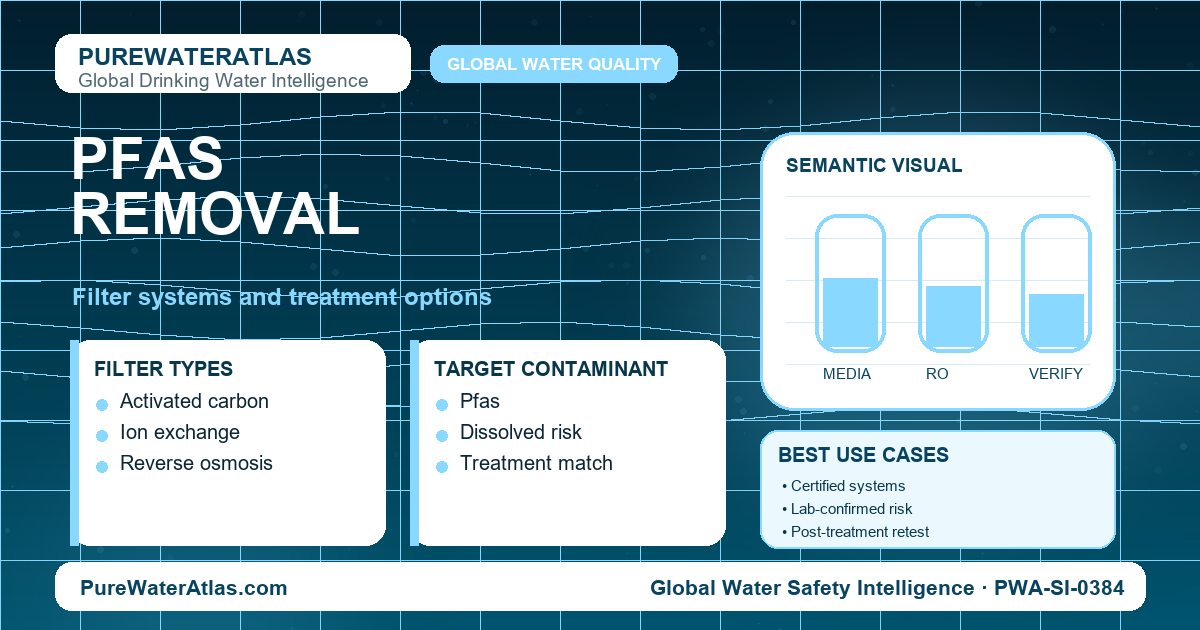
Activated carbon adsorption
Granular or powdered activated carbon can reduce taste and odor compounds, some industrial chemicals, pesticides, and natural organic matter. It is also used in advanced systems to help address trace contaminants.
Ion exchange
This method swaps unwanted dissolved ions for safer ones. It is useful for water softening and, in specialized designs, for nitrate or certain metal removal.
Membrane processes
Reverse osmosis, nanofiltration, and ultrafiltration can remove a wide range of contaminants. Reverse osmosis is particularly effective for salts, nitrates, arsenic, and many dissolved chemicals, though it generates wastewater and requires maintenance.
Advanced oxidation and specialized treatment
Some utilities use ozone, UV with hydrogen peroxide, or other advanced oxidation processes to degrade difficult organic contaminants. Desalination plants may combine multiple membrane and post-treatment stages to convert seawater into potable water.
Point-of-use and point-of-entry options
In homes and buildings, additional treatment may be installed where local conditions, plumbing concerns, or personal risk tolerance justify it. Common options include:
- Pitcher and faucet filters for improving taste, odor, and reducing selected contaminants
- Under-sink carbon systems for targeted reduction of chlorine, lead, and some organics
- Reverse osmosis units for broad dissolved contaminant reduction
- UV disinfection units for microbial control where water is already clear enough for effective UV transmission
- Whole-house systems for sediment control, softening, carbon treatment, or specialized media
Choosing the best filter
Discussions of countries with safe drinking water best filters should begin with one key principle: there is no single best filter for every problem. The best option depends on the contaminant, water chemistry, flow needs, maintenance capacity, and certification status.
When selecting a filter, consumers should consider:
- What contaminant needs to be reduced
- Whether the device is certified to a recognized performance standard
- How often cartridges or membranes must be replaced
- Whether pretreatment is needed for sediment or hardness
- Whether the unit affects water pressure or wastes water
- Whether installation and sanitation can be performed properly
A carbon filter may be very effective for chlorine taste and some organic chemicals but ineffective for nitrate. A reverse osmosis system may remove many dissolved substances but may not be ideal where maintenance is neglected. UV can inactivate microbes but will not remove chemicals or sediment.
Maintenance and long-term performance
Countries with safe drinking water maintenance is not only a utility-level issue; it also applies to household treatment. Poorly maintained filters can become ineffective or even create conditions for bacterial growth. Maintenance practices include:
- Replacing cartridges on schedule
- Cleaning housings and storage tanks
- Monitoring pressure drops and flow changes
- Checking UV lamp condition and intensity
- Sanitizing systems after service or contamination events
- Retesting water periodically to confirm performance
For more educational resources on purification technologies, see /category/water-purification/.
Common Misconceptions
Public understanding of water safety is often shaped by oversimplified beliefs. Correcting these misconceptions is essential for informed decisions.
“Clear water is safe water”
This is false. Many dangerous contaminants are invisible, odorless, and tasteless. Microbes, nitrates, lead, and PFAS may be present even when water looks perfectly clean.
“Bottled water is always safer than tap water”
Not necessarily. In many countries, municipal tap water is monitored more frequently and more transparently than bottled water. Bottled water may also be stored improperly or come from sources similar to municipal supplies.
“Boiling solves every water problem”
Boiling can kill many pathogens, but it does not remove heavy metals, nitrate, salts, or most chemical pollutants. In some cases, boiling can slightly concentrate dissolved contaminants as water evaporates.
“A filter is a filter”
Different filters target different contaminants. A device effective for chlorine taste may do little for arsenic or microbial pathogens. Performance claims should always be matched to certified use cases.
“Safe countries do not need treatment at home”
Even in countries with strong centralized treatment, building plumbing, rural wells, temporary contamination events, or localized lead issues may justify additional precautions. Household treatment should be based on evidence, not fear.
“Once installed, a system keeps working indefinitely”
All treatment devices require upkeep. Membranes foul, carbon media become exhausted, UV lamps age, and housings need sanitation. Maintenance is central to real-world countries with safe drinking water effectiveness.
Regulations and Standards
Safe drinking water systems depend on enforceable standards, transparent monitoring, and institutional accountability. Different countries have different regulatory frameworks, but most align broadly with risk-based principles similar to those promoted by the World Health Organization.
Strong regulatory systems usually include:
- Maximum contaminant levels or guideline values for key pollutants
- Required monitoring frequency based on population served and source type
- Treatment technique requirements for microbial control
- Operator certification and utility reporting obligations
- Public notification rules for violations or health emergencies
- Source water protection and infrastructure planning requirements
In many high-performing countries, regulations do not simply require clean water at the treatment plant. They also address distribution system integrity, disinfection residual, corrosion control, and consumer-right-to-know reporting. This matters because failures often occur after treatment, especially in aging urban systems.
Internationally, standards vary in exact numeric limits, but the direction is similar: control pathogens aggressively, limit toxic chemical exposure, reduce byproducts where possible, and update requirements as new science emerges. Emerging contaminants such as PFAS illustrate how regulations evolve over time. Countries with robust governance tend to revise standards, expand monitoring, and invest in treatment upgrades as evidence develops.
Compliance alone, however, is not the whole story. A system can meet minimum legal requirements and still benefit from modernization, preventive maintenance, and better communication with the public. The most trusted water systems are not only compliant but also resilient, transparent, and proactive.
Conclusion
Safe drinking water is the result of protection, treatment, testing, and maintenance working together. The topic of countries with safe drinking water removal is really about how societies control risk from source to tap. It includes source protection, filtration, disinfection, chemical reduction, infrastructure management, and household-level safeguards where appropriate.
Countries known for reliable water safety typically succeed because they use multiple barriers rather than a single solution. They monitor source conditions, apply effective treatment, maintain distribution systems, enforce standards, and adapt to new threats. Their success also depends on public trust, transparent reporting, and continued investment.
For consumers, the key lesson is that water safety should be evidence-based. Testing identifies the real issue, and treatment should be matched to that issue. Countries with safe drinking water treatment systems, filtration methods, best filters, maintenance, and effectiveness all make sense only when understood in context. A certified carbon filter, reverse osmosis unit, UV system, or whole-house treatment setup can be highly valuable, but only when chosen and maintained properly.
As pressures from climate change, emerging contaminants, and aging infrastructure grow, even strong water systems must keep improving. Safe drinking water is not a static condition. It is an ongoing public health commitment that depends on science, engineering, regulation, and responsible use at every level.
Read the full guide: Global Water Quality Guide
Explore more in this category: Global Water Quality Articles