
Introduction
Water naturally contains dissolved substances picked up as it moves through soil, rock, pipes, and treatment systems. Among the most common of these substances are minerals such as calcium, magnesium, sodium, iron, manganese, fluoride, and sulfate. In many cases, these minerals are expected and even useful indicators of water chemistry. However, when certain mineral levels become too high, too low, or out of balance, they can affect taste, plumbing performance, household appliances, and in some cases health.
This guide serves as a practical minerals in drinking water home safety checklist for homeowners, renters, and families who want to better understand their water. It explains where minerals come from, what warning signs to watch for, how to evaluate water quality, and what steps can reduce risk. Whether your home relies on a private well or a public supply, learning the basics of mineral content can help you make informed decisions about testing, treatment, and ongoing maintenance.
It is important to begin with a balanced view. Not all minerals in water are harmful. Some are naturally present at low levels and simply contribute to hardness, taste, or overall water character. Problems usually arise when mineral concentrations exceed recommended limits, cause damage to fixtures, create nuisance issues, or indicate a broader contamination concern. A sound household strategy combines observation, testing, maintenance, and awareness of local standards.
If you are new to this subject, broader background information can be found in water science resources and in this complete guide to minerals in drinking water. The checklist approach below is designed to help households move from general knowledge to practical action.
- Know your water source: public system or private well.
- Watch for changes in taste, odor, color, and staining.
- Review annual consumer confidence reports if you use municipal water.
- Test private well water regularly and after major environmental events.
- Inspect plumbing, water heaters, and treatment devices for scale or corrosion.
- Use certified laboratories and certified treatment products when needed.
What It Is
Minerals in drinking water are inorganic substances dissolved or suspended in water. They enter water through natural geological contact, treatment processes, plumbing materials, and human activity. Some minerals are present as ions, which means they are dissolved and invisible. Others can appear as particles, sediment, or deposits after water stands, heats, or evaporates.
Common minerals and related substances include:
- Calcium and magnesium: the main contributors to hard water.
- Sodium: may be naturally present or added by ion-exchange water softeners.
- Iron and manganese: often cause staining, metallic taste, and discoloration.
- Fluoride: may occur naturally or be adjusted in public water systems.
- Sulfate: can affect taste and may cause digestive effects at high levels.
- Chloride: can come from natural deposits, road salt, or other sources.
- Copper and lead: usually associated more with plumbing corrosion than natural geology.
- Arsenic: a naturally occurring element in some regions, but a serious health concern rather than a beneficial mineral.
From a household perspective, minerals are often discussed in three practical categories:
Beneficial or Normal Mineral Content
Many water supplies contain moderate levels of calcium, magnesium, and other dissolved solids without creating major concerns. These minerals may affect taste and hardness but are often considered part of normal water composition.
Nuisance Minerals
Some minerals primarily create household problems rather than immediate health threats. Iron, manganese, and hardness minerals can stain sinks, clog fixtures, reduce soap efficiency, and shorten appliance life. Even when health risk is low, nuisance levels can be costly and frustrating.
Potentially Hazardous Mineral-Related Contaminants
Other substances, including arsenic, excessive fluoride, elevated sodium for sensitive individuals, copper, and lead, may carry more significant health implications. These require more careful evaluation and often professional testing and treatment.
Understanding this distinction is essential because a white crust on a kettle and an elevated arsenic result are not the same type of issue. A true minerals in drinking water home safety checklist should separate simple aesthetic concerns from health-related hazards.
Main Causes or Sources
Minerals can enter household drinking water from several pathways. Knowing the source is a key part of any effective minerals in drinking water inspection process.
Natural Geology
The most common source of minerals is the surrounding geology. As groundwater travels through limestone, chalk, gypsum, sandstone, or mineral-rich formations, it dissolves substances into the water. This is why water chemistry varies greatly by region. Hard water is especially common where groundwater moves through calcium- and magnesium-rich rock.
Natural geology can also introduce iron, manganese, fluoride, sulfate, selenium, uranium, or arsenic. In these situations, the water may look clear and still contain substances that need monitoring.
Private Wells
Homes using private wells are more directly affected by local soils and aquifers. Well depth, casing condition, seasonal recharge, nearby land use, and flooding events all influence mineral content. Because private wells are not continuously monitored by a utility, homeowners are responsible for minerals in drinking water household testing and maintenance.
Municipal Water Treatment and Distribution
Public water systems treat and distribute water according to regulatory requirements, but mineral content can still vary. Utilities may blend water from multiple sources, adjust pH, add fluoride, or use corrosion-control strategies. While treatment usually improves safety, changes in source water or treatment chemistry can influence household mineral levels and pipe interactions.
Household Plumbing
Not all minerals measured at the tap come from the source water itself. Corrosion of pipes, fittings, solder, and fixtures can release copper, lead, iron, or zinc. Water that is highly acidic or otherwise corrosive can increase the leaching of these materials. This is why testing both source water and first-draw tap water may be useful in some homes.
Water Softeners and Treatment Systems
Ion-exchange softeners remove hardness minerals by replacing calcium and magnesium with sodium or potassium. This can solve scale problems but may increase sodium in the treated water. Other treatment systems, such as remineralization filters, reverse osmosis units, neutralizing filters, and oxidation systems, also affect mineral balance.
Environmental and Human Activities
Agriculture, road de-icing salts, mining, industrial operations, construction, and improper waste disposal can alter groundwater and surface water mineral content. Chloride and sodium increases are common near heavily salted roads. Disturbance of geologic formations can also affect naturally occurring trace elements.
For a deeper discussion of origin pathways, see causes and sources of minerals in drinking water.
- Checklist item: Identify whether your home uses well water, city water, or a blended source.
- Checklist item: Ask whether your area is known for hard water, iron, arsenic, or fluoride variation.
- Checklist item: Note the age and material of household plumbing.
- Checklist item: Review any installed treatment systems and how they change water chemistry.
Health and Safety Implications
The health impact of minerals in water depends on the specific substance, its concentration, the duration of exposure, and individual sensitivity. A careful review of minerals in drinking water risk signs should include both physical signs in the home and possible health-related considerations.
Hardness Minerals: Usually a Household Issue
Calcium and magnesium are the minerals most responsible for hardness. Hard water is generally not considered a major health hazard for most people, but it can create substantial maintenance issues. Scale buildup in pipes and hot water systems may reduce efficiency and contribute to plumbing wear. Soap does not lather well, leading to residue on skin, dishes, and laundry.
Iron and Manganese: Nuisance With Some Concerns
Iron and manganese commonly cause red, brown, black, or orange staining. They may also lead to metallic taste and discoloration. At nuisance levels, they are usually more of an aesthetic and maintenance problem than a severe health threat, but elevated manganese in drinking water may raise concerns for infants and long-term exposure, so persistent high results should not be ignored.
Sodium: Important for Some Individuals
Sodium in drinking water can matter for people on sodium-restricted diets, especially if a water softener adds sodium. While drinking water is often not the main dietary source, households with vulnerable members should know whether softened water is being used for cooking or drinking.
Sulfate: Taste and Digestive Effects
High sulfate can give water a bitter or medicinal taste and may cause laxative effects, particularly for visitors, infants, or those unaccustomed to it. This is often a concern in groundwater and some private wells.
Fluoride: Benefit at Controlled Levels, Risk at Excessive Levels
Fluoride can support dental health at appropriate levels, but too much may contribute to dental fluorosis and, in severe long-term cases, skeletal effects. Natural fluoride varies by region, making testing especially important for wells.
Copper, Lead, and Arsenic: Greater Safety Concern
Although not always grouped with household “minerals” in a casual sense, these inorganic contaminants are central to water safety. Copper can cause gastrointestinal upset and, at elevated levels, other health concerns. Lead exposure is particularly dangerous for children and pregnant individuals. Arsenic may occur naturally in groundwater and is associated with serious long-term health risks, including cancer. These substances require prompt attention if test results are above recommended levels.
Home Warning Signs to Take Seriously
Common minerals in drinking water risk signs include:
- White crust on faucets, showerheads, kettles, or coffee makers
- Red, brown, orange, or black staining on fixtures and laundry
- Metallic, salty, bitter, or otherwise unusual taste
- Blue-green stains that may suggest copper corrosion
- Frequent appliance scale problems or reduced hot water efficiency
- Cloudiness, sediment, or color changes after plumbing repairs or storms
- Worsening issues after changes in treatment settings or softener operation
It is also important to recognize what signs do not tell you. Water can contain harmful inorganic contaminants without obvious color, taste, or odor changes. That is why visual inspection should always be paired with testing. More detail on health considerations is available in health effects and risks of minerals in drinking water.
Testing and Detection
Testing is the backbone of a reliable minerals in drinking water home safety checklist. It confirms whether household observations reflect harmless nuisance issues or conditions that need corrective action. The right testing strategy depends on your water source, household concerns, and local geology.
Start With Source Awareness
If you use municipal water, review your utility’s annual water quality report. This can provide information about hardness, fluoride, sodium, and regulated contaminants. However, utility data may not fully reflect conditions inside your home, especially if plumbing corrosion is an issue.
If you use a private well, routine testing is essential because there is no public utility conducting regular compliance monitoring for your tap.
Basic Household Screening
Home test strips and simple screening kits can provide quick information about hardness, iron, pH, alkalinity, and some other parameters. These tools are useful for initial checks and for monitoring treatment performance, but they should not replace certified laboratory analysis when a health concern is possible.
Laboratory Testing
Certified laboratory testing is the best option for identifying minerals and inorganic contaminants accurately. Depending on local conditions, a comprehensive panel may include:
- Hardness
- Calcium and magnesium
- Iron and manganese
- Sodium
- Fluoride
- Sulfate and chloride
- pH and total dissolved solids
- Copper and lead
- Arsenic and other trace elements if regionally relevant
When to Test
Good minerals in drinking water household testing practice includes testing at the following times:
- When moving into a new home
- When a private well is first used
- At least annually for basic well-water parameters, or more often if advised locally
- After flooding, wildfire, nearby construction, or seismic disturbance
- After installing or servicing a treatment device
- When taste, odor, color, or staining suddenly changes
- When a household member has a health condition affected by water chemistry
Sampling Tips
Proper sampling matters. Follow laboratory instructions exactly, use clean containers, and pay attention to whether the sample should be first-draw or flushed. First-draw samples are often used when testing for plumbing-related metals such as lead or copper. Flushed samples may better represent the source water. If both source and plumbing effects are possible, collecting multiple samples can be helpful.
Inspection Checklist for the Home
A practical minerals in drinking water inspection should include more than a lab report. Walk through the home and look for patterns:
- Check faucet aerators and showerheads for scale or debris.
- Inspect toilets, tubs, and sinks for rust-colored or black stains.
- Look inside kettles, humidifiers, and coffee makers for mineral deposits.
- Review water heater maintenance history and signs of sediment buildup.
- Examine treatment devices for salt bridging, clogged media, or overdue cartridges.
- Notice whether only hot water, only cold water, or all taps show symptoms.
If only one faucet has an issue, the problem may be local to that fixture. If the entire home is affected, the source water or central treatment system may be involved.
Prevention and Treatment
Once you know what minerals are present and at what levels, the next step is selecting sensible minerals in drinking water protection steps. Prevention and treatment should match the actual problem rather than relying on generic solutions.
Protect the Water Source
For private well owners, source protection is one of the most effective long-term strategies:
- Keep the well cap secure and in good condition.
- Maintain proper grading so runoff drains away from the well.
- Keep fertilizers, chemicals, fuels, and waste away from the well area.
- Inspect the well casing for cracks or damage.
- Test after flooding or major land disturbance.
Municipal water users should stay informed about local system updates, flushing notices, and infrastructure work that may temporarily affect water quality.
Address Plumbing Corrosion
If testing suggests copper or lead is coming from household plumbing, treatment focused only on hardness or sediment will not solve the problem. Corrosion control may involve pH adjustment, replacing old plumbing components, using certified point-of-use filters, or flushing stagnant water before use.
Match the Treatment to the Mineral
Different mineral issues require different technologies:
- Hard water: ion-exchange softeners, template-assisted systems, or other scale-control methods.
- Iron and manganese: oxidation followed by filtration, specialized media filters, or water softeners for limited dissolved iron.
- Sodium concerns: bypass softened water for drinking, use potassium-based alternatives where appropriate, or consider reverse osmosis at the tap.
- Arsenic, fluoride, sulfate, and some trace elements: reverse osmosis, adsorption media, or other targeted systems depending on chemistry.
- Acidic water causing corrosion: neutralizing filters or chemical feed systems.
Point-of-use systems treat water at a single tap, while point-of-entry systems treat water for the whole home. For example, a whole-house softener may help with hardness, while a kitchen reverse osmosis unit may be better for reducing specific dissolved contaminants in drinking water.
Maintenance Matters
Even the best equipment can fail if neglected. Strong minerals in drinking water maintenance tips include:
- Replace cartridges, membranes, and media on schedule.
- Clean and sanitize treatment units as recommended by the manufacturer.
- Check softener salt levels and watch for salt bridging.
- Service oxidation and filtration systems before fouling becomes severe.
- Flush water heaters periodically if sediment is accumulating.
- Retest water after major service or repairs.
Households exploring equipment options may benefit from reviewing water treatment systems and broader drinking water safety guidance.
Practical Home Safety Checklist
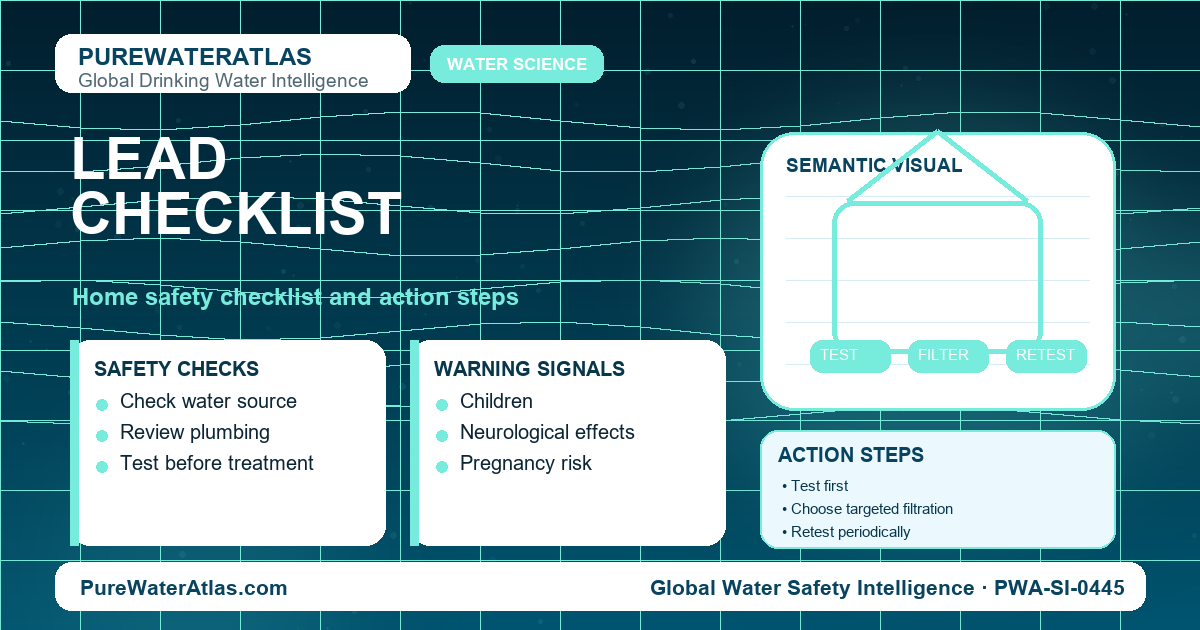
- Confirm your water source and review any available water reports.
- Schedule regular testing based on local risk and household conditions.
- Investigate visible staining, scale, or taste changes promptly.
- Do not assume clear water is automatically safe.
- Use certified treatment devices designed for the specific contaminant.
- Maintain all treatment systems according to manufacturer instructions.
- Keep records of tests, repairs, filter changes, and service visits.
- Retest after installing treatment to verify performance.
Common Misconceptions
Misunderstandings about water minerals can lead households to ignore real risks or spend money on the wrong solution. Clearing up these myths is an important part of an effective minerals in drinking water home safety checklist.
“All Minerals in Water Are Good for You”
Some minerals are common and not necessarily harmful at low levels, but that does not mean every mineral or every concentration is beneficial. Arsenic, lead, excessive fluoride, and elevated manganese or copper can be serious concerns.
“If Water Tastes Fine, It Must Be Safe”
Many inorganic contaminants have no obvious taste, color, or odor. Good taste does not replace laboratory testing.
“Hard Water Is Dangerous to Drink”
Hard water is mainly a nuisance and maintenance issue in most cases, not an acute health emergency. However, it can damage appliances and reduce cleaning efficiency, so it still deserves attention.
“A Water Softener Solves Every Mineral Problem”
Softeners are designed mainly for hardness minerals and some limited dissolved iron. They do not reliably address arsenic, sulfate, fluoride, lead, or many other contaminants. In some cases, they also increase sodium.
“Bottled Water Is Always Safer”
Bottled water is not a universal solution. Quality varies, and it may contain minerals as well. It can be useful as a temporary measure during troubleshooting, but it should not replace identifying and fixing the actual household water issue.
“Public Water Means No Household Testing Is Needed”
Municipal water is regulated, but water quality at the tap can still be affected by building plumbing, fixture corrosion, or localized conditions. Households with older pipes or specific sensitivities may still benefit from targeted testing.
Regulations and Standards
Understanding regulations helps households interpret test results correctly. Not every mineral is regulated the same way, and standards may differ by country, state, or local authority.
Primary Standards
Primary drinking water standards are generally health-based. They apply to contaminants that can pose direct health risks. Examples may include arsenic, lead action levels, copper action levels, and fluoride limits depending on jurisdiction. These standards are especially important when evaluating laboratory results for safety decisions.
Secondary Standards
Secondary standards often address aesthetic qualities such as taste, odor, color, staining, or scale. Iron, manganese, chloride, sulfate, and total dissolved solids are often discussed in this category. While these may not always indicate immediate danger, they can still signal water quality problems, interfere with treatment, and reduce household usability.
Public Water Systems vs. Private Wells
Public water systems are generally required to monitor and report regulated contaminants. Private wells usually are not subject to the same routine testing oversight, which means homeowners bear more responsibility for monitoring and treatment. This difference is one of the most important reasons private well owners need a formal testing schedule.
Certified Products and Labs
When selecting treatment equipment, look for products certified by recognized third-party organizations for the specific contaminant of concern. Likewise, use accredited or certified laboratories for testing whenever health-related decisions are involved. Marketing claims alone are not enough.
How to Use Standards at Home
- Compare your test results with current local or national guidelines.
- Distinguish between health-based exceedances and nuisance-level concerns.
- Consult local health departments or water professionals when results are unclear.
- Retest to confirm unexpected findings before investing in major equipment.
Regulations provide an essential benchmark, but they should be combined with household context. A level below a formal standard may still be undesirable if it damages appliances, creates persistent staining, or affects sensitive individuals in the home.
Conclusion
A smart household approach to water quality begins with awareness and follows through with action. Minerals in drinking water can be completely normal, mildly inconvenient, or genuinely hazardous depending on the substance and concentration involved. The most effective minerals in drinking water home safety checklist is one that combines observation, testing, maintenance, and informed treatment choices.
Start by identifying your water source and learning the local geology or utility profile. Watch for visible minerals in drinking water risk signs such as scale, staining, metallic taste, or unusual residue. Perform regular minerals in drinking water inspection throughout the home, especially if you rely on a private well or have older plumbing. Use dependable minerals in drinking water household testing methods, including certified laboratory analysis when needed. Then apply targeted minerals in drinking water protection steps and follow strong minerals in drinking water maintenance tips so treatment systems continue to work as intended.
Most importantly, do not guess. Clear water is not always safe, and a single treatment device is not the answer to every mineral issue. With the right information and a consistent routine, households can protect health, extend plumbing life, and improve confidence in the water they use every day.
Read the full guide: Water Science Guide
Explore more in this category: Water Science Articles