
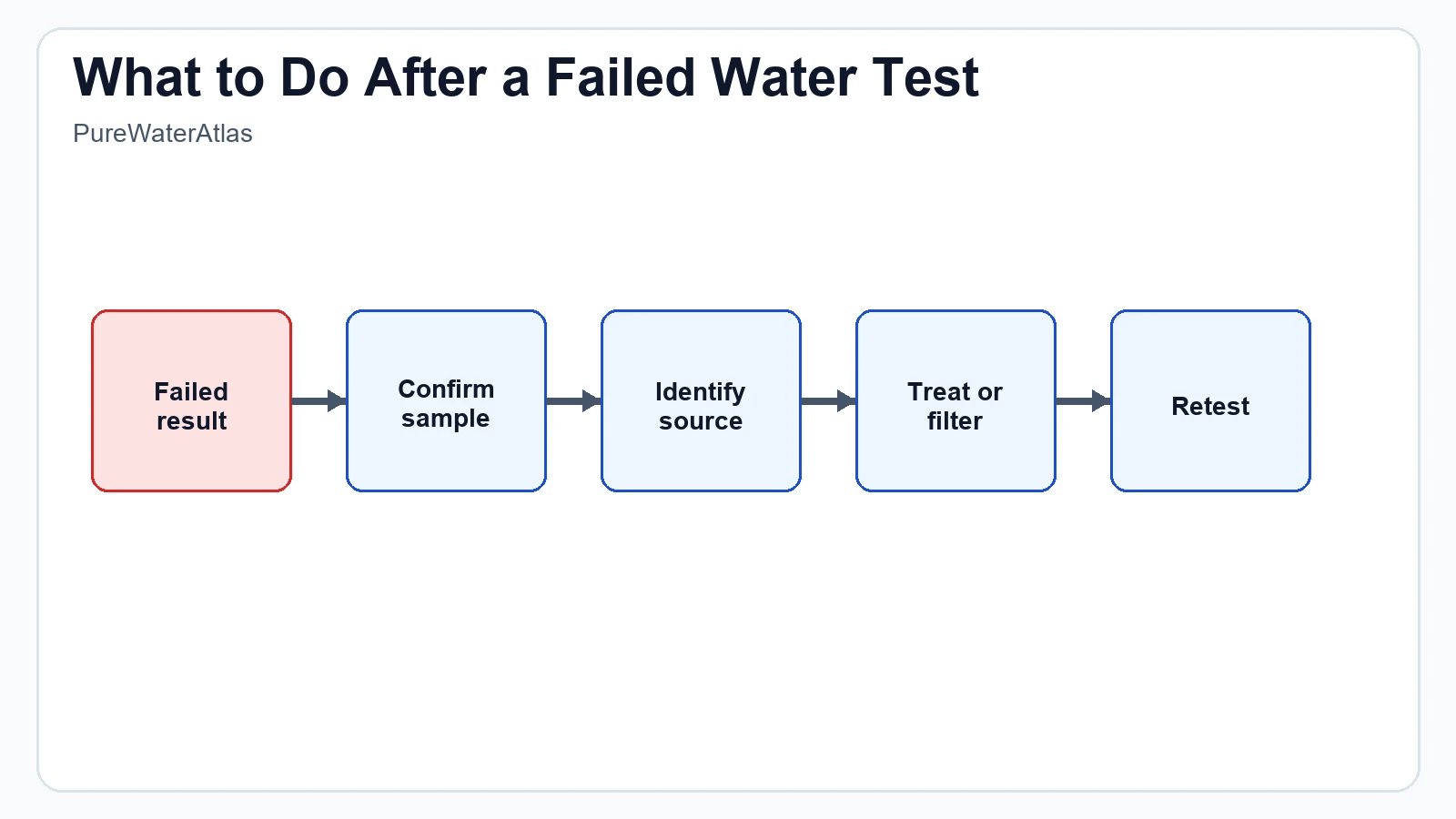
A failed water test can be alarming, but it is not the end of the story. In most cases, a concerning result is the beginning of a structured response: confirm the finding, identify the contaminant, reduce exposure, and apply the right treatment or corrective action. A practical failed water test solution depends on what was detected, how high the concentration is, whether the water comes from a private well or public supply, and who is being exposed. Some failures call for immediate avoidance of the water for drinking and cooking, while others indicate a chronic problem that should be corrected over days or weeks. The key is to move from uncertainty to evidence-based action. This article explains what to do if your water test fails, why it matters for health, how to interpret results, and which water contamination fix and water purification steps are most appropriate for specific situations.
Water quality failures matter because drinking water is a direct exposure route. Microorganisms such as E. coli, nitrates from agricultural runoff, heavy metals from plumbing or geology, and industrial chemicals such as PFAS can each create very different risks. A water sample that exceeds a guideline or regulatory threshold does not always mean severe poisoning is imminent, but it does mean the water should not be assumed safe. The response must match the contaminant. Boiling may work for microbes but can worsen dissolved chemical exposure by concentrating some contaminants as water evaporates. Activated carbon can reduce some organic chemicals but does not reliably remove nitrate. Reverse osmosis can be effective for many dissolved substances, but not every unit performs equally, and point-of-entry versus point-of-use installation matters. A sound water contamination response begins with one principle: do not guess.
What a Failed Water Test Actually Means
A failed water test means that one or more measured parameters exceeded a health-based guideline, an enforceable drinking water standard, a secondary aesthetic benchmark, or a lab-defined action threshold. The meaning of the word “failed” depends on the context of the test.
- Health-based failure: The sample contains something above a level associated with potential harm, such as total coliform with E. coli present, nitrate above 10 mg/L as nitrogen, arsenic above 10 µg/L, lead above an action level, or certain PFAS above advisory or enforceable limits depending on jurisdiction.
- Regulatory failure: The water system or sample exceeds an enforceable standard under applicable law, often described by the U.S. Environmental Protection Agency as a Maximum Contaminant Level or treatment technique requirement. For regulatory background, see the EPA drinking water program.
- Aesthetic failure: The water is unpleasant but not necessarily unsafe, such as high iron, manganese, hardness, odor, or discoloration. These can still matter because they affect acceptability, plumbing, and consumer confidence.
- Operational failure: A treatment device is not functioning properly, or a disinfection residual is absent where one should be present.
For many households, especially those using private wells, a failed water test solution begins with understanding the exact analyte, units, and threshold. A result reported in mg/L, µg/L, colony-forming units, presence/absence, or pCi/L cannot be interpreted the same way. If you need a deeper foundation in reading numbers and units, PureWaterAtlas provides guidance on understanding water test results.
Why Fast, Correct Action Matters
Unsafe drinking water can cause both acute and chronic health effects. Acute effects tend to appear quickly and are common with microbial contamination. Symptoms may include diarrhea, vomiting, fever, and dehydration. Chronic effects develop over longer periods and are often associated with chemicals such as arsenic, lead, nitrate, uranium, or disinfection byproducts. Not every exposure causes disease, and risk depends on dose, duration, age, pregnancy status, immune status, and underlying health conditions. Still, the public health importance of safe water is clear. The World Health Organization overview of drinking water emphasizes that contamination by microbes and chemicals remains a major global health concern.
Certain groups deserve extra caution after a failed test:
- Infants, especially if formula is prepared with tap or well water
- Pregnant people
- Older adults
- People with compromised immune systems
- Patients receiving dialysis or certain medical treatments that require specific water quality
If a test shows E. coli, a confirmed fecal indicator, the response should be immediate. If lead is elevated, exposure reduction should also begin quickly, especially where children are present. If nitrate exceeds standards, infant exposure is a priority because high nitrate can interfere with oxygen transport in the blood. The right unsafe water treatment is therefore partly a toxicology and microbiology question, not just a plumbing question.
Step 1: Do Not Panic, but Do Reduce Exposure Right Away
The first practical action is exposure control. If your water test fails, decide immediately whether the water should still be used for drinking, cooking, infant formula, brushing teeth, washing produce, making ice, and preparing beverages. This depends on the contaminant.
Use Restrictions by Contaminant Type
| Contaminant Category | Common Immediate Response | Important Notes |
|---|---|---|
| Microbial contamination (E. coli, coliform concerns, enteric pathogens suspected) | Use bottled water or boil water if appropriate public health guidance supports it | Boiling can inactivate bacteria, viruses, and protozoa, but it does not remove metals or nitrate |
| Lead or copper | Use bottled or properly filtered water for drinking and cooking | Do not rely on boiling; it does not remove metals and may concentrate them |
| Nitrate/nitrite | Do not use for infant formula; use alternate safe water | Boiling is not a safe fix because nitrate may become more concentrated |
| Arsenic, uranium, PFAS, solvents | Use alternate safe water or verified treatment | These often require specialized filtration or source correction |
| Aesthetic issues only (iron, sulfur odor, hardness) | Usually no emergency restriction unless another contaminant is involved | Confirm that the issue is truly aesthetic and not masking a broader problem |
If your home is served by a public water system and you receive a notice from the utility, follow the utility’s instructions first. If you rely on a private well, the responsibility to act falls mostly on the property owner. For a broader background on evaluating drinking water safety, see how to know if your tap water is safe to drink.
Step 2: Verify the Result Before Investing in the Wrong Fix
One of the most common mistakes after a bad report is buying treatment equipment before confirming the result. A good failed water test solution starts with verification because false positives, sampling errors, seasonal variation, and plumbing-specific contamination can all distort the picture.
Why Water Tests Sometimes Need Confirmation
- Sampling contamination: Touching the inside of a microbiology bottle cap, using a dirty faucet, or collecting from a contaminated hose can create misleading results.
- Stagnation effects: First-draw samples can show elevated lead or copper from plumbing contact time, whereas flushed samples may look very different.
- Seasonal changes: Heavy rain, flooding, drought, and agricultural activity can alter well water quality.
- Laboratory variability: Quality labs use controls and accreditation, but repeat testing is still important near critical thresholds.
- Short-term anomalies: A one-time bacterial intrusion may differ from a persistent sanitary defect.
For that reason, a water contamination response often includes a follow-up sample, preferably from a certified laboratory and with strict chain-of-custody and collection instructions. If you are deciding how to collect a better sample or whether a home screening kit is useful before lab confirmation, review the available options in this guide to best water testing kits.
How to Retest Correctly
Retesting should be targeted. If total coliform or E. coli was found, repeat the microbiological sample using sterile technique. If lead was elevated, collect the appropriate first-draw and flushed comparison samples if recommended. If nitrate or arsenic was high, repeat using a certified chemistry lab and note the sampling location, date, and whether any treatment device was operating.
For private wells, it is especially important to sample both before and after any existing treatment device if you have one. This helps determine whether the contamination originates in the source water or whether the treatment unit has failed. In well systems, also document recent rainfall, flooding, nearby construction, septic issues, and any changes in taste, odor, or water level.
Step 3: Identify Whether the Problem Is Source Water, Plumbing, or Treatment Failure
The next scientific question is where the contaminant is entering the water pathway. This determines whether the solution should focus on the aquifer or source, household plumbing, a treatment unit, or the distribution system.
Source Water Problems
Source water contamination originates before the water reaches your home. Examples include:
- Fecal contamination from septic failure, livestock runoff, or surface water intrusion into wells
- Nitrate from fertilizers, manure, or septic systems
- Arsenic, manganese, uranium, fluoride, and iron from natural geology
- Industrial chemicals, petroleum compounds, or PFAS from nearby facilities, fire training areas, or waste sites
The U.S. Geological Survey water resources program provides useful scientific context on how hydrology and geology influence water quality.
Plumbing Problems
Some contaminants are introduced inside the building:
- Lead from old lead service lines, brass fixtures, solder, or galvanic interactions
- Copper from corrosive water affecting pipes
- Nickel, iron, zinc, or other metals from plumbing materials
- Biofilm-associated bacteria in premise plumbing, especially in low-use lines
If contamination is confined to one faucet or appears only in first-draw samples, plumbing is a strong suspect. Corrosion control, material replacement, flushing, and point-of-use filtration may be more effective than whole-house treatment in these cases.
Treatment System Failure
If a home already has a filter, softener, UV unit, chlorinator, reverse osmosis system, or iron removal system, the failed result may indicate that the equipment is overloaded, improperly maintained, bypassing, or incorrectly matched to the contaminant. A saturated carbon cartridge, fouled membrane, depleted media bed, malfunctioning UV lamp, or broken injector can all lead to poor performance. This is why post-treatment testing is as important as raw water testing.
Step 4: Match the Failed Water Test Solution to the Contaminant
There is no universal water contamination fix. The most effective water safety solutions depend on contaminant chemistry or microbiology, concentration, water pH, hardness, organic matter, contact time, and flow rate. Below are the major categories and the most scientifically appropriate responses.
Microbial Contamination: Coliforms, E. coli, and Pathogens
If a sample is positive for E. coli or indicates fecal contamination, treat the situation as urgent. Total coliform alone does not always mean pathogens are present, but it signals that the system is vulnerable or unsanitary and needs investigation.
Common causes include:
- Poorly sealed or damaged well caps
- Flooding or surface water entering the well
- Cracked casings
- Nearby septic malfunction
- Unsanitary sample collection
- Contaminated storage tanks or plumbing dead ends
Appropriate water purification steps may include:
- Immediate use of bottled water or boil-water practices as locally advised
- Inspection of well construction and sanitary seal
- Shock chlorination in some well scenarios, followed by flushing and retesting
- Repair of casing, cap, grout, drainage, or surface grading
- Continuous disinfection such as UV or chlorination for persistent risk
Shock chlorination can temporarily reduce bacterial contamination in a well, but it is not a guaranteed permanent fix if the structural defect remains. UV disinfection can be highly effective against microorganisms if the water is clear enough and the unit is correctly sized and maintained. However, UV provides no residual disinfectant and does not remove chemicals. For broader technical background on treatment choices, see this overview of water purification methods and contaminant removal.
Nitrate and Nitrite
Nitrate is a common well water contaminant in agricultural regions and areas with septic influence. The U.S. standard for nitrate in drinking water is 10 mg/L as nitrogen. The main concern is infant methemoglobinemia, but high nitrate is also a general water quality warning sign because it suggests land-use influence.
Important response points:
- Do not boil nitrate-contaminated water for infant formula
- Inspect nearby septic systems, fertilizer use, and well siting
- Test for associated contaminants, including coliform bacteria and pesticides where relevant
- Use reverse osmosis, ion exchange designed for nitrate, or distillation if treatment is needed
Whole-house treatment may be appropriate if all household consumption depends on the same source and contamination is persistent. Point-of-use reverse osmosis at the kitchen tap can work when only drinking and cooking water need treatment, provided the unit is certified and maintained.
Lead and Copper
Lead problems are often linked to plumbing rather than the source water itself. Lead is especially concerning because no level is considered beneficial, and even low exposures matter for child development. Copper can cause gastrointestinal symptoms at higher levels and may signal corrosive water chemistry.
Corrective actions may include:
- Using cold water for consumption and flushing stagnant lines
- Installing certified point-of-use filters specifically rated for lead reduction
- Replacing lead-containing fixtures, solder, or service lines
- Adjusting corrosion control chemistry in larger building systems or public systems
Boiling is not effective for lead or copper. If the failure came from a first-draw sample, comparing flushed samples can help distinguish plumbing leaching from source contamination. Where a municipal system is involved, the utility may already be implementing corrosion control measures under regulatory requirements.
Arsenic
Arsenic is usually a geologic contaminant in groundwater, though industrial sources can also contribute. Chronic exposure can increase long-term health risks, so arsenic requires a deliberate but serious response. Effective treatment options often include reverse osmosis, adsorptive media, activated alumina, or specialized iron-based systems depending on arsenic speciation and water chemistry.
Because arsenic removal depends strongly on whether arsenic is present as As(III) or As(V), pretreatment such as oxidation may be necessary. It is wise to work with a knowledgeable treatment professional and verify performance with before-and-after lab testing.
PFAS and Other Synthetic Chemicals
Per- and polyfluoroalkyl substances, solvents, and some pesticides require contaminant-specific treatment. Granular activated carbon can reduce some PFAS and volatile organic compounds under the right design conditions, while reverse osmosis can reduce many dissolved synthetic chemicals at the tap. But not all carbon filters are equal, and breakthrough can occur silently as media becomes exhausted.
In these scenarios, treatment certification, replacement schedules, and confirmatory testing are critical. A home filter marketed generally for “better tasting water” is not enough evidence that it solves a serious chemical exceedance.
Iron, Manganese, Sulfur, Hardness, and Other Aesthetic or Operational Issues
These contaminants may not always create immediate toxicological concern at typical levels, but they can damage plumbing, stain fixtures, interfere with disinfection, and make water unacceptable to drink. Iron and manganese can also foul treatment systems. The solution may include oxidation-filtration, greensand-type media, catalytic media, aeration, or softening depending on the form and concentration.
Even when an issue seems aesthetic, do not assume it is harmless without checking benchmarks. Manganese, for example, has both aesthetic and health relevance depending on concentration and exposure duration.
Step 5: Understand Standards, Guidelines, and Thresholds
One reason homeowners feel lost after a failed report is that different documents use different numbers. Regulatory standards, health advisories, secondary standards, and lab flags are not always the same thing.
Key Types of Water Quality Benchmarks
- Maximum Contaminant Level (MCL): An enforceable limit for public water systems under U.S. regulations.
- Maximum Contaminant Level Goal (MCLG): A non-enforceable health goal, often lower than the enforceable standard.
- Action level: A threshold that triggers treatment, corrosion control, or other required response, as used for lead and copper.
- Health advisory or guideline: A recommended non-enforceable concentration, often used for emerging contaminants.
- Secondary standard: A non-health-based benchmark for taste, odor, color, staining, or other aesthetic issues.
If your report says a contaminant exceeds a standard, check what type of standard it is and which authority set it. For a practical consumer-oriented overview of contaminant benchmarks, PureWaterAtlas has a useful reference on safe water levels for common contaminants.
Private well owners should remember that federal drinking water regulations generally apply to public water systems, not individual household wells. That does not make well contamination less important; it means the homeowner must take the lead on testing and remediation.
Step 6: Investigate the Cause, Not Just the Symptom
A treatment device can reduce exposure, but long-term water safety solutions should also address root causes where possible. This is especially true for recurring microbial contamination or any problem linked to infrastructure defects.
Questions to Ask After a Failed Test
- Has there been recent heavy rain, flooding, or snowmelt?
- Is there a nearby septic system with signs of failure?
- Has agricultural activity increased nearby?
- Are there old plumbing materials inside the house?
- Has the well cap been damaged or left unsecured?
- Was any new treatment device installed incorrectly?
- Has the well recently been serviced, deepened, or disturbed?
- Are there local advisories for PFAS, mining impacts, or industrial releases?
For private well owners, routine sanitary inspection is part of a proper water contamination response. If you need a practical maintenance and sampling framework, consult this well water testing checklist.
Step 7: Choose the Right Treatment Technology
When contamination is confirmed, the next task is selecting treatment that is technically appropriate and sized for the household. A common mistake is choosing a device based on popularity or marketing rather than contaminant removal data.
Point-of-Use vs Point-of-Entry
Point-of-use (POU) devices treat water at a single tap, usually the kitchen sink. They are often suitable for contaminants primarily relevant to drinking and cooking, such as lead, arsenic, nitrate, or PFAS, especially if showering exposure is less important.
Point-of-entry (POE) systems treat all water entering the home. They are often chosen for hardness, iron, hydrogen sulfide, whole-house disinfection, or when contamination affects all uses.
Treatment Technologies and Their Typical Uses
| Technology | Often Effective For | Limitations |
|---|---|---|
| Boiling | Microbial inactivation | Does not remove metals, nitrate, or most chemicals |
| Activated carbon | Chlorine, taste/odor, some organic chemicals, some PFAS | Not reliable for nitrate, many dissolved metals, or all PFAS types without proper design |
| Reverse osmosis | Nitrate, arsenic, lead, fluoride, many dissolved contaminants, many PFAS | Requires maintenance, wastes some water, may need pretreatment |
| UV disinfection | Bacteria, viruses, protozoa | Requires clear water and power; no chemical removal |
| Ion exchange | Hardness, nitrate, some metals depending on resin | Needs correct resin selection; regeneration chemistry matters |
| Distillation | Many dissolved solids and some contaminants | Energy intensive and slower; volatile contaminants may need special controls |
| Oxidation + filtration | Iron, manganese, sulfur, some arsenic with proper setup | System design and chemical dosing are critical |
The best failed water test solution is the one that addresses the confirmed contaminant, at the measured concentration, under your household flow and maintenance conditions. Look for units tested or certified against relevant standards when possible, and always verify with follow-up water analysis after installation.
Step 8: Retest After Every Corrective Action
No remediation is complete without follow-up testing. The purpose of retesting is to confirm that the intervention worked and to establish a new monitoring baseline.
When to Retest
- Immediately after a boil-water episode ends, according to local guidance
- After shock chlorination and adequate flushing of a well
- After installing or servicing a treatment system
- After plumbing replacement or corrosion-control changes
- Seasonally if contamination is variable
- At routine intervals recommended for the contaminant and water source
Microbiology often requires prompt post-correction sampling. Chemical contaminants may be checked after installation of treatment and then periodically based on expected media life or membrane performance. If a household relies on reverse osmosis for nitrate, arsenic, or PFAS reduction, do not wait until taste changes occur; many contaminants have no taste at relevant concentrations.
Common Mistakes to Avoid After a Water Test Failure
- Assuming all contamination can be solved by boiling: This is false for most chemical contaminants and some circumstances.
- Buying a generic filter without performance data: Not all filters target the same contaminants.
- Ignoring one failed result because the water looks clear: Many dangerous contaminants are colorless and odorless.
- Testing only treated water: You also need raw source data to diagnose the problem.
- Treating bacteria without fixing the sanitary defect: Temporary disinfection alone may not solve recurring contamination.
- Using hot water for cooking when lead is a concern: Hot water can leach more metals from plumbing.
- Skipping maintenance: Treatment systems fail quietly when cartridges, lamps, or media are overdue.
Public Water vs Private Well: Why the Response Can Differ
If your water comes from a public utility, the system operator is responsible for monitoring, treatment, and notification under applicable regulations. Consumers should follow utility advisories, review annual water quality reports, and contact the provider if a household-specific issue like plumbing corrosion is suspected. The CDC drinking water resources offer practical public health information for households.
If your home uses a private well, there is usually no utility monitoring your water on your behalf. That means regular testing, maintenance, and corrective action are largely your responsibility. This is why private well owners should have a standing testing plan rather than waiting for symptoms, discoloration, or illness.
How to Build a Long-Term Water Safety Plan After a Failure
A one-time response is not enough if the underlying risk persists. A strong long-term plan includes monitoring, infrastructure improvements, and clear household habits.
Elements of a Good Long-Term Plan
- A written record of all contaminants detected, with dates and concentrations
- Lab reports stored in one place for trend review
- A map of sampling points, including raw and treated water locations
- A maintenance schedule for every treatment device
- Annual or risk-based retesting based on source type and contaminant history
- Specific precautions for infants, pregnant people, or immunocompromised household members
- Emergency access to safe alternative water if the system fails again
Many households benefit from thinking in layers: protect the source, maintain plumbing, apply targeted treatment, and verify with testing. That layered approach is often more reliable than depending on a single device.
FAQ
Should I stop using the water immediately if a test fails?
It depends on what failed. If the result shows E. coli, high nitrate for infant use, or a serious chemical exceedance, use an alternate safe water source for drinking and cooking right away. If the issue is purely aesthetic, the response may be less urgent. Always interpret the specific contaminant, concentration, and source.
Can I fix unsafe water by boiling it?
Boiling is useful for microbial contamination when public health guidance recommends it, but it does not remove lead, arsenic, nitrate, PFAS, or most dissolved chemicals. In some cases, boiling can increase the concentration of nonvolatile contaminants as water evaporates.
How do I know whether the contamination came from my plumbing or my well?
Compare samples from different points and conditions. First-draw versus flushed samples can help identify plumbing-related metals. Raw well water versus post-treatment samples can show whether the source is contaminated or the treatment unit is underperforming. A sanitary inspection of the well and home plumbing is often necessary.
Do I need a whole-house treatment system?
Not always. If the main concern is water used for drinking and cooking, a certified point-of-use unit may be sufficient. Whole-house treatment is more appropriate when contamination affects all household uses, when disinfection is needed throughout the plumbing, or when operational issues like iron or hardness are widespread.
How often should I retest after fixing the problem?
Retesting frequency depends on the contaminant and the corrective action. Microbial issues often require prompt confirmation after remediation. Chemical contaminants should be retested after treatment installation and then at intervals based on contaminant risk, treatment type, and prior history.
Conclusion
If your water test fails, the most effective response is systematic: reduce exposure, confirm the result, identify the contaminant source, select a contaminant-specific treatment or repair, and verify success with follow-up testing. A failed water test solution is rarely one-size-fits-all. Microbial contamination, nitrate, lead, arsenic, PFAS, and aesthetic water quality problems each require different water purification steps and different levels of urgency. By focusing on evidence rather than assumptions, households can move from a worrying lab report to practical, science-based water safety solutions that genuinely reduce risk.
Featured image: Photo by Bl∡ke on Pexels.



Read the full guide: Water Testing Guide
Explore more in this category: Water Testing Articles