
Introduction
Understanding lead in drinking water causes and sources is an important part of protecting household health. Lead is a toxic metal that has been widely used in plumbing materials, industrial products, paints, and other applications for many decades. Although its use has been reduced or banned in many settings, lead can still enter drinking water through aging infrastructure, corrosion, and plumbing components that contain lead. Because water is consumed every day for drinking, cooking, and preparing infant formula, even low-level exposure over time can become a serious public health concern.
Lead contamination in water is especially challenging because it is often invisible. It usually cannot be seen, smelled, or tasted at harmful levels. As a result, many households may be unaware that they have a problem until they conduct testing or receive notice of a plumbing issue or local water system concern. This makes education, routine monitoring, and prevention strategies essential.
For readers seeking broader context on contamination issues, resources such as water contamination and drinking water safety provide useful background. This article explains where lead in water comes from, why some homes face higher risk, how exposure affects health, and what practical steps can help reduce danger.
What It Is
Lead is a naturally occurring metal, but it becomes hazardous when it accumulates in the human body. In drinking water, lead contamination usually does not originate from the water source itself, such as a lake, reservoir, or groundwater aquifer. Instead, it most often enters water after treatment, during its travel through pipes, service lines, plumbing fixtures, solder, valves, and faucets.
When discussing lead contamination, it is important to understand that the issue is usually tied to the interaction between water and plumbing materials. If water is corrosive, it can dissolve or loosen lead particles from pipes and fixtures. These particles or dissolved lead can then flow from the tap into household water used for drinking or food preparation.
Lead in drinking water may appear in two general forms:
- Dissolved lead, which has entered the water at a chemical level and cannot be seen.
- Particulate lead, which consists of tiny lead-containing particles released from plumbing materials, corrosion scale, or disturbance of old pipes.
This distinction matters because lead levels can vary from one moment to another. Water that tests low at one time may test higher later if plumbing conditions change, if pipes are disturbed, or if water has been sitting motionless in contact with lead-containing materials.
Many people assume lead contamination is only a problem in very old cities, but lead in drinking water household exposure can occur in a range of settings. Older homes are often at greatest risk, yet newer buildings may still contain brass fixtures or plumbing components that contribute small amounts of lead under certain conditions. A more complete overview is available in this complete guide to lead in drinking water.
Main Causes or Sources
The most important lead in drinking water common sources are found in the plumbing system. In most cases, contamination develops when water interacts with materials containing lead. The amount that enters the water depends on pipe composition, water chemistry, age of plumbing, maintenance practices, and how long water remains in contact with those materials.
Lead Service Lines
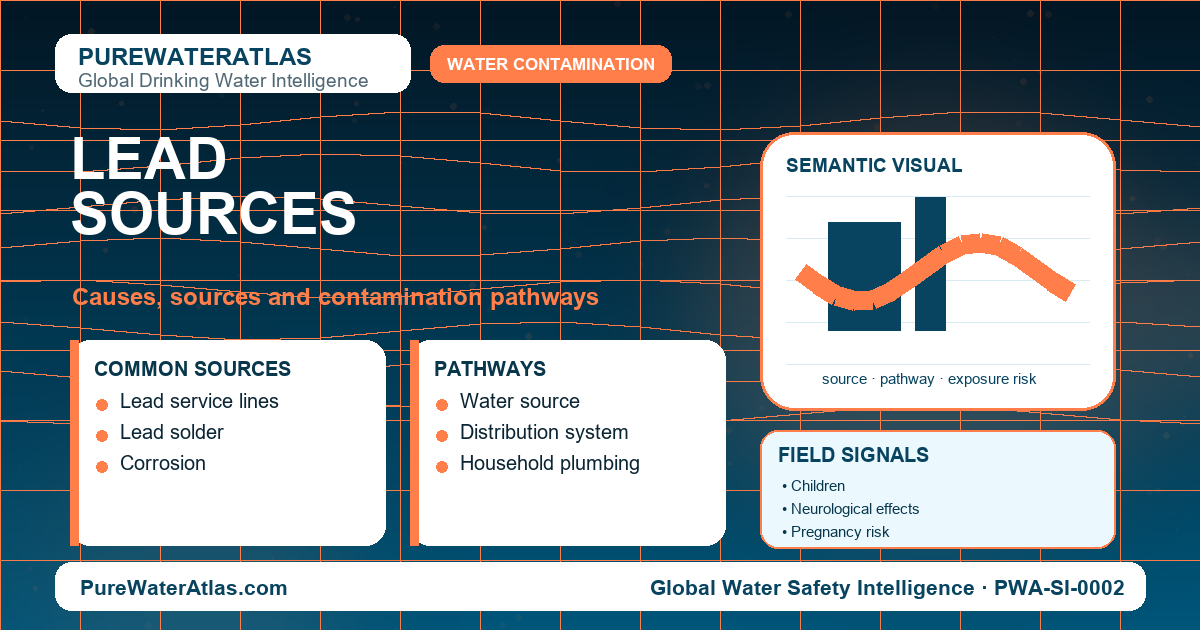
One of the most significant sources is the lead service line. This is the pipe that connects the water main in the street to a home or building. In many communities, especially those with older infrastructure, these lines were installed decades ago when lead was commonly used. If a home still has a lead service line, it may be at particularly high risk for contamination.
Lead service lines can release lead slowly through ongoing corrosion, or suddenly through disturbance caused by construction, repairs, meter replacement, or changes in water flow. Partial replacement can sometimes create temporary increases in lead levels if old lead pipe remains in place and becomes disrupted.
Lead Pipes Inside Buildings
Some older homes and buildings may contain interior lead pipes or sections of lead-containing plumbing. Though less common than lead service lines in many areas, interior lead plumbing remains a serious concern where it exists. The longer water sits in these pipes, the greater the chance that lead can leach into the water.
Lead Solder
Lead solder was widely used to join copper pipes in plumbing systems before restrictions were introduced. Homes built or renovated before modern standards may still contain solder with substantial lead content. Corrosion can cause lead from soldered joints to enter tap water, especially when water remains stagnant in the pipes for several hours.
Brass Faucets, Valves, and Fixtures
Even when pipes themselves are not made of lead, certain plumbing fixtures can contribute contamination. Brass components, including faucets, valves, and fittings, may contain lead. Although regulations now limit the amount permitted in products labeled for potable water use, older fixtures may release more lead. Newer components can also contribute small amounts in some conditions, especially when first installed.
Corrosion of Plumbing Materials
Corrosion is the central process behind most lead in drinking water causes and sources. Corrosion happens when water chemically reacts with pipes and plumbing parts. Several conditions can make corrosion more likely or more severe:
- Low pH or acidic water
- Low mineral content
- High water temperature
- High levels of dissolved oxygen
- Changes in disinfectants or treatment processes
- Physical wear inside pipes
When corrosion control is weak or inconsistent, protective mineral scales inside pipes may dissolve or destabilize, allowing more lead to enter the water. This is one reason water chemistry management by utilities is so important.
Water Sitting in Plumbing
Stagnation is another major factor. Water that has been sitting in pipes for hours, such as overnight or during the workday, has more time to absorb lead from plumbing materials. This is why first-draw water from a tap may contain more lead than water that has been flushed for several minutes.
Construction, Repairs, and Disturbance
Pipe repair, roadwork, utility replacement, meter installation, or home renovation can disturb old lead-bearing materials. When that happens, particulate lead may break free and temporarily increase contamination. Households sometimes notice no visible signs, even when lead particles are present. This makes post-construction precautions and follow-up testing especially important.
Private Wells and Non-Municipal Systems
Private well owners may assume lead is not a concern because they are not connected to a city water system. However, while the well itself may not contain lead, the well plumbing, pump components, fittings, solder, pressure tanks, and household fixtures still can. Therefore, private systems are not immune from contamination.
Schools, Childcare Facilities, and Older Buildings
Larger or older buildings often have more complex plumbing networks, many faucets, and periods of low water use. These conditions can increase lead release. Schools and childcare centers are of special concern because children are particularly vulnerable to lead exposure. Water outlets used infrequently, such as classroom sinks or seasonal fountains, may accumulate higher lead concentrations after long stagnation periods.
Household Risk Factors
Several lead in drinking water risk factors increase the likelihood that a property may have a problem:
- Home built before modern lead restrictions took effect
- Presence of a lead service line or unknown service line material
- Older plumbing with lead solder or brass fixtures
- Recent plumbing work or utility construction
- Long periods of water stagnation
- Corrosive source water or changes in water treatment chemistry
- Infrequently used taps or seasonal buildings
Health and Safety Implications
Lead is toxic because the body can absorb it and store it over time. Unlike some contaminants that cause immediate stomach upset or odor problems, lead may produce no obvious short-term symptoms while still causing long-term harm. That is why prevention matters so much.
The health effects of lead depend on the amount, duration, and timing of exposure. Children, infants, and fetuses are most sensitive. Even low levels of exposure can interfere with development. Adults are also at risk, especially with ongoing exposure over months or years. Readers interested in more depth can review lead in drinking water health effects and risks.
Risks for Infants and Children
Children absorb lead more readily than adults, and their developing brains and nervous systems are more vulnerable. Exposure has been associated with:
- Learning and behavioral problems
- Lower IQ and attention difficulties
- Delayed growth and development
- Hearing and speech issues
- Nervous system effects
Infants fed formula prepared with contaminated tap water may face increased exposure because formula can be a major source of water intake during early life.
Risks During Pregnancy
Pregnant individuals need special protection from lead exposure because lead can cross the placenta. This may affect fetal development and may contribute to adverse outcomes. In addition, lead stored in bones from past exposure can be released during pregnancy, increasing overall body burden.
Risks for Adults
Adults exposed to lead in drinking water may experience elevated blood pressure, kidney effects, reproductive concerns, cardiovascular impacts, and nervous system problems. Long-term exposure is particularly concerning because symptoms may be subtle or mistaken for other conditions.
No Safe Benefit from Exposure
Lead serves no beneficial role in the human body. Public health guidance is based on minimizing exposure as much as possible, especially for children. Because lead can accumulate, repeated small doses matter. A household may not notice a problem immediately, but chronic intake can still create risk over time.
Why Household Exposure Is Often Overlooked
Lead in drinking water household exposure is often underestimated because drinking water may represent only one part of overall lead exposure. People may also encounter lead from old paint, dust, soil, imported products, or occupational sources. However, water becomes especially important because it is consumed directly and used in cooking. It can also increase exposure when used to make baby formula, soups, hot beverages, and foods that absorb water during cooking.
Testing and Detection
Lead in drinking water detection is essential because lead usually cannot be identified through appearance, smell, or taste. The only reliable way to know whether water contains lead is to test it. Detection can involve both plumbing identification and laboratory analysis of water samples.
Why Visual Inspection Is Not Enough
While visual inspection can help identify possible lead service lines or old plumbing materials, it cannot measure lead concentration in water. A home may have a lead pipe but low measured lead at a given moment, or it may have no visible lead pipe yet still show contamination from solder or brass fixtures. Therefore, both inspection and testing are valuable.
Identifying Possible Lead Plumbing
Homeowners can begin by checking the service line where it enters the building, often near the water meter or basement wall. Lead pipes are usually dull gray and soft enough to scratch carefully with a key, revealing a shiny metal surface beneath. However, this method should be done cautiously and does not replace professional confirmation. Copper pipes are reddish-brown, and galvanized steel is typically harder and magnetic.
Water Sampling Methods
Testing programs may use different sampling approaches depending on the goal:
- First-draw sampling: collects water after it has sat in plumbing, often overnight, to capture lead that accumulated during stagnation.
- Flush sampling: collects water after running the tap, which may help identify lead from service lines or deeper plumbing.
- Sequential sampling: uses multiple samples in sequence to better locate the source of contamination within the plumbing system.
Because lead levels can fluctuate, one result may not tell the full story. In some situations, repeated testing provides a more accurate picture.
Certified Laboratory Testing
The most dependable approach is to use a certified laboratory or an approved testing program. Proper sample containers, instructions, and handling procedures are important for accurate results. If the sampling process is not done correctly, the result may not reflect true conditions.
For a more detailed explanation of methods and interpretation, see lead in drinking water testing and detection methods.
When Testing Is Especially Important
Testing should be strongly considered when:
- A home was built before lead plumbing restrictions
- The service line material is unknown
- Young children or pregnant individuals live in the home
- Renovation or utility work has recently occurred
- Water has unusual corrosive characteristics
- A school or childcare facility serves drinking water to children
- Previous lead issues have been reported in the neighborhood or utility system
Interpreting Results Carefully
Lead results should be interpreted with care. A result below a regulatory threshold does not necessarily mean there is zero risk, especially for sensitive groups. It may only indicate that the measured concentration at that time was below a certain action level or standard. Because lead exposure should be minimized, households may still choose protective measures even when results are relatively low.
Prevention and Treatment
Lead in drinking water prevention focuses on both long-term solutions and immediate household practices. The best permanent approach is to remove the source of lead whenever possible. At the same time, short-term risk reduction can help protect families while larger plumbing improvements are planned.
Replace Lead Service Lines and Plumbing Components
The most effective long-term solution is full replacement of lead service lines and other lead-containing plumbing materials. Replacing only part of a lead line may not eliminate risk and can sometimes temporarily worsen it if corrosion scale is disturbed. Whenever feasible, full replacement is preferable.
Use Certified Water Filters
Point-of-use filters certified for lead reduction can significantly lower exposure when properly selected, installed, and maintained. It is important to choose a filter specifically certified for lead removal and to replace cartridges on schedule. Not all household filters remove lead, so product claims should be verified carefully.
Flush Stagnant Water
If water has been sitting in plumbing for several hours, flushing the tap may help reduce lead levels before use. The amount of flushing time varies depending on the plumbing layout and whether lead service lines are present. Water can be run until it becomes noticeably colder, indicating fresher water from the main. However, flushing is not a complete solution and may be less effective where particulate lead is present.
Use Cold Water for Consumption
Cold tap water should be used for drinking, cooking, and preparing infant formula. Hot water can dissolve lead more readily from plumbing materials. Boiling water does not remove lead; in fact, evaporation can concentrate contaminants if lead is already present.
Clean Faucet Aerators
Lead particles and other debris can collect in faucet aerators. Regularly cleaning these screens may reduce particulate contamination, especially after plumbing work or disturbances in the water system.
Take Extra Precautions for Infants
Households with infants should be especially careful about the water used for formula preparation. If lead is suspected or confirmed, parents and caregivers should consider using filtered water certified for lead reduction or another safe water source as recommended by health authorities.
Corrosion Control at the Utility Level
Water utilities play a major role in prevention by adjusting water chemistry to reduce corrosion. Corrosion control treatment may involve pH adjustment, alkalinity management, and the addition of corrosion inhibitors that help form protective coatings inside pipes. When well-managed, these measures can significantly reduce lead release, though they do not remove the lead source itself.
Routine Monitoring and Household Planning
Good prevention also includes awareness and planning:
- Determine whether the home has a lead service line
- Keep records of plumbing repairs and fixture replacements
- Retest after renovation, service line work, or treatment changes
- Use certified treatment devices when needed
- Stay informed about utility notices and local public health guidance
Homeowners exploring filtration and treatment options may find useful information in water treatment systems.
Common Misconceptions
Misunderstandings about lead in water can delay action and increase exposure. Clearing up these myths helps households make better decisions.
“If the Water Looks Clear, It Must Be Safe”
False. Lead is usually invisible at harmful levels. Clear water can still contain dissolved or particulate lead.
“Boiling Water Removes Lead”
False. Boiling does not remove lead. Because water evaporates during boiling, the concentration of lead may remain the same or become higher.
“Only Very Old Homes Have a Problem”
Not always. Older homes face greater risk, but newer properties can still have lead-bearing brass fixtures, plumbing components, or service line uncertainties. Risk depends on specific materials and water chemistry, not age alone.
“A Single Low Test Means There Is No Risk”
Not necessarily. Lead levels can vary over time. A low result on one day does not guarantee levels will remain low after stagnation, plumbing work, or changes in water chemistry.
“If the Utility Meets Standards, My Household Water Cannot Have Lead”
Not always. Utility compliance is important, but individual properties may still experience elevated lead if household plumbing contains lead or if local conditions cause release at the tap.
“Filters All Work the Same Way”
False. Some filters improve taste or remove chlorine but do not reduce lead. Only products specifically certified for lead reduction should be relied on for this purpose.
Regulations and Standards
Lead in drinking water is addressed through public health regulations, product standards, and utility monitoring requirements. These rules vary by country and region, but the overall goals are similar: reduce lead exposure, control corrosion, identify lead service lines, and ensure appropriate action when contamination is detected.
Action Levels and Compliance Frameworks
In many regulatory systems, lead is managed through an action level rather than a simple pass-fail drinking water limit at every tap. This means utilities must monitor representative sites and take corrective action if too many samples exceed the specified threshold. Such action may include public education, corrosion control improvements, expanded monitoring, or service line replacement.
It is important for consumers to understand that an action level is not the same as a health-based statement that any level below it is completely safe. Public health agencies generally emphasize reducing lead exposure as much as possible.
Restrictions on Plumbing Materials
Modern plumbing codes and product regulations limit the allowable lead content in pipes, fittings, fixtures, and solder intended for drinking water systems. These restrictions have helped reduce new sources of contamination, but they do not eliminate lead already present in older infrastructure.
Lead Service Line Inventory and Replacement Efforts
Many jurisdictions now require water systems to identify service line materials, notify customers of lead line presence, and develop replacement programs. These efforts are critical because permanent risk reduction depends on removing lead-containing infrastructure rather than relying only on treatment and flushing.
Building-Level Oversight
Schools, daycare centers, and public buildings may also be subject to separate testing and remediation requirements. Because children are highly vulnerable, many public health initiatives prioritize these locations for monitoring and fixture replacement.
Why Standards Continue to Evolve
Scientific understanding of low-level lead exposure has improved over time, especially regarding its effects on child development. As evidence has grown, many policies have become stricter. This reflects the reality that lead is hazardous even at relatively low concentrations and that prevention is more effective than reacting after exposure occurs.
Conclusion
Knowing the lead in drinking water causes and sources helps households, property owners, and communities take informed action. In most cases, lead enters water not from the original water source but from service lines, pipes, solder, fixtures, and corrosion within plumbing systems. Risk is often highest in older buildings, homes with lead service lines, and properties where water sits in contact with lead-containing materials.
The consequences of exposure can be serious, especially for infants, children, and pregnant individuals. Because lead is typically undetectable by sight, smell, or taste, lead in drinking water detection through proper testing is essential. Once identified, risk can be reduced through source replacement, certified filtration, flushing practices, cold-water use, corrosion control, and ongoing monitoring.
Ultimately, lead in drinking water prevention requires a combination of household awareness, sound plumbing decisions, utility responsibility, and strong public health standards. By understanding the common sources, recognizing key risk factors, and taking practical protective steps, families can significantly reduce lead in drinking water household exposure and support safer drinking water for everyone.
Read the full guide: Water Contamination Guide
Explore more in this category: Water Contamination Articles