
Introduction
Concerns about lead in drinking water health effects have grown as more communities learn how aging plumbing, poor corrosion control, and service line deterioration can contaminate water that otherwise appears clean. Lead is a toxic metal with no known safe role in the human body. Unlike contaminants that change the taste, smell, or color of water, lead can be present without any obvious warning signs. That makes it especially important for households, schools, healthcare facilities, and building managers to understand where lead comes from, how exposure happens, and why even low levels can raise serious health questions.
Drinking water is not usually the largest source of lead exposure for every person, but it can become a major contributor when plumbing materials contain lead or when water chemistry causes metal to leach into the supply. Exposure may happen slowly over time, making health effects harder to recognize. In many cases, people only discover a problem after testing the water, evaluating household plumbing, or investigating elevated blood lead levels.
This article explains what lead in drinking water is, the main causes of contamination, the health and safety implications, and the practical steps used for testing, prevention, and response. It also addresses lead in drinking water medical concerns, including who is most at risk and why long-term exposure deserves careful attention. Readers looking for broader context may also explore resources on water contamination, a full overview at this complete guide, and related information in drinking water safety.
What It Is
Lead is a naturally occurring metal that has been widely used in plumbing, paint, gasoline additives, industrial products, batteries, and other manufactured materials. In the context of drinking water, lead usually enters the water supply not from the source water itself, but from contact with pipes, solder, brass fixtures, faucets, and service lines that contain lead. As water sits in or passes through these materials, small amounts of lead can dissolve or break off into the water.
Lead contamination in water is often described as a corrosion-related problem. Corrosion does not mean the same thing as visible rust alone. In water systems, corrosion refers to chemical reactions between water and plumbing materials. If the water is more likely to dissolve metals or disturb protective scale inside pipes, lead can be released into tap water. This process may be influenced by pH, alkalinity, temperature, water age, disinfectants, and other treatment variables.
One reason lead is particularly dangerous is that it is a cumulative toxicant. The body can store lead in bones and teeth, where it may remain for years. Ongoing exposure, even at relatively low doses, can gradually increase the total burden in the body. For this reason, discussions about lead in drinking water exposure levels often focus not only on one high reading, but also on repeated consumption over time.
Lead in water cannot be reliably detected by sight, smell, or taste. Clear water is not necessarily safe water. A home may have acceptable test results one day and elevated levels another day depending on plumbing use patterns, water chemistry changes, or disturbance in the pipes. That variability is one reason targeted sampling and proper interpretation are so important.
Main Causes or Sources
The primary source of lead in drinking water is contact with lead-containing plumbing materials. In older homes and buildings, lead service lines are a major concern. A lead service line is the pipe connecting the water main in the street to the building. Even if interior plumbing has been updated, a lead service line can continue to contaminate water entering the property.
Other important sources include:
- Lead solder used historically to join copper pipes, particularly in older plumbing systems.
- Brass faucets, valves, and fittings that may contain lead as part of the alloy.
- Older fixtures that gradually release lead into stagnant water.
- Galvanized pipes that can accumulate and later release lead particles if lead was previously present upstream.
- Improper corrosion control in municipal water treatment systems.
- Physical disturbance during construction, repairs, meter replacement, or partial service line replacement, which can dislodge lead-containing particles.
Lead contamination does not affect all buildings equally. Risk is often highest in older properties, especially those built before modern plumbing restrictions reduced lead use. However, newer buildings are not automatically free from risk. Some fixtures and imported plumbing components may still contribute low but measurable amounts of lead, especially when water remains stagnant overnight or during long periods of low use.
Water chemistry plays a central role in whether lead enters the water. Soft, acidic, or low-mineral water can sometimes be more corrosive, but the full picture is more complex. Changes in treatment chemicals, disinfectant type, source water blending, or seasonal temperature can alter the stability of pipe scale. If that protective scale breaks down, lead release may increase quickly. This is why system-wide treatment decisions require careful corrosion control planning and monitoring.
For a deeper explanation of plumbing-related pathways, readers can review lead in drinking water causes and sources. Broader regional issues are also discussed in global water quality, where aging infrastructure and uneven regulation can create different risk profiles across locations.
Health and Safety Implications
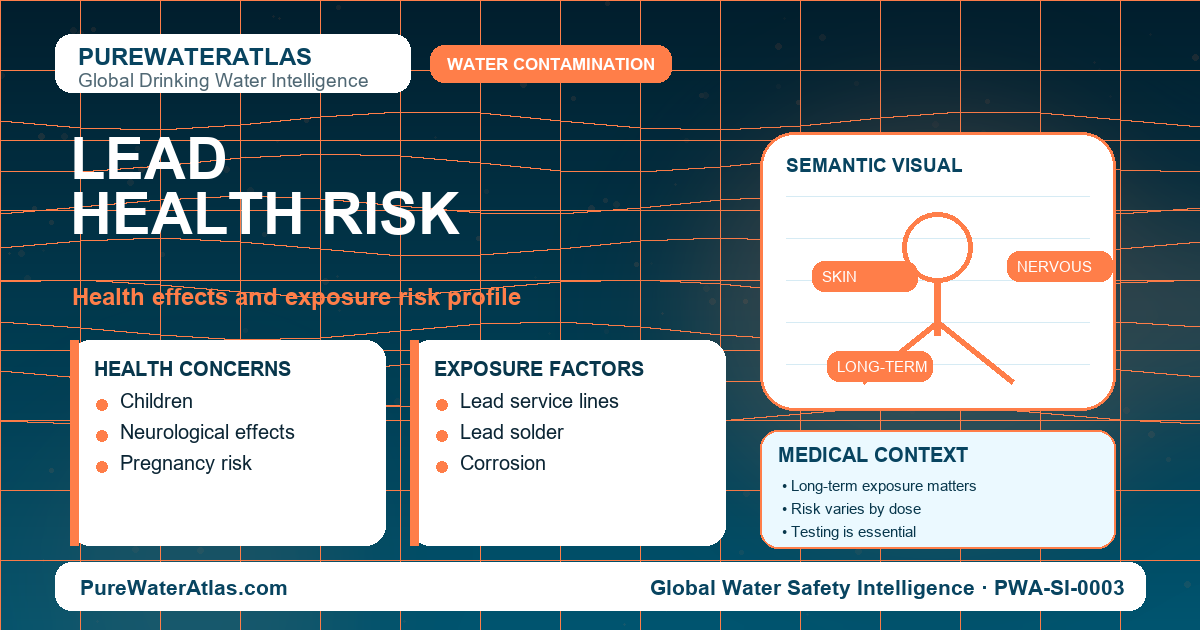
The most important issue surrounding lead contamination is toxicity. Lead can affect multiple organ systems, and the nervous system is particularly sensitive. The seriousness of lead in drinking water health effects depends on several factors, including the amount of lead consumed, the duration of exposure, the age and health status of the individual, and whether there are other sources of lead in the environment.
Lead exposure can be harmful even before symptoms become obvious. Many people with elevated lead levels do not notice immediate changes, which can delay action. This makes prevention and testing more important than relying on symptoms alone.
How Lead Affects the Body
Once lead enters the body, it can circulate in the blood and be deposited in soft tissues and bone. It interferes with enzymes, disrupts cellular processes, and can impair the development and function of the brain and nervous system. It may also affect blood formation, kidney function, cardiovascular health, and reproductive systems.
In adults, some lead is stored in bone and may be released later during pregnancy, lactation, aging, or conditions that increase bone turnover. This means past exposure can remain medically relevant long after the original source has been removed.
Lead in Drinking Water Symptoms
Lead in drinking water symptoms are often nonspecific. They may be subtle or mistaken for other health problems. Possible symptoms and signs associated with lead exposure can include:
- Fatigue or unusual tiredness
- Irritability or mood changes
- Headaches
- Difficulty concentrating
- Learning or behavior problems in children
- Abdominal pain or digestive discomfort
- Constipation
- Loss of appetite
- Muscle or joint pain
- Developmental delays in infants and young children
- Hearing or speech-related concerns in severe or prolonged cases
These symptoms are not unique to lead exposure, and some individuals may have no clear symptoms at all. That is why medical evaluation and blood lead testing are often necessary when exposure is suspected. A household should not assume water is safe simply because no one feels ill.
Lead in Drinking Water Long Term Risks
The lead in drinking water long term risks are especially significant because lead can build up in the body and affect critical systems over many years. Long-term exposure has been associated with:
- Reduced cognitive function and lower IQ in children
- Attention, behavior, and academic performance problems
- Delayed growth and development
- Hypertension and increased cardiovascular risk in adults
- Kidney damage or reduced kidney function
- Reproductive problems, including effects on fertility
- Pregnancy complications and fetal development concerns
- Persistent neurological effects from earlier-life exposure
Research over time has reinforced the view that there may be no harmless threshold for lead exposure, particularly in children. Even relatively low exposure levels can be associated with measurable developmental harm. This is why public health agencies generally emphasize minimizing exposure as much as possible rather than treating small amounts as negligible.
Lead in Drinking Water Vulnerable Groups
Some populations face higher risks and deserve special attention when considering lead in drinking water vulnerable groups. These include:
- Infants and young children: Their brains and nervous systems are still developing, and they absorb lead more readily than adults.
- Pregnant people and developing fetuses: Lead can cross the placenta, affecting fetal growth and neurological development.
- Formula-fed infants: If formula is mixed with contaminated tap water, exposure may increase substantially.
- People with nutritional deficiencies: Low intake of calcium, iron, and other nutrients can increase lead absorption.
- Residents of older homes: They may face multiple exposure sources, including old pipes, lead paint, and contaminated dust.
- People with kidney disease or certain chronic conditions: Existing health issues may increase medical vulnerability.
Schools, childcare centers, and apartment buildings also present special safety concerns because many individuals may share the same plumbing infrastructure. In such settings, one contamination problem can affect a large number of people, often including children.
Lead in Drinking Water Medical Concerns
Among the key lead in drinking water medical concerns is the fact that health effects may occur without immediate signs. Clinicians may consider environmental exposure when patients, especially children, show developmental delays, behavior changes, unexplained gastrointestinal complaints, or elevated blood pressure in the context of known risk factors. Blood lead testing remains the standard method for assessing recent or ongoing exposure in people.
Medical management depends on the blood lead level, age, symptoms, and source of exposure. The first priority is removing or reducing the source. Nutritional support, developmental monitoring, repeat testing, and environmental investigation may all be part of follow-up care. In cases of very high lead levels, specialized treatment such as chelation therapy may be considered under medical supervision, but this is not a substitute for eliminating exposure.
Testing and Detection
Because lead cannot be detected by the senses, testing is the only reliable way to determine whether water is contaminated. Effective testing starts with understanding that lead levels can vary by time, faucet, and sampling method. A single sample provides useful information, but it may not capture the full picture in every building.
Common approaches include:
- First-draw sampling: Water is collected after it has remained stagnant in plumbing for a period, often overnight. This helps identify lead leaching from indoor pipes and fixtures.
- Flush sampling: Water is collected after running the tap for a set time, which may help assess contamination from different parts of the plumbing system.
- Sequential sampling: Multiple samples are taken in sequence to help locate whether lead is coming from the faucet, interior pipes, or service line.
- Laboratory analysis: Certified laboratory testing provides the most dependable measurement of lead concentration.
Home test kits may offer screening value, but quality and accuracy vary. For health or regulatory decisions, laboratory-based testing is generally preferred. If elevated lead is found, additional testing at different taps and times may be recommended to clarify the source and extent of contamination.
When evaluating lead in drinking water exposure levels, it is important to interpret results carefully. A low result from one faucet does not guarantee all taps are safe. Likewise, a result below a regulatory threshold does not necessarily mean there is zero risk, especially for infants and pregnant people. Public health guidance typically aims to reduce lead exposure as much as practical.
Testing may be especially important when:
- The building was constructed decades ago
- Lead service lines are known or suspected
- Water has unusual corrosive characteristics
- Recent plumbing work or water main disturbance has occurred
- There are infants, children, or pregnant residents in the home
- Blood lead levels are elevated without another clear source
For more on sampling methods and interpretation, see lead in drinking water testing and detection methods.
Prevention and Treatment
Preventing exposure is the most effective response to lead in drinking water. Once lead enters the body, some damage may not be fully reversible, especially in children. For that reason, efforts should focus on reducing contact with contaminated water before health effects occur.
Household Prevention Strategies
- Identify plumbing materials: Determine whether the home has a lead service line, old solder, or lead-containing fixtures.
- Use certified filters: Filters certified for lead removal can significantly reduce exposure when properly installed and maintained.
- Flush taps strategically: Running cold water before use may reduce lead levels when water has been sitting in pipes, although flushing is not a permanent solution.
- Use cold water for drinking and cooking: Hot water can dissolve lead more readily. Water for infant formula, beverages, and cooking should come from the cold tap and then be heated if needed.
- Clean faucet aerators: Lead-containing particles can accumulate in screens and fixtures.
- Test water periodically: Especially after plumbing changes, nearby construction, or service line work.
Infrastructure Solutions
The most reliable long-term solution is removal and replacement of lead-containing plumbing materials. Full lead service line replacement is especially important. Partial replacement can sometimes disturb pipes and temporarily increase lead release, so professional planning and post-replacement precautions are needed. Corrosion control treatment at the water system level is also critical to stabilize pipes and minimize leaching.
Building-wide responses may include replacing fixtures, addressing stagnant plumbing sections, and implementing routine water management plans in schools, hospitals, and multifamily properties.
Medical Treatment and Follow-Up
If exposure has already occurred, treatment begins with medical evaluation and source control. Blood lead testing helps determine the level of concern and the need for follow-up. Physicians may recommend:
- Repeat blood lead testing over time
- Developmental screening for children
- Nutritional guidance, especially adequate iron and calcium intake
- Environmental assessment of home and water sources
- Referral to specialists when blood lead levels are high or symptoms are concerning
Severe cases may require chelation therapy, but this is reserved for specific situations and should only be managed by qualified healthcare professionals. It is not an all-purpose remedy, and it does not remove the need to eliminate the contamination source.
Common Misconceptions
Misunderstandings about lead in water can delay protective action. Several common myths deserve correction.
- “If the water looks clear, it is safe.” Lead is usually invisible, tasteless, and odorless.
- “Boiling water removes lead.” Boiling does not remove lead and may actually increase concentration as water evaporates.
- “Only very old homes are at risk.” Older buildings face greater risk, but newer fixtures or imported components can also contribute lead.
- “A small amount of lead is harmless.” Public health guidance increasingly recognizes that even low exposure can matter, especially for children.
- “If one test is low, the problem is solved.” Lead levels can fluctuate. Additional testing may still be appropriate.
- “Flushing always fixes the issue.” Flushing may reduce lead temporarily in some cases, but it does not replace pipe replacement or treatment improvements.
- “Only drinking water matters.” Cooking, preparing infant formula, making ice, and mixing beverages can also contribute exposure.
Correcting these misconceptions is essential for public education. Communities benefit when risk communication is transparent, practical, and based on current evidence rather than reassurance alone.
Regulations and Standards
Regulations for lead in drinking water are designed to reduce contamination, but standards vary by jurisdiction and may not always align perfectly with health-based goals. In many countries, drinking water systems must monitor lead and take corrective action if concentrations exceed specified limits or action levels. These standards often reflect both toxicological concerns and the practical realities of water treatment and infrastructure management.
In the United States, for example, lead is regulated under drinking water rules that focus heavily on corrosion control, public education, and service line management. Water systems may be required to sample tap water, optimize corrosion treatment, and replace lead service lines under certain conditions. However, because lead usually enters water from plumbing after treatment, compliance at the system level does not guarantee that every household tap is free from lead.
This distinction is important. Regulatory thresholds are tools for triggering action, not statements that lower levels are risk-free. From a health perspective, the goal is generally to reduce exposure to the lowest feasible level. That is particularly relevant for homes with pregnant residents, infants, or young children.
Standards may also apply to plumbing products. Over time, many jurisdictions have limited the amount of lead allowed in pipes, solder, and fixtures intended for drinking water systems. While these rules have reduced new sources of contamination, older infrastructure remains a major challenge in many communities.
Public notification, school testing programs, and funding for service line replacement have become increasingly important parts of modern lead risk management. Strong regulations help, but implementation, transparency, and infrastructure investment are what ultimately determine whether exposure falls.
Conclusion
Lead in drinking water is a preventable but serious public health issue. The most significant lead in drinking water health effects involve the brain, nervous system, kidneys, cardiovascular system, and development of children and fetuses. Because exposure can occur without obvious warning signs, waiting for symptoms is not a safe strategy. Understanding lead in drinking water symptoms, recognizing lead in drinking water vulnerable groups, and taking seriously the lead in drinking water long term risks can help households and communities respond before harm becomes more severe.
The most effective approach combines testing, source identification, corrosion control, filtration where appropriate, and replacement of lead-containing plumbing materials. Medical follow-up is also important when exposure is suspected, especially given the wide range of lead in drinking water medical concerns that may arise over time. Whether the issue is a single home, a school, or a citywide infrastructure problem, the goal remains the same: reduce lead in drinking water exposure levels as much as possible and protect health through informed action.
Continued public education, strong monitoring, and investment in safer water infrastructure are essential for lasting progress. With proper testing, clear communication, and preventive measures, communities can significantly lower risk and improve confidence in the safety of their drinking water.
Read the full guide: Water Contamination Guide
Explore more in this category: Water Contamination Articles