
Introduction
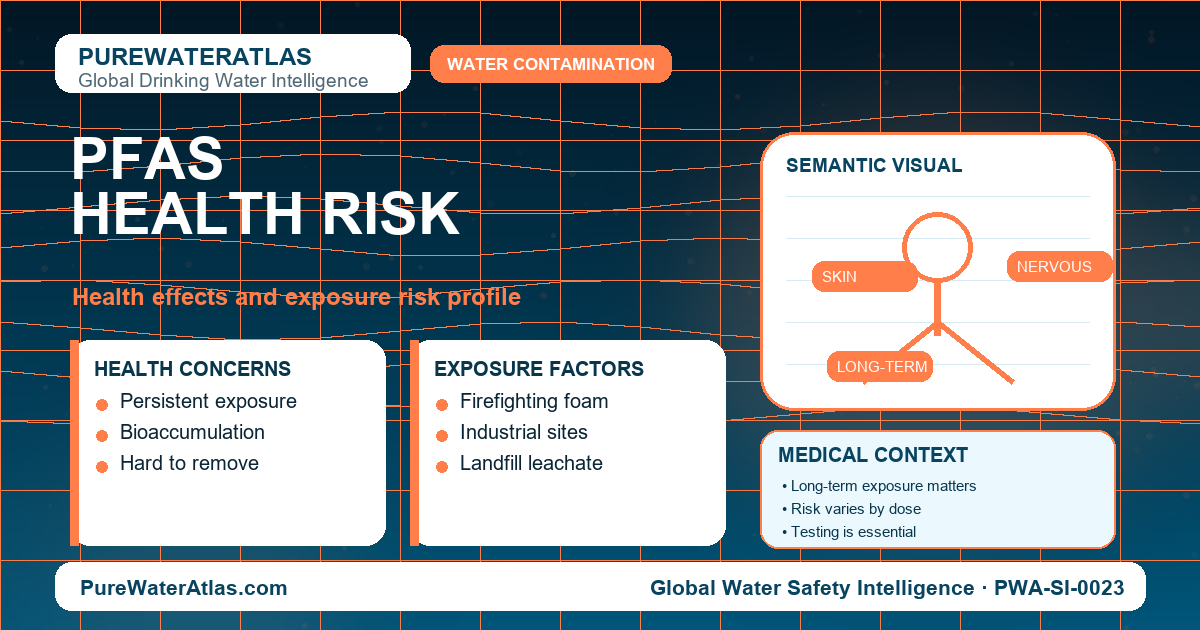
Concerns about pfas in drinking water health effects have grown rapidly as scientists, regulators, and communities learn more about how widespread these chemicals can be and how long they persist in the environment. PFAS, or per- and polyfluoroalkyl substances, are a large group of human-made chemicals used for decades in industrial processes and consumer products because of their resistance to heat, water, grease, and stains. That same resistance makes them useful in manufacturing, but it also makes them difficult to break down once they enter soil, rivers, groundwater, and public water supplies.
For many people, the issue feels complicated because PFAS are not a single chemical. They are a broad family that includes well-known compounds such as PFOA, PFOS, GenX chemicals, PFHxS, and PFNA, among others. Some have been phased out in certain countries, while others remain in use or are replaced by newer compounds that are still being studied. As a result, understanding health effects requires looking at both individual chemicals and PFAS as a category.
Public attention often focuses on contamination events near industrial sites, military bases, airports, landfills, and wastewater treatment facilities. However, PFAS can also affect smaller communities, private well owners, and households far from obvious industrial activity. Drinking water is only one possible exposure route, but it is one of the most important because water is consumed daily and contamination may continue for years before detection.
This article explains what PFAS are, how they enter water supplies, what is known about pfas in drinking water symptoms and disease associations, and why pfas in drinking water long term risks are a major public health concern. It also reviews pfas in drinking water exposure levels, testing methods, prevention strategies, treatment options, common misunderstandings, and the current regulatory landscape. For readers seeking broader background, resources such as water contamination and the complete guide to PFAS in drinking water can provide additional context.
What It Is
PFAS stands for per- and polyfluoroalkyl substances, a broad class of fluorinated chemicals characterized by very strong carbon-fluorine bonds. These bonds make PFAS highly stable. In environmental health discussions, PFAS are often called “forever chemicals” because many of them do not break down easily in nature. Instead, they can persist for long periods in water, soil, sediment, wildlife, and the human body.
PFAS have been used in products such as nonstick cookware, stain-resistant fabrics, food packaging, firefighting foams, metal plating solutions, and certain industrial processing aids. Their usefulness comes from their ability to repel water and oil, reduce friction, and withstand extreme conditions. Unfortunately, those same properties contribute to their environmental persistence and mobility.
When PFAS contaminate drinking water, exposure may occur through tap water used for drinking, cooking, making infant formula, preparing beverages, and in some cases through foods grown or prepared with contaminated water. The body can absorb some PFAS and retain them over time. Different PFAS have different half-lives in the human body, meaning some remain for years before levels decline significantly after exposure is reduced.
It is also important to understand that PFAS differ from microbial contaminants such as bacteria, viruses, or parasites. They are chemical contaminants, so their behavior, health impacts, and treatment methods are different from biological hazards often discussed in water microbiology. PFAS contamination is also distinct from traditional water chemistry concerns such as hardness or chlorine levels, though all of these topics fit under the broader umbrella of water science.
Scientists continue to investigate hundreds of PFAS compounds, but health data are much stronger for a smaller number of well-studied chemicals. Even so, research increasingly shows that concern is justified because low-level, chronic exposure can matter, and mixtures of multiple PFAS may create risks that are not captured by studying a single compound alone.
Main Causes or Sources
PFAS enter drinking water through several pathways, and the exact source often depends on local land use, industrial history, and waste disposal practices. In many contamination cases, PFAS have been released over years or decades before anyone realized a problem existed. Once released, they can move through the environment and contaminate surface water, groundwater, sediments, and eventually municipal or private water systems.
The most common sources include:
- Industrial facilities: Manufacturing plants that produce or use PFAS can discharge them into air, wastewater, or surrounding land. Over time, these releases may contaminate nearby rivers, lakes, and aquifers.
- Firefighting foam use: Aqueous film-forming foam, or AFFF, has historically contained significant levels of PFAS. It has been used extensively at airports, military bases, fuel storage facilities, and firefighter training grounds.
- Landfills: Consumer products and industrial waste containing PFAS can leach chemicals into landfill runoff and groundwater, especially if waste management systems are inadequate.
- Wastewater treatment plants: Standard treatment processes often do not fully remove PFAS. As a result, PFAS may remain in treated effluent or concentrate in biosolids applied to land.
- Contaminated soil and sediments: Historical releases can remain in soil for years. Rainwater and groundwater movement may gradually carry PFAS into wells and public water sources.
- Industrial pretreatment failures or illegal disposal: Poor handling of industrial waste can accelerate local contamination.
These pathways explain why PFAS problems are not limited to one type of community. Rural well owners may be affected by nearby biosolid application or an old landfill. Suburban residents may be exposed through a contaminated municipal supply. Urban systems may draw from rivers receiving industrial discharge far upstream.
Another challenge is that PFAS are often invisible and tasteless in water. Unlike contamination that changes color, odor, or taste, PFAS can go unnoticed without laboratory testing. This makes community awareness and routine monitoring especially important.
Readers who want a deeper look at source pathways can explore PFAS in drinking water causes and sources, which explains how contamination travels from industrial or commercial use into household taps.
Health and Safety Implications
The question most people ask first is whether exposure is dangerous. The answer from current science is that certain PFAS are associated with meaningful health concerns, especially when exposure is repeated over long periods. Research in humans and laboratory animals has linked some PFAS to a range of health outcomes, though the strength of evidence varies by chemical and by disease endpoint.
One reason this topic can be confusing is that pfas in drinking water symptoms are usually not immediate or specific. Unlike acute poisoning, PFAS exposure does not typically cause a clear set of short-term signs that make the problem obvious. Many people with elevated PFAS levels feel normal. Instead, concern centers on subtle biological effects and increased risks of certain conditions over time.
How PFAS Affect the Body
PFAS can be absorbed into the bloodstream and distributed through the body. Some compounds bind to proteins and may accumulate with continued exposure. Depending on the PFAS involved, they may affect liver function, lipid metabolism, immune signaling, endocrine activity, and developmental processes. Researchers are also studying how PFAS interact with cellular receptors and gene expression pathways.
Because exposure can begin before birth and continue throughout life, timing matters. Fetal development, infancy, childhood, and pregnancy are often considered critical windows of vulnerability.
Potential Health Effects Identified in Research
Studies of heavily exposed communities, workers, and the general population have associated certain PFAS with:
- Increased cholesterol levels
- Changes in liver enzymes
- Reduced immune response, including weaker vaccine response in some studies
- Higher risk of pregnancy-related hypertension or preeclampsia
- Lower birth weight in some exposure scenarios
- Thyroid disruption
- Kidney and testicular cancer associations for some well-studied PFAS
- Possible reproductive and developmental effects
These findings do not mean that every exposed person will develop disease. Rather, they indicate that exposure may raise risk at the population level or contribute to disease in susceptible individuals.
PFAS in Drinking Water Long Term Risks
The issue of pfas in drinking water long term risks is central because PFAS exposure often occurs at low levels but over many years. Chronic exposure raises concern for cumulative effects, especially when multiple PFAS are present together. Long-term risk assessment considers both concentration and duration. A lower concentration consumed for decades may still matter, particularly for chemicals with long biological half-lives.
Long-term risks may include ongoing burden on the liver, effects on lipid regulation, altered immune function, endocrine disruption, and increased lifetime risk for certain cancers or reproductive problems. In public health, this is important because the burden may not appear evenly across the population. Some people may be more sensitive due to age, genetics, preexisting illness, pregnancy, occupational exposure, or other environmental stressors.
PFAS in Drinking Water Vulnerable Groups
PFAS in drinking water vulnerable groups deserve special attention because the same exposure may not carry the same implications for everyone. Groups often considered at higher risk include:
- Pregnant people: Exposure may affect maternal health and fetal development.
- Infants: Formula prepared with contaminated water can lead to relatively high exposure per body weight.
- Children: Developing immune, hormonal, and organ systems may be more sensitive to chemical disruption.
- People with high water consumption: Athletes, outdoor workers, and individuals in hot climates may consume more contaminated water.
- People with occupational exposure: Firefighters, industrial workers, and others may face combined exposures from work and home environments.
- Residents near known contamination sites: Communities near military installations, airports, industrial plants, or landfills may experience higher exposure levels.
PFAS in Drinking Water Medical Concerns
When discussing pfas in drinking water medical concerns, it is important to separate established evidence from ongoing investigation. Clinicians may consider PFAS exposure history when evaluating liver abnormalities, thyroid issues, lipid changes, reproductive concerns, or unusual cancer patterns in highly exposed populations. However, there is currently no universal clinical syndrome that proves PFAS exposure in an individual patient. Blood tests can measure some PFAS in the body, but they do not predict exactly what disease a person will or will not develop.
Medical concern generally increases when exposure is known to be elevated, prolonged, or associated with a community contamination event. In such cases, healthcare providers may advise routine preventive care, attention to cholesterol and liver health, pregnancy counseling, and discussion of ways to reduce ongoing exposure.
Testing and Detection
Because PFAS cannot be seen or smelled, laboratory testing is the main way to determine whether drinking water is contaminated. Testing can be performed for public water systems, schools, businesses, and private wells. The process typically involves collecting carefully handled water samples and sending them to a qualified laboratory that uses sensitive analytical methods to measure specific PFAS compounds at very low concentrations.
PFAS in drinking water exposure levels are commonly reported in parts per trillion, abbreviated as ppt, or in nanograms per liter. These are extremely small amounts, which is one reason testing requires specialized equipment. Modern methods can detect PFAS at low concentrations that were difficult or impossible to measure in the past.
How Water Is Tested
Analytical testing often relies on advanced techniques such as liquid chromatography paired with mass spectrometry. Laboratories test for a panel of PFAS, though the exact list varies by method and regulatory requirements. Proper sampling is crucial because PFAS are present in many consumer and industrial materials, and contamination can accidentally occur during collection if protocols are not followed.
Key principles in sampling include:
- Using approved sample containers
- Avoiding clothing or materials treated with water-repellent chemicals
- Preventing contact with products that may contain fluorinated compounds
- Following chain-of-custody and preservation instructions
- Collecting representative samples from the correct point in the system
Interpreting Results
A test result must be interpreted in context. A concentration that triggers concern in one jurisdiction may differ from another depending on health advisories, enforceable limits, and which PFAS are included. In addition, some agencies evaluate mixtures of several PFAS rather than looking only at individual chemicals.
For households on public systems, annual water quality reports may not always include PFAS unless testing has been required or conducted voluntarily. Residents may need to consult utility notices, local health departments, or state environmental agencies. Private well owners are generally responsible for arranging their own testing, especially if they live near known contamination sources.
For more technical guidance, readers can review PFAS in drinking water testing and detection methods, which covers sampling practices, laboratory analysis, and result interpretation in greater detail.
Human Biomonitoring
In some cases, blood testing is used to measure PFAS in people. This is most often done in research studies, occupational health investigations, or community exposure assessments. While biomonitoring can confirm that exposure has occurred, it does not identify the exact source or directly predict disease outcomes for an individual. It is therefore a useful but limited tool.
Prevention and Treatment
Reducing PFAS exposure from drinking water requires action at both the system level and the household level. Prevention ideally begins upstream by controlling industrial releases, phasing out problematic uses, improving waste management, and monitoring vulnerable water sources. Once contamination is present, water treatment becomes essential.
Water Treatment Approaches
Not all treatment technologies remove PFAS effectively. Standard disinfection methods such as chlorine or ultraviolet treatment do not reliably solve PFAS contamination because these chemicals are highly stable. More effective options include:
- Granular activated carbon: Often effective for certain long-chain PFAS, though performance depends on water quality and filter maintenance.
- Ion exchange resins: Can remove a range of PFAS and may perform well in municipal or industrial systems.
- Reverse osmosis: One of the most effective household and point-of-use options for many PFAS, though it can waste water and requires maintenance.
- High-pressure membrane systems: Used in larger treatment settings for strong removal performance.
Treatment does not destroy PFAS in all cases; it often transfers them into a concentrated waste stream or spent media that must then be managed safely. Long-term solutions therefore require both removal and responsible disposal or destruction technologies.
What Households Can Do
If contamination is suspected or confirmed, households can take practical steps:
- Review local utility reports and public notices
- Test private wells if near potential PFAS sources
- Use a certified treatment device designed for PFAS reduction
- Follow maintenance and cartridge replacement schedules carefully
- Use treated or alternative water for drinking, cooking, and infant formula preparation when advised
- Stay informed through local health and environmental agencies
Medical Follow-Up
There is no specific antidote that removes PFAS from the human body quickly. Prevention of further exposure is the most important step. People with known high exposure may wish to discuss their situation with a healthcare professional, especially if they are pregnant, planning pregnancy, managing chronic disease, or caring for infants and children. Medical care generally focuses on risk reduction and routine monitoring rather than a PFAS-specific cure.
This may include regular preventive visits, attention to cholesterol, liver function, blood pressure, thyroid concerns, cancer screening according to established guidelines, and discussions of occupational or environmental exposure history.
Common Misconceptions
Public discussion around PFAS is often shaped by headlines, social media, and understandable anxiety. Several misconceptions can make the issue harder to understand clearly.
“If my water looks fine, it is safe.”
This is false. PFAS usually do not change the color, smell, or taste of water. Clear water can still contain concerning PFAS concentrations.
“Boiling water removes PFAS.”
Boiling is not a reliable treatment for PFAS. In fact, boiling may slightly concentrate contaminants if water evaporates while PFAS remain behind. It is useful for microbial safety, not for persistent fluorinated chemicals.
“All PFAS are the same.”
PFAS are a broad family, and different compounds behave differently in the environment and the human body. However, this does not mean newer or less studied PFAS are automatically safe. Sometimes they are simply less researched.
“Only people near factories are exposed.”
Industrial areas are major concern zones, but contamination can also reach communities near airports, military sites, landfills, wastewater discharge areas, or agricultural lands treated with contaminated biosolids.
“A low level means no risk at all.”
Risk is not always an all-or-nothing issue. For PFAS, very low concentrations can still matter, especially with lifelong exposure, mixture effects, or exposure during sensitive developmental periods.
“Blood testing tells me exactly what will happen to my health.”
Blood tests can indicate past or ongoing exposure to certain PFAS, but they do not provide a simple prediction of future illness. Health outcomes depend on many factors, including exposure history, age, genetics, lifestyle, and other environmental influences.
Regulations and Standards
PFAS regulation is evolving quickly, and standards vary by country, state, and agency. Historically, the regulatory framework lagged behind scientific understanding because PFAS testing was technically demanding, toxicology data were incomplete, and thousands of related chemicals existed with uneven evidence bases. That is changing as governments respond to stronger evidence and public demand for action.
Regulatory approaches typically include some combination of:
- Health advisory levels for drinking water
- Enforceable maximum contaminant levels for specific PFAS
- Monitoring requirements for public water systems
- Industrial discharge controls
- Cleanup standards for contaminated sites
- Product restrictions or phaseouts for certain uses
One challenge is that standards may target only a small subset of PFAS, while many others remain unregulated or under review. Another challenge is that toxicology continues to develop, so recommended limits may become stricter as evidence improves. Communities sometimes find that water once considered acceptable later exceeds new health-based guidance.
From a public health perspective, regulations serve several purposes. They trigger monitoring, require treatment, define cleanup obligations, and provide a basis for enforcement. But regulations are not the same as complete safety. They are policy tools built on the best available science, practical feasibility, and evolving risk assessment methods.
Consumers should therefore pay attention not only to whether their water system meets current legal standards, but also to whether local PFAS monitoring is comprehensive and transparent. Communities with known contamination may benefit from expanded testing, source investigation, remediation planning, and communication from health authorities.
Conclusion
PFAS contamination has become one of the most important modern water quality issues because it combines persistence, widespread use, difficult cleanup, and credible evidence of health risk. The science surrounding pfas in drinking water health effects shows that concern is justified, especially where exposure is repeated over long periods or affects sensitive populations such as pregnant people, infants, and children.
Although pfas in drinking water symptoms are often not obvious, the broader picture includes meaningful concerns about cholesterol, liver function, immune effects, reproductive health, developmental outcomes, and certain cancers for some PFAS. Understanding pfas in drinking water long term risks requires attention to cumulative exposure, mixture effects, and vulnerable life stages rather than only short-term illness.
The most effective response combines source control, routine monitoring, reliable testing, transparent public communication, and treatment technologies that actually remove PFAS. Individuals can reduce risk by learning whether their water has been tested, understanding local contamination history, and using proven treatment systems where needed. Communities benefit when regulators, utilities, scientists, and healthcare professionals work together to identify contamination early and reduce ongoing exposure.
As knowledge expands, one message is already clear: PFAS in drinking water are not a minor or temporary issue. They are a long-term environmental health challenge that requires informed decisions, careful science, and sustained public action.
Read the full guide: Water Contamination Guide
Explore more in this category: Water Contamination Articles