
Introduction
Concerns about heavy metals in drinking water health effects have grown as more households, schools, and communities learn that water can carry contaminants that are invisible, tasteless, and odorless. While drinking water is often assumed to be safe when it appears clear, some of the most important hazards cannot be detected without proper testing. Heavy metals are among the best-known examples because even low levels of certain metals may affect human health over time, and higher levels can create urgent medical and public health concerns.
Heavy metals can enter drinking water from natural geological sources, industrial activity, mining, corrosion of plumbing materials, agricultural runoff, and failures in water treatment or distribution systems. Once present in water, they may be consumed, used in cooking, or contribute to exposure through infant formula preparation and other household uses. The risk depends on the specific metal, the concentration, how long exposure continues, and who is exposed.
This article explains what heavy metals are, where they come from, how exposure happens, and why health professionals take them seriously. It also reviews heavy metals in drinking water symptoms, heavy metals in drinking water long term risks, common testing methods, prevention strategies, and major standards used to protect public health. Readers looking for broader background on contamination can also explore water contamination resources and a broader complete guide to heavy metals in drinking water.
What It Is
In water quality discussions, the term “heavy metals” generally refers to metallic elements that can be toxic to humans at certain exposure levels. Not all metals are equally dangerous, and not all are harmful at every concentration. Some metals, such as iron, zinc, copper, manganese, and selenium, may play biological roles in small amounts but become harmful when levels rise too high. Others, such as lead, arsenic, cadmium, and mercury, are of much greater concern because they can cause toxic effects even at relatively low concentrations or with chronic exposure.
When discussing heavy metals in drinking water exposure levels, it is important to distinguish between:
- Acute exposure, where a person drinks water with a high concentration over a short period
- Chronic exposure, where lower concentrations are consumed repeatedly over months or years
- Point-of-use contamination, where contamination occurs at a faucet or in household plumbing
- Source contamination, where the water source itself contains the metal
Common heavy metals and metalloids of concern in drinking water include:
- Lead – often linked to old pipes, solder, and fixtures
- Arsenic – frequently associated with groundwater and natural rock formations, but also industrial and agricultural contamination
- Cadmium – linked to industrial waste, batteries, and corrosion of galvanized pipes in some settings
- Mercury – associated with industrial discharges and environmental deposition
- Chromium – especially hexavalent chromium in industrial contamination contexts
- Copper – commonly from household plumbing corrosion
- Manganese – often naturally present in groundwater and of concern at elevated levels
- Nickel – can enter water from natural deposits or industrial activities
Heavy metals may be dissolved in water, attached to particles, or present in forms that change depending on pH, oxygen levels, temperature, and water chemistry. This is one reason testing and treatment are technical issues: the behavior of a metal in water affects both its toxicity and how easily it can be removed.
Understanding heavy metals also requires recognizing that “safe” is not a simple yes-or-no category. For some contaminants, health agencies establish maximum allowable levels based on current evidence, treatment feasibility, and risk modeling. For others, especially lead, the ideal health-based target is essentially as low as possible because no amount is considered beneficial.
Main Causes or Sources
Heavy metals reach drinking water through a combination of natural and human-made pathways. In some areas, contamination begins underground before water is even pumped to the surface. In others, treated water leaves the utility in good condition but picks up metals while moving through aging infrastructure. More detail on these pathways can be found in this guide to causes and sources of heavy metals in drinking water.
Natural Geological Sources
Many aquifers pass through rock and soil that naturally contain arsenic, manganese, iron, uranium-associated metals, and other elements. As groundwater interacts with these materials, metals can dissolve into the water. This process may be slow and entirely natural, but it still creates a health risk when concentrations exceed recommended levels.
Arsenic is one of the best-known examples. In some regions, wells tapping deep groundwater have elevated arsenic because local geology releases it into the water over time. Manganese can behave similarly, especially in low-oxygen groundwater conditions.
Corrosion of Plumbing Materials
In many homes and buildings, the most important source of heavy metals is not the lake, reservoir, or aquifer, but the plumbing itself. Lead service lines, lead-containing solder, brass fixtures, and copper pipes can all release metals into water, especially when:
- The water is corrosive
- pH is low
- Water sits stagnant in pipes for long periods
- Corrosion control treatment is inadequate
- Plumbing systems are old or damaged
This is why first-draw water from a tap after overnight stagnation may show higher metal levels than flushed water. Copper and lead are especially associated with household plumbing contamination.
Industrial Activity and Waste Disposal
Factories, metal plating facilities, mining operations, smelters, tanneries, battery production sites, and chemical manufacturing plants can release metals into soil and water if waste handling is poor or environmental controls fail. Metals may then migrate into rivers, lakes, or groundwater supplies used for drinking water.
Industrial contamination can involve cadmium, chromium, nickel, lead, mercury, and arsenic, among others. Even when direct discharge is regulated, legacy contamination from older industrial sites may continue to affect water decades later.
Mining and Smelting
Mining disturbs ore-bearing rock and can expose sulfide minerals that generate acidic drainage. This can mobilize lead, cadmium, arsenic, mercury, and other metals into nearby water systems. Abandoned mines can remain pollution sources for long periods if not properly remediated.
Agricultural Inputs
Agriculture is more commonly associated with nutrients and pesticides, but heavy metals can also be introduced through certain fertilizers, biosolids, animal wastes, and historical pesticide use. In some regions, these inputs contribute to accumulation in soils and eventual runoff or leaching into water sources.
Improper Disposal of Consumer and Electronic Waste
Batteries, electronics, fluorescent bulbs, paints, and some industrial products contain metals. When these materials are dumped illegally or disposed of improperly, metals can enter landfills, leach into surrounding environments, and eventually affect surface or groundwater.
Distribution System Failures
Even a well-operated utility can face contamination risks when there are changes in source water, treatment chemistry, pipe disturbances, construction, or loss of corrosion control. Disturbances can release built-up scale and sediments from pipes, increasing metal concentrations at the tap.
Understanding these source patterns is part of the broader science of drinking water quality, and readers interested in foundational concepts can review additional material in water science.
Health and Safety Implications
The public health significance of heavy metals depends on toxicity, dose, duration, age, nutritional status, and underlying medical conditions. Some people may have no immediate signs of exposure, while others develop subtle or severe illness. This makes heavy metals in drinking water medical concerns especially important: exposure may go unrecognized unless clinicians ask about water sources and environmental history.
General Mechanisms of Harm
Heavy metals can damage health through several pathways:
- Interfering with enzymes and essential cellular processes
- Causing oxidative stress and inflammation
- Damaging the nervous system
- Injuring kidneys and liver
- Affecting blood formation and circulation
- Disrupting bone metabolism
- Increasing cancer risk for certain metals and forms of exposure
- Impeding growth and development in children
Lead
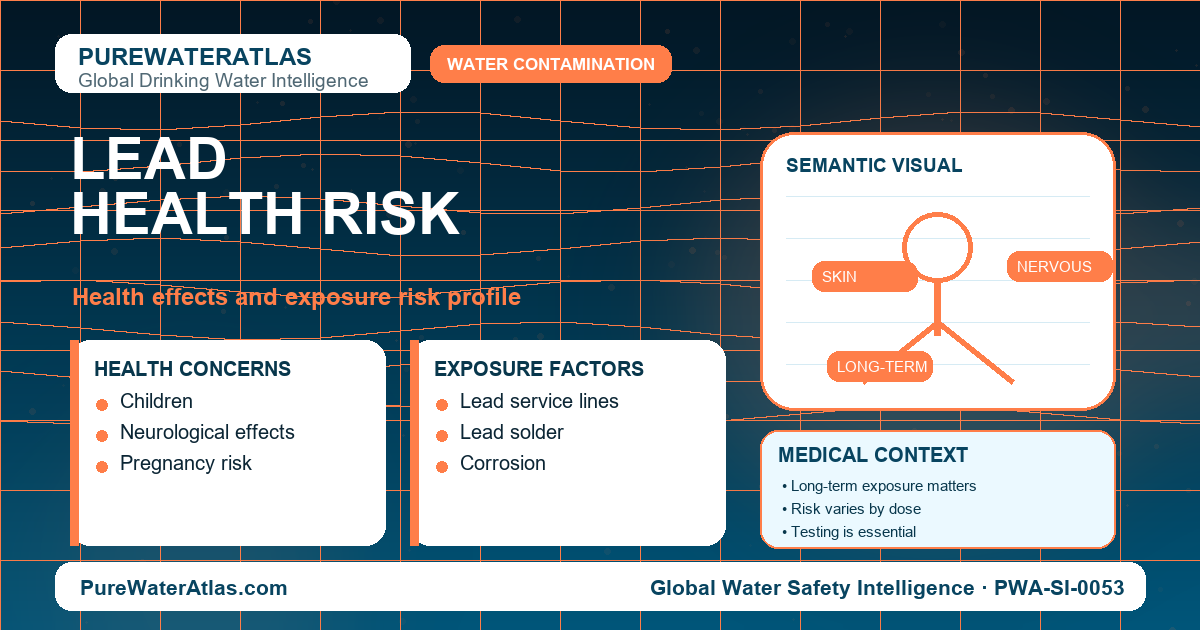
Lead is one of the most serious drinking water contaminants because it is a potent neurotoxin. Children are particularly vulnerable. Even relatively low exposure can impair learning, attention, behavior, and overall neurodevelopment. In adults, lead exposure may contribute to hypertension, kidney damage, reproductive problems, and neurological effects. Pregnant people exposed to lead may also place the developing fetus at risk.
One of the challenges with lead is that heavy metals in drinking water symptoms may not be obvious early on. Chronic low-level exposure can produce developmental and cognitive harm without dramatic immediate signs.
Arsenic
Arsenic exposure through drinking water is a major global health issue. Long-term ingestion has been associated with skin changes, cardiovascular disease, diabetes-related concerns, nerve effects, and increased risks of cancers involving the skin, bladder, lung, kidney, and possibly other organs. Arsenic toxicity may develop gradually, making chronic exposure difficult to detect without testing.
Cadmium
Cadmium tends to accumulate in the body, especially in the kidneys. Long-term exposure has been linked to kidney dysfunction, bone demineralization, and increased fracture risk. At higher levels, it may also affect the digestive system and overall metabolic health.
Mercury
Mercury is widely recognized for neurological toxicity. The exact risk from drinking water depends on the form of mercury present, but exposure can affect the nervous system and kidneys. Developing fetuses and young children are of greatest concern because their nervous systems are still forming.
Chromium
Chromium exists in different forms, and toxicity depends heavily on which form is present. Hexavalent chromium is the form most associated with industrial contamination and toxic concern. Potential health effects include irritation, organ toxicity, and possible carcinogenic risks with sustained exposure.
Copper and Manganese
Copper is an essential nutrient but can cause problems at elevated concentrations. Short-term exposure may cause gastrointestinal symptoms such as nausea, vomiting, abdominal pain, and diarrhea. Long-term exposure at high levels can contribute to liver or kidney effects in susceptible individuals.
Manganese is also essential in small amounts, but excessive exposure has raised concern for neurological effects, particularly in infants and children. Its presence in groundwater is often overlooked because attention tends to focus on more famous contaminants such as lead and arsenic.
Symptoms of Exposure
Heavy metals in drinking water symptoms vary widely by metal, concentration, and duration. Possible symptoms can include:
- Headaches
- Fatigue or weakness
- Nausea, vomiting, or stomach pain
- Diarrhea
- Numbness or tingling
- Memory, attention, or learning difficulties
- Behavioral changes
- Kidney-related abnormalities
- High blood pressure
- Skin changes in chronic arsenic exposure
- Developmental delays in children
These symptoms are not specific to heavy metals, which means they can be mistaken for many other illnesses. That is why clinicians often rely on a combination of exposure history, water testing, and medical laboratory testing when evaluating possible cases.
Long-Term Risks
Heavy metals in drinking water long term risks are often more important than immediate symptoms because chronic exposure can continue silently for years. Potential long-term outcomes include:
- Reduced cognitive function and learning problems
- Permanent developmental effects in children
- Kidney disease
- Liver injury
- Cardiovascular effects, including elevated blood pressure
- Bone loss and skeletal weakness
- Reproductive and pregnancy-related complications
- Neurological damage
- Elevated cancer risk for specific contaminants such as arsenic
Vulnerable Groups
Heavy metals in drinking water vulnerable groups include people whose bodies are still developing, who have preexisting illnesses, or who consume proportionally more water relative to body size. These groups include:
- Infants – especially when formula is prepared with contaminated water
- Children – because of rapid brain and body development
- Pregnant people – due to potential fetal exposure
- Older adults – who may be more susceptible to organ stress
- People with kidney or liver disease – because these organs help process and eliminate toxins
- People with nutritional deficiencies – for example, deficiencies in iron or calcium may increase uptake of some metals such as lead
Water safety also intersects with microbiological quality. In some settings, households focus on one hazard while overlooking another, so it is useful to understand how chemical and biological risks differ. Additional background is available in water microbiology resources.
Testing and Detection
Because heavy metals are usually invisible and may not alter taste or smell, testing is the only reliable way to confirm contamination. Proper detection is essential for both households and public water systems. For a more technical review, see testing and detection methods for heavy metals in drinking water.
When Testing Is Especially Important
- If a home uses a private well
- If the building has old plumbing or possible lead service lines
- If there is nearby mining, industrial activity, or waste disposal
- If local geology is known for arsenic or manganese
- If a household includes infants, children, or pregnant people
- If water discoloration or plumbing corrosion is noticed
- If a community has experienced treatment or infrastructure changes
Types of Testing
Testing can occur at several levels:
- Utility monitoring – public water systems perform routine compliance testing under regulatory requirements
- Household tap testing – used to assess plumbing-related contamination such as lead or copper
- Private well testing – essential because private wells are often not regulated like municipal systems
- Clinical biomonitoring – blood, urine, or other medical tests may be used when exposure is suspected
Sample Collection Matters
Accurate results depend on how the sample is collected. For example, first-draw samples may be recommended when evaluating lead from household plumbing, while flushed samples can help distinguish plumbing contamination from source contamination. Laboratories may test for total metals, dissolved metals, or specific chemical forms.
Laboratory Methods
Modern labs commonly use advanced analytical methods such as:
- Inductively coupled plasma mass spectrometry
- Atomic absorption spectroscopy
- Inductively coupled plasma optical emission spectrometry
These methods can detect metals at very low concentrations. Home test kits may offer screening value in some situations, but they are generally less definitive than certified laboratory analysis.
Interpreting Exposure Levels
Heavy metals in drinking water exposure levels should be interpreted against applicable regulatory standards, health advisories, and clinical context. A result that exceeds a legal limit warrants action, but even levels below formal limits can matter in highly vulnerable groups, particularly for lead. Interpretation should consider:
- The exact metal detected
- The measured concentration
- Whether exposure is occasional or ongoing
- The age and health status of exposed individuals
- Whether the contamination is coming from the source or household plumbing
Prevention and Treatment
Preventing exposure is more effective than trying to reverse harm after it occurs. Once heavy metal contamination is identified, the response should address both immediate risk reduction and long-term source control.
Source Control
The most protective strategy is to remove or reduce the contamination source. This may involve:
- Replacing lead service lines and lead-containing plumbing
- Improving corrosion control treatment
- Cleaning up industrial or mining contamination
- Changing water sources
- Installing centralized treatment at utilities
- Managing waste and industrial discharge more effectively
Household Risk Reduction
Households can lower exposure by taking practical steps, especially while waiting for permanent solutions:
- Use certified filters designed for the specific metal of concern
- Flush taps after water has been sitting in pipes
- Use cold water for drinking and cooking, since hot water may dissolve metals more readily from plumbing
- Clean faucet aerators regularly
- Test water periodically, particularly after plumbing changes
- Use alternative water sources for infant formula if contamination is confirmed
It is important to note that not all filters remove all metals. Consumers should verify certification for contaminants such as lead, arsenic, or chromium, depending on the local concern.
Water Treatment Technologies
Treatment effectiveness depends on the metal and its chemical form. Common options include:
- Reverse osmosis – highly effective for many dissolved metals
- Ion exchange – useful for certain metals under appropriate conditions
- Activated alumina – often used for arsenic and some other contaminants
- Distillation – can remove many inorganic contaminants
- Adsorptive media – specialized materials that bind target metals
- Chemical precipitation and coagulation – more common in large-scale treatment systems
Medical Evaluation and Treatment
If exposure is suspected, especially in children or pregnant people, medical consultation is important. Heavy metals in drinking water medical concerns may require both environmental intervention and clinical follow-up. A healthcare provider may recommend:
- Blood lead testing or other biomonitoring
- Kidney and liver function assessment
- Developmental evaluation for children
- Nutritional support, since adequate iron and calcium may reduce uptake of some metals
- Referral to specialists in toxicology, pediatrics, nephrology, or occupational/environmental medicine
In severe poisoning cases, chelation therapy may be considered for specific metals and under strict medical supervision. However, chelation is not a substitute for removing the exposure source and is not appropriate for every metal or every exposure level.
Common Misconceptions
If Water Looks Clean, It Is Safe
This is false. Many dangerous metals are colorless, odorless, and tasteless at harmful concentrations. Visual inspection cannot confirm safety.
Boiling Removes Heavy Metals
Boiling is useful for many microbial hazards, but it does not remove heavy metals. In fact, boiling may slightly concentrate metals as water evaporates.
Only Industrial Areas Have Heavy Metal Problems
Industrial activity is important, but rural areas can also have serious heavy metal issues due to natural geology, private wells, mining legacy sites, or old plumbing.
Municipal Water Problems Are Always Source Problems
Not necessarily. Water may leave a treatment plant meeting standards and then pick up lead or copper from household plumbing or service lines before reaching the tap.
Low-Level Exposure Is Never Important
For some contaminants, especially lead, low-level exposure can still have meaningful health consequences, particularly in children.
Home Filters Automatically Solve the Problem
Only certain filters are certified for specific metals. A filter that improves taste or removes chlorine may do little for arsenic, lead, or cadmium.
Regulations and Standards
Drinking water regulations aim to reduce population-level risk by setting enforceable limits, treatment requirements, and monitoring rules. Standards vary by country, but the overall principles are similar: identify contaminants of concern, estimate health risks, establish limits, require testing, and mandate corrective action when standards are exceeded.
Maximum Contaminant Levels and Action Levels
Regulatory systems may use different categories of limits:
- Maximum contaminant levels for contaminants in finished drinking water
- Action levels that trigger treatment or infrastructure response, as with lead and copper programs in some jurisdictions
- Health advisories or guideline values for contaminants under review or where enforceable standards differ
Why Standards Are Not the Same as Zero Risk
A common misunderstanding is that meeting a regulatory standard means zero health risk. In reality, standards are public health tools based on toxicology, epidemiology, analytical capability, treatment feasibility, and policy choices. They are designed to lower risk substantially, but they do not always reflect a completely risk-free threshold for every individual.
Public Water Systems vs. Private Wells
Public systems are usually subject to routine monitoring and reporting requirements. Private wells, however, often fall outside the same regulatory structure, meaning the well owner is responsible for testing and maintenance. This creates a significant gap in protection, especially in areas with naturally occurring arsenic or aging rural infrastructure.
Consumer Information
In many regions, public water suppliers provide annual water quality reports or similar disclosures. These reports can help residents understand detected contaminants, treatment processes, and compliance status. However, they may not fully capture tap-specific issues caused by household plumbing, so additional home testing can still be necessary.
Conclusion
Heavy metals in drinking water are a serious environmental health issue because exposure may occur silently, persist for years, and cause harm before contamination is recognized. The most important message is that appearance alone cannot determine safety. Understanding heavy metals in drinking water health effects requires attention to source, concentration, duration, and the vulnerability of the people exposed.
Lead, arsenic, cadmium, mercury, chromium, copper, manganese, and other metals each present different toxicological profiles, but all deserve careful evaluation when found in drinking water. The potential outcomes range from gastrointestinal irritation and kidney stress to neurological injury, developmental delays, cardiovascular impacts, and increased cancer risk. These heavy metals in drinking water long term risks are especially significant for infants, children, pregnant people, older adults, and individuals with existing health conditions.
Fortunately, risks can be reduced through proper testing, accurate interpretation of heavy metals in drinking water exposure levels, source control, certified treatment technologies, and timely medical follow-up when needed. Whether water comes from a public utility or a private well, informed monitoring and prevention are essential. Strong regulation, sound infrastructure, and public education remain the foundation of safer drinking water for everyone.
Read the full guide: Water Contamination Guide
Explore more in this category: Water Contamination Articles