Introduction
Choosing among the many activated carbon water filters best filters on the market can feel overwhelming, especially when marketing claims, certification labels, and treatment technologies all seem to overlap. Activated carbon filtration is one of the most widely used and well-established approaches in water treatment because it can improve taste, reduce odors, and remove or lower many organic chemicals and disinfectant byproducts. It is used in pitcher filters, faucet-mounted devices, under-sink units, refrigerator cartridges, whole-house systems, and as a polishing stage in advanced treatment setups.
At the same time, activated carbon is not a universal solution for every water quality problem. It does not solve all contamination issues, and its performance depends heavily on carbon type, contact time, flow rate, contaminant type, and maintenance. That is why homeowners, facility managers, and anyone interested in better water quality should understand what activated carbon does well, where it has limits, and how to compare systems intelligently.
This article explains how activated carbon filters work, what contaminants they are designed to address, how they compare with other technologies, and how to choose and maintain the right system. If you want a broader overview of treatment options, see water purification. For a deeper technical foundation, the resource on activated carbon water filters complete guide is also useful.
What It Is
Activated carbon is a highly porous form of carbon processed to create an enormous internal surface area. That surface area gives the material its treatment power. Instead of acting like a simple screen that blocks particles by size, activated carbon primarily works through adsorption, a process in which dissolved compounds adhere to the carbon surface. This makes it especially effective for many organic chemicals, chlorine, chloramine in certain specialized formulations, and compounds that affect taste and odor.
In practical terms, activated carbon water filters carbon filters are systems that pass water through granular activated carbon, carbon block media, or catalytic carbon. Each format behaves a little differently:
- Granular activated carbon (GAC) uses loose granules and is common in larger tanks, whole-house systems, and some cartridges.
- Carbon block filters compress fine carbon particles into a dense block, often providing more consistent contact and better reduction of particulates and certain chemicals.
- Catalytic carbon is a modified form designed to improve performance for contaminants such as chloramine and some sulfur-related compounds.
Source materials can include coconut shell, coal, wood, or other carbon-rich feedstocks. The raw material and activation method affect pore structure, hardness, and contaminant affinity. For example, coconut shell carbon is often valued for micropore volume, while other media may be selected for broader pore distribution.
Activated carbon systems may be installed as:
- Pitcher or countertop filters for convenience
- Faucet-mounted filters for point-of-use treatment
- Under-sink cartridges for drinking and cooking water
- Reverse osmosis prefilters and postfilters
- Whole-house tanks for chlorine, taste, and odor control
Some products combine carbon with sediment filtration, ion exchange, ultraviolet disinfection, ultrafiltration, or membrane treatment. In many homes, carbon is not the only treatment stage, but it is the stage that most directly improves aesthetic water quality.
Main Causes or Sources
Activated carbon filters are usually selected in response to common water quality issues rather than a single contaminant source. These issues can originate in source water, treatment processes, plumbing materials, or environmental pollution. Understanding the source helps determine whether carbon alone is appropriate.
One of the most common reasons people buy carbon filtration is the presence of chlorine or a chemical taste in municipal water. Public utilities add disinfectants to control pathogens, but those disinfectants can leave water with an undesirable taste or smell. Carbon is especially effective at reducing free chlorine, which is why even small countertop filters can make tap water noticeably more pleasant.
Another major source category is volatile organic compounds and other synthetic chemicals. These may come from:
- Industrial discharges
- Agricultural runoff
- Fuel leaks and spills
- Household chemical disposal
- Stormwater contamination
Compounds such as benzene, toluene, certain pesticides, herbicides, and some solvents may be reduced by properly designed activated carbon systems. However, removal varies widely by compound, concentration, and filter design.
Disinfection byproducts are another reason activated carbon is used. When disinfectants react with natural organic matter in source water, compounds such as trihalomethanes and haloacetic acids can form. Carbon can reduce many of these byproducts, especially with adequate contact time and appropriate media.
Taste and odor problems can also arise from naturally occurring organic matter, algal metabolites, sulfur compounds, or stagnation in plumbing. Carbon is often chosen because it addresses the compounds consumers notice most immediately, even when the issue is more aesthetic than hazardous.
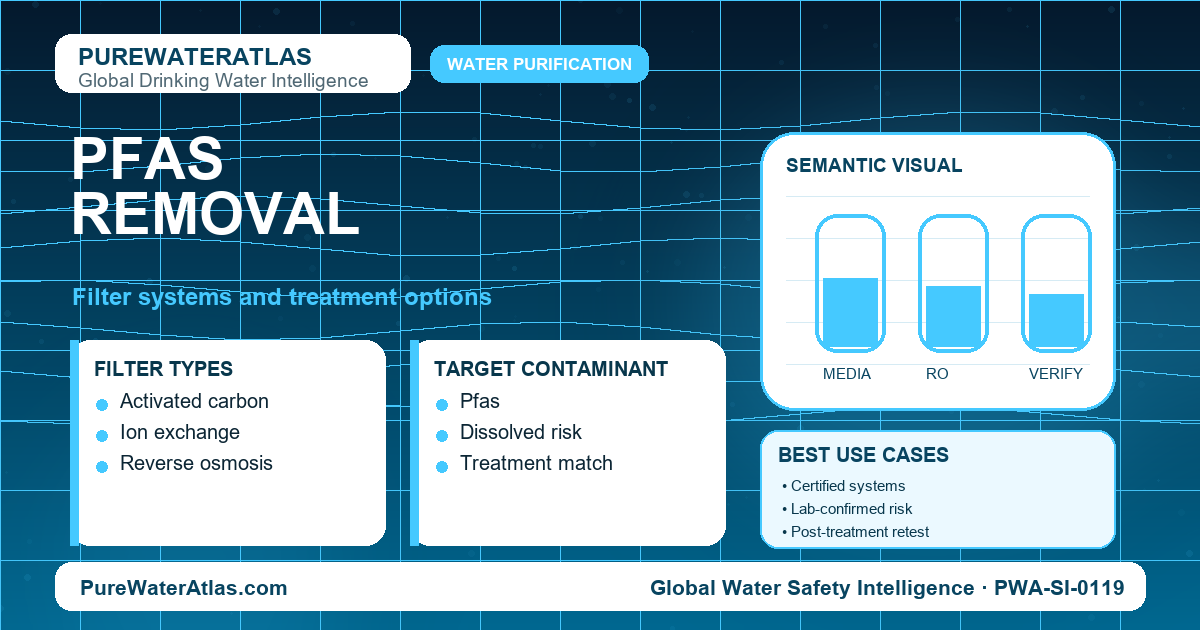
In some cases, people consider activated carbon because they have read about PFAS, lead, pharmaceuticals, or emerging contaminants. Carbon can help with certain substances in those categories, but not all filters are equal and not every product is certified for them. This is where careful product-specific review matters. More discussion of contamination origins is available at causes and sources, and foundational background on source water processes can be found in water science.
It is equally important to note what activated carbon is not primarily designed to treat. It is generally not the first-choice solution for:
- Dissolved salts and high total dissolved solids
- Nitrate and nitrite
- Hardness minerals
- Most heavy metals without special media or certification
- Microbiological contamination as a standalone barrier
Those limitations are critical because a filter chosen for the wrong source problem can create false confidence without delivering meaningful risk reduction.
Health and Safety Implications
Activated carbon filtration matters because water quality affects both consumer confidence and, in some cases, human health. Some contaminants addressed by carbon are mainly aesthetic, such as chlorine taste and odor. Others, including certain organic chemicals and disinfection byproducts, may be relevant to long-term exposure concerns. The value of activated carbon lies in reducing exposure to selected contaminants while improving usability and acceptance of drinking water.
For many households, the most immediate impact is behavioral: better-tasting water can encourage greater consumption of tap water instead of sugary beverages or expensive bottled water. That is a practical public health benefit, even when the contaminants reduced are not acutely dangerous.
From a toxicological standpoint, activated carbon can be helpful where water contains compounds associated with liver, kidney, neurological, reproductive, or carcinogenic concerns, depending on the contaminant. Examples may include:
- Certain volatile organic compounds
- Some pesticides and herbicides
- Some industrial solvents
- Selected disinfection byproducts
However, the phrase “can reduce” is important. A carbon filter only provides meaningful health protection if it has sufficient capacity, the right media, proper flow conditions, and timely cartridge replacement. A poorly matched or exhausted filter may show little benefit.
There are also safety limitations to understand. Activated carbon by itself is not considered a reliable primary disinfection technology. It may remove chlorine that originally protected water from microbial regrowth in plumbing, and if maintenance is neglected, wet filter media can become a location where microorganisms accumulate. This does not mean carbon filters are unsafe by default, but it does mean proper installation and maintenance are essential, especially in systems with low use or warm conditions.
Another concern is overreliance. If a home has lead, arsenic, nitrate, bacterial contamination, or severe well water issues, a standard carbon filter may not adequately solve the problem. That is why contamination-specific testing is more important than choosing a filter based on general popularity.
People with private wells should be especially careful. Municipal systems are regulated and monitored, but private well owners are responsible for testing and treatment decisions. Carbon may be part of a treatment train, yet wells often require additional safeguards for microbes, iron, manganese, sulfur, or nitrate.
For more on exposure concerns and treatment relevance, the section on health effects and risks offers additional context. Information on microbial issues is also related to water microbiology.
Testing and Detection
The best approach to selecting an activated carbon filter starts with testing rather than assumptions. Water can look clear and still contain contaminants, or it can taste unpleasant for reasons that are mainly aesthetic rather than dangerous. Testing distinguishes between those possibilities.
For municipal water, the first step is to review the utility’s annual water quality report. This report can identify disinfectants used, regulated contaminants detected, and source water information. It may indicate whether chlorine or chloramine is present, which matters because standard carbon handles free chlorine more easily than chloramine.
For both city and well water, home or laboratory testing may be useful when there are specific concerns such as:
- Unusual taste or odor
- Nearby industrial or agricultural activity
- Known plumbing concerns
- PFAS advisories in the region
- Lead service line concerns
- Private well use
Common test categories include:
- Basic chemistry: pH, hardness, total dissolved solids, alkalinity
- Metals: lead, copper, arsenic, iron, manganese
- Nutrients: nitrate, nitrite
- Organic chemicals: VOCs, pesticides, selected synthetic compounds
- Microbiology: total coliform and E. coli for wells
Because activated carbon is strongest for many organic chemicals and chlorine-related problems, testing should focus on those compounds if carbon is being considered as the main treatment technology. If the primary issue turns out to be hardness, sodium, arsenic, nitrate, or microbes, another technology may be necessary.
A practical testing strategy often includes three levels:
- Screening to identify broad problem categories
- Confirmatory testing from a certified laboratory for contaminants of concern
- Post-installation testing to verify the system is performing as intended
Testing is also important over time. Water quality may change seasonally or after plumbing work, source changes, flooding, or local contamination events. Even an excellent filter should not replace periodic verification.
Consumers should be cautious with vague test strips or broad advertising claims. Laboratory methods, accredited labs, and certification-backed filter performance provide a much stronger foundation for decision-making.
Prevention and Treatment
Prevention begins with source control whenever possible. If contaminants can be kept out of the water supply, treatment becomes simpler and more reliable. Proper chemical storage, well protection, plumbing updates, and local watershed protection all matter. But once contaminants or nuisance compounds are present, treatment selection becomes the key issue.
When evaluating activated carbon water filters best filters, it helps to think in terms of application rather than brand alone. The best filter is the one matched to the actual water problem, household demand, and maintenance capacity.
How activated carbon works in treatment
Activated carbon treatment depends on several operational factors:
- Contact time: Longer contact usually improves adsorption performance.
- Flow rate: Water moving too quickly through the media may reduce effectiveness.
- Carbon type: GAC, block, and catalytic carbon perform differently.
- Contaminant competition: Multiple compounds can compete for adsorption sites.
- Media exhaustion: Capacity declines as the filter is used.
That is why a large, certified under-sink carbon block may outperform a small generic cartridge, even if both are marketed for similar purposes.
Comparing common system formats
- Pitcher filters: Affordable and easy to use. Best for taste, odor, and modest chlorine reduction. Limited flow and capacity.
- Faucet-mounted filters: Convenient for small households. Better access than pitchers, but still limited in capacity.
- Under-sink carbon systems: Often the best balance for drinking water treatment, contact time, and convenience.
- Whole-house carbon tanks: Useful for chlorine reduction throughout the home, helping showers, appliances, and tap water taste.
- Refrigerator filters: Convenient, but performance depends heavily on model and replacement frequency.
Activated carbon water filters reverse osmosis
A common question is how activated carbon water filters reverse osmosis compare. Reverse osmosis and activated carbon are not competitors in every case; they are often complementary. Carbon is excellent for chlorine, many taste and odor compounds, and a range of organic chemicals. Reverse osmosis is much stronger for dissolved salts, nitrate, fluoride in many systems, and many metals.
In fact, most reverse osmosis units include carbon stages because carbon protects the membrane from chlorine damage and improves final taste. A simplified comparison looks like this:
- Activated carbon: Better for chlorine, many organics, lower cost, higher flow, less wastewater.
- Reverse osmosis: Better for dissolved ions and broader contaminant reduction, but slower and more complex.
If your main concern is chlorinated taste from city water, a carbon system may be entirely sufficient. If your concern is nitrate, arsenic, or high TDS, reverse osmosis may be the stronger option. Many homes benefit from a combined approach.
Activated carbon water filters treatment comparison
A useful activated carbon water filters treatment comparison should include not just contaminant reduction potential, but also operating costs, convenience, and maintenance burden.
- Versus sediment filters: Sediment filters remove particles; carbon removes many dissolved chemicals and tastes.
- Versus water softeners: Softeners remove hardness minerals; carbon does not.
- Versus UV systems: UV disinfects microbes; carbon does not reliably disinfect.
- Versus ion exchange: Ion exchange targets specific ions such as hardness or nitrate; carbon targets many organics.
- Versus distillation: Distillation removes many dissolved contaminants but is energy-intensive and slower.
The best treatment plan often combines technologies rather than relying on one unit to solve every issue.
Activated carbon water filters buying guide
An effective activated carbon water filters buying guide should focus on evidence instead of broad claims. Look for the following:
- Third-party certification for the specific contaminants you want to reduce
- Rated capacity in gallons or months
- Flow rate appropriate for your use
- System format suited to point-of-use or whole-house treatment
- Replacement cost over time, not just initial purchase price
- Installation practicality for renters, homeowners, or well users
- Clear maintenance instructions from the manufacturer
For city water with chlorine taste and odor, a certified carbon block under-sink filter is often an excellent choice. For whole-home chlorine control, a properly sized whole-house carbon tank can be beneficial. For targeted removal of more complex contaminants, choose a system certified specifically for those compounds rather than assuming all carbon filters perform equally.
Activated carbon water filters filter maintenance
Good performance depends on activated carbon water filters filter maintenance. Maintenance is not optional. Carbon media has finite adsorption capacity, and exhausted filters may lose effectiveness or allow water to channel around the media in some designs.
Core maintenance practices include:
- Replace cartridges on the recommended schedule or sooner if water quality declines
- Flush new filters according to instructions
- Sanitize housings during cartridge changes when recommended
- Monitor pressure drop and flow reduction
- Avoid long periods of stagnation if possible
- Use only compatible replacement elements
Households with higher contaminant loads, heavy usage, warm conditions, or sediment issues may need more frequent changes. A “six-month” filter may not truly last six months in every home.
Common Misconceptions
Activated carbon filtration is popular, but popularity often produces myths. Clearing up these misconceptions helps consumers choose systems more effectively.
Myth: All carbon filters remove the same contaminants
They do not. Performance varies by media type, cartridge design, pore structure, contact time, and certification. One product may be excellent for chlorine but poor for chloramine or lead reduction.
Myth: If water tastes good, it is safe
Taste is not a complete indicator of safety. Some harmful contaminants have no taste, smell, or color. Carbon improves taste, but testing is still essential.
Myth: Activated carbon removes bacteria and viruses
Standard carbon filters are not a primary microbiological barrier. Additional treatment, such as UV, chlorination, ultrafiltration, or boiling, may be needed where microbes are a concern.
Myth: A filter keeps working as long as water still flows
Flow alone does not prove treatment effectiveness. Many contaminants break through before the cartridge is completely clogged. Following certified capacity guidance is important.
Myth: More expensive always means better
Price can reflect features, branding, or build quality, but certification and fit for purpose matter more than price alone. A mid-priced certified unit may outperform a premium unit with vague claims.
Myth: Reverse osmosis makes carbon unnecessary
In many systems, carbon remains essential because it protects the RO membrane and improves taste. The two technologies often work best together.
Regulations and Standards
Activated carbon filters exist within a larger framework of drinking water regulation, product testing, and performance certification. Understanding this framework helps consumers separate verified claims from marketing language.
In many countries, municipal drinking water is regulated through standards for contaminants, treatment, and monitoring. These regulations govern the water delivered by the utility, not necessarily the performance of in-home treatment devices. Home filtration products are commonly evaluated through independent certification organizations and consensus standards.
For consumers, the most practical standard is third-party certification. Look for products tested to recognized standards for the contaminants you care about. It is not enough for a product to say it “uses activated carbon.” What matters is whether the complete system has been tested and certified for specific reduction claims under realistic conditions.
Important points when reviewing standards include:
- Certification scope: Which contaminants were tested?
- Rated capacity: How long does certified performance last?
- Intended use: Point-of-use or whole-house?
- Feed water assumptions: Was testing done for city water, chlorine, pH, or pressure conditions relevant to your home?
Well owners should remember that regulations generally do not provide routine private well oversight. That makes independent testing and correct system selection even more important.
Building codes, plumbing codes, and installation standards can also affect filter choice, especially for permanently installed under-sink and whole-house systems. Certified components, proper bypass arrangements, and sanitary installation practices all contribute to safety and reliability.
From an educational standpoint, standards matter because they define evidence. A trustworthy filter is not just one with positive reviews, but one with transparent technical documentation, certified contaminant claims, and clear replacement guidance.
Conclusion
Activated carbon filtration remains one of the most practical and effective ways to improve drinking water quality when the target problems are chlorine, taste, odor, many organic chemicals, and selected disinfection byproducts. The strength of activated carbon water filters best filters lies in matching the right media and system design to the actual water quality issue. A small pitcher, a carbon block under-sink unit, a catalytic carbon tank, or a combined carbon and reverse osmosis system can each be the right choice in the right context.
The key lesson is that activated carbon is powerful but not universal. It works best when informed by testing, verified through certification, and supported by consistent maintenance. Consumers should compare systems based on contaminant-specific performance, not general claims, and should be especially careful when dealing with metals, nitrate, salts, or microbial contamination, where additional treatment may be necessary.
If you are beginning your research, explore more resources in water purification, review the complete guide, learn about causes and sources, and understand the broader context of health effects and risks. A strong decision starts with understanding your water, your goals, and the capabilities of the treatment system you choose.
Read the full guide: Water Purification Guide
Explore more in this category: Water Purification Articles