
Introduction
Portable water purification systems can play an important role in household preparedness, emergency response, travel, and temporary water treatment needs. Whether used during storm-related outages, boil-water advisories, camping trips, apartment plumbing problems, or as a backup to a central treatment unit, these compact systems are designed to improve water quality at the point of use. Even so, no device is automatically safe simply because it is portable, convenient, or marketed for broad protection. A careful, practical portable water purification systems home safety checklist helps households understand how these devices work, what they can and cannot remove, and how to inspect, test, maintain, and use them responsibly.
Many families assume that a portable purifier is a complete solution for every water hazard. In reality, performance depends on source water quality, filtration media, disinfection method, maintenance schedule, storage conditions, and whether the system has been matched to the actual contaminant risk. Some units are built primarily for sediment and chlorine taste reduction, while others target bacteria, protozoa, viruses, volatile organic compounds, heavy metals, or a combination of threats. Without a home safety checklist, users may overlook damaged housings, expired filters, weak ultraviolet lamps, depleted batteries, poor sanitation practices, or untreated post-filtration storage containers.
This article explains the essential safety issues associated with portable purification devices in home use. It covers what these systems are, common contamination sources, key health concerns, methods of testing and detection, and practical prevention strategies. It also addresses frequent misunderstandings and outlines the standards that help consumers evaluate quality claims. Readers seeking broader background may also review resources in water purification, compare options in a complete guide to portable systems, explore contamination pathways in causes and sources, and learn more about health effects and risks. Additional context on related topics can be found in water contamination and water treatment systems.
What It Is
Portable water purification systems are compact treatment devices intended to reduce harmful substances or organisms from water at the point where it is collected, stored, or consumed. Unlike large whole-house systems or municipal treatment plants, portable units are usually sized for temporary, mobile, or localized use. They may be carried by hand, stored in emergency kits, connected to a faucet, used on a countertop, or operated from rechargeable batteries or manual pumps.
These systems vary widely in design and capability. Common types include:
- Mechanical filters that remove sediment, dirt, rust, cysts, and sometimes bacteria depending on pore size.
- Activated carbon filters that reduce chlorine, odors, some pesticides, and certain organic chemicals that affect taste and smell.
- Ultraviolet systems that inactivate microorganisms when water is clear enough and the lamp output is adequate.
- Reverse osmosis units that force water through a semipermeable membrane to reduce a broad range of dissolved contaminants.
- Chemical disinfection systems that use tablets, drops, or built-in dosing methods to kill microbes.
- Hybrid devices combining two or more technologies, such as prefiltration, carbon adsorption, and UV treatment.
The word “purification” is often used loosely in marketing. A product may significantly improve water quality without making every source safe. For household use, the first item on any portable water purification systems inspection list should be identifying exactly what the unit is certified to reduce. A filter that improves taste may not remove lead. A UV bottle may not treat cloudy water effectively. A membrane system may remove many dissolved solids but still require careful sanitation and cartridge replacement.
Portable systems are especially useful during emergencies, rental housing transitions, travel, and short-term interruptions in normal water service. They are also used when residents want an extra layer of point-of-use protection. However, they should not be treated as a substitute for diagnosing a persistent contamination problem in a well, plumbing system, or municipal supply line. If a home has an ongoing water quality issue, the purifier is only one part of a larger safety response.
Main Causes or Sources
The need for portable treatment at home usually arises from one or more contamination sources. Understanding these sources is central to a reliable portable water purification systems home safety checklist because the wrong device can create a false sense of security.
Microbial contamination
Bacteria, viruses, and protozoa can enter water through flooding, sewage backups, failing septic systems, broken water mains, well contamination, improper storage, and untreated surface water. In homes, microbial risks often increase after storms, plumbing repairs, boil-water notices, and long periods of stagnation. Portable systems used under these conditions must be selected for microbial reduction rather than only for odor or sediment control.
Chemical contamination
Chemicals can enter water through agricultural runoff, industrial discharge, household chemical spills, corroded plumbing, and naturally occurring minerals. Lead, arsenic, nitrates, solvents, and fuel-related compounds may not be removed by basic portable filters. Chemical contamination is one of the most overlooked issues in household backup water treatment, especially when users focus only on visible clarity.
Sediment and turbidity
Visible particles from aging pipes, disturbed mains, well sediment, and post-storm runoff can interfere with treatment performance. Cloudy water may shield microorganisms from UV light, clog filter media quickly, and shorten cartridge life. Sediment itself may not always be highly toxic, but it is a warning sign that source conditions have changed and that treatment steps may need adjustment.
Plumbing-related contamination
Contamination can arise within the home rather than at the source. Lead from old service lines, copper from corroded plumbing, rubber or plastic taste from new hoses, and biofilm inside infrequently used fixtures can all affect water quality. Portable devices connected to taps should be checked for compatibility with plumbing materials and pressure conditions.
Improper storage and handling
Even if source water is treated, contamination can re-enter through dirty containers, touching bottle openings, storing purified water next to chemicals, or leaving treated water at warm temperatures for extended periods. Some of the most serious portable water purification systems risk signs are related not to the device itself but to unsafe handling after treatment.
Equipment degradation
Filters clog, seals crack, carbon beds become exhausted, UV lamps lose intensity, batteries weaken, and membrane performance declines. A unit that worked well months ago may no longer function properly. Wear and storage damage are especially common in systems kept for emergencies and rarely checked.
Health and Safety Implications
Unsafe drinking water can affect both short-term and long-term health. The seriousness of the risk depends on the contaminant type, concentration, exposure duration, and the vulnerability of the people drinking the water. Infants, pregnant individuals, older adults, and people with weakened immune systems may face higher risks from contaminated water.
Microbial illness
Bacteria, viruses, and protozoa can cause gastrointestinal symptoms such as diarrhea, vomiting, stomach cramps, fever, and dehydration. In some cases, infections can become severe, especially when treatment is delayed or the person affected is medically vulnerable. If a portable purifier is used during a water emergency, users should understand whether it addresses bacterial contamination only or also viruses and protozoan cysts.
Chemical exposure
Some chemicals cause immediate symptoms such as nausea, irritation, or unusual taste and odor, while others pose long-term risks including developmental harm, neurological effects, kidney damage, or increased cancer risk. Lead is a major concern in older homes, and nitrates are particularly dangerous for infants. A clear, fresh-tasting water sample can still contain dissolved contaminants at unsafe levels.
False reassurance
One of the most important household safety concerns is misplaced confidence. A portable system may appear to work because the water looks cleaner or tastes better, yet dangerous contaminants may remain. This is why portable water purification systems household testing should be considered part of safe use rather than an optional extra.
Cross-contamination
Purified water can become contaminated again if it is stored in unclean containers, mixed with untreated water, or dispensed through unsanitized spouts. Cross-contamination risks are especially high in emergency settings, shared households, and situations where multiple people refill containers without a clear hygiene routine.
Electrical and operational safety
Some portable treatment units use electricity, ultraviolet lamps, pumps, or pressurized housings. Improper assembly, use of damaged cords, charging in wet environments, and operating beyond manufacturer limits can create safety hazards beyond water quality itself. A complete home checklist should therefore include both contaminant control and physical device safety.
Testing and Detection
Testing and detection are the foundation of informed water treatment decisions. A purifier should be matched to the actual water problem, not just to assumptions. Households that rely on portable treatment should evaluate both source water conditions and device performance over time.
Start with the source
Determine whether the water comes from a municipal supply, private well, rainwater collection, hauled water source, or emergency storage container. Each source has different hazards. Municipal users should review local consumer confidence reports and advisories. Well owners should test regularly for bacteria, nitrates, and other region-specific contaminants. If flooding, repairs, or unusual discoloration occur, additional testing may be necessary.
Watch for risk signs
Common portable water purification systems risk signs include:
- Sudden change in taste, smell, or color
- Cloudy or particle-filled water
- Visible algae, slime, or container residue
- Repeated gastrointestinal illness in household members
- Filter cartridges clogging faster than normal
- Slow flow rate or inconsistent pressure
- Cracks, leaks, damaged seals, or warped housings
- Expired filters, lamps, or chemical treatment supplies
- Warning lights, battery failure, or error codes on electronic units
These signs do not identify the contaminant by themselves, but they indicate that the system or source water needs attention.
Use laboratory testing when needed
Certified laboratory analysis is the most reliable way to confirm many contaminants, especially metals, nitrates, solvents, and other dissolved chemicals. Home test strips can be useful for screening, but they may not provide the precision required for high-stakes decisions. If the household includes infants, pregnant individuals, or immunocompromised residents, more rigorous testing is especially important.
Perform routine device checks
A practical portable water purification systems inspection routine should include:
- Reviewing filter replacement dates and usage logs
- Checking O-rings, caps, seals, and hose connections
- Inspecting for mold, residue, mineral buildup, or standing water
- Confirming that indicator lights and electronic functions work properly
- Assessing whether flow rate has dropped below normal
- Verifying that the system has been stored dry and clean when not in use
Inspection frequency depends on usage, source water quality, and manufacturer instructions. Emergency-only devices should still be checked on a schedule, because dormant equipment can degrade unnoticed.
Household testing checklist
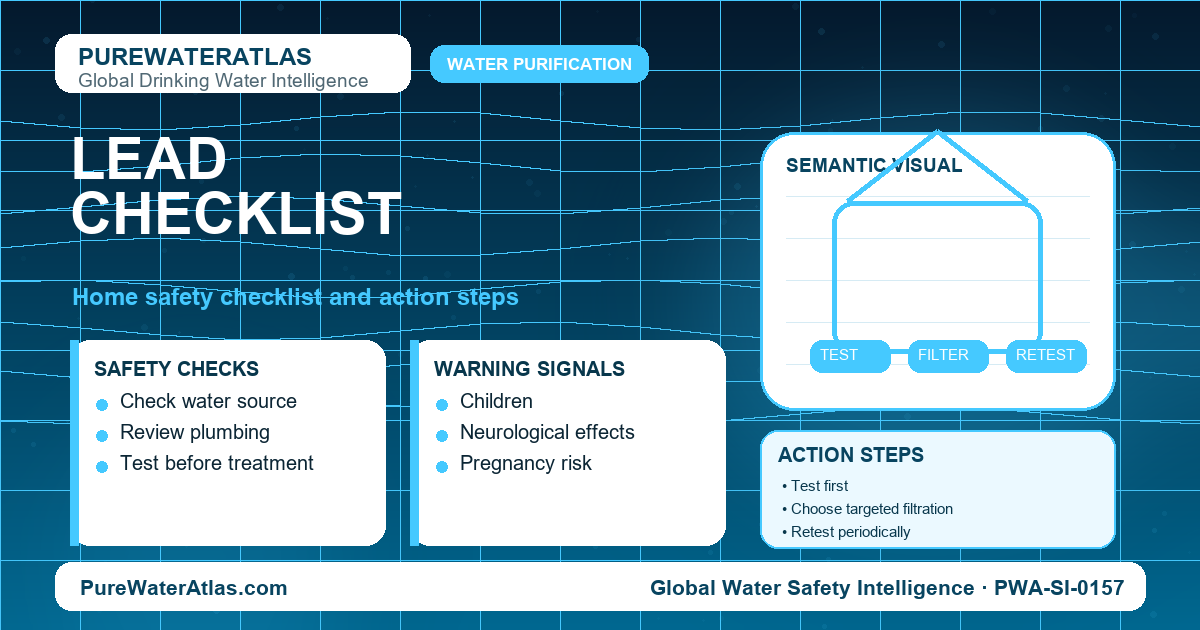
For a basic portable water purification systems household testing plan, households should consider the following steps:
- Test incoming water before selecting a treatment method whenever possible.
- Retest if there is flooding, plumbing work, a boil-water notice, or a sudden change in water quality.
- Monitor treated water if the source has known chemical risks.
- Use accredited labs for contaminants of concern such as lead, arsenic, nitrates, and VOCs.
- Keep records of test results, maintenance dates, and replacement parts.
Prevention and Treatment
The most effective safety strategy combines prevention, correct device selection, proper operation, and ongoing maintenance. A purifier should be part of a larger household water safety plan, not the only step.
Select the right system
Choose a unit based on verified treatment goals. Look for products tested or certified for the contaminants relevant to your water source. If microbial contamination is the concern, make sure the system is designed for that purpose. If lead or nitrates are suspected, verify that the treatment technology is appropriate. Avoid buying on marketing language alone.
Follow a home safety checklist
A strong portable water purification systems protection steps routine includes:
- Identify your water source and likely contaminants.
- Match the purifier to those contaminants.
- Read the manufacturer instructions before first use.
- Flush new cartridges or membranes as directed.
- Use only within rated temperature, pressure, and turbidity limits.
- Store replacement parts and disinfectants before an emergency occurs.
- Label treated and untreated water containers clearly.
- Sanitize bottles, tanks, and dispensing parts regularly.
- Replace filters, UV lamps, batteries, and seals on schedule.
- Retest water if conditions change.
Maintenance essentials
Good performance depends on consistent upkeep. Key portable water purification systems maintenance tips include cleaning housings, drying units before storage when recommended, protecting components from freezing, and replacing media before they become exhausted. Carbon filters can become less effective over time. UV systems may appear to light up while still delivering inadequate germicidal output. Membranes may foul without obvious external damage. A written maintenance log helps prevent missed service intervals.
Additional maintenance suggestions include:
- Keep spare filters and seals in original packaging.
- Do not use expired chemical disinfectants.
- Avoid storing systems in hot cars, damp basements, or direct sunlight unless approved by the manufacturer.
- Discard parts with cracks, brittleness, or persistent odor.
- Clean prefilters more frequently when treating turbid water.
Pre-treatment and multiple barriers
Highly turbid or visibly dirty water often needs pre-treatment before final purification. Settling, coarse filtration, or cloth prefiltration can improve the effectiveness of finer filters and UV systems. In higher-risk scenarios, a multiple-barrier approach may be warranted, such as sediment removal followed by filtration and then disinfection. Layered treatment is particularly useful when source quality is uncertain.
Safe storage after treatment
Once water is purified, store it in food-grade containers that have been washed and sanitized. Keep lids closed, avoid touching the interior, and separate treated water from raw water physically. If water will be stored for an extended period, review guidance for rotation, disinfection, and container sanitation. Poor storage can undo all the benefits of purification.
When to stop using a system
Households should discontinue use and seek expert advice if the system leaks, fails to maintain expected flow or treatment performance, shows repeated contamination after maintenance, or is being used against contaminants it was never designed to address. During major contamination events, bottled water or an alternative approved source may be safer until the issue is resolved.
Common Misconceptions
Misunderstandings about portable water treatment are widespread. Correcting them is an important part of safe household use.
If water looks clean, it is safe
This is false. Many dangerous contaminants are invisible, odorless, and tasteless. Clear water can still contain microbes, lead, nitrates, or chemical pollutants.
All portable purifiers remove everything
No single device removes every possible contaminant under all conditions. Treatment capability varies by technology, design, and certification. Users must verify what a unit is intended to reduce.
Taste improvement means full purification
Activated carbon often improves taste and odor significantly, but that does not mean pathogens or dissolved metals have been removed. Pleasant-tasting water may still be unsafe.
Emergency devices do not need routine care
Backup systems can fail precisely because they sit unused for long periods. An emergency unit should be inspected regularly, supplies rotated, and instructions kept accessible.
Filters work indefinitely until water stops flowing
Filter exhaustion can happen before complete blockage. Some contaminants may break through while water still appears normal. Following replacement intervals is essential.
UV treatment always works instantly
UV can be effective, but only if the lamp output is strong enough, the contact conditions are correct, and the water is clear enough for light penetration. Dirty water reduces effectiveness.
Regulations and Standards
Regulations and standards help consumers separate verified performance from unsupported claims. While requirements vary by country and region, households should look for products evaluated against recognized testing protocols rather than relying only on packaging language.
In many markets, independent certification organizations test systems for specific contaminant reduction claims. These certifications may address microbiological purification, lead reduction, cyst removal, chemical reduction, structural integrity, and material safety. A system certified for one purpose is not automatically certified for another, so consumers should read the details carefully.
Common evaluation areas include:
- Microbiological reduction for bacteria, viruses, and protozoa
- Chemical reduction for substances such as lead, pesticides, and VOCs
- Aesthetic effects such as chlorine taste and odor reduction
- Structural integrity to ensure the device can withstand normal operating conditions
- Material safety to help confirm that device components do not leach harmful substances
Households should also pay attention to local public health advisories, boil-water notices, and private well guidance. During a contamination event, official instructions may recommend boiling, disinfection, flushing plumbing, or temporary avoidance of tap water for drinking and cooking. Portable treatment should be used in line with this guidance, not as a substitute for it.
For private wells, regulations may be less comprehensive than for municipal systems, making owner responsibility especially important. Well owners should test regularly, maintain well integrity, protect the wellhead from runoff, and confirm that any portable system used indoors is appropriate for the contaminants identified.
Instruction manuals, warranty terms, and certification documents are part of the safety record of the product. Save them. They provide operating limitations, replacement schedules, and troubleshooting steps that are often overlooked during emergencies.
Conclusion
Portable water purification systems can provide valuable protection in homes, especially during emergencies, temporary service disruptions, travel, and point-of-use treatment needs. However, safe use requires more than buying a compact filter or UV device and assuming full protection. A dependable portable water purification systems home safety checklist includes source identification, contaminant awareness, device selection, routine inspection, household testing, maintenance, and safe storage practices.
The most important lesson is that portable systems are only as effective as their match to the water problem and the consistency of their upkeep. Warning signs such as unusual taste, turbidity, filter clogging, leaks, expired components, or recurring illness should never be ignored. Through regular portable water purification systems inspection, prompt response to portable water purification systems risk signs, disciplined portable water purification systems maintenance tips, and sensible portable water purification systems protection steps, households can use these devices more confidently and responsibly.
When uncertainty remains, verify with portable water purification systems household testing and professional guidance. In water safety, evidence matters more than assumptions. A portable treatment system can be a highly useful tool, but it works best when integrated into a broader household plan for clean, safe drinking water.
Read the full guide: Water Purification Guide
Explore more in this category: Water Purification Articles