
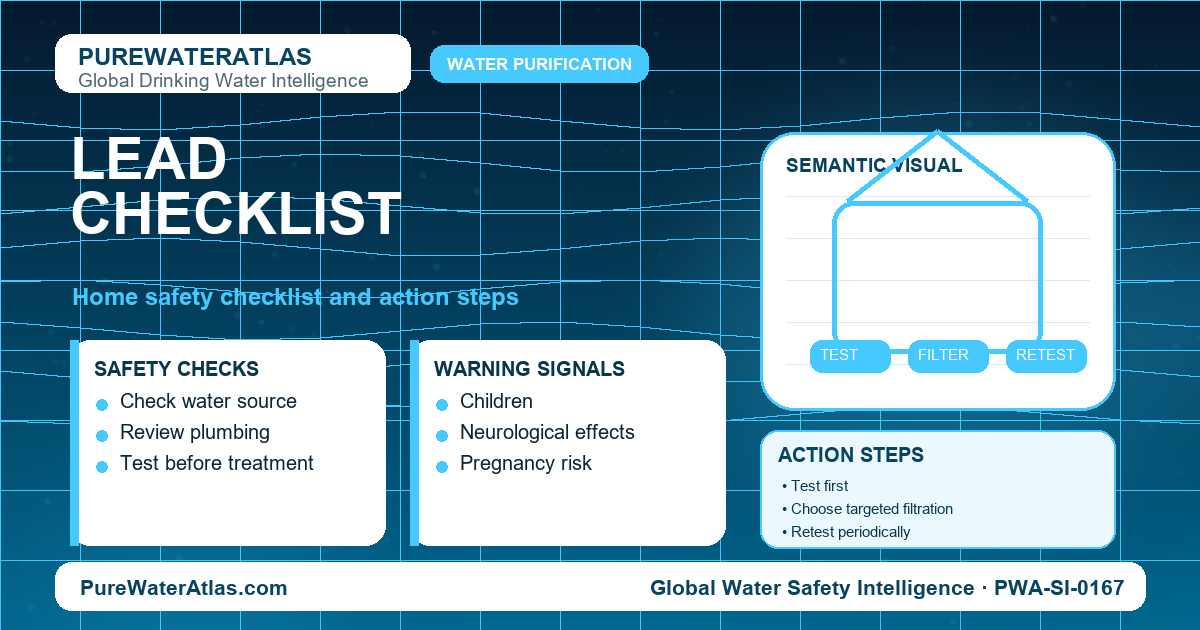
Introduction
Safe drinking water is one of the most important foundations of a healthy home, yet many households assume that clear, odorless water is automatically safe. In reality, water quality can change as it travels from the source, through municipal treatment systems, and finally through household plumbing and private filtration equipment. A practical household water filtration systems home safety checklist helps homeowners, renters, and property managers evaluate whether a filtration setup is doing its job, whether warning signs are being overlooked, and what actions should be taken to reduce risk.
Household filtration can improve taste, odor, and appearance while also reducing specific contaminants. However, no filter is universally effective against every hazard. A system that removes chlorine may not remove dissolved metals. A sediment cartridge may not control bacteria. A point-of-use filter at the sink may not protect shower water or an ice maker. For this reason, filtration should be understood as part of a larger home water safety strategy rather than a single all-purpose solution.
This article explains how household water filtration systems work, where contamination risks commonly originate, what health and safety issues they may affect, and how to inspect, test, maintain, and upgrade systems responsibly. It also addresses several misunderstandings that can lead to poor decisions. Readers looking for broader background can explore /category/water-purification/ and /household-water-filtration-systems-complete-guide/ for additional context on technologies and system design.
The goal is not simply to recommend buying a filter. The goal is to help households build a disciplined approach to water safety: identify local risks, choose appropriate treatment methods, follow a regular inspection routine, confirm performance with testing, and understand when professional support is needed. A well-maintained system can be highly effective, but neglected equipment can become a weak point rather than a protective barrier.
What It Is
Household water filtration systems are devices or treatment assemblies installed in homes to reduce unwanted substances in water used for drinking, cooking, bathing, cleaning, or whole-house distribution. These systems vary widely in size, complexity, and purpose. Some are small pitcher filters or faucet attachments. Others are under-sink units, refrigerator cartridges, countertop purifiers, whole-house sediment filters, water softeners, ultraviolet disinfection units, reverse osmosis systems, or multi-stage treatment trains.
The phrase household water filtration systems home safety checklist refers to a structured review process that examines whether a home water treatment setup is suitable, functioning properly, and being maintained according to recognized safety practices. Such a checklist generally covers:
- The source of water, such as municipal supply, well water, rainwater collection, or another private source
- The contaminants of concern in the local area or within household plumbing
- The filtration or treatment technologies installed
- The location of each device and the fixtures it serves
- The manufacturer’s performance claims and certification status
- Installation quality and plumbing integrity
- Maintenance schedules, cartridge replacement intervals, and sanitation procedures
- Water quality testing results before and after treatment
- Visible, taste, odor, or pressure changes that may indicate failure
Different technologies target different contaminants. Activated carbon is often used to improve taste and reduce chlorine, volatile organic compounds, and some organic chemicals. Reverse osmosis can reduce many dissolved salts, metals, and other contaminants, though it also creates wastewater and may require remineralization depending on use. Sediment filters capture particles such as rust, sand, and silt. Ion exchange systems can soften hard water or remove certain charged contaminants. Ultraviolet treatment can inactivate microorganisms when water is sufficiently clear. Distillation can separate many impurities but is slower and energy-intensive.
An effective system is not defined by how expensive it is, but by how well it matches actual water conditions. Households considering system selection or evaluation may benefit from the source-focused material at /household-water-filtration-systems-causes-and-sources/ and scientific background at /category/water-science/.
Main Causes or Sources
Water quality concerns in homes usually come from one or more of four broad sources: the original water source, the treatment and distribution process before the water reaches the house, the household plumbing itself, and the filtration system if it is poorly selected or maintained. Understanding these sources is essential to carrying out a meaningful household water filtration systems inspection.
Source Water Conditions
Municipal water and private well water present different risk profiles. Municipal utilities usually disinfect water and monitor regulated contaminants, but water can still contain residual disinfectants, byproducts, or contaminants introduced downstream. Private wells are not typically subject to the same ongoing public oversight, so the homeowner bears greater responsibility for testing and treatment.
- Groundwater: May contain iron, manganese, arsenic, nitrate, hardness minerals, sulfur compounds, and naturally occurring radionuclides
- Surface water: May be influenced by agricultural runoff, microbial contamination, industrial discharges, seasonal algae, and sediment load
- Local geology: Can affect metals, mineral content, pH, and corrosivity
- Nearby land use: Farms, roadways, factories, landfills, and septic systems may introduce specific contaminants
Distribution System and Municipal Infrastructure
Even when water leaves a treatment plant in acceptable condition, it may change during distribution. Aging infrastructure, pressure fluctuations, pipe corrosion, and maintenance events can influence quality at the tap. Sediment disturbances, discoloration, and temporary odor changes can occur after main breaks or hydrant flushing. If a household relies on point-of-use treatment, such events may challenge filter capacity or reveal the need for additional stages.
Household Plumbing and Fixtures
In many homes, internal plumbing creates its own contamination risks. Lead service lines, brass fittings, copper corrosion, scale buildup, and stagnant sections of pipe can all affect water chemistry. Hot water systems are particularly important to monitor because heat can accelerate leaching and support microbial growth under certain conditions. Refrigerator lines, faucet aerators, showerheads, and low-use fixtures can accumulate debris or biofilm.
Common plumbing-related concerns include:
- Lead release from older plumbing materials or solder
- Copper leaching in corrosive water
- Rust and sediment from aging galvanized pipes
- Biofilm development in stagnant plumbing sections
- Bacterial growth in warm, low-flow equipment
Filter System Design and Maintenance Failures
Some of the most important household water filtration systems risk signs come from the filtration equipment itself. A filter can become overloaded, clogged, damaged, bypassed, incorrectly installed, or simply unsuitable for the contaminant present. In those cases, users may falsely believe the water is protected when it is not.
System-related causes of poor performance include:
- Expired cartridges left in service beyond their rated life
- Improper cartridge type for the contaminant being targeted
- Poor sealing, channeling, or bypass due to installation errors
- Unsanitary filter changes that introduce microbes
- Lack of prefiltration, causing premature failure of downstream units
- Reduced disinfection performance because water is too cloudy for UV treatment
- Membrane scaling or fouling in reverse osmosis systems
- Undersized systems that cannot keep up with household demand
Microbiological risks deserve special attention, especially in systems that remove disinfectant residuals. Once chlorine or chloramine is reduced by activated carbon, downstream plumbing may be more vulnerable to microbial regrowth if the system is not managed carefully. Additional reading on microbial considerations is available at /category/water-microbiology/.
Health and Safety Implications
The health implications of household water quality depend on the contaminant, the concentration, the duration of exposure, and the vulnerability of household members. Infants, pregnant individuals, older adults, and people with weakened immune systems may face elevated risk from contaminants that cause little immediate effect in healthy adults. A thoughtful household water filtration systems home safety checklist therefore begins by identifying who uses the water and how.
Chemical Contaminants
Chemical contaminants may produce acute or long-term effects. Nitrate is particularly concerning for infants because it can interfere with oxygen transport in the blood. Lead exposure is associated with developmental harm, especially in children. Arsenic has been linked to serious chronic health outcomes with long-term exposure. Certain organic chemicals, solvents, and disinfection byproducts may also present health concerns depending on concentration and duration.
Important safety considerations include:
- Children may be more affected by lead, nitrate, and other contaminants because of their developing bodies
- Pregnant individuals may need heightened caution regarding contaminants with developmental effects
- People with kidney conditions or those on medically restricted diets may need to monitor sodium, hardness treatment changes, or other water chemistry factors
- Private well users may be at higher risk of unrecognized contamination if testing is infrequent
Microbiological Contaminants
Bacteria, viruses, and protozoa can cause gastrointestinal illness and, in some cases, serious complications. Contamination can come from source water, plumbing issues, flood events, poor system sanitation, or filter neglect. Risk is often higher in untreated well water, compromised plumbing, or systems with stagnant components. If a household depends on microbiological control, filtration alone may not be sufficient; disinfection may also be necessary.
More on contamination consequences and exposure concerns can be found at /household-water-filtration-systems-health-effects-and-risks/.
Indirect Safety Issues
Not all safety concerns are caused by contaminants directly. Some arise from equipment conditions that affect daily life or emergency preparedness:
- Low pressure: May indicate severe clogging, sediment loading, or failing components
- Leaks: Can damage building materials, create slip hazards, and promote mold growth
- Improperly installed units: Can stress plumbing connections or create cross-connection concerns
- Missed maintenance: May lead to a false sense of security while performance declines
Because many water hazards are invisible, the absence of taste or odor problems should never be treated as proof of safety. Some of the most concerning contaminants cannot be seen, smelled, or tasted at all.
Testing and Detection
Reliable decision-making requires evidence. That is why household water filtration systems household testing is one of the most important elements of a home safety checklist. Testing establishes baseline conditions, confirms whether the selected treatment is appropriate, and verifies whether the system is still working after installation and over time.
When to Test
Households should consider testing under several circumstances:
- When moving into a new home
- Before selecting or upgrading a filtration system
- After installing a new treatment device
- After plumbing repairs, flooding, or source water changes
- If taste, odor, color, or pressure changes occur
- On a routine schedule for private wells or known local risks
What to Test For
The right panel depends on water source, local environment, plumbing age, and health priorities. Municipal consumers may start with utility water quality reports and then test for home-specific issues such as lead, copper, or filter performance. Well owners usually need a broader testing strategy. Parameters commonly evaluated include:
- Total coliform bacteria and, where appropriate, E. coli
- Lead and copper
- Nitrate and nitrite
- Arsenic and region-specific metals
- pH, hardness, alkalinity, and total dissolved solids
- Iron, manganese, sulfur-related compounds
- Chlorine or chloramine residual where relevant
- Turbidity or sediment-related indicators
Field Checks and Home Observations
Laboratory testing is critical, but daily observation also matters. A practical household water filtration systems inspection should note visible and operational clues that suggest a problem. These do not replace testing, but they help identify when action is needed sooner rather than later.
Useful observational checks include:
- Unusual taste, odor, or color changes
- Cloudiness that does not clear quickly
- Black, orange, blue-green, or white residue around fixtures
- Reduced flow at treated outlets
- Frequent leaks, drips, or wet cabinet surfaces near units
- Missed filter replacement dates or unreadable labels
- Alarms, indicator lights, or system error messages
Performance Verification
One of the most overlooked parts of household water filtration systems household testing is comparing untreated and treated water. If a household wants to know whether a system is reducing a contaminant, sampling should be designed to measure both influent and effluent where practical. This is especially helpful for arsenic treatment, reverse osmosis membranes, nitrate reduction, UV systems, and lead-focused point-of-use devices.
Good verification practices include:
- Testing before installation to identify the true problem
- Testing after installation to confirm expected reduction
- Repeating tests at intervals based on risk and manufacturer guidance
- Keeping records of dates, laboratory reports, and maintenance actions
Households relying on private sources or complex treatment should consider consulting certified laboratories and qualified water treatment professionals rather than depending only on general-purpose home kits.
Prevention and Treatment
Prevention begins with matching the right treatment to the right problem and then maintaining the system consistently. The best household water filtration systems protection steps are systematic rather than reactive. Instead of waiting for obvious problems, households should create routines that keep risks low over time.
Choose Treatment Based on Evidence
The first rule is simple: do not select a filter based only on marketing claims. Use water test results, plumbing conditions, and local source information to choose a technology designed for the contaminants that matter in the home. A whole-house sediment filter may be useful as pretreatment, but it will not solve lead or nitrate concerns by itself. An activated carbon unit may improve taste dramatically but still leave dissolved minerals or metals. Reverse osmosis may reduce many dissolved contaminants but requires monitoring, maintenance, and a practical plan for replacement and drainage.
Core Home Safety Checklist
The following checklist can serve as a practical framework for routine review:
- Identify the water source and whether it has changed seasonally or operationally
- Review recent laboratory test results and compare them with historical data
- Confirm that each installed device addresses a verified water issue
- Check that filters, membranes, lamps, and media are within service life
- Inspect housings, fittings, valves, and tubing for leaks or corrosion
- Clean and sanitize components according to manufacturer instructions
- Confirm bypass valves are in the correct position and seals are intact
- Verify pressure and flow are within expected operating range
- Flush systems after cartridge changes or periods of non-use
- Keep a maintenance log with dates, part numbers, and observations
Household Water Filtration Systems Maintenance Tips
Strong maintenance practices are the difference between protective treatment and neglected hardware. The following household water filtration systems maintenance tips are broadly useful across many system types:
- Replace cartridges on schedule, not only when taste changes
- Use manufacturer-approved replacement parts when possible
- Wash hands and sanitize surfaces before opening filter housings
- Lubricate O-rings with approved products if recommended
- Inspect for cracks, warped housings, or worn seals during every service
- Flush new cartridges thoroughly before use
- Protect units from freezing, excessive heat, and direct sunlight when not designed for such exposure
- Do not ignore slow flow, as it may indicate clogging or internal failure
- Replace UV lamps on schedule even if the light still appears to work, because germicidal performance declines with age
- Sanitize storage tanks, lines, and faucet components where applicable
Point-of-Use and Whole-House Strategies
For many homes, the most cost-effective approach is a layered strategy. A whole-house prefilter can reduce sediment and protect plumbing, while a certified point-of-use unit at the kitchen sink can target drinking and cooking water more precisely. This approach can be particularly useful when only certain uses require the highest level of treatment.
Examples of layered protection include:
- Sediment prefiltration plus activated carbon for taste and odor improvement
- Water softening combined with a point-of-use reverse osmosis unit for drinking water
- UV disinfection added after filtration for microbiological risk management in well systems
- Lead-certified kitchen faucet filtration for older homes with legacy plumbing concerns
Emergency and Special Conditions
Some situations require immediate attention rather than routine maintenance. Households should act quickly if there is flooding, sewage backup, a boil-water notice, a positive bacterial test, major plumbing work, or sudden unexplained illness potentially linked to water. Filters exposed to contaminated floodwater may need replacement, and some systems require disinfection or professional evaluation before returning to service.
Additional household water filtration systems protection steps for special situations include:
- Following public health notices exactly as issued
- Using bottled or properly boiled water when advised
- Disinfecting wells and plumbing where appropriate after contamination events
- Retesting after corrective action rather than assuming the problem is resolved
Common Misconceptions
Many household water decisions are shaped by assumptions rather than evidence. Correcting these misconceptions helps prevent wasted money and unsafe practices.
If Water Looks Clear, It Must Be Safe
This is one of the most common and most dangerous myths. Many important contaminants, including lead, nitrate, arsenic, and some microbes, may not change the look of water in any obvious way. Visual clarity can be reassuring, but it is not a reliable safety indicator.
Any Filter Is Better Than No Filter
Not necessarily. An inappropriate or poorly maintained filter may provide little benefit and can create false confidence. In some cases, old media or stagnant components may even worsen taste, flow, or microbial conditions. A filter should be chosen for a specific purpose and serviced correctly.
Changing Taste Means the Filter Has Failed, and No Change Means It Still Works
Taste is not a complete performance test. A carbon filter may stop controlling chlorine taste before other reduction claims are fully exhausted, or the opposite may happen. Some contaminants have no taste at all. Replacement should follow certified capacity limits, manufacturer instructions, and verification testing where appropriate.
Municipal Water Never Needs Home Treatment
Municipal water is often well managed, but home-specific factors still matter. Plumbing materials, stagnation, localized disturbances, taste preferences, and special health concerns can justify additional treatment. The key is to base treatment on actual conditions rather than assumption.
Private Wells Are Naturally Pure
Well water can be excellent, but it is not automatically safe. Wells can be affected by geology, nearby septic systems, agriculture, flooding, casing damage, and seasonal changes. Routine testing remains essential.
Certification Labels Mean a Filter Removes Everything
Certification usually applies to specific contaminants under defined conditions. Households should read the scope of claims carefully. A certified device may be excellent for chlorine and lead reduction yet not designed for nitrate, arsenic, or microbial control.
Regulations and Standards
Household water treatment exists within a broader framework of public health regulation, product standards, and local plumbing rules. While regulatory details vary by location, several principles are widely important for consumers carrying out a household water filtration systems home safety checklist.
Public Water Oversight Versus Private Responsibility
Municipal water suppliers are generally required to meet applicable drinking water regulations and monitor specified contaminants. Consumers often receive annual water quality reports or can request test information. However, the utility’s responsibility typically ends at a certain point in the distribution system, and home plumbing or point-of-use treatment conditions may fall to the property owner.
For private wells, responsibility usually rests much more directly with the homeowner. This includes testing, treatment selection, maintenance, and corrective action when contamination is found.
Product Certification Standards
When selecting filtration products, certification by recognized third-party organizations is one of the best ways to evaluate performance claims. Certification can indicate that a product has been tested for structural integrity, material safety, and reduction of specific contaminants under specified conditions. Consumers should verify what a certification actually covers rather than assuming it applies broadly.
Plumbing Codes and Installation Quality
Whole-house systems, drain connections for reverse osmosis units, UV installations, and any treatment involving cross-connections or discharge lines may need to comply with local plumbing codes. Improper installation can undermine both treatment performance and building safety. In some cases, professional installation is the most reliable way to ensure code compliance and proper operation.
Recordkeeping and Accountability
One of the simplest but most effective safety practices is documentation. Keep records of:
- Water test results
- Purchase and installation dates
- Model numbers and replacement parts
- Maintenance and sanitation actions
- Observed household water filtration systems risk signs
- Repairs, upgrades, and professional service visits
These records help households identify trends, make informed replacement decisions, and demonstrate responsible maintenance if property management or resale questions arise.
Conclusion
A home water treatment setup is only as reliable as the plan behind it. A careful household water filtration systems home safety checklist turns water protection from a one-time purchase into an ongoing household practice. That practice begins with understanding the source of the water, identifying real contaminants of concern, and choosing technologies that are certified and appropriate for those conditions. It continues through routine household water filtration systems inspection, disciplined household water filtration systems household testing, and timely replacement of consumable parts.
Households should pay close attention to warning indicators such as pressure loss, unusual taste or odor, missed service dates, leaks, and visible buildup. These household water filtration systems risk signs can signal declining performance or unsafe conditions. Just as important, families should not rely on appearance alone. Some of the most serious hazards are invisible, which is why evidence-based monitoring matters.
Practical protection comes from consistency. Use the right treatment for the right contaminant, maintain it correctly, document service and test results, and seek professional guidance when problems exceed routine household management. With these household water filtration systems maintenance tips and household water filtration systems protection steps, a home can move closer to dependable, informed water safety rather than guesswork.
For readers who want to continue learning, the resources at /category/water-purification/, /category/water-science/, and /category/water-microbiology/ provide broader technical background on water quality, treatment methods, and microbiological issues that affect homes.
Read the full guide: Water Purification Guide
Explore more in this category: Water Purification Articles