Introduction
Clean drinking water is often taken for granted, yet the quality of water reaching a home can vary widely depending on source water, local infrastructure, plumbing materials, treatment practices, and environmental conditions. This is one reason many households install filters at the faucet, under the sink, on shower lines, or for the entire home. Interest in household water filtration systems health effects has grown as consumers try to understand whether these devices improve safety, introduce new risks, or create a false sense of security when they are not selected or maintained properly.
Household water filtration systems can provide important benefits. They may reduce chlorine taste and odor, lower levels of lead or certain volatile organic compounds, remove sediment, or help address specific contaminants such as arsenic, nitrates, or microbial hazards when the correct technology is used. At the same time, not every filter treats every problem. A system that improves taste may do little for dissolved metals, while a membrane system that removes many contaminants may also alter mineral content and require regular maintenance to prevent performance decline.
Understanding household water filtration systems health effects requires looking at both the contaminants being removed and the possible issues created by poor system choice, incorrect installation, neglected filter replacement, or overreliance on devices that are not certified for a particular purpose. This topic also includes practical medical and public health questions, such as how exposure differs by age, pregnancy status, immune health, and long-term consumption patterns.
This article explains what household filtration systems are, where water quality concerns come from, how exposure can affect health, how systems are tested, and what prevention steps matter most. Readers seeking broader background may also find useful information in water purification resources, a complete guide to household filtration systems, and additional material on water contamination and water treatment systems.
What It Is
A household water filtration system is any device or treatment unit designed to improve water quality at the point of entry to the home or at the point of use. Point-of-entry systems treat most or all water entering the building. Point-of-use systems treat water at one location, such as a kitchen faucet, refrigerator line, countertop unit, or showerhead.
These systems differ by technology, target contaminants, maintenance needs, and expected performance. Understanding these differences is essential because the health value of a system depends on matching the treatment method to the actual water issue.
Common types of household water filtration systems
- Activated carbon filters: Often used in pitchers, faucet-mounted units, refrigerator filters, and under-sink systems. They are commonly effective for improving taste and odor and may reduce chlorine, some pesticides, and certain organic chemicals. Some are certified for lead reduction, but performance varies by model.
- Reverse osmosis systems: Use a semipermeable membrane to reduce a broad range of dissolved contaminants, including salts, metals, nitrates, fluoride, and some organic compounds. These systems often include prefilters and postfilters.
- Ultraviolet disinfection units: Use UV light to inactivate microorganisms. They are typically intended for microbial control and do not remove dissolved chemicals or sediment.
- Ion exchange systems: Common in water softeners. They replace calcium and magnesium with sodium or potassium to reduce hardness. Specialized ion exchange media can also target contaminants such as nitrate.
- Sediment filters: Remove visible particles such as sand, rust, or silt. They are often used as pretreatment and do not address most dissolved contaminants.
- Distillation units: Heat water to create steam and condense it, leaving many contaminants behind. They can be effective for a range of dissolved substances but may be slow and energy intensive.
How filtration relates to health
The phrase household water filtration systems health effects can refer to two broad issues. First, there are the positive effects of lowering harmful exposure to contaminants. Second, there are the negative effects that can occur if a filter is ineffective, poorly maintained, or unsuitable for the water problem. For example, a family concerned about lead may be protected by a certified lead-removal filter, but a decorative or generic filter with no certification may provide little actual reduction.
The system itself is not automatically good or bad. Health outcomes depend on water testing, correct system selection, routine maintenance, proper sanitation, and awareness of vulnerable household members who may be more sensitive to low-level contaminants.
Main Causes or Sources
People usually install water filtration systems in response to a known or suspected contamination source, an unpleasant taste or odor, visible sediment, hard water, or concern about aging infrastructure. The reasons differ by geography, housing age, water source, and industrial or agricultural surroundings.
Municipal source and distribution issues
Even when a public water supply meets regulatory limits, water quality can still change between the treatment plant and the tap. Pipes may contribute metals, disinfectants can react with natural organic matter to form byproducts, and repairs or pressure changes may disturb sediment. Common municipal-related concerns include:
- Lead from old service lines, solder, or brass fixtures
- Chlorine or chloramine taste and odor
- Disinfection byproducts such as trihalomethanes
- Rust, sediment, or particulate matter from aging pipes
- Copper release from household plumbing under corrosive conditions
Private well water concerns
Households using wells often have a greater need for site-specific testing because private wells are generally not monitored as frequently as public systems. Well water may be affected by:
- Microbial contamination from septic systems, surface runoff, or flooding
- Nitrates from fertilizer use or animal waste
- Arsenic or uranium from natural geologic formations
- Iron, manganese, sulfur compounds, or hardness minerals
- Pesticides, solvents, or industrial contamination in some regions
For a fuller discussion of where these problems begin, readers can explore causes and sources of household water filtration issues.
System-related sources of risk
Some water quality problems are not present in the incoming water but arise because the filtration system is poorly managed. Examples include:
- Expired filter cartridges: Old media can lose effectiveness and allow contaminant breakthrough.
- Microbial growth: Filters that trap organic matter and remain moist may support bacterial growth if not replaced on schedule.
- Improper installation: Leaks, bypassing, or wrong connections can reduce treatment effectiveness.
- Wrong technology choice: A carbon filter cannot reliably solve every contamination issue, especially many dissolved inorganic substances.
- Poor storage or handling: Filtered water stored in unclean containers can become recontaminated.
Exposure levels and duration
The significance of any contamination depends on concentration, frequency of consumption, and length of exposure. This is the basis of household water filtration systems exposure levels as a practical health concept. A very small contaminant level may pose little concern for a healthy adult over a short period but may still matter for infants, pregnant people, or those with kidney disease. Repeated low-level exposure over years can also be relevant for contaminants with chronic effects, such as lead, arsenic, or nitrates under certain circumstances.
Health and Safety Implications
The health impact of a household filtration system can be protective, neutral, or harmful depending on what it removes, what it fails to remove, and whether it is maintained correctly. This section covers both health benefits and risks, including household water filtration systems symptoms, household water filtration systems long term risks, and household water filtration systems medical concerns.
Potential health benefits
Appropriate filtration may reduce exposure to contaminants linked with acute or chronic illness. Possible benefits include:
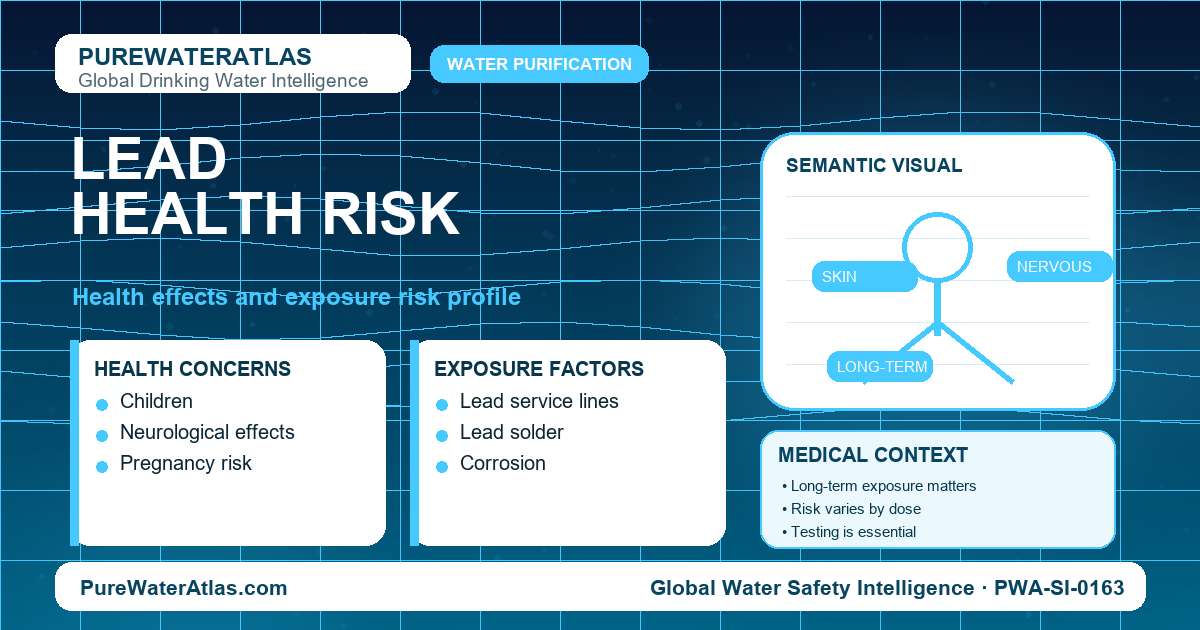
- Lowering lead intake, which is especially important for child neurodevelopment
- Reducing microbial exposure in situations where disinfection is needed
- Decreasing nitrate exposure in at-risk regions, particularly for infant formula preparation
- Reducing certain volatile organic compounds, pesticides, or industrial chemicals when the device is certified for those contaminants
- Improving taste and odor, which may encourage adequate hydration
Short-term symptoms linked to contaminated or poorly treated water
When filtration is inadequate or fails, the symptoms depend on the specific contaminant. Household water filtration systems symptoms are not caused by filters alone; they usually reflect either contaminants still present in the water or microbial contamination arising from neglected systems. Possible short-term symptoms include:
- Nausea, vomiting, diarrhea, or abdominal cramps from microbial contamination
- Headaches or irritation related to chemical tastes, odors, or solvent exposure in unusual cases
- Skin or eye irritation, especially when shower or bathing water contains irritants and no suitable treatment is in place
- Metallic taste or gastrointestinal discomfort where metals or high mineral levels remain elevated
These symptoms are nonspecific and can have many causes, so they should not be assumed to come from drinking water alone. However, recurrent symptoms in multiple household members, especially after plumbing changes, flooding, or filter neglect, should prompt water evaluation.
Long-term risks from ongoing exposure
Household water filtration systems long term risks are most important when a household relies on a filter that does not actually address the contaminant of concern. Chronic exposure to some water contaminants may contribute to significant health outcomes:
- Lead: Developmental delays, lower IQ, behavioral effects in children, and cardiovascular or kidney effects in adults.
- Arsenic: Increased risk of certain cancers, skin changes, and cardiovascular effects with prolonged exposure.
- Nitrates: Greatest concern for infants, with potential effects on oxygen transport in the blood when exposure is high.
- Disinfection byproducts: Long-term concerns have been studied in relation to cancer and reproductive effects, though risk depends on concentration and duration.
- Microbial hazards: Recurrent gastrointestinal illness can be serious in vulnerable people and may lead to dehydration or complications.
Medical concerns related to filtration system design
Some household water filtration systems medical concerns arise from the treatment system itself rather than the source water. Examples include:
- Sodium increase from water softeners: This may matter for people on sodium-restricted diets, depending on hardness and treatment settings.
- Demineralization from reverse osmosis: RO water is generally safe, but households should understand that mineral reduction can change taste and may influence how water is used in infant feeding or special diets.
- Microbial colonization of filters: Stagnant or overdue filters may harbor bacteria, especially when disinfectant residuals are removed by carbon media.
- False reassurance: People may drink contaminated water longer if they assume any installed filter guarantees safety.
Vulnerable groups
Household water filtration systems vulnerable groups deserve special attention because the same contaminant level may carry a different degree of risk across populations.
- Infants: More sensitive to nitrates, lead, and dehydration caused by gastrointestinal illness.
- Children: Particularly vulnerable to lead because of developing brains and higher intake relative to body size.
- Pregnant people: Need reliable water quality because some contaminants may affect fetal development.
- Older adults: May have increased susceptibility to dehydration, kidney strain, and infection.
- Immunocompromised individuals: More likely to experience severe illness from pathogens that might be insignificant to healthy adults.
- People with kidney disease or specific metabolic conditions: May need careful guidance about sodium, potassium, fluoride, or mineral content depending on treatment type and medical advice.
Testing and Detection
No filtration choice should be based entirely on guesswork. Effective treatment starts with identifying what is actually in the water and whether the concentration is high enough to matter for health, aesthetics, or equipment performance. Testing helps determine both the need for filtration and whether the installed system continues to work as intended.
Why testing matters
A common mistake is choosing a filter based on taste alone. Taste and odor can be useful clues, but dangerous contaminants are often invisible, tasteless, and odorless. Lead, arsenic, nitrates, and many microorganisms may not be obvious. Testing also prevents overspending on unnecessary systems while making it more likely that real risks are addressed.
What to test for
The right panel depends on whether the home uses municipal water or a private well, as well as local environmental factors. Common tests include:
- Lead and copper
- Total coliform and E. coli for wells or after flooding
- Nitrates and nitrites
- Arsenic
- Hardness, iron, manganese, and pH
- Chlorine or chloramine levels
- Volatile organic compounds in areas with industrial or solvent concerns
- Pesticides in agricultural regions
Testing methods
There are several ways to evaluate water quality:
- Certified laboratory testing: Usually the most reliable approach for health-related decisions.
- Home screening kits: Useful for preliminary checks, but they may be less comprehensive or less precise.
- Utility reports: Public water systems often provide annual consumer confidence reports, though these do not replace testing at the tap for plumbing-related contaminants such as lead.
- System performance monitoring: Some advanced devices use sensors or indicators for pressure drop, filter life, or conductivity changes.
More detail is available in testing and detection methods for household water filtration systems.
When to retest
- After installing a new filtration system
- After changing filter media or major plumbing work
- When water taste, color, or odor changes unexpectedly
- After flooding, well repairs, or nearby contamination events
- At routine intervals recommended for the water source and contaminant profile
Verifying system claims
Consumers should look for independent certification rather than relying on broad marketing language such as “pure,” “healthy,” or “advanced.” Certification standards can indicate whether a system has been evaluated for reduction of specific contaminants under defined conditions. It is also important to review capacity limits, flow rate requirements, maintenance schedules, and replacement part specifications.
Prevention and Treatment
The safest strategy is prevention first, treatment second. Whenever possible, contamination should be controlled at the source or in plumbing before relying on a household device. Still, point-of-use and point-of-entry systems play an important role when source control is not immediately possible or when localized treatment is the most practical option.
Prevention steps for households
- Test water before selecting a treatment system
- Choose technology certified for the exact contaminant of concern
- Install the system according to manufacturer instructions or use a qualified professional
- Replace filters and membranes on schedule
- Sanitize housings and storage tanks when recommended
- Flush taps after periods of stagnation, especially in homes with lead plumbing concerns
- Store filtered water in clean containers
- Keep records of installation dates, test results, and maintenance
Matching treatment to the problem
No single device solves every water issue. Examples of appropriate matching include:
- Lead: Certified lead-reduction filters, often carbon block or reverse osmosis depending on product certification
- Microorganisms: UV treatment, distillation, or systems specifically certified for cyst or microbial reduction, usually with proper pretreatment
- Nitrates: Reverse osmosis, distillation, or specialized ion exchange
- Hardness: Water softeners
- Taste and odor: Activated carbon filtration
- Arsenic: Reverse osmosis, adsorptive media, or specialty systems designed for arsenic species present
Treatment of health concerns
If contaminated water is suspected to be contributing to illness, the first priority is to stop exposure and identify the contaminant. Medical care depends on the symptoms and exposure type. For example, gastrointestinal illness may require hydration and evaluation for infectious causes, while suspected metal exposure may prompt blood testing or other laboratory assessment. The presence of symptoms should lead to both medical consultation and environmental investigation.
Households should not attempt to diagnose significant exposure solely from internet searches or product advertising. Clinicians, poison control centers, local public health departments, and certified water testing laboratories can provide more reliable guidance.
Maintenance as a health measure
Maintenance is not just a product issue; it is a health issue. A neglected filter may become ineffective long before it looks dirty. Signs that maintenance may be overdue include reduced flow rate, return of odors, visible sediment, unusual taste, or indicator alerts. However, some forms of failure have no obvious warning. The safest approach is schedule-based replacement combined with periodic water testing.
Common Misconceptions
Misunderstandings about filtration are widespread. These misconceptions can lead to inappropriate purchases, missed contamination risks, and preventable health concerns.
“Any filter makes water safe”
False. Many filters are designed mainly for taste and odor. Unless the device is certified for a specific contaminant, it should not be assumed to provide meaningful health protection against that contaminant.
“If water looks clear, it is clean”
False. Dangerous substances such as lead, nitrates, arsenic, and some microbes may be invisible. Clear water can still pose important health risks.
“Filters last until water tastes bad again”
False. Taste is not a reliable indicator of performance. A filter may stop removing harmful contaminants before any noticeable change in flavor occurs.
“Reverse osmosis water is unhealthy because minerals are removed”
This is overstated. RO water is generally safe to drink. While it contains fewer dissolved minerals, most dietary minerals come from food rather than water. The more practical concern is whether RO is the right solution for the household’s actual contamination profile and whether the system is maintained correctly.
“Boiling solves all water quality problems”
False. Boiling can help with many microbial hazards, but it does not remove lead, nitrates, arsenic, or many chemical contaminants. In some cases, boiling may concentrate dissolved contaminants as water evaporates.
“Public water never needs household treatment”
Not necessarily. Public water is regulated, but conditions at the household tap can still be affected by old plumbing, service lines, fixture materials, or building-specific problems. Home testing may still be warranted, especially for lead.
Regulations and Standards
Water quality and filtration systems operate within a framework of public health regulations, manufacturing standards, and third-party certifications. Understanding these standards helps consumers evaluate claims more critically and make safer decisions.
Drinking water regulations
Public water systems are usually required to meet maximum contaminant levels or treatment technique standards for various substances and pathogens. These rules are intended to protect population health, but they apply primarily at the system level and do not eliminate all building-specific risks. Private wells, in contrast, are often the homeowner’s responsibility, making routine testing particularly important.
Product certification standards
Independent certification organizations evaluate many household water treatment products against recognized performance standards. These certifications may cover reduction claims for lead, cysts, chlorine, volatile organic compounds, and other contaminants. A certified product should specify exactly what it reduces and under what conditions. This information is more meaningful than general advertising language.
Installation and plumbing standards
Proper installation matters for both performance and safety. Plumbing codes may address cross-connections, backflow prevention, drain lines, pressure issues, and material compatibility. Improperly installed systems can create leaks, sanitation issues, or reduced treatment effectiveness.
How standards relate to exposure levels
Regulatory limits are based on toxicology, epidemiology, technical feasibility, and risk management considerations. However, they do not mean zero risk in every circumstance. Household water filtration systems exposure levels still need to be interpreted in context. For example, infants consuming formula mixed with water, or people with unusual consumption patterns, may warrant a more cautious approach than the average adult assumptions behind some standards.
Why compliance is not the only question
A household may live in an area where the utility meets all regulations and still benefit from treatment for specific home-level concerns such as lead release from plumbing, nuisance odors, or hardness. Conversely, installing a filtration system without understanding standards can lead to poor choices. The most informed approach combines regulatory awareness, local testing, and product certification review.
Conclusion
Household water treatment can be a valuable public health tool, but its benefits depend on evidence-based use. The key issue in household water filtration systems health effects is not simply whether a filter is present, but whether the right filter is used for the right problem and maintained in the right way. When systems are selected based on actual water testing, certified for target contaminants, and serviced on schedule, they can reduce harmful exposure and improve confidence in drinking water quality.
At the same time, filters can create problems when they are used as a substitute for testing, neglected past their service life, or trusted beyond their actual capabilities. This is especially important when considering household water filtration systems long term risks, where years of low-level exposure may continue if a system is ineffective. It is also crucial to account for household water filtration systems vulnerable groups, since infants, children, pregnant people, older adults, and immunocompromised individuals may face higher health stakes from the same water quality issue.
The most practical path forward is straightforward: test the water, identify the true source of concern, choose certified treatment technology, maintain it carefully, and retest as needed. By doing so, households can minimize household water filtration systems medical concerns, understand likely household water filtration systems symptoms if problems arise, and make informed decisions about household water filtration systems exposure levels over time. In water safety, good information is as important as good equipment.
Read the full guide: Water Purification Guide
Explore more in this category: Water Purification Articles