Introduction
Freshwater is one of the planet’s most valuable resources, yet it is unevenly distributed, increasingly stressed, and often contaminated before it reaches homes, farms, schools, and industries. Discussions about freshwater availability around the world best filters are no longer limited to niche technical fields. They now shape public health planning, emergency response, household water treatment decisions, and long-term sustainability strategies across both developed and developing regions.
Although Earth is often called the “blue planet,” only a small fraction of its total water is available as accessible freshwater. Much of that freshwater is locked in glaciers, deep aquifers, or remote ecosystems, leaving a limited amount for direct human use. Population growth, urbanization, climate variability, industrial pollution, agricultural runoff, and aging infrastructure all increase pressure on these supplies. As a result, many communities are not only asking whether water is available, but whether it is safe, affordable, and practical to treat.
Water filtration and purification technologies play an essential role in closing that gap. From simple sediment screens and activated carbon cartridges to advanced membrane systems such as reverse osmosis and ultraviolet disinfection, treatment options vary widely in cost, maintenance needs, effectiveness, and suitability for different water sources. Choosing the right system requires a clear understanding of contaminants, local water conditions, household needs, and performance standards.
This article explains the global freshwater challenge and offers an educational overview of the best filters, systems, and solutions commonly used to improve water quality. It also compares treatment technologies, outlines testing methods, reviews safety implications, and provides a practical freshwater availability around the world buying guide for households and organizations. Readers looking for broader context may also explore this complete guide and related resources in global water quality.
What It Is
Freshwater availability refers to the amount of naturally occurring water with low salt content that is accessible and usable for drinking, sanitation, agriculture, industry, and ecosystem support. It includes surface water such as rivers, lakes, and reservoirs, as well as groundwater stored in aquifers. Availability is not determined by volume alone. Water may exist in large quantities but still be unusable because of contamination, excessive mineral content, seasonal variability, poor infrastructure, or legal restrictions.
In practical terms, freshwater availability has both a quantity dimension and a quality dimension. A region may experience water scarcity because there is physically too little water, or because polluted water cannot safely be used without treatment. That is why discussions about water security increasingly focus on treatment technologies and point-of-use filters as part of the broader solution.
Water quality differs dramatically from one place to another. Some communities depend on relatively clean mountain-fed supplies that require only disinfection and basic particle removal. Others rely on groundwater with arsenic, fluoride, iron, or excessive hardness. Coastal and drought-prone areas may contend with brackish water or seawater intrusion. Urban areas may face disinfection byproducts, lead from old pipes, industrial solvents, or microbial contamination after infrastructure failures.
Because of these differences, there is no single “best” filter for every setting. The most effective solution depends on the source water and the treatment goal. When people search for freshwater availability around the world best filters, they are really asking a larger question: which technologies best match specific water risks in specific locations?
Broadly, water treatment systems are designed to address one or more of the following:
- Suspended particles such as sand, silt, rust, and sediment
- Microorganisms including bacteria, viruses, and protozoa
- Chemical contaminants such as pesticides, solvents, nitrates, and PFAS
- Metals such as lead, arsenic, mercury, and chromium
- Dissolved salts and minerals, including hardness and salinity
- Taste, odor, and color problems caused by chlorine, sulfur compounds, or organic matter
Understanding freshwater availability therefore means understanding both hydrology and treatment science. Additional background on contamination pathways can be found in this overview of causes and sources and in the broader water contamination category.
Main Causes or Sources
Freshwater shortages and water-quality problems arise from a combination of natural and human-made factors. These causes differ by geography, climate, economy, and infrastructure, but several major patterns appear worldwide.
Climate Variability and Drought
Changing rainfall patterns, higher temperatures, and prolonged drought reduce river flows, lower reservoir levels, and limit groundwater recharge. Even short-term climate extremes can strain treatment plants and distribution systems. In arid and semi-arid regions, households often turn to point-of-use filtration or desalination-based systems when conventional supplies become unreliable.
Population Growth and Urbanization
As cities expand, water demand rises for drinking, sanitation, manufacturing, and energy production. At the same time, rapid urban growth can overload aging infrastructure, leading to pipe leaks, intermittent supply, and contamination risks. Informal settlements may have no centralized treatment at all, making small-scale filtration and purification systems critical.
Agricultural Runoff
Agriculture is a major user of freshwater and a major source of pollution. Fertilizers contribute nitrates and phosphates, while livestock operations and pesticides can introduce pathogens and chemical residues into rivers, lakes, and shallow groundwater. These contaminants are difficult to remove with basic filters alone and often require combinations of media filtration, carbon adsorption, ion exchange, or membrane treatment.
Industrial Discharges
Factories, mines, refineries, and chemical processing facilities may release metals, acids, solvents, oils, and persistent organic pollutants. Even where regulations exist, legacy contamination can remain in soil and aquifers for decades. In such settings, treatment selection must be driven by detailed water testing rather than assumptions.
Natural Geology
Some serious water-quality issues originate in local rock and soil. Arsenic, fluoride, iron, manganese, sulfur, and hardness minerals can all occur naturally in groundwater. This means that even remote areas far from visible pollution sources may need specialized treatment systems.
Saltwater Intrusion and Salinity
In coastal regions, over-pumping groundwater can pull seawater into freshwater aquifers. Irrigation mismanagement can also increase salinity in inland areas. For these problems, conventional sediment and carbon filters are not enough. This is where freshwater availability around the world reverse osmosis systems become especially important because they can remove many dissolved salts and a wide range of dissolved contaminants.
Infrastructure Failures
Leaks, corroded pipes, poor storage tanks, and intermittent pressure can all introduce contamination after water leaves the treatment plant. Lead service lines and old plumbing are particularly concerning in many cities. In such situations, point-of-use systems can serve as an added layer of protection.
Conflict, Displacement, and Emergencies
Natural disasters, war, and displacement can disrupt centralized water services and force communities to rely on uncertain sources. Portable filters, chlorination, gravity systems, ceramic filters, and UV devices often become essential emergency solutions.
These sources of stress highlight why the term “availability” must include safe access, not just physical presence. A river contaminated with sewage or a well containing arsenic does not represent true drinking-water security without treatment.
Health and Safety Implications
Unsafe freshwater is linked to a wide range of acute and chronic health problems. The exact risk depends on the contaminant, concentration, duration of exposure, and vulnerability of the population. Infants, pregnant women, older adults, and immunocompromised people are often at greater risk.
Microbial Risks
Bacteria such as E. coli, Salmonella, and Vibrio; viruses such as norovirus and hepatitis A; and protozoa such as Giardia and Cryptosporidium can cause diarrhea, dehydration, fever, organ complications, and in severe cases death. In low-resource settings, microbial contamination remains one of the most urgent water safety threats worldwide.
Chemical Risks
Chemical contaminants may not produce immediate symptoms, but they can create serious long-term health impacts. Examples include:
- Lead: neurological and developmental damage, especially in children
- Arsenic: increased risk of cancer, skin lesions, and cardiovascular problems
- Nitrates: risk of methemoglobinemia in infants
- Fluoride: beneficial in small amounts but harmful at excessive levels, causing dental or skeletal fluorosis
- PFAS and industrial chemicals: possible links to immune, hormonal, metabolic, and cancer-related outcomes
Hardness, Taste, and Household Effects
Not all water-quality problems are directly toxic, but they can still matter. Hard water may damage appliances, reduce soap efficiency, and encourage scale buildup. Sulfur odors, chlorine taste, and discoloration can reduce confidence in water safety and push households toward expensive bottled water. Better treatment can improve usability and trust.
Why Filtration Choice Matters
One of the biggest safety mistakes is assuming any filter will remove any contaminant. That is not true. A sediment filter can trap visible particles but will not remove dissolved lead or nitrates. A carbon filter may improve taste and reduce chlorine, but not reliably remove all microbes. Reverse osmosis can remove many dissolved contaminants, but only if the membrane is functioning properly and the system is maintained.
This is why freshwater availability around the world treatment comparison is so important. The right solution must match the real hazard. For a more detailed discussion of outcomes and exposure concerns, see health effects and risks.
Testing and Detection
Before selecting a water treatment system, testing is essential. Water that looks clear can still contain harmful contaminants, while cloudy water may be aesthetically unpleasant but not necessarily chemically dangerous. Reliable testing prevents wasted money and reduces the chance of choosing the wrong equipment.
Basic Water Quality Indicators
Common initial indicators include:
- pH
- Turbidity
- Total dissolved solids (TDS)
- Hardness
- Iron and manganese
- Chlorine residual
- Odor and color
These values help characterize the source water and can guide pre-treatment decisions.
Microbiological Testing
When microbial contamination is possible, testing for total coliforms, E. coli, or other pathogen indicators is critical. This is especially important for private wells, post-flood water, and intermittently supplied systems.
Chemical and Metal Testing
More targeted laboratory testing may be needed for:
- Lead and copper
- Arsenic
- Nitrates and nitrites
- Fluoride
- Pesticides and herbicides
- Volatile organic compounds
- PFAS
- Salinity or sodium
Point-of-Use vs. Source Testing
Testing should consider where contamination occurs. Source water may be acceptable, while contamination enters through storage or plumbing. In other cases, municipal water may meet standards at the plant but pick up lead or sediment before reaching the tap. Sampling strategy matters.
How Often to Test
Testing frequency depends on water source and risk profile:
- Private wells: often at least annually for bacteria and nitrates, with periodic testing for metals and local risks
- Municipal users: routine review of utility reports plus targeted in-home testing if plumbing or taste issues exist
- After floods, repairs, or source changes: immediate retesting is advisable
Reading Product Claims Carefully
Many water treatment products advertise broad benefits, but claims should be tied to independently verified standards and contaminant-specific performance data. A “purifier” label alone is not enough. Test results should guide the technology selection, filter sizing, and maintenance schedule.
Prevention and Treatment
Prevention means protecting source water whenever possible, while treatment means improving water that is already compromised or uncertain. The most effective strategies often combine both approaches.
Source Protection and Conservation
At the community and policy level, prevention includes watershed management, pollution control, leak reduction, sustainable groundwater use, agricultural best practices, and infrastructure upgrades. These measures reduce the burden on treatment systems and improve long-term freshwater security.
Household and Community Treatment Options
Below is a practical overview of common filtration and purification technologies relevant to freshwater availability around the world best filters.
Sediment Filters
These filters remove suspended solids such as sand, silt, and rust. They are often used as pre-filters to protect more advanced treatment stages.
- Best for: visible particles, turbidity reduction, protecting downstream filters
- Limitations: do not remove dissolved chemicals, salts, or most microbes
Activated Carbon Filters
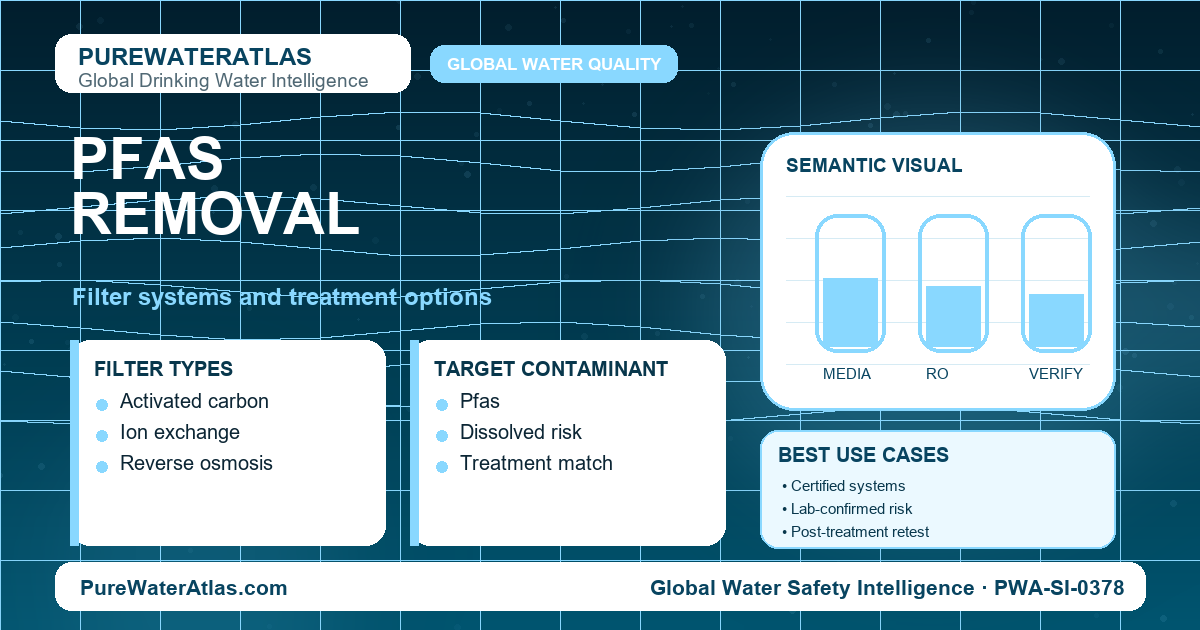
Freshwater availability around the world carbon filters are widely used because they improve taste and odor while reducing chlorine and many organic chemicals. Carbon can be highly effective for aesthetic improvement and selected contaminants, especially when certified for specific uses.
- Best for: chlorine, taste, odor, some pesticides, some volatile organic compounds
- Limitations: not a universal solution for metals, nitrates, salinity, or all microbes
Ceramic Filters
Ceramic media can physically block many bacteria and protozoa, especially in low-resource or emergency settings. Some models include silver or carbon components for added performance.
- Best for: basic microbial reduction and particle removal
- Limitations: performance varies, and viruses and dissolved chemicals may remain
Ultraviolet (UV) Disinfection
UV systems inactivate many microorganisms without adding chemicals. They are effective when water is clear enough for light penetration.
- Best for: bacteria, viruses, and protozoa in low-turbidity water
- Limitations: no removal of chemicals, metals, or particles; requires power and lamp maintenance
Reverse Osmosis Systems
Freshwater availability around the world reverse osmosis treatment is one of the most versatile options for removing dissolved contaminants. RO uses a semi-permeable membrane to reduce salts, many metals, nitrates, fluoride, and numerous other dissolved substances. It is especially useful where groundwater salinity, arsenic, or mixed contamination is a concern.
- Best for: dissolved salts, many metals, fluoride, nitrates, broad contaminant reduction
- Limitations: wastewater generation, slower production rate, membrane fouling risk, usually requires pre-filters and maintenance
Ion Exchange and Water Softeners
These systems exchange hardness minerals such as calcium and magnesium for sodium or potassium. They are useful where hard water is a major issue but are not a complete drinking-water treatment solution by themselves.
- Best for: hardness and scale control
- Limitations: do not remove many organic chemicals or pathogens
Distillation
Distillation boils water and condenses the vapor, leaving many contaminants behind. It can be very effective, though it is often energy-intensive and slower than other methods.
- Best for: many dissolved contaminants and microbial safety
- Limitations: energy use, throughput limitations, some volatile compounds may require additional carbon treatment
Multi-Stage Systems
Because real-world water problems are often mixed, many of the best solutions combine technologies. A typical household system might include sediment filtration, activated carbon, reverse osmosis, and post-treatment remineralization or polishing. Community systems may combine coagulation, filtration, disinfection, and specialized adsorption media.
Treatment Comparison at a Glance
A useful freshwater availability around the world treatment comparison should always begin with the source water profile. In simplified terms:
- If the main issue is sediment: use sediment filtration
- If the main issue is chlorine or taste: use activated carbon
- If the main issue is microbes: use UV, certified microbiological filtration, boiling, or chlorination as appropriate
- If the main issue is salts, arsenic, nitrates, or mixed dissolved contaminants: consider reverse osmosis
- If the main issue is hardness: consider softening or ion exchange
Filter Maintenance
Freshwater availability around the world filter maintenance is often the deciding factor between safe performance and false confidence. Even excellent systems can fail if cartridges are not replaced, membranes are not cleaned, or UV lamps are not changed on schedule.
- Replace pre-filters and carbon cartridges at manufacturer-recommended intervals or sooner if pressure drops
- Sanitize housings and storage tanks when changing components
- Monitor RO membrane performance using TDS trends and service guidance
- Replace UV lamps even if they still glow, because light output declines over time
- Keep records of installation dates, test results, and service events
Maintenance is not optional. A neglected filter can become ineffective or even contribute to bacterial growth in some conditions.
Buying Guide
A smart freshwater availability around the world buying guide should focus on evidence, not marketing. Before buying a system, ask the following:
- What contaminants are actually present in the water?
- Is the system certified for those specific contaminants?
- How much water is needed per day?
- Is the product designed for point-of-use or whole-house treatment?
- What are the ongoing costs for replacement filters, membranes, electricity, or wastewater?
- Can local users realistically maintain it?
- Will water pressure, temperature, or turbidity affect performance?
- Is after-sales support available?
In many cases, the best system is not the most advanced one, but the one that consistently matches local water conditions, budget, and maintenance capacity. More resources on technologies and product categories are available in water purification.
Common Misconceptions
Water treatment is often misunderstood, which can lead to poor decisions. Several myths appear repeatedly in households and public discussions.
“Clear water is safe water.”
Many dangerous contaminants are invisible, odorless, and tasteless. Clear water can still contain bacteria, lead, arsenic, nitrates, or other harmful substances.
“Any filter is better than any other.”
Filters are not interchangeable. Each technology has strengths and limits. The right choice depends on what needs to be removed.
“Carbon filters remove everything.”
Activated carbon is valuable, but it is not universal. It is excellent for certain chemicals and aesthetic issues, yet it does not reliably solve salinity, hardness, or all metal and pathogen problems.
“Reverse osmosis is always the best option.”
RO is powerful, but not always necessary. If the only issue is chlorine taste, a well-chosen carbon filter may be more practical and affordable. RO also needs maintenance and can waste some water during operation.
“Boiling water solves all contamination.”
Boiling can inactivate many pathogens, but it does not remove metals, salts, nitrates, or most chemical pollutants.
“Filter maintenance can wait until water tastes bad.”
Performance may decline before obvious taste changes occur. Scheduled maintenance is essential to keep treatment effective.
Regulations and Standards
Water safety depends not only on technology but also on standards, certification, and oversight. Around the world, regulatory frameworks vary, but several principles are widely recognized.
Drinking Water Guidelines
Many countries base national standards on public health guidance from international bodies such as the World Health Organization, or on domestic regulations established by health and environmental agencies. These standards define acceptable limits for microbes, metals, disinfection byproducts, nitrates, and other contaminants.
Utility Monitoring and Consumer Reports
Public water suppliers in many jurisdictions must test water routinely and report results to regulators and consumers. These reports can be a useful starting point for understanding local water issues, although they may not capture contamination introduced in private plumbing.
Product Certification
For household filters and treatment units, independent certification matters. Reputable systems are often tested against recognized performance standards for specific contaminant claims. Consumers should look for documentation that shows exactly what was tested and under what conditions.
Private Wells and Decentralized Systems
In many countries, private wells are not monitored as closely as municipal systems, placing more responsibility on owners. This makes routine testing, careful system selection, and good maintenance even more important.
Equity and Access
Regulations alone do not guarantee safe water. Affordability, infrastructure, maintenance capacity, and emergency preparedness all affect whether standards translate into real-world protection. Safe freshwater access remains both a technical challenge and a social justice issue.
Conclusion
Freshwater availability is one of the defining resource issues of the modern world. It involves far more than the presence of rivers, lakes, or groundwater. True availability means water that is accessible, reliable, and safe for human use. Around the globe, this goal is threatened by drought, pollution, overuse, infrastructure failures, salinity, and uneven development.
That is why the search for freshwater availability around the world best filters is so important. Effective treatment can protect health, improve resilience, and help communities adapt to water-quality challenges that vary by region. But there is no universal device that solves every problem. Sediment filters, carbon filters, ceramic units, UV disinfection, softeners, distillation, and reverse osmosis all serve different purposes. The best solution begins with testing, matches the contaminant profile, and includes realistic maintenance planning.
For some households, a certified carbon filter may be sufficient. For others, especially where dissolved contaminants or salinity are present, reverse osmosis may be the better choice. In emergency or low-resource environments, simple and robust systems can save lives when centralized treatment is unavailable. Across all settings, maintenance, certification, and informed decision-making remain essential.
Ultimately, improving freshwater security requires both local action and systemic change: better watershed protection, stronger regulations, smarter infrastructure, and wider access to proven treatment technologies. When these pieces work together, safe drinking water becomes more than a technical possibility-it becomes a practical and sustainable reality.
Read the full guide: Global Water Quality Guide
Explore more in this category: Global Water Quality Articles