Introduction
Freshwater is essential for drinking, cooking, hygiene, agriculture, health care, energy production, and ecosystems. Yet freshwater availability varies dramatically across regions, seasons, and populations. Some communities have abundant rivers, lakes, and groundwater, while others depend on seasonal rainfall, distant water deliveries, or unsafe local sources. Understanding freshwater availability around the world health effects is important because limited or unreliable access to safe water does not only affect thirst or convenience. It directly influences infectious disease risk, nutrition, sanitation, maternal and child health, economic stability, and long-term public health outcomes.
Globally, freshwater stress is shaped by climate, geography, infrastructure, pollution, governance, population growth, and competing demands from farming, industry, and households. Even places with large total freshwater resources may still experience shortages if water is contaminated, poorly distributed, overused, or inaccessible to vulnerable communities. In contrast, some dry regions maintain relatively safe access through strong treatment systems, conservation planning, and efficient delivery networks.
The health effects of freshwater scarcity and unsafe freshwater exposure range from immediate dehydration and waterborne illness to chronic disease burdens linked to chemical contamination, poor sanitation, and repeated infection. When people do not have adequate water for handwashing, cleaning, and food preparation, diseases spread more easily. When they rely on unsafe rivers, shallow wells, or poorly stored household water, they may be exposed to pathogens, heavy metals, agricultural runoff, and industrial pollutants. Where shortages are persistent, children, older adults, pregnant people, people with disabilities, low-income households, rural communities, migrants, and those living in conflict zones often face the greatest harm.
This article explains what freshwater availability means, what drives global differences, how exposure affects human health, which populations are most at risk, and what testing, prevention, treatment, and regulation look like in practice. Readers looking for broader background can also explore this complete guide and additional resources in the global water quality category.
What It Is
Freshwater availability refers to the amount of usable, accessible, and safe freshwater that people and ecosystems can rely on over time. This includes surface water such as rivers, lakes, reservoirs, and wetlands, as well as groundwater stored in aquifers. Availability is not simply a question of how much water exists in nature. It also depends on whether that water is physically reachable, affordable, microbiologically safe, chemically acceptable, and available when needed.
In public health terms, freshwater availability includes several dimensions:
- Quantity: whether enough water is available for drinking, cooking, cleaning, hygiene, sanitation, and basic household needs.
- Quality: whether the water is free from harmful microbes, toxic chemicals, and excessive contaminants.
- Reliability: whether access is consistent across days, seasons, and years.
- Accessibility: whether households can obtain water without excessive travel, cost, or physical burden.
- Equity: whether all populations have similar access, including marginalized and remote groups.
Global discussions often use terms such as water scarcity, water stress, and water insecurity. While related, these are not identical. Water scarcity generally describes limited water resources relative to demand. Water stress often reflects high pressure on available supplies from use or environmental conditions. Water insecurity is broader and includes unreliable access, poor quality, unaffordability, and social vulnerability.
These distinctions matter because the freshwater availability around the world medical concerns are shaped by more than volume alone. A community may live near a river but still face major health risks if the river is contaminated with sewage, mining waste, or industrial discharge. Another community may have a functioning piped system but suffer seasonal shortages that reduce handwashing and raise disease transmission. Likewise, households may have technically available water but only at a cost that forces rationing.
When discussing freshwater availability around the world exposure levels, it is useful to think of exposure in tiers:
- Low-risk exposure: consistent access to treated, monitored water in sufficient quantity for drinking and hygiene.
- Moderate-risk exposure: intermittent access, occasional contamination events, or dependence on untreated backup sources.
- High-risk exposure: chronic scarcity, unsafe source water, poor sanitation, contaminated storage, or long collection distances.
These exposure levels influence both short-term symptoms and long-term health outcomes. More detail on the environmental side of this issue can be found in this overview of causes and sources.
Main Causes or Sources
Freshwater availability differs around the world because of a combination of natural and human factors. In most cases, no single cause explains water insecurity. Instead, multiple pressures interact and intensify one another.
Climate and Weather Variability
Rainfall patterns strongly shape freshwater supplies. Regions with low annual precipitation, prolonged drought, irregular monsoons, shrinking snowpack, or changing glacial melt may experience reduced river flow and groundwater recharge. Climate change is making many of these patterns less predictable. Some areas are becoming drier overall, while others are seeing more extreme swings between floods and droughts. Flooding can temporarily increase water quantity but often worsens contamination and damages supply infrastructure.
Population Growth and Urbanization
As populations grow, demand for freshwater rises for drinking, sanitation, food production, and industry. Rapid urbanization can outpace infrastructure, leading to overdrawn aquifers, aging pipe systems, intermittent supply, and sewage contamination. Informal settlements are especially vulnerable when they lack regulated service connections and safe storage options.
Agricultural Demand
Agriculture is one of the largest freshwater users globally. Irrigation can deplete rivers and aquifers, especially in arid regions or where water-intensive crops are grown unsustainably. Agricultural activities may also reduce water quality through fertilizer runoff, pesticide residues, animal waste, and sediment loading. This creates a double burden: less water and more contamination.
Industrial Use and Energy Production
Industries use water for manufacturing, cooling, mining, processing, and cleaning. Poorly managed discharges can contaminate freshwater with heavy metals, solvents, hydrocarbons, acids, and other hazardous substances. Thermal pollution from energy facilities can also affect aquatic ecosystems and water quality. In some regions, industrial demand competes directly with community water needs.
Groundwater Overextraction
Many communities depend on groundwater because it is often more stable than surface water during dry periods. However, overpumping can lower water tables, dry out wells, cause land subsidence, and allow saltwater intrusion in coastal areas. Deepening wells may also increase exposure to naturally occurring contaminants such as arsenic or fluoride in certain geologic settings.
Pollution and Wastewater Failures
Sewage discharge, inadequate wastewater treatment, open defecation, landfill leakage, mining runoff, and accidental chemical spills can all make freshwater unsafe. Microbial contamination is especially dangerous because it can spread rapidly and cause outbreaks of diarrheal disease, hepatitis, cholera, typhoid, and parasitic infections. Chemical contamination may produce less immediate illness but can create severe chronic health risks over time.
Infrastructure and Governance Challenges
Water may exist regionally but remain unavailable locally because of broken pumps, leaking pipes, poor maintenance, insufficient treatment capacity, weak regulation, corruption, or conflict. Fragile governance can limit monitoring, emergency response, and fair water allocation. In conflict-affected or disaster-affected settings, water systems may be intentionally targeted or indirectly damaged, leaving communities reliant on unsafe alternatives.
Environmental Degradation
Deforestation, wetland destruction, soil erosion, and watershed mismanagement can reduce natural water storage and filtration. Healthy ecosystems help regulate water flow, recharge aquifers, reduce sedimentation, and maintain water quality. When these systems are degraded, both quantity and safety may suffer.
For readers interested in contamination pathways connected to scarcity, the water contamination category provides additional context.
Health and Safety Implications
The public health consequences of inadequate freshwater access are broad and often interconnected. The phrase freshwater availability around the world health effects includes not only illnesses from drinking contaminated water, but also the consequences of not having enough water for hygiene, sanitation, food safety, and disease prevention.
Immediate Health Effects
One of the most direct consequences of insufficient freshwater is dehydration. Mild dehydration may cause thirst, fatigue, headache, dry mouth, dizziness, and reduced concentration. More serious dehydration can lead to confusion, rapid heart rate, low blood pressure, kidney stress, heat-related illness, and in severe cases, death. Infants, older adults, and people working outdoors are especially vulnerable.
Unsafe freshwater can also cause acute infectious disease. Common freshwater availability around the world symptoms related to contaminated water exposure include:
- Diarrhea
- Vomiting
- Abdominal cramps
- Nausea
- Fever
- Weakness
- Dehydration
- Skin irritation or rash after contaminated water contact
Microbial contamination from bacteria, viruses, and parasites is a major cause of these symptoms. Repeated diarrheal disease can quickly become life-threatening, particularly in young children, because of dehydration and electrolyte loss. Water insecurity also makes disease outbreaks harder to control, since handwashing and cleaning become limited.
Hygiene and Sanitation Impacts
Health risks rise sharply when water scarcity affects hygiene. Without enough water for handwashing, bathing, cleaning utensils, laundering clothes, and maintaining toilets, transmission of gastrointestinal and respiratory infections can increase. Poor sanitation also allows pathogens to cycle back into local water sources. Schools and clinics are especially affected when water shortages interrupt safe operations.
Women and girls may face added burdens where water collection is time-consuming or unsafe. Limited water access can complicate menstrual hygiene management, increase school absenteeism, and raise exposure to violence during long collection trips.
Nutritional and Developmental Effects
Inadequate freshwater access affects nutrition in several ways. Unsafe water increases diarrhea, which reduces nutrient absorption. Water shortages can lower crop production, increase food prices, and reduce dietary diversity. Contaminated irrigation water may also affect food safety. In children, repeated infection and undernutrition together can contribute to stunting, impaired cognitive development, and reduced long-term educational and economic outcomes.
Chemical Exposure and Chronic Disease
Some of the most serious freshwater availability around the world long term risks are linked to chronic exposure to chemical contaminants. These may include arsenic, lead, nitrate, fluoride, mercury, cadmium, industrial solvents, and agricultural chemicals. Health outcomes depend on the contaminant, concentration, duration, and age or health status of the exposed person.
Examples of long-term risks include:
- Kidney damage
- Liver injury
- Neurologic effects
- Developmental problems in children
- Bone and dental abnormalities
- Cardiovascular effects
- Certain cancers
- Endocrine and reproductive impacts
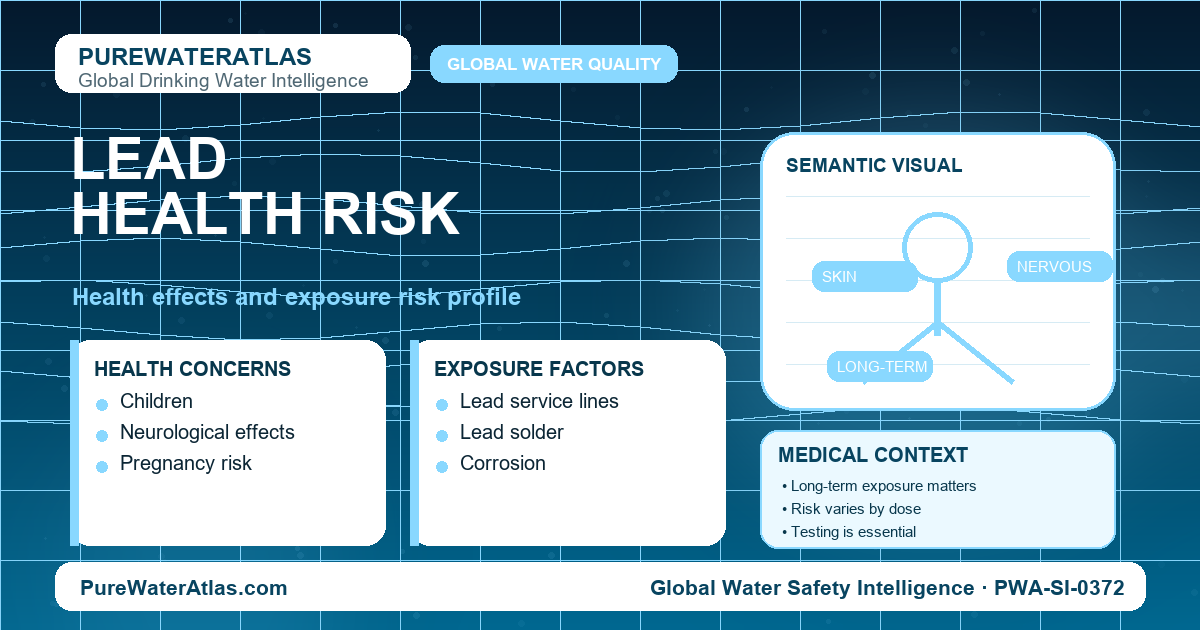
Nitrate-contaminated drinking water can be especially dangerous for infants. Lead exposure may impair neurodevelopment even at low levels. Arsenic has been associated with cancer and cardiovascular disease after long-term exposure. Excess fluoride can protect teeth at appropriate concentrations but may contribute to fluorosis when levels are too high.
Mental Health and Social Effects
Water insecurity also affects mental health. Constant worry about obtaining water, paying for water, or protecting family members from contaminated supplies can contribute to stress, anxiety, and social strain. Long collection times reduce opportunities for school, work, rest, and caregiving. In humanitarian settings, lack of safe water often compounds trauma, displacement, and insecurity.
Vulnerable Groups
The burden of harm is not evenly distributed. Key freshwater availability around the world vulnerable groups include:
- Infants and young children: higher risk of dehydration, diarrheal disease, and developmental harm.
- Pregnant people: greater need for hydration and higher concern about certain contaminants.
- Older adults: increased susceptibility to dehydration and chronic disease complications.
- People with weakened immune systems: more severe outcomes from microbial contamination.
- Rural households: possible reliance on untreated wells, rivers, or seasonal sources.
- Low-income communities: greater difficulty affording safe water, storage, filtration, or medical care.
- People with disabilities: barriers to water collection, transport, and sanitation access.
- Displaced populations and conflict-affected communities: disrupted infrastructure and higher outbreak risk.
In these groups, even moderate water insecurity may translate into substantial health consequences.
Testing and Detection
Evaluating freshwater availability requires testing both quantity and quality. Public health agencies, utilities, researchers, and communities use a range of monitoring approaches to identify shortages, contamination, and associated health threats.
Water Quantity Assessment
Availability is measured through rainfall records, river flow monitoring, reservoir levels, groundwater depth, household access surveys, and system performance data. Utilities may track supply interruptions, pressure loss, seasonal variability, and consumption patterns. In rural areas, functionality of wells, pumps, and boreholes is a critical part of detection because infrastructure failure can create practical scarcity even when water remains in the environment.
Microbiological Testing
Testing for microbial contamination often includes indicators such as total coliforms and E. coli, which suggest fecal contamination and possible presence of pathogens. Additional testing may target specific bacteria, viruses, or parasites depending on local risks. Sampling must be done carefully because contamination can occur at the source, during treatment, in distribution pipes, or in household storage containers.
Chemical Testing
Chemical analysis may include pH, turbidity, hardness, nitrate, fluoride, arsenic, lead, manganese, pesticides, and industrial compounds. Some contaminants are visible through staining, odor, or taste changes, but many are not. Clear water can still be hazardous. That is why laboratory testing and routine surveillance are essential, especially in areas with mining, agriculture, old plumbing, industrial activity, or known geologic contamination.
Household and Community Warning Signs
Communities may notice warning signs before formal testing occurs. These include sudden increases in diarrheal illness, unusual taste or smell, discoloration, sediment, dead fish, flooding near latrines, system pressure drops, dry wells, or higher dependence on tanker deliveries and surface water collection. While these signs do not identify contaminants with certainty, they should prompt rapid investigation.
Health Surveillance
Clinicians and public health officials also detect water-related problems through disease patterns. Clusters of gastrointestinal illness, jaundice, skin disease, or specific toxic exposure findings may point toward water system failures. Linking environmental testing with clinical surveillance improves early detection and outbreak response.
More on sampling and monitoring approaches is available in this guide to testing and detection methods.
Prevention and Treatment
Preventing health harm from freshwater scarcity requires action at household, community, health system, and policy levels. Effective solutions address not only drinking water quality, but also equitable access, infrastructure reliability, sanitation, and hygiene.
Source Protection and Watershed Management
Protecting rivers, lakes, wetlands, and aquifers helps preserve both quantity and quality. This includes controlling industrial discharge, improving wastewater treatment, reducing agricultural runoff, restoring vegetation, and managing land use in recharge areas. Healthy watersheds function as natural buffers against contamination and extreme variability.
Water Treatment and Purification
Centralized treatment systems remain one of the most effective public health measures where infrastructure is available. Depending on source conditions, treatment may include filtration, coagulation, sedimentation, chlorination, ultraviolet disinfection, membrane treatment, activated carbon, or advanced chemical removal methods. Household methods such as boiling, point-of-use filters, chlorination tablets, solar disinfection, and safe storage can reduce risk when centralized systems are absent or unreliable.
Readers interested in practical options can explore the water purification category.
Improved Access and Reliability
Reducing collection times, repairing distribution systems, preventing leaks, expanding storage, and building climate-resilient infrastructure all improve health outcomes. Reliable water access supports handwashing, food safety, maternal care, school attendance, and infection control in clinics. Emergency planning is also crucial so that droughts, floods, and system failures do not force households toward unsafe sources.
Sanitation and Hygiene Interventions
Water supply improvements must be paired with safe sanitation and hygiene practices. Toilets, sewer systems, fecal sludge management, handwashing facilities, and hygiene education reduce fecal contamination and disease transmission. In many settings, integrating water, sanitation, and hygiene programs provides greater health benefit than focusing on one component alone.
Medical Management of Water-Related Illness
Treatment depends on the type of exposure. For acute diarrheal illness, oral rehydration is often lifesaving. Severe dehydration may require intravenous fluids. Some infections need antimicrobial or antiparasitic treatment, though this should follow clinical guidance because many diarrheal illnesses are self-limited or require organism-specific management. Suspected chemical exposure may need blood or urine testing, toxicology consultation, and long-term follow-up depending on the contaminant.
People should seek medical care promptly if they have persistent vomiting, bloody diarrhea, high fever, confusion, signs of severe dehydration, decreased urination, or symptoms in infants, older adults, or immunocompromised individuals.
Risk Communication and Community Education
Clear communication is essential during shortages and contamination events. Communities need practical guidance on boiling advisories, safe storage, infant feeding, hygiene under limited-water conditions, and when to seek care. Public trust improves when health authorities communicate quickly, transparently, and in accessible language.
Common Misconceptions
Several misconceptions can make freshwater-related health risks harder to understand and manage.
- “If water looks clean, it is safe.” Many pathogens and chemicals are invisible, odorless, and tasteless.
- “Water scarcity only affects dry countries.” Water insecurity can occur in wet regions because of contamination, poor infrastructure, seasonal disruption, or inequitable distribution.
- “The main issue is thirst.” Health impacts also come from reduced hygiene, poor sanitation, food insecurity, and chronic chemical exposure.
- “Boiling fixes all water problems.” Boiling can inactivate many microbes but does not remove heavy metals, nitrates, or many chemical pollutants.
- “Only poor rural communities are affected.” Urban areas, high-income countries, and wealthy households can also experience contamination, infrastructure failures, drought restrictions, and inequitable access.
- “Short shortages are harmless.” Even temporary interruptions can disrupt sanitation, increase infection risk, and force use of unsafe backup sources.
Correcting these misconceptions is important for prevention, planning, and emergency response.
Regulations and Standards
Freshwater governance involves international guidance, national laws, local regulations, and utility standards. While details differ by country, most frameworks aim to protect drinking water quality, manage withdrawals, regulate pollution, and ensure safe service delivery.
Drinking Water Quality Standards
Many countries base their drinking water regulations on health-based guideline values developed by major public health organizations and adapted to local conditions. These standards often define acceptable levels for microbial indicators, disinfectant residuals, turbidity, metals, nitrate, fluoride, and other contaminants. Routine monitoring and reporting are essential because standards only protect health when they are enforced.
Water Resource Management
Water allocation laws may govern groundwater extraction, river withdrawals, agricultural use, industrial permits, and environmental flow protection. In well-regulated systems, these rules help prevent aquifer depletion, ecosystem collapse, and harmful competition between sectors. In weaker systems, overuse and contamination may continue despite formal laws.
Sanitation, Wastewater, and Pollution Control
Health protection depends not only on what enters drinking water plants, but also on what is kept out of source waters. Regulations on sewage treatment, industrial discharge, landfill management, mining waste, and agricultural runoff are critical. Without source control, treatment costs rise and contamination events become more frequent.
Equity and Human Rights Dimensions
Access to safe water is increasingly recognized as a basic human need and a foundation for health. Modern policy approaches often emphasize affordability, non-discrimination, resilience, and service to rural and marginalized populations. This matters because averages can hide serious disparities. A country may report high national access while remote villages or informal settlements remain dangerously underserved.
Emergency Preparedness Standards
Preparedness plans for drought, flooding, storms, contamination incidents, and infrastructure failure are a core part of regulation. These plans may include backup supply systems, public alerts, emergency disinfection protocols, health surveillance, and coordination between utilities and health departments.
Conclusion
Freshwater availability is one of the most important environmental determinants of health. The global picture is not defined only by how much water exists, but by whether it is safe, reliable, affordable, and equitably accessible. The topic of freshwater availability around the world health effects includes dehydration, infectious disease, hygiene failure, chemical exposure, nutritional stress, mental strain, and deep social inequality.
Understanding freshwater availability around the world symptoms, recognizing freshwater availability around the world long term risks, identifying freshwater availability around the world vulnerable groups, and evaluating freshwater availability around the world exposure levels are all essential for prevention. So is attention to the full range of freshwater availability around the world medical concerns, from acute gastroenteritis to chronic toxic exposure and developmental harm.
Progress depends on protecting source waters, improving treatment and sanitation, strengthening infrastructure, expanding monitoring, and prioritizing the communities at greatest risk. With coordinated public health action, science-based regulation, and equitable investment, the burden of water-related disease can be reduced and safe freshwater access can become more secure for people around the world.
Read the full guide: Global Water Quality Guide
Explore more in this category: Global Water Quality Articles