
Introduction
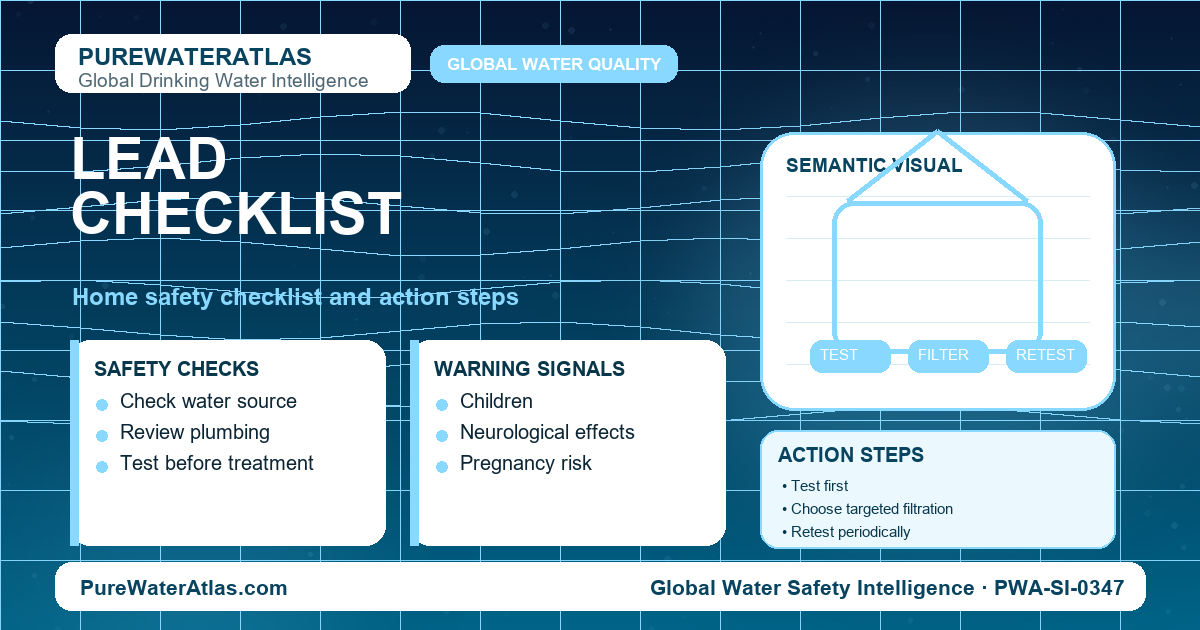
Water quality is one of the most important and least understood parts of home safety. People often assume that clear, odorless water is safe, but appearance alone cannot confirm whether water is suitable for drinking, cooking, bathing, or everyday household use. A practical water quality by country home safety checklist helps families evaluate local risks, understand how infrastructure and geography influence supply safety, and make informed decisions about testing, filtration, storage, and maintenance.
Water safety differs widely from one country to another and even between neighborhoods in the same city. National infrastructure, treatment standards, industrial activity, agricultural runoff, plumbing materials, climate conditions, and emergency preparedness all affect what comes out of a tap. Rural homes relying on wells may face risks that differ from urban apartments connected to municipal systems. Likewise, countries with advanced treatment systems may still experience contamination events due to aging pipes, flooding, drought, or failures in distribution networks.
This article explains how to use a country-focused home water checklist in a practical way. It covers what water quality means at the household level, where contamination comes from, how water-related risks affect health and safety, what testing methods are available, and how homeowners and tenants can reduce hazards. It also addresses common myths and highlights the role of regulations and standards in protecting public health.
For broader context on regional conditions and global comparisons, readers may also explore /category/global-water-quality/ and the overview resource /water-quality-by-country-complete-guide/. Those resources are useful when comparing local home concerns with national and international patterns.
What It Is
At the household level, water quality refers to the physical, chemical, and biological characteristics of the water used in a home. A home safety checklist built around water quality by country is a structured way to identify likely hazards based on where a household is located and how its water is sourced, treated, stored, and delivered.
In practical terms, the checklist asks questions such as:
- What is the source of the water: municipal supply, private well, rainwater collection, tanker delivery, or bottled storage?
- Is the home in a country or region known for strong water treatment systems, intermittent service, or contamination concerns?
- Are there local water quality by country risk signs, such as frequent boil-water advisories, visible sediment, pipe corrosion, flooding, or agricultural runoff?
- Has the household completed any recent water quality by country inspection of plumbing, tanks, filters, and fixtures?
- Is there a routine for water quality by country household testing based on local hazards like bacteria, heavy metals, nitrates, arsenic, or hardness?
- Are there effective water quality by country protection steps in place, such as certified treatment devices, safe storage, and regular maintenance?
The checklist approach matters because water safety is never only a national issue. Even in countries with high regulatory compliance, contamination can occur inside the building through old pipes, cross-connections, poorly maintained water heaters, corroded fixtures, or rooftop storage tanks. In lower-resource settings, households may need to assess additional risks linked to untreated sources, inconsistent chlorination, inadequate sanitation, or seasonal contamination.
Water quality should also be understood as dynamic rather than fixed. Conditions may change after storms, earthquakes, floods, utility repairs, droughts, industrial spills, or changes in land use. A useful checklist is therefore not a one-time document. It should be reviewed regularly and updated when a family moves, renovates plumbing, installs a treatment system, or notices changes in taste, color, pressure, or odor.
Readers seeking more background on why contamination patterns vary by location can review /water-quality-by-country-causes-and-sources/ for source-specific explanations.
Main Causes or Sources
Water contamination in homes can come from the original source, the treatment process, the distribution network, or household plumbing and storage. Understanding the main causes is central to any home safety checklist because the correct response depends on the contamination pathway.
Natural geological sources
Some harmful substances occur naturally in soil and rock. Groundwater may dissolve arsenic, fluoride, manganese, iron, uranium, or other minerals depending on local geology. In some countries, these natural contaminants are major long-term drinking water concerns, especially where private wells are common or centralized treatment is limited.
Geological contamination is often invisible and cannot be detected by taste. A home may have water that looks clean while containing elevated levels of arsenic or other substances. In regions known for specific geochemical hazards, routine testing is essential.
Microbial contamination
Bacteria, viruses, and parasites are among the most immediate water safety threats. These organisms may enter water supplies through sewage leaks, failing septic systems, animal waste, flooding, stormwater runoff, poor sanitation infrastructure, or inadequate disinfection. Common microbial hazards include E. coli, coliform bacteria, Giardia, Cryptosporidium, and various enteric viruses.
Microbial risks are especially important in settings with intermittent water service, low-pressure systems, shared storage tanks, and untreated wells. Homes that store water in tanks or containers also face elevated risk if cleaning and sealing practices are poor.
For scientific background on organisms that can affect water safety, see /category/water-microbiology/.
Distribution system failures
Water that leaves a treatment plant in safe condition may become contaminated before it reaches the home. Aging infrastructure, corroded mains, pressure loss, illegal connections, pipe breaks, backflow events, and cross-connections can all compromise quality. These problems can occur in both developing and highly developed countries.
One of the most important water quality by country risk signs is inconsistency: cloudy water after repairs, recurring discoloration, low pressure, rust staining, or sudden changes in odor. Such signs may indicate disturbance in the distribution system or corrosion inside plumbing.
Household plumbing materials
Internal plumbing can significantly affect water quality. Lead service lines, lead solder, brass fixtures, copper pipes, galvanized steel, deteriorating rubber components, and certain plastic materials may contribute metals, particles, or chemical compounds. In older buildings, first-draw water may contain elevated contaminants after sitting in contact with pipes overnight.
This is why a country-based checklist must also be building-specific. National tap water may generally be safe, but older homes may still require targeted testing and treatment.
Industrial and agricultural pollution
Industrial discharge, mining operations, landfills, fuel spills, and agricultural chemicals can contaminate surface water and groundwater. Nitrates from fertilizers, pesticides, solvents, and heavy metals may enter local supplies. Rural areas are often associated with these risks, but suburban and peri-urban communities can also be affected.
Industrial and agricultural contaminants frequently require laboratory analysis because they are not reliably identified by taste, smell, or color. A household near farms, factories, mining areas, or waste disposal sites should consider that proximity as a trigger for broader testing.
Storage and handling problems
In some countries, especially where supply is intermittent, households depend on rooftop tanks, cisterns, or delivered water. These systems can become contaminated if tanks are uncovered, cracked, poorly cleaned, or accessible to insects, animals, and debris. Stagnation also promotes biofilm growth and can reduce residual disinfectant levels.
Container handling is equally important. Water may be microbiologically safe when delivered but become unsafe during household transfer, scooping, or storage.
Health and Safety Implications
The health effects of poor water quality depend on the contaminant, exposure level, and duration. Some problems cause immediate illness, while others create long-term health burdens that may go unnoticed for years. A careful home checklist should therefore consider both acute and chronic risks.
Acute gastrointestinal illness
Microbial contamination often causes rapid symptoms such as diarrhea, vomiting, stomach cramps, nausea, fever, and dehydration. Young children, older adults, pregnant individuals, and people with weakened immune systems are especially vulnerable. In severe cases, waterborne disease can lead to hospitalization or life-threatening dehydration.
Outbreaks may be linked to contaminated municipal systems, private wells, flood events, recreational water contact, or poor storage hygiene. Even one episode of visibly contaminated or foul-smelling water should prompt caution and immediate follow-up.
Long-term toxic exposure
Chronic exposure to arsenic, lead, nitrates, manganese, or industrial chemicals may affect neurological development, cardiovascular health, kidney function, reproductive health, or cancer risk. Lead exposure is a major concern because even low levels can affect children’s brain development and behavior. Nitrate contamination can be especially dangerous for infants, and arsenic exposure has serious long-term implications in affected regions.
Because these hazards may not cause immediate symptoms, many families underestimate them. This is one reason water quality by country household testing should be based on local evidence rather than only on whether water “seems fine.”
Skin, eye, and respiratory effects
Water quality problems do not affect only drinking water. Bathing and cleaning water can cause skin irritation, worsen eczema, inflame eyes, or create inhalation concerns. For example, high chlorine by-products, microbial aerosols, or poor water heater conditions may contribute to indoor exposure risks. Very hard water may not be a direct toxicity issue for most people, but it can aggravate dryness, reduce soap performance, and increase scale buildup that affects appliances and fixtures.
Safety risks beyond health
Water quality also affects overall home safety and cost. Corrosive water damages pipes, water heaters, and appliances. Scale buildup reduces energy efficiency and shortens equipment life. Staining, sediment, and biofilm can indicate operational problems that may become more expensive over time. In severe cases, contamination can make a home temporarily uninhabitable or require expensive plumbing replacement and remediation.
To better understand how household exposure relates to broader public health, readers can review /water-quality-by-country-health-effects-and-risks/.
Testing and Detection
Testing is the foundation of any effective water safety checklist. While sensory clues may help identify obvious problems, reliable detection requires structured observation and, in many cases, laboratory analysis.
Start with observation
A basic home inspection should begin with what residents can directly observe. These findings do not replace testing, but they help identify priorities for action.
- Cloudiness, sediment, or floating particles
- Brown, orange, blue-green, or black discoloration
- Metallic, sulfur, chlorine, or musty odors
- Unusual taste changes
- Rust stains on sinks, tubs, and laundry
- Scale deposits on kettles, faucets, and showerheads
- Recurring plumbing leaks or corrosion
- Low or fluctuating water pressure
These common water quality by country risk signs should be recorded and compared with local utility notices, recent repairs, weather events, and neighborhood reports.
Perform a household inspection
A thorough water quality by country inspection should include the home’s water entry point, visible plumbing, treatment devices, water heater, storage tanks, outdoor spigots, and any well components if applicable. Key questions include:
- What material are the supply pipes made of?
- Is the property old enough to have lead-containing components?
- Are filters installed, and are cartridges changed on schedule?
- Is there a private well, and if so, when was it last tested?
- Are tanks covered, cleaned, and protected from contamination?
- Has the home experienced flooding or backflow?
- Are there dead-end plumbing sections where water may stagnate?
Use home test kits carefully
Home kits can be useful for screening pH, hardness, chlorine, nitrates, and sometimes bacteria or metals. They are convenient and may help households identify whether further investigation is needed. However, kit quality varies, and results should be interpreted cautiously. Screening tests do not always match certified laboratory methods, especially for contaminants present at very low but still important levels.
Home kits are best used as part of a larger plan, not as the sole basis for declaring water safe.
Laboratory testing priorities
The most reliable water quality by country household testing program includes laboratory analysis tailored to source type and local risk factors. The exact list differs by region, but many households should consider testing for:
- Total coliform and E. coli
- Lead
- Arsenic
- Nitrates and nitrites
- pH and corrosivity indicators
- Hardness and total dissolved solids
- Iron and manganese
- Copper
- Fluoride, where locally relevant
- Pesticides or industrial contaminants, if local land use suggests risk
Private well owners usually need more frequent and broader testing than customers served by well-managed municipal systems. Testing should also be repeated after plumbing changes, flooding, major construction, unusual taste or odor events, or positive bacterial findings.
When to test immediately
Immediate testing or urgent alternative water use should be considered if:
- Infants, pregnant individuals, or immunocompromised residents live in the home
- Water has a sudden change in color, smell, or taste
- There has been flooding, sewage backup, or loss of system pressure
- A boil-water notice has been issued
- The home uses a private well and has not been tested recently
- Renovation may have disturbed old plumbing materials
Households interested in scientific fundamentals behind testing parameters may find useful background at /category/water-science/.
Prevention and Treatment
Once risks are identified, the next step is to apply effective preventive measures and treatment strategies. The most important rule is simple: match the solution to the problem. Different contaminants require different controls.
Source protection and safe use habits
Many water quality by country protection steps begin before treatment. Households should protect wells, tanks, and plumbing from contamination whenever possible.
- Keep wellheads sealed, elevated, and away from septic systems or chemical storage
- Clean and disinfect storage tanks on a scheduled basis
- Use clean containers for stored drinking water
- Avoid cross-connections with irrigation, hoses, or non-potable systems
- Flush taps after extended stagnation, especially in older homes
- Follow local advisories after storms, repairs, or emergencies
Choose treatment based on the contaminant
Not all filters remove the same pollutants. Activated carbon may improve taste and reduce some chemicals, but it does not reliably remove dissolved metals or many microbes unless specially designed. Reverse osmosis can reduce many dissolved contaminants, including certain metals and salts, but requires maintenance and may waste some water. Ultraviolet treatment can disinfect microbes if the water is sufficiently clear, but it does not remove chemicals. Distillation can remove many dissolved substances, though it is slower and energy-intensive.
Examples of matching treatment to risk include:
- Microbial contamination: boiling, disinfection, UV treatment, or properly certified microbiological filtration
- Lead and certain metals: certified point-of-use filters or plumbing replacement
- Hardness: water softening systems
- Arsenic or nitrates: treatment specifically certified for those contaminants, often reverse osmosis or specialized media
- Sediment: pre-filtration to protect plumbing and downstream devices
Maintenance is essential
One of the most overlooked topics is water quality by country maintenance tips. A treatment device that is not maintained can become ineffective or even make water quality worse. Filters may clog, cartridges may expire, UV lamps may weaken, and neglected storage tanks may become contamination sites.
Key maintenance practices include:
- Replacing filter cartridges at the recommended interval
- Keeping a written schedule for tank cleaning and system servicing
- Testing treated water periodically to confirm performance
- Sanitizing well systems or storage components when contamination is detected
- Inspecting plumbing for leaks, corrosion, and pressure irregularities
- Checking softeners, membranes, and UV units for proper function
Boiling and emergency treatment
Boiling is a useful emergency response for microbiological risk, but it does not remove heavy metals, nitrates, or many chemical contaminants. In fact, boiling can concentrate some dissolved substances as water evaporates. This is why households should not assume that boiled water is universally safe. Emergency guidance must be tied to the contaminant of concern.
Plumbing upgrades and long-term fixes
Sometimes the most effective action is structural. Replacing old lead-bearing plumbing components, correcting backflow risks, improving well construction, or installing safer storage can provide a more durable solution than relying entirely on repeated short-term treatment.
Renters should document concerns and communicate with landlords or building managers. Owners should keep records of repairs, filter certifications, lab reports, and utility notices. This documentation supports informed maintenance and may also be useful during real estate transactions or public health investigations.
Common Misconceptions
Many water safety decisions are shaped by assumptions that sound reasonable but are inaccurate. Correcting these misunderstandings is an important part of household protection.
“If water looks clear, it is safe”
This is false. Many dangerous contaminants, including lead, arsenic, nitrates, and microbes, may be present in water that looks perfectly normal. Visual inspection is helpful, but it cannot confirm safety.
“Bottled water is always safer than tap water”
Not necessarily. Bottled water quality varies by source, regulation, storage conditions, and handling. In some settings it may be safer than untreated tap water, but in others it may offer no advantage or may be subject to contamination after opening or prolonged heat exposure.
“Municipal water means no home testing is needed”
Municipal treatment reduces many risks, but it does not eliminate problems within the building. Old service lines, corroded plumbing, and poor storage practices can still create exposure. Households with vulnerable residents or older infrastructure may still benefit from targeted testing.
“A filter is a universal solution”
Different filters do different things. A carbon pitcher may improve taste but may not remove the contaminant that matters most in a specific home. Treatment should be selected according to tested risks and certified performance.
“Boiling fixes every water problem”
Boiling is effective against many microbes but not against most chemical contaminants. It is an emergency microbiological control, not a complete treatment method.
“Only low-income countries have water quality problems”
This misconception is particularly harmful. Water quality challenges exist in every region of the world. Wealthier countries may have stronger monitoring and treatment capacity, yet still face contamination events, lead service line issues, agricultural pollution, aging infrastructure, and household plumbing hazards. Country comparisons are useful, but they should not create false confidence.
Regulations and Standards
Regulations play a central role in water protection, but standards differ among countries and are implemented with varying levels of consistency. Understanding this helps households interpret national claims about safety while still taking local responsibility.
Why standards vary
Countries may adopt different drinking water guidelines based on scientific review, available technology, economic conditions, source water challenges, and regulatory history. Some follow international frameworks closely, while others use their own legal thresholds and monitoring systems. Even where standards appear strong on paper, enforcement capacity may differ between urban and rural areas.
What regulations usually cover
Most national or regional drinking water standards address core categories such as:
- Microbial indicators like coliform bacteria or E. coli
- Chemical contaminants such as arsenic, lead, nitrate, and pesticides
- Disinfection requirements and residual levels
- Operational parameters like turbidity and pH
- Sampling frequency, reporting, and corrective action procedures
However, regulations often focus more on public systems than on private wells, household storage, or in-building plumbing. That gap matters. A family may live in a country with high compliance in municipal treatment while still facing hazards in their own home.
Using regulations wisely at home
Households should see regulations as a foundation, not a substitute for awareness. The safest approach is to combine public information with private vigilance. Review local water quality reports where available, track utility advisories, and understand whether the home is served by a regulated public system or an unregulated private source.
A practical checklist for regulatory awareness includes:
- Identify the source of household water
- Determine whether the supply is publicly regulated or privately managed
- Review the most recent public water quality report, if one exists
- Ask whether the building has old plumbing components
- Confirm whether local authorities issue advisories during floods, pressure loss, or contamination incidents
- Schedule independent testing if risk factors are present
Global standards and country comparisons are valuable, but the household remains the final point of exposure. This is why a water quality by country home safety checklist should always combine broad regulatory context with on-the-ground inspection, testing, and maintenance.
Conclusion
Safe household water depends on more than geography, yet geography strongly shapes the risks a household is likely to face. A well-designed water quality by country home safety checklist helps residents move beyond assumptions and evaluate water using a practical framework: identify the source, inspect the system, recognize risk signs, test for likely contaminants, apply appropriate treatment, and maintain all protective measures over time.
The most important lessons are straightforward. Water that looks normal may still contain harmful contaminants. National standards are important but do not guarantee safety inside every building. Household conditions such as old pipes, storage tanks, private wells, flooding, and neglected filters can create risks even where public systems perform well. In contrast, informed households can significantly reduce exposure through targeted inspection, routine testing, evidence-based treatment, and careful maintenance.
Whether a family lives in a country with advanced infrastructure or one with more variable service, the same principles apply: know the local hazards, verify rather than assume, and respond based on actual evidence. With consistent attention to water quality by country inspection, water quality by country household testing, water quality by country maintenance tips, and practical water quality by country protection steps, homes can become far safer and more resilient.
For continued learning, readers can explore broader regional resources at /category/global-water-quality/, compare international trends in /water-quality-by-country-complete-guide/, review source pathways at /water-quality-by-country-causes-and-sources/, learn more about exposure concerns at /water-quality-by-country-health-effects-and-risks/, and build foundational knowledge through /category/water-science/ and /category/water-microbiology/.
Read the full guide: Global Water Quality Guide
Explore more in this category: Global Water Quality Articles