
Introduction
Water quality varies widely across regions, climates, economies, and infrastructure systems. When people search for water quality by country health effects, they are usually trying to understand a practical and urgent question: how does the water in a given place affect human health in the short term and over many years? The answer depends on many overlapping factors, including microbial contamination, chemical pollutants, water treatment capacity, aging pipes, agricultural runoff, industrial discharges, and natural geology.
In some countries, the main public health concern is infectious disease caused by bacteria, viruses, or parasites in untreated drinking water. In others, the larger concern may be chronic exposure to contaminants such as arsenic, lead, fluoride, nitrates, or industrial chemicals. Even within the same country, water quality can differ sharply between urban and rural areas, wealthy and underserved communities, and centralized versus private water systems. This is why any discussion of water quality should avoid overly simple rankings and instead focus on exposure, risk, and context.
Understanding water quality is important not only for travelers and households, but also for clinicians, policymakers, schools, food businesses, and emergency planners. Poor water quality can affect hydration, digestion, child development, pregnancy outcomes, kidney and liver function, and overall disease burden. It can also disrupt sanitation, food preparation, and hygiene practices, multiplying health risks beyond drinking alone.
This article explains what water quality means, where contamination comes from, how different exposure patterns affect health, and why some populations face greater danger than others. It also reviews testing, prevention, treatment, and the regulatory frameworks used to protect public supplies. For readers looking for broader context, related resources include global water quality, a complete guide by country, and more detailed discussions of causes and sources and testing and detection methods.
What It Is
Water quality refers to the physical, chemical, and biological characteristics of water that determine whether it is safe and suitable for a specific use. For drinking water, quality is judged mainly by whether the water is free from harmful microorganisms, dangerous chemicals, and unacceptable levels of turbidity, salinity, or taste- and odor-causing substances. Safe water is not simply clear water. Water can look clean and still contain pathogens, heavy metals, pesticides, or other contaminants that pose serious health risks.
When discussing water quality by country health effects, it helps to understand that countries differ in water source types, monitoring systems, treatment technologies, and public health reporting. Some rely heavily on protected groundwater, while others depend on rivers, reservoirs, rainwater harvesting, or desalinated water. Each source has its own risk profile. Groundwater may be microbiologically safer but can contain arsenic, fluoride, iron, manganese, or nitrates. Surface water is more vulnerable to sewage contamination, storm runoff, and industrial pollution.
Water quality is often assessed through several categories:
- Microbiological quality: presence of bacteria, viruses, and parasites such as E. coli, cholera-causing organisms, Giardia, Cryptosporidium, hepatitis A virus, and norovirus.
- Chemical quality: levels of lead, arsenic, mercury, nitrates, fluoride, pesticides, solvents, and disinfection by-products.
- Physical quality: turbidity, color, temperature, sediment, and suspended solids.
- Radiological quality: naturally occurring or human-related radioactive substances in water.
- Aesthetic quality: taste, smell, and appearance, which may not always indicate safety but often influence public confidence and consumption behavior.
The meaning of “safe” also depends on exposure. A low-level contaminant may not cause immediate illness after one glass, but long-term daily consumption can create significant cumulative harm. This is why topics such as water quality by country exposure levels, water quality by country long term risks, and water quality by country medical concerns are so important. Health outcomes are shaped not only by what is in the water, but by how much, how often, and for how long people are exposed.
Main Causes or Sources
Water contamination can arise from natural conditions, human activity, infrastructure failure, or a combination of all three. The dominant causes differ by country, region, and season.
Microbial Contamination
In many low-resource settings, the greatest water-related health burden comes from pathogens introduced through human or animal waste. Sources include leaking sewers, open defecation, poorly maintained septic systems, flooded latrines, contaminated storage containers, and untreated surface water. Heavy rainfall and flooding can overwhelm sanitation systems and wash pathogens into wells and distribution networks.
Common organisms associated with unsafe drinking water include:
- E. coli and other fecal indicator bacteria
- Vibrio cholerae
- Salmonella typhi
- Shigella
- Rotavirus and norovirus
- Giardia and Cryptosporidium
Chemical Pollution
Chemical contamination often receives less public attention than outbreaks of infectious disease, yet it can produce major chronic health effects. Agricultural runoff can introduce nitrates, phosphates, herbicides, and insecticides into rivers and aquifers. Industrial activity may release heavy metals, solvents, petroleum compounds, and persistent organic pollutants. Mining can mobilize arsenic, mercury, cadmium, and acid drainage.
Some of the most significant chemical risks are geologic in origin. In certain countries and regions, groundwater naturally contains elevated arsenic or fluoride. These are not signs of industrial failure, but they still create serious public health burdens where treatment and alternative supplies are limited.
Infrastructure and Distribution Problems
Even if water leaves a treatment plant in good condition, it can become contaminated during distribution. Aging pipes, intermittent pressure, corroded plumbing, cross-connections, illegal tapping, and poorly maintained storage tanks all create opportunities for contamination. Lead exposure, in particular, is often linked to old service lines, plumbing fixtures, or solder rather than the original water source.
Intermittent water service is a major issue in some countries. When pressure drops, contaminated water from the surrounding environment can be drawn into cracked pipes. Households may then store water in tanks or containers, increasing the risk of recontamination through poor handling.
Environmental and Climate-Related Drivers
Drought concentrates pollutants and forces communities to use lower-quality sources. Floods spread sewage, sediment, chemicals, and debris across water systems. Rising temperatures can alter microbial growth, algal blooms, and water demand. Climate change is therefore not only an environmental issue but also a water safety issue.
Readers interested in contamination pathways can explore more background at water contamination.
Health and Safety Implications
The health effects of poor water quality range from mild digestive upset to severe dehydration, neurologic injury, organ damage, developmental impairment, reproductive harm, and cancer. The pattern depends on the contaminant and the duration of exposure.
Short-Term Effects and Symptoms
Acute illness is most often linked to microbial contamination, although some chemicals can also cause rapid symptoms at high levels. Typical water quality by country symptoms may include:
- Diarrhea
- Vomiting
- Abdominal cramps
- Nausea
- Fever
- Headache
- Fatigue
- Dehydration
- Skin irritation after contact with contaminated water
For healthy adults, some infections are self-limited. For infants, older adults, and immunocompromised individuals, however, these same illnesses can become dangerous quickly. Repeated diarrheal disease can also contribute to malnutrition and impaired growth in children.
Long-Term Risks
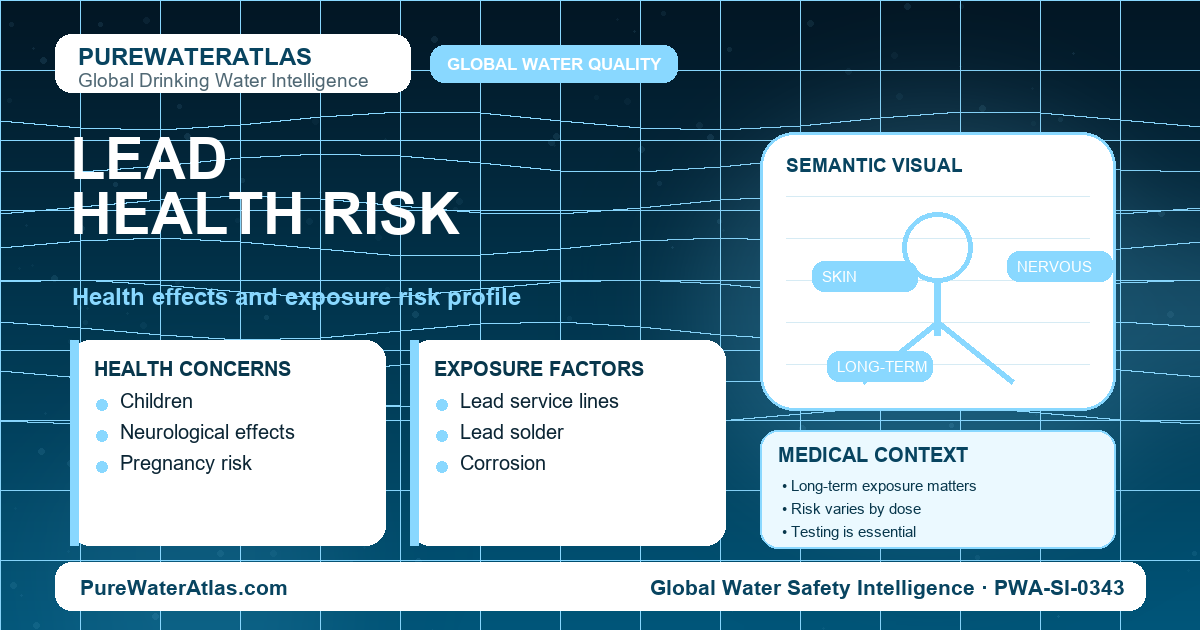
Water quality by country long term risks are especially important where populations drink the same compromised source for years. Chronic arsenic exposure has been associated with skin lesions, cardiovascular disease, neuropathy, diabetes risk, and increased rates of certain cancers. Lead exposure can impair child neurodevelopment, reduce IQ, affect attention and behavior, and contribute to hypertension and kidney disease in adults. Excess fluoride can lead to dental fluorosis and, at higher sustained levels, skeletal fluorosis.
Other long-term concerns include:
- Nitrates: especially dangerous for infants, with risk of methemoglobinemia; may also indicate agricultural pollution.
- Disinfection by-products: formed when chlorine reacts with organic matter; prolonged exposure at elevated levels is a regulatory concern in many systems.
- Pesticides and industrial chemicals: potential endocrine, neurologic, hepatic, renal, or carcinogenic effects depending on the compound.
- Mercury, cadmium, and other metals: possible kidney, nerve, and developmental effects with chronic exposure.
Vulnerable Groups
Water quality by country vulnerable groups include populations whose bodies, living conditions, or social circumstances increase sensitivity to contaminants. These groups often bear the highest disease burden even when average national water quality appears acceptable.
- Infants and young children: greater susceptibility to dehydration, developmental toxicity, and nitrate-related illness.
- Pregnant people: some contaminants may affect fetal growth and development.
- Older adults: increased vulnerability to dehydration and chronic disease complications.
- Immunocompromised individuals: higher risk from opportunistic pathogens.
- Rural and low-income communities: often less access to treatment, testing, and infrastructure maintenance.
- People relying on private wells or informal sources: may lack regular monitoring and treatment.
Exposure Levels and Risk Interpretation
Water quality by country exposure levels matter as much as the presence of a contaminant. Health professionals and regulators consider concentration, frequency of intake, duration of exposure, body weight, and additional routes such as cooking or bathing. Risk is rarely defined by a single measurement in isolation. A trace amount of a contaminant does not always mean immediate danger, while moderate exceedances over a long period may carry significant cumulative risk.
In medical settings, concerns often arise when patients present with unexplained gastrointestinal symptoms, developmental delays, neurologic signs, kidney dysfunction, or clusters of illness linked to a shared water source. These water quality by country medical concerns are often difficult to recognize because many symptoms are nonspecific. That is one reason systematic testing and environmental history are so important.
Testing and Detection
Reliable testing is essential because unsafe water often cannot be identified by appearance alone. Monitoring programs vary widely by country, from highly automated national surveillance systems to limited periodic sampling in understaffed regions.
Common Water Quality Tests
Testing may include microbiological, chemical, and physical parameters such as:
- E. coli or total coliform testing
- Turbidity measurement
- pH and conductivity
- Residual disinfectant levels
- Nitrate and nitrite testing
- Lead, arsenic, fluoride, iron, and manganese analysis
- Pesticide and industrial chemical screening
- Hardness and dissolved solids
Laboratory and Field Methods
Central laboratories can provide detailed and highly accurate analysis, but they require trained personnel, equipment, sample preservation, and transport systems. Field kits and portable sensors allow faster screening in remote areas, though they may be less comprehensive. In outbreak settings, rapid microbial testing can guide urgent public health decisions while confirmatory laboratory work continues.
Testing should occur at multiple points, including source water, treatment facilities, distribution systems, household taps, storage tanks, and private wells. Sampling at only one point can miss contamination introduced later in the chain.
Household and Community Detection Challenges
Many households assume that municipal water is safe unless it looks or smells unusual. In reality, lead, arsenic, nitrates, and many pathogens are not reliably detected by the senses. Conversely, unpleasant taste or odor does not always indicate a serious health hazard. This gap between perception and reality can delay protective action.
Communities with intermittent service or private supplies should consider routine testing schedules, especially after floods, repairs, changes in taste, or nearby industrial and agricultural activity. More technical detail is available in testing and detection methods.
Prevention and Treatment
Preventing health effects from poor water quality requires action at several levels: source protection, treatment, infrastructure maintenance, household safety, and medical response when exposure occurs.
Source Protection
The most effective strategy is often preventing contamination before it enters the water supply. This may include protecting watersheds, improving sanitation, controlling industrial discharges, regulating agricultural runoff, managing animal waste, and establishing setback distances between wells and latrines or septic systems.
Water Treatment Approaches
Treatment depends on the contaminant:
- Chlorination: effective against many bacteria and viruses, though less effective against some protozoa and dependent on proper dosing.
- Filtration: helps remove particles and some pathogens; advanced systems can target specific contaminants.
- Boiling: useful for microbial contamination but does not remove heavy metals or most chemicals.
- Activated carbon: can reduce some organic chemicals, tastes, and odors.
- Reverse osmosis: effective for many dissolved contaminants including arsenic, fluoride, nitrates, and some metals, depending on system design.
- Ultraviolet disinfection: inactivates many microorganisms if water is sufficiently clear.
- Ion exchange and specialized media: used for nitrate, hardness, arsenic, and other targeted contaminants.
Household technologies can reduce risk, but they require maintenance, replacement parts, user training, and verification of performance. A poorly maintained filter may provide false reassurance.
More information on treatment options can be found under water purification.
Safe Storage and Distribution
Where treated water is stored at home, prevention also means using clean containers, keeping lids closed, avoiding hand contact with stored water, and cleaning tanks regularly. In piped systems, maintaining pressure, replacing damaged lines, and preventing corrosion are critical. Lead service line replacement has become a major public health priority in some countries.
Medical Management
When exposure has already occurred, treatment depends on the illness or contaminant involved. Acute diarrheal disease may require oral rehydration, electrolyte replacement, and, in some cases, antimicrobial therapy. Suspected heavy metal or chemical exposure may need laboratory evaluation, removal from the source, and specialist management. Clinicians often need an exposure history that includes water source, duration of use, local advisories, and whether others in the household are affected.
Common Misconceptions
Public understanding of water safety is shaped by assumptions that can be misleading. Correcting these misconceptions is essential for risk reduction.
“Clear water is safe water”
This is one of the most common myths. Many dangerous contaminants are invisible, tasteless, and odorless. Clear water can still contain lead, arsenic, nitrates, viruses, or bacteria.
“Boiling fixes every water problem”
Boiling is very useful for microbial contamination, but it does not remove most heavy metals or chemical pollutants. In some cases, boiling can even concentrate dissolved chemicals as water evaporates.
“National averages reflect every community”
Country-level statistics are useful, but they can hide major inequalities. Urban centers may have advanced treatment while remote areas rely on shallow wells or trucked water. Evaluating water quality by country health effects requires attention to local conditions, not just national rankings.
“Bottled water is always safer”
Bottled water may be useful in emergencies or areas with unreliable supplies, but it is not automatically superior in every setting. Quality control, storage conditions, heat exposure, counterfeit products, and cost all matter. Long-term dependence on bottled water can also create financial and environmental burdens.
“If no one is getting sick right away, the water is fine”
Some contaminants cause delayed or cumulative harm rather than immediate illness. Chronic arsenic, lead, or fluoride exposure may not be obvious at first, especially when symptoms are subtle or nonspecific.
Regulations and Standards
Countries use different legal and technical frameworks to define safe drinking water. Many standards are influenced by guidance from the World Health Organization, but implementation varies widely according to resources, governance, infrastructure, and local risk profiles.
How Standards Are Set
Regulatory limits are typically based on toxicology, epidemiology, feasibility of treatment, analytical capability, and acceptable risk thresholds. For microbial contaminants, standards often aim for zero tolerance for indicators such as E. coli in treated drinking water. For chemicals, limits are generally expressed as maximum allowable concentrations over time.
Challenges in Enforcement
Even when good standards exist on paper, enforcement may be inconsistent. Common barriers include inadequate funding, insufficient laboratory capacity, poor rural coverage, political instability, fragmented utilities, and weak reporting systems. Some countries have strong city-level compliance but limited oversight of private wells or informal settlements.
Transparency is also crucial. Public notification systems, boil-water advisories, annual water quality reports, and open access to monitoring data improve trust and enable earlier response to contamination events.
Country Comparisons Require Caution
Comparing countries can be informative, but simple rankings may be misleading. A country with robust monitoring may appear worse because it detects and reports more problems, while another with limited surveillance may appear safer than it actually is. Interpreting water quality by country medical concerns therefore requires looking at both reported contamination and the strength of the reporting system itself.
Conclusion
Water quality is a fundamental determinant of public health, but its risks are not uniform across countries or even within them. The health effects of poor water range from acute gastrointestinal illness to chronic developmental, neurologic, renal, skeletal, and cancer-related outcomes. Understanding water quality by country health effects means looking beyond broad labels and examining the specific contaminants, the source of exposure, the duration of contact, and the populations most at risk.
Short-term illness is often linked to microbial contamination, while long-term harm is more commonly associated with chemicals such as arsenic, lead, fluoride, nitrates, and industrial pollutants. Vulnerable groups, including infants, pregnant people, older adults, immunocompromised individuals, and underserved communities, face higher risks and often have fewer resources for protection. Because many dangerous contaminants are invisible, testing and ongoing surveillance are essential.
Effective prevention combines source protection, treatment, distribution system maintenance, household safety practices, and strong regulation. Public education also matters, especially in correcting misconceptions about clear water, boiling, bottled water, and national averages. As climate pressures, urban growth, and infrastructure challenges increase, water safety will remain a central global health issue.
Readers seeking a broader overview can continue with the complete guide and related information in global water quality. A deeper understanding of causes, detection, and treatment supports better choices at household, clinical, and policy levels-and ultimately helps prevent avoidable illness.
Read the full guide: Global Water Quality Guide
Explore more in this category: Global Water Quality Articles