Introduction
Water quality varies widely from one country to another because source water, infrastructure, regulation, climate, industrial activity, and treatment capacity all differ. In some places, municipal tap water is highly reliable and carefully monitored. In others, aging pipes, agricultural runoff, inadequate disinfection, intermittent supply, or weak enforcement can create significant risks. For households, travelers, businesses, and public health professionals, understanding water quality by country removal strategies is essential for choosing appropriate filtration and treatment options.
This topic is not just about whether water looks clear. Water can appear clean while still containing microorganisms, dissolved metals, industrial chemicals, pesticides, excess minerals, or disinfection byproducts. It is also not enough to choose a filter based only on brand reputation. Effective water treatment depends on matching the right technology to the local contamination profile. A system that performs well in one country may be insufficient or unnecessarily complex in another.
An educational approach to country-specific water quality should begin with the basics: what contaminants are common, where they come from, how they affect health, how to test for them, and which treatment systems are most effective. Readers looking for broad regional context may also benefit from exploring /category/global-water-quality/ and a wider overview at /water-quality-by-country-complete-guide/.
This article explains the major categories of water contamination, compares practical water quality by country filtration methods, and reviews the strengths and limits of common water quality by country treatment systems. It also addresses maintenance, regulation, and common misconceptions so that water treatment decisions can be made on evidence rather than assumptions. The goal is to provide a clear, authoritative foundation for selecting the water quality by country best filters and evaluating their long-term water quality by country effectiveness.
What It Is
Water quality refers to the physical, chemical, and microbiological characteristics of water and whether those characteristics make it suitable for drinking, cooking, bathing, industrial use, or agriculture. When discussing water quality by country, the focus is usually on drinking water safety and the conditions that influence treatment requirements in a particular location.
Safe drinking water must meet standards for microbial safety, chemical composition, and aesthetic quality. These categories overlap, but each presents different treatment challenges:
- Microbiological contaminants: bacteria, viruses, protozoa, and parasites that can cause acute illness.
- Chemical contaminants: arsenic, lead, fluoride, nitrates, pesticides, PFAS, industrial solvents, and other compounds that may cause chronic health effects.
- Physical and aesthetic issues: turbidity, sediment, color, taste, odor, and hardness that may not always be dangerous but can indicate deeper treatment problems.
Country-level differences arise from geography and governance. A mountainous country relying on protected reservoirs may face different water quality challenges than a low-lying agricultural country using shallow groundwater. Likewise, a nation with advanced centralized treatment plants and continuous monitoring may provide more consistent drinking water than one where households depend on wells, tanker delivery, or point-of-use treatment.
The concept of water quality by country removal therefore refers to the process of identifying local contaminants and applying methods that remove, reduce, or neutralize them to safe levels. This may happen at several points:
- Source protection: reducing contamination before water enters the supply.
- Municipal treatment: large-scale filtration, clarification, and disinfection.
- Distribution system management: maintaining pipes, storage tanks, and residual disinfectant.
- Point-of-entry treatment: whole-house systems installed where water enters a building.
- Point-of-use treatment: countertop, pitcher, faucet, under-sink, or portable devices for drinking and cooking water.
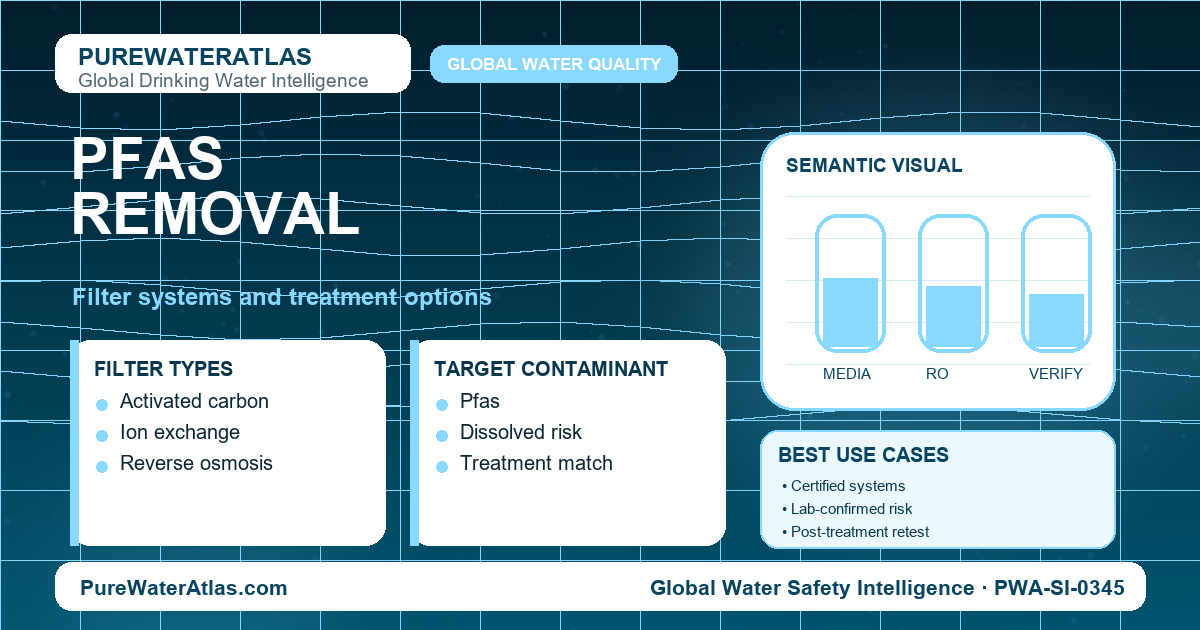
Different treatment goals lead to different system choices. For example, sediment filters address visible particles, activated carbon improves taste and can reduce many organic chemicals, ultraviolet systems inactivate microbes, reverse osmosis removes many dissolved contaminants, and ion exchange softeners target hardness. No single system solves every water issue, which is why country-specific assessment matters so much.
Main Causes or Sources
Water contamination rarely has a single cause. Most countries face a combination of natural and human-made sources, and the dominant risks vary by region. A fuller discussion of contamination patterns can be found at /water-quality-by-country-causes-and-sources/.
Natural Geological Sources
Groundwater naturally dissolves minerals and elements from surrounding rock and soil. In some countries, arsenic, fluoride, iron, manganese, or high total dissolved solids occur because of geology rather than industrial pollution. These are common in certain aquifers and can affect large populations if untreated groundwater is used for drinking.
- Arsenic: naturally present in some groundwater basins and associated with serious long-term health risks.
- Fluoride: can protect teeth at low levels but cause fluorosis at excessive concentrations.
- Hardness minerals: calcium and magnesium are common and mainly affect scaling and appliance performance.
- Iron and manganese: may stain fixtures, affect taste, and complicate treatment operations.
Agricultural Runoff
Farming can significantly influence water quality through fertilizers, pesticides, animal waste, and sediment. Countries with intensive agriculture often experience elevated nitrates in groundwater and nutrient pollution in rivers and lakes. These pollutants may not always create an obvious taste or odor problem, but they can have important health and environmental consequences.
- Nitrates from fertilizer and manure can contaminate shallow wells.
- Pesticides may persist in surface water and groundwater.
- Runoff can increase turbidity, making disinfection less effective if treatment is inadequate.
- Excess nutrients can promote algal blooms, some of which produce toxins.
Industrial and Mining Activity
Manufacturing, energy production, metal processing, and mining can release heavy metals, solvents, petroleum compounds, acidic drainage, and persistent chemicals into water sources. In countries with strong monitoring and enforcement, these risks may be controlled. In others, contamination can be severe and long-lasting, especially near industrial zones or legacy waste sites.
Industrial pollution often requires specialized water quality by country treatment systems because contaminants may be chemically stable, difficult to detect without laboratory testing, and harmful even at very low concentrations.
Municipal Infrastructure Failures
Even when treatment plants operate properly, unsafe water can result from failures in the distribution system. Common problems include:
- Aging pipes that leach lead or allow contamination through leaks.
- Intermittent service that creates pressure changes and intrusion risks.
- Insufficient disinfectant residual in long or poorly maintained networks.
- Storage tanks that are unclean, uncovered, or poorly sealed.
- Cross-connections between potable and non-potable systems.
These issues are especially important in urban areas where source water may be treated adequately but becomes compromised before reaching households.
Household and Localized Sources
At the household level, contamination can come from private wells, plumbing fixtures, rooftop storage tanks, local septic systems, or unsafe storage practices. In many countries, private supply users are responsible for their own testing and treatment, which means water quality can vary greatly between neighboring homes.
Travelers should also remember that hospitality settings may use local water in ice, beverages, fresh produce washing, or food preparation. Country-level guidance is useful, but local conditions matter just as much.
Health and Safety Implications
Unsafe drinking water can cause both immediate illness and long-term disease. The seriousness depends on the contaminant, concentration, duration of exposure, and the health status of the person consuming the water. More detailed discussion is available at /water-quality-by-country-health-effects-and-risks/ and related resources in /category/drinking-water-safety/.
Microbial Risks
Microbiological contamination is often the most urgent public health concern because it can produce rapid outbreaks. Waterborne pathogens can cause diarrhea, vomiting, fever, dehydration, and serious complications, particularly in infants, older adults, and immunocompromised individuals.
- Bacteria: such as E. coli, Salmonella, and Vibrio species.
- Viruses: including norovirus, rotavirus, and hepatitis A.
- Protozoa: such as Giardia and Cryptosporidium, which can be resistant to some disinfectants.
In countries where sanitation infrastructure is limited or flooding is common, the microbial burden may be especially high. Boiling, UV disinfection, and membrane filtration can be important household safeguards where centralized treatment is unreliable.
Chemical Risks
Chemical contaminants often pose chronic rather than immediate risks. People may consume polluted water for years before symptoms appear, which is why routine testing and preventive treatment are so important.
- Lead: harms neurological development, especially in children.
- Arsenic: associated with skin lesions, cardiovascular effects, and increased cancer risk.
- Nitrates: can cause methemoglobinemia in infants and are a concern in agricultural regions.
- PFAS and industrial chemicals: linked to a range of potential long-term health effects and increasingly monitored worldwide.
- Excess fluoride: may cause dental or skeletal fluorosis at high levels.
Aesthetic Problems and Indirect Impacts
Taste, odor, and color issues may seem minor, but they can have real consequences. If people distrust tap water because of unpleasant characteristics, they may switch to expensive bottled water, sugary beverages, or unsafe alternative sources. Aesthetic problems can also signal treatment failure or pipe corrosion. For example, metallic taste may indicate elevated metals, and earthy or musty odors can point to algal activity or organic contamination.
Vulnerable Populations
Some groups need stricter precautions:
- Infants fed with formula prepared using local water
- Pregnant individuals
- People with kidney disease or compromised immune systems
- Older adults
- Travelers without prior exposure to local pathogens
For these groups, choosing the water quality by country best filters and verifying treatment performance can be especially important.
Testing and Detection
The most effective treatment begins with accurate testing. Without knowing what is in the water, it is impossible to select the right system or evaluate water quality by country effectiveness. Visual inspection alone is not enough. Many dangerous contaminants are invisible, tasteless, and odorless.
What to Test For
Testing priorities should match the country, region, and source type. Typical parameters include:
- Microbial indicators: total coliforms, E. coli, and sometimes enterococci
- Physical parameters: turbidity, total dissolved solids, hardness, pH
- Metals: lead, arsenic, iron, manganese, copper
- Nutrients: nitrate and nitrite
- Disinfectant indicators: free chlorine and byproducts where relevant
- Organic chemicals: pesticides, VOCs, PFAS, or region-specific industrial pollutants
Field Tests vs Laboratory Analysis
Simple field kits can be useful for screening pH, hardness, chlorine, or general bacterial presence, but they have limitations. Laboratory analysis is more reliable for metals, low-level chemical contaminants, and confirmation of microbial safety. In countries with uncertain water infrastructure, a combination of local reports, municipal disclosures, and independent lab testing is often the best approach.
Sampling Considerations
Proper sampling matters. A sample taken after the water has run for several minutes may not capture lead leaching from pipes, while a first-draw sample might. Microbial samples require sterile containers and careful handling. Seasonal changes also influence results. Rainy seasons can increase turbidity and microbial contamination, while dry periods may concentrate dissolved contaminants.
Testing should be repeated:
- When moving to a new area or country
- After plumbing work or flooding
- If taste, odor, or color changes suddenly
- When a new baby or medically vulnerable person is in the home
- On a regular schedule for private wells
Using Test Results to Choose Treatment
One of the biggest mistakes people make is buying a system before reviewing actual test data. Different contaminants require different technologies. For example:
- Activated carbon may reduce chlorine, taste, odor, and some organic compounds, but it does not reliably remove dissolved salts or many heavy metals on its own.
- Reverse osmosis can reduce many dissolved contaminants, including arsenic and nitrates, but it may require prefiltration and regular membrane care.
- UV disinfection can inactivate microorganisms, but it does not remove chemicals and works best when water is already clear.
- Sediment filters improve particle removal but do not disinfect water.
This is why water quality by country filtration methods should always be tied to actual source conditions rather than assumptions.
Prevention and Treatment
Prevention is always preferable to treatment. Protecting watersheds, controlling discharges, maintaining infrastructure, and enforcing standards reduce risks before water reaches the consumer. However, where contamination is present or trust is limited, treatment becomes essential. Readers comparing solutions can also browse /category/water-treatment-systems/.
Source Protection and System-Level Prevention
- Protect wellheads and recharge zones from waste disposal and runoff.
- Improve wastewater treatment and sanitation coverage.
- Replace aging lead service lines and damaged distribution pipes.
- Maintain pressure in municipal systems to prevent intrusion.
- Use watershed management to limit agricultural and industrial contamination.
These measures are the foundation of public health, but they often take time and investment. Household treatment remains important where system-wide improvements are incomplete.
Common Water Treatment Technologies
Sediment Filtration
Sediment filters remove sand, rust, silt, and suspended particles. They are often used as a first stage to protect downstream equipment. They improve clarity and may help other systems perform better, but they do not address dissolved chemicals or most microorganisms.
Activated Carbon Filtration
Activated carbon is one of the most common and practical options for point-of-use treatment. It can improve taste and odor and reduce chlorine, some pesticides, some volatile organic compounds, and certain disinfection byproducts. Carbon filters are among the water quality by country best filters for areas where aesthetic issues and chlorine are the main concerns, but they are not universal solutions.
Reverse Osmosis
Reverse osmosis systems use a semipermeable membrane to reduce many dissolved substances, including salts, nitrates, arsenic, fluoride, and some metals. They are often recommended where groundwater contamination is significant. Their strengths include broad contaminant reduction and strong household-level performance when properly maintained. Their limits include slower flow, wastewater production, and the need for regular membrane and prefilter replacement.
Ultraviolet Disinfection
UV systems inactivate bacteria, viruses, and protozoa by damaging their genetic material. They are highly useful in settings where microbial contamination is the main concern and the water is relatively clear. UV does not remove particles or chemicals, so it is usually paired with filtration. It also requires electricity and routine lamp maintenance.
Boiling
Boiling is an accessible emergency method for microbiological safety. It is effective against many pathogens, but it does not remove heavy metals, nitrates, or other dissolved chemicals. It may even concentrate some contaminants if water volume decreases during boiling. It is best viewed as a short-term microbial safeguard rather than a complete treatment strategy.
Ion Exchange and Water Softeners
Ion exchange systems are commonly used for hardness reduction. Specialized media can also address nitrate, arsenic, or specific metals in some applications. These systems can be effective, but resin selection, regeneration practices, and influent water chemistry strongly affect results.
Distillation
Distillation can remove many minerals and some contaminants by evaporating and condensing water. It is often effective but energy intensive and slower than other household methods. Some volatile chemicals may require additional carbon treatment.
Ceramic and Hollow-Fiber Filters
These filtration methods can physically block many microorganisms and are widely used in portable and low-resource settings. Performance depends on pore size, product certification, and proper maintenance. Some units are excellent for travel or emergency preparedness but may not handle dissolved chemical contaminants.
Choosing by Country Conditions
A practical treatment decision should consider:
- Primary risk: microbes, metals, salts, pesticides, or aesthetics
- Water source: municipal tap, private well, rainwater, tanker, or surface water
- Infrastructure reliability: continuous service or intermittent supply
- Household needs: drinking only or whole-house treatment
- Budget and maintenance capacity: some systems fail because owners cannot sustain upkeep
Maintenance and Long-Term Performance
Water quality by country maintenance is a critical but often overlooked part of treatment success. Even high-quality systems can become ineffective if cartridges are not replaced, membranes foul, UV lamps age, or storage containers are neglected. In fact, poor maintenance can turn a filter into a contamination source.
- Replace filters according to manufacturer instructions and actual water usage.
- Sanitize housings and storage tanks periodically.
- Monitor pressure drop, flow rate, and taste changes as signs of system fatigue.
- Retest water after installation and at regular intervals.
- Use certified replacement parts to preserve performance claims.
Maintenance planning is especially important in countries where replacement parts, electricity, or technical support may be inconsistent. The best treatment system is not always the most advanced one; it is often the one that can be maintained reliably over time.
Common Misconceptions
Misunderstandings about water quality lead to poor decisions. Several myths appear repeatedly across countries and settings.
- If water is clear, it is safe. Many contaminants are invisible and cannot be judged by appearance.
- Bottled water is always better. Bottled water quality varies, and storage conditions matter. It is not automatically safer than well-treated tap water.
- All filters remove everything. Filters differ greatly by technology and certification. No single product addresses every contaminant.
- Boiling solves all water problems. Boiling is mainly for microbes, not dissolved chemicals.
- Municipal water quality is identical across a whole country. Conditions differ by region, season, and even neighborhood.
- Maintenance is optional. Neglected systems lose effectiveness and can worsen water quality.
Another common misconception is that advanced treatment always means better treatment. In reality, over-treating water can add unnecessary cost and complexity. For example, a household dealing mainly with chlorine taste may not need reverse osmosis, while a family exposed to arsenic likely needs more than a basic carbon pitcher. The key is fit, not prestige.
Regulations and Standards
Water safety is shaped by both international guidance and national enforcement. The World Health Organization publishes widely respected drinking-water guidelines, but individual countries adopt their own standards, monitoring schedules, and compliance systems. Some nations have highly developed legal frameworks and transparent reporting, while others struggle with implementation, especially in rural or rapidly growing areas.
What Standards Typically Cover
- Maximum contaminant levels for microbiological and chemical hazards
- Treatment technique requirements where direct measurement is difficult
- Sampling frequency and reporting obligations
- Operator training and certification
- Public notification when standards are exceeded
Why Regulatory Context Matters
Regulations influence trust, but standards on paper are not enough. Effective water safety depends on laboratory capacity, inspections, maintenance funding, emergency response, and public communication. A country may have strict numerical limits but inconsistent rural enforcement. Another may have strong urban systems but limited oversight of private wells or informal settlements.
For consumers, this means country-level reputation should be a starting point, not the final answer. Reviewing local water utility reports, independent testing, and product certifications remains important. When evaluating water quality by country treatment systems, it is useful to look for products tested against recognized standards such as NSF or equivalent national certifications where applicable.
Travel, Migration, and Cross-Border Considerations
People moving between countries often assume the same home treatment setup will be appropriate everywhere. That is not always true. A system chosen for chlorinated municipal water in one country may perform poorly on high-TDS groundwater in another. Likewise, a traveler accustomed to safe tap water may need portable disinfection in locations with uncertain microbial quality. Regulations help define baseline safety, but personal treatment choices should still reflect local testing and usage patterns.
Conclusion
Understanding water quality by country requires more than checking whether tap water is officially potable. It involves recognizing how geology, agriculture, industry, infrastructure, climate, and regulation shape local contamination risks. Effective water quality by country removal depends on identifying the actual contaminants present and selecting technologies that match those risks.
The most practical approach is straightforward: learn the local context, test the water, compare treatment options by contaminant type, and commit to proper maintenance. In many cases, a layered strategy works best, combining source protection, municipal treatment, and point-of-use safeguards. Consumers should pay close attention to water quality by country filtration methods, expected water quality by country effectiveness, and ongoing water quality by country maintenance needs before choosing a system.
There is no universal filter for every country or every household. The water quality by country best filters are the ones that are matched to verified conditions, certified for the contaminants of concern, and maintained consistently over time. With careful testing, informed product selection, and awareness of local standards, households can greatly reduce risk and improve drinking water safety no matter where they are located.
Read the full guide: Global Water Quality Guide
Explore more in this category: Global Water Quality Articles