
Introduction
Understanding legionella in water systems home safety checklist topics is important for anyone responsible for a house, apartment, rental property, vacation cabin, or small residential building. Legionella bacteria are naturally present in freshwater environments, but they become a serious concern when they enter building water systems and find conditions that allow them to multiply. In homes, that can include plumbing lines, water heaters, showerheads, hot tubs, decorative water features, and other devices that hold or circulate water.
Because infection usually happens when contaminated water droplets are inhaled, household exposure is often linked to common activities such as showering, using certain faucets, or operating aerosol-producing equipment. The risk is not the same in every home, and not every plumbing system will support growth. However, low water temperatures, stagnant sections of pipe, scale buildup, biofilm, and poor maintenance can create favorable conditions.
This article provides an educational, practical guide to recognizing concerns, reducing hazards, and understanding when professional help is needed. It is designed for homeowners, landlords, facility caretakers, and anyone researching residential water safety. If you want broader background information, you may also find helpful resources in water microbiology, the complete guide to Legionella in water systems, and materials on drinking water safety.
A home-focused checklist is especially useful because many people assume Legionella is mainly a problem in hospitals or large commercial buildings. While large systems can present complex risks, homes can also have conditions that support bacterial growth, especially when water is stored, recirculated, underheated, or left unused for long periods. Seasonal homes, recently renovated properties, and buildings with aging plumbing deserve special attention.
The goal is not alarm, but informed prevention. With a sensible inspection routine, temperature control, cleaning habits, and awareness of vulnerable household members, you can significantly improve water safety. The sections below explain what Legionella is, where it tends to grow, what health issues it can cause, how testing works, and what protective steps make the biggest difference.
What It Is
Legionella is a group of bacteria found in natural aquatic environments such as lakes, rivers, and streams. In those settings, bacterial concentrations are usually low. Problems arise when the organisms enter man-made water systems and encounter conditions that support multiplication. Warm water, nutrients, sediment, rust, slime layers, and standing water can all help the bacteria persist and spread.
The most widely recognized species is Legionella pneumophila, which is associated with most reported cases of Legionnaires’ disease. This disease is a serious form of pneumonia. Legionella exposure can also cause Pontiac fever, a milder flu-like illness that does not involve pneumonia. Infection occurs primarily by breathing in small water droplets or mist that contain the bacteria. In general, people do not get Legionnaires’ disease by drinking water in the usual sense, although aspiration of contaminated water can be a concern for some individuals.
In home plumbing, Legionella tends to be associated with complex biological communities called biofilms. A biofilm is a slimy layer of microorganisms that attaches to the inside of pipes, fittings, tanks, and fixtures. Biofilms can shelter Legionella from disinfectants and make eradication more difficult. Scale, corrosion products, and sediment further complicate control by providing nutrients and surfaces for attachment.
Legionella can also live inside free-living amoebae and other microorganisms commonly found in water systems. This relationship gives the bacteria additional protection and can make them more resistant to environmental stress. That is one reason a system that appears clear and odor-free can still support bacterial growth.
For residents trying to understand legionella in water systems risk signs, it helps to know that the bacteria are usually invisible. There is no single obvious color, smell, or taste that reliably indicates contamination. Instead, people assess risk by looking at system conditions: water temperature, stagnation, lack of cleaning, dead-end piping, old fixtures, scale buildup, and devices that create mist.
If you want a deeper explanation of system behavior, the article on Legionella in water systems causes and sources can provide additional context.
Main Causes or Sources
In residential settings, Legionella growth is usually the result of several conditions happening at once rather than a single cause. The bacteria need water, time, favorable temperature, and a place to survive. Below are the most common household sources and contributing factors.
Warm Water Temperatures
Legionella grows best in a moderate warm range, especially when hot water is not hot enough to suppress it. Water heaters set too low may save energy or reduce scald concerns, but they can also create an environment where bacteria survive more easily. Lukewarm water in tanks, recirculation loops, and distal plumbing is a known concern.
Stagnation and Low Use
Stagnant water is one of the biggest residential risk factors. Water that sits in pipes for days or weeks loses disinfectant residual, settles sediment, and allows biofilms to develop. Homes that are vacant for part of the year, guest bathrooms that are rarely used, and infrequently run fixtures all deserve attention. Long pipe runs, oversized plumbing, and dead legs further increase stagnation.
Water Heaters and Storage Tanks
Hot water tanks can accumulate sediment at the bottom, especially in areas with hard water. That sediment provides a protective environment for microorganisms. If the tank temperature is inconsistent or the system is not flushed periodically, bacterial growth is more likely. Tankless systems may reduce some storage concerns, but they can still have stagnant branches or fixtures elsewhere in the plumbing.
Showerheads and Faucet Aerators
Showerheads and faucet aerators can collect scale, slime, and mineral deposits. Because showers generate fine aerosol droplets, these fixtures are especially relevant. A neglected showerhead in a warm, low-flow, little-used bathroom can become part of a higher-risk scenario.
Hot Tubs, Spa Baths, and Whirlpool Systems
Hot tubs and jetted baths are important sources because they combine warm water, circulation, and aerosol generation. If disinfectant levels are poor or cleaning is inconsistent, microorganisms can multiply quickly. Indoor hot tubs may pose an even greater inhalation concern because the aerosol remains concentrated in enclosed air.
Humidifiers and Decorative Water Features
Certain humidifiers, room misters, and decorative fountains can spread contaminated droplets if they use untreated or contaminated water. Devices that store water and disperse it into the air should be cleaned strictly according to manufacturer directions.
Aging Plumbing Materials and Biofilm Formation
Old pipes, corroded fittings, scale deposits, and rough internal surfaces encourage microbial attachment. Biofilms become established more easily in systems with inconsistent flow and temperature. Renovation work can also disturb deposits and change hydraulic patterns, which is why newly modified systems should be flushed carefully.
Municipal Water Changes and Low Residual Disinfectant
Even when incoming water meets regulatory requirements, disinfectant residual can decline inside a home system, especially where water sits for long periods. Homes on private wells face a different challenge because there may be no residual disinfectant at all. This does not automatically mean a system is unsafe, but it does increase the importance of maintenance and monitoring.
When conducting a basic legionella in water systems inspection, look for these conditions:
- Water heater temperatures set too low
- Fixtures that go unused for a week or longer
- Seasonal shutdowns or long vacancies
- Visible scale, sediment, rust, or slime in fixtures
- Old showerheads or clogged aerators
- Whirlpool tubs, spas, or mist-producing devices with irregular cleaning
- Dead-end pipes or plumbing areas left in place after remodeling
- Large homes with complex hot water recirculation or long branch lines
Health and Safety Implications
The main health concern associated with Legionella is Legionnaires’ disease, a potentially severe pneumonia. Symptoms often include cough, fever, muscle aches, shortness of breath, headache, and fatigue. Some people also experience gastrointestinal symptoms or confusion. The illness can become serious quickly, especially in older adults and people with underlying health conditions.
Pontiac fever is another illness caused by Legionella exposure. It is generally milder and resembles a flu-like condition without pneumonia. Even so, the presence of Pontiac fever suggests that exposure has occurred and should not be ignored.
Not everyone has the same level of risk. Household exposure becomes more concerning when the following people live in or regularly visit the home:
- Adults over age 50
- Current or former smokers
- People with chronic lung disease
- Individuals with weakened immune systems
- People with cancer, diabetes, kidney disease, or severe chronic illness
- Anyone taking immunosuppressive medication
Exposure generally occurs through inhalation of tiny contaminated water droplets rather than through ordinary person-to-person spread. This means that devices producing mist or aerosols deserve special attention. Showers, whirlpool baths, hot tubs, respiratory devices using water, and some decorative water features are often more relevant than kitchen sinks, although any fixture can contribute under the right conditions.
One challenge is that legionella in water systems risk signs in a home are often indirect. Most households will not notice immediate warning symptoms in the plumbing itself. Instead, concern increases when vulnerable individuals become ill and no other clear source is found, or when the home has obvious system issues such as long-term stagnation, poor hot water control, visible buildup, or neglected aerosol-producing equipment.
Medical diagnosis requires clinical evaluation and laboratory testing. If someone develops pneumonia symptoms and there is concern about possible water exposure, a healthcare professional should be informed. Environmental control and medical care go hand in hand; one does not replace the other.
For more on illness patterns and severity, see Legionella in water systems health effects and risks.
Testing and Detection
Legionella in water systems household testing can be useful, but it is often misunderstood. Testing is not always simple, and a single result may not provide a complete picture of household risk. Because Legionella concentrations can vary from one fixture to another and from one day to the next, sample location, timing, and collection method matter greatly.
What Testing Can and Cannot Tell You
Testing can help determine whether Legionella is present in a particular part of the water system. It may support troubleshooting after long stagnation, system changes, or known exposure concerns. However, a negative result from one sample does not prove that the entire home is free of risk. Likewise, a positive result does not always predict illness, but it does indicate that corrective action should be considered.
Common Testing Methods
- Culture testing: Often considered a standard environmental method because it detects viable bacteria that can grow under laboratory conditions. It can take longer to get results.
- PCR testing: Faster and sensitive for detecting bacterial genetic material, but it may identify organisms that are not currently viable, depending on the method used.
- Swab and biofilm sampling: Sometimes used alongside water sampling because Legionella can persist in fixture buildup and internal surfaces.
Where Samples Are Often Collected
- Water heater drain or tank outlet
- Most distant hot water fixture
- Rarely used showerheads
- Faucets with aerators
- Whirlpool tub lines or hot tub water
- Cold water points with unusual warming or stagnation
When Household Testing May Be Worth Considering
A homeowner may consider testing when a house has been unoccupied for an extended period, when an at-risk resident is moving in, when there has been repeated low hot water temperature, when there is concern after a case of Legionnaires’ disease, or when a system has persistent scale and biofilm issues. Testing may also be useful after corrective actions to evaluate whether remediation appears effective.
Inspection Checklist for Homeowners
A practical legionella in water systems inspection often starts before laboratory sampling. Consider this checklist:
- Measure hot water temperature at the heater and at several fixtures
- Identify fixtures that are rarely used
- Check whether showerheads and aerators have visible mineral deposits
- Review maintenance records for water heaters, hot tubs, and filters
- Look for unused pipe branches left after remodeling
- Confirm whether recirculation systems are functioning correctly
- Inspect for scale, sediment, corrosion, and slime in accessible areas
- Review any history of plumbing leaks, repairs, or prolonged outages
Who Should Perform Testing
Some homeowners use mail-in sampling kits, but interpretation can be difficult without technical support. For higher-risk situations, professional environmental consultants, certified water treatment specialists, or laboratories experienced in Legionella analysis are preferable. If the home includes vulnerable residents, expert guidance is especially important.
Homeowners interested in broader system care may also benefit from information in water treatment systems.
Prevention and Treatment
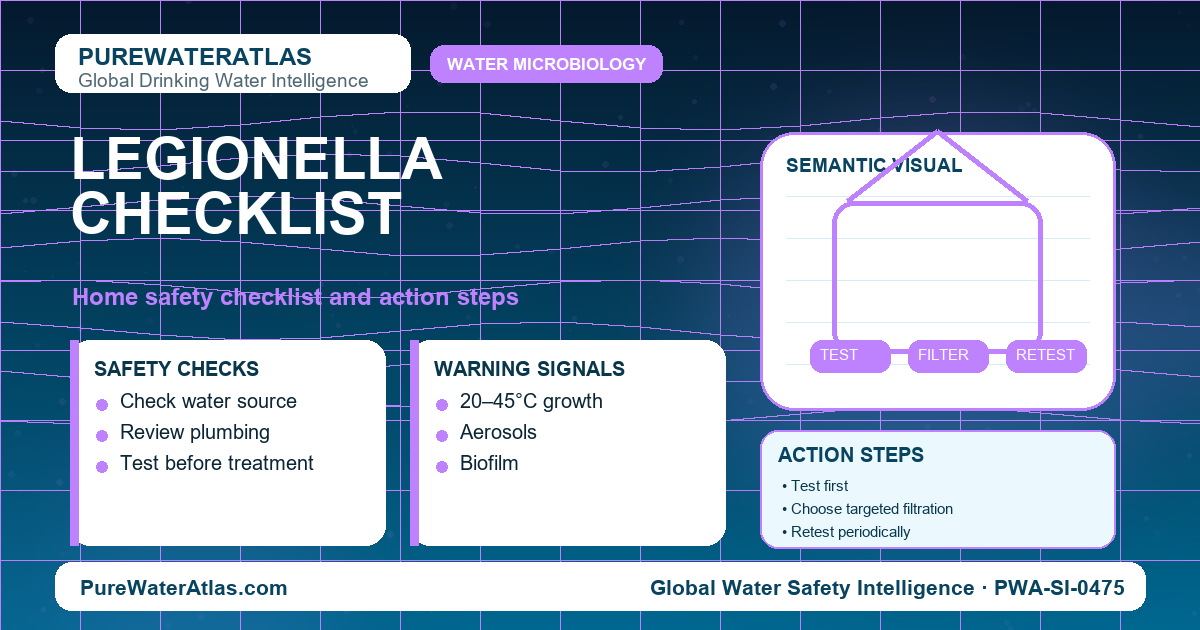
The most effective legionella in water systems protection steps focus on controlling conditions that allow growth. Prevention is usually more practical than trying to eliminate bacteria after they become established. A good home safety checklist combines temperature control, regular flushing, fixture cleaning, and attention to special devices.
Control Water Temperature
Hot water should be stored and distributed at temperatures that limit bacterial growth while also addressing scald safety. Because exact settings depend on plumbing design, local codes, and occupant vulnerability, homeowners should consult qualified professionals when adjusting systems. Anti-scald devices may be necessary if storage temperatures are raised. The key principle is to avoid maintaining hot water in lukewarm ranges that favor bacterial survival.
Reduce Stagnation
Regular use helps maintain disinfectant residual and prevents prolonged sitting water. In homes with guest bathrooms, basements, or seasonal wings, run hot and cold water routinely at each outlet. After vacations, renovations, or long vacancies, flush all fixtures thoroughly before normal use. Start with cold water lines where appropriate, then flush hot water fixtures once the system has stabilized.
Maintain Water Heaters
Water heaters should be inspected and maintained according to manufacturer recommendations. Sediment removal, anode rod checks where applicable, and confirmation of proper thermostat function are all helpful. If the heater struggles to maintain temperature, it may be creating uneven conditions that support microbial growth.
Clean Showerheads and Aerators
Periodic removal and descaling of showerheads and faucet aerators can reduce buildup where microorganisms thrive. Replace fixtures that are heavily corroded, impossible to clean, or chronically clogged. In homes with vulnerable residents, prioritize cleaning of the most frequently used showers.
Manage Hot Tubs and Jetted Systems Carefully
Hot tubs require strict disinfectant control, filtration maintenance, and regular draining and cleaning. Residential jetted tubs should be cleaned according to the manufacturer’s instructions, especially if they are used infrequently. Warm recirculating water in hidden piping can support growth if sanitation lapses.
Use Devices Correctly
Humidifiers, CPAP humidification chambers, room misters, and similar devices should be operated exactly as directed. Use recommended water types, replace water often, and clean reservoirs on schedule. Never assume that a device is safe simply because it is marketed for home use.
Address Plumbing Design Problems
If a home has dead-end piping, oversized water heaters, poor recirculation, or chronic low-use branches, plumbing modifications may be worthwhile. Sometimes the safest long-term solution is removing unused pipe sections or redesigning areas where water continually stagnates.
Consider Point-of-Use Measures for High-Risk Occupants
In some cases, point-of-use filters designed for microbial control may be used temporarily at showers or taps for highly susceptible individuals. These are not universal solutions and require strict replacement schedules. They are best used with professional advice, not as a substitute for correcting system problems.
Responding to a Positive Result
If household testing finds Legionella, the response should be proportionate and informed. Possible actions include targeted flushing, thermal disinfection, cleaning and replacement of contaminated fixtures, shock disinfection where appropriate, and professional evaluation of the water heater and plumbing design. Because poorly executed remediation can fail or create new risks, professional assistance is often warranted.
Practical Home Safety Checklist
Use this step-by-step legionella in water systems home safety checklist as a working reference:
- Review who lives in the home and whether anyone is at high risk for severe infection
- Check water heater settings and verify delivered hot water temperatures
- Flush all rarely used taps and showers weekly or on a regular schedule
- Deep flush the plumbing after vacations, vacancies, or construction work
- Clean or replace showerheads and faucet aerators with visible scale
- Drain, clean, and maintain hot tubs, whirlpool baths, and similar equipment consistently
- Inspect for dead legs, little-used plumbing runs, and stagnant storage areas
- Monitor water heaters for sediment accumulation and service them as needed
- Maintain any treatment devices, softeners, or filters according to schedule
- Use humidifiers and water-aerosol devices only with proper cleaning and water handling
- Consider professional assessment if the home has vulnerable residents or recurring plumbing issues
- Seek expert guidance on sampling if there has been illness, long-term stagnation, or a positive prior result
These legionella in water systems maintenance tips are most effective when done consistently rather than only after a concern arises.
Common Misconceptions
Several myths make residential Legionella control harder than it needs to be. Clearing them up helps homeowners focus on practical action.
“Only hospitals and hotels need to worry about Legionella.”
Large buildings do receive more attention because of their complexity and vulnerable populations, but homes can also support Legionella growth. Residential risk increases with stagnation, low hot water temperatures, aging plumbing, and aerosol-producing devices.
“If my water looks clean, there is no problem.”
Legionella cannot be reliably detected by sight, smell, or taste. Clear water may still contain microorganisms or support biofilm inside pipes and fixtures.
“Cold water lines are never part of the issue.”
Cold water is generally less favorable than warm water, but it can still become a concern if it warms up due to environmental conditions, poor insulation, proximity to hot lines, or long stagnation.
“Lower water heater temperatures are always safer.”
Lower temperatures may reduce scalding risk, but they can increase microbiological risk if they allow water to remain in a growth-friendly range. Safe management often requires balancing thermal control with anti-scald protection.
“One negative test means my system is permanently safe.”
Water systems change over time. Use patterns, temperatures, and disinfectant levels vary. A single negative result is useful, but it is not a lifetime guarantee.
“Bleach or disinfectant added casually will solve everything.”
Unplanned chemical disinfection may be ineffective, unsafe, or damaging to plumbing materials. Corrective actions should be matched to the system design and carried out properly.
“Legionella comes only from dirty homes.”
This is false. Even clean, well-kept homes can have hidden plumbing conditions that encourage bacterial growth. Cleanliness helps, but system design and water management matter just as much.
Regulations and Standards
Residential Legionella oversight is less prescriptive than requirements for some healthcare and commercial facilities, but that does not mean standards are irrelevant. Homeowners should understand that several layers of guidance may apply indirectly through plumbing codes, water heater regulations, public health recommendations, and product instructions.
Public Health Guidance
Public health agencies in many countries publish recommendations for managing Legionella risks, particularly after building closures, disasters, or outbreaks. These documents often emphasize flushing, temperature management, cleaning, and protection of high-risk occupants. While not always legally binding for private homes, they provide strong practical guidance.
Plumbing Codes and Temperature Safety
Local plumbing codes may govern water heater installation, thermostatic mixing valves, anti-scald fixtures, cross-connection control, and recirculation design. These code provisions influence Legionella risk even when the bacteria are not named directly. For example, design choices that avoid stagnant branches and ensure appropriate temperature delivery can help reduce growth opportunities.
Standards for Water Management
Formal water management standards are more commonly applied in institutional settings, but the principles still matter in homes: know the system, identify risk points, control temperatures, minimize stagnation, clean devices, and verify performance. Homeowners managing larger residences, multi-unit buildings, or short-term rentals may choose to adopt simplified versions of these practices.
Rental Properties and Shared Responsibility
Landlords, property managers, and condominium associations may have additional obligations under housing, maintenance, and habitability rules. Even if a regulation does not specifically mention Legionella, failure to maintain hot water systems or address known hazards can create liability and safety concerns. In shared buildings, central hot water systems deserve coordinated oversight.
Testing Laboratories and Professional Support
When testing is performed, homeowners should use reputable laboratories and qualified professionals who understand environmental sampling protocols. Standards for accredited laboratory methods and reporting quality can improve decision-making, especially when results may influence remediation work.
It is also useful to stay informed through broader topic areas such as drinking water safety and water treatment systems, since Legionella control often overlaps with general water quality management.
Conclusion
Legionella in household plumbing is a manageable risk when homeowners understand the conditions that allow the bacteria to grow. Warm stagnant water, low-use fixtures, undermaintained heaters, scale buildup, and aerosol-generating devices are the main concerns. The most effective response is not panic, but a structured routine of inspection, cleaning, flushing, temperature control, and prompt correction of plumbing problems.
A strong legionella in water systems home safety checklist begins with identifying vulnerable occupants and mapping the places where water sits, warms, or becomes aerosolized. From there, regular maintenance makes the greatest difference: keep hot water systems functioning properly, flush rarely used outlets, clean showerheads and aerators, maintain spas and humidifiers carefully, and seek professional guidance when risk is elevated or test results are positive.
Homeowners who pay attention to legionella in water systems inspection, recognize legionella in water systems risk signs, and follow practical legionella in water systems protection steps can greatly reduce the chance of harmful exposure. When needed, legionella in water systems household testing can support informed decision-making, especially if it is paired with expert interpretation. In the long run, consistent prevention is the safest and most cost-effective approach.
For continued learning, explore the complete guide to Legionella in water systems, information on causes and sources, and resources covering health effects and risks. A better understanding of your home water system is one of the most practical steps you can take to protect your household.
Read the full guide: Water Microbiology Guide
Explore more in this category: Water Microbiology Articles