
Introduction
Concern about microplastics in tap water, bottled water, and household plumbing has grown rapidly over the last decade. Researchers, utilities, regulators, and consumers are all trying to answer the same basic questions: how much plastic is present, what kinds of particles are being found, and what the findings mean for human health. As a result, microplastics in drinking water testing has become an important topic in environmental science and public health.
Microplastics are tiny plastic particles that can enter water from many pathways, including degraded consumer products, industrial discharges, synthetic textiles, dust, treatment systems, and distribution infrastructure. Detecting them is not as simple as running a standard water quality panel. Unlike traditional contaminants such as lead, nitrate, or chlorine byproducts, microplastics vary widely in size, shape, polymer type, and concentration. The way a sample is collected, filtered, prepared, and analyzed can significantly affect the result.
This makes education essential. People often hear headlines claiming that water is “full of plastic,” but the science behind those claims depends heavily on methodology. Different studies may use different particle-size cutoffs, contamination controls, and identification tools, so findings are not always directly comparable. Understanding the basics of sampling, laboratory analysis, and interpretation helps put test data into proper context.
For readers looking for broader background, resources such as this complete guide and the articles in the drinking water safety category can provide useful context before diving into the technical side of detection. This article focuses specifically on what microplastics are, where they come from, how they are tested, and what current limitations still affect confidence in results.
What It Is
Microplastics are generally defined as plastic particles smaller than 5 millimeters. In drinking water discussions, the term may include a broad range of materials, from visible fragments down to particles so small they require specialized microscopy or spectroscopic instruments to confirm their identity. Some scientists also study nanoplastics, which are even smaller and much more difficult to detect reliably.
These particles are not all alike. They can appear as:
- Fragments from the breakdown of larger plastic items
- Fibers shed from synthetic textiles, ropes, carpets, and other materials
- Films from packaging or coatings
- Beads or pellets from industrial sources or manufactured plastic feedstock
- Foam particles from polystyrene and related products
Microplastics can also be categorized by origin. Primary microplastics are intentionally manufactured at small sizes for specific uses, though many such applications have been reduced or restricted. Secondary microplastics form when larger plastic objects degrade through sunlight, heat, abrasion, oxidation, or mechanical wear.
In drinking water analysis, another important distinction is the difference between “suspected particles” and “confirmed plastic particles.” A particle observed under a microscope may look like plastic, but visual appearance alone is often not enough. To confirm the material, laboratories usually need chemical identification methods such as Fourier-transform infrared spectroscopy or Raman spectroscopy. Without such confirmation, counts may be overestimated.
The scientific challenge is not only finding particles, but finding them consistently. A study that counts particles larger than 300 micrometers will report different values than a study that includes particles down to 20 micrometers. This is one reason why discussions of microplastics in drinking water accuracy are so important. Method choices strongly shape what is detected and what is missed.
Main Causes or Sources
Microplastics in drinking water do not come from one single source. Instead, they can enter water at many points, beginning in the surrounding environment and continuing through treatment, storage, and household use. A more focused overview is available in this guide to causes and sources, but the major pathways are summarized below.
Source Water Contamination
Rivers, lakes, reservoirs, and groundwater can receive plastic pollution from urban runoff, wastewater discharges, litter, agricultural plastics, atmospheric deposition, and industrial activities. Surface waters are generally more exposed than protected groundwater, but neither source is completely isolated from contamination.
Wastewater and Stormwater Inputs
Wastewater treatment plants capture much of the particulate matter entering them, but not all microplastics are removed. Fibers from clothing, particles from tire wear, and fragments from household and commercial activities can make their way into water bodies used as drinking water sources. Stormwater can also wash roadside debris, packaging fragments, and dust into streams and reservoirs.
Distribution System and Infrastructure
Even when treatment plants reduce particle levels effectively, plastic can be introduced later. Pipes, storage tanks, liners, gaskets, valves, and other components may contribute particles under certain conditions. This does not mean all plastic infrastructure is a major emitter, but it does mean the distribution system is part of the overall picture.
Bottling and Packaging
Bottled water studies have often detected microplastics, with some particles believed to come from bottling processes, bottle materials, caps, or packaging-related abrasion. Repeated opening and closing of caps and handling during transport may also shed small particles.
Household Plumbing and Indoor Environment
Within homes, plumbing materials, faucet attachments, water filter housings, and indoor dust can influence water samples. This is especially relevant when consumers attempt microplastics in drinking water home testing without strong contamination control procedures. Airborne fibers from clothing, paper towels, or room dust can land in the sample and be mistaken for contamination from the water itself.
Treatment Residuals and Operational Factors
Water treatment processes may remove many suspended particles, but operational changes, filter condition, maintenance, and source water fluctuations can affect overall performance. In some cases, treatment media or polymer-based materials used within systems may also contribute particles if degraded or mishandled.
Because contamination can occur at several stages, investigators often use carefully designed microplastics in drinking water sampling methods to determine whether particles are entering before treatment, after treatment, within the distribution system, or at the tap.
Health and Safety Implications
The presence of microplastics in drinking water raises understandable concern, but the health science is still evolving. Researchers are studying not only the particles themselves, but also the chemicals and microorganisms that may be associated with them. For a broader discussion, readers can review this article on health effects and risks.
Physical Presence of Particles
Larger microplastic particles may pass through the digestive system with limited absorption, while smaller particles may behave differently. As particle size decreases, the scientific interest in possible biological interaction increases. Nanoplastics are of particular concern, but they remain much harder to measure in drinking water than larger microplastics.
Chemical Concerns
Plastics can contain additives such as plasticizers, stabilizers, flame retardants, pigments, and other compounds. In addition, microplastics in the environment may adsorb pollutants from surrounding water. The extent to which these chemicals contribute meaningfully to drinking water exposure is still being studied and likely depends on polymer type, particle size, environmental history, and concentration.
Microbial Attachment
Plastic surfaces can support biofilms, meaning microorganisms may attach to them. Researchers are investigating whether microplastics play a meaningful role in transporting microbes through water systems, though this area remains under active study and is not yet fully understood in routine drinking water contexts.
Uncertainty in Risk Assessment
One of the biggest challenges is that exposure data and toxicological data are still developing. It is difficult to assess risk when studies use different particle-size ranges, polymer identification methods, and counting procedures. This is why microplastics in drinking water test results should not be interpreted in isolation. A count of particles per liter is informative, but the health significance depends on what those particles are, how small they are, and how reliable the analytical method was.
At present, many public health agencies acknowledge the potential concern while also recognizing major evidence gaps. The absence of complete certainty does not mean the issue is unimportant; it means caution is warranted in both directions. Alarmist claims should be avoided, but so should dismissing the subject simply because standardized risk thresholds are not yet universally established.
Testing and Detection
This section is the core of microplastics in drinking water testing. Unlike conventional water analyses, testing for microplastics involves a chain of steps, and each step influences the final result. Good science depends on proper sample collection, contamination control, particle isolation, identification, quantification, and reporting.
Why Testing Is Difficult
Microplastics are challenging to detect because they exist across a broad size range and often occur at low concentrations. Drinking water matrices may contain natural organic matter, minerals, sediments, and biological debris that can obscure or mimic plastic particles. In addition, laboratories must avoid introducing contamination from synthetic clothing, plastic tools, packaging, and airborne dust during the analysis itself.
As a result, there is no single universal test that works perfectly for every situation. Some methods are better for larger particles, some for smaller particles, and some for confirming polymer type. Practical testing strategies usually combine multiple steps.
Sampling Methods
Strong microplastics in drinking water sampling methods are essential because poor sampling can invalidate the rest of the analysis. Key considerations include:
- Sample location: raw source water, post-treatment water, distribution system points, bottled water, or household taps
- Sample volume: larger volumes increase the chance of detecting low concentrations
- Container selection: glass or metal is often preferred over plastic to reduce contamination risk
- Field blanks: control samples exposed to the same environment help identify airborne or procedural contamination
- Replicates: repeated samples improve confidence in the findings
- Handling procedures: covering samples, minimizing open-air exposure, and using non-shedding clothing reduce false positives
Sampling may involve direct grab samples or pumped and filtered collection methods. Larger studies sometimes pass many liters of water through fine filters to concentrate particles. The filter pore size selected is important because it determines the lower bound of what can be captured.
Sample Preparation
Once collected, samples often require preparation before analysis. This may include:
- Filtration to capture particles on a membrane
- Digestion of organic matter using chemical or enzymatic treatments
- Density separation to isolate lighter plastic particles from heavier mineral materials
- Rinsing and transfer steps for microscopic or spectroscopic examination
Preparation must be designed carefully so that non-plastic materials are removed without damaging the polymers being studied. Some aggressive chemicals can alter or destroy certain plastics, leading to undercounting or misidentification.
Visual Microscopy
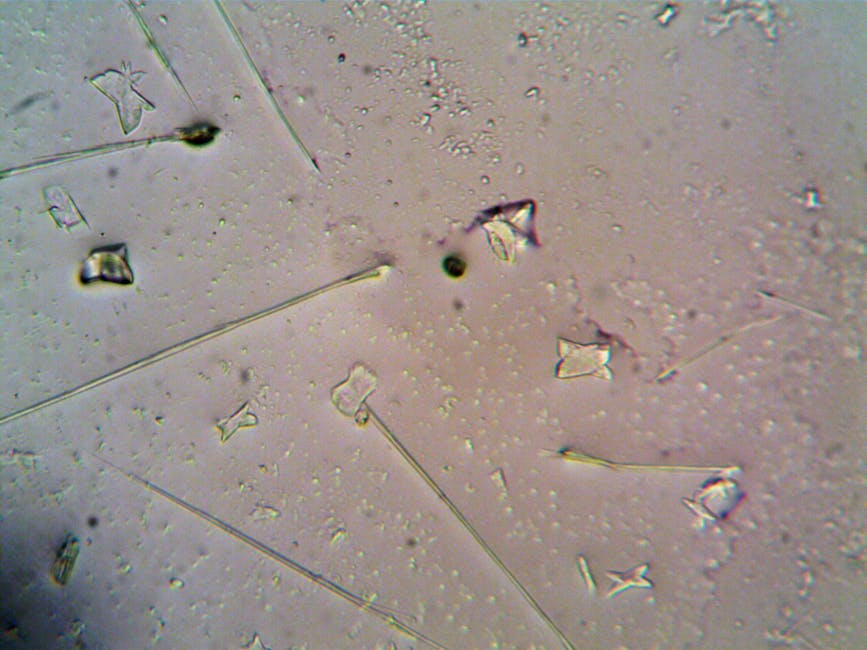
Microscopy is often one of the first steps in analysis. Technicians examine filtered particles under a stereomicroscope or compound microscope and classify them by shape, size, and color. This approach is useful for screening and counting visible particles, especially larger ones.
However, visual inspection alone has major limitations. Natural fibers, cellulose fragments, and mineral particles can resemble plastics. That is why visual counts should ideally be followed by chemical confirmation. Laboratories that rely too heavily on appearance may produce less reliable results.
FTIR Spectroscopy
Fourier-transform infrared spectroscopy, commonly called FTIR, is one of the most widely used tools in microplastics in drinking water lab analysis. FTIR identifies materials based on how they absorb infrared light, producing a spectral fingerprint that can be compared with known polymer libraries.
FTIR can be applied to individual particles or through imaging systems that scan a filter surface. It is especially valuable for confirming whether suspected particles are actually plastic and for identifying polymer types such as polyethylene, polypropylene, polystyrene, or polyethylene terephthalate.
Advantages of FTIR include strong polymer specificity and broad acceptance in microplastics research. Limitations include reduced performance for very small particles, longer analysis times for dense particle loads, and the need for well-maintained spectral libraries and quality controls.
Raman Spectroscopy
Raman spectroscopy is another major identification tool. It uses laser light to measure molecular vibrations and can often characterize smaller particles than standard FTIR methods. Raman is useful for detailed particle identification and is commonly used in advanced research and specialized testing.
Its limitations include fluorescence interference, sensitivity to sample condition, and slower throughput for large numbers of particles. Even so, Raman plays a key role when small-size detection is important.
Pyrolysis-GC/MS and Thermal Analysis
Some laboratories use thermal methods such as pyrolysis-gas chromatography/mass spectrometry. In this approach, the sample is heated so the polymers break into characteristic compounds that can be analyzed chemically. This is powerful for identifying polymer mass and composition.
The tradeoff is that thermal methods usually do not provide the same particle-by-particle information on shape and count that microscopy-based methods can provide. They are especially useful when the goal is to estimate total polymer mass rather than visible particle number.
Electron Microscopy and Advanced Techniques
Scanning electron microscopy and other specialized tools may be used for detailed particle imaging, surface characterization, or research applications. These methods can reveal fine structural detail, but they generally require specialized expertise and are not typically the first-line choice for routine consumer water testing.
Home Testing Versus Laboratory Analysis
Interest in microplastics in drinking water home testing is increasing, but consumers should understand the limitations. At-home kits may involve collecting a sample and mailing it to a laboratory, or they may attempt simplified screening methods. True identification of microplastics generally requires laboratory-grade instrumentation and strict contamination controls.
Most home users cannot reliably confirm polymer identity with basic visual methods. A sample viewed under a low-cost microscope may reveal particles, but not whether they are plastic, natural fiber, or ordinary debris. This is why microplastics in drinking water lab analysis remains the more credible route when meaningful results are needed.
If a homeowner wants to pursue testing, the most dependable option is usually to work with a qualified environmental or analytical laboratory that can explain:
- What particle-size range the test includes
- Whether polymer confirmation is performed
- How field and laboratory blanks are used
- What units will be reported, such as particles per liter or polymer mass
- What quality assurance procedures support the findings
Accuracy and Quality Assurance
Questions about microplastics in drinking water accuracy are central to the field. Accuracy depends on many factors:
- The minimum size the method can detect
- The efficiency of the filtration and recovery process
- The ability to distinguish plastic from non-plastic material
- The extent of contamination control during sampling and analysis
- The calibration and validation of analytical instruments
- The use of blanks, duplicates, spikes, and reference materials
No method captures every particle. A laboratory may accurately report what it can detect within a defined size range, but that does not mean it measured all microplastics present. This is a key interpretive point. Results should be viewed as method-dependent estimates, not absolute totals.
How Test Results Are Reported
Microplastics in drinking water test results may be presented in different ways, including:
- Particles per liter
- Particles by size class
- Particles by shape, such as fibers or fragments
- Polymer type distribution
- Total polymer mass per volume
When reviewing results, ask the following questions:
- What was the minimum detectable particle size?
- Were results corrected for blank contamination?
- Were particles visually counted, chemically confirmed, or both?
- How many samples were analyzed?
- Are the findings compared with any standardized method or benchmark?
Without this context, reported numbers can be misleading. A higher count in one report does not automatically mean worse water if that report used a more sensitive method than another study.
Prevention and Treatment
Preventing microplastics in drinking water requires action at multiple levels: source reduction, infrastructure management, treatment optimization, and informed household choices. Articles in the water treatment systems category and the broader water contamination category can help readers explore practical solutions in more depth.
Source Reduction
The most effective long-term strategy is to reduce plastic pollution before it reaches water sources. This includes better waste management, reduced litter, improved industrial controls, stormwater management, and product design changes that limit shedding and fragmentation.
Water Treatment Processes
Many conventional treatment processes can remove at least some microplastic particles, particularly larger ones. Coagulation, flocculation, sedimentation, and filtration may reduce particle levels, though efficiency depends on particle size, density, and plant operation. Advanced treatment systems such as membrane filtration may improve removal performance for smaller particles.
Distribution System Management
Utilities can also evaluate whether infrastructure materials, maintenance practices, or storage conditions contribute particles to finished water. Monitoring at multiple points helps distinguish source-related contamination from issues occurring later in the system.
Point-of-Use and Point-of-Entry Treatment
At the household level, some water treatment devices may help reduce particulate matter, though performance for microplastics varies by technology and certification. Fine mechanical filtration, certain membrane systems, and well-designed reverse osmosis systems are often discussed as possible options. However, consumers should look for clear performance data rather than assumptions. Not all filters are tested specifically for microplastics.
Good Sampling Hygiene at Home
If homeowners are collecting samples for professional analysis, they should follow the laboratory’s instructions carefully. Using clean glass containers, avoiding synthetic clothing during collection when possible, keeping containers closed, and minimizing airborne contamination can improve sample quality.
Common Misconceptions
“Any particle seen in water is a microplastic.”
False. Many particles are not plastic at all. Natural fibers, mineral grains, organic debris, and cellulose can resemble plastics under visual inspection.
“Home kits provide the same certainty as a laboratory.”
Usually not. Reliable microplastic identification generally requires specialized instrumentation, trained analysts, and contamination controls.
“All studies can be compared directly.”
No. Different studies often use different sampling volumes, filter sizes, detection limits, and confirmation methods. Results may not be equivalent.
“A higher particle count always means higher health risk.”
Not necessarily. Risk depends on more than count alone. Size, polymer type, associated chemicals, and exposure duration all matter.
“If regulations are limited, the problem is not real.”
Regulatory development often lags behind emerging science. The issue can be real and important even while methods and standards are still being refined.
Regulations and Standards
Regulatory frameworks for microplastics in drinking water are still developing. In many regions, there is not yet a universally adopted enforceable drinking water limit specifically for microplastics. One reason is methodological: regulators typically need standardized, reproducible testing methods before setting compliance thresholds.
Several agencies and research bodies are working toward harmonized methods for sampling, identification, and reporting. This includes efforts to define quality assurance expectations, particle size categories, contamination control practices, and analytical validation requirements. Standardization is essential because policy decisions depend on trustworthy and comparable data.
Current activity often focuses on:
- Developing validated analytical methods
- Improving interlaboratory comparability
- Establishing monitoring frameworks
- Assessing exposure and toxicology data
- Determining whether health-based guideline values can be justified
For consumers and water professionals, the practical takeaway is that the absence of a simple legal limit does not eliminate the value of testing. Instead, it means results must be interpreted with extra care, using method details and scientific context rather than relying on a single pass-fail number.
Conclusion
Microplastics in drinking water are an active area of research, and testing them is far more complex than many people realize. Effective microplastics in drinking water testing depends on careful sampling, contamination control, appropriate preparation, and analytical tools capable of confirming polymer identity. The field continues to evolve as laboratories improve methods and regulators work toward standardization.
Consumers should be cautious about oversimplified claims, especially when reviewing microplastics in drinking water test results without information about size range, quality controls, and confirmation techniques. For the most dependable answers, microplastics in drinking water lab analysis is generally more reliable than informal screening. At the same time, better source control, stronger treatment practices, and improved scientific standards can all help reduce uncertainty and support safer water management.
As knowledge advances, clearer benchmarks and more consistent methods will likely improve confidence in microplastics in drinking water accuracy. Until then, education remains the best tool for understanding what test findings really mean and how they should guide decisions about drinking water quality, treatment, and public health.



Read the full guide: Water Contamination Guide
Explore more in this category: Water Contamination Articles