
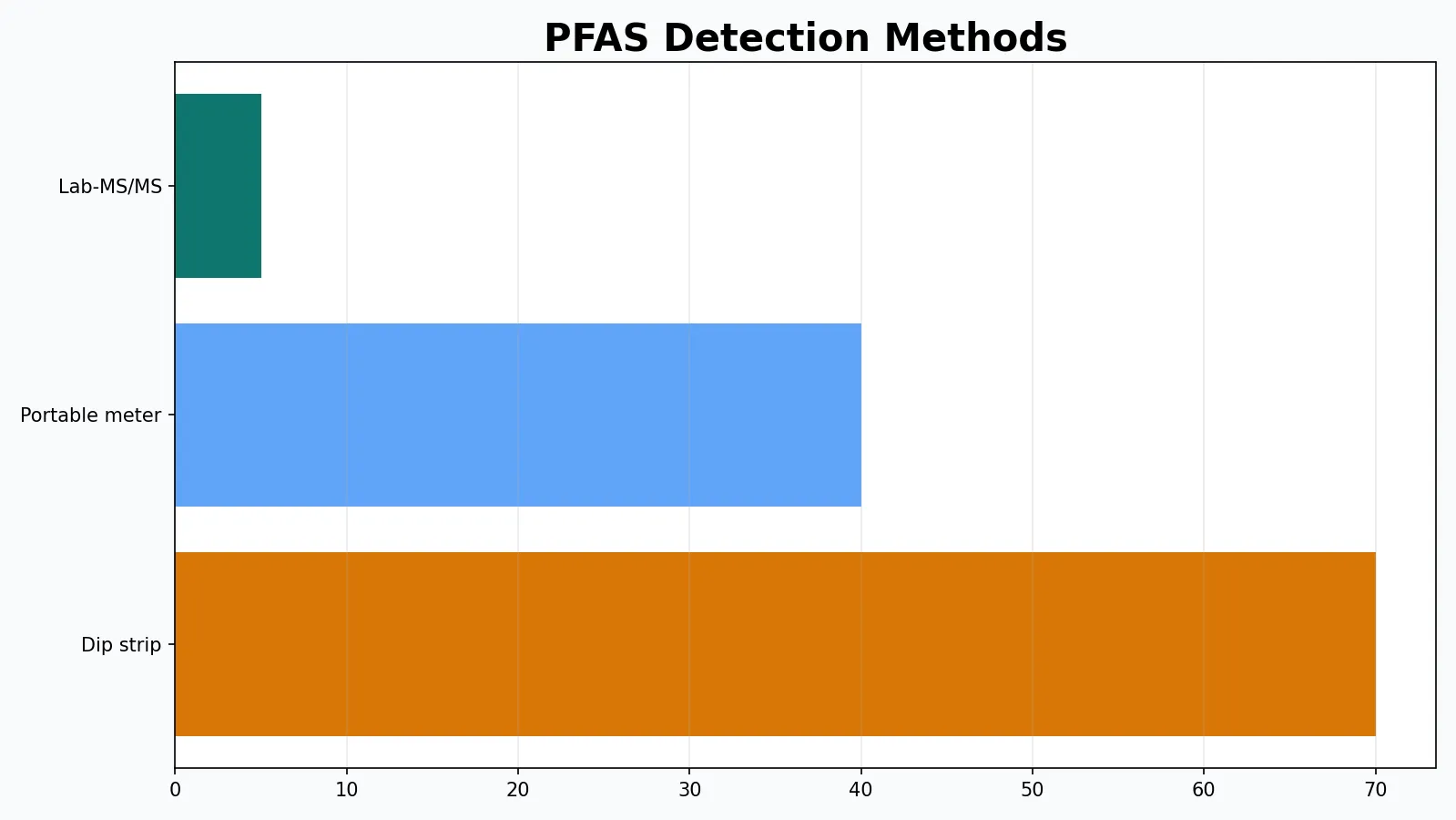
PFAS water testing has become a central topic in drinking water science because these chemicals behave differently from many traditional contaminants. Per- and polyfluoroalkyl substances, commonly called PFAS, are a large class of synthetic chemicals valued for their resistance to heat, oil, stains, and water. That same durability is why they are often referred to as “forever chemicals water” contaminants: many PFAS do not readily break down in the environment, can persist in groundwater and surface water, and may accumulate over time in people and ecosystems. For households, utilities, regulators, and public health professionals, the challenge is not only determining whether PFAS are present, but also understanding how pfas water testing works, how accurate different methods are, what laboratories can and cannot reliably detect, and how to interpret results in a practical way.
The topic matters because PFAS are now being found in more places than once expected. Industrial releases, firefighting foam use, landfill leachate, wastewater residuals, manufacturing, and even diffuse environmental transport have contributed to detections in source waters around the world. Unlike a contaminant that causes an obvious taste, odor, or color change, PFAS are usually invisible in drinking water. That means contamination can go unnoticed without targeted laboratory analysis. If a community or homeowner wants to evaluate exposure risk, a pfas contamination test is not optional; it is the essential first step.
From a scientific perspective, PFAS are analytically challenging because the class contains thousands of chemicals with different structures, chain lengths, and functional groups. Some are well studied, such as PFOA and PFOS. Others are shorter-chain replacements or precursors that can transform in the environment. Testing methods have improved substantially in the past two decades, especially through liquid chromatography coupled with tandem mass spectrometry. Even so, no single laboratory procedure captures every PFAS compound that may be present in water. Understanding the strengths and limitations of available methods is therefore just as important as obtaining a numerical result.
This article explains the scientific basis of pfas detection water methods, the main laboratory techniques used today, what affects accuracy, how sampling mistakes can distort results, how results are interpreted against evolving standards, and what consumers should do if PFAS are detected. For readers who want a broader foundation before going deeper into this topic, PureWaterAtlas also covers water science, contaminants, treatment, and water quality in a wider context.
What PFAS are and why they are called “forever chemicals”
PFAS are a family of fluorinated organic compounds characterized by strong carbon-fluorine bonds. These bonds are among the strongest in organic chemistry, which helps explain why many PFAS are highly stable and resistant to environmental degradation. Historically, PFAS have been used in nonstick cookware, stain-resistant textiles, food packaging, chrome plating, semiconductor manufacturing, firefighting foams, and many industrial processes. Their broad use has led to broad environmental distribution.
The phrase “forever chemicals water” has entered public discussion because some PFAS remain in water, soil, and sediment for long periods. They can migrate through watersheds, infiltrate aquifers, and enter drinking water sources. While not all PFAS behave identically, many are mobile in water, and some are difficult to remove once contamination occurs. Source water impacts can therefore persist long after the original release.
PFAS contamination is especially concerning in drinking water because ingestion can be a significant exposure pathway in affected areas. Public health agencies and researchers continue to evaluate the relationship between PFAS exposure and health outcomes, but the regulatory and scientific trend is clear: low-level detection matters, and sensitive testing is necessary. Agencies such as the U.S. Environmental Protection Agency drinking water program, the World Health Organization drinking water resources, and the CDC Healthy Water program all emphasize the importance of drinking water quality monitoring and risk reduction.
Why PFAS water testing matters for drinking water safety
Water quality decisions depend on measurement. Without a defensible analytical result, consumers and utilities cannot know whether PFAS are absent, present at trace levels, or present above health-based or regulatory thresholds. This is particularly important because PFAS often occur at concentrations measured in parts per trillion, equivalent to nanograms per liter. At these levels, analytical sensitivity and contamination control become critical.
PFAS water testing matters for several reasons:
- PFAS are usually not detectable by the senses. Water may look, smell, and taste normal even when PFAS are present.
- Some PFAS are regulated or subject to advisory levels. Testing is needed to compare actual concentrations with applicable standards.
- Exposure can be chronic rather than acute. Small concentrations consumed over time can still be relevant to risk assessment.
- Treatment choices depend on chemistry. Granular activated carbon, ion exchange, and reverse osmosis performance can vary by PFAS type and concentration.
- Source identification may require compound-specific patterns. A PFAS profile can sometimes suggest whether contamination is linked to firefighting foam, industrial activity, landfill influence, or mixed sources.
For readers exploring contaminant categories more broadly, PureWaterAtlas provides additional background on types, sources, risks, and prevention of drinking water contamination. PFAS fit within that larger contamination framework, but they deserve special attention because of their persistence, trace-level relevance, and analytical complexity.
The scientific background behind PFAS detection in water
To understand pfas detection water methods, it helps to start with the chemistry. PFAS molecules often contain a fluorinated carbon chain attached to a functional group such as a carboxylate or sulfonate. This structure affects how the compound behaves during extraction, separation, ionization, and mass spectrometric detection. Long-chain PFAS and short-chain PFAS do not always respond the same way in the laboratory or in treatment systems.
Most modern targeted PFAS methods rely on several scientific steps:
- Sample collection and preservation to prevent contamination or analyte loss.
- Extraction or concentration to isolate PFAS from the water matrix.
- Chromatographic separation to distinguish different PFAS compounds from one another.
- Mass spectrometric detection to identify and quantify compounds based on mass-to-charge behavior and fragmentation patterns.
- Quality control review using blanks, spikes, surrogates, calibration, and internal standards.
Targeted methods are designed to quantify a defined list of PFAS analytes. That list may include legacy compounds such as PFOA, PFOS, PFHxS, PFNA, and GenX-related chemicals, among others. However, targeted testing does not measure every PFAS in existence. This is a key limitation. If a water source contains unusual or emerging PFAS not included in the method, a targeted panel can underestimate the total PFAS burden.
Because of that limitation, scientists have also developed broader screening approaches such as total organic fluorine, extractable organofluorine, and total oxidizable precursor assays. These methods do not replace targeted drinking water compliance methods, but they can help researchers evaluate whether unmeasured PFAS or PFAS precursors may also be present.
Common sources of PFAS in drinking water
Testing becomes more meaningful when paired with source awareness. PFAS contamination can enter drinking water through several pathways:
- Use of aqueous film-forming foam at military sites, airports, and firefighting training areas
- Industrial manufacturing and fluorochemical processing
- Metal finishing, plating, and electronics production
- Landfill leachate migration into groundwater or nearby surface water
- Wastewater discharges and biosolids application
- Atmospheric deposition followed by watershed transport
Hydrogeology matters. In porous aquifers, PFAS can travel significant distances depending on groundwater flow, recharge, soil properties, and the specific compounds involved. Surface water systems can also be affected by upstream discharges and stormwater transport. The U.S. Geological Survey water resources program offers valuable context on the movement and monitoring of contaminants in the water environment.
If contamination is suspected near a home, school, or utility, a pfas contamination test should be designed around that local context. A one-time sample may be helpful, but a more informative approach often includes knowledge of nearby land use, source water type, past environmental investigations, and whether contamination is expected to be stable, seasonal, or influenced by operational changes.
How PFAS water testing is performed
PFAS water testing is typically performed by accredited laboratories using validated methods. The most common drinking water methods are based on liquid chromatography with tandem mass spectrometry, abbreviated LC-MS/MS. In simple terms, the instrument first separates PFAS compounds as they move through a chromatographic column, then identifies and quantifies them using mass spectrometric signals.
Targeted LC-MS/MS methods
Targeted methods are the current backbone of PFAS testing for drinking water. U.S. EPA methods such as Method 533 and Method 537.1 are widely used for specific PFAS analyte lists in drinking water matrices. These methods differ somewhat in analyte coverage, extraction conditions, and performance characteristics, but both are intended for highly sensitive quantification of selected PFAS at low concentrations.
In practice, the workflow generally includes:
- Collecting water in PFAS-compatible containers
- Adding isotope-labeled internal standards or surrogates
- Concentrating analytes, often by solid-phase extraction
- Eluting PFAS from the extraction media
- Separating analytes by liquid chromatography
- Detecting them by tandem mass spectrometry using compound-specific transitions
- Quantifying results against a calibrated standard curve
The use of isotope-labeled standards is essential to method accuracy. These standards behave similarly to the native analytes during sample preparation and analysis, helping compensate for matrix effects, extraction losses, and instrument variability. When the laboratory reports a concentration, that number reflects a chain of calibrations, recovery corrections, and quality controls designed to make low-level measurements as reliable as possible.
EPA Method 537.1
EPA Method 537.1 was developed for the determination of selected PFAS in drinking water. It is known for covering several long-chain legacy PFAS and certain newer compounds. The method uses solid-phase extraction followed by LC-MS/MS. For laboratories analyzing regulated drinking water samples or high-priority monitoring samples, this method has been a cornerstone because it provides standardized procedures and documented performance criteria.
However, EPA Method 537.1 does not include every PFAS of interest. If short-chain PFAS or compounds not on its target list are suspected, another method may be more suitable or may need to be run in combination.
EPA Method 533
EPA Method 533 was developed to complement Method 537.1 and expand coverage for additional short-chain PFAS and other analytes. It also relies on isotope dilution and LC-MS/MS. In many real-world testing programs, laboratories use both methods or a combined analytical strategy to capture a wider range of PFAS compounds relevant to drinking water.
For a general primer on how water testing approaches differ across contaminant types, PureWaterAtlas has a helpful overview of water testing methods explained. PFAS testing stands out because of the low reporting levels and extraordinary contamination control needed during every stage.
Draft and advanced methods
As PFAS science evolves, new methods continue to emerge. These may include expanded targeted analyte lists, high-resolution mass spectrometry for suspect screening, total organic fluorine techniques, and precursor transformation assays. Such approaches are especially useful in research, source tracking, and treatment evaluation. Still, for most drinking water decisions today, targeted quantitative LC-MS/MS remains the main tool because it provides compound-specific results that can be compared with regulatory values or advisory levels.
Sampling procedures and contamination control
A major challenge in pfas water testing is avoiding contamination from the sampling process itself. PFAS are present in many consumer and industrial materials, so accidental introduction can occur from unexpected sources. A technically excellent laboratory method can still produce misleading results if field sampling is not controlled properly.
Why contamination control is so strict
Because PFAS are often measured in parts per trillion, even very small amounts introduced during collection or transport can affect results. This is different from testing for contaminants typically present at much higher concentrations. Field staff and homeowners should follow laboratory instructions carefully and avoid improvising.
Common contamination sources during sampling
- Water-resistant clothing or gear treated with fluorinated compounds
- Some waterproof notebooks, markers, labels, and packaging materials
- Certain gloves, especially if not laboratory approved for PFAS sampling
- Cosmetics, lotions, sunscreen, and other personal care products
- Food packaging, fast-food wrappers, and snack bags handled near samples
- Sampling equipment not verified as PFAS-free
Most laboratories specify acceptable bottles, preservation requirements, holding times, and shipment conditions. The best practice is to use the lab’s own kit and chain-of-custody instructions. If a sample is collected incorrectly, the result may be unusable or difficult to interpret.
Field quality control
Reliable PFAS sampling programs often include field blanks, trip blanks when appropriate, duplicate samples, and matrix spikes. These quality control samples help reveal whether contamination occurred during transport or sampling, whether results are reproducible, and whether the water matrix interferes with recovery. Utilities and consultants typically rely on these checks when defending analytical conclusions.
Detection limits, reporting limits, and what “non-detect” really means
One of the most misunderstood aspects of pfas water testing is the meaning of a “non-detect.” A non-detect does not mean the chemical is definitely absent. It means the analyte was not detected above the method’s reporting threshold under the conditions of that analysis. That distinction matters, especially when health benchmarks are very low.
Laboratory reports may reference several related terms:
- Method Detection Limit (MDL): an estimate of the lowest concentration that can be distinguished from zero with defined confidence.
- Minimum Reporting Level (MRL) or Reporting Limit (RL): the lowest level at which the laboratory routinely reports quantitative results.
- Limit of Quantitation (LOQ): the lowest level at which the analyte can be quantified with acceptable precision and accuracy.
If a result is reported as non-detect at a reporting limit of 2 ng/L, that means the lab did not quantify the PFAS above 2 ng/L. The true concentration could still be below that level. In contexts where advisory or regulatory values are very low, the reporting limit itself becomes an important part of data quality.
This is why consumers should not interpret all “non-detect” results equally. A non-detect achieved with a sensitive validated method and a low reporting limit is stronger evidence than a non-detect from a less sensitive screen. To make sense of these details, it helps to understand how water test results are interpreted in general, including qualifiers, units, and laboratory notes.
What affects the accuracy of PFAS water testing
Accuracy in PFAS analysis is not a single property. It reflects how close a reported result is to the true concentration, and it depends on the entire testing chain from field collection through data review. Several factors influence analytical accuracy.
1. Method selection
The laboratory must use a method appropriate for the matrix and the PFAS compounds of concern. Drinking water methods are not always interchangeable with wastewater, soil, or tissue methods. A method optimized for one matrix may perform poorly in another.
2. Calibration quality
Instrument calibration is fundamental. Laboratories prepare standards across a concentration range and verify that instrument response is linear or otherwise appropriately fit. Poor calibration leads directly to biased results. Ongoing calibration checks are also needed to ensure stability over the analytical sequence.
3. Recovery of analytes
During extraction and cleanup, some PFAS may be lost. Isotope-labeled internal standards help track and correct for these losses, but recoveries must still fall within acceptable ranges. Very low or very high recoveries can indicate matrix interference, contamination, or procedural problems.
4. Matrix effects
Although drinking water is generally a cleaner matrix than wastewater or industrial process water, dissolved salts, organic matter, and co-occurring contaminants can still suppress or enhance ionization in the mass spectrometer. This can affect quantification if not properly controlled.
5. Laboratory contamination
PFAS can be introduced from tubing, solvents, labware, or instrument components if a laboratory’s contamination control program is weak. Reputable labs address this through PFAS-free materials where possible, procedural blanks, method blanks, and carefully validated workflows.
6. Field contamination
As noted earlier, contamination during sample collection is a major risk. If PFAS are introduced before the sample reaches the lab, the analytical system may correctly report them even though they were not present in the source water at that concentration.
7. Data review and qualification
Analytical data should be reviewed by trained personnel. Results may need qualifiers if blank contamination was present, surrogate recovery was out of range, duplicate precision was poor, or holding times were exceeded. Qualified data are not always invalid, but they require careful interpretation.
8. Analyte coverage limitations
A targeted test can be highly accurate for the compounds it includes while still missing other PFAS not on the target list. This is an important conceptual limitation: analytical accuracy for listed analytes is not the same as complete knowledge of all PFAS in a sample.
How accurate are current PFAS testing methods?
For the specific analytes they target, current validated LC-MS/MS methods are generally very accurate and highly sensitive when performed by competent laboratories under proper quality assurance programs. Interlaboratory validation studies and regulatory method development have shown that trace-level PFAS can be measured with strong precision and reproducibility. However, “accurate” should not be confused with “perfect.”
In practice, current methods are strong at answering questions like:
- Is PFOA or PFOS present in this drinking water sample?
- At what concentration, within documented uncertainty, is a target PFAS detected?
- Do repeated samples show a consistent trend?
- Does treatment reduce target PFAS concentrations?
They are less complete for questions like:
- What is the total concentration of all PFAS compounds in this sample?
- Are unknown fluorinated precursors present that may transform later?
- How much organofluorine is present from non-target compounds?
So the best answer is that current pfas water testing methods are highly accurate for defined PFAS analytes under controlled conditions, but not exhaustive for the full universe of PFAS chemistry.
Interpreting PFAS results in a drinking water context
Once a laboratory report arrives, the next challenge is interpretation. A result only becomes meaningful when placed in context: Which compounds were tested? What were the reporting limits? Were quality controls acceptable? What standard or health benchmark applies? Is this a one-time snapshot or part of a trend?
Key interpretation questions
- Which PFAS compounds were included in the method?
- Were any compounds detected above the reporting limit?
- Were there any data qualifiers or blank contamination flags?
- How do the results compare with applicable federal, state, or local standards?
- Were samples collected from raw source water, entry point, or tap water?
- Is the result representative of normal operating conditions?
For example, a utility sample showing non-detect for several target PFAS at very low reporting limits may indicate effective control for those analytes at that sampling point. By contrast, a homeowner test showing a few low-level detections should be evaluated alongside plumbing, treatment device status, sampling location, and any known local contamination history.
Regulatory context also matters. Some PFAS values are enforceable standards, while others are health advisories, guidance values, or state-specific limits. Because the landscape changes over time, readers should compare results with current official criteria rather than older summaries. PureWaterAtlas also offers practical guidance on how water quality standards are explained and why different numbers may exist for the same contaminant across jurisdictions.
PFAS standards, thresholds, and regulatory context
PFAS regulation has evolved rapidly. In the United States, federal and state agencies have moved from health advisories toward more formal drinking water standards for selected compounds. Other countries and regions have taken their own approaches, sometimes regulating individual PFAS and sometimes adopting group-based or precautionary frameworks.
Several points are important:
- Not all PFAS are regulated equally.
- Thresholds may differ between jurisdictions.
- Health-based goals can differ from enforceable maximum contaminant levels.
- New toxicological assessments may lead to future revisions.
Because many standards are very low, pfas safety water decisions depend on tests with sufficiently low reporting limits. A laboratory that cannot reliably quantify down to relevant thresholds may not provide actionable information. This is why method sensitivity should be discussed before ordering a pfas contamination test.
Consumers should also remember that regulatory compliance values are not the only consideration. A result below a legal threshold does not automatically mean no concern exists in every context, especially if vulnerable populations, multiple exposure pathways, or changing regulations are relevant. At the same time, one low-level detection should not be interpreted as a medical emergency. The appropriate response is evidence-based follow-up: confirm the result if needed, identify the source if possible, and evaluate treatment or alternate water options using current public health guidance.
How homeowners and communities should approach PFAS testing
PFAS testing can be requested by private well owners, municipal utilities, schools, health departments, and businesses. The best approach depends on the purpose of the test.
For private well owners
If you rely on a private well, PFAS testing may be especially worthwhile if you live near airports, military installations, industrial facilities, landfills, wastewater-impacted areas, or known contamination sites. Start with a certified laboratory that offers drinking water PFAS analysis and provides clear sampling instructions. Ask which method will be used, which analytes are included, and what the reporting limits are.
For public water systems
Utilities often conduct PFAS monitoring under regulatory programs, source assessments, or treatment optimization studies. A utility testing plan may include raw water, treated water, distribution system points, and repeat sampling over time. Trend analysis is often more informative than a single isolated result.
For schools and buildings
Testing tap water inside buildings can help determine whether water entering the building is the issue or whether treatment and point-of-use decisions are needed at occupied outlets. Although PFAS usually originate from source water rather than indoor plumbing, sampling design still matters if representative exposure is the goal.
Questions to ask before ordering a test
- Is the lab accredited or certified for PFAS drinking water analysis?
- Which PFAS compounds are included?
- What are the reporting limits for each analyte?
- Will the report include data qualifiers and quality control information?
- Does the lab provide sampling bottles and PFAS-specific instructions?
- How should results be interpreted against current standards?
If you are comparing different kinds of contaminant screening, the broader water-testing category at PureWaterAtlas can help put PFAS analysis in perspective relative to microbial, mineral, and other chemical tests.
What to do if PFAS are detected
A detection should lead to a measured response, not panic. The appropriate next step depends on the concentration, the compound detected, the water source, and whether the result has been confirmed.
1. Review the report carefully
Check which PFAS were detected, at what levels, and whether any data qualifiers are attached. Make sure you understand the sampling point and the units used.
2. Compare with current applicable standards
Use up-to-date federal, state, or local criteria. If you are on a public water system, contact the utility or local health department for interpretation. If you use a private well, consult your state environmental or health agency and the laboratory if clarification is needed.
3. Consider confirmatory testing
If results are unexpected, especially near the reporting limit, a second sample can help confirm the finding. Confirmatory testing is also useful after treatment installation or operational changes.
4. Evaluate exposure reduction options
Depending on the situation, options may include point-of-use reverse osmosis, whole-house treatment using granular activated carbon or ion exchange, blending, source substitution, or connection to an alternate water supply. Treatment choice should be based on PFAS type, water chemistry, maintenance requirements, and verified performance data.
5. Investigate the source if relevant
For recurring detections, source investigation may be needed, especially for wells or small systems near potential release areas. The PFAS profile sometimes provides clues, but hydrogeologic and site data are often needed for firm conclusions.
PFAS treatment verification and post-treatment testing
Testing is not only for initial detection. It is also how treatment effectiveness is verified. If a household or utility installs PFAS treatment, post-treatment sampling should be planned in advance. That sampling should ideally include baseline concentrations, a schedule for follow-up tests, and a decision framework for media replacement or system adjustment.
Treatment verification matters because breakthrough can occur. A system that initially removes PFAS effectively may become less protective as adsorption media nears exhaustion or operating conditions change. Post-treatment pfas detection water data can show whether removal remains adequate and whether specific compounds break through earlier than others.
Short-chain PFAS can be more difficult for some treatment systems to remove than long-chain PFAS. Therefore, a treatment device validated only against a limited subset of compounds may not perform equally well for the entire PFAS profile present in the water. This is another reason targeted compound-specific testing is so valuable.
Limitations of PFAS testing that consumers should understand
Even very good PFAS testing has limitations. Being clear about them helps avoid overconfidence and misinterpretation.
- No single test measures every PFAS. Most drinking water analyses target selected analytes.
- Results are time-specific. A sample reflects the water at that place and time, not every future condition.
- Low-level detections require expert interpretation. Method sensitivity, blank contamination, and qualifiers matter.
- Regulations change. A result judged low concern today may be viewed differently under future standards.
- Exposure is broader than water alone. Water may be one pathway among several, though drinking water is often a priority pathway in contaminated areas.
These limitations do not reduce the value of pfas water testing. Rather, they define how the results should be used: as rigorous evidence within a broader decision-making process involving source knowledge, treatment evaluation, and current public health guidance.
FAQ
How often should PFAS water testing be done?
There is no single schedule for every situation. Private well owners near potential PFAS sources may start with one test and then retest based on results, local guidance, or changing land use. Utilities often follow regulatory or monitoring schedules, plus additional testing during source investigations or treatment changes.
Does a non-detect mean my water has no PFAS?
No. It means the tested PFAS were not detected above the laboratory’s reporting limit. Very low concentrations below that limit, or PFAS not included in the method, may still be present.
What is the most common method used for PFAS detection in water?
Targeted liquid chromatography with tandem mass spectrometry, usually under validated methods such as EPA Method 533 or 537.1, is the most common and most important approach for drinking water PFAS analysis.
Can home test strips measure PFAS accurately?
PFAS generally require specialized laboratory analysis. Simple home strips are not the standard approach for reliable PFAS quantification at drinking water-relevant concentrations.
Which is more important: the PFAS concentration or the reporting limit?
Both matter. The concentration tells you what was detected, while the reporting limit determines how much confidence you can place in a non-detect and whether the test is sensitive enough for relevant health or regulatory benchmarks.
Conclusion
PFAS water testing is one of the most technically demanding areas of modern drinking water analysis because it combines persistent contaminants, extremely low concentrations, strict contamination control, and rapidly evolving standards. The good news is that current targeted laboratory methods are highly capable for the PFAS compounds they are designed to measure. When samples are collected correctly and analyzed by qualified laboratories, the resulting data can support sound decisions about drinking water safety, treatment, and follow-up action.
The most important lessons are practical: choose an appropriate method, use a lab experienced in PFAS analysis, pay attention to sampling instructions, look closely at reporting limits and quality controls, and interpret results against current standards rather than assumptions. In the context of pfas safety water decisions, accurate measurement is not the end of the process, but it is where every responsible response begins.
Read the full guide: Water Testing Guide
Explore more in this category: Water Testing Articles