
Introduction
Clean water is one of the most important foundations of public health, yet many people still have urgent questions about what happens when water becomes unsafe. This guide is designed as a practical resource for readers searching for health risks of contaminated water faqs, with clear explanations of what contamination means, where it comes from, how it affects the body, and what households can do to reduce risk.
Water contamination can involve microbes, chemicals, metals, sediments, or other harmful substances that change water quality and make it unsafe for drinking, cooking, bathing, or cleaning. In some cases, contamination causes obvious changes such as bad taste, unusual color, or odor. In other situations, the danger is invisible. Water may look perfectly normal while still carrying disease-causing organisms or toxic compounds.
This article answers many of the most common questions in an educational format. It also addresses health risks of contaminated water quick answers for readers who want practical guidance, along with deeper context for those comparing household safety options, medical concerns, and prevention strategies. If you want broader background, you may also find useful information in drinking water safety resources, a complete guide to contaminated water risks, and articles focused on causes and sources and health effects and risks.
Because water quality issues can affect infants, children, older adults, pregnant people, and individuals with weakened immune systems more severely, learning the basics is not just helpful but essential. The sections below explain the problem step by step and provide health risks of contaminated water household advice that can support safer daily decisions.
What It Is
Contaminated water is water that contains biological, chemical, or physical agents at levels that may harm human health or make the water unsuitable for normal use. Contamination can occur in groundwater, wells, rivers, lakes, reservoirs, and even treated municipal supplies if problems arise during treatment, storage, or distribution.
From a health perspective, contamination is usually grouped into several broad categories:
- Biological contaminants: bacteria, viruses, parasites, and other microorganisms that can cause infections.
- Chemical contaminants: pesticides, industrial solvents, fuel residues, disinfectant byproducts, and other compounds.
- Heavy metals and minerals: lead, arsenic, mercury, cadmium, and sometimes excessive nitrate or fluoride.
- Physical contaminants: sediment, rust, and particulate matter that may signal infrastructure or source-water problems.
- Radiological contaminants: radioactive substances that may enter water from geology, mining, or industrial activities.
One common question in health risks of contaminated water faqs is whether contamination always means the water is immediately dangerous. The answer is no. Some contaminants cause acute illness within hours or days, while others lead to long-term health effects after repeated exposure over months or years. For example, bacteria and viruses may trigger sudden gastrointestinal symptoms, whereas lead or arsenic exposure may create more gradual but serious health consequences.
Another important point is that contamination does not only apply to drinking water. Unsafe water may affect people through:
- Drinking
- Making ice
- Cooking and preparing infant formula
- Brushing teeth
- Washing fruits and vegetables
- Bathing or showering in certain contamination scenarios
- Inhalation of aerosolized droplets in some cases
Readers interested in the science behind germs and waterborne pathogens can explore more detailed material in the water microbiology category. For a broader overview of related hazards, the water contamination category provides useful supporting information.
Main Causes or Sources
Water becomes contaminated through many pathways, and identifying the source is a critical part of risk management. The most common sources differ between urban and rural settings, public systems and private wells, and developed and developing regions.
Microbial Sources
Microbial contamination often happens when human or animal waste enters a water source. This may occur because of sewage overflows, septic system failures, agricultural runoff, flooding, or damaged infrastructure. Pathogens of concern include E. coli, Salmonella, Campylobacter, Giardia, Cryptosporidium, norovirus, and hepatitis A virus.
These organisms can spread rapidly when sanitation systems are stressed by storms, natural disasters, or inadequate treatment. In private well systems, heavy rain and poor well construction are especially important risk factors.
Chemical Sources
Chemical contamination can result from industrial discharge, agricultural chemicals, leaking underground storage tanks, mining activity, landfill leachate, and household hazardous waste. Some contaminants enter the environment slowly and persist for years. Others appear after an accidental release or spill.
Nitrates from fertilizers and animal waste are a notable concern in agricultural areas. Volatile organic compounds and solvents may affect groundwater near industrial zones. Pesticide residues can also move into surface water and wells.
Lead and Plumbing-Related Sources
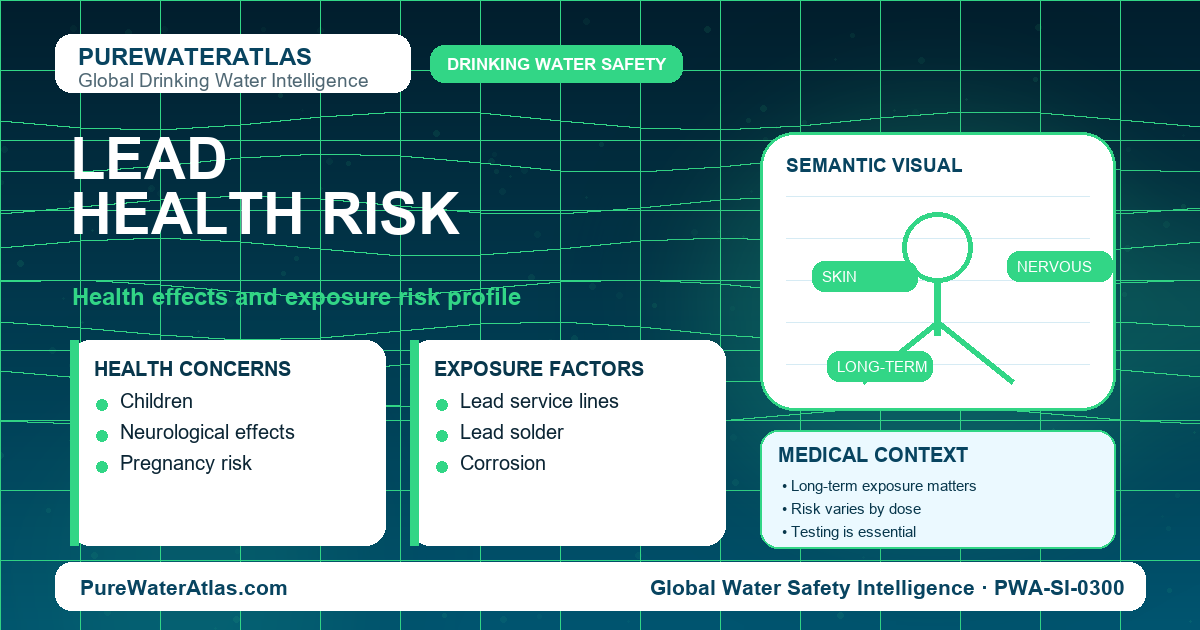
Sometimes the original water source is relatively clean, but contamination occurs while water travels through pipes, fixtures, or solder. Lead is the best-known example. Older homes, schools, and buildings may have plumbing materials that release lead into water, especially when water is corrosive or sits in pipes for extended periods.
Copper, iron, and other metals may also leach from plumbing. While some of these are mainly aesthetic issues at low levels, others can create real health or safety concerns.
Natural Geological Sources
Not all contamination is caused by human activity. Natural rock and soil formations may release arsenic, fluoride, manganese, sulfur compounds, or radionuclides into groundwater. In these cases, even remote-looking water that seems pristine may be unsafe without testing.
Household and Building-Level Sources
Storage tanks, filters that are not maintained, cross-connections, stagnant plumbing, and water heaters can all contribute to water quality problems. Warm, stagnant water may encourage growth of organisms such as Legionella under certain conditions. Improperly installed softeners or treatment systems can also fail to protect users if they are not serviced correctly.
These examples are central to health risks of contaminated water household advice because the risk is not always at the municipal level. Sometimes the source is inside the property itself.
Health and Safety Implications
The health effects of contaminated water depend on what is in the water, the concentration, how long a person is exposed, and individual vulnerability. In health risks of contaminated water quick answers, people often ask whether contaminated water always causes stomach problems. Gastrointestinal illness is common, but it is far from the only possible outcome.
Short-Term Health Effects
Acute exposure to microbial contamination often produces symptoms such as:
- Diarrhea
- Vomiting
- Nausea
- Stomach cramps
- Fever
- Dehydration
These effects can range from mild to severe. Infants, older adults, and people with chronic illness may become dehydrated quickly and require medical care. Some pathogens can also cause more serious complications, including kidney injury, bloodstream infection, liver inflammation, or prolonged intestinal problems.
Long-Term Health Effects
Chemical and metal contaminants are often linked with chronic health risks rather than immediate symptoms. Potential long-term effects include:
- Developmental problems in infants and children
- Learning and behavioral issues from lead exposure
- Cancer risk from certain chemicals and byproducts
- Kidney damage
- Liver damage
- Nervous system effects
- Hormonal disruption
- Reproductive and pregnancy-related complications
Arsenic exposure, for example, has been associated with skin changes, cardiovascular effects, and increased cancer risk over time. High nitrate levels are dangerous for infants because they can interfere with oxygen transport in the blood, leading to a condition known as methemoglobinemia or “blue baby syndrome.”
Who Is Most at Risk?
Some groups face greater danger from contaminated water than the general population:
- Infants and young children: smaller body size and developing organs increase vulnerability.
- Pregnant people: certain contaminants can affect fetal development.
- Older adults: immune response and resilience may be lower.
- Immunocompromised individuals: higher risk from opportunistic pathogens.
- People with kidney or liver disease: reduced ability to process toxins.
Safety Concerns Beyond Drinking
One of the most important health risks of contaminated water safety concerns is the assumption that if water is not swallowed, it cannot cause harm. In reality, some contaminants pose risks during bathing, food preparation, or inhalation of mist. For example:
- Skin irritation may occur with some chemicals or high disinfectant levels.
- Inhaling contaminated droplets can be a concern with certain building water pathogens.
- Washing produce in unsafe water can transfer harmful microbes.
- Preparing baby formula with contaminated water can expose infants to dangerous substances.
Because effects vary widely, households should not rely on symptoms alone to judge water safety. Many contaminants have no taste, smell, or immediate physical warning signs.
Testing and Detection
Testing is the only reliable way to confirm many forms of water contamination. People frequently ask whether home observation is enough. The answer is no. Clear water is not necessarily safe, and unpleasant-looking water is not always the most dangerous. Laboratory analysis and approved field methods remain the best tools for detection.
When to Test Water
Testing is especially important in the following situations:
- You use a private well
- There has been flooding, heavy rain, or nearby construction
- Your water changes color, odor, or taste
- Household members have unexplained gastrointestinal illness
- Your home has older plumbing or possible lead service lines
- You live near farms, factories, gas stations, landfills, or mining areas
- You are preparing for a pregnancy or have an infant at home
What Water Tests Look For
Common testing panels may include:
- Total coliform bacteria and E. coli
- Lead and copper
- Nitrate and nitrite
- Arsenic
- pH and corrosivity
- Total dissolved solids
- Pesticides or industrial chemicals in higher-risk locations
For private wells, annual bacterial and nitrate testing is often recommended, with additional tests based on local geology and land use. Public water systems are monitored according to regulatory standards, but households may still test tap water if they suspect plumbing-related contamination.
Interpreting Results
A water test result is only useful if it is interpreted correctly. Some contaminants have enforceable legal limits in public water systems, while others have health-based guidelines or advisory levels. A result that exceeds a standard does not always mean immediate poisoning, but it does mean action should be taken to reduce exposure.
Conversely, a single negative test does not guarantee permanent safety. Water quality can change over time. That is why repeat testing and trend awareness are important, especially for wells and homes with older plumbing.
Signs That Warrant Immediate Attention
Seek prompt guidance from local authorities, a water utility, or a qualified environmental professional if:
- You receive a boil water notice
- There is a sewage backup or flood intrusion
- Your test shows E. coli or high lead levels
- Infants, elderly family members, or immunocompromised people are using the water
- You suspect chemical exposure after a spill or local incident
Among the most useful health risks of contaminated water expert tips is this: test based on risk, not assumptions. Local conditions matter, and the right test panel is often different from one region to another.
Prevention and Treatment
Preventing exposure is more effective than dealing with illness later. Households, landlords, facilities, and public utilities all play a role in reducing contamination risks. The best strategy depends on whether the problem is microbial, chemical, plumbing-related, or environmental.
Household Prevention Steps
- Use only tested and safe water for drinking, cooking, and infant formula.
- Maintain private wells, caps, and surrounding drainage properly.
- Keep hazardous chemicals, fuels, and waste away from water sources.
- Service septic systems on schedule.
- Flush taps after water has been sitting in pipes, especially in older homes.
- Clean and replace filters according to manufacturer instructions.
- Pay attention to boil water notices and public health alerts.
Boiling Water: What It Helps and What It Does Not
Boiling is commonly recommended for microbial contamination because it can kill many bacteria, viruses, and parasites when done correctly. However, boiling does not remove lead, nitrates, or most chemical contaminants. In fact, boiling may concentrate some chemicals as water evaporates.
This is one reason many health risks of contaminated water faqs emphasize matching the response to the actual contaminant. A boil water notice is not the same as a chemical contamination advisory.
Filtration and Treatment Options
Treatment systems vary greatly in effectiveness. Common options include:
- Activated carbon filters: may reduce certain chemicals, tastes, and odors, but usually do not remove all microbes or dissolved metals.
- Reverse osmosis: can reduce many dissolved contaminants including some metals, salts, and nitrates.
- Ultraviolet disinfection: effective against many microorganisms when water is clear and the system is properly maintained.
- Distillation: can remove many contaminants but may be slower and more energy-intensive.
- Water softeners and specialty media filters: designed for specific mineral or metal problems.
No single system solves every problem. Certification, correct installation, maintenance, and periodic retesting are all essential. Households should select treatment based on verified contaminants, not marketing claims alone.
What to Do If Contamination Is Confirmed
If testing confirms contamination:
- Stop using the water for drinking and cooking if advised to do so.
- Switch to bottled water or a confirmed safe alternative source.
- Follow public health instructions carefully.
- Identify whether the source is the water supply, plumbing, or a private well issue.
- Install appropriate treatment or repair infrastructure.
- Retest after corrective action.
For lead concerns, using cold water for consumption, flushing stagnant lines, and replacing lead-containing plumbing materials are common interim and long-term steps. For bacterial contamination in wells, shock chlorination may be used in some circumstances, but the root cause must still be corrected.
Common Misconceptions
Misunderstandings about contaminated water are common and can lead to false reassurance or unnecessary panic. Addressing health risks of contaminated water common myths helps households respond more effectively.
Myth 1: If Water Looks Clear, It Is Safe
False. Many dangerous contaminants are invisible. Bacteria, viruses, nitrates, arsenic, and lead often cannot be detected by sight, smell, or taste.
Myth 2: Boiling Fixes All Water Problems
False. Boiling is useful for many microbial threats but does not remove most chemicals, heavy metals, or nitrates. In some cases, it may increase concentration as water evaporates.
Myth 3: Public Water Is Always Risk-Free
False. Public systems are regulated and generally much safer than untreated sources, but problems can still occur because of aging infrastructure, treatment failures, source contamination, or building plumbing.
Myth 4: Bottled Water Is Always Safer
Not necessarily. Bottled water quality varies, and it may not be the best long-term answer for every issue. Certified treatment of household water or correction of the source problem may be more sustainable and reliable.
Myth 5: Filters Remove Everything
False. Different filters target different contaminants. A basic pitcher filter may reduce chlorine taste but may not remove microbes, arsenic, or nitrates. Consumers must match the filter to the contaminant.
Myth 6: Only Drinking the Water Matters
False. Food preparation, infant formula mixing, tooth brushing, and in some cases bathing or inhalation exposure may also be relevant. This is why health risks of contaminated water safety concerns should be considered more broadly than drinking alone.
Myth 7: Private Wells Are Naturally Pure
False. Wells are vulnerable to bacterial contamination, runoff, septic failure, and naturally occurring arsenic, nitrate, or other substances. Regular testing is essential.
Understanding these misconceptions is an important part of practical prevention. Good decisions come from evidence, testing, and informed guidance rather than assumptions.
Regulations and Standards
Water safety is supported by regulations, monitoring, and public health standards, although the exact framework differs by country and region. In general, municipal water systems are required to test for certain contaminants, treat water to meet legal limits, and notify consumers when standards are exceeded.
Public Water Systems
Public systems typically operate under enforceable standards for microbial contamination, disinfectants, heavy metals, and other regulated substances. They must monitor source water, treatment performance, and distribution quality. Consumer confidence reports or similar public disclosures are often available and can provide useful local information.
Even so, regulations usually apply to water as it leaves the system or at defined sampling points. Plumbing inside homes, schools, or apartment buildings may introduce additional issues not fully captured by utility-wide reports.
Private Wells
Private wells are often the owner’s responsibility and may not be covered by the same routine oversight as public systems. This means well owners must arrange testing, maintenance, and treatment themselves. From a public health perspective, this is one of the most important gaps in water safety awareness.
Health-Based Limits and Action Levels
Standards may include maximum contaminant levels, treatment technique requirements, or action levels. Some contaminants are regulated because strong evidence links them to disease. Others are monitored through guidance values because risk may depend on local conditions, exposure duration, or developing science.
For households, the key lesson is simple: regulations reduce risk but do not replace vigilance. If there is a known local problem, an old plumbing system, or a vulnerable family member in the home, additional testing may still be wise.
Role of Public Health Communication
Boil water notices, do-not-drink advisories, and contamination alerts are essential public protections. People should take these notices seriously and follow instructions precisely. Delays or misunderstandings can increase exposure, particularly among children, pregnant people, and those with weakened immunity.
As part of health risks of contaminated water expert tips, it is wise to know where your local water quality notices are posted and how your utility communicates emergencies.
Conclusion
Contaminated water is a serious public health issue because its effects can range from short-term stomach illness to long-term neurological, developmental, reproductive, and cancer-related concerns. The biggest challenge is that many hazards are invisible, making testing and informed action essential.
For anyone looking for health risks of contaminated water faqs, the most important takeaways are straightforward:
- Unsafe water may contain microbes, chemicals, metals, or other harmful substances.
- Some health effects appear quickly, while others develop over years.
- Infants, children, pregnant people, older adults, and immunocompromised individuals face higher risks.
- Boiling helps with many germs but does not fix every contamination problem.
- Testing is the only reliable way to confirm many water hazards.
- Prevention, proper treatment, and infrastructure maintenance matter at both community and household levels.
The most effective approach combines awareness, regular testing where appropriate, rapid response to advisories, and evidence-based treatment choices. By understanding contamination sources, rejecting myths, and following sound household practices, families can reduce exposure and protect long-term health.
If you are concerned about local water quality, review utility reports, consider targeted testing, and seek guidance from qualified environmental health professionals. Reliable information and timely action remain the best tools for managing health risks of contaminated water household advice, addressing health risks of contaminated water quick answers, and responding to broader health risks of contaminated water safety concerns with confidence.
Read the full guide: Drinking Water Safety Guide
Explore more in this category: Drinking Water Safety Articles