Rural water treatment solutions are not one technology. They are a set of decisions about source water, contamination risk, treatment barriers, storage, testing, maintenance, and long-term reliability. A mountain spring, a shallow dug well, a borehole in arsenic-bearing sediment, a rainwater tank, and a small surface-water intake may all serve rural households, yet each one needs a different treatment strategy.
In urban systems, water treatment is often centralized, staffed, monitored, and regulated through formal utility programs. Rural systems may rely on household equipment, small community plants, private wells, seasonal operators, or locally managed cooperatives. That makes the technology choice more consequential. A device that performs well in a laboratory may fail if it clogs quickly, requires unavailable replacement parts, consumes too much power, or treats the wrong contaminant.
This article explains rural water treatment solutions in practical technical terms. It covers the major purification methods, when they work, where they fail, and how to combine them into safer treatment trains. The goal is not to promote a single product, but to help households, engineers, health workers, local governments, and rural water committees understand what each technology can realistically do.
For readers comparing rural systems with broader treatment options, the PureWaterAtlas pillar guide to Water Treatment Systems provides additional context on selecting the right solution for safe drinking water.
Why Rural Water Treatment Is Different
Rural water safety is shaped by distance, infrastructure, geology, climate, and operating capacity. A rural household may be miles from a laboratory, a repair technician, or a steady electricity supply. Roads may be poor during wet seasons. Replacement lamps, membranes, chlorine tablets, or filter cartridges may not be available locally. These practical factors can matter as much as the treatment mechanism itself.
Another difference is source diversity. Rural communities often use groundwater from private wells, springs, boreholes, rainwater harvesting, ponds, streams, or small reservoirs. Many use more than one source across the year. A well may be used during the dry season, while roof-harvested rainwater supplements supply during storms. Surface water may become turbid after heavy rainfall. Groundwater may be clear and cool but contain arsenic, fluoride, nitrate, iron, manganese, hardness, salinity, or naturally occurring radionuclides.
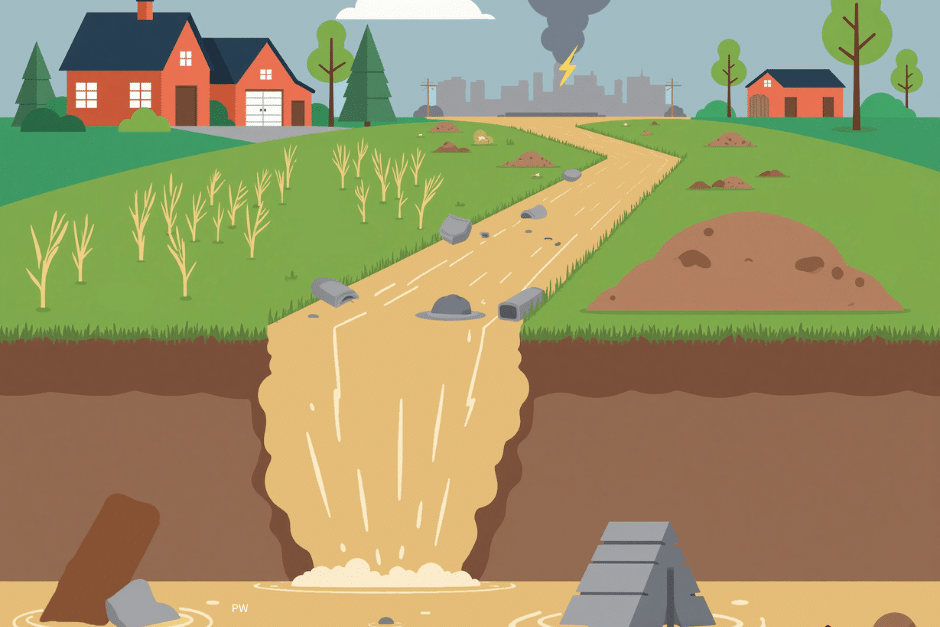
Microbial contamination is also a persistent rural risk. Fecal contamination can enter shallow wells through cracked casings, poor wellhead drainage, latrine proximity, animal waste, floodwater, or unprotected springs. The health significance is high because bacteria, viruses, and protozoa may cause acute gastrointestinal illness, especially in children, older adults, pregnant people, and immunocompromised individuals. The World Health Organization emphasizes that safely managed drinking water requires protection from contamination from source to point of use, not treatment alone. See the WHO overview of drinking water for a global public health perspective.
Rural systems also face a governance challenge. Small water systems may not have a full-time certified operator. Private wells are often the responsibility of the owner. Household filters may be installed without follow-up testing. Community plants may be built through a grant but underfunded for maintenance. A robust rural treatment plan therefore needs to be technically sound and socially maintainable.
The First Step: Identify the Source and Contaminants
No rural water treatment solution should be selected before the water source is understood. Clear water is not necessarily safe, and unpleasant water is not always the most dangerous. Arsenic, nitrate, fluoride, and many pathogens can be present without obvious taste, odor, or color. Iron and manganese may stain fixtures and make water look poor, yet their health significance differs from contaminants such as E. coli, lead, arsenic, or nitrate.
A basic rural water assessment begins with four questions. First, what is the source: groundwater, surface water, spring water, rainwater, hauled water, or a mixture? Second, what are the likely hazards based on land use, geology, agriculture, sanitation, mining, industry, or flooding? Third, what treatment goal is required: microbial safety, chemical contaminant reduction, taste and odor improvement, hardness control, or all of these? Fourth, who will operate and maintain the system?
For groundwater, testing often focuses on total coliforms and E. coli, nitrate, arsenic, fluoride, iron, manganese, hardness, pH, total dissolved solids, conductivity, and local contaminants of concern. In agricultural regions, pesticides and nitrate may be relevant. In areas with naturally mineralized aquifers, arsenic, fluoride, uranium, radium, sulfate, or salinity may require attention. The USGS Water Science School offers useful background on water sources and natural water chemistry through its water science education resources.
For surface water, the primary concern is usually microbial risk combined with turbidity and organic matter. Streams, ponds, and reservoirs can receive animal waste, septic leakage, storm runoff, algae, and soil particles. Treatment must address both particle removal and disinfection, because suspended particles can shield microbes from disinfectants. Protozoa such as Giardia and Cryptosporidium are particularly important because they are more resistant to chlorine than many bacteria and viruses.
For rainwater harvesting, the risks are different. Rainwater may be low in minerals and relatively soft, but roof surfaces, gutters, tanks, insects, birds, rodents, dust, and biofilms can introduce contamination. Treatment may require first-flush diversion, prefiltration, covered storage, sediment removal, and disinfection. Corrosivity can also be a concern when low-alkalinity water contacts metal plumbing.
The PureWaterAtlas Water Contamination Guide provides a broader review of contaminant types, sources, risks, and prevention strategies that can support a rural source assessment.
Core Rural Water Treatment Technologies
Most rural water treatment solutions are built from a limited set of treatment processes. Each process targets particular contaminants. The safest systems often combine several processes so that one barrier supports another. This is known as a multiple-barrier approach.
| Technology | Main purpose | Best suited for | Key limitations |
|---|---|---|---|
| Sediment filtration | Removes sand, silt, rust, and suspended particles | Wells with grit, surface water pretreatment, rainwater tanks | Does not reliably remove dissolved chemicals or microbes by itself |
| Slow sand or biosand filtration | Reduces turbidity and many microbes through physical and biological action | Households, schools, small communities using low-turbidity water | Requires correct flow rate, maturation period, cleaning, and protection from recontamination |
| Activated carbon | Reduces chlorine taste, odors, some organic chemicals, and some pesticides | Taste and odor improvement, polishing after disinfection, selected organics | Not a universal contaminant remover; exhausted carbon can lose effectiveness |
| Chlorination | Disinfects bacteria and many viruses; provides residual protection | Community systems, storage tanks, emergency treatment | Less effective against Cryptosporidium; performance drops in turbid or high-organic water |
| Ultraviolet disinfection | Inactivates bacteria, viruses, and protozoa when water is clear | Private wells, small systems, point-of-entry disinfection | No residual disinfectant; needs power, lamp maintenance, and low turbidity |
| Reverse osmosis | Reduces many dissolved ions and chemicals | Arsenic, nitrate, fluoride, salinity, uranium, some metals | Produces reject water; needs pressure, pretreatment, membrane maintenance |
| Ion exchange | Exchanges target ions such as nitrate, hardness, or some metals | Nitrate removal, softening, selected inorganic contaminants | Requires regeneration chemicals and brine management |
| Oxidation and filtration | Converts dissolved iron, manganese, or some sulfides to filterable particles | Groundwater with iron, manganese, sulfur odors | Needs correct pH, oxidant dose, contact time, and filter backwashing |
| Coagulation and flocculation | Aggregates fine particles and organic matter for removal | Surface water, highly turbid water, small treatment plants | Requires chemical dosing control, mixing, settling, sludge handling |
| Distillation | Evaporates and condenses water, reducing many dissolved contaminants | Small-volume household treatment for selected chemicals | Energy intensive, slow, and may require post-treatment for taste |
Sediment filtration is usually the first physical barrier. Cartridge filters, screen filters, media filters, and sand filters can protect downstream equipment from clogging. A 50-micron screen may remove coarse grit; a 5-micron cartridge removes finer suspended solids. However, micron ratings can be misunderstood. A nominal 5-micron filter is not the same as an absolute microbial barrier. Sediment filters improve clarity and protect equipment, but they should not be treated as disinfection unless certified for specific microbial reduction.
Activated carbon is widely used because it improves taste and odor. It can adsorb many organic compounds and remove residual chlorine. Granular activated carbon and carbon block filters differ in contact time, density, and flow resistance. Carbon is useful for some pesticides, disinfection byproducts, and volatile organic chemicals, but performance depends on the chemical, carbon type, empty bed contact time, competing organic matter, and maintenance. Carbon does not reliably remove nitrate, fluoride, hardness, or many dissolved salts.
Chlorination remains one of the most practical rural disinfection methods, especially for community systems and stored water. Its strength is residual protection: if dosed correctly, free chlorine can remain in the distribution line or tank and help control recontamination. Its weaknesses are taste objections, byproduct formation when organic matter is high, and reduced effectiveness in turbid water. Chlorine demand must be measured, not guessed. Water with iron, manganese, ammonia, or high organic content may consume chlorine rapidly.
Ultraviolet disinfection is effective when the water is clear and the unit is correctly sized and maintained. UV does not add chemicals and can inactivate protozoa that are chlorine-resistant. But UV has no residual effect. If treated water enters a contaminated storage tank or unsafe pipe, microbes can return. UV lamps also age, quartz sleeves foul, and low voltage can reduce dose. For private wells, UV is often paired with sediment filtration and sometimes carbon filtration upstream.
Reverse osmosis is one of the most powerful household purification methods for dissolved contaminants. It can reduce arsenic, nitrate, fluoride, sodium, chloride, sulfate, uranium, and total dissolved solids when designed correctly. Yet it is not always ideal for whole-house rural use because it wastes some water as concentrate, requires adequate pressure, and can foul if iron, hardness, sediment, or biofilm are not controlled. Point-of-use reverse osmosis at a kitchen tap is often more practical than whole-house installation when the main concern is drinking and cooking water.
How Treatment Trains Work
A treatment train is a sequence of technologies arranged so that each step improves the performance of the next. In rural water systems, treatment trains are often more reliable than single devices because water quality changes over time. A well may produce sediment after pump repairs. A stream may become muddy after storms. A rainwater tank may develop biofilm. A treatment train provides layered protection.
A simple private-well treatment train might include a wellhead inspection, pressure tank, sediment filter, activated carbon filter, UV disinfection, and safe plumbing to the tap. If arsenic is present, a point-of-use reverse osmosis unit or an adsorptive media system may be added. If iron is high, oxidation and filtration may be installed before UV so the water remains clear enough for effective disinfection.
A small surface-water treatment train may include intake screening, roughing filtration, coagulation, flocculation, sedimentation, rapid sand filtration, disinfection, and covered storage. Where budgets are limited, slow sand filtration combined with chlorination may be used if source water turbidity is manageable. If the water is highly variable, operators need turbidity monitoring and a plan for shutting down intake during extreme contamination events.
The order of treatment matters. Disinfection before adequate particle removal can be unreliable because particles shield organisms and consume disinfectant. Activated carbon before chlorination may remove chlorine and reduce disinfection residual. Reverse osmosis before iron removal may cause membrane fouling. UV after a dirty storage tank does not protect water as it sits in the tank. The technology must be placed in the right sequence.
Treatment trains also need bypass control. A common rural failure is untreated water bypassing the system through an open valve, cross-connection, hose, or poorly labeled pipe. If only one tap is treated, users must know which tap is safe for drinking and cooking. If a community plant treats water centrally, the distribution system must be protected from leaks, pressure loss, animal intrusion, and unauthorized connections.
Groundwater Treatment Solutions
Groundwater is often preferred in rural areas because it is naturally filtered through soil and rock and may have lower microbial contamination than surface water. However, groundwater can carry dissolved contaminants that are difficult to detect without testing. The correct rural water treatment solution depends on the specific chemistry.
Private wells and microbial safety
A properly constructed deep well with sanitary casing and a sealed cap can be a high-quality source. But many rural wells are shallow, old, poorly sealed, or vulnerable to flooding. Coliform bacteria suggest that surface influence or sanitary defects may be present. E. coli indicates fecal contamination and requires immediate action.
For microbial risks in private wells, the first intervention is source protection: repair the well cap, extend casing above grade, slope the ground away from the well, maintain separation from septic systems and livestock areas, and disinfect the well after repairs or flooding. Treatment may include UV, chlorination, or another validated disinfection method. If contamination is persistent, the problem should not be masked with treatment alone; the well structure and surrounding sanitation must be investigated.
Arsenic, fluoride, and nitrate
Arsenic is a serious rural groundwater concern in several regions of the world and in parts of the United States. It has no reliable taste or smell. Long-term exposure is associated with cancer and other health effects. Treatment options include reverse osmosis, adsorptive media such as iron-based media, coagulation-filtration, and anion exchange in selected cases. Arsenic chemistry matters: arsenic III is harder to remove than arsenic V, so oxidation may be needed before removal.
Fluoride can be beneficial at low levels but harmful when elevated, causing dental or skeletal fluorosis over long exposure periods. Rural treatment options include reverse osmosis, activated alumina, bone char in some regions, and other adsorptive media. As with arsenic, media exhaustion must be monitored. A filter that is not replaced on schedule can become ineffective while water still looks normal.
Nitrate is especially important for infants because high nitrate can interfere with oxygen transport in the blood. It is often associated with fertilizer, manure, septic systems, and shallow groundwater vulnerability. Reverse osmosis, anion exchange, and distillation can reduce nitrate. Boiling does not remove nitrate; it can concentrate it as water evaporates.
Iron, manganese, hardness, and sulfur odor
Iron and manganese are common rural groundwater problems. They can stain laundry, clog fixtures, produce metallic taste, and support nuisance bacterial growth. Treatment may involve aeration, chlorine, potassium permanganate, ozone, catalytic media, greensand, or other oxidation-filtration systems. The correct choice depends on concentration, pH, alkalinity, dissolved oxygen, and whether iron is dissolved, particulate, or associated with iron bacteria.
Hardness is caused mainly by calcium and magnesium. It is not usually a direct health hazard, but it causes scale, reduces soap performance, and can shorten the life of heaters and appliances. Ion-exchange softeners are common. They exchange calcium and magnesium for sodium or potassium. In households with sodium-restricted diets, a separate unsoftened or reverse osmosis drinking-water tap may be considered.
Hydrogen sulfide causes a rotten-egg odor and can corrode plumbing. Treatment may include aeration, oxidation, activated carbon in low-level cases, or specialized media. It is essential to distinguish hydrogen sulfide from other odor sources, including bacterial contamination in hot water systems.
Surface Water, Springs, and Rainwater Treatment
Surface water requires a more cautious treatment approach than most protected groundwater because it is directly exposed to fecal contamination, wildlife, soil particles, algae, and storm runoff. A rural stream that looks clean during dry weather can become unsafe within minutes during rainfall. For surface water used as drinking water, filtration and disinfection should usually be considered minimum barriers.
Surface water and small community plants
Small community surface-water plants often need some form of particle removal before disinfection. Coagulation and flocculation can remove fine clay, color, algae, and natural organic matter. Slow sand filtration can be effective in some rural settings where source water is not excessively turbid and operators can maintain the filter correctly. Rapid sand filters and pressure filters can treat higher flows but require backwashing and operator control.
Chlorine can provide residual protection in storage and distribution, but turbidity should be low before final disinfection. If water remains cloudy, microbial risk can persist even when chlorine is added. The U.S. Environmental Protection Agency provides information on drinking water regulation and treatment through its ground water and drinking water resources.
Springs
Springs can be excellent sources when properly protected, but an unprotected spring is essentially exposed groundwater emerging at the surface. Spring boxes should be sealed, screened, drained away from the collection point, protected from animals, and inspected after storms. Treatment may include sediment filtration and disinfection. If a spring becomes turbid after rainfall, it may be under direct surface influence and should be treated more like surface water.
Rainwater harvesting
Rainwater systems need attention to collection surfaces and storage. A roof catchment should be made from suitable material, and overhanging branches should be controlled. First-flush diverters can reduce the initial load of dust, bird droppings, and debris. Gutters should be cleaned. Tanks should be covered, vented with screens, and protected from insects, rodents, sunlight, and surface runoff.
Treatment for rainwater may include coarse screening, sediment filtration, activated carbon for taste, and UV or chlorination for disinfection. Because rainwater is often low in alkalinity, it can be corrosive to some metals. If lead-containing plumbing or brass fittings are present, testing for metals may be warranted. The broader principles of Drinking Water Safety apply even when the source is rain rather than a well or municipal supply.
Household Versus Community-Scale Systems
Rural water treatment solutions can be installed at the point of use, at the point of entry, or at a community scale. Each approach has advantages and weaknesses.
Point-of-use systems treat water at a specific tap, pitcher, countertop unit, or storage container. Examples include ceramic filters, biosand filters, gravity-fed hollow fiber filters, carbon block filters, countertop distillers, and under-sink reverse osmosis. These systems can be affordable and targeted. They are often suitable when the main exposure concern is drinking and cooking water. Their weakness is coverage: water from other taps remains untreated, and safe storage becomes critical.
Point-of-entry systems treat all water entering a house or building. Examples include whole-house sediment filters, softeners, iron filters, UV units, chlorination systems, and pressure media filters. They protect plumbing and provide treated water at every tap. They also require correct sizing for peak flow, pressure, and maintenance access. A poorly maintained whole-house system can create a false sense of security.
Community-scale systems treat water for multiple households, schools, clinics, or villages. They can support stronger monitoring, higher-quality equipment, and shared operation costs. They are often better for surface water or widespread groundwater contaminants. However, they require governance: tariff collection, operator training, spare parts, recordkeeping, residual monitoring, and a plan for breakdowns.
The choice is not always either household or community. Hybrid designs are common. A community well may provide basic chlorinated water, while households with infants use point-of-use reverse osmosis for nitrate. A village may install a central arsenic removal plant, while households use safe storage containers. A school may use a dedicated UV and filtration system even if homes rely on private wells.
Maintenance, Monitoring, and Failure Points
Rural water treatment often fails quietly. Water may continue to flow even when it is no longer being treated effectively. A UV lamp may be on but past its effective life. A carbon filter may be exhausted. A reverse osmosis membrane may be damaged. A chlorine tank may be empty. A filter may be bypassed because it reduced pressure. A storage tank may be contaminated after treatment.
Maintenance planning should be part of technology selection, not an afterthought. Before installing a system, users should know which parts need replacement, how often, how much they cost, and where they can be obtained. They should also know what signs indicate failure: pressure drop, taste change, low chlorine residual, high turbidity, alarm lights, microbial test results, or flow reduction.
For cartridge filters, maintenance is usually based on pressure loss, time, or water volume. For activated carbon, maintenance should be based on certified capacity and contaminant type, not appearance. For UV systems, lamps are commonly replaced on a schedule even if they still emit visible light, because germicidal output declines over time. Quartz sleeves must be cleaned. For reverse osmosis, prefilters, carbon filters, membranes, storage tanks, and postfilters all have maintenance needs.
Community systems need written operating procedures. Daily tasks may include checking flow, chlorine residual, turbidity, chemical feed, tank levels, pump function, and leaks. Weekly or monthly tasks may include filter backwashing, cleaning screens, inspecting storage tanks, recording chemical use, and checking spare parts. Records are not bureaucracy for its own sake; they show trends before failures become outbreaks.
Operator safety also matters. Chlorine, acids, caustic chemicals, coagulants, and regenerant salts must be handled correctly. Electrical systems near water require proper installation. Confined tanks can be dangerous. A rural system that injures its operator is not sustainable.
Testing and Verification for Water Safety
Testing verifies whether treatment is working. The test plan should match the hazards. A household concerned about bacteria needs microbial testing, not only a total dissolved solids meter. A region with arsenic needs laboratory arsenic analysis, not taste evaluation. A reverse osmosis system used for nitrate should be tested for nitrate after installation and periodically afterward.
Basic field measurements can be valuable. Turbidity indicates particle removal performance and disinfection readiness. Free chlorine residual indicates whether chlorination is likely to provide ongoing protection. pH affects corrosion, chlorine effectiveness, coagulation, and many media processes. Conductivity can show changes in dissolved minerals and reverse osmosis performance. However, field meters require calibration and interpretation.
Microbial testing deserves careful handling. Total coliforms indicate possible sanitary defects, while E. coli is stronger evidence of fecal contamination. A single absent result does not prove permanent safety, because contamination can be intermittent. Testing after heavy rain, flooding, repairs, or seasonal change may reveal risks that routine dry-weather sampling misses. Readers seeking more detail on organisms and health risks can review the PureWaterAtlas guide to Water Microbiology.
Chemical contaminants often require certified laboratory analysis. This is especially true for arsenic, lead, nitrate, fluoride, uranium, pesticides, volatile organic compounds, and disinfection byproducts. Sample bottles, preservatives, holding times, and chain-of-custody instructions should be followed. If treatment is installed to remove a regulated or health-significant contaminant, post-treatment testing is essential.
Certification can help when selecting devices. In many markets, products are tested to standards for specific contaminant reductions. Certification does not mean a device removes everything. It means the device met defined performance criteria under specified conditions. The contaminant list, flow rate, capacity, and maintenance requirements should be read carefully.
Costs, Energy, and Supply-Chain Realities
The best rural water treatment solution is not always the most advanced one. It is the system that reliably produces safe water over time under local conditions. Cost must include purchase, installation, replacement parts, chemicals, power, waste handling, testing, operator time, and repairs.
Low-cost household filters can be effective for certain microbial risks, but they may not address dissolved chemicals. Reverse osmosis can address many dissolved contaminants, but it costs more, wastes some water, and needs consumables. Chlorination is inexpensive and scalable, but it needs dosing control and user acceptance. UV is convenient, but it requires electricity and lamp replacement. Slow sand filtration can be robust, but it needs appropriate design and protection from high turbidity shocks.
Energy availability is central. Off-grid systems may use gravity filtration, hand pumps, solar-powered UV with battery storage, solar pumping, or chemical disinfection. Solar systems must be designed for cloudy periods and realistic demand. If a treatment system stops working whenever power is unavailable, the community needs a safe backup.
Supply chains determine sustainability. If replacement cartridges are imported and expensive, users may keep using expired filters. If chlorine is unavailable during rainy season, stored water may go untreated just when risk rises. If a proprietary controller fails and no local technician can repair it, a costly system can sit idle. Rural projects should prefer technologies with local support unless there is a strong reason to do otherwise.
Waste streams also require planning. Reverse osmosis concentrate, softener brine, spent media, sludge from coagulation, and filter backwash water must be managed so they do not contaminate wells, streams, gardens, or septic systems. The connection between drinking water and sanitation is direct; rural water planning should account for the Wastewater Treatment Process and local disposal capacity.
Choosing the Right Rural Treatment Solution
A practical selection process begins with evidence. Test the source water. Inspect the source. Identify seasonal changes. Define the health-based treatment goals. Then choose technologies that match the contaminants, flow needs, maintenance capacity, and budget.
For a deep well with no microbial indicators but high arsenic, the solution may be point-of-use reverse osmosis or arsenic-selective adsorptive media, verified by laboratory testing. Adding only a sediment filter or carbon filter would not be adequate. For a shallow well with E. coli, the response should include well repair, sanitary protection, shock disinfection where appropriate, and ongoing treatment such as UV or chlorination. For a muddy stream, a single UV unit without filtration would be fragile because turbidity interferes with UV transmission.
For rainwater, the treatment plan should start at the roof and tank, not only at the tap. First-flush control, screened inlets, covered storage, sediment removal, and disinfection work together. For a small village system, operator training and spare parts may determine success more than the brand of filter.
A useful decision rule is to separate contaminants into three groups: particles, microbes, and dissolved chemicals. Particles are addressed with settling, filtration, and coagulation. Microbes are addressed with filtration plus disinfection, depending on organism type and water clarity. Dissolved chemicals require processes such as adsorption, ion exchange, reverse osmosis, distillation, oxidation, or specialized media. No single method covers every group equally.
Rural water treatment solutions should also be reviewed periodically. Land use changes, drought, flooding, new wells, mining, fertilizer use, septic failures, and climate variability can change water quality. A system that was adequate ten years ago may no longer match the risk. The PureWaterAtlas Water Treatment Systems category includes additional guides on treatment methods and system selection.
Common Rural Treatment Scenarios
Scenario 1: Clear well water with E. coli detected
Clear appearance does not remove concern. E. coli suggests fecal contamination. The priority is to inspect the well, correct sanitary defects, disinfect the well if appropriate, and retest. A long-term barrier such as UV or chlorination may be needed, but treatment should not replace source correction. If flooding is frequent, the wellhead may need major improvement or relocation.
Scenario 2: Well water with arsenic above the health guideline
Arsenic requires a validated removal method and follow-up testing. Point-of-use reverse osmosis can be practical for drinking and cooking water. Adsorptive media can also work when matched to arsenic chemistry and replaced before exhaustion. Aesthetic filters are not sufficient unless specifically certified and verified for arsenic reduction.
Scenario 3: Surface water used by a small settlement
A multiple-barrier approach is needed. Intake protection, turbidity management, filtration, disinfection, covered storage, and residual monitoring are typical components. During storm events, water may require additional settling or temporary intake shutdown. Chlorine residual should be maintained if water is distributed or stored.
Scenario 4: Rainwater tank at an off-grid home
The system should reduce contamination before it reaches the tank and treat water before drinking. Roof maintenance, first-flush diversion, screened tank vents, sediment filtration, and UV or chlorination can form a practical train. If plumbing contains lead-bearing components, testing for metals should be considered because low-mineral rainwater can be corrosive.
FAQ
What are the best rural water treatment solutions for private wells?
The best solution depends on the well test results. For microbial contamination, source repair plus UV or chlorination may be appropriate. For arsenic, nitrate, fluoride, uranium, or salinity, reverse osmosis or specialized media may be needed. For iron, manganese, or sulfur odor, oxidation and filtration are often used. A sediment filter alone is rarely a complete safety solution.
Can boiling make rural water safe?
Boiling can inactivate bacteria, viruses, and protozoa when done correctly, so it is useful during emergencies or boil-water advisories. It does not remove arsenic, nitrate, fluoride, salt, lead, or many other chemical contaminants. Boiling can concentrate some dissolved chemicals as water evaporates. It is not a complete long-term treatment solution for many rural sources.
Is UV better than chlorine for rural water?
Neither is universally better. UV is effective against many microbes, including protozoa, when water is clear and the lamp is maintained. It adds no taste but provides no residual protection. Chlorine is inexpensive and leaves a residual that helps protect stored and distributed water, but it is less effective against some protozoa and performs poorly in turbid water. Many systems use filtration plus either UV or chlorine, and some use both.
Does reverse osmosis remove all contaminants?
Reverse osmosis reduces many dissolved contaminants, including nitrate, arsenic, fluoride, sodium, chloride, sulfate, and some metals, but it is not a magic barrier for every situation. Performance depends on membrane condition, pressure, water chemistry, pretreatment, and maintenance. RO systems also need periodic filter changes and verification testing for the target contaminant.
How often should rural well water be tested?
Many private well owners test at least annually for total coliforms and E. coli, and more often after flooding, repairs, changes in taste or odor, or nearby contamination events. Chemical testing frequency depends on local geology and land use. Arsenic, nitrate, fluoride, uranium, lead, pesticides, or other contaminants may need periodic laboratory testing based on regional risk.
Are household water filters enough for a whole family?
They can be, if they are matched to the contaminants, sized for daily demand, maintained correctly, and used consistently for all drinking and cooking water. A household filter that treats only one pitcher or tap does not protect water used elsewhere. Safe storage and hygiene are also essential, especially where microbial contamination is the main concern.
What is the most common mistake in rural water treatment?
The most common mistake is choosing equipment before testing the water. This leads to filters that improve taste but do not remove the actual hazard, or advanced systems that fail because pretreatment was missing. Another frequent mistake is neglecting maintenance. Treatment must be verified over time, not only installed.
How can a community make a rural treatment system sustainable?
A sustainable community system needs clear ownership, trained operators, affordable tariffs or funding, spare parts, routine testing, maintenance records, and a response plan for failures. Technology should match local capacity. A simpler system that is monitored and maintained often protects health better than a complex system that cannot be serviced locally.
Read the full guide: Water Treatment Systems Guide
Explore more in this category: Water Treatment Systems Articles