Water pH is one of the simplest numbers reported on a water test, yet it influences some of the most consequential questions in drinking water: Will the water corrode pipes? Can it dissolve lead or copper? Will chlorine disinfect effectively? Is the water likely to taste sharp, bitter, metallic, or flat? Understanding pH does not require advanced chemistry, but it does require a clear view of what the number means and what it does not mean.
This complete guide gives water pH explained in practical terms for households, well owners, building managers, treatment operators, and anyone comparing purification methods. pH is not a direct measure of whether water is safe to drink. A glass of water can have a normal pH and still contain arsenic, nitrate, bacteria, PFAS, or other contaminants. Another sample can have a low or high pH and be microbiologically safe after proper treatment. pH is a master variable: it changes how water behaves, how contaminants move, how disinfectants work, and how plumbing materials age.
Pure water at 25 degrees Celsius has a neutral pH of 7.0, but natural waters rarely behave like laboratory pure water. Rainfall, limestone, soils, aquifers, wetlands, industrial discharges, treatment chemicals, household plumbing, and biological activity all shape pH. The result is a number that can reveal useful clues about water quality, but only when read alongside alkalinity, hardness, dissolved minerals, disinfectant residual, metals, and microbial results.
This article is part of the broader Water Science pillar at PureWaterAtlas. It explains how pH works, why it matters for water safety, when it becomes a concern, how to test it, and how common treatment systems adjust it. The goal is not to make pH seem more alarming than it is. The goal is to help you interpret it correctly.
What pH Measures
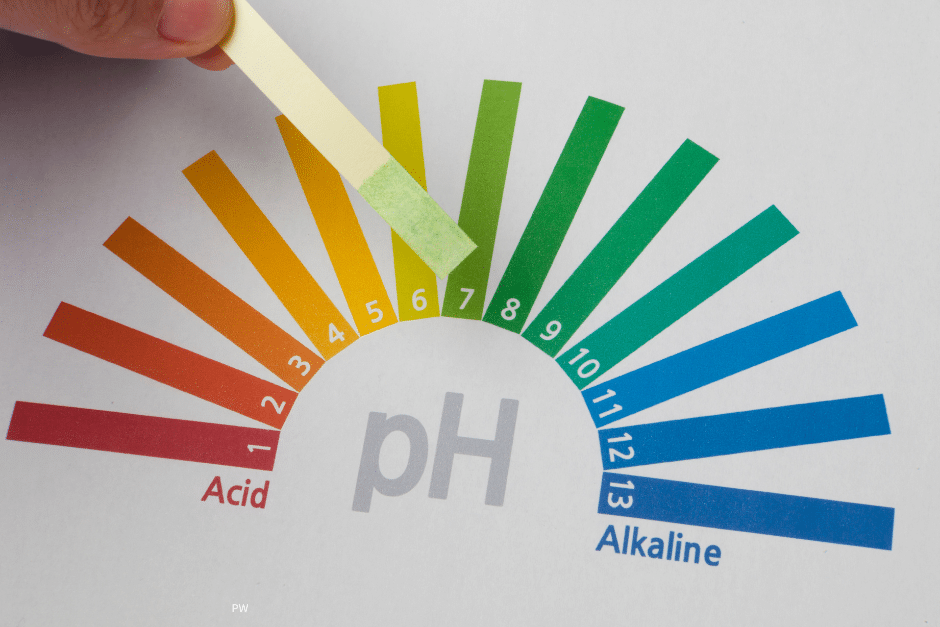
pH measures the activity of hydrogen ions in water. In simpler language, it describes how acidic or basic a water sample is. The pH scale usually runs from 0 to 14 for routine water discussions. A pH below 7 is acidic. A pH of 7 is neutral. A pH above 7 is basic, also called alkaline.
The scale is logarithmic, which means each whole pH unit represents a tenfold change in hydrogen ion activity. Water with a pH of 6 is about ten times more acidic than water with a pH of 7. Water with a pH of 5 is about one hundred times more acidic than water with a pH of 7. This logarithmic nature is why a shift from 7.5 to 6.5 may matter more than it appears at first glance.
pH is not the same as alkalinity. This is one of the most common sources of confusion. pH tells you the current acid-base condition of the water. Alkalinity tells you the water’s capacity to resist pH change, mainly through bicarbonate, carbonate, and hydroxide ions. A water sample can have a moderately high pH but low alkalinity, making it unstable. Another sample can have a neutral pH and high alkalinity, making it resistant to sudden pH shifts.
pH is also not the same as hardness. Hardness measures calcium and magnesium, minerals that form scale and influence soap performance. Hard water often has a higher pH because it comes from limestone or other carbonate-rich geology, but the relationship is not guaranteed. Soft water may be acidic, neutral, or alkaline depending on its source and treatment history.
For drinking water, pH is usually interpreted as an operational and aesthetic parameter rather than as a direct toxicological limit. Very low or very high pH can irritate tissues, damage plumbing, affect taste, and interfere with treatment, but the larger safety concern is often indirect: pH can increase or decrease the release, solubility, or removal of other contaminants.
The pH Scale in Drinking Water Context
The pH scale is familiar, but its meaning becomes clearer when tied to real water systems. Most drinking water falls roughly between pH 6.5 and 8.5. This range is commonly used as an operational target because it tends to support acceptable taste, corrosion control, disinfection performance, and distribution system stability. Some natural waters fall outside this range without being automatically unsafe, but they deserve closer evaluation.
| pH range | General description | Common water implications |
|---|---|---|
| Below 5.5 | Strongly acidic for drinking water | May corrode metal plumbing, leach metals, taste sour or metallic, and require correction before household use. |
| 5.5 to 6.5 | Mildly acidic | Can increase corrosion risk, especially in copper, galvanized steel, brass, and lead-containing components. |
| 6.5 to 8.5 | Typical drinking water operating range | Often acceptable for taste, plumbing stability, and treatment, though safety still depends on contaminant testing. |
| 8.5 to 9.5 | Moderately alkaline | May taste bitter or slippery, encourage scale formation, and affect chlorine chemistry. |
| Above 9.5 | High pH for drinking water | May indicate treatment chemical imbalance, unusual geology, industrial influence, or need for professional review. |
The EPA Drinking Water program treats pH mainly as a secondary water quality parameter in public drinking water guidance. Secondary parameters are not usually health-based maximum contaminant levels; they address taste, odor, color, staining, corrosivity, and other qualities that influence acceptability and system performance. That does not make pH unimportant. Corrosion control is a central drinking water protection issue because pipe materials can become a source of contamination.
The WHO Drinking Water fact sheets emphasize that safe drinking water depends on protection from microbial, chemical, and radiological hazards. pH supports that goal by influencing treatment and distribution conditions, but it cannot replace direct testing for hazards. A useful rule is this: pH helps explain water behavior; it does not certify water safety by itself.
Why Water pH Matters
pH matters because it affects chemistry, biology, infrastructure, and human perception. In a water treatment plant, operators monitor pH because coagulation, disinfection, corrosion control, softening, and filtration often depend on it. In a private well, pH can indicate whether the water is likely to dissolve metals from pipes or whether it has passed through carbonate-rich rock. In a home, pH may explain blue-green stains, pinhole leaks, bitter taste, cloudy hot water, or mineral scale.
The most serious pH-related concern in drinking water is corrosion. Acidic water is more likely to dissolve metals from plumbing materials. Copper pipes, brass fixtures, solder, galvanized coatings, and older lead service lines can release metals under corrosive conditions. This is why pH must be evaluated with alkalinity, dissolved inorganic carbon, chloride, sulfate, temperature, pipe age, and stagnation time. A single pH number cannot fully predict corrosion, but low pH is a strong warning sign.
High pH can create different problems. Alkaline water may promote scale, especially when hardness is high. Scale can reduce flow, coat heating elements, reduce appliance efficiency, and interfere with valves and fixtures. In treatment systems, high pH can reduce the effectiveness of some disinfectants and change the form of metals, ammonia, and other dissolved substances. High pH water can also taste bitter or feel slippery.
pH also affects disinfectants. Free chlorine exists mainly as hypochlorous acid at lower pH and as hypochlorite ion at higher pH. Hypochlorous acid is the stronger disinfectant. As pH rises, chlorine can become less effective at the same measured concentration. This does not mean lower pH is always better, because corrosion and taste must also be controlled. It means treatment requires balance.
For more context on how pH fits into contaminant risk, treatment barriers, and household decision-making, see PureWaterAtlas resources on Drinking Water Safety. pH is one piece of that safety picture, not the whole picture.
Is pH a Health Risk by Itself?
For most drinking water situations, pH is not the primary health hazard. People routinely drink waters with modest pH differences without direct harm. The human digestive system handles a wide range of acidity from foods and beverages. Coffee, citrus juice, carbonated drinks, milk, and many foods have pH values far outside typical drinking water ranges.
That said, extreme pH is not suitable for drinking. Very acidic water can taste sour, irritate the mouth, and corrode plumbing. Very alkaline water can taste unpleasant, irritate skin or mucous membranes at high levels, and indicate chemical imbalance. Household drinking water with pH far outside the common 6.5 to 8.5 operating range should be investigated rather than normalized as a lifestyle preference.
The more important issue is indirect exposure. Low pH water can increase lead, copper, cadmium, zinc, iron, or nickel release depending on plumbing materials. Lead is especially concerning because there is no safe blood lead level for children. Copper at elevated concentrations can cause gastrointestinal symptoms and, in vulnerable individuals, more serious effects. Iron and manganese are often aesthetic concerns at typical levels, but they can stain fixtures, support nuisance bacteria, and signal broader redox or corrosion conditions.
High pH can also influence contaminant behavior. Some metals become less soluble at higher pH and may precipitate, while others can form soluble complexes. The pH of water affects arsenic speciation, ammonia chemistry, aluminum residuals after coagulation, and the formation or removal of certain disinfection byproducts. These are not always simple one-direction relationships. Water chemistry must be interpreted as a system.
So, is acidic or alkaline water automatically unsafe? No. But unusual pH is a reason to test more carefully. If water has a low pH, metal testing should be considered. If water has a high pH, hardness, alkalinity, sodium, treatment chemical history, and scale potential deserve attention. If the water comes from a private well, microbial testing remains essential regardless of pH.
Natural Causes of Low or High pH
Natural water pH reflects the materials and gases water encounters. Rain absorbs carbon dioxide from the atmosphere and forms weak carbonic acid, so rainwater is naturally slightly acidic. In areas affected by air pollution, rain can become more acidic due to sulfur and nitrogen compounds. Once rainwater infiltrates soil, it interacts with organic acids, minerals, microbes, and rock surfaces.
Water flowing through granite, sandstone, peat, or organic-rich soils may remain soft and acidic because it has limited exposure to carbonate minerals. Shallow wells in such areas can have low alkalinity and low pH. These waters may look clear and taste refreshing but still be corrosive to metal plumbing.
Water flowing through limestone, dolomite, marble, or other carbonate-rich formations tends to gain bicarbonate, calcium, and magnesium. This increases alkalinity, hardness, and often pH. Such water can be stable and pleasant, but it may create scale in heaters, kettles, pipes, and appliances.
Wetlands, reservoirs, and lakes can show daily and seasonal pH patterns. Photosynthesis by algae and aquatic plants consumes carbon dioxide, which can raise pH during daylight. Respiration and decomposition release carbon dioxide, lowering pH at night or near sediments. Stratified reservoirs may have different pH values at different depths. These shifts can influence metal release from sediments and treatment requirements for surface water systems.
Groundwater can also be affected by redox chemistry. In oxygen-poor aquifers, iron, manganese, sulfur compounds, and methane may be present. pH interacts with these constituents in complex ways. A neutral pH does not rule out iron bacteria, manganese staining, hydrogen sulfide odor, or microbial concerns. The USGS Water Science School provides useful educational background on natural water chemistry and the water cycle.
Human Activities That Change Water pH
Human activity can shift pH at many points in the water cycle. Mining drainage, industrial discharges, agricultural runoff, urban stormwater, road salts, wastewater effluent, and treatment chemicals can all alter acid-base balance. In some settings, pH changes are obvious. In others, the pH remains within a normal range while alkalinity, salinity, or corrosivity changes substantially.
Acid mine drainage is a classic example of human-influenced low pH. When sulfide minerals are exposed to air and water, sulfuric acid can form and dissolve metals from rock. This can create water with low pH and elevated iron, aluminum, manganese, and trace metals. Such conditions can damage streams and require specialized treatment.
Wastewater can affect pH depending on industrial inputs, biological processes, and treatment design. Municipal wastewater treatment typically aims to maintain pH conditions that support microbial activity and protect receiving waters. Nitrification, denitrification, chemical precipitation, and anaerobic digestion are all pH-sensitive processes. Readers interested in the treatment side can review the Wastewater Treatment Process guide.
Public water utilities also adjust pH deliberately. They may add lime, sodium hydroxide, soda ash, carbon dioxide, orthophosphate, or other chemicals to improve coagulation, softening, disinfection, or corrosion control. A treated water pH value is therefore not just a natural fingerprint; it can be the result of engineered decisions intended to protect public health and infrastructure.
Buildings can change water pH after it leaves the utility. Water heaters, premise plumbing, filters, softeners, stagnation, and contact with cement-lined pipes or fixtures can alter pH slightly. Point-of-use devices may also change pH, especially reverse osmosis systems, remineralization cartridges, alkaline filters, and neutralizers.
pH, Corrosion, and Metals in Plumbing
Corrosion is one of the main reasons water pH deserves close attention. Corrosion occurs when water reacts chemically or electrochemically with plumbing materials. The result can be pipe damage, leaks, discoloration, taste problems, and metal release into drinking water.
Low pH water generally has greater corrosive potential because it can dissolve protective mineral films on pipe surfaces. If alkalinity is also low, the water has little buffering capacity and may not form stable protective scales. This is common in soft, acidic well water. Symptoms can include blue-green stains from copper, metallic taste, pinhole leaks in copper pipes, rusty water from iron pipes, or elevated lead in homes with lead-bearing components.
However, corrosion is not controlled by pH alone. Chloride and sulfate can increase corrosivity. Dissolved oxygen can drive electrochemical corrosion. High water temperature accelerates reactions. Stagnation time allows metals to accumulate in standing water. Plumbing age and material type are decisive. A home with no lead service line has a different risk profile than a home with older lead components, even if the pH is the same.
Utilities use corrosion control programs to manage these risks. They may adjust pH and alkalinity or add corrosion inhibitors such as orthophosphate. The goal is to create conditions that minimize metal release while maintaining disinfection and distribution stability. Private well owners must manage corrosion themselves, usually with help from certified laboratories and qualified water treatment professionals.
If a household has acidic water and metal plumbing, testing first-draw and flushed samples can help identify whether plumbing contributes metals. A first-draw sample reflects water that has sat in pipes for several hours. A flushed sample reflects water drawn after the plumbing has been cleared. Differences between these samples can reveal stagnation-related metal release.
pH and Disinfection
Disinfection is another area where pH has practical consequences. Chlorine, chloramine, ozone, chlorine dioxide, ultraviolet treatment, and other disinfection strategies each have operating conditions. pH is especially important for chlorine chemistry.
When chlorine is added to water, it forms hypochlorous acid and hypochlorite ion. Hypochlorous acid is more effective against many microorganisms. At lower pH, a greater fraction of free chlorine exists as hypochlorous acid. At higher pH, more exists as hypochlorite ion, which is less powerful as a disinfectant. This is why swimming pools, drinking water systems, and emergency chlorination procedures often specify pH ranges.
Chloramine is less affected by pH in the same way as free chlorine, but pH still matters for nitrification, distribution system stability, and taste. Ozone and chlorine dioxide have their own chemistry. Ultraviolet disinfection is not a chemical disinfectant, so pH does not directly change UV dose in the same manner, but pH can still influence scaling or fouling on UV sleeves, which reduces performance.
In household water treatment, pH can influence whether a disinfection step succeeds. If a well has high pH, high turbidity, iron, manganese, or organic matter, simple chlorination may be less reliable without pretreatment. If pH is too low, equipment may corrode and contact tanks may degrade. A complete system design considers pH alongside microbial quality, particles, iron, manganese, hardness, and organic carbon.
For microbial risks, pH should never be used as a substitute for testing. Some microorganisms can survive across broad pH ranges. To understand bacteria, viruses, biofilms, and other biological hazards in water systems, see the PureWaterAtlas guide to Water Microbiology.
pH and Taste, Odor, and Appearance
Most people notice pH through taste and household symptoms rather than laboratory reports. Low pH water can taste sharp, sour, or metallic, particularly when it has dissolved copper, iron, or zinc from plumbing. High pH water can taste bitter, chalky, or slippery, especially when alkalinity and hardness are high.
Appearance can also give clues. Acidic, corrosive water may leave blue-green stains where copper dissolves and later deposits on fixtures. It may contribute to rusty staining if iron pipes or fixtures corrode. Alkaline hard water may leave white scale on faucets, showerheads, kettles, glassware, and humidifiers. Scale is usually calcium carbonate or related mineral deposits.
Odor is less directly tied to pH, but pH can influence odor chemistry. Hydrogen sulfide, the gas associated with rotten-egg odor, exists in different forms depending on pH. Ammonia and ammonium balance is also pH-dependent. Biological growth in plumbing can produce odors under conditions that involve temperature, stagnation, disinfectant residual, nutrients, and pipe material; pH is only one factor.
Consumer products sometimes market alkaline water as smoother or healthier. Taste preference is real, but health claims should be treated cautiously. A pleasant taste does not prove superior safety or nutrition. Many people prefer water with some minerals and moderate alkalinity because it tastes less flat than highly purified water. That sensory preference should not be confused with medical benefit.
What Is a Good pH for Drinking Water?
For most public and household drinking water, a practical target is about pH 6.5 to 8.5. This range is widely used because it supports corrosion management, palatability, treatment performance, and distribution system control. Some systems operate slightly outside this range for specific reasons, but persistent values below 6.5 or above 8.5 deserve interpretation by someone familiar with the water source and plumbing conditions.
A good pH is not always the same number in every system. A utility may maintain pH near 7.2 for treatment reasons, while another may maintain pH near 8.3 for corrosion control. A carbonate-rich groundwater supply may naturally sit near 7.8 to 8.4 and be stable. A soft surface water may need pH and alkalinity adjustment to prevent corrosion.
For private wells, pH should be assessed with alkalinity, hardness, iron, manganese, total dissolved solids, chloride, sulfate, nitrate, coliform bacteria, and locally relevant contaminants such as arsenic, uranium, radon, or pesticides. If pH is low, test for copper and lead if the plumbing may contain those metals. If pH is high, evaluate hardness, alkalinity, sodium, and scale potential.
The phrase water pH explained often appears in consumer searches because people want a single answer: acidic, neutral, or alkaline. Real water quality rarely works that way. The best pH is the one that supports safe treatment, stable plumbing, acceptable taste, and low contaminant release for that specific source and distribution system.
How to Test Water pH
Testing pH is relatively easy, but accuracy varies by method. The simplest options are test strips, color comparator kits, handheld digital meters, and laboratory analysis. Each has a place.
Test strips are inexpensive and useful for screening, but they are not highly precise. They can be affected by color, lighting, age of the strips, and user interpretation. Color comparator kits are often more reliable than basic strips if used carefully. Digital pH meters can be accurate, but only when calibrated with fresh buffer solutions and maintained properly. A poorly calibrated meter can give a false sense of precision.
Laboratory testing is the best option when decisions involve treatment equipment, corrosion control, real estate transactions, or suspected contamination. pH can change after sampling because carbon dioxide can enter or leave the water, temperature can change, and biological activity may continue. For that reason, laboratories often measure pH soon after collection or specify preservation and holding conditions. Field pH measurements can be useful for wells and treatment troubleshooting.
To test household water more reliably, collect samples from both cold and hot taps when investigating plumbing symptoms, but use cold water for drinking water decisions unless a laboratory instructs otherwise. Let the water run if the goal is source-water pH, or collect first-draw samples if the goal is stagnation and plumbing interaction. Record where and when the sample was taken, whether treatment devices were bypassed, and how long the water had been stagnant.
pH should not be the only test. If you are assessing a private well, include coliform bacteria, nitrate, conductivity or total dissolved solids, hardness, alkalinity, iron, manganese, and any contaminants known in your region. If you are choosing treatment, a broader panel is usually cheaper than buying the wrong equipment.
pH in Purification Methods and Water Treatment Systems
Different purification methods affect pH in different ways. Some remove contaminants without much pH change. Others require pH adjustment before or after treatment. Matching pH chemistry to the correct treatment method is essential for reliable results.
Neutralizing filters are commonly used for acidic well water. They often contain calcite, which is calcium carbonate, or blends of calcite and magnesium oxide. As acidic water passes through the media, minerals dissolve and raise pH and alkalinity. This can reduce corrosion, but it may also increase hardness. The media must be replenished, and flow rates must be appropriate.
Chemical feed systems can raise pH by injecting soda ash or sodium hydroxide. These systems are useful when water is very acidic, when high flow is needed, or when neutralizing filters are not sufficient. They require a solution tank, pump, controls, and maintenance. Overfeeding can create high pH, taste problems, or scale.
Reverse osmosis removes many dissolved ions and can slightly lower the pH of product water because carbon dioxide may pass through the membrane while buffering minerals are removed. RO water often has low alkalinity, so its pH can be unstable and sensitive to air exposure. Many systems add remineralization cartridges after RO to improve taste and buffering. RO is useful for many dissolved contaminants, but pH alone should not be the reason to install it.
Water softeners exchange calcium and magnesium for sodium or potassium. They usually do not solve low pH corrosion by themselves. Softened water can sometimes be more corrosive if alkalinity and pH are not managed, because hardness scale that might have formed protective deposits is reduced. A softener may be appropriate for scale control, but acidic water may still need neutralization.
Activated carbon filters usually have limited effect on pH, although new carbon can temporarily shift pH depending on the product. Carbon is primarily used for chlorine, taste, odor, and certain organic compounds. It does not reliably correct acidic water or remove all dissolved metals. Distillation produces low-mineral water that may absorb carbon dioxide from air and show a slightly acidic pH; remineralization may improve taste.
For a broader decision framework, see the PureWaterAtlas guide to Water Treatment Systems. Treatment should be based on a complete water test, not on pH alone or marketing claims about alkalinity.
Alkaline Water Claims: What the Science Supports
Alkaline water is often marketed with broad claims about hydration, detoxification, acidity balance, and wellness. The chemistry is much narrower. Alkaline water simply has a pH above 7. It may be naturally alkaline because it contains bicarbonate and minerals, or it may be produced by electrolysis, mineral addition, or treatment cartridges.
The body tightly regulates blood pH within a narrow range. Drinking alkaline water does not meaningfully alkalinize the blood in healthy people. Stomach acid also neutralizes much of the alkalinity of consumed water. Some people may prefer the taste of mineralized alkaline water, and certain clinical questions have been studied in limited contexts, but broad disease-prevention claims are not supported as a general drinking water standard.
Alkaline water is not automatically safer than neutral water. If it is produced by a poorly maintained device, it can still contain microbial contamination. If the source water contains nitrate, arsenic, PFAS, or solvents, raising pH does not necessarily remove them. If alkaline treatment increases sodium, that may matter for people on sodium-restricted diets.
The safest way to think about alkaline water is practical rather than promotional. Does the source water meet health standards? Has it been tested? Is the treatment device certified for the contaminants of concern? Does the final water taste acceptable? Does the pH create scale or interact with plumbing? Those questions matter more than the label alkaline.
Acidic Water: Signs, Risks, and Corrections
Acidic water generally refers to water below pH 7, but treatment concern often begins when pH is below about 6.5, especially if alkalinity is low. Acidic water is common in areas with soft groundwater, granitic bedrock, shallow wells, acidic soils, or rainwater collection systems.
Signs of acidic water may include metallic taste, blue-green staining, recurring pinhole leaks in copper plumbing, corrosion on fixtures, reddish-brown staining from iron, and rapid failure of water heaters or appliances. These symptoms are not definitive. Laboratory testing is needed because staining and corrosion can have multiple causes.
The first step is to test pH, alkalinity, hardness, copper, lead where relevant, iron, manganese, and total dissolved solids. If the water is from a private well, bacterial testing should also be current. If pH is low and copper is elevated, corrosion is likely. If lead is detected, the response should be more urgent, especially where children or pregnant people may consume the water.
Common corrections include calcite neutralizers, calcite and magnesium oxide blends, or soda ash feed systems. The choice depends on initial pH, flow rate, alkalinity, hardness tolerance, maintenance preferences, and plumbing. If pH is extremely low, a simple calcite filter may not raise it enough. If hardness is already high, adding more calcium may worsen scale. Professional design is often worth the cost because poor pH correction can create new problems.
High pH Water: Signs, Risks, and Corrections
High pH water is less commonly discussed than acidic water, but it can cause operational and household problems. Water above pH 8.5 may taste bitter, feel slippery, and contribute to scale when calcium and magnesium are present. Very high pH may indicate overfeeding of treatment chemicals, unusual geology, concrete contact, industrial influence, or malfunctioning treatment equipment.
High pH can reduce free chlorine disinfection strength and can shift ammonia toward un-ionized ammonia, depending on temperature and chemistry. It can also affect coagulation and metal precipitation in treatment systems. In households, the most common complaint is scale. White deposits on fixtures, reduced water heater efficiency, and clogged aerators often reflect hardness and alkalinity as much as pH.
Correction depends on the cause. If high pH comes from a treatment device, the device should be inspected and adjusted. If it comes from naturally alkaline groundwater, treatment may focus on scale control rather than pH reduction. Acid injection can reduce pH but is usually a professional system, not a casual household adjustment. Blending may be an option in some larger systems.
High pH alone does not prove danger, but persistent values above the common operating range deserve a complete water analysis. The concern is not simply the number. The concern is what the number means for disinfection, scaling, treatment compatibility, and contaminant chemistry.
Rainwater, Bottled Water, and Filtered Water pH
Rainwater is often mildly acidic because it absorbs carbon dioxide from air. Stored rainwater can vary widely in pH depending on roof materials, dust, leaves, microbial activity, storage tanks, and treatment. Rainwater used for drinking requires careful filtration and disinfection, not just pH adjustment. Low mineral content also means low buffering capacity, so pH can shift easily.
Bottled water pH varies by brand and source. Spring waters may be mineralized and slightly alkaline. Purified waters treated by reverse osmosis or distillation may have low mineral content and a pH that changes after exposure to air. Labels may list pH, but the more relevant safety questions are source protection, treatment, bottling hygiene, storage conditions, and regulatory compliance.
Filtered tap water pH depends on the filter. Carbon pitchers may not change pH much. Reverse osmosis may lower buffering and slightly reduce pH. Alkaline pitchers may raise pH by adding minerals. Ionizing devices can produce high-pH water and low-pH waste streams, but they should not be mistaken for broad contaminant removal systems unless certified for specific reductions.
If a filter changes pH, that change should be understood as a chemical effect, not proof that the water has become healthier. The best filter is the one that addresses verified contaminants while maintaining water that is stable, palatable, and safe.
How Professionals Interpret pH Data
Water professionals rarely interpret pH alone. They look at a group of related measurements: alkalinity, hardness, conductivity, total dissolved solids, calcium, magnesium, chloride, sulfate, dissolved oxygen, temperature, oxidation-reduction conditions, disinfectant residual, and metals. Together, these values show whether water is corrosive, scale-forming, buffered, disinfected, or chemically unstable.
Several indices have been developed to evaluate scaling and corrosion tendencies, including the Langelier Saturation Index and related approaches. These tools are useful but not perfect. They depend on accurate inputs and are most relevant to calcium carbonate scale behavior. They do not fully predict lead release, microbial regrowth, or every form of pipe corrosion.
Trends are often more informative than one result. If pH at a well is stable for years and suddenly changes, something may have changed in the aquifer, sampling method, well structure, treatment equipment, or nearby land use. If pH at a utility entry point is stable but pH at a building tap varies, premise plumbing or onsite equipment may be involved.
Temperature also matters. Laboratory pH readings are temperature-compensated by many meters, but chemical equilibria still change with temperature. Hot water can be more corrosive and should not be used for drinking or cooking, especially in buildings with older plumbing. Cold water is generally preferred for consumption, then heated as needed.
Practical Guidance for Households
If your water comes from a regulated public system, review the annual consumer confidence report and contact the utility if you see unusual pH, corrosion complaints, or changes in taste. Public systems monitor pH for treatment and distribution control. Still, building plumbing can affect water after it leaves the main, so household testing may be useful if you have older pipes, lead service lines, stains, metallic taste, or young children in the home.
If your water comes from a private well, test pH as part of a broader baseline analysis. Retest annually for bacteria and nitrate, and retest chemistry periodically or whenever taste, odor, color, nearby land use, flooding, construction, or plumbing changes occur. Private well owners are responsible for their own water safety; pH is only one of several routine indicators.
Do not buy treatment equipment based only on a sales demonstration that changes water color or shows a dramatic pH shift. Ask for certified laboratory results. Identify the contaminants and operational problems first, then select treatment. If treatment is installed, test the water after installation to confirm that it works and does not create new issues.
If you suspect corrosive water, avoid using hot tap water for drinking, flush stagnant water before use, and test for metals. If lead is present, follow public health guidance and use certified filters rated for lead reduction while permanent corrections are planned. If water has very low or very high pH, consult a qualified water treatment professional rather than making chemical adjustments without testing.
Readers who want more articles in this topic area can browse the Water Science category for related explanations of water chemistry, contaminants, and treatment principles.
Key Takeaways
- pH measures how acidic or basic water is, using a logarithmic scale where each whole unit represents a tenfold change.
- Most drinking water is managed near pH 6.5 to 8.5, but safe water depends on contaminant testing, not pH alone.
- Low pH can increase corrosion and metal release from plumbing, including copper and lead in vulnerable systems.
- High pH can affect taste, scaling, disinfection chemistry, and treatment performance.
- Alkalinity and hardness are not the same as pH, but they strongly influence how stable water is.
- Purification methods can change pH, especially reverse osmosis, remineralization, neutralizing filters, and chemical feed systems.
- Private wells should be tested for pH as part of a broader water quality panel, including microbial and chemical hazards.
FAQ
What does pH mean in water?
pH describes how acidic or basic water is. A pH below 7 is acidic, 7 is neutral, and above 7 is alkaline. Because the scale is logarithmic, a one-unit change represents a tenfold change in hydrogen ion activity. In drinking water, pH helps explain corrosion, taste, scale, and treatment performance.
What is the best pH for drinking water?
For most drinking water systems, about pH 6.5 to 8.5 is considered a practical operating range. The best value depends on source water chemistry, alkalinity, hardness, plumbing materials, and treatment goals. A normal pH does not guarantee that water is free of contaminants.
Is alkaline water healthier than regular water?
Alkaline water is not automatically healthier. It may taste pleasant if it contains minerals, but broad claims about changing body pH are not supported for healthy people. Safety depends on source quality, contaminant removal, treatment maintenance, and microbiological control.
Can acidic water make drinking water unsafe?
Acidic water can increase corrosion and may dissolve metals from plumbing. The main risk is often indirect exposure to lead, copper, or other metals rather than the acidity itself. If water pH is below about 6.5, especially with metallic taste or staining, test for metals and consider corrosion control.
Does reverse osmosis lower water pH?
Reverse osmosis can produce water with low alkalinity and may slightly lower pH because many buffering minerals are removed while dissolved carbon dioxide may remain. The pH of RO water can also shift after exposure to air. Remineralization cartridges are often used to improve taste and stability.
Can I test pH with strips?
Test strips are useful for quick screening, but they are not highly precise. For treatment decisions, corrosion concerns, real estate transactions, or private well evaluation, laboratory testing or a properly calibrated pH meter is more reliable. pH should be tested alongside alkalinity, hardness, and relevant contaminants.
Does boiling water change pH?
Boiling can change pH slightly by driving off dissolved carbon dioxide and concentrating minerals as water evaporates. The effect depends on alkalinity and mineral content. Boiling does not remove many chemical contaminants and does not correct corrosive water chemistry in a reliable way.
Should I adjust my water pH at home?
Adjust pH only after a complete water test identifies the cause and related chemistry. Acidic water may need a neutralizing filter or chemical feed system. High pH may require equipment adjustment or scale management. Poorly designed pH correction can create scale, taste problems, or treatment failures.
Read the full guide: Water Science Guide
Explore more in this category: Water Science Articles