
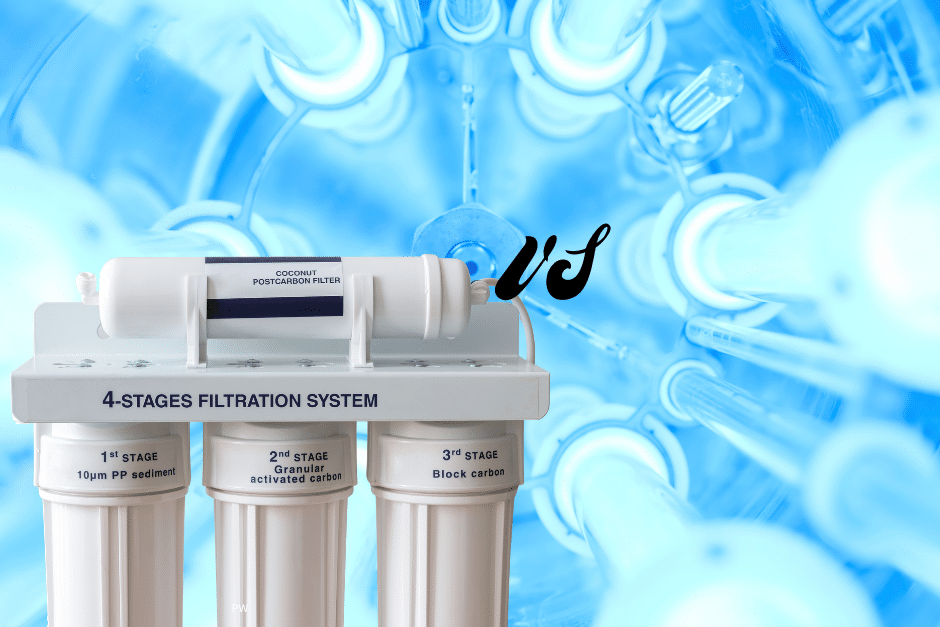
Reverse osmosis vs UV purification is one of the most common comparisons in drinking water treatment, yet the two technologies are often misunderstood because they are designed to solve different problems. Reverse osmosis is primarily a separation process. It physically rejects dissolved salts, many metals, nitrate, fluoride, arsenic species, and a wide range of organic molecules through a semi-permeable membrane. UV purification is primarily a disinfection process. It uses ultraviolet light to damage microbial genetic material so bacteria, viruses, and protozoa cannot reproduce or cause infection.
The practical consequence is simple but significant: reverse osmosis changes water chemistry, while UV changes microbial viability. A reverse osmosis system can reduce total dissolved solids and many chemical contaminants, but it is not usually treated as a stand-alone microbiological barrier unless designed, maintained, and certified for that purpose. A UV system can provide strong microbial control, but it does not remove lead, arsenic, nitrate, fluoride, PFAS, pesticides, hardness minerals, chlorine by-products, or sediment. Choosing between them depends on the contaminants actually present, the reliability of the water source, and the level of risk a household or facility needs to manage.
This scientific deep dive compares the mechanisms, performance, limitations, maintenance demands, and best-use cases for both purification methods. It is written for households, facility managers, well owners, laboratory staff, and water professionals who need a clear answer without oversimplifying the science. For broader context on how these technologies fit among other options, see the PureWaterAtlas pillar guide to Water Purification Methods.
Short Answer: They Are Not Interchangeable
If the main risk is dissolved chemical contamination, reverse osmosis is usually the stronger choice. If the main risk is bacteria, viruses, or protozoa in otherwise low-turbidity water, UV purification is usually the more direct choice. When both chemical and microbial hazards are plausible, the best design is often a combined system: sediment filtration and carbon pretreatment, followed by reverse osmosis for dissolved contaminants, and UV as a final microbial barrier or point-of-entry disinfection stage.
Municipal water users usually receive disinfected water that has already been treated under regulatory requirements, though distribution plumbing can still introduce contaminants such as lead or disinfection by-products may remain. Private well users have a different risk profile. Wells are not regulated in the same way as public supplies in many countries, and they may be affected by septic systems, agricultural runoff, naturally occurring arsenic, nitrate, iron, manganese, hardness, or seasonal microbial intrusion. The right technology should follow testing, not assumptions. A detailed laboratory analysis is often the most cost-effective step before buying treatment equipment.
The World Health Organization drinking water fact sheet emphasizes that safe drinking water depends on controlling microbial and chemical risks across the full water supply chain. The U.S. EPA drinking water program similarly distinguishes between regulated contaminants, treatment techniques, and health-based standards. These distinctions matter because a purifier that works well for one class of hazard may do almost nothing for another.
How Reverse Osmosis Works
Reverse osmosis, often abbreviated RO, uses pressure to move water through a semi-permeable membrane. Under natural osmosis, water tends to move from a dilute solution toward a more concentrated solution across a membrane. Reverse osmosis applies pressure in the opposite direction, forcing water molecules through the membrane while rejecting many dissolved ions, molecules, and particles. The treated stream is called permeate. The concentrated waste stream is called reject, concentrate, or brine.
The membrane is the core of the system. Most residential RO membranes are thin-film composite polyamide membranes arranged in spiral-wound modules. Water enters along the surface of the membrane, and a portion passes through to the central collection tube. Dissolved salts and rejected contaminants remain in the concentrate stream and are flushed to drain. This cross-flow design helps reduce fouling compared with dead-end filtration, although fouling still occurs if pretreatment is poor or water chemistry is challenging.
RO performance is usually described by percent rejection. If feed water contains 100 milligrams per liter of a dissolved contaminant and permeate contains 5 milligrams per liter, the system achieved 95 percent rejection for that contaminant under those conditions. Rejection varies by membrane type, pressure, water temperature, pH, contaminant chemistry, membrane age, and system design. Divalent ions such as calcium and sulfate are often rejected more strongly than some small neutral molecules. Monovalent ions such as sodium and chloride are also reduced, but exact performance depends on operating pressure and membrane condition.
Residential reverse osmosis units commonly include multiple stages. A sediment filter protects downstream components from grit, rust, and suspended solids. A carbon filter removes chlorine or chloramine residual that can damage thin-film composite membranes, though chloramine reduction may require specialized catalytic carbon and adequate contact time. The RO membrane performs the main separation. A post-carbon filter may improve taste after storage. Some systems include remineralization cartridges, permeate pumps, ultraviolet lamps, or leak detection devices.
RO is effective because it is not limited to one contaminant group. It can reduce total dissolved solids, sodium, chloride, nitrate, fluoride, arsenic in certain forms, chromium, lead, copper, radium, many pesticides, and numerous industrial chemicals. It can also reduce microplastics and some microbial particles by size exclusion, although standard residential RO should not be relied upon as the sole treatment for microbiologically unsafe water unless the entire system is certified and maintained for that purpose.
How UV Purification Works
Ultraviolet purification disinfects water by exposing microorganisms to light in the germicidal UV range, most commonly around 254 nanometers for low-pressure mercury lamps or equivalent germicidal wavelengths from certain UV-LED systems. This energy damages nucleic acids, especially by forming thymine dimers in DNA or related lesions in RNA. When the genetic material is sufficiently damaged, microorganisms cannot replicate effectively. Because infection generally requires replication or cellular function, the treated organisms are considered inactivated.
UV dose is the key performance concept. It is commonly expressed as millijoules per square centimeter. Dose depends on lamp intensity, exposure time, water flow rate, quartz sleeve clarity, water UV transmittance, and reactor design. If water flows too quickly, if the lamp has aged, if the quartz sleeve is coated with scale or iron film, or if the water absorbs UV strongly, the delivered dose may fall below the intended level.
UV is highly effective against many bacteria, viruses, and protozoa when properly applied. Cryptosporidium and Giardia, which are resistant to some chemical disinfectants, are very sensitive to adequate UV dose. Many viruses require careful dose control, and the system should be sized for the most resistant target organisms expected. A UV system does not necessarily kill organisms instantly in the everyday sense; it inactivates them by preventing reproduction. For public health purposes, that is what matters.
UV purification does not add chemicals and does not create a lasting disinfectant residual in the treated water. This is both an advantage and a limitation. It avoids taste changes and avoids many disinfection by-products, but it also means there is no ongoing protection after the water leaves the UV chamber. If treated water enters contaminated plumbing, a storage tank, or a biofilm-rich distribution line, microbes can reappear downstream. For this reason, UV placement, plumbing hygiene, and post-treatment storage design are critical.
UV also requires clear water. Suspended particles can shield microorganisms from light. Dissolved iron, manganese, tannins, and color can reduce UV transmittance. Hardness can scale the quartz sleeve. A typical UV installation for well water may require sediment filtration, iron removal, softening, carbon filtration, or other pretreatment before the UV reactor. The lamp is not a substitute for good upstream water conditioning.
What Each Technology Removes or Inactivates
The most useful way to compare reverse osmosis vs UV purification is by contaminant class. Drinking water hazards include microorganisms, dissolved inorganic chemicals, organic chemicals, radioactive elements, particles, taste and odor compounds, and aesthetic problems such as hardness or staining. A treatment system should be matched to the hazard, not chosen by reputation alone.
| Contaminant or water quality issue | Reverse osmosis performance | UV purification performance | Scientific interpretation |
|---|---|---|---|
| Bacteria such as E. coli | Can physically reduce many cells, but not usually treated as a stand-alone disinfection barrier in standard household designs | Strong inactivation when dose and water clarity are adequate | UV is the more direct microbial treatment; RO may be part of a multi-barrier system |
| Viruses | May reduce some viruses depending on membrane integrity and design, but certification matters | Can inactivate viruses with sufficient dose | UV requires correct sizing; RO should not be assumed virus-proof without validation |
| Protozoa such as Giardia and Cryptosporidium | Physical rejection is likely due to size, but system integrity matters | Strong inactivation at appropriate UV dose | Both can contribute, but UV is a recognized disinfection barrier |
| Lead | Usually strong reduction when properly installed and maintained | No removal | RO or certified adsorption media is needed for dissolved lead |
| Arsenic | Can reduce arsenic, with performance affected by arsenic form and water chemistry | No removal | Testing for arsenic species and post-treatment verification are recommended |
| Nitrate | Often effective, though rejection varies | No removal | RO is commonly used for nitrate reduction in drinking water |
| Fluoride | Often effective | No removal | RO is one of the practical household methods for fluoride reduction |
| PFAS | Can reduce many PFAS compounds, especially longer-chain species, depending on membrane and system | No removal | RO and activated carbon are commonly considered for PFAS risk reduction |
| Chlorine taste and odor | RO systems usually include carbon pretreatment that reduces chlorine | No removal | Carbon, not UV, is responsible for taste improvement |
| Hardness minerals | Reduces calcium and magnesium in treated water | No removal | RO treats drinking water hardness at the tap; softeners treat whole-house hardness |
| Turbidity and sediment | Membrane is sensitive to fouling, so sediment pretreatment is required | Poor fit unless water is prefiltered | Particles interfere with both technologies in different ways |
This table shows why the phrase best purifier can be misleading. UV may be superior for disinfecting a biologically unsafe well, while RO may be superior for reducing nitrate in the same well. Neither technology should be selected in isolation from the water analysis. If a household suspects multiple contaminant types, the PureWaterAtlas Water Testing Guide explains how to use screening tests and certified laboratory analysis to build a treatment plan.
Microbial Safety: Where UV Has the Advantage
Microbial contamination can cause acute illness much faster than many chemical contaminants. Bacteria, viruses, and protozoa from fecal contamination are especially concerning because they may indicate sewage, septic, animal, or floodwater influence. In private wells, microbial risk can rise after heavy rain, snowmelt, flooding, well repairs, nearby construction, or failure of a sanitary seal. In small systems, storage tanks and premise plumbing can also harbor biofilms.
UV purification is well suited to this type of risk when the water is otherwise clear and chemically compatible with the reactor. It has a short contact time, does not require chemical dosing, and does not significantly alter taste. Properly designed systems can inactivate organisms that are resistant to chlorine, including Cryptosporidium. This makes UV attractive for wells, cottages, rainwater systems after adequate filtration, and facilities that need a point-of-entry microbial barrier without adding disinfectant chemicals.
The strength of UV depends on dose assurance. A high-quality system should be sized for the maximum flow rate, not the average flow rate. If two showers, a washing machine, and a kitchen tap can operate at the same time, the UV reactor must still deliver the required dose at that peak flow. Professional systems may include UV intensity sensors, alarms, automatic shutoff valves, hour meters, and validated reactor designs. Low-cost lamps without monitoring can still work, but they provide less assurance that disinfection is occurring at the intended level.
UV has no residual effect. If a point-of-entry UV unit treats water before it enters a contaminated pressure tank or long downstream pipe run with biofilm, microorganisms may still be detected at the tap. A point-of-use UV unit installed near a drinking water faucet can reduce this concern, but it treats only that outlet. In larger buildings, hospitals, laboratories, or food-service settings, UV may be one component of a broader water management plan rather than the only control.
Reverse osmosis can reduce microbial particles, but common under-sink RO units are not usually designed as primary disinfection systems. Membrane defects, O-ring leaks, storage tank contamination, biofilm growth, and post-filter colonization can compromise microbial safety. If feed water is known or suspected to contain pathogens, disinfection should occur before or after RO depending on the system design. Many high-assurance designs use UV after storage to control organisms that may grow in tanks or downstream components.
Chemical Contaminants: Where Reverse Osmosis Has the Advantage
Chemical contamination is a broad category. It includes naturally occurring elements such as arsenic, uranium, radium, fluoride, and manganese; agricultural contaminants such as nitrate and pesticides; corrosion-related metals such as lead and copper; industrial chemicals such as solvents and PFAS; and treatment-related compounds such as disinfection by-products. UV does not remove these contaminants. If they are present, UV-treated water may still be chemically unsafe.
Reverse osmosis is one of the most versatile household-scale technologies for dissolved contaminants. It is particularly useful when several ions or small molecules need to be reduced at the same tap. For example, a well may contain elevated nitrate, fluoride, and total dissolved solids. A municipal home may have concerns about lead from internal plumbing and taste issues from chlorine. A single under-sink RO system with proper carbon pretreatment may address several of these concerns for drinking and cooking water.
RO performance is not identical for every contaminant. Arsenic illustrates the point. Arsenic can occur mainly as arsenate, As(V), or arsenite, As(III). Many membranes reject arsenate more effectively than arsenite. Oxidation pretreatment may improve arsenic removal in some waters, but any arsenic treatment plan should be verified by laboratory testing after installation. Nitrate rejection can also vary and may require system-specific certification if the water is used for infants or pregnant people. PFAS reduction depends on compound chain length, membrane properties, and operating conditions.
Lead is another case where context matters. RO can reduce dissolved lead at a drinking water tap, but it does not correct the source of lead release in plumbing. If lead service lines, brass fixtures, solder, or premise plumbing are contributing lead, corrosion control, pipe replacement, flushing practices, and certified point-of-use treatment may all be relevant. The same logic applies to copper and other metals. Treatment at the tap can reduce exposure, but the plumbing system should not be ignored.
A detailed overview of contaminant sources, pathways, and health concerns is available in the PureWaterAtlas Water Contamination Guide. For readers comparing purification methods, the key message is that a chemical contaminant requires a chemical or physical removal technology. UV light alone cannot make chemically contaminated water safe.
Water Quality Conditions That Affect Performance
Both RO and UV are sensitive to feed water conditions, but in different ways. Reverse osmosis membranes are affected by pressure, temperature, pH, scaling potential, oxidants, fouling particles, iron, manganese, silica, and organic matter. UV reactors are affected by UV transmittance, turbidity, color, iron, manganese, hardness scale, lamp output, sleeve condition, and hydraulic design. A system that performs well in one home can fail early in another if feed water chemistry is ignored.
Pressure is central to RO. Low pressure reduces permeate production and may reduce contaminant rejection. Many under-sink RO systems operate best above a minimum pressure range specified by the manufacturer. Homes with low well pressure may need a booster pump. Cold water also reduces membrane productivity because viscosity increases as temperature drops. A system rated at a certain flow under laboratory conditions may produce less water in a cold basement during winter.
Scaling is a major RO concern. Calcium carbonate, calcium sulfate, barium sulfate, silica, and other sparingly soluble compounds can precipitate on the membrane surface as water is concentrated. This reduces flow and may reduce rejection. Pretreatment may include softening, antiscalant dosing in larger systems, pH adjustment, or lower recovery operation. Residential under-sink systems usually manage scaling through conservative recovery and cartridge replacement, but hard well water can still shorten membrane life.
Oxidants also matter. Thin-film composite RO membranes are vulnerable to free chlorine damage. That is why carbon pretreatment is standard. Chloramine is less aggressive than free chlorine but harder for basic carbon to remove, and prolonged exposure can still affect membrane performance. If the water utility uses chloramine, the RO system should be designed for chloramine reduction rather than assuming any carbon cartridge is sufficient.
UV systems require water that allows germicidal light to reach microbes. UV transmittance is a measurement of how much UV light passes through a water sample. Tannins, humic substances, iron, and other dissolved or colloidal materials can lower transmittance. Turbidity can hide microorganisms behind particles. Hardness and iron can coat the quartz sleeve, reducing lamp intensity inside the reactor even if the lamp is still on. A glowing lamp is not proof of adequate disinfection.
The USGS Water Science School provides useful background on natural water chemistry, groundwater, surface water, and dissolved constituents. That background helps explain why treatment design should be local. Groundwater from a limestone aquifer, surface water influenced by wetlands, and shallow wells near agriculture can have very different treatment needs.
System Design: Point-of-Use and Point-of-Entry Choices
Reverse osmosis is most commonly installed as a point-of-use system under the kitchen sink. It treats water for drinking, cooking, coffee, tea, ice, and sometimes a refrigerator dispenser. This is efficient because only a small fraction of household water needs high-level dissolved contaminant reduction. Treating shower, toilet, laundry, and irrigation water with RO is usually unnecessary and expensive. Whole-house RO exists, especially for brackish water or severe contamination, but it requires careful engineering, storage, repressurization, corrosion control, and waste management.
UV is commonly installed at point of entry, especially for private wells. Treating all water entering the home helps ensure that bathroom taps, kitchen taps, and appliances receive disinfected water. Point-of-entry UV can be valuable where microbial contamination is intermittent or where all domestic uses need microbial risk control. Point-of-use UV also exists and can be placed close to a drinking water faucet, often after carbon or RO, to control microbes in the final treated stream.
Combined designs are common. A well-water household may use a sediment filter, iron filter, water softener, UV point-of-entry unit, and then an under-sink RO system for drinking water. Another home may use sediment filtration, carbon filtration, RO, remineralization, and a small UV lamp after the RO storage tank. A facility with high purity needs may use softening, carbon, RO, deionization, and UV in a controlled sequence. The best order depends on the water and the goal.
A practical rule is to protect each downstream technology from the contaminants that harm it. Sediment filters protect valves, carbon beds, membranes, and UV sleeves. Carbon protects RO membranes from chlorine. Softening or antiscalant strategies protect membranes and UV sleeves from scale. UV placed after filtration receives clearer water and performs more reliably. RO placed before UV can reduce dissolved material but may create storage conditions where post-treatment microbial control is useful.
For households comparing brands and configurations, PureWaterAtlas has a broader decision framework in Water Treatment Systems. The main point is that equipment should be selected as a treatment train, not as isolated devices with marketing claims.
Maintenance Requirements and Failure Modes
Maintenance is not a minor detail. A poorly maintained purifier can provide a false sense of safety. Reverse osmosis systems and UV systems fail differently, so owners need to understand the signs and the invisible risks.
RO maintenance usually includes replacing sediment and carbon prefilters every 6 to 12 months, replacing the post-filter according to schedule, sanitizing the storage tank and lines periodically, and replacing the membrane when production or rejection declines. The membrane may last two to five years in many residential applications, but lifespan varies widely. High sediment, chlorine breakthrough, hardness scaling, iron fouling, and high daily demand can shorten it. A total dissolved solids meter can help track general membrane performance, but it does not verify every contaminant. For health-related contaminants such as arsenic, nitrate, lead, or PFAS, laboratory testing is the stronger verification method.
Common RO failure modes include clogged prefilters, ruptured carbon cartridges, chlorine-damaged membranes, exhausted membranes, biofilm in the storage tank, leaks around fittings, poor drain flow, incorrect installation, and long stagnation periods. Reduced water production is often noticed, but reduced contaminant rejection may not be obvious by taste. Some contaminants have no taste, color, or odor at harmful levels.
UV maintenance usually includes lamp replacement, quartz sleeve cleaning, sleeve replacement if scratched or fouled, checking O-rings, verifying alarms, and ensuring that flow rate remains within design limits. Many low-pressure mercury lamps continue to glow after germicidal output has declined. For that reason, annual lamp replacement is common even if the lamp appears functional. UV-LED systems have different maintenance profiles, but they still require dose assurance and clean optical surfaces.
Common UV failure modes include lamp aging, power interruption, fouled quartz sleeve, high flow beyond rating, low UV transmittance, sediment shielding, air pockets, failed ballast, failed sensor, and untreated bypass plumbing. A UV system needs electricity. During a power outage, water flowing through the unit may not be disinfected unless an automatic shutoff valve prevents use. After service or power loss, some systems require flushing before use.
Maintenance records are valuable. Record filter changes, lamp changes, test results, repairs, pressure readings, TDS readings, and unusual events such as flooding or well work. For private wells, microbial testing should be repeated at least annually and after events that could introduce contamination. Chemical testing intervals depend on the contaminant and local conditions.
Wastewater, Energy, and Environmental Considerations
Reverse osmosis produces a concentrate stream. In household under-sink systems, this reject water goes to drain. The ratio of treated water to reject water varies by design, pressure, membrane, temperature, and recovery configuration. Older or low-efficiency systems may waste several liters for every liter produced. More efficient systems with permeate pumps or improved flow controls can reduce waste, but concentrate is still part of the process. For most municipal households, the water volume is modest compared with total household use, but in water-scarce regions it deserves attention.
RO also removes minerals that contribute to taste and alkalinity. Some people prefer the taste of low-TDS water; others find it flat. Very low mineral water can be more corrosive in certain plumbing contexts, especially in larger storage and distribution systems. Residential under-sink systems often use plastic tubing and dedicated faucets, but whole-house RO requires careful post-treatment stabilization. Remineralization cartridges can add calcium carbonate or similar minerals to improve taste and pH, though performance varies.
UV uses electricity but does not create a reject stream. A typical residential UV lamp may use power comparable to a small light bulb, continuously. The environmental footprint includes electricity use and lamp disposal. Low-pressure mercury lamps contain small amounts of mercury and should be recycled or disposed of according to local rules. UV-LED systems may reduce some lamp disposal concerns, but they are still developing across flow rates and applications.
From a sustainability perspective, the best system is one that treats the actual risk with the least unnecessary complexity. Installing RO for all household water when only drinking water needs treatment can waste water and money. Installing UV where the main hazard is nitrate provides no health protection for that hazard. A targeted design based on testing is both safer and more efficient. Readers interested in how domestic and municipal treatment connect to broader water infrastructure may find the PureWaterAtlas Wastewater Treatment Process guide useful for understanding downstream water management.
Certification, Standards, and Performance Claims
Water treatment devices should be evaluated by standards, not only by marketing language. In North America, NSF and ANSI standards are commonly used for residential treatment certification. Different standards apply to different claims. For example, standards may address aesthetic chlorine reduction, lead reduction, reverse osmosis performance, cyst reduction, or microbiological purification. A device certified for taste and odor improvement is not automatically certified for lead, nitrate, arsenic, PFAS, or pathogens.
For reverse osmosis, certification can indicate that a system has been tested for reduction of specific contaminants under defined conditions. The contaminant list matters. A system certified for total dissolved solids reduction may not be certified for every health contaminant a household cares about. The rated production capacity and recovery conditions also matter. Certification should be checked at the system level, not just for one component, because housings, seals, flow restrictors, storage tanks, and post-filters affect performance.
For UV systems, validation and dose claims matter. A lamp wattage alone does not define disinfection performance. Reactor geometry, flow control, UV transmittance assumptions, lamp intensity, and sensor placement all affect dose. A high-quality UV system should state the flow rate at which it delivers a target dose under specified water conditions. For microbiologically unsafe water, alarms and shutoff valves provide additional safety because they reduce the chance of unknowingly using untreated water.
Be cautious with broad claims such as removes all contaminants or kills everything. No treatment method removes everything under all conditions. RO does not remove all volatile compounds equally, and UV removes no chemicals. Carbon can adsorb many organic compounds but does not reliably remove all metals or nitrate. Distillation has its own limitations. Professional water treatment is built on matching methods to contaminants and verifying performance after installation.
Cost Comparison: Equipment, Operation, and Verification
Cost should include more than the purchase price. A low-cost unit that is undersized, uncertified for the target contaminant, or difficult to maintain may be more expensive over time. The main cost categories are equipment, installation, replacement filters or lamps, electricity, water waste, laboratory testing, repairs, and eventual component replacement.
Under-sink RO systems vary widely in price. Basic systems may be affordable, while higher-end systems with certified contaminant reduction, permeate pumps, remineralization, leak protection, and higher flow rates cost more. Replacement filters are a recurring cost. Membranes cost more than prefilters but are replaced less often. If a booster pump is needed, electricity use and complexity increase. Professional installation may be worthwhile when plumbing modifications, refrigerator connections, drain saddle placement, or leak prevention are concerns.
Residential UV systems also vary. A simple point-of-use unit may cost relatively little, while a whole-house UV reactor with stainless steel housing, intensity sensor, alarm, solenoid shutoff, and professional installation costs more. Annual lamp replacement and sleeve maintenance are predictable recurring expenses. Pretreatment can cost more than the UV unit itself if the water has iron, manganese, turbidity, hardness, or tannins.
Testing costs are part of responsible treatment. Before treatment, testing identifies the problem. After installation, testing verifies that the system works. For microbial risks, presence-absence tests for total coliform and E. coli are common. For chemical risks, certified laboratory analysis is preferable. If nitrate, arsenic, uranium, lead, PFAS, or other health-related contaminants are present, post-treatment verification is not optional from a safety perspective.
Decision Framework: Choosing Between Reverse Osmosis and UV
The most reliable decision starts with the water source. Municipal water users should review local water quality reports, identify building plumbing risks, and test at the tap when lead, copper, taste, odor, or specific contaminants are concerns. Private well users should test for total coliform, E. coli, nitrate, pH, conductivity or total dissolved solids, hardness, iron, manganese, arsenic, and other local contaminants. Surface water or rainwater systems need a more robust multi-barrier approach because microbial risk is higher and water quality can change quickly.
Choose reverse osmosis when the target contaminants are dissolved chemicals that RO is known or certified to reduce. This commonly includes nitrate, fluoride, lead, arsenic under appropriate conditions, chromium, copper, radium, many salts, and some industrial compounds. RO is also useful when taste is affected by high dissolved solids or when a household wants a broad point-of-use chemical barrier for drinking and cooking water.
Choose UV purification when the target risk is microbial contamination and the water can be pretreated to adequate clarity. UV is especially useful for wells with coliform detections, systems vulnerable to intermittent contamination, rainwater after filtration, and homes where chemical disinfectant taste is undesirable. It should be installed with attention to flow rate, power reliability, pretreatment, and post-treatment plumbing hygiene.
Choose both when microbial and chemical risks coexist. This is common in private wells. A household may need UV for E. coli risk and RO for nitrate or arsenic. The treatment train may be point-of-entry UV for the whole home plus point-of-use RO at the kitchen sink. In some designs, UV is placed after RO to control microbes in the final product water. The best arrangement depends on which risk needs whole-house control and which risk is limited to drinking water exposure.
Avoid choosing either technology based only on taste. Good-tasting water can contain nitrate, arsenic, lead, PFAS, or pathogens. Bad-tasting water may be aesthetically unpleasant but not necessarily unsafe. Taste is a useful clue, not a safety test. Laboratory data should guide health decisions.
Practical Scenarios
Private well with total coliform but no chemical exceedances
If a well repeatedly tests positive for total coliform but negative for E. coli, the first step is sanitary inspection and corrective action. The well cap, casing, grading, nearby septic system, and plumbing should be evaluated. Shock chlorination may be used as a corrective measure, but recurrence suggests an ongoing pathway. UV point-of-entry treatment can provide continuous microbial control if the water is clear and pretreatment is adequate. RO is not the primary tool unless chemical contaminants are also present.
Private well with nitrate above the health guideline
Nitrate is not removed by UV. If nitrate is elevated, reverse osmosis at the drinking water tap is a common treatment option, especially for water used by infants, pregnant people, or formula preparation. The system should be certified or verified for nitrate reduction, and treated water should be retested. If bacteria are also present, UV or another disinfection barrier may be needed in addition to RO.
Municipal water with lead from household plumbing
UV provides no lead reduction. A certified RO system can reduce lead at the drinking water tap, usually with carbon pretreatment and proper maintenance. The household should also consider flushing practices, fixture replacement, lead service line status, and official utility guidance. Testing first-draw and flushed samples can help distinguish premise plumbing contributions from incoming water quality.
Rainwater harvesting for indoor potable use
Rainwater used for drinking requires careful multi-barrier treatment. Roof debris, bird droppings, insects, storage tanks, and biofilms can introduce pathogens and organic matter. A typical treatment train may include first-flush diversion, sediment filtration, carbon filtration, fine filtration, UV disinfection, and sometimes RO depending on chemical concerns. UV is central for microbial control, but pretreatment is essential because particles and color reduce effectiveness.
High dissolved solids and salty taste
UV will not reduce salinity or total dissolved solids. Reverse osmosis is usually the practical household treatment for drinking water with high TDS, sodium, chloride, or brackish characteristics, provided the system is designed for the concentration and pressure required. Very high salinity may require specialized membranes and professional design rather than a standard under-sink unit.
Health Risk Perspective
Microbial and chemical risks differ in timing. Pathogens can cause illness within hours or days. Chemical contaminants often create risk through chronic exposure over months or years, although some, such as nitrate for infants, can be urgent. A household with microbial contamination should act quickly because boiling, disinfection, or bottled water may be needed until treatment is verified. A household with chronic chemical contamination should also act, but the response may involve confirmatory testing, treatment selection, installation, and post-treatment verification.
Boiling deserves special mention. Boiling can inactivate many pathogens, but it does not remove nitrate, lead, arsenic, fluoride, salts, or PFAS. In fact, boiling can concentrate dissolved contaminants as water evaporates. A boil-water advisory addresses microbiological risk, not chemical contamination. Conversely, RO-treated water is not automatically microbiologically safe if the system is contaminated downstream or if the membrane is compromised. Each hazard requires the right control.
Vulnerable populations may need stricter caution. Infants, pregnant people, older adults, transplant recipients, chemotherapy patients, and people with weakened immune systems may be more susceptible to waterborne illness or contaminant effects. In these settings, treatment design and verification should be more conservative. Medical facilities, laboratories, and food businesses should follow applicable regulations and professional water management practices.
Bottom Line
Reverse osmosis vs UV purification is not a contest with one universal winner. Reverse osmosis is the stronger tool for many dissolved chemical contaminants and for improving high-TDS drinking water. UV purification is the stronger tool for inactivating bacteria, viruses, and protozoa when water clarity and dose are properly controlled. They occupy different roles in a scientifically sound treatment train.
For many homes, the right answer is neither technology alone. A well-designed system may use sediment filtration, carbon filtration, softening or iron removal, reverse osmosis, and UV in a sequence matched to the water analysis. The safest approach is to test first, choose treatment for the contaminants found, install equipment correctly, maintain it on schedule, and verify performance after installation. For readers comparing related options, the PureWaterAtlas Water Purification library provides additional guides on purification methods, testing, and treatment system design.
FAQ
Is reverse osmosis better than UV purification?
Reverse osmosis is better for many dissolved chemical contaminants, including nitrate, fluoride, lead, salts, and some industrial chemicals. UV purification is better for microbial disinfection, including bacteria, viruses, and protozoa, when the system is properly sized and the water is clear. The better choice depends on the contaminant problem.
Does UV purification remove lead, arsenic, or nitrate?
No. UV light does not remove dissolved chemicals or metals. Water can pass through a UV chamber with the same lead, arsenic, nitrate, fluoride, PFAS, or salt concentration it had before treatment. Chemical contaminants require removal technologies such as reverse osmosis, adsorption media, ion exchange, or other targeted methods.
Can reverse osmosis remove bacteria and viruses?
Reverse osmosis membranes can physically reduce many microorganisms, but standard residential RO systems should not be assumed to provide complete disinfection. Leaks, membrane defects, storage tank contamination, and post-filter biofilm can compromise microbial quality. If the source water is microbiologically unsafe, use a validated disinfection barrier such as UV, chlorination, or another approved method along with appropriate pretreatment.
Should UV be installed before or after reverse osmosis?
It depends on the goal. UV before RO can disinfect feed water and reduce microbial loading on downstream components, but RO storage tanks can still develop biofilm. UV after RO can disinfect final product water, especially after storage. Whole-house well systems often use point-of-entry UV and separate under-sink RO for drinking water. A professional design should consider water quality, plumbing layout, storage, and target contaminants.
Does reverse osmosis waste water?
Yes. RO creates a treated water stream and a concentrate stream that carries rejected contaminants to drain. The amount depends on system design, pressure, temperature, membrane condition, and recovery ratio. More efficient residential systems can reduce waste, but they do not eliminate concentrate production.
Does UV purification work during a power outage?
No. UV systems require electricity. If power is lost, the lamp cannot deliver germicidal dose. Some systems include a solenoid valve that stops water flow during lamp failure or power interruption. Without that protection, untreated water may pass through the chamber during an outage.
Do I need water testing before choosing RO or UV?
Yes. Testing is the only reliable way to know whether the main concern is microbial, chemical, aesthetic, or a combination. Private wells should be tested for bacteria, nitrate, pH, hardness, conductivity or total dissolved solids, iron, manganese, arsenic, and locally relevant contaminants. Post-treatment testing verifies that the selected system is actually reducing the target risk.
Read the full guide: Water Purification Guide
Explore more in this category: Water Purification Articles