Introduction
Water always contains more than just H2O molecules. As it moves through soil, rock, plumbing systems, and treatment infrastructure, it dissolves and carries a wide range of naturally occurring and human-made substances. The term total dissolved solids, often shortened to TDS, refers to the combined content of dissolved inorganic salts, minerals, metals, and small amounts of organic matter present in water. Understanding total dissolved solids in water causes and sources is important for homeowners, facility managers, educators, public health professionals, and anyone responsible for drinking water quality.
TDS is not a single contaminant. Instead, it is a broad measurement that reflects the total concentration of dissolved material in a water sample. Calcium, magnesium, sodium, potassium, bicarbonates, chlorides, sulfates, and traces of metals may all contribute. In some cases, dissolved solids come from beneficial natural minerals. In other cases, they may reflect pollution, aging plumbing, agricultural runoff, industrial discharge, or seawater intrusion. Because of this wide range of contributors, TDS should be interpreted carefully and in context.
From a practical standpoint, elevated TDS can affect taste, odor, scaling, corrosion, appliance life, and water treatment performance. It may also signal the presence of specific substances that deserve closer attention. While TDS itself is often discussed as an aesthetic or operational issue rather than a direct toxic hazard, it remains an important indicator of overall water chemistry and potential water quality concerns.
This article explains what TDS is, explores total dissolved solids in water common sources, reviews total dissolved solids in water risk factors, and outlines methods for total dissolved solids in water detection and total dissolved solids in water prevention. It also discusses total dissolved solids in water household exposure and the standards commonly used to evaluate water acceptability. For readers seeking broader background, the resources in water science and the complete guide to total dissolved solids in water provide useful supporting information.
What It Is
Total dissolved solids is a measure of the total concentration of substances dissolved in water that are small enough to pass through a fine filter, typically around 2 microns. These dissolved substances may include:
- Mineral ions such as calcium and magnesium
- Salts such as sodium chloride
- Anions such as bicarbonate, sulfate, and nitrate
- Trace metals such as iron, manganese, copper, or lead
- Small amounts of dissolved organic compounds
TDS is usually expressed in milligrams per liter (mg/L), which is roughly equivalent to parts per million (ppm) in freshwater. A TDS reading does not identify exactly which dissolved materials are present. It only indicates the overall amount. Two water samples can have the same TDS reading but very different compositions and very different implications for safety, taste, or treatment needs.
For example, one source of water may have moderate TDS because it contains calcium and magnesium from limestone, which contribute to hardness. Another source may have a similar TDS level due to sodium, chloride, nitrate, and industrial residues. The total number may look similar, but the water quality story is not the same. That is why TDS is best used as a screening and monitoring parameter rather than as a complete assessment on its own.
TDS is closely related to several other water quality concepts:
- Hardness: mainly caused by calcium and magnesium, which are part of TDS but not the whole picture
- Salinity: generally refers to dissolved salts, especially in brackish or marine-influenced water
- Electrical conductivity: a measure of water’s ability to conduct electricity, often used to estimate TDS because dissolved ions increase conductivity
It is also important to distinguish dissolved solids from suspended solids. Suspended solids are particles floating in water, such as sediment, clay, or organic debris, that can often be removed by settling or filtration. Dissolved solids are chemically dispersed at the ionic or molecular level and require different treatment approaches.
Main Causes or Sources
The main contributors to TDS come from both natural processes and human activities. In many environments, the chemistry of local geology is the dominant influence. In others, land use, wastewater, industrial operations, and infrastructure play a larger role. When considering total dissolved solids in water causes and sources, it helps to divide them into natural, municipal, household, agricultural, and industrial categories.
Natural mineral dissolution
As groundwater and surface water move through the environment, they dissolve minerals from rocks and soils. This is one of the most common and unavoidable sources of TDS. Water that passes through limestone may pick up calcium and bicarbonate. Water in gypsum-rich areas may gain sulfate. Regions with salt deposits, marine sediments, or evaporite formations can contribute sodium and chloride.
The longer water remains in contact with mineral-bearing formations, the greater the opportunity for solids to dissolve. This is why deep groundwater or water from arid regions often has higher TDS than rapidly flowing mountain streams. Natural geological conditions are among the leading total dissolved solids in water common sources.
Soil runoff and weathering
Rainfall, snowmelt, and irrigation water can leach dissolved substances from soil into rivers, lakes, reservoirs, and aquifers. This process may mobilize natural salts, nutrients, and trace elements. During storm events, runoff can increase dissolved loads in surface water, especially where soils are disturbed or where vegetation cover is limited.
Weathering of rocks is a slow but constant source of dissolved ions. Over time, this weathering shapes the baseline chemistry of watersheds and directly influences the TDS of local water supplies.
Agricultural activities
Agriculture can significantly increase TDS in both surface water and groundwater. Irrigation return flows often carry concentrated salts back into nearby water bodies. Fertilizers can add nitrate, phosphate, potassium, and other dissolved compounds. Animal waste may contribute nutrients and salts, while soil amendments can further alter dissolved chemistry.
In dry climates, repeated irrigation can leave salts behind in soil, which later dissolve and move into drainage water. This makes agriculture a major factor in some regions when evaluating total dissolved solids in water risk factors, especially for private wells and downstream communities.
Road salt and de-icing chemicals
In colder climates, winter de-icing practices are a well-known source of elevated TDS. Sodium chloride, calcium chloride, and magnesium chloride applied to roads, sidewalks, and parking areas can dissolve into meltwater and infiltrate groundwater or run off into streams and lakes. Seasonal spikes in chloride and overall TDS are common near heavily traveled roadways and urban areas with frequent winter maintenance.
Municipal wastewater and septic systems
Treated wastewater discharges can contain dissolved salts, nutrients, and residual chemicals that contribute to TDS in receiving waters. Even when treatment plants effectively reduce pathogens and suspended solids, dissolved substances may remain. Septic systems, especially poorly maintained or failing ones, can also release dissolved materials into shallow groundwater.
Population density, water reuse practices, and downstream water withdrawals can all influence how much municipal wastewater contributes to TDS in local supplies. This is especially relevant in watersheds where rivers receive multiple discharges and then serve as drinking water sources for communities downstream.
Industrial and commercial discharges
Many industrial operations generate waste streams with high dissolved solids. Food processing, mining, metal finishing, chemical manufacturing, energy production, textile processing, and paper manufacturing can all contribute salts, process chemicals, and dissolved residues if not properly controlled.
Industrial cooling towers and boilers may also concentrate dissolved solids during operation, creating discharge streams with elevated mineral content. Even where regulatory oversight exists, industrial legacy pollution or accidental releases may continue to affect groundwater and surface water quality.
Mining and energy extraction
Mining can expose sulfide minerals, salts, and metals that then dissolve into water. Acid mine drainage can mobilize large amounts of dissolved material, including sulfate and metals. Oil and gas operations may produce brines or formation waters that are naturally high in dissolved solids. If such fluids are improperly handled or spill into the environment, they can sharply increase TDS in nearby water resources.
Seawater intrusion
In coastal regions, overpumping of groundwater can draw seawater into freshwater aquifers. Because seawater contains high concentrations of dissolved salts, even limited intrusion can raise TDS significantly. This is a growing concern in some areas affected by drought, heavy groundwater use, sea level rise, or reduced aquifer recharge.
Corrosion and household plumbing
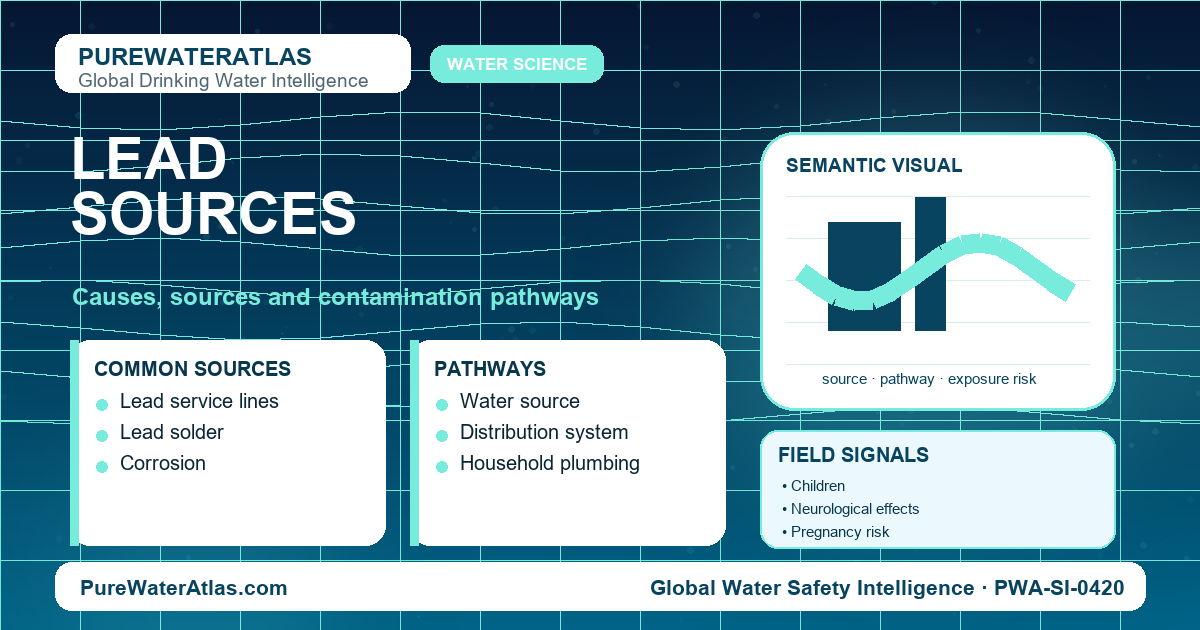
Some dissolved solids originate within homes and buildings themselves. As water moves through plumbing, it can dissolve copper, iron, zinc, or other metals from pipes, fittings, fixtures, and water heaters. Corrosion is not always the main driver of total TDS, but it can contribute to overall dissolved content and, more importantly, introduce specific contaminants that matter for health and safety.
This makes total dissolved solids in water household exposure a practical concern. Water entering a home may differ from water at the kitchen tap because of changes occurring inside the plumbing system.
Water treatment chemicals
Some treatment processes add dissolved substances intentionally. Water softeners, for example, exchange calcium and magnesium for sodium or potassium. This may not increase TDS dramatically in every case, but it changes the chemical makeup of dissolved solids. pH adjustment chemicals, corrosion control additives, and disinfection byproducts can also affect the final dissolved content of treated water.
Health and Safety Implications
TDS is often described as an indicator rather than a direct measure of health risk. That distinction is important. A high TDS reading does not automatically mean water is unsafe, and a low TDS reading does not guarantee safety. The implications depend on which substances are present, in what concentrations, and who is being exposed.
Aesthetic and operational effects
The most common effects of elevated TDS are related to taste and household performance. Water with high dissolved solids may taste salty, bitter, metallic, or otherwise unpleasant. It can leave spots on dishes, contribute to scale in kettles and water heaters, and reduce the efficiency of appliances. Hard water deposits may clog fixtures and shorten the life of plumbing components.
These issues may not be medical hazards by themselves, but they are often the first signs that water chemistry should be evaluated more closely.
Potential health concerns from specific dissolved substances
The main health concern is not TDS as a single number, but the possibility that the dissolved total includes harmful components. Examples include:
- Nitrate: particularly important for infants and pregnant households
- Lead: may result from plumbing corrosion and can be harmful at very low levels
- Arsenic: naturally occurring in some aquifers and associated with long-term health risks
- Sodium: may matter for people on medically restricted diets
- Sulfate: at higher levels can cause gastrointestinal effects, especially for people not accustomed to it
- Fluoride: beneficial at appropriate levels but a concern when excessive
Because of these differences, a TDS meter should never replace a full analysis when contamination is suspected. More discussion of this topic is available in total dissolved solids in water health effects and risks.
Sensitive populations
Certain groups may be more affected by changes in dissolved water chemistry:
- Infants consuming formula mixed with tap water
- People with kidney disease or cardiovascular conditions
- Individuals on sodium-restricted diets
- Residents using private wells in agricultural or industrial areas
- Households with old plumbing systems
In these settings, evaluating total dissolved solids in water risk factors can help identify when more detailed testing is justified.
Household exposure pathways
For most people, the main route of exposure is drinking and cooking. Additional household contact occurs through beverages, food preparation, infant formula, ice makers, and in some cases whole-house water use. While skin absorption of dissolved minerals is generally not the primary concern, showering and bathing can reveal aesthetic effects such as soap scum or skin dryness related to hard water chemistry.
Understanding total dissolved solids in water household exposure means considering both how much water is consumed and how water chemistry affects domestic systems over time.
Testing and Detection
Proper total dissolved solids in water detection starts with recognizing what TDS tests can and cannot tell you. A TDS measurement is useful for screening, routine monitoring, and evaluating treatment performance, but it does not identify all contaminants individually.
Handheld TDS meters
Consumer and professional TDS meters are widely available. These devices typically estimate TDS by measuring electrical conductivity and converting it to an approximate ppm value. They are fast, affordable, and useful for trend monitoring, especially before and after treatment systems such as reverse osmosis units.
However, conductivity-based meters have limitations:
- They do not measure nonionic substances well
- They do not identify the specific dissolved materials present
- Results can vary depending on temperature and calibration
- Different conversion factors may yield slightly different readings
Laboratory analysis
For a more complete understanding, laboratory testing is the preferred approach. Labs may determine TDS gravimetrically by evaporating filtered water and weighing the residue, or they may analyze specific ions and calculate totals. Comprehensive testing can include calcium, magnesium, sodium, chloride, sulfate, nitrate, iron, manganese, arsenic, lead, and many other constituents.
Laboratory analysis is especially important when:
- TDS is unusually high or changes suddenly
- Water tastes salty, metallic, or bitter
- Private well users are near farms, roads, industries, or coastal zones
- There are signs of corrosion, staining, or scaling
- Households include infants or medically sensitive individuals
When to test
Testing frequency depends on the water source and local conditions. Public water systems conduct routine monitoring under regulatory programs, but homeowners on private wells should follow a regular schedule and test more often if conditions change. Sensible times to test include:
- When moving into a new home with a well
- After flooding, drought, or nearby construction
- When taste or scaling changes become noticeable
- After installing or servicing treatment equipment
- If nearby land use changes, such as new agriculture or industry
Readers looking for more detailed guidance can review total dissolved solids in water testing and detection methods.
Interpreting results
TDS values are often interpreted roughly as follows, though actual water acceptability depends on composition:
- Low TDS: often palatable, but not necessarily safer
- Moderate TDS: common in many natural water supplies
- High TDS: may affect taste, scale formation, and treatment needs
- Very high TDS: may indicate salinity problems, contamination, or a need for specialized treatment
A number alone should not drive decisions. The most useful interpretation combines TDS with pH, hardness, alkalinity, chloride, sulfate, nitrate, sodium, metals testing, and source history.
Prevention and Treatment
Effective total dissolved solids in water prevention depends on the source. In some cases, prevention means protecting aquifers and watersheds from pollution. In others, it means improving household plumbing, choosing the right treatment technology, or changing land management practices.
Source protection
The best long-term strategy is to reduce contamination before it enters the water supply. Important measures include:
- Managing fertilizer and manure application responsibly
- Maintaining septic systems properly
- Controlling industrial discharges and stormwater runoff
- Limiting salt overuse on roads and paved surfaces where possible
- Protecting recharge areas and wellheads from contamination
- Monitoring groundwater withdrawal in coastal aquifers to reduce seawater intrusion
These actions address total dissolved solids in water common sources at the watershed level rather than only treating symptoms at the tap.
Household practices
At home, prevention may involve reducing plumbing-related contributions and monitoring changes in water quality. Useful steps include:
- Flushing stagnant water from taps before drinking
- Replacing corroded plumbing components when needed
- Servicing water heaters and appliances to reduce scaling problems
- Testing private wells regularly
- Reviewing treatment system performance periodically
Treatment options
Not all water treatment methods reduce TDS. Standard sediment filters remove particles, not dissolved ions. Activated carbon can improve taste and remove some chemicals, but it generally does not remove most dissolved salts effectively. The main treatment options for high TDS include:
- Reverse osmosis: highly effective for reducing many dissolved solids, commonly used at point of use
- Distillation: removes many dissolved substances by vaporizing and condensing water
- Deionization: uses ion exchange resins to remove charged dissolved species, more common in specialized applications
- Ion exchange softening: reduces hardness minerals but does not necessarily lower total TDS in a meaningful way
Reverse osmosis is one of the most widely recommended options when high TDS causes taste, scaling, or sodium and chloride concerns. Still, treatment system selection should be based on water chemistry, usage volume, maintenance requirements, and the specific contaminants involved. Additional background is available in water purification and water treatment systems.
Matching treatment to the problem
Because TDS can come from many different dissolved substances, choosing the correct treatment requires knowing the source. Examples include:
- If hardness is the main issue, softening may help with scale and soap performance
- If sodium chloride from salinity is the concern, reverse osmosis may be more appropriate
- If nitrate is elevated, targeted treatment and source investigation are essential
- If corrosion is introducing metals, pipe replacement and corrosion control may be needed
The best prevention and treatment plans combine testing, source identification, and routine monitoring.
Common Misconceptions
TDS is one of the most misunderstood water quality parameters. Several common myths can lead to poor decisions.
“High TDS always means water is dangerous”
This is false. Some waters have elevated TDS because they contain natural minerals such as calcium, magnesium, and bicarbonate. These may affect taste and scaling but do not automatically create a serious health hazard. The specific composition matters more than the total number alone.
“Low TDS means water is pure and safe”
Also false. Water can have low TDS and still contain harmful contaminants that a simple meter cannot detect accurately, including some organic chemicals, pathogens, or certain metals at dangerous levels. TDS is not a complete safety test.
“A TDS meter identifies contaminants”
A TDS meter provides an estimate of total dissolved concentration, usually through conductivity. It does not tell you whether the reading comes from harmless minerals, sodium chloride, nitrate, or toxic metals. Detailed lab testing is necessary when contamination is suspected.
“Water softeners remove TDS”
Traditional softeners exchange hardness minerals for sodium or potassium. They improve soap performance and reduce scale, but they do not necessarily reduce the overall dissolved solids burden. In some cases, the TDS reading may remain similar or even change very little despite softer water.
“Bottled water always has better TDS levels”
Not necessarily. Bottled water varies widely. Some types are mineral-rich by design, while others are purified to low TDS levels. A lower number is not always better; suitability depends on taste preference, intended use, and the water’s overall chemistry.
Regulations and Standards
TDS is commonly regulated or guided as an aesthetic parameter rather than as a primary health-based contaminant standard. In many jurisdictions, drinking water agencies set recommended levels intended to protect taste, odor, and acceptability rather than to define a direct toxic threshold.
Aesthetic guideline values
In the United States, TDS is commonly associated with a secondary drinking water standard, meaning it is a non-enforceable guideline related to appearance, taste, and consumer acceptance. Secondary standards help utilities and property owners assess water quality concerns that affect usability and public confidence, even when immediate health hazards are not present.
Why standards are limited
A universal health-based TDS limit is difficult because TDS represents many different substances with very different toxicological profiles. A water sample with 500 mg/L of mostly calcium bicarbonate is not equivalent to 500 mg/L dominated by sodium chloride and nitrate. For that reason, regulators often set specific standards for individual contaminants, such as nitrate, arsenic, lead, chloride, or sulfate, rather than relying on TDS alone.
Public water versus private wells
Public water systems are generally required to monitor a range of water quality parameters and to meet applicable regulatory standards. Private wells, by contrast, are often the responsibility of the owner. This means well owners must take a proactive role in testing, interpreting results, and choosing treatment if needed.
Private well users should be especially aware of local total dissolved solids in water risk factors, including geology, agriculture, industrial activity, road salt use, and coastal influence.
Using standards correctly
Regulatory values should be used as reference points, not as the only basis for decision-making. Water that meets a secondary TDS guideline may still have problems with corrosion or specific contaminants. Water that exceeds an aesthetic guideline may still be safe in a narrow toxicological sense but unpleasant to drink or hard on plumbing. The most effective approach combines regulatory awareness with source-specific testing and practical judgment.
Conclusion
Total dissolved solids is a broad but valuable indicator of water chemistry. Learning about total dissolved solids in water causes and sources helps explain why water may taste different, produce scale, corrode plumbing, or require treatment. Natural geology, soil runoff, agriculture, wastewater, road salt, industry, seawater intrusion, and household plumbing can all contribute to TDS in different ways.
The most important point is that TDS is not a complete measure of safety by itself. It tells you how much dissolved material is present, but not exactly what that material is. That is why total dissolved solids in water detection should combine quick screening tools with laboratory analysis when needed. It is also why assessing total dissolved solids in water household exposure requires attention to plumbing, source water, and vulnerable household members.
Effective total dissolved solids in water prevention starts with source protection and continues through regular testing, maintenance, and appropriate treatment. Whether the goal is better taste, lower scaling, reduced salinity, or protection against specific dissolved contaminants, informed water management is the key. By understanding total dissolved solids in water common sources and total dissolved solids in water risk factors, households and communities can make better decisions about water quality, treatment, and long-term resource protection.
Read the full guide: Water Science Guide
Explore more in this category: Water Science Articles