
Introduction
Concerns about heavy metals in drinking water causes and sources have grown as more people learn that contaminants can enter water long before it reaches the kitchen tap. Heavy metals are naturally present in the earth, but human activity, aging infrastructure, and water chemistry can increase their concentration in drinking water supplies. In some cases, contamination begins in groundwater or surface water. In others, it develops during treatment, storage, or distribution through pipes, fixtures, and plumbing components.
Understanding where these metals come from is essential for both public health and practical decision-making. Homeowners, renters, schools, facility managers, and municipal water operators all play a role in reducing exposure. Some metals may be present at low levels without causing immediate symptoms, while others can create serious health concerns over time, especially for infants, children, pregnant people, older adults, and people with certain medical conditions.
This article explains how heavy metals enter drinking water, the most common contamination pathways, the health and safety implications of exposure, and the methods used to test, prevent, and treat contamination. Readers looking for broader context on contamination pathways may also find useful background in water contamination resources, while those seeking a broader overview can explore this complete guide to heavy metals in drinking water.
What It Is
In water quality discussions, the term “heavy metals” generally refers to metallic elements with relatively high density that may become harmful when present above certain concentrations. Not every heavy metal behaves the same way, and not all have the same toxicity, mobility, or persistence. In drinking water, the metals most commonly discussed include:
- Lead
- Arsenic
- Mercury
- Cadmium
- Chromium
- Copper
- Nickel
- Manganese
- Iron
Some of these metals, such as iron, manganese, copper, and zinc, may be essential trace elements at low levels but problematic at high concentrations. Others, such as lead, arsenic, cadmium, and mercury, are of greater concern because of their well-documented toxicity even at relatively low exposure levels over long periods.
Heavy metals can appear in dissolved form, attached to particles, or incorporated into scale and sediment within plumbing and distribution systems. Their presence in water can be influenced by pH, temperature, dissolved oxygen, alkalinity, hardness, microbial activity, and the length of time water remains stagnant in pipes.
One reason this topic is often misunderstood is that contamination does not always change the taste, smell, or appearance of water. Clear water is not necessarily safe water. Because heavy metal contamination is often invisible, understanding heavy metals in drinking water household exposure depends on both source awareness and proper testing.
Main Causes or Sources
The topic of heavy metals in drinking water common sources includes both natural and human-made pathways. In many communities, contamination results from a combination of environmental conditions and infrastructure vulnerabilities rather than a single obvious event.
Natural Geologic Sources
Many heavy metals occur naturally in rocks, soils, and mineral deposits. As groundwater moves through underground formations, it can dissolve small amounts of these elements. In certain regions, this process can significantly elevate metal concentrations in wells and aquifers.
- Arsenic often originates from natural geologic deposits and can leach into groundwater.
- Manganese and iron are commonly found in groundwater, especially in low-oxygen environments.
- Chromium, nickel, and other metals may also occur naturally depending on local geology.
This means even homes far from industrial activity may still face contamination risks if they rely on private wells or local aquifers with naturally elevated metal levels.
Corrosion of Plumbing Systems
One of the most important answers to the question of heavy metals in drinking water causes and sources is corrosion. Water that is acidic, low in mineral content, or otherwise chemically aggressive can corrode pipes, fittings, solder, valves, and fixtures. This process allows metals to leach into the water after it has already left the treatment plant.
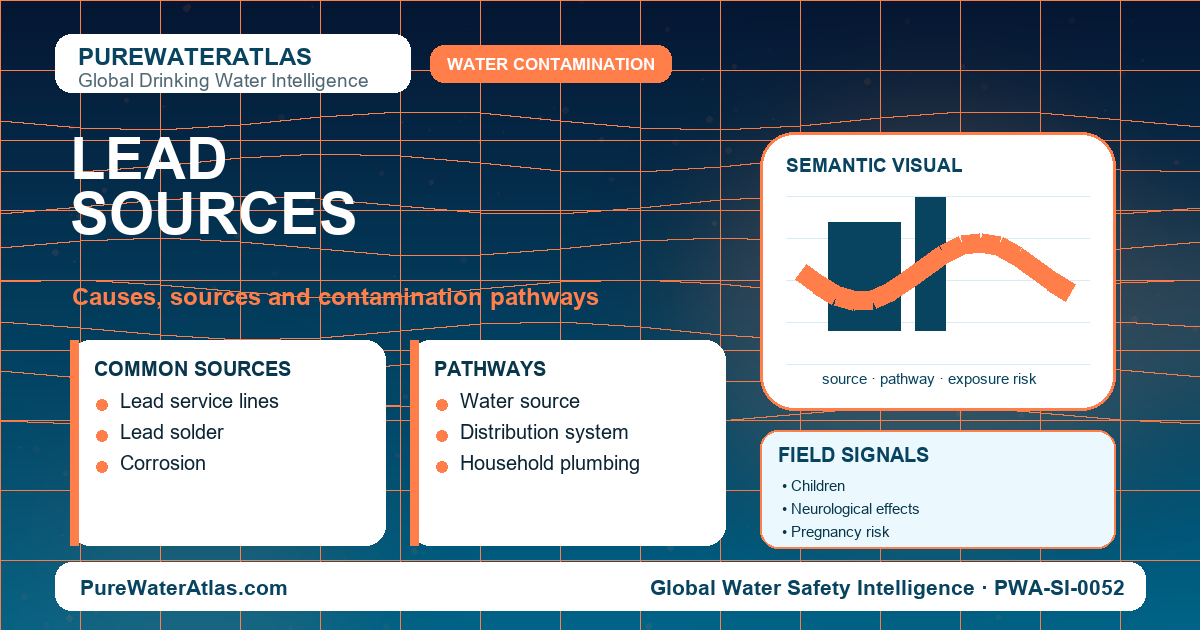
- Lead can come from lead service lines, lead-containing solder, and brass fixtures.
- Copper commonly enters water through corrosion of copper plumbing.
- Nickel and chromium may leach from metal alloys and stainless steel components under certain conditions.
Corrosion-related contamination is strongly influenced by water chemistry. Utilities often manage corrosion with treatment adjustments, but if controls fail or conditions change, metal release can increase. Water that sits overnight in household plumbing may contain higher concentrations than water that has been freshly flushed through the system.
Industrial Activities
Industrial operations can release heavy metals into the environment through wastewater discharges, accidental spills, improper waste storage, air emissions that settle onto land or water, and legacy contamination from past practices. Metal processing, mining, electroplating, battery production, pigment manufacturing, tanning, and electronics production are among the industries historically associated with metal contamination.
Where industrial pollutants infiltrate rivers, lakes, or groundwater, they may affect drinking water sources directly or indirectly. Even when raw water is treated, some contamination can persist if treatment systems are not designed for the specific metal or concentration involved.
Mining and Smelting
Mining exposes metal-bearing rock to air and water, which can increase leaching into nearby waterways and groundwater. Smelting and ore-processing operations may also generate metal-rich waste, dust, and emissions. Communities near active or abandoned mine sites may face elevated risks for arsenic, cadmium, lead, mercury, and other metals.
Abandoned mines are a notable concern because contamination can continue long after operations stop. Acid mine drainage, in particular, can dissolve metals and carry them into streams and aquifers.
Agricultural Inputs and Land Use
Agriculture is more often associated with nutrients and pesticides, but some farming practices can also contribute to metal contamination. Certain fertilizers, soil amendments, biosolids, and pesticides may contain trace metals. Over time, runoff or infiltration can transport these metals into nearby water supplies.
Livestock operations, erosion, and sediment transport may also mobilize naturally occurring metals from soil into surface water systems. While agriculture is not always the main cause, it can be one of several heavy metals in drinking water risk factors in a watershed.
Landfills, Waste Disposal, and Legacy Pollution
Improperly managed landfills, dump sites, and hazardous waste areas can release leachate containing heavy metals. Older disposal sites may lack liners or containment systems, allowing contaminants to move into groundwater. Legacy pollution is especially important in areas with historical manufacturing, military operations, older incinerators, or uncontrolled dumping.
Even if polluting activities ended decades ago, residual contamination can persist in soil and groundwater and continue affecting drinking water sources.
Urban Runoff and Stormwater
Stormwater runoff from roads, rooftops, construction sites, and industrial areas can carry metals into streams, reservoirs, and recharge zones. Common urban metal sources include brake dust, tire wear, galvanized surfaces, building materials, and atmospheric deposition from traffic and industry. In heavily developed areas, stormwater can be a meaningful contributor to source-water contamination.
Water Treatment and Distribution Issues
Although treatment plants are designed to improve water quality, problems in treatment optimization or distribution management can contribute to metal release. For example, shifts in disinfectants, pH, alkalinity, or corrosion control chemicals can destabilize pipe scale. When protective mineral layers inside old pipes are disturbed, stored metals may be released into flowing water.
This was a major lesson from several public water crises: source water may not be the only issue. Distribution chemistry and infrastructure compatibility matter just as much.
Private Wells and Localized Exposure
Private well users often have a different risk profile from people served by municipal systems. Wells are not always subject to the same routine monitoring requirements as public utilities, and contamination can vary significantly from one property to the next. Nearby geology, septic systems, industrial history, depth of the well, casing condition, and groundwater movement all influence exposure.
Because of this variability, heavy metals in drinking water household exposure may be highly localized. Two neighboring homes can have very different water quality results.
Health and Safety Implications
The health risks from heavy metals depend on the specific metal, concentration, exposure duration, age and health status of the person exposed, and whether multiple contaminants are present at the same time. Some exposures produce acute symptoms, but many are more dangerous because they are chronic and cumulative.
For a more in-depth review of outcomes associated with exposure, readers may consult this resource on heavy metals in drinking water health effects and risks.
Lead
Lead is especially harmful because it can affect the nervous system, brain development, behavior, learning, and cardiovascular health. There is no known safe level of lead exposure for children. Infants and young children are particularly vulnerable because their bodies absorb lead more readily and their developing brains are highly sensitive.
Arsenic
Long-term arsenic exposure has been associated with skin changes, cardiovascular effects, developmental concerns, and increased risk of certain cancers. Arsenic contamination often comes from groundwater, making it a major concern in well-dependent regions.
Mercury
Mercury can affect the nervous system and kidneys. While mercury exposure more commonly occurs through food, especially fish, water contamination is still a serious concern in areas affected by industrial discharge or improper waste handling.
Cadmium
Cadmium exposure can damage the kidneys and bones and may increase cancer risk over time. It is often linked to industrial pollution, mining, and certain waste streams.
Chromium
Chromium exists in different forms, and toxicity depends on the specific species. Hexavalent chromium is of particular concern because it has been associated with cancer and organ damage in certain exposure scenarios.
Copper, Iron, and Manganese
These metals may be more familiar because they often affect both aesthetics and health. Elevated copper can cause gastrointestinal upset and, in severe or prolonged cases, liver or kidney effects. Excess iron and manganese can cause staining, unpleasant taste, and operational problems, while high manganese exposure has raised concerns for neurological impacts, especially in children.
Who Is Most at Risk
Key heavy metals in drinking water risk factors include:
- Living in older homes with lead service lines or old plumbing
- Using private well water without routine testing
- Residing near mining, industrial, or waste disposal sites
- Using water from aquifers known to contain natural arsenic or manganese
- Having water with low pH or corrosive characteristics
- Experiencing long water stagnation times in pipes
- Belonging to a sensitive group such as infants, children, or pregnant people
Because some health effects develop gradually, people may not recognize exposure until contamination has been present for months or years. That is one reason preventive monitoring is so important.
Testing and Detection
Heavy metals in drinking water detection requires analytical testing. Since metals are usually invisible and may not alter odor or taste, visual inspection alone is not reliable. Staining or metallic taste can suggest a problem in some cases, but neither confirms nor rules out contamination.
Detailed technical information is available in this guide to heavy metals in drinking water testing and detection methods.
Laboratory Testing
The most dependable method is laboratory analysis by a certified water testing facility. Samples may be analyzed using techniques such as atomic absorption spectroscopy, inductively coupled plasma mass spectrometry, or other approved methods capable of detecting metals at very low concentrations.
Laboratory testing can identify:
- Which metals are present
- The concentration of each metal
- Whether contamination likely comes from the source water or household plumbing
First-Draw and Flushed Samples
To understand whether contamination comes from plumbing, testing often includes a “first-draw” sample taken after water has sat unused in pipes for several hours. A second sample after flushing may help distinguish between source-water contamination and plumbing-related leaching.
- High first-draw, lower flushed result: often suggests household plumbing contribution
- High levels in both samples: may suggest source-water contamination or upstream distribution issues
Public Water System Monitoring
Public water systems typically conduct routine compliance monitoring for specific contaminants under regulatory requirements. Consumers can often review annual water quality reports to see reported levels, violations, treatment information, and monitoring status. However, utility reports may not fully capture localized problems inside individual buildings or homes.
When to Test
Testing is especially important when:
- You use a private well
- Your home has older plumbing or a lead service line
- You notice staining, metallic taste, or blue-green corrosion marks
- You are pregnant or have young children in the home
- You live near industrial, mining, or waste sites
- Your water source has a known history of arsenic, manganese, or other metals
- Plumbing repairs or source changes have occurred recently
Field Test Kits
Home test kits may offer screening value for some metals, but they are generally less definitive than laboratory testing. They can be useful for prompting further investigation, but important decisions about drinking water safety should ideally rely on certified lab results.
Prevention and Treatment
Heavy metals in drinking water prevention involves both source protection and point-of-use control. The best approach depends on whether contamination originates in the water source, the distribution system, or household plumbing.
Source Water Protection
Protecting rivers, reservoirs, and aquifers reduces contamination before treatment is needed. Effective source protection can include:
- Controlling industrial discharges
- Monitoring mining impacts
- Managing landfill leachate
- Reducing runoff and erosion
- Remediating contaminated sites
- Protecting recharge zones and wellhead areas
Broader environmental context can be found through global water quality information and water science resources.
Corrosion Control
For public systems, corrosion control is one of the most important interventions for lead and copper. Utilities may adjust pH, alkalinity, and corrosion inhibitors to reduce leaching from pipes. These measures help form or maintain protective coatings inside plumbing materials.
At the household level, replacing lead service lines, old solder, and problematic fixtures is often the most permanent solution. Flushing stagnant water before use may reduce metal levels temporarily, though it should not be seen as a substitute for corrective action where contamination is significant.
Household Filtration and Treatment
Treatment options vary by metal and concentration. Common approaches include:
- Reverse osmosis: often effective for lead, arsenic, chromium, cadmium, and other metals
- Distillation: can remove many dissolved contaminants, including several metals
- Ion exchange: useful in some metal removal applications depending on system design
- Adsorptive media: specialized filters may target arsenic, lead, or other metals
Not all filters remove all metals. A carbon filter alone may improve taste and odor but may not be sufficient for dissolved heavy metals unless specifically certified for those contaminants. Consumers should look for systems independently certified for the metal of concern and install them according to flow and maintenance requirements.
Maintenance Matters
Even a good treatment system can fail if cartridges are not changed, membranes are not replaced, or units are not properly sized. Filters that are overloaded or expired may lose effectiveness. Households should follow manufacturer schedules, verify certifications, and retest water after installation.
Practical Household Steps
To reduce heavy metals in drinking water household exposure, households can:
- Use only cold water for drinking and cooking, since hot water can increase metal leaching
- Flush taps after long periods of non-use
- Test water periodically, especially in older homes or private well systems
- Replace lead-containing plumbing components when possible
- Clean faucet aerators to remove trapped sediment and particles
- Install a properly certified filter when contamination is confirmed or suspected
Well Owner Responsibilities
Private well owners should test regularly because they are responsible for the safety of their own water supply. Testing frequency depends on local conditions, but annual testing for core parameters and additional testing after flooding, nearby land-use changes, or unusual water quality changes is a prudent practice. In areas with known arsenic or manganese issues, routine metal testing is particularly important.
Common Misconceptions
If Water Looks Clear, It Is Safe
This is false. Many dangerous metals have no obvious visual signs. Water can be colorless, odorless, and still contain concerning concentrations of lead or arsenic.
Boiling Removes Heavy Metals
Boiling does not remove heavy metals. In fact, boiling may slightly increase concentration if water evaporates while metals remain behind. Boiling is useful for microbial contamination, not for dissolved metals.
Only Industrial Areas Have Metal Contamination
Also false. Natural geology can cause significant contamination in rural and undeveloped areas, especially for arsenic, iron, and manganese. Older residential plumbing can also create contamination far from industrial zones.
Municipal Water Reports Tell You Everything About Your Tap
Water utility reports are important, but they do not always reflect conditions inside your home’s plumbing. A compliant system can still deliver water that picks up lead or copper inside private pipes and fixtures.
All Filters Work the Same Way
Different filters target different contaminants. A pitcher filter may reduce certain substances but may not be certified for the metal affecting your water. Treatment selection should be based on actual test results.
New Plumbing Cannot Cause Problems
Newer plumbing is often safer than older lead-containing materials, but it is not automatically risk-free. Some metal components and alloys can still leach under certain water chemistry conditions, particularly if water is corrosive.
Regulations and Standards
Drinking water regulations vary by country and jurisdiction, but most systems set maximum allowable contaminant levels or treatment requirements for metals of concern. These standards are designed to reduce health risks and establish monitoring, reporting, and corrective-action obligations for public water systems.
Public Water Systems
Public utilities are generally required to monitor for regulated contaminants, maintain treatment performance, and notify consumers when violations occur. In many regulatory frameworks:
- Lead and copper are often managed through action levels and corrosion control requirements
- Arsenic, cadmium, chromium, and mercury have enforceable maximum contaminant levels in many regions
- Utilities must document sampling methods, frequency, and compliance results
Private Wells
Private wells often fall outside the full regulatory structure that applies to public water systems. This creates a significant gap in protection because contamination may go unnoticed unless owners test voluntarily. Education and local health department guidance are therefore essential.
Building-Level Responsibility
Even when utility water meets source and distribution standards, schools, child care centers, health care facilities, and residential property owners may still need building-specific testing and remediation. Internal plumbing materials and stagnation patterns can create unique exposure pathways.
The Importance of Evolving Standards
Scientific understanding of metal toxicity changes over time. As evidence improves, standards may become more stringent, monitoring may expand, and old assumptions may be reconsidered. Public awareness and updated infrastructure policies are both critical for long-term risk reduction.
Conclusion
Understanding heavy metals in drinking water causes and sources is essential for protecting health and making informed water safety decisions. Heavy metals can come from natural geology, industrial pollution, mining, agriculture, urban runoff, aging infrastructure, and household plumbing. In many cases, contamination is invisible and long-lasting, which makes routine awareness and testing especially important.
The most effective response begins with identifying the contamination pathway. Source-water problems call for watershed protection, monitoring, and treatment. Plumbing-related problems require corrosion control, fixture replacement, flushing strategies, or point-of-use filtration. For households, especially those with private wells or older plumbing, testing is the foundation of effective prevention.
Because the issue spans environmental science, public health, engineering, and policy, no single solution fits every situation. Still, the core principles are clear: know your water source, understand your plumbing, test when risk factors are present, and use treatment methods that match verified contaminants. With accurate information and appropriate action, the risks associated with heavy metals in drinking water can be substantially reduced.
Read the full guide: Water Contamination Guide
Explore more in this category: Water Contamination Articles