Introduction
Access to safe drinking water is one of the most important public health achievements in modern society, yet water quality problems still occur in homes, campsites, emergency settings, and remote worksites. Portable treatment devices are often promoted as practical tools for improving water safety, especially when centralized treatment is unavailable or when users want an extra layer of protection. To understand how and when these devices are useful, it is important to examine portable water purification systems causes and sources in a broad and practical way. In this context, the phrase refers not only to the systems themselves, but also to the contamination problems that lead people to use them, the conditions that affect their performance, and the environmental sources of impurities they are designed to address.
Portable purification systems are used for many reasons. Outdoor enthusiasts may carry them to remove microbes from streams and lakes. Families may keep them for emergency preparedness during boil-water advisories, storms, or infrastructure failures. Travelers may rely on them in areas where tap water safety is uncertain. Some households use compact countertop or pitcher-based treatment units when they are concerned about taste, odor, sediment, or specific contaminants. A deeper understanding of portable water purification systems common sources of contamination helps consumers match the right technology to the right problem.
Water contamination can come from natural geology, wildlife activity, agricultural runoff, aging plumbing, flooding, sewage leaks, industrial discharge, or poor storage practices. Because contamination types vary widely, no single purification method solves every problem. For example, a filter that is excellent at reducing protozoa and sediment may do little against dissolved chemicals, while a UV device may inactivate microorganisms but cannot remove heavy metals or cloudiness. Understanding the causes and sources behind water quality concerns is essential for making informed decisions.
This article explains what portable water purification systems are, where contamination typically comes from, what health and safety implications are associated with unsafe water, how water is tested, and what prevention strategies can reduce risk. It also addresses common myths and summarizes key regulations and standards that influence product quality. Readers seeking broader background information can also explore water purification resources and a complete guide to portable water purification systems.
What It Is
Portable water purification systems are compact devices or treatment products designed to improve water quality for drinking and, in some cases, cooking or hygiene. They are intended for mobility, temporary use, emergency response, travel, or point-of-use treatment in settings where water safety is uncertain. These systems range from simple squeeze filters and gravity bags to handheld ultraviolet units, chemical disinfectant drops, portable pump filters, countertop systems, and small reverse osmosis units.
The term “purification” is often used broadly in marketing, but in technical terms different devices perform different treatment functions. Some systems primarily filter water by physically removing suspended particles, sediment, bacteria, and protozoa. Others disinfect water by inactivating microorganisms using ultraviolet light, chlorine, chlorine dioxide, iodine, or ozone. More advanced devices may adsorb chemicals using activated carbon or separate dissolved contaminants through membrane processes such as reverse osmosis.
Because these technologies work differently, understanding the contamination profile matters. Portable systems may target:
- Microbiological contaminants, such as bacteria, viruses, and protozoa
- Physical contaminants, such as sediment, silt, rust, and turbidity
- Chemical contaminants, such as pesticides, volatile organic compounds, heavy metals, chlorine byproducts, and fuel residues
- Aesthetic issues, including bad taste, odor, and discoloration
Not all portable devices address all four categories. A backpacking filter may be highly effective against Giardia and Cryptosporidium but may not remove viruses unless the pore size or media is specifically designed to do so. Activated carbon can improve taste and reduce certain chemicals, but it is not a universal microbiological barrier. UV systems depend on battery power and clear water for effectiveness. Chemical tablets are lightweight and useful in emergencies, but they can require waiting periods and may not remove particulates or chemical pollution.
Household use adds another dimension. Portable water purification systems household exposure concerns often arise when residents experience unusual taste, color, or odor in tap water, or when they receive notices about contamination events, lead concerns, or local service interruptions. In these situations, a portable point-of-use system may be used as a short-term protective measure while the underlying source is investigated and corrected.
Portable systems should therefore be understood as tools within a larger water safety strategy, not as universal solutions. Their value depends on proper selection, maintenance, storage, and realistic expectations about what they can and cannot remove. For more information about health outcomes related to contaminated water and treatment limitations, readers may consult portable water purification systems health effects and risks.
Main Causes or Sources
When discussing portable water purification systems causes and sources, the most useful approach is to examine the actual sources of contamination that create the need for treatment. Unsafe water usually results from one or more environmental, infrastructure-related, or human-caused factors. The following are the major categories.
Natural Surface Water Contamination
Streams, rivers, ponds, and lakes may appear clean but often contain microorganisms from soil, wildlife, and upstream human activity. Rainfall can wash fecal material, decaying organic matter, and sediment into surface waters. Even in remote areas, animals such as deer, beavers, rodents, birds, and livestock can introduce pathogens. Common microbiological hazards include Escherichia coli, Salmonella, Campylobacter, Giardia, and Cryptosporidium.
These are among the most important portable water purification systems common sources of concern for hikers, campers, military personnel, field researchers, and emergency responders. Surface water contamination is highly variable. A fast-flowing mountain stream may still carry protozoan cysts, while a calm pond may accumulate algae, sediment, and microbial growth. Seasonal changes, storms, and upstream activity can rapidly alter water quality.
Groundwater and Well Water Issues
Private wells are often assumed to be safer than surface water, but groundwater can also contain harmful contaminants. Shallow wells may be influenced by septic systems, animal operations, stormwater, and agricultural chemicals. Naturally occurring arsenic, fluoride, iron, manganese, sulfur compounds, or radionuclides may be present depending on local geology. Bacterial contamination can occur if the well casing is damaged or the cap is compromised.
Portable treatment devices are sometimes used when households suspect changes in well water quality, during post-flood recovery, or while waiting for laboratory testing. However, well-related contamination can involve dissolved substances that simple portable filters do not remove effectively.
Municipal System Failures and Distribution Problems
Centralized water treatment plants are designed to produce safe drinking water, but contamination can occur after treatment. Breaks in water mains, pressure loss, flooding, infrastructure corrosion, cross-connections, storage tank problems, or inadequate disinfection can affect distribution systems. During such events, boil-water advisories may be issued.
In urban and suburban settings, these are important portable water purification systems risk factors because consumers may rely on home or travel-sized treatment systems during short-term service disruptions. Lead and copper can also enter water from household plumbing, solder, or fixtures, especially in older buildings. In such cases, the source is not the treatment plant but the distribution or plumbing system.
Agricultural Runoff
Farming activities can introduce nutrients, manure, pesticides, herbicides, and sediment into nearby water bodies. Heavy rainfall can transport nitrogen, phosphorus, and pathogenic organisms into streams and reservoirs. Algal blooms stimulated by nutrient loading may produce toxins that are not removed by all portable systems.
This is a major source of both microbiological and chemical contamination in rural watersheds. People drawing water from private sources or using untreated surface water in agricultural regions face elevated risk, particularly after storms or irrigation return flows.
Industrial and Urban Chemical Pollution
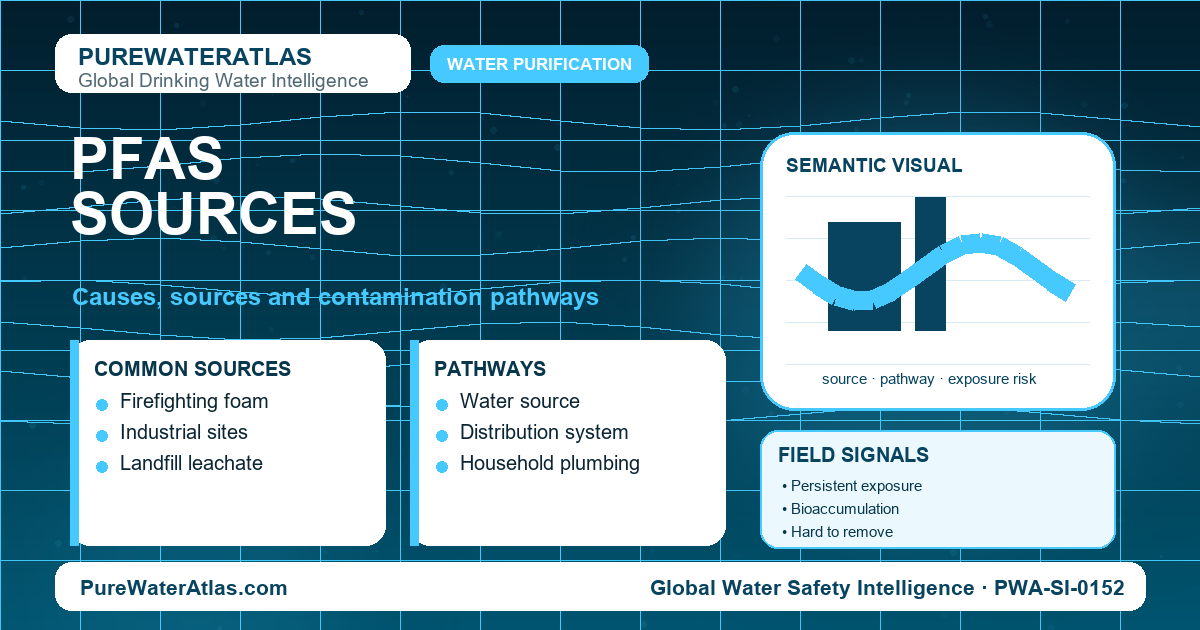
Industrial operations, mining, fuel storage, transportation spills, and improper waste disposal can introduce petroleum compounds, solvents, heavy metals, and synthetic chemicals into water. Urban runoff may carry oils, metals, road salts, and household chemicals into storm drains and receiving waters. In some regions, emerging contaminants such as PFAS have become a growing concern.
These contaminants are significant because many lightweight portable systems are primarily designed for microbes, not complex chemical pollution. Carbon media may reduce some organic compounds, but performance varies widely by chemical type and concentration. Reverse osmosis and specialized sorbent media may be required for certain pollutants.
Flooding and Disaster Events
Floodwaters can overwhelm sewage systems, mobilize chemical storage areas, inundate wells, and mix debris with drinking water sources. Natural disasters such as hurricanes, earthquakes, wildfires, and severe storms can damage treatment facilities and plumbing infrastructure. Under these conditions, multiple contamination categories may occur at once: sediment, pathogens, fuel residues, metals, and degraded taste and odor.
This is one of the clearest examples of why understanding causes and sources matters. A portable system that performs well for ordinary backpacking may not be sufficient for post-disaster urban floodwater.
Improper Water Storage and Handling
Water can become unsafe even after it has been treated. Contamination may occur through dirty containers, poor hand hygiene, warm storage conditions, biofilm formation, or repeated dipping into a storage vessel. This is especially relevant in households, travel settings, and emergency shelters where treated water is stored for later use.
Portable devices do not eliminate risk if clean water is recontaminated after treatment. Safe handling practices are therefore part of the broader prevention strategy.
Household Plumbing and Indoor Sources
Portable water purification systems household exposure concerns often involve contamination from within the home itself. Common issues include lead from old service lines, copper from corroding pipes, rust particles, sediment from plumbing repairs, stagnant water in low-use fixtures, microbial growth in poorly maintained home devices, and contamination in water dispensers or storage containers.
Indoor sources are sometimes overlooked because residents assume contamination only comes from the source water. In reality, water quality can degrade between the point of entry and the point of use.
Health and Safety Implications
The health effects of unsafe water depend on the type of contaminant, concentration, exposure duration, and individual vulnerability. Some impacts are immediate and obvious, while others develop slowly over months or years.
Microbiological Risks
Bacteria, viruses, and protozoa can cause gastrointestinal illness, fever, vomiting, diarrhea, abdominal pain, and dehydration. In severe cases, waterborne disease may require hospitalization. Young children, older adults, pregnant individuals, and people with weakened immune systems are at greater risk of serious complications.
Protozoa such as Giardia and Cryptosporidium are especially relevant in outdoor settings. These organisms can survive in cold natural waters and may resist some forms of basic disinfection. Viral contamination is more common where human sewage is involved, such as flood events, sewage overflows, or densely populated areas with poor sanitation.
Chemical Risks
Chemical contaminants may produce short-term symptoms such as nausea, irritation, headache, or unusual taste and odor, but many of the most serious concerns are long-term. Heavy metals like lead can harm neurological development in children. Arsenic exposure has been associated with increased cancer risk and cardiovascular effects. Nitrates can be dangerous for infants because they interfere with oxygen transport in blood. Certain solvents, pesticides, and industrial compounds may affect the liver, kidneys, endocrine system, or immune system.
These concerns reinforce the importance of matching the treatment method to the contaminant source. Users should not assume that any device labeled “purifier” addresses every hazardous chemical.
Physical and Aesthetic Indicators
Cloudiness, discoloration, unusual smell, oily sheen, metallic taste, or visible particles may indicate contamination, but clear water is not necessarily safe. Many pathogens and dissolved chemicals are invisible. Conversely, aesthetically unpleasant water is not always dangerous, though it should still be investigated. Relying only on sight and smell is therefore not enough for safety decisions.
Risk Factors That Increase Exposure
Important portable water purification systems risk factors include:
- Using untreated surface water from unknown sources
- Drinking from flood-affected wells or plumbing systems
- Relying on a treatment device that is not certified for the contaminant present
- Poor filter maintenance or expired cartridges
- Low battery power or improper dose in UV and chemical systems
- High turbidity that interferes with disinfection
- Storing treated water in dirty containers
- Assuming all contaminants are removed when only one category is addressed
Understanding these risk factors helps users avoid a false sense of security, which can be as dangerous as having no treatment at all.
Testing and Detection
Reliable portable water purification systems detection begins with identifying what problem may be present. Testing and detection can range from simple field observations to advanced laboratory analysis.
Visual Inspection and Context Clues
The first step is to consider the setting. Is the water source downstream from livestock, septic systems, urban runoff, or industrial activity? Has there been recent heavy rain, flooding, wildfire, or construction? Is the household served by old plumbing or a private well? These context clues help identify likely contamination causes and guide testing priorities.
Visual indicators such as turbidity, foam, unusual color, algae, sediment, rust staining, or oily films may suggest contamination, though they cannot confirm safety or define exact pollutants.
Field Testing
Portable test kits can measure parameters such as pH, chlorine residual, hardness, nitrate, iron, total dissolved solids, and sometimes coliform presence. Turbidity meters and conductivity meters can also provide useful screening information. In field and emergency settings, these tools help users make preliminary decisions, but they are not substitutes for certified laboratory analysis when significant contamination is suspected.
Microbiological Testing
Testing for total coliforms, fecal coliforms, or E. coli is common for private wells and suspected microbial contamination. Presence-absence tests and culture-based methods can indicate whether sanitary integrity has been compromised. However, absence of one indicator organism does not prove complete absence of all pathogens.
Chemical Analysis
Laboratories can test for lead, arsenic, copper, nitrates, pesticides, volatile organic compounds, PFAS, and many other contaminants. This type of analysis is essential when contamination may originate from plumbing, industrial activity, agricultural runoff, or geologic sources. Chemical issues often cannot be diagnosed by taste or appearance.
Device Performance Verification
Another aspect of detection is verifying whether the treatment device itself is functioning properly. Flow rate changes, cartridge age, membrane fouling, damaged seals, and depleted UV lamps can all reduce performance. Users should follow manufacturer instructions for replacement schedules, cleaning, and storage. Certified claims matter greatly here, because they define what the device has been tested to remove under specific conditions.
Readers who want a closer look at testing methods can visit portable water purification systems testing and detection methods or browse additional topics in drinking water safety.
Prevention and Treatment
Effective portable water purification systems prevention involves both reducing contamination exposure and selecting the right treatment approach. Prevention should always begin with source protection whenever possible.
Choose the Best Available Source
In outdoor settings, selecting clearer, flowing water upstream from human or animal activity is generally preferable to stagnant or visibly polluted water. Avoid collecting water near camps, roads, industrial sites, or downstream from agricultural areas when possible. In households, use cold water from the tap for drinking and cooking, especially when lead exposure is a concern, because hot water can dissolve metals more readily.
Use the Right Treatment Technology
No single method is ideal for every situation. Common portable treatment options include:
- Microfilters for sediment, bacteria, and protozoa
- Purifiers with finer media or electroadsorptive elements for some viruses in addition to bacteria and protozoa
- Activated carbon for taste, odor, chlorine, and some organic chemicals
- Ultraviolet systems for microbial inactivation in clear water
- Chemical disinfectants for emergency microbial treatment
- Reverse osmosis units for many dissolved salts, metals, and chemicals
In many real-world cases, layered treatment is best. For example, cloudy water may need prefiltration before UV disinfection. Chemical concerns may require activated carbon or reverse osmosis in addition to microbial barriers.
Maintain Devices Correctly
Portable devices are only effective when maintained properly. Filters clog over time. Carbon media exhausts. Membranes foul. UV lamps lose intensity. Batteries fail. Chemical disinfectants expire. Users should clean devices as directed, replace parts on schedule, protect equipment from freezing if required, and store units in sanitary conditions.
Practice Safe Water Handling
Treated water should be stored in clean, food-grade containers with tight-fitting lids. Hands and utensils should be kept clean, and users should avoid touching the inside of caps or bottles. If water is dispensed from a container, the spout should be protected from contamination. This is especially important in emergency shelters and for portable water purification systems household exposure scenarios where treated water may be stored for later use.
Respond Appropriately to Advisories
If public health officials issue a boil-water advisory or contamination notice, follow the stated guidance. Some advisories are specific to microbial risks, while others involve chemicals that boiling will not remove and may even concentrate. Portable systems may be useful as temporary measures, but official instructions should take priority.
Protect Source Water and Plumbing
Long-term prevention includes maintaining private wells, sealing well caps, testing wells regularly, preventing cross-connections, replacing lead-containing plumbing components, controlling runoff, and addressing leaks or standing water around infrastructure. In homes, flushing stagnant lines and cleaning faucet aerators can also improve water quality.
Additional resources on related solutions can be found in water treatment systems.
Common Misconceptions
Several misconceptions can lead consumers to misuse portable treatment devices or underestimate water risks.
“Clear Water Is Safe Water”
This is one of the most common misunderstandings. Many dangerous microbes and dissolved chemicals are invisible. Water can look pristine and still be unsafe to drink.
“All Portable Purifiers Remove Everything”
Different products remove different contaminants. A backpacking filter, a charcoal pitcher, and a compact reverse osmosis unit are not equivalent technologies. Product claims should be read carefully and verified through certification.
“Boiling Solves Every Water Problem”
Boiling is very effective against biological contamination when done correctly, but it does not remove heavy metals, nitrates, many industrial chemicals, or sediment. In some cases, boiling may increase concentration of nonvolatile contaminants as water evaporates.
“Bad Taste Means Dangerous, and Good Taste Means Safe”
Taste and odor can provide clues, but they are unreliable as safety measures. Some harmful contaminants have no taste or smell at all.
“A New Filter Works Forever”
All treatment media have limits. Performance declines as cartridges age, clog, or become saturated. Neglected devices can become ineffective or even contribute to contamination.
“Household Water Problems Always Come from the Utility”
Sometimes the contamination source is the home’s own plumbing, fixtures, water heater, or storage containers. Investigating internal sources is an essential part of diagnosis.
Regulations and Standards
Although portable devices are often marketed directly to consumers, product quality and public health protection are shaped by regulations, certification standards, and testing protocols.
Drinking Water Framework
In many countries, public water systems are regulated under national or regional drinking water laws that set maximum contaminant levels, monitoring requirements, and treatment obligations. These laws primarily apply to utilities, not to portable consumer devices. However, they establish the contaminant benchmarks that consumers often use to evaluate water quality concerns.
Certification Standards for Treatment Devices
Independent certification is especially important for portable and point-of-use devices. Standards developed by organizations such as NSF/ANSI and other accredited bodies evaluate whether a product can reduce specific contaminants under defined test conditions. A certified claim for cyst reduction, lead reduction, chlorine taste and odor, or microbiological purification is much more meaningful than a vague marketing statement.
Consumers should look for:
- Certification to recognized standards
- Clear identification of contaminants reduced
- Rated treatment capacity
- Operating limitations such as turbidity, temperature, and flow rate
- Replacement and maintenance instructions
Emergency and Field Guidance
Public health agencies, disaster response organizations, and outdoor safety authorities often publish guidance on temporary water treatment during emergencies and travel. These recommendations typically emphasize source selection, multiple-barrier treatment, and recognition of the limits of portable systems.
Why Standards Matter for Causes and Sources
Standards help bridge the gap between contamination sources and treatment selection. If the likely source is microbial contamination from wilderness surface water, a system tested for bacteria and protozoa may be appropriate. If the likely source is lead from household plumbing, a device certified for lead reduction is needed. If the source is mixed post-flood contamination, more robust and multi-step treatment may be required.
Conclusion
Understanding portable water purification systems causes and sources is essential for anyone who depends on these devices for outdoor use, emergency preparedness, travel, or temporary household protection. Water contamination does not arise from a single cause. It can result from wildlife, sewage, flooding, agricultural runoff, industrial discharge, aging plumbing, poor storage practices, or natural geologic conditions. Each source creates a different risk profile, and each treatment technology has strengths and limitations.
The most important lesson is that water safety starts with correct identification of the problem. Portable water purification systems common sources of concern include surface water microbes, well contamination, plumbing-related metals, and chemical runoff. Portable water purification systems risk factors include poor maintenance, mismatched technology, high turbidity, and unsafe storage after treatment. Effective portable water purification systems detection may require both field screening and laboratory analysis. Strong portable water purification systems prevention depends on source selection, proper device use, regular maintenance, and safe handling. In homes, portable water purification systems household exposure issues often involve not just the source water but the plumbing and storage environment as well.
Portable systems can play an important role in reducing exposure to unsafe water, but only when users understand what contaminants are likely present and whether the selected device is designed to address them. Educated selection, verified performance, and realistic expectations are the foundation of safe use.
Read the full guide: Water Purification Guide
Explore more in this category: Water Purification Articles