Introduction
Clean drinking water is one of the most important foundations of household health, yet many families do not think deeply about what may be present in the water coming from the tap. Municipal treatment, private wells, aging plumbing, environmental runoff, and even household storage conditions can all influence water quality. This is why interest in filtration has grown steadily. People are not only asking whether a filter is needed, but also what problems it is designed to address and where those problems come from in the first place.
The topic of household water filtration systems causes and sources is broader than many consumers initially realize. Water filtration systems are not just appliances; they are responses to specific contamination pathways, infrastructure issues, and health concerns. Understanding the causes and sources of water quality problems helps households choose the right system, maintain it properly, and avoid relying on ineffective or unnecessary solutions.
Contaminants may enter water before it reaches the home, within the home plumbing network, or through local environmental conditions. Some are naturally occurring, such as arsenic, hardness minerals, sulfur compounds, or radionuclides in groundwater. Others come from human activity, including agricultural chemicals, industrial discharges, road runoff, disinfectant byproducts, and corrosion in distribution systems. The phrase household water filtration systems common sources therefore refers not only to the physical origins of contaminants but also to the practical reasons households install filtration devices.
This article explains what household filtration systems are, why they are used, what contamination sources they address, and how homeowners can evaluate risk. It also explores household water filtration systems risk factors, household water filtration systems detection, household water filtration systems prevention, and household water filtration systems household exposure in a clear, educational way. For readers seeking broader background on treatment technologies, the resources at /category/water-purification/ and /household-water-filtration-systems-complete-guide/ provide useful context.
What It Is
A household water filtration system is any device or treatment unit installed at the point where water enters the home or at a specific point of use, such as the kitchen faucet, refrigerator line, or under-sink tap, to reduce unwanted substances in water. These systems vary in size, cost, complexity, and treatment capability. Some are designed for taste and odor improvement, while others target serious contaminants such as lead, nitrates, bacteria, pesticides, or volatile organic compounds.
There are two broad categories of residential filtration:
- Point-of-use systems, which treat water at a single outlet, such as faucet filters, countertop units, under-sink systems, and reverse osmosis units.
- Point-of-entry systems, which treat water as it enters the home, affecting all taps, showers, and appliances.
Common filtration and treatment methods include:
- Activated carbon for chlorine, some organic chemicals, tastes, and odors
- Reverse osmosis for dissolved salts, certain metals, nitrates, and many other contaminants
- Ion exchange for hardness, softening, and some metal removal
- Ultraviolet disinfection for microbial control
- Sediment filtration for rust, sand, silt, and particulates
- Specialty media for arsenic, fluoride, iron, manganese, sulfur, or PFAS in certain applications
It is important to distinguish filtration from complete water treatment. Not every system removes every contaminant. In fact, one of the most common consumer mistakes is assuming that any filter automatically makes water “safe.” Filtration systems are selected based on the contaminants present, their concentration, and household use patterns. A carbon pitcher, for example, may improve taste but do little for nitrates or microbiological contamination. A UV system can inactivate microorganisms but will not remove lead or pesticides.
Household filtration should therefore be viewed as a targeted intervention. Its purpose is to reduce exposure to known or likely contaminants. In educational terms, the system itself is the response; the true issue lies in the water quality challenge that caused the household to seek treatment.
Main Causes or Sources
To understand why filtration systems are used, it is necessary to examine the main contamination pathways. The question of household water filtration systems causes and sources centers on where water quality problems originate and what conditions make them more likely.
Municipal Source Water Contamination
Even treated public water can contain contaminants at low levels or develop quality issues before reaching the home. Source water may come from rivers, lakes, reservoirs, or groundwater aquifers. These sources are vulnerable to:
- Agricultural runoff carrying fertilizers, nitrates, and pesticides
- Industrial releases or legacy contamination from past manufacturing
- Stormwater runoff containing oils, metals, and chemical residues
- Sewage overflows or wastewater discharges
- Naturally occurring minerals and metals in groundwater
Municipal treatment plants remove many contaminants, but treatment is never absolute. Some households install filtration to reduce residual disinfectants, disinfection byproducts, sediment, or contaminants of emerging concern. This makes public systems one of the household water filtration systems common sources of concern, not because utilities are ineffective in general, but because source water conditions and treatment limitations vary.
Private Wells and Groundwater Conditions
Private well users often have greater responsibility for monitoring and treatment because they are not covered by the same routine utility oversight as public systems. Well water may be affected by:
- Arsenic from natural geology
- Nitrates from septic systems or fertilizer use
- Bacteria from surface intrusion or poor well construction
- Iron, manganese, and sulfur compounds
- Hardness minerals such as calcium and magnesium
- Radionuclides in certain geologic formations
In these households, filtration is often a necessity rather than a preference. Understanding local geology and land use is essential when evaluating contamination sources.
Aging Plumbing and Distribution System Corrosion
Water may leave the treatment plant in acceptable condition but become contaminated during distribution or within household plumbing. Lead service lines, lead solder, brass fixtures, and corroded pipes can release metals into water. Iron and copper may also leach into tap water under corrosive conditions. Homes built before modern plumbing regulations are especially relevant when discussing household water filtration systems risk factors.
Stagnation increases the problem. Water that sits in pipes overnight or during low-use periods may accumulate higher levels of metals or sediments. As a result, even homes served by compliant public systems may use specialized filters as a barrier against plumbing-related exposure.
Microbiological Sources
Waterborne microorganisms can enter drinking water through source contamination, infrastructure failures, cross-connections, flood events, or compromised wells. These include bacteria, viruses, and protozoa. In homes with wells, seasonal flooding, cracked well casings, poor sanitary seals, or nearby septic problems can significantly increase microbial risk.
Microbiological contamination is particularly important because it can cause acute illness. Readers interested in microbial pathways may find additional background at /category/water-microbiology/.
Environmental and Land Use Factors
Nearby human activity strongly influences household water contamination risk. Common environmental sources include:
- Farms using fertilizers, herbicides, and pesticides
- Industrial areas with solvents, heavy metals, or chemical waste
- Mining operations associated with metals and acid drainage
- Landfills or waste disposal sites that may leach contaminants
- Roadways and airports contributing runoff and specialty chemicals
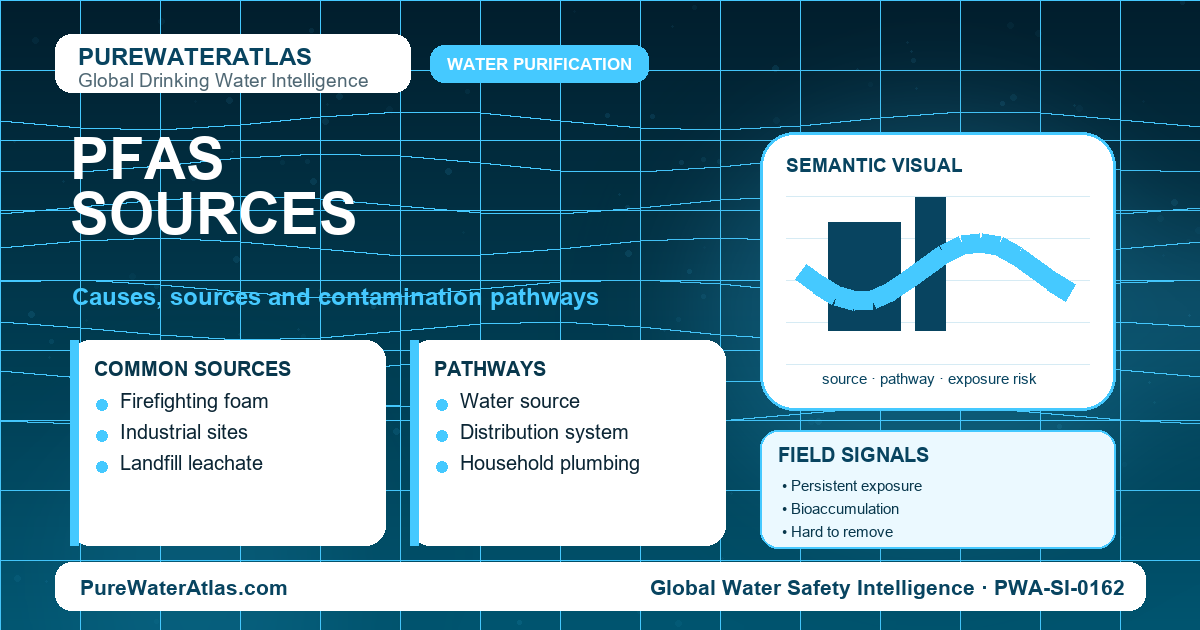
- Military or firefighting training sites associated with PFAS contamination
These conditions represent major household water filtration systems common sources of concern because they shape both the type of contamination and the treatment system required.
Household Storage and Premise Plumbing Conditions
Not all water problems begin outside the property. Water heaters, storage tanks, infrequently used pipes, refrigerator dispensers, and faucet aerators can affect water quality. Biofilm growth, sediment accumulation, and stagnation may alter odor, taste, or microbial conditions. In some cases, the perception of contamination comes from appliance neglect rather than the incoming water itself.
This is why household water filtration systems household exposure includes more than drinking alone. People are exposed to water through cooking, beverages, ice, infant formula preparation, and in some cases inhalation of volatile chemicals during showering or cleaning.
Health and Safety Implications
The health significance of household water contamination depends on the specific contaminant, its concentration, the duration of exposure, and the vulnerability of the person exposed. Some water quality issues are mainly aesthetic, such as unpleasant taste, color, or odor. Others carry meaningful health risks.
Chemical Contaminants
Chemical exposure through drinking water may occur over months or years. For example:
- Lead is associated with neurological and developmental harm, especially in infants and children.
- Arsenic is linked to increased long-term cancer risk and other systemic effects.
- Nitrates are especially concerning for infants because of the risk of methemoglobinemia.
- Volatile organic compounds may affect the liver, kidneys, nervous system, or cancer risk depending on the compound.
- PFAS are being studied for associations with immune, developmental, hormonal, and metabolic effects.
In these cases, a properly selected filtration system can reduce exposure, but only when matched to the contaminant profile.
Microbial Hazards
Pathogens in water can cause gastrointestinal illness, fever, and more severe disease in vulnerable individuals. Children, older adults, pregnant people, and those with weakened immune systems face greater risk. Unlike some chemical exposures, microbial contamination can have immediate effects, making prompt detection and corrective action essential.
Indirect and Practical Safety Concerns
Water quality also affects household safety indirectly. Hard water can shorten appliance life. Iron and sediment can clog fixtures and reduce water heater efficiency. Sulfur odors can create nuisance concerns and signal broader water chemistry issues. Slippery assumptions about “clear-looking water” can delay action when contaminants are invisible, tasteless, and odorless.
For a deeper discussion of impacts, see /household-water-filtration-systems-health-effects-and-risks/ and broader contamination resources at /category/water-contamination/.
Who Is at Higher Risk?
Several household water filtration systems risk factors increase the likelihood that contamination will affect health:
- Living in an older home with legacy plumbing materials
- Using private well water without routine testing
- Residing near agriculture, industry, mining, or landfills
- Experiencing flooding, storm damage, or drought-related water quality shifts
- Having infants, pregnant people, elderly residents, or immunocompromised household members
- Relying heavily on tap water for drinking, formula, and cooking
These risk factors help determine whether simple filtration is enough or whether a more comprehensive treatment strategy is needed.
Testing and Detection
Choosing a filtration system without testing is often guesswork. Effective household water filtration systems detection begins with understanding what is actually in the water. Different contaminants require different testing methods, and no single test covers every possibility.
Consumer Clues and Warning Signs
Some water issues are first noticed through household observations:
- Metallic taste
- Rotten egg odor
- Blue-green staining or reddish-brown deposits
- Cloudiness or visible sediment
- Scale buildup on kettles and fixtures
- Recurring digestive illness suspected to be water-related
These clues are useful but not definitive. Many hazardous contaminants, including lead, arsenic, nitrates, and some organic chemicals, may be present without obvious sensory signs.
Laboratory Testing
The most reliable approach is certified laboratory analysis. Testing should be based on the water source and local risk profile:
- Public water users may begin by reviewing the utility consumer confidence report and then testing for contaminants of household concern, especially lead at the tap.
- Private well users should conduct routine testing for coliform bacteria, nitrates, pH, and any regional contaminants such as arsenic, fluoride, iron, manganese, or radionuclides.
Testing may include:
- General mineral and chemistry panels
- Heavy metal testing
- Microbiological analysis
- VOC and pesticide panels
- PFAS testing where appropriate
Further guidance is available at /household-water-filtration-systems-testing-and-detection-methods/.
When to Test
Testing is especially important:
- When moving into a new home
- Before installing an expensive treatment system
- After flooding, plumbing repairs, or well work
- When a household member has a relevant health concern
- When there is a noticeable change in taste, odor, or color
- At regular intervals for private wells
Detection should not end once a filter is installed. Follow-up testing can confirm that the system is working and that cartridge changes or membrane maintenance are occurring on schedule.
Interpreting Results
Water test reports can be confusing. Results are typically listed in milligrams per liter, micrograms per liter, colony counts, or similar units. Interpretation requires comparing measured levels with applicable health guidelines, action levels, or treatment goals. Homeowners should also distinguish between source contamination and tap contamination. For example, a lead problem may be absent at the utility source but present after water passes through household plumbing.
In practical terms, household water filtration systems detection is not just about finding contaminants. It is about identifying the exact treatment target so that the chosen system is technically appropriate.
Prevention and Treatment
Household water filtration systems prevention includes both reducing contamination risks and selecting the right treatment strategy. Prevention starts before the filter is purchased.
Source Control and Exposure Reduction
Whenever possible, households should reduce contamination at the source rather than relying only on end-stage treatment. Examples include:
- Maintaining private wells, caps, and sanitary seals
- Keeping hazardous chemicals away from wells and drainage areas
- Inspecting septic systems regularly
- Flushing stagnant water from taps in older homes
- Replacing lead-containing plumbing components
- Cleaning aerators, refrigerator lines, and storage units
These steps can significantly reduce household water filtration systems household exposure before water even enters a treatment unit.
Matching Treatment to the Problem
No single device solves every water issue. Appropriate treatment depends on contaminant type:
- Activated carbon: useful for chlorine, taste, odor, and some organic chemicals
- Reverse osmosis: useful for dissolved solids, nitrates, arsenic, and many metals when properly configured
- Water softeners: useful for hardness, but not a substitute for contaminant-specific treatment
- UV disinfection: useful for microorganisms, but requires clear water and proper maintenance
- Sediment filters: useful as prefilters for particulates and to protect downstream equipment
- Specialty media filters: designed for contaminants such as iron, manganese, fluoride, arsenic, or PFAS
In some homes, a combination system is necessary. For example, well water with sediment, bacteria, and arsenic may require staged treatment rather than one standalone unit.
Installation and Maintenance
Even the best equipment fails if it is installed incorrectly or neglected. Common maintenance issues include:
- Expired filter cartridges that no longer remove contaminants effectively
- Improper flow rates that reduce treatment performance
- Fouled membranes in reverse osmosis systems
- Burned-out UV lamps or dirty quartz sleeves
- Bypass settings left open on softeners or whole-house systems
Consumers should look for systems certified to recognized performance standards for the specific contaminant of concern. Maintenance logs, scheduled cartridge changes, and periodic retesting are all part of responsible filtration use.
Household Habits That Support Prevention
- Use cold water for drinking and cooking, especially in homes with older plumbing
- Flush taps after periods of stagnation
- Replace filters according to manufacturer instructions
- Store treated water in clean containers if needed
- Pay attention to boil water notices and local advisories
- Retest after any major change in source water or plumbing
Prevention is most effective when it combines testing, treatment, maintenance, and informed water use behavior.
Common Misconceptions
Water filtration is an area where marketing claims and consumer assumptions often outpace science. Several misconceptions can lead to poor decisions.
“If water looks clear, it is safe.”
This is false. Many serious contaminants are invisible and have no taste or smell. Lead, nitrates, arsenic, and some industrial chemicals may be undetectable without laboratory testing.
“Any filter removes all contaminants.”
Different technologies remove different contaminants. A pitcher filter is not equivalent to reverse osmosis, and a softener does not disinfect water. Treatment must be matched to the problem.
“Municipal water never needs extra treatment.”
Public water is often safe and highly regulated, but local issues such as old plumbing, aesthetic concerns, residual chlorine taste, or specific household vulnerabilities may justify additional treatment. The need depends on conditions, not assumptions.
“Well water is natural, so it is automatically pure.”
Groundwater can contain naturally occurring arsenic, radionuclides, sulfur, iron, manganese, and other substances. Wells are also vulnerable to microbial contamination and nitrate intrusion.
“Maintenance is optional once the system is installed.”
In reality, maintenance is essential. A neglected filter can lose effectiveness and, in some cases, become a site for microbial growth or flow restriction.
“Taste improvement means health protection.”
Better-tasting water may encourage hydration, but improved taste does not guarantee removal of health-relevant contaminants. Sensory improvement and risk reduction are not always the same thing.
Regulations and Standards
Water quality and filtration systems operate within a framework of public health regulations and product performance standards. Understanding this framework helps households make informed decisions.
Public Water Standards
In many countries, public water systems must comply with legally enforceable limits or treatment requirements for a range of contaminants. Utilities monitor source water, treatment performance, and distribution quality. Consumers often receive annual reports summarizing detected contaminants and compliance status. However, these reports do not always capture the specific condition of water at the individual household tap, especially where plumbing-related contamination is involved.
Private Well Responsibility
Private wells are typically the homeowner’s responsibility. This means the household must arrange testing, interpretation, and treatment. There is often no routine government testing of private wells, which makes personal vigilance especially important.
Filter Certification
When buying a filtration unit, households should look for certification from reputable third-party organizations showing that the system has been tested for the specific contaminants it claims to reduce. Certification is more meaningful than vague advertising language such as “premium purification” or “advanced clean water technology.”
Key considerations include:
- Whether the system is certified for the target contaminant
- The capacity rating before replacement is required
- Required operating conditions such as pressure and flow
- Any pretreatment requirements
- Maintenance and monitoring expectations
Why Standards Matter
Regulations and standards provide a baseline, but they do not remove the need for household awareness. A legal limit is not the same as zero risk, and regulatory compliance does not address every local plumbing issue or all emerging contaminants equally. Households should use standards as a guide while still considering their own water source, vulnerability, and exposure patterns.
Conclusion
Understanding household water filtration systems causes and sources is the key to making good decisions about residential water safety. Filtration systems exist because water quality can be influenced by source water contamination, well conditions, agricultural and industrial activity, aging pipes, household plumbing, and microbiological hazards. These are the true drivers behind the adoption of household treatment technologies.
The most effective response begins with identifying household water filtration systems common sources of contamination and evaluating household water filtration systems risk factors such as private well use, older plumbing, nearby land use, or vulnerable residents. From there, reliable household water filtration systems detection through testing helps determine whether treatment is necessary and what type will work best. Proper household water filtration systems prevention includes source protection, plumbing maintenance, system certification, routine cartridge changes, and periodic retesting.
Most importantly, households should remember that filtration is not a one-size-fits-all solution. It is a targeted tool for reducing household water filtration systems household exposure to specific contaminants. When selected carefully and maintained correctly, these systems can improve water quality, support long-term health, and provide greater confidence in everyday water use.
Read the full guide: Water Purification Guide
Explore more in this category: Water Purification Articles