Introduction
Clean drinking water is one of the most important foundations of a healthy home, yet many homeowners assume that clear, good-tasting water is automatically safe. In reality, water quality can vary significantly depending on the source, the age and condition of plumbing, local environmental factors, and the type of filtration equipment installed. This is why household water filtration systems testing is such an important part of maintaining reliable water quality. A filter may be marketed to reduce certain contaminants, but only proper testing can confirm whether it is performing as expected in real household conditions.
Water filtration systems are used in homes for many reasons. Some are designed to improve taste and odor, while others target specific contaminants such as lead, chlorine, sediment, pesticides, volatile organic compounds, hardness minerals, nitrates, or microbial hazards. Because no single system removes every possible contaminant, understanding what is in the water before and after filtration is essential. Testing helps homeowners choose the right technology, evaluate ongoing performance, and determine when a filter cartridge, membrane, or treatment stage needs replacement.
There are several ways to assess water quality, ranging from simple home test strips to comprehensive laboratory analysis. Household water filtration systems home testing can provide quick screening information for common parameters, while household water filtration systems lab analysis offers more precise and detailed data for regulated and emerging contaminants. Choosing between these approaches depends on the water source, the contaminants of concern, and the level of confidence required.
This article explains how household water filtration systems are evaluated, what contaminants may be present, which testing and detection methods are commonly used, and how to interpret findings responsibly. If you are exploring broader water quality topics, resources in water purification and drinking water safety can help place testing into a wider context.
What It Is
Household water filtration systems are devices or treatment assemblies installed at the point of entry or point of use to improve water quality. Point-of-entry systems treat water as it enters the home, while point-of-use systems treat water at a specific faucet, refrigerator line, or appliance. The term includes a wide range of technologies, such as activated carbon filters, sediment filters, reverse osmosis units, ion exchange softeners, ultraviolet disinfection systems, distillation units, and combination systems that use multiple treatment stages.
At its core, household water filtration systems testing refers to the process of evaluating whether these systems are effectively reducing or removing targeted contaminants. Testing can focus on raw source water, treated water, or both. Ideally, it compares influent water quality with effluent water quality under realistic household operating conditions. This allows homeowners, inspectors, and water treatment professionals to verify actual performance rather than relying only on product claims.
Different systems address different water quality problems:
- Activated carbon is often used for chlorine, taste, odor, and some organic chemicals.
- Reverse osmosis can reduce dissolved solids, certain heavy metals, nitrates, and a broad range of contaminants.
- Ion exchange is commonly used for hardness reduction and water softening.
- Ultraviolet systems are intended to inactivate microorganisms but do not remove particles or chemicals.
- Sediment filters remove suspended solids such as sand, rust, and silt.
Testing matters because treatment performance is affected by water chemistry, pressure, flow rate, temperature, filter age, maintenance practices, and installation quality. A filter that works well in one home may perform differently in another. For that reason, many homeowners begin with a broader understanding of filtration options through guides such as this complete guide to household water filtration systems before moving on to testing and verification.
Main Causes or Sources
Testing is driven by the possibility that contaminants may enter household water from multiple sources. Understanding these sources helps determine what should be tested and how frequently. Some contamination originates outside the home, while some arises within the home’s own plumbing and storage systems.
Source Water Contamination
Municipal water and private well water face different risks. Municipal systems typically treat and monitor water under regulated standards, but contaminants may still be present at low levels or enter the system through infrastructure issues. Private wells are not subject to the same routine public oversight and therefore require direct homeowner responsibility for monitoring.
- Groundwater sources may contain arsenic, nitrates, iron, manganese, sulfur compounds, radon, or naturally occurring minerals.
- Surface water sources are more vulnerable to microbial contamination, agricultural runoff, industrial discharge, and seasonal changes in sediment and organic matter.
- Local environmental conditions such as mining, farming, road salt use, landfills, and manufacturing can influence contaminant profiles.
Plumbing and Household Infrastructure
Even if the incoming water meets quality standards, contamination can develop after water enters the home. Lead can leach from old service lines, solder, and plumbing components. Copper may also leach from pipes, especially in corrosive water. Biofilm growth can occur in plumbing dead-ends, faucet aerators, or neglected filters. Water heaters and storage tanks may accumulate sediment or promote microbial growth under certain conditions.
Filtration System Limitations
Filtration systems themselves can become a source of reduced water quality if poorly maintained. An expired filter cartridge may lose removal efficiency or become clogged. A reverse osmosis membrane may foul over time. A UV system with a weakened lamp may no longer provide dependable microbial treatment. Incorrect installation, bypass leaks, channeling within media beds, or inadequate prefiltration can also reduce treatment effectiveness.
To understand where specific contamination risks come from, homeowners often benefit from source-based information such as common causes and sources related to household water filtration systems. This context improves the quality of testing plans and makes interpretation of results more meaningful.
Health and Safety Implications
The importance of testing becomes clear when considering the health and safety effects of contaminated water. Not all contaminants produce an immediate taste, odor, or visible change, and some of the most significant risks are not detectable by human senses alone. Testing is therefore a practical safety tool, not just a technical exercise.
Chemical Contaminants
Lead is one of the most serious household concerns because prolonged exposure can affect neurological development in children, contribute to cardiovascular problems in adults, and accumulate over time. Nitrates are especially dangerous for infants because they can interfere with oxygen transport in the blood. Arsenic exposure over long periods is associated with increased cancer risk and other chronic health effects. Volatile organic compounds and certain industrial chemicals may cause both short-term and long-term adverse effects depending on the compound and concentration.
Microbial Hazards
Bacteria, viruses, and parasites can cause gastrointestinal illness and, in vulnerable individuals, more serious disease. Homes that rely on private wells, homes affected by flooding, and systems with poor maintenance can be especially susceptible. A filtration system designed only for sediment or taste improvement may not protect against microbial contamination unless it includes appropriate disinfection or certified microbiological treatment.
Aesthetic Issues That Signal Larger Problems
While taste, odor, staining, and cloudiness are often considered aesthetic concerns, they may indicate operational problems or source contamination. Rotten egg odor may suggest sulfur compounds or bacterial activity. Blue-green stains can point to copper corrosion. Rust-colored water may indicate iron, corrosion products, or sediment disturbances. These conditions may not always represent major health hazards, but they can help identify where further testing is warranted.
For a deeper look at the potential consequences of poor water quality, homeowners can review health effects and risks associated with household water filtration systems. Understanding health implications also helps prioritize which contaminants should be included in a testing schedule.
Testing and Detection
This is the most practical section for homeowners and professionals because it covers how filtration performance is actually measured. Good testing combines clear goals, proper sampling, appropriate methods, and careful interpretation. Without all four, results may be misleading.
What Should Be Tested
The right test panel depends on the water source and the type of treatment system installed. A homeowner with chlorinated municipal water may focus on lead, chlorine, byproducts, and copper, while a private well owner may need to test for bacteria, nitrates, arsenic, hardness, iron, manganese, pH, and regional contaminants.
Common parameters include:
- pH
- Total dissolved solids
- Hardness
- Chlorine or chloramine
- Lead and copper
- Arsenic
- Nitrates and nitrites
- Iron and manganese
- Total coliform and E. coli
- Turbidity
- Volatile organic compounds
- Pesticides or herbicides where relevant
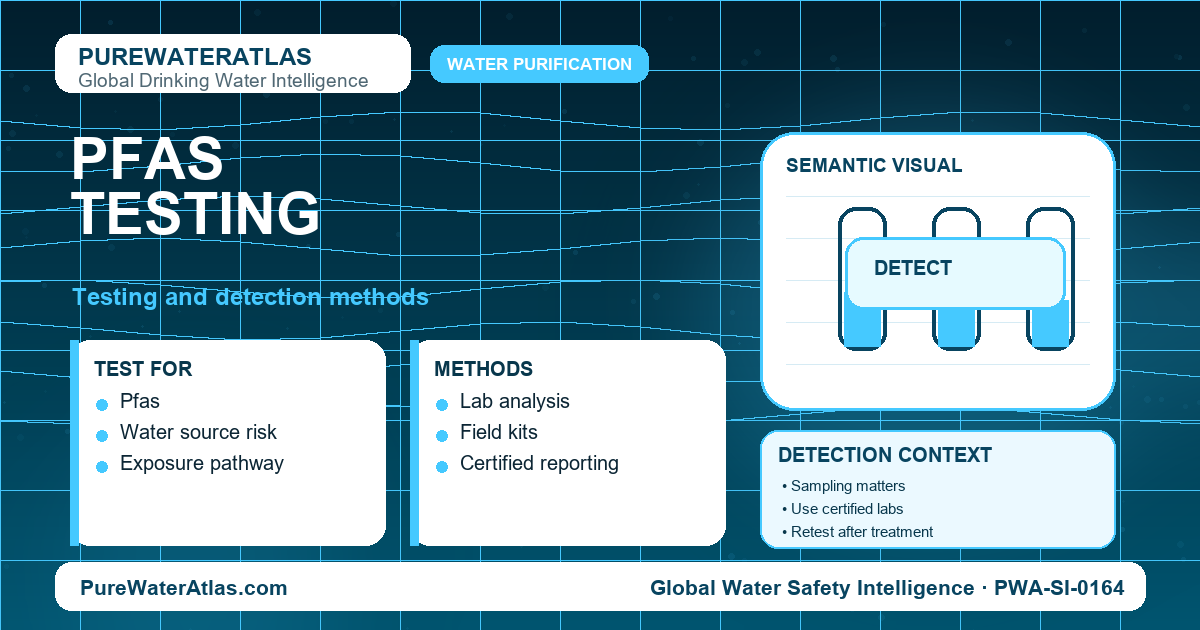
- PFAS or other emerging contaminants where local concern exists
Household Water Filtration Systems Home Testing
Household water filtration systems home testing usually involves test strips, reagent kits, handheld meters, or simple comparator methods. These options are attractive because they are affordable, fast, and accessible. They are especially useful for routine screening or monitoring operational changes over time.
Home testing is commonly used for:
- Chlorine residual
- pH
- Hardness
- Iron
- Nitrate screening
- Total dissolved solids using conductivity meters
The advantages of home testing include convenience, immediate feedback, and the ability to check water before and after filter replacement. However, homeowners should understand the limits of these methods. Many kits provide only approximate concentration ranges. User technique can affect outcomes, especially with timing, lighting, color interpretation, contamination of reagents, or improper storage of supplies. Home test kits are helpful screening tools, but they rarely replace a certified laboratory when precision is necessary.
Household Water Filtration Systems Lab Analysis
Household water filtration systems lab analysis is the preferred method when accurate quantification is required, when health-sensitive contaminants are involved, or when a result may affect treatment decisions, property transactions, or regulatory compliance. Certified laboratories use validated analytical methods and quality control procedures to improve confidence in the data.
Laboratory analysis is especially important for:
- Lead and copper
- Arsenic
- Nitrates at low concentrations
- Bacterial contamination
- Volatile organic compounds
- Pesticides
- PFAS
- Comprehensive water quality profiling
Lab reports typically include sample identification, collection date, analytical method, reporting limits, units, and measured results. Many also note whether the results exceed a regulatory standard, health advisory, or laboratory reference level. These reports can be highly informative, but they should be interpreted in the context of sampling location, system type, and filter condition at the time of collection.
Household Water Filtration Systems Sampling Methods
Household water filtration systems sampling methods are critical because poor sampling can invalidate even the most sophisticated laboratory analysis. Sampling should be planned around the question being asked. For example, are you trying to characterize incoming water, treated water, worst-case water after stagnation, or water at a specific point of use?
Important sampling approaches include:
- Raw water sampling: taken before filtration to identify what the system must remove.
- Treated water sampling: taken after filtration to evaluate system performance.
- Paired sampling: raw and treated samples collected close together in time for direct comparison.
- First-draw sampling: water collected after standing stagnant for several hours, often used for lead assessment.
- Flushed sampling: water collected after running the tap for a set time, often used to evaluate source water quality beyond premise plumbing effects.
Best practices for sampling include using clean containers, following laboratory instructions exactly, avoiding contamination from hands or faucet surfaces, recording the collection location and time, and noting any recent filter replacement, plumbing repair, or disinfection event. For microbiological samples, sterile technique and proper preservation are especially important. For metals or organics, some laboratories require specific preservatives or temperature control during shipment.
Frequency of Testing
Testing frequency depends on risk level, water source, and treatment type. A reasonable general approach might include:
- Annual testing for private wells, with bacteria and nitrates often prioritized.
- Routine post-installation testing after a new filter is installed.
- Periodic follow-up testing based on manufacturer recommendations or local risk factors.
- Additional testing after flooding, plumbing work, taste or odor changes, or known contamination events.
- Verification testing when filter cartridges or membranes are nearing end of life.
Household Water Filtration Systems Accuracy
Household water filtration systems accuracy involves more than instrument precision. It includes the accuracy of the analytical method, the representativeness of the sample, the consistency of collection procedures, and the stability of the contaminant in the sample before analysis. A highly accurate method can still produce an unhelpful result if the sample was collected incorrectly or at an unrepresentative time.
Several factors influence accuracy:
- Contaminant concentration can fluctuate throughout the day.
- Water use patterns affect stagnation and flow conditions.
- Filter performance may decline gradually, not suddenly.
- Test strips and field kits may have broad detection ranges.
- Improper sample preservation can alter results.
- Cross-contamination during collection can produce false positives.
For this reason, interpreting results often benefits from repeated measurements over time rather than relying on a single data point. Trends can reveal declining performance, seasonal changes, or source instability that one sample would miss.
Interpreting Household Water Filtration Systems Test Results
Household water filtration systems test results should be reviewed with several questions in mind:
- What was the sampling location?
- Was the sample taken before or after filtration?
- Was the water first-draw or flushed?
- What is the health-based standard or reference level for that contaminant?
- What is the filter certified to remove?
- How old was the filter media at the time of testing?
A result showing some contaminant reduction may still be unsatisfactory if levels remain above recommended thresholds. Conversely, a low contaminant level after treatment does not necessarily prove that all possible hazards are addressed. Results should always be tied back to the treatment objective. If a system is intended to reduce lead, lead data matter most. If it is intended to disinfect microbiological contaminants, microbial testing and maintenance records become essential.
In difficult cases, professional interpretation from a water treatment specialist, public health department, or certified laboratory can help clarify whether a system is functioning properly or whether treatment changes are necessary.
Prevention and Treatment
Testing is valuable, but it is only one part of a broader prevention and treatment strategy. The goal is to reduce risk consistently over time, not just pass an occasional test.
Choosing the Right Treatment Technology
Effective prevention begins by matching the treatment method to the contaminant. Carbon filters are useful for chlorine and many taste and odor concerns, but they are not universal solutions. Reverse osmosis may be more appropriate for dissolved contaminants such as nitrates, arsenic, and some metals. UV disinfection is useful for microbial control when the water is already sufficiently clear. Water softeners address hardness but are not intended to remove many hazardous chemicals.
Homeowners comparing systems may also find useful background information in resources on water treatment systems.
Maintenance and Replacement
Many filtration failures are maintenance failures. Cartridges, membranes, UV lamps, and prefilters all have service intervals. Ignoring these intervals can reduce flow, allow breakthrough of contaminants, or create conditions that support bacterial growth. Manufacturers typically specify replacement schedules based on gallons treated, time in service, or both.
- Replace filters on schedule, not only when taste changes.
- Sanitize systems when required.
- Inspect seals, housings, and tubing for leaks or bypass conditions.
- Monitor pressure and flow where appropriate.
- Keep records of installation, maintenance, and test dates.
Preventing Contamination at the Source
Some water quality issues can be reduced before they reach the filter. Well owners can protect the wellhead, maintain proper setbacks from contamination sources, and inspect caps and casings. Homeowners can reduce corrosion risks by addressing aggressive water chemistry and replacing lead-containing plumbing components. During emergencies or local advisories, following boil water notices and public health guidance remains essential even when a household treatment system is present.
Routine testing plus preventive maintenance is one of the most reliable ways to ensure long-term system performance.
Common Misconceptions
Misunderstandings about household filtration are widespread and can lead to false confidence or unnecessary expense. Correcting these misconceptions is an important part of water safety education.
If Water Looks Clear, It Must Be Safe
This is one of the most common errors. Many harmful contaminants are invisible and tasteless at concentrations that still matter for health. Clear water can still contain lead, arsenic, nitrates, bacteria, or organic chemicals.
All Filters Remove the Same Contaminants
Filter labels and marketing can create the impression that all systems provide broad protection. In reality, treatment performance varies widely. One system may reduce chlorine and improve taste, while another is designed for lead or dissolved salts. Certification and testing data should always be reviewed against the contaminant of concern.
Home Test Kits Are Always Enough
Home testing is useful, but screening is not the same as comprehensive evaluation. When the concern involves health-sensitive contaminants, legal documentation, or verification of system performance, laboratory analysis is usually the better option.
A New Filter Guarantees Safe Water
Even a newly installed filter may not solve the problem if it is the wrong technology, installed incorrectly, or overwhelmed by unexpected contamination levels. Testing before and after installation is the best way to verify suitability.
Municipal Water Never Needs Household Testing
Public water systems are monitored, but household plumbing can still introduce contaminants such as lead or copper. Home-level testing is especially relevant in older buildings, after plumbing work, or when water quality changes suddenly.
Regulations and Standards
Water testing and treatment operate within a framework of standards, certifications, and public health benchmarks. Homeowners do not need to become regulatory experts, but understanding the basics improves decision-making.
Public Water Standards
In many regions, municipal drinking water is regulated under legally enforceable maximum contaminant levels or treatment requirements. These standards are intended to protect public health at the system level, but they do not always account for contamination introduced within private plumbing.
Private Wells
Private well owners are usually responsible for their own water quality monitoring and treatment decisions. There may be local recommendations or real estate transaction requirements, but routine testing often depends on homeowner initiative.
Product Certification
Filtration systems are often certified by independent organizations against specific performance standards. These certifications may address reduction claims for lead, cysts, chlorine, volatile organic compounds, or other contaminants. Certification does not eliminate the need for testing in actual household conditions, but it is an important sign that a product has been evaluated using recognized protocols.
Laboratory Quality Standards
When ordering laboratory testing, it is wise to use a certified or accredited laboratory. Such laboratories follow quality assurance practices related to calibration, detection limits, control samples, and documented methods. This improves confidence in the results and supports better decision-making.
For homeowners, the practical takeaway is simple: standards and certifications provide a starting point, while in-home testing confirms real-world performance.
Conclusion
Reliable drinking water at home depends on more than installing a filter and assuming it will always work. Household water filtration systems testing provides the evidence needed to confirm whether a treatment system is addressing the contaminants that matter most. By combining source awareness, appropriate system selection, proper maintenance, and well-planned testing, homeowners can make informed decisions that protect both health and household plumbing.
Whether using household water filtration systems home testing for routine screening or household water filtration systems lab analysis for precise measurement, the value of testing lies in asking the right questions and using sound household water filtration systems sampling methods. Good data improve household water filtration systems accuracy and make household water filtration systems test results far more useful. In the end, clean water confidence comes not from assumptions, but from verification.
Homeowners who continue learning through resources on water purification, water treatment systems, and drinking water safety will be better prepared to maintain safe, effective, and dependable water treatment at home.
Read the full guide: Water Purification Guide
Explore more in this category: Water Purification Articles