Introduction
Water from the tap is often assumed to be safe, but the reality is more complex. Public water systems, private wells, household plumbing, nearby land use, seasonal weather, and even the age of a home can all affect the quality of the water used for drinking, cooking, bathing, and cleaning. Understanding home water testing for safety causes and sources is an essential part of protecting household health. Testing does not simply confirm whether water is “good” or “bad.” It helps identify specific contaminants, their likely origins, and the actions needed to reduce exposure.
Many water quality issues are invisible. Water may look clear, smell normal, and still contain bacteria, lead, nitrates, pesticides, or other harmful substances. In other cases, obvious warning signs such as staining, unusual taste, cloudiness, or rotten-egg odor may indicate contamination or plumbing-related problems. Because risks vary by geography, water source, and home infrastructure, there is no single test that fits every situation. A thoughtful testing plan should consider both broad screening and targeted analysis based on local conditions and household vulnerabilities.
For homeowners, renters, landlords, and caregivers, learning about water contamination is a practical health measure. This article explains what home water testing involves, the most important contamination sources, major health concerns, testing options, prevention strategies, common myths, and the standards that guide interpretation of results. Readers who want a broader overview can also explore this complete guide to home water testing and related resources in the drinking water safety category.
What It Is
Home water testing is the process of evaluating residential water for contaminants and quality indicators that may affect safety, taste, odor, appearance, or plumbing performance. It can involve simple at-home test strips, mail-in laboratory kits, or professional sampling and analysis by certified laboratories. The purpose is to detect contaminants that could pose health risks or signal problems with the water source or household distribution system.
Testing can apply to water from several sources:
- Municipal or community water systems: Water supplied by a utility and treated before distribution.
- Private wells: Groundwater sources maintained by property owners and not usually regulated like public systems.
- Rainwater collection systems: Water captured from roofs or other surfaces, often requiring treatment before household use.
- Spring water or surface water supplies: Less common but potentially vulnerable to runoff, microbial contamination, and environmental changes.
It is important to understand that water quality has two broad dimensions: health-related contaminants and aesthetic or operational issues. Health-related contaminants include bacteria, viruses, lead, arsenic, nitrates, and industrial chemicals. Aesthetic issues include hardness, iron, manganese, sulfur odors, sediment, and discoloration. Although aesthetic issues are not always dangerous, they may indicate underlying contamination pathways or plumbing problems that deserve attention.
Home water testing for safety detection often focuses on a mix of microbial, chemical, and physical indicators. Common test targets include:
- Total coliform bacteria and E. coli
- Lead and copper
- Nitrate and nitrite
- Arsenic
- pH, hardness, and total dissolved solids
- Iron and manganese
- Chlorine or chloramine residual
- Volatile organic compounds
- Pesticides or herbicides in high-risk areas
- Radon, uranium, or other naturally occurring substances in some regions
Testing may be routine, seasonal, or event-driven. For example, a household may test annually as a preventive measure, after flooding or plumbing repairs, or when a baby, elderly person, or immunocompromised resident lives in the home. Water testing is especially important when using a private well because the homeowner is usually responsible for monitoring quality.
Anyone studying home water testing for safety household exposure should remember that exposure does not happen only by drinking water. Contaminants can also be encountered through:
- Cooking and preparing infant formula
- Making beverages such as coffee, tea, and ice
- Bathing and showering
- Inhalation of aerosols or vapors from hot water
- Skin contact during washing, cleaning, or laundry
For technical background on contamination pathways, useful context can also be found in the water contamination category and the water microbiology category.
Main Causes or Sources
The causes of household water contamination can be grouped into natural sources, human activities, infrastructure problems, and treatment failures. Understanding home water testing for safety common sources is essential because test selection should match likely risks rather than rely on guesswork.
Natural Geological Sources
Some contaminants enter water naturally as it moves through soil and rock. Groundwater may dissolve minerals and metals from surrounding formations. In some areas, these naturally occurring substances are the main reason water testing is needed.
- Arsenic: Naturally present in certain bedrock and aquifers; can enter private wells without any visible warning signs.
- Uranium and radon: Found in some geologic formations and may affect well water.
- Iron and manganese: Common in groundwater and often associated with staining or metallic taste.
- Hardness minerals: Calcium and magnesium can cause scale buildup and reduced soap performance.
- Fluoride: Naturally occurring in some regions at levels that may be beneficial or excessive depending on concentration.
Microbial Contamination
Bacteria, viruses, and parasites can enter water supplies through fecal contamination from human or animal waste. Microbial contamination is especially important for private wells and systems affected by runoff or structural defects.
- Failing septic systems
- Livestock operations and manure runoff
- Wildlife near springs, wells, or surface water
- Flooding that carries sewage or contaminated sediment
- Poorly sealed well caps or damaged casings
- Cross-connections or backflow in plumbing systems
Total coliform bacteria are often used as an indicator that contamination pathways exist. E. coli more specifically suggests recent fecal contamination and requires prompt action.
Agricultural Sources
Farming can affect both groundwater and surface water. Nutrients, pesticides, herbicides, and microbes may move into water through leaching, runoff, or infiltration. Homes near agricultural areas face increased home water testing for safety risk factors for several contaminants.
- Nitrates: Commonly associated with fertilizer use and manure; especially dangerous for infants.
- Pesticides and herbicides: May contaminate groundwater or surface water in agricultural regions.
- Sediment and turbidity: Increased runoff can transport microbes and chemicals.
- Animal waste organisms: Can introduce bacterial and parasitic contamination.
Industrial and Commercial Sources
Manufacturing, mining, fuel storage, dry cleaning, and waste disposal can introduce hazardous chemicals into local water resources. Even homes connected to treated public water may experience concerns if source water is impacted or if contamination enters through local distribution problems.
- Petroleum products from leaking underground tanks
- Solvents such as trichloroethylene or perchloroethylene
- Heavy metals from industrial discharge or historical pollution
- PFAS and other persistent industrial chemicals
- Byproducts related to mining activities
Household Plumbing and Building Materials
Sometimes contamination is not in the source water but inside the home. Household plumbing can significantly alter water quality between the main supply and the tap.
- Lead: Often comes from service lines, solder, brass fixtures, or old plumbing components.
- Copper: Can leach from pipes, especially when water is acidic or corrosive.
- Nickel, zinc, and other metals: May come from fixtures and fittings.
- Biofilm growth: Plumbing interiors can support microbial growth under certain conditions.
- Hot water heater issues: Sediment, bacteria, and metals may accumulate in poorly maintained systems.
Corrosion is a major factor because it allows metals to dissolve into drinking water. Water chemistry, pipe age, stagnation time, and treatment changes can all influence corrosion risk.
Treatment and Distribution System Problems
Even when water leaves a treatment plant in compliance with standards, problems may occur during storage or distribution. These include:
- Water main breaks
- Pressure loss events
- Inadequate disinfectant residual
- Storage tank contamination
- Aging infrastructure
- Seasonal source water changes
Weather, Seasonal, and Emergency Events
Short-term contamination events often follow environmental disruptions. Heavy rain, drought, wildfire, freezing, and flooding can all affect water quality.
- Flooding: May introduce sewage, chemicals, and microbes into wells and surface water.
- Drought: Can concentrate contaminants and change aquifer chemistry.
- Wildfires: May alter source water and damage infrastructure, leading to volatile organic contamination and sediment problems.
- Storm damage: Can compromise well heads, distribution systems, and treatment equipment.
Health and Safety Implications
The health effects of contaminated water depend on the contaminant, concentration, duration of exposure, and the vulnerability of the exposed person. A single unsafe contaminant may be enough to create serious risk, while chronic low-level exposure can also have long-term consequences. Understanding home water testing for safety household exposure means considering both immediate illness and cumulative health burdens.
Microbial Risks
Bacteria, viruses, and parasites are often associated with acute gastrointestinal illness. Symptoms may include diarrhea, vomiting, stomach cramps, nausea, and fever. In severe cases, dehydration and hospitalization may occur. Microbial contamination can be especially dangerous for:
- Infants and young children
- Older adults
- Pregnant people
- People with weakened immune systems
Some waterborne pathogens can also cause long-lasting complications such as kidney injury, reactive arthritis, or serious infections in vulnerable individuals.
Lead and Other Metals
Lead exposure is a major drinking water concern because even low levels can affect health, especially in children. Lead is linked to developmental and neurological harm, learning and behavior problems, and effects on growth. In adults, exposure may contribute to high blood pressure, kidney problems, and reproductive concerns.
Copper at elevated levels can cause gastrointestinal symptoms and may be especially concerning for infants. Arsenic exposure over time is linked to skin changes, cardiovascular effects, diabetes risk, and increased risk of certain cancers. Manganese, while an essential nutrient at low levels, may become concerning at elevated concentrations, particularly for infants.
Nitrate and Nitrite
Nitrate is particularly important in homes with private wells near agricultural land or septic systems. In infants, high nitrate exposure can interfere with oxygen transport in the blood and lead to methemoglobinemia, sometimes called “blue baby syndrome.” Pregnant people and certain medically vulnerable individuals may also require extra caution.
Chemical Contaminants
Volatile organic compounds, pesticides, petroleum chemicals, industrial solvents, and PFAS can pose a range of health concerns depending on the specific substance. Potential effects may include liver and kidney damage, endocrine disruption, immune effects, reproductive harm, developmental impacts, and increased cancer risk. Because these contaminants are often odorless and colorless at harmful levels, testing is important in areas with known industrial or environmental risk.
Aesthetic Indicators and Hidden Risk
Water that smells unpleasant or leaves stains is not always dangerous, but these issues should not be dismissed. Sulfur odors may reflect nuisance bacteria or other water chemistry issues. Cloudiness can signal suspended particles or microbial concerns. Corrosive water that tastes metallic may increase metal leaching from pipes. Aesthetic changes are often useful clues in home water testing for safety causes and sources investigations.
For a deeper discussion of exposure pathways and outcomes, readers may find useful information in this resource on health effects and risks.
Testing and Detection
Effective home water testing for safety detection begins with choosing the right tests for the right reasons. Testing should reflect the water source, surrounding land use, plumbing materials, local history, household health needs, and any warning signs in the home.
When to Test
- When moving into a new home
- When buying a property with a private well
- Annually for key well water parameters
- After flooding, wildfire, drought, or major storms
- After plumbing work, well repair, or pump replacement
- When water changes taste, smell, color, or clarity
- When an infant, pregnant person, or immunocompromised resident is present
- When local contamination events are reported
Core Tests for Many Homes
Although every home is different, a practical core screening may include:
- Total coliform bacteria and E. coli
- Nitrate and nitrite
- Lead, especially in older homes
- pH and corrosivity-related indicators
- Hardness, iron, manganese, and total dissolved solids
Targeted Testing Based on Risk Factors
Home water testing for safety risk factors help determine whether additional tests are needed:
- Near farms: Nitrate, pesticides, herbicides, bacteria
- Near industrial sites or landfills: VOCs, PFAS, metals
- Older homes: Lead, copper, corrosion indicators
- Radon-prone geology: Radon and uranium
- Arsenic-prone regions: Arsenic
- After sewage or flood events: Microbial testing and broader chemical screening as advised
At-Home Tests vs. Laboratory Analysis
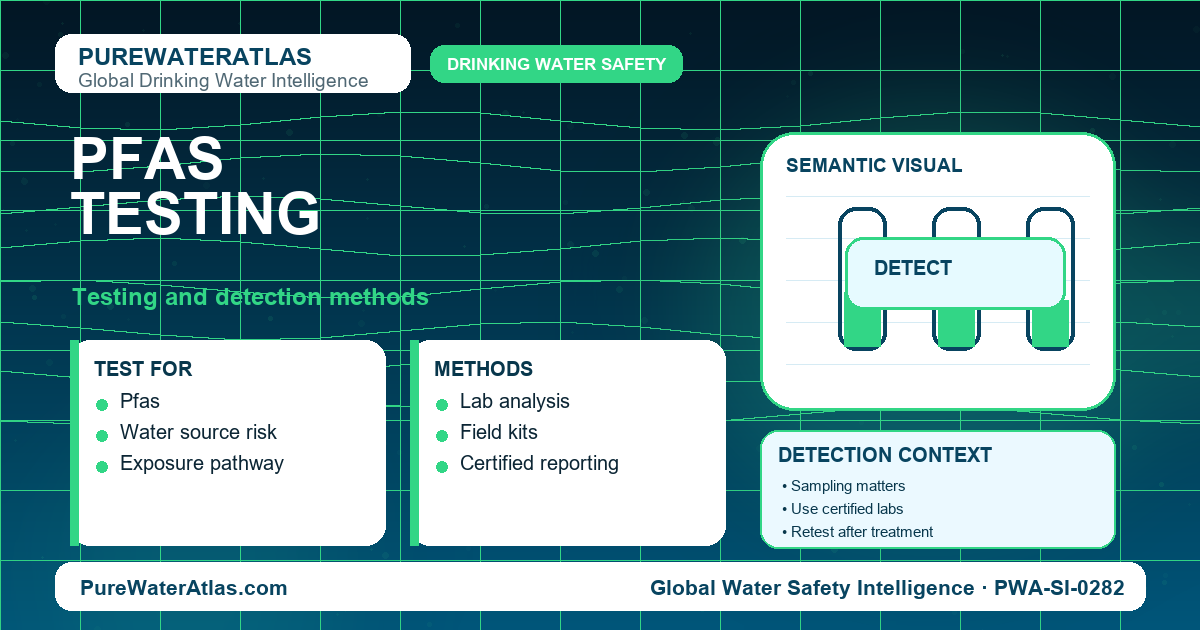
Home test strips can be useful for quick screening of pH, hardness, chlorine, nitrates, and some other indicators. They are convenient and inexpensive, but they are not always precise enough for health-critical decisions. Certified laboratory testing is preferred for contaminants such as lead, arsenic, bacteria, VOCs, PFAS, and other regulated chemicals.
When collecting samples, it is important to follow instructions carefully. Improper sample handling can cause false results. Examples include:
- Using the wrong container
- Failing to keep microbial samples cold
- Collecting after flushing when a first-draw sample is needed for lead
- Waiting too long before sending the sample to the lab
Interpreting Results
A water test result must be interpreted in context. A contaminant may be present at trace levels without exceeding a health-based standard, while another may require action even at a relatively low concentration. A result may also point to the source of the problem. For example:
- Coliform present: Possible pathway for contamination; inspect well or plumbing.
- E. coli present: Likely fecal contamination; take immediate protective steps.
- Lead elevated in first-draw sample: Plumbing-related contamination likely.
- Nitrate elevated: Possible fertilizer, manure, or septic influence.
- Low pH and elevated metals: Corrosive water affecting household plumbing.
Detailed practical guidance is available in this page on testing and detection methods.
Prevention and Treatment
Home water testing for safety prevention involves reducing contamination risks before problems become severe, while treatment focuses on correcting unsafe water once contaminants are found. The best strategy depends on whether the problem comes from the source water, the household plumbing, or both.
Source Protection
- Maintain proper distance between wells and septic systems, manure storage, and chemical storage areas.
- Inspect well caps, casing, and grading to keep runoff away.
- Seal abandoned wells that may allow contamination into aquifers.
- Limit pesticide, fertilizer, and fuel storage near water sources.
- Respond quickly after floods or major weather events.
Plumbing and Household Prevention
- Identify and replace lead service lines or lead-containing plumbing components where possible.
- Use certified plumbing fixtures designed to reduce metal leaching.
- Flush stagnant water before use when lead risk is present.
- Use cold water for drinking and cooking, since hot water may contain higher levels of metals.
- Maintain water heaters and clean aerators or faucet screens.
Water Treatment Options
No single treatment system removes all contaminants. Treatment should be selected based on verified test results.
- Activated carbon: Can reduce some chemicals, tastes, and odors; performance varies by contaminant.
- Reverse osmosis: Effective for many dissolved contaminants including some metals and nitrates.
- Ion exchange: Often used for hardness or specific ions such as nitrate in some systems.
- Oxidation and filtration: Useful for iron, manganese, and sulfur-related issues.
- Ultraviolet disinfection: Can inactivate microbes if water is adequately pretreated and the system is maintained correctly.
- Chlorination or shock chlorination: Sometimes used for microbial problems in wells, though underlying causes must still be corrected.
- Distillation: Effective for certain dissolved contaminants but slower and often more energy-intensive.
Maintenance Matters
A treatment device is only effective if it is maintained according to manufacturer instructions. Filters that are not changed on schedule may lose performance or even worsen water quality. UV lamps, membranes, softeners, and carbon cartridges all require ongoing attention. After installing treatment, retesting is important to confirm that the system is working as intended.
Emergency Actions
If a test shows severe contamination, immediate steps may include:
- Using bottled water for drinking and cooking
- Following boil-water advisories when microbial contamination is suspected and boiling is appropriate
- Avoiding boiling for contaminants like lead or nitrate, which boiling does not remove and may concentrate
- Consulting local health officials or certified water professionals
- Retesting after corrective action
Common Misconceptions
Misunderstandings about water quality can delay testing and increase exposure. Several myths are especially common.
If Water Looks Clear, It Must Be Safe
Many dangerous contaminants are invisible. Bacteria, lead, nitrates, arsenic, and many industrial chemicals may be present without affecting appearance.
Municipal Water Never Needs Home Testing
Utility water is monitored and treated, but contamination can still occur in distribution systems or household plumbing. Homes with older pipes or lead service lines may need tap-specific testing.
Private Well Water Is Natural, So It Is Automatically Pure
Natural does not always mean safe. Wells can contain arsenic, bacteria, nitrates, radon, and other contaminants from both natural and human-related sources.
Boiling Water Solves Every Problem
Boiling helps with many microbial risks, but it does not remove metals, nitrates, or most chemicals. In some cases, it can make concentrations higher as water evaporates.
One Test Is Enough Forever
Water quality changes over time. Seasonal runoff, aging plumbing, nearby construction, agricultural practices, and treatment changes can all alter results. Ongoing monitoring is often necessary.
Only Drinking Water Matters
Exposure can also occur through cooking, inhaling vapors or aerosols during showering, and skin contact. The significance depends on the contaminant, but total household use should be considered.
Regulations and Standards
Water quality standards help households understand whether a test result may pose a health concern. In many countries, public water systems must follow regulatory limits for numerous contaminants. In the United States, for example, the Environmental Protection Agency establishes drinking water standards for public systems. These include maximum contaminant levels for substances such as lead-related action levels, arsenic, nitrate, microbial indicators, and many other contaminants.
However, private wells are typically not regulated in the same way as municipal systems. This means the homeowner is responsible for arranging testing, interpreting results, and maintaining treatment systems if needed. That difference is one of the most important reasons why education on home water testing for safety causes and sources matters.
Key Standard Concepts
- Maximum Contaminant Level (MCL): A regulatory limit for certain contaminants in public drinking water.
- Action Level: A threshold that triggers treatment or corrective requirements, commonly discussed for lead and copper.
- Maximum Residual Disinfectant Level: The highest allowed level of disinfectant residual in public systems.
- Secondary Standards: Non-enforceable guidelines related to taste, odor, staining, or cosmetic concerns.
Why Standards Need Careful Interpretation
Not every household result can be understood by a simple pass-fail mindset. Some contaminants have health advisories rather than enforceable limits. Others may require repeated sampling to distinguish between a one-time event and a persistent issue. A result below a regulatory limit does not always mean zero risk, particularly for highly sensitive individuals. Conversely, some aesthetic problems can be bothersome without representing a serious health threat.
State, provincial, or local agencies may also provide region-specific guidance for private wells, especially in areas known for arsenic, uranium, nitrate, or agricultural contamination. Local health departments, extension programs, and certified laboratories are often valuable sources of interpretation support.
Conclusion
Safe water at home should never be taken for granted. Water quality is influenced by geology, land use, weather, plumbing materials, treatment performance, and household maintenance. Because many contaminants are invisible and tasteless, testing is the most reliable way to identify problems before they lead to illness or long-term exposure. A sound understanding of home water testing for safety causes and sources allows households to select relevant tests, interpret results intelligently, and choose effective prevention or treatment measures.
Whether water comes from a private well or a public utility, responsible monitoring starts with awareness of local conditions and household risk factors. Homes near farms, industrial areas, aging infrastructure, or flood-prone zones may require broader screening. Older plumbing may add lead or copper even when source water is well treated. Once a contaminant is identified, source correction, plumbing updates, and properly selected treatment systems can significantly reduce risk.
In practical terms, the best approach combines routine testing, attention to warning signs, and informed action. Households that stay proactive are better positioned to prevent contamination, reduce household exposure, and maintain long-term drinking water safety.
Read the full guide: Drinking Water Safety Guide
Explore more in this category: Drinking Water Safety Articles