Introduction
Safe drinking water is one of the most basic foundations of health, yet many households assume that clear, odorless, and good-tasting water must also be harmless. In reality, water can contain contaminants that are invisible, tasteless, or slow to cause noticeable problems. That is why home water testing for safety health effects is an important topic for homeowners, renters, caregivers, and anyone responsible for a household water supply.
Water testing helps identify contaminants that may affect short-term well-being, contribute to chronic disease risk, or create particular dangers for infants, pregnant women, older adults, and people with compromised immune systems. Depending on the source of water, contamination may come from natural geology, aging plumbing, nearby industry, agricultural runoff, treatment failures, or changes in water chemistry after storms, floods, or infrastructure work.
Understanding the possible health effects of contaminated water is essential because symptoms are not always immediate or easy to connect to water exposure. Some contaminants cause digestive upset within hours or days. Others, such as lead, arsenic, nitrates, and certain industrial chemicals, may create health effects gradually over months or years. This makes home water testing for safety symptoms and risk awareness especially important for prevention.
Household testing does not replace public monitoring programs or professional laboratory analysis, but it can be a practical first step in identifying problems and deciding whether more advanced testing or treatment is needed. People on private wells have an even greater need to test regularly, because they often do not benefit from the routine compliance testing required for municipal water systems.
For broader background, readers can explore drinking water safety resources and a more general overview in the complete guide to home water testing for safety. This article focuses specifically on how contamination relates to human health, which health outcomes matter most, and how testing fits into a responsible safety plan.
What It Is
Home water testing for safety health effects refers to the process of evaluating household water for contaminants that may harm human health. The goal is not merely to determine whether water looks acceptable, but to assess whether it contains biological, chemical, or physical hazards at levels that could affect the people using it for drinking, cooking, bathing, infant formula preparation, or food washing.
Water quality concerns can be divided into several broad categories:
- Microbiological contaminants, such as bacteria, viruses, and parasites
- Inorganic chemicals, including lead, arsenic, nitrate, fluoride, copper, and other metals or minerals
- Organic chemicals, such as pesticides, solvents, fuel compounds, and industrial substances like PFAS
- Disinfection byproducts, which may form when treatment chemicals react with organic material in water
- Physical indicators, such as sediment, turbidity, color, or corrosion signs that may point to deeper problems
Home testing may involve simple strips, portable meters, mail-in kits, or direct laboratory sampling. Some tests measure general water conditions like pH, hardness, and total dissolved solids. Others target contaminants with clearer health relevance, such as coliform bacteria, lead, nitrates, arsenic, and chlorine byproducts.
It is important to understand that different tests answer different questions. A test for hardness does not indicate microbial safety. A basic strip may not detect low-level lead. A negative bacteria test from one day does not guarantee long-term safety if contamination is intermittent. For this reason, testing should be purposeful and based on likely risks from the water source, plumbing, surrounding land use, and household concerns.
Many people begin testing after noticing taste, staining, corrosion, or odor issues, but contamination can also exist without obvious warning signs. Health-focused testing is therefore proactive. It aims to detect hazards before symptoms appear or before chronic exposure builds over time.
If you want more detail on contamination origins, see causes and sources of home water contamination. Additional topic-specific materials are also available under water contamination.
Main Causes or Sources
Household water contamination can arise from many pathways, and the source often determines which health effects are most likely. Knowing where contaminants come from helps households choose the right testing approach and understand exposure risk.
Private Wells and Groundwater Risks
Private wells are vulnerable to both natural and human-related contamination. Groundwater may pick up arsenic, uranium, manganese, iron, or fluoride from local geology. It may also be affected by septic systems, agricultural fertilizer, livestock waste, landfill leakage, or floodwater infiltration. Because private wells are generally the owner’s responsibility, regular testing is essential.
Municipal Supply Problems
Public water systems are monitored and regulated, but that does not eliminate all risk. Problems can arise from treatment failures, aging infrastructure, water main breaks, pressure loss, cross-connections, or seasonal changes in source water quality. Even when water leaves the treatment plant in compliance, conditions can change before it reaches the tap.
Household Plumbing and Fixtures
Older pipes, solder, brass fixtures, and corroding plumbing components may leach metals into water. Lead is the best-known example, but copper and nickel may also be present. Corrosion is influenced by water chemistry, pipe age, stagnation time, and recent plumbing work. In many cases, the main problem is not the source water itself but the home’s internal plumbing system.
Agriculture and Rural Land Use
In farming areas, nitrates, pesticides, herbicides, and microbial contaminants may enter groundwater or surface water. Nitrate is especially important because it can pose acute danger to infants and may signal broader contamination from fertilizer or animal waste. Pesticide contamination tends to be location-specific but can be a serious concern where intensive chemical use occurs nearby.
Industrial and Commercial Activities
Factories, dry cleaners, fuel storage areas, airports, military sites, and manufacturing facilities can contribute solvents, petroleum chemicals, heavy metals, and PFAS to local water supplies. These contaminants may persist for long periods and may not produce immediate taste or odor changes, making targeted testing necessary.
Storms, Floods, and Environmental Disturbances
Severe weather events can alter water quality suddenly. Flooding may introduce sewage, chemicals, debris, and pathogens into wells or local distribution systems. Wildfires can affect watershed conditions and treatment challenges. Construction, drilling, and nearby excavation can also disturb soil and infrastructure, changing sediment levels and releasing contaminants.
Water Storage and Household Devices
Storage tanks, refrigerator filters, humidifiers, and poorly maintained treatment systems can create secondary contamination problems. Biofilms may develop where water stagnates, and filters past their service life may stop working effectively or release trapped material back into the water stream.
The range of sources explains why testing should be matched to the setting. A suburban home with old plumbing may need lead testing, while a rural home on a shallow well may prioritize bacteria, nitrates, and arsenic. A household near industrial activity may need broader screening for synthetic chemicals.
Health and Safety Implications
The most important reason for testing is to reduce disease risk. Home water testing for safety medical concerns often center on whether current exposure is causing illness now, whether it may contribute to future disease, and whether specific family members are at greater risk than others.
Short-Term Symptoms and Acute Effects
Home water testing for safety symptoms often becomes a priority when households experience sudden health changes. Contaminated water can contribute to:
- Nausea and vomiting
- Diarrhea
- Abdominal cramps
- Headaches
- Skin irritation
- Eye irritation
- Unusual metallic taste sensations
- Fatigue or malaise in some exposure situations
Microbial contamination is a common cause of acute symptoms. Bacteria, viruses, and parasites can lead to gastrointestinal illness, sometimes severe enough to require medical care. Young children, older adults, and immunocompromised individuals may experience more intense illness or dehydration.
Nitrate exposure in infants is a special emergency concern because it can reduce the blood’s ability to carry oxygen, leading to methemoglobinemia, sometimes called “blue baby syndrome.” Elevated copper can also trigger stomach upset, especially in new plumbing systems or after water has sat in pipes.
Long-Term Risks and Chronic Exposure
Home water testing for safety long term risks deserve close attention because many water contaminants do not cause immediate symptoms. Repeated exposure over years can increase the chance of serious health effects, including:
- Developmental and learning problems in children
- Kidney damage
- Liver effects
- Cardiovascular effects
- Hormonal or endocrine disruption
- Immune system effects
- Neurological impairment
- Reproductive problems
- Increased cancer risk for some contaminants
Lead is one of the clearest examples of a contaminant with major chronic consequences. Even relatively low exposure can affect brain development, behavior, attention, and learning in children. In adults, lead exposure may contribute to hypertension, kidney dysfunction, and neurological symptoms.
Arsenic has been associated with skin changes, cardiovascular problems, diabetes-related concerns, and increased risk of certain cancers with long-term exposure. PFAS exposure is an area of growing public health concern because some compounds in this class have been linked to cholesterol changes, immune effects, liver changes, pregnancy-related issues, and possible increased cancer risk.
Disinfection byproducts, when present at elevated levels over time, may also carry chronic risk. Nitrates, certain solvents, and industrial contaminants can have long-term reproductive, metabolic, or organ-system effects depending on the type and level of exposure.
Exposure Levels and Why They Matter
Home water testing for safety exposure levels are central to understanding risk. A contaminant’s presence alone does not automatically mean severe harm, but concentration, duration, route of exposure, and individual susceptibility all influence the outcome. Key factors include:
- Concentration: Higher levels generally create greater risk
- Frequency: Daily use leads to higher cumulative exposure than occasional use
- Duration: Months or years of exposure increase concern for chronic contaminants
- Route: Drinking and cooking exposures may matter more than skin contact for many chemicals, though some contaminants can also be inhaled in steam or aerosols
- Life stage: Infants and fetuses are often more sensitive than healthy adults
People often ask whether brief exposure is dangerous. The answer depends on the contaminant. A one-time bad-tasting glass of water is not equivalent to years of low-level lead consumption. Conversely, a short-term microbial contamination event can cause acute illness quickly. This is why test interpretation should always consider both the test result and the type of contaminant involved.
Vulnerable Groups
Home water testing for safety vulnerable groups is especially important because not all household members face the same level of risk. Those who may be more susceptible include:
- Infants: More vulnerable to nitrates, lead, and dehydration from diarrheal illness
- Children: More sensitive to lead and developmental toxicants
- Pregnant women: Exposure may affect both parent and developing fetus
- Older adults: Often more affected by dehydration, kidney strain, and chronic disease interactions
- Immunocompromised individuals: More susceptible to severe infections from microbial contamination
- People with kidney or liver disease: May be less able to tolerate certain chemical exposures
Because susceptibility varies, a water quality issue that seems minor for one adult may pose a much greater danger in another household. Families preparing infant formula, households with pregnant members, and homes with medically fragile individuals should be especially careful about routine testing and result review.
Testing and Detection
Testing is most effective when it is planned, repeated appropriately, and interpreted with care. The purpose is not only to identify contamination but also to determine whether the water creates meaningful health risk and what action should follow.
Common Household Tests
Homeowners often begin with tests for:
- Coliform bacteria or E. coli indicators
- Lead
- Nitrate and nitrite
- Arsenic
- pH and hardness
- Iron, manganese, and copper
- Chlorine or chloramine residuals
- Total dissolved solids
Depending on local risk factors, additional testing may include PFAS, pesticides, volatile organic compounds, uranium, radon in water, or other metals. A good testing plan should reflect local environmental conditions, plumbing age, and household medical concerns.
Screening Kits vs Laboratory Analysis
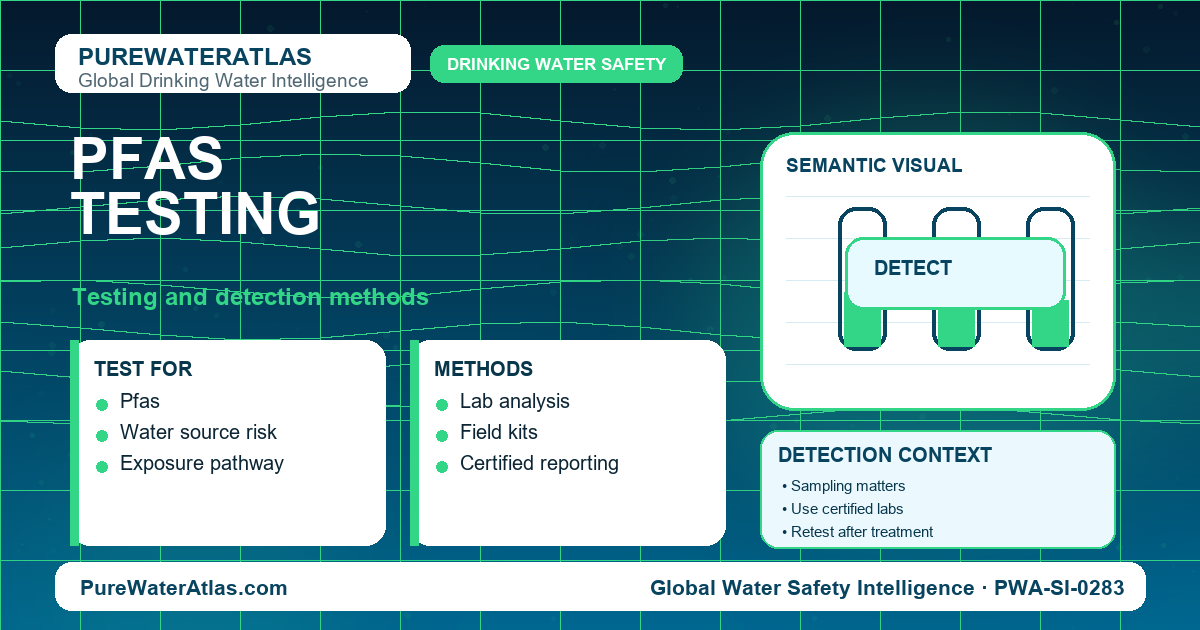
Simple home kits can be useful for screening, but they have limitations. They may be less sensitive, less specific, or harder to interpret than accredited laboratory methods. For contaminants with major health implications, especially lead, arsenic, PFAS, and certain organics, laboratory testing is often the more reliable option.
Screening kits are often best used to identify whether further professional testing is needed. Laboratory analysis is generally preferred when:
- You need legally defensible or highly accurate results
- The contaminant has serious health consequences at low levels
- A vulnerable person lives in the household
- There has been flooding, illness, or an unusual contamination event
- You are choosing an expensive treatment system and need precise data
How Often to Test
Frequency depends on the water source and known risks. Private well owners commonly test at least annually for bacteria and nitrates, with periodic testing for additional contaminants such as arsenic or regional hazards. Public water users may still need testing if the home has older plumbing, if the water has changed in taste or appearance, or if a local advisory has been issued.
You should also test after:
- Flooding or heavy storms
- Well repairs or plumbing changes
- Water discoloration, odor, or sediment changes
- Repeated unexplained gastrointestinal illness
- Notices from local authorities about contamination or treatment issues
Interpreting Results
A result is meaningful only if it is compared with an appropriate health benchmark or regulatory guideline. Some values are measured against enforceable drinking water standards, while others may be compared with health advisories or action levels. It is important to know whether the number reflects a legal limit, a treatment trigger, or a non-enforceable health-based recommendation.
Interpreting water tests can be challenging because contaminants differ greatly. For example:
- Any confirmed E. coli in drinking water is a serious concern
- Lead action thresholds may trigger intervention even at low levels
- Nitrate concerns are especially urgent when infants are present
- pH and hardness affect plumbing and treatment choices but are not usually direct toxic hazards at household levels
For a practical overview of available methods, readers can visit testing and detection methods for home water safety.
Prevention and Treatment
Once a problem is identified, the next step is reducing exposure. The best solution depends on the contaminant, its source, and the level detected. Prevention starts before contamination reaches the tap, while treatment addresses contaminants already present.
Source Control
Whenever possible, address the cause of contamination directly. This may include:
- Repairing well caps, casing, or drainage issues
- Moving contamination sources away from wells
- Maintaining septic systems properly
- Replacing corroded plumbing or lead-containing components
- Following local boil-water or do-not-drink advisories
- Protecting wells from flood runoff and surface contamination
Source control is especially important because filters and treatment systems can fail, require maintenance, or only address certain contaminants.
Point-of-Use and Whole-House Treatment
Different technologies are designed for different hazards:
- Activated carbon: Often used for chlorine, taste and odor issues, and some organic chemicals
- Reverse osmosis: Effective for many dissolved contaminants, including some metals and nitrates
- Distillation: Can remove many dissolved substances but is slower and energy-intensive
- Ion exchange: Common for hardness and may be used for selected contaminants
- Ultraviolet disinfection: Used against microorganisms, but water usually must be clear for good performance
- Specialized media filters: May target arsenic, iron, manganese, PFAS, or other specific contaminants
No single system removes everything. Treatment must be matched to actual test results. Households sometimes buy a filter based on marketing claims only to find that it does not address the contaminant they have. This is one reason testing should come before treatment selection whenever possible.
Immediate Protective Steps
If contamination is suspected or confirmed, immediate actions may include:
- Using bottled water for drinking and infant formula
- Avoiding use of contaminated tap water for cooking when advised
- Flushing taps before use if plumbing-related metal contamination is suspected
- Using only cold water for consumption and cooking, since hot water may contain higher metal levels from plumbing
- Seeking medical advice if symptoms or high-risk exposures are present
Medical Evaluation
Home water testing for safety medical concerns should lead to healthcare consultation when there are symptoms, high test results, or vulnerable individuals in the home. A clinician may recommend evaluation based on the contaminant involved. For example, blood lead testing may be appropriate after significant lead exposure concern. Gastrointestinal illness after microbial contamination may require stool testing, hydration support, or further medical care.
Clinicians are most helpful when households provide specific water test results, timeframes of exposure, and information about who was exposed. Vague concern is harder to assess than documented contamination data.
For treatment options and filtration technologies, additional information is available under water purification.
Common Misconceptions
Misunderstandings about water safety can delay testing and increase preventable exposure. Several myths are particularly common.
If Water Looks Clean, It Is Safe
This is false. Many dangerous contaminants are invisible and do not change taste or smell. Lead, nitrates, arsenic, and PFAS may all be present in water that appears completely normal.
Municipal Water Means Zero Risk
Public systems are regulated and generally safer than unmonitored sources, but household plumbing, infrastructure failures, and episodic contamination events can still create risk at the tap. Local compliance does not guarantee that every home has the same water quality.
Boiling Always Makes Water Safer
Boiling can kill many microorganisms, but it does not remove metals such as lead or chemicals such as nitrates. In some cases, boiling may actually concentrate certain dissolved contaminants as water evaporates.
One Test Is Enough Forever
Water quality changes over time. Seasonal shifts, plumbing corrosion, storms, repairs, and land use changes can alter contaminant levels. Regular retesting is part of responsible water safety management.
All Filters Remove the Same Contaminants
Different filters have very different capabilities. A simple carbon pitcher is not the same as a reverse osmosis unit or an arsenic-specific media filter. Product certification and contaminant-specific performance matter.
No Symptoms Means No Problem
Many serious contaminants do not cause immediate symptoms. Chronic exposure can continue unnoticed for years. This is one of the strongest arguments for proactive testing rather than waiting for illness.
Regulations and Standards
Water safety decisions are often guided by standards set by public health and environmental agencies. In many countries, municipal suppliers must meet regulated contaminant limits and perform regular monitoring. However, these protections may not extend fully to private wells, small systems, or contamination originating in household plumbing.
Maximum Contaminant Levels and Health Goals
Regulatory systems commonly use enforceable limits for certain contaminants in public water supplies. They may also publish non-enforceable health goals, advisory levels, or treatment technique requirements. These distinctions matter:
- Enforceable limits are standards public systems are expected to meet
- Health goals may represent ideal risk-reduction targets, even when not fully enforceable
- Action levels may trigger investigation or remediation rather than function as direct pass-fail limits
Lead is a well-known case where tap water action frameworks differ from straightforward maximum contaminant limits. PFAS is another area where standards are evolving as scientific understanding develops and regulatory agencies update recommendations.
Private Well Responsibilities
Private well owners are usually responsible for their own testing, maintenance, and treatment. This means that if contamination is present, there may be no automatic government detection program identifying it. Households must decide what to test for, how often to test, and what corrective action to take.
Why Standards Are Not the Whole Story
Meeting a regulatory standard does not always mean zero risk. Standards often balance health evidence, detection limits, treatment feasibility, and policy considerations. In addition, household-specific factors may create special concerns even when the broader supply is compliant. For example, a home with a pregnant resident or infant may choose more conservative precautions.
Regulations provide an important framework, but households still benefit from understanding local conditions, reviewing consumer confidence reports where available, and conducting targeted home testing when appropriate.
Conclusion
Home water testing for safety health effects is about more than technical numbers on a lab report. It is a practical way to protect health, identify hidden risks, and make informed decisions about water use, treatment, and medical follow-up. Because water contamination may be invisible and symptoms may be delayed or nonspecific, testing plays a vital preventive role.
Short-term illness can result from microbial contamination, metals, or sudden water quality changes, while chronic exposure to substances such as lead, arsenic, nitrates, and certain industrial chemicals may create long-term health consequences. Understanding home water testing for safety symptoms, home water testing for safety long term risks, home water testing for safety vulnerable groups, home water testing for safety exposure levels, and home water testing for safety medical concerns helps households respond appropriately rather than relying on assumptions.
The most effective strategy is to test based on actual risk factors, interpret results against trusted health benchmarks, and choose prevention or treatment methods that match the specific contaminant involved. Households with private wells, old plumbing, recent flooding, nearby agriculture, or industrial exposure concerns should be especially proactive.
Safe water is not something to guess about. With consistent testing, informed interpretation, and timely action, households can reduce preventable exposure and create a safer environment for every member of the home.
Read the full guide: Drinking Water Safety Guide
Explore more in this category: Drinking Water Safety Articles