Introduction
Clean drinking water is often taken for granted, yet water quality can change between the source, the treatment plant, the distribution system, and the tap inside a home. For households that use private wells, cisterns, rainwater collection systems, or aging plumbing, the need for careful evaluation is even greater. That is why home water testing for safety testing is an essential part of protecting household health. Testing helps identify whether water contains microbes, heavy metals, excess minerals, chemical contaminants, or other quality issues that may not be visible, noticeable by taste, or detectable by smell.
Many people assume that clear water is safe water, but appearance alone provides only limited information. Water that looks perfectly clean may still contain lead, arsenic, nitrate, bacteria, or industrial chemicals. Conversely, water with staining or odor may be unpleasant yet not immediately dangerous. A proper testing strategy distinguishes aesthetic concerns from true safety risks and provides a basis for informed decisions.
There are several approaches to home water testing for safety home testing, ranging from simple test strips and mail-in kits to advanced laboratory assessments. Each method has strengths and limitations. Understanding what can be measured, how to collect a sample correctly, and how to interpret findings is critical for obtaining useful results. Households also benefit from learning when to retest, what contaminants are most relevant in their area, and what treatment options match specific water quality problems.
This article explains the fundamentals of home water safety testing, including common contamination sources, health implications, testing methods, interpretation of findings, and practical prevention steps. For readers seeking broader background information, additional resources are available in drinking water safety materials and the complete guide to home water testing.
What It Is
Home water testing is the process of evaluating household water for physical, chemical, and microbiological characteristics that affect safety, usability, and regulatory compliance. In practical terms, it means collecting a sample of water from a tap, well, storage tank, or treatment system and analyzing it to determine whether specific contaminants or water quality indicators are present.
Home water testing for safety testing typically focuses on hazards that can affect human health. These may include:
- Microbiological contaminants, such as total coliform bacteria, E. coli, and other pathogens
- Heavy metals, including lead, arsenic, copper, mercury, and cadmium
- Inorganic chemicals, such as nitrate, nitrite, fluoride, sulfate, and sodium
- Organic chemicals, including pesticides, solvents, fuel components, and byproducts
- Water quality indicators, such as pH, hardness, alkalinity, total dissolved solids, chlorine, turbidity, iron, and manganese
Testing can be performed for different purposes. Some households test to check routine safety. Others investigate a specific concern, such as a metallic taste, blue-green staining, recurring stomach illness, nearby agricultural runoff, or old plumbing that may release lead. After installing a filter, softener, ultraviolet unit, or reverse osmosis system, testing can also confirm whether treatment is working as intended.
There are two broad categories of testing:
- Screening tests, which provide quick, limited information and may be conducted at home
- Confirmatory or comprehensive tests, usually performed by certified laboratories for higher reliability and broader contaminant coverage
The most effective testing program usually combines both. A homeowner may begin with basic screening and then pursue home water testing for safety lab analysis if results suggest a problem or if the water source is vulnerable to contamination.
Testing is not a one-time event. Water quality can vary over time due to seasonal rainfall, drought, plumbing corrosion, changes in source water, flooding, construction, treatment system failure, or nearby land use. As a result, home water testing should be viewed as an ongoing risk management practice rather than a single checkmark.
Main Causes or Sources
Water contamination can originate at several points between the natural source and the household tap. Identifying likely sources helps prioritize what to test for and how frequently testing should occur. A useful overview is available in causes and sources of home water contamination.
Natural Geological Sources
Groundwater and surface water naturally interact with soil and rock. In some regions, this can introduce arsenic, uranium, radon, fluoride, iron, manganese, sulfur compounds, or high mineral content into household water. These substances may not indicate pollution in the conventional sense, but they can still affect safety, taste, staining, or treatment needs.
Agricultural Runoff
Farms and rural properties may contribute nitrate, nitrite, pesticides, herbicides, and microbial contamination from fertilizers and animal waste. Wells that are shallow, poorly sealed, or located near fields, feedlots, or manure storage areas are especially vulnerable. Nitrate contamination is a serious concern for infants and pregnant individuals because it can interfere with oxygen transport in the blood.
Septic Systems and Wastewater
Improperly maintained septic systems can release bacteria, viruses, nitrates, and household chemicals into groundwater. If a well is too close to a septic drain field, or if soil conditions allow rapid movement of water, contamination risks increase. Flooding can worsen this problem by spreading waste into surrounding areas.
Industrial and Commercial Activities
Factories, gas stations, dry cleaners, landfills, mining operations, and manufacturing facilities may release volatile organic compounds, petroleum products, solvents, metals, and other contaminants into soil or groundwater. These pollutants can travel long distances underground depending on geology and hydrology.
Aging Plumbing and Household Fixtures
Even when water entering the home is adequately treated, household plumbing can alter its quality. Lead service lines, lead solder, brass fixtures, and copper pipes may release metals into water, especially when the water is corrosive or sits stagnant in pipes for many hours. This is why “first-draw” samples are often used when evaluating lead and copper exposure.
Water Heater and Interior System Issues
Hot water systems, storage tanks, and poorly maintained treatment units can become sources of contamination. Sediment buildup may affect water clarity and taste. Warm, stagnant areas may support microbial growth. Filters that are not replaced on schedule may lose effectiveness or harbor bacteria.
Storm Events and Environmental Changes
Heavy rain, flooding, wildfire aftermath, drought, and nearby construction can all change water quality. Rain and floodwater can carry surface contamination into wells. Drought may concentrate dissolved minerals. Disturbed soils can increase turbidity or mobilize metals.
Because contamination sources vary widely, home water testing for safety sampling methods should be selected based on the likely hazard. A sample taken improperly may miss the true source or underestimate exposure.
Health and Safety Implications
The health effects of unsafe water depend on the type of contaminant, its concentration, how long exposure continues, and individual vulnerability. Infants, children, older adults, pregnant individuals, and people with weakened immune systems often face greater risk. More detail can be found in health effects and risks of household water contamination.
Microbiological Risks
Bacteria, viruses, and parasites can cause acute gastrointestinal illness, including diarrhea, vomiting, fever, and abdominal cramps. In severe cases, dehydration and systemic infection can occur. Certain pathogens are especially dangerous for infants, older adults, and immunocompromised individuals. The presence of total coliform does not always mean disease-causing organisms are present, but it can indicate that the system is vulnerable to contamination and should be investigated further.
Lead and Other Metals
Lead is particularly concerning because there is no known safe exposure level for children. Even low levels can affect brain development, learning, behavior, and growth. Adults may experience cardiovascular, kidney, and reproductive effects with ongoing exposure. Copper in high amounts can cause gastrointestinal symptoms and, over the long term, may stress the liver in sensitive individuals. Arsenic exposure has been linked to skin changes, cancer risk, and cardiovascular effects.
Nitrate and Nitrite
Nitrate in drinking water can be converted to nitrite in the body. In infants, this can reduce the blood’s ability to carry oxygen, causing methemoglobinemia, sometimes called “blue baby syndrome.” This is one reason well water should always be tested when used to prepare infant formula.
Chemical Contaminants
Pesticides, solvents, fuel compounds, and industrial chemicals may produce health effects ranging from headaches and nausea to organ toxicity, endocrine disruption, developmental effects, and cancer risk, depending on the compound and dose. Some chemicals have immediate health significance, while others are mainly associated with long-term exposure.
Indirect Household Safety Concerns
Not all water quality issues lead directly to poisoning or disease, but they can still affect safety and household function. Hard water may reduce appliance efficiency and leave scale. Low pH can corrode plumbing, increasing metal leaching. Iron and manganese can stain fixtures and laundry. Sulfur compounds can create odor problems that discourage water use or point to related system issues. High turbidity can interfere with disinfection and indicate incoming sediment or treatment failure.
Because some contaminants cause no obvious symptoms until damage has occurred, regular testing remains one of the most reliable preventive tools available to homeowners.
Testing and Detection
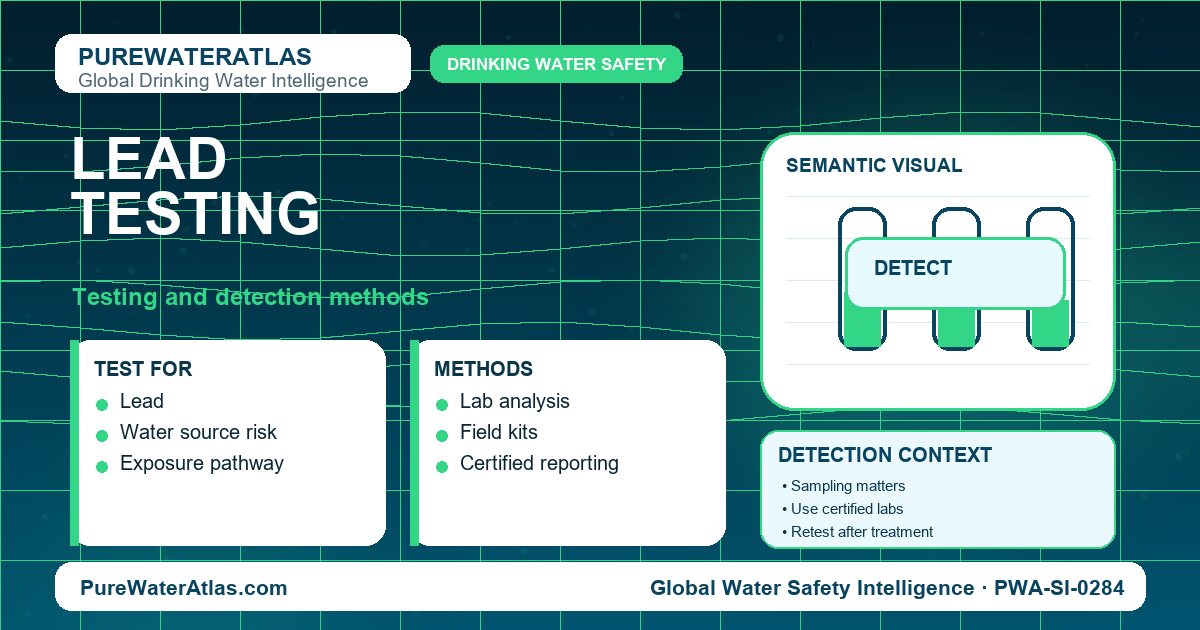
This section is the core of home water testing for safety testing. Effective testing begins with knowing what to test for, when to test, and which method fits the question being asked. No single test checks for every possible contaminant, so testing plans should be targeted and risk-based.
When to Test
Households should consider testing:
- When moving into a new home
- When using a private well or other private source
- After flooding, wildfire, or major storms
- After plumbing repairs, well maintenance, or treatment system installation
- When water changes in taste, color, clarity, or odor
- When a household member experiences unexplained gastrointestinal illness
- When an infant, pregnant individual, or medically vulnerable person is in the home
- On a routine schedule for ongoing monitoring
What to Test For
The basic panel depends on the water source. For many private wells, routine safety testing often includes:
- Total coliform bacteria and E. coli
- Nitrate and nitrite
- pH
- Total dissolved solids or conductivity
- Hardness, iron, and manganese where relevant
- Lead and copper if plumbing materials suggest risk
- Arsenic or region-specific contaminants where geology or local history indicate concern
Homes connected to municipal systems may still benefit from targeted testing for lead, copper, chlorine residual, disinfection byproducts, or contaminants related to a known local advisory.
At-Home Test Kits
Home water testing for safety home testing often starts with over-the-counter kits. These may use strips, color-change reagents, vials, or handheld meters to measure selected parameters such as pH, hardness, chlorine, nitrate, iron, copper, or bacteria indicators.
Advantages of home kits include:
- Fast results
- Low cost
- Convenience
- Useful preliminary screening
Limitations include:
- Restricted contaminant coverage
- Variable sensitivity
- Potential user error in timing, reading color, or sample handling
- Lower precision compared with laboratory methods
These kits are best viewed as screening tools rather than final confirmation for significant health decisions. They can be helpful for monitoring treatment performance, checking hardness or chlorine levels, or identifying whether lab testing is warranted.
Mail-In and Certified Laboratory Testing
For higher confidence, many homeowners use mail-in kits linked to professional labs or submit samples directly to state-certified laboratories. Home water testing for safety lab analysis is especially important for bacteria, lead, arsenic, volatile organic compounds, pesticides, and other contaminants that require sensitive instrumentation and standardized procedures.
Laboratory analysis offers several benefits:
- Greater analytical sensitivity and specificity
- Broader contaminant panels
- Quality control and method validation
- Results reported in regulated units and often compared with standards
However, laboratory testing depends heavily on correct sample collection and timely delivery. A poor sample can still produce misleading data, even when the lab performs excellent analysis.
Sampling Methods
Home water testing for safety sampling methods are one of the most overlooked aspects of water quality assessment. The way a sample is collected can determine whether it reflects the source water, the plumbing system, or a specific exposure scenario.
Common sampling approaches include:
- First-draw samples: water collected after sitting in pipes for several hours, often used for lead and copper assessment
- Flushed samples: water collected after running the tap for a specified period, often used to reflect water from the main line or well source
- Raw water samples: taken before treatment equipment to identify incoming contamination
- Post-treatment samples: taken after filtration or disinfection to verify performance
- Sterile microbiological samples: collected without touching the inside of the container or contaminating the cap, often with strict timing requirements
Good sampling practice generally includes the following steps:
- Use the container provided by the laboratory or kit manufacturer
- Follow instructions for preservation, temperature, and holding time
- Avoid sampling through dirty aerators, swivel faucets, or hoses unless specifically instructed
- Label samples clearly with location, date, and time
- Deliver or ship samples promptly
- Document whether the sample was first-draw, flushed, hot, cold, treated, or untreated
Microbial samples are especially sensitive to contamination during collection. Even touching the bottle opening or allowing the sample to sit too long before analysis can compromise reliability.
Accuracy and Reliability
Home water testing for safety accuracy depends on multiple factors:
- The quality of the test method
- The match between the method and the contaminant of concern
- Proper sample collection
- Storage and transport conditions
- User interpretation of results
- Natural variability in water quality over time
For example, a home strip test may estimate nitrate reasonably well for screening, but it cannot match a laboratory instrument for trace-level detection. Similarly, a single sample may not capture intermittent contamination after rainfall or seasonal change. When results are borderline, unexpected, or inconsistent with symptoms or local conditions, repeat testing is often appropriate.
In practice, the highest level of confidence comes from using accredited laboratories, following strict sampling instructions, and retesting at intervals suited to the risk profile of the water source.
Understanding Test Results
Home water testing for safety test results should be interpreted against established health-based standards, aesthetic guidelines, and the context of the household system. A number on a report does not automatically indicate danger, but it should be compared with the relevant benchmark.
When reviewing results, homeowners should ask:
- What contaminant was measured?
- What concentration was found?
- What is the relevant regulatory limit or health guideline?
- Does the sample represent the water source, the plumbing, or the treated water?
- Should the sample be repeated for confirmation?
- What treatment options are effective for this contaminant?
Results that exceed a health-based standard should prompt action, which may include avoiding use for drinking or cooking, using bottled water temporarily, confirming the result with repeat testing, inspecting the source or plumbing, and installing appropriate treatment. Results that fall below standards may still warrant monitoring if the concentration is close to the limit or if vulnerable household members are present.
Prevention and Treatment
Testing identifies problems, but prevention and treatment reduce risk over time. The best approach depends on whether contamination originates in the source water, the distribution system, or the home’s plumbing.
Source Protection
- Maintain proper separation between wells and septic systems, livestock areas, fuel storage, and chemical use areas
- Inspect well caps, seals, and surface grading to prevent contamination entry
- Keep hazardous chemicals away from recharge zones and drainage pathways
- Test after floods, major storms, or nearby environmental disturbances
Plumbing Controls
- Replace lead service lines, lead solder, or outdated fixtures where possible
- Flush taps after water has been sitting for extended periods
- Use only cold water for drinking and cooking, especially when lead is a concern
- Maintain water heaters and remove sediment as recommended
Treatment Options
Different contaminants require different technologies. A single device does not solve every problem.
- Activated carbon: useful for chlorine, taste, odor, and many organic chemicals, but not reliable for all metals or nitrate
- Reverse osmosis: effective for many dissolved salts, metals, nitrate, and other contaminants, often used at a point of use
- Ion exchange: commonly used for hardness reduction and certain specific contaminant removal
- Ultraviolet disinfection: effective against many microorganisms when water is clear and the unit is maintained properly
- Distillation: removes many dissolved contaminants but uses energy and requires maintenance
- Oxidation and filtration systems: often used for iron, manganese, sulfur, and some other nuisance contaminants
Households exploring treatment options can review resources on water purification and water treatment systems.
Verification After Treatment
Installing a filter is not the end of the process. Water should be retested after treatment to confirm that the selected technology is working and sized correctly. Maintenance schedules matter as much as installation. Cartridges, membranes, lamps, resins, and media all have service limits. Without upkeep, performance can decline and, in some cases, the system itself can become a source of contamination.
Common Misconceptions
If Water Looks Clear, It Must Be Safe
Many dangerous contaminants are invisible. Lead, nitrate, and arsenic usually do not change the water’s appearance.
Municipal Water Never Needs Home Testing
Public systems are regulated and monitored, but conditions inside a specific home can still affect quality. Plumbing-related lead or copper exposure is a common example.
One Test Covers Everything
No single test identifies all contaminants. Testing must be tailored to the water source, local risks, and household concerns.
At-Home Kits Are Always Accurate Enough
Home kits can be useful, but they are not equal to certified laboratory methods for many health-related contaminants. Screening and confirmation are different tasks.
A Filter Solves Every Water Problem
Different contaminants require different treatment technologies. Installing the wrong system may provide little or no protection.
Passing Once Means Safe Forever
Water quality changes over time. Seasonal shifts, plumbing corrosion, floods, and nearby land use changes can alter results.
Regulations and Standards
Understanding regulations helps homeowners place test results in context. In many countries, public drinking water systems must comply with health-based standards for specific contaminants and monitoring requirements. In the United States, for example, the Environmental Protection Agency establishes standards for public systems under the Safe Drinking Water Act.
Private wells, however, are usually not regulated in the same way. This means the homeowner is responsible for monitoring water quality, interpreting reports, and taking corrective action when needed. That responsibility makes home water testing for safety testing especially important for households outside public systems.
Water quality reports may reference several types of benchmarks:
- Maximum Contaminant Level (MCL): an enforceable legal limit for public water systems
- Action Level: a threshold that triggers treatment or corrective action in specific programs, such as lead and copper rules
- Secondary Standard: a non-enforceable guideline for taste, odor, staining, or other aesthetic qualities
- Health Advisory or Guideline Value: a recommended limit based on health information, often used when no formal enforceable standard exists
When evaluating a lab report, it is important to know which standard is being used for comparison and whether that standard applies directly to private household decision-making. Laboratories, local health departments, cooperative extension services, and water quality professionals can often help interpret findings.
Conclusion
Water quality cannot be judged reliably by sight, smell, or taste alone. A thoughtful testing plan is the foundation of safe household water use, particularly for homes with private wells, older plumbing, or changing environmental conditions. Home water testing for safety testing gives homeowners the information needed to identify hidden risks, choose the right treatment, and verify that corrective actions are effective.
The most effective approach combines targeted screening, proper sampling, and professional confirmation when necessary. By understanding likely contamination sources, using appropriate home water testing for safety sampling methods, and paying close attention to home water testing for safety test results, households can make evidence-based decisions that protect health.
Whether the concern is bacteria, lead, nitrate, minerals, or chemical pollution, testing turns uncertainty into actionable knowledge. Regular monitoring, source protection, and well-matched treatment technologies together create a strong defense against water-related hazards and support long-term confidence in the water used every day.
Read the full guide: Drinking Water Safety Guide
Explore more in this category: Drinking Water Safety Articles