Introduction
Clean water is one of the most basic requirements for human health, yet contamination remains a major public health concern around the world. Understanding the health risks of contaminated water is essential for households, schools, healthcare providers, businesses, and policymakers. Water that appears clear and tastes normal can still contain harmful microorganisms, toxic chemicals, heavy metals, or other pollutants that affect short-term wellness and long-term health.
This health risks of contaminated water overview explains how contamination happens, what kinds of pollutants are most concerning, how exposure affects the body, and what steps can reduce risk. Contaminated water may be consumed directly through drinking, but exposure also occurs through cooking, bathing, washing produce, making infant formula, and, in some settings, inhaling aerosols from water systems. Because water touches nearly every part of daily life, the consequences of contamination can spread quickly through homes and communities.
The danger varies depending on the contaminant, its concentration, how long exposure lasts, and the health status of the person exposed. Infants, young children, pregnant people, older adults, and people with weakened immune systems often face the highest risk. In addition, repeated low-level exposure to certain substances can be difficult to notice at first but may contribute to chronic disease over time.
For readers interested in broader household guidance, the topic connects closely with resources on drinking water safety. This article also complements more focused information on causes and sources, health effects and risks, and testing and detection methods.
What It Is
Contaminated water is water that contains substances or organisms that make it unsafe or less safe for its intended use. In a public health context, this usually refers to water used for drinking, food preparation, hygiene, medical settings, agriculture, or recreation. Contamination may be biological, chemical, physical, or radiological.
Biological contamination includes bacteria, viruses, parasites, and other pathogens that can cause infectious disease. Common examples include E. coli, Salmonella, Giardia, Cryptosporidium, norovirus, and hepatitis A virus. These contaminants often enter water supplies through sewage leaks, failing septic systems, animal waste runoff, floodwater, or poor sanitation infrastructure.
Chemical contamination involves substances such as pesticides, fertilizers, industrial solvents, petroleum products, disinfection byproducts, and toxic metals like lead, arsenic, mercury, and cadmium. Some chemicals produce immediate symptoms, while others are associated with cumulative damage that may take years to become apparent.
Physical contamination can include sediment, rust, microplastics, and suspended particles. While physical impurities do not always cause illness directly, they may indicate infrastructure problems or create conditions that shelter microorganisms from disinfectants. Radiological contamination, although less common in many settings, can arise from naturally occurring radioactive materials or industrial activities.
A key point in any discussion of the health risks of contaminated water is that contamination is not always visible. Clear water is not automatically safe, and unpleasant odor or cloudiness is not the only warning sign. Reliable safety depends on source protection, treatment, monitoring, and appropriate household precautions when needed.
Main Causes or Sources
The sources of water contamination are diverse, and they often overlap. In many communities, contamination does not result from a single event but from a combination of aging infrastructure, environmental conditions, and human activity.
Microbial contamination from sewage and waste
One of the most common and dangerous sources is fecal contamination. When sewage systems leak, septic tanks fail, or stormwater overwhelms treatment systems, pathogens can enter groundwater, rivers, lakes, and drinking water distribution systems. Animal agriculture can also contribute through manure runoff, especially after heavy rain.
Agricultural runoff
Farms can introduce nitrates, phosphates, pesticides, herbicides, and animal waste into nearby water bodies. Nitrate contamination is especially concerning for infants because it can interfere with the blood’s ability to carry oxygen. Agricultural runoff can also fuel harmful algal blooms, some of which release toxins dangerous to people and animals.
Industrial discharge and chemical spills
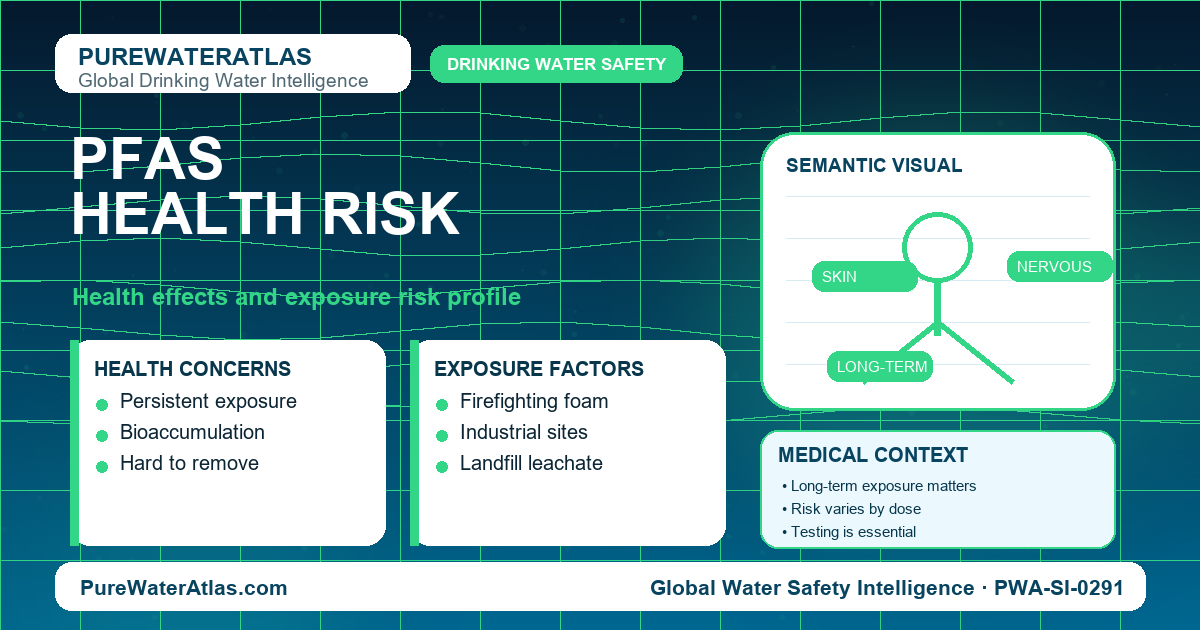
Factories, mining operations, refineries, and manufacturing sites may release hazardous substances into water sources if waste is poorly managed or containment systems fail. Solvents, PFAS compounds, acids, hydrocarbons, and metals can persist in the environment and create widespread exposure. Illegal dumping and accidental spills further increase risk.
Corroding pipes and old plumbing
Even when source water is well treated, contamination can occur during distribution. Aging pipes, corroding fixtures, and lead-containing plumbing materials may leach metals into tap water. This issue has drawn major attention because lead exposure can harm brain development in children and increase cardiovascular risk in adults.
Natural geological sources
Some contaminants occur naturally in soil and rock. Arsenic, fluoride, manganese, iron, sulfur, and radionuclides may enter groundwater depending on local geology. Natural occurrence does not mean harmlessness; in some areas, arsenic in well water is a serious long-term health threat.
Flooding and extreme weather
Floods can wash pathogens, chemicals, fuel, debris, and waste into drinking water sources. Drought can also worsen contamination by concentrating pollutants in reduced water volumes. Climate-related changes increase the importance of monitoring and resilience planning, particularly in vulnerable regions. Readers exploring these larger patterns may find additional context in global water quality.
Household and building-level contamination
Contamination does not always begin at the municipal level. Poorly maintained private wells, storage tanks, water heaters, and premise plumbing can create localized hazards. Biofilms inside pipes may allow bacteria such as Legionella to multiply, especially when water stagnates or temperatures are poorly controlled.
- Broken sewer lines or failing septic systems
- Runoff from farms, feedlots, and fertilizer use
- Industrial waste, mining, and chemical spills
- Lead service lines and corroded plumbing
- Natural arsenic or other mineral contamination in groundwater
- Flooding, storms, and infrastructure damage
- Unsafe storage or maintenance of private wells
Health and Safety Implications
The health risks of contaminated water health effects depend on the type of contaminant, dose, route of exposure, and individual vulnerability. Effects may be acute, such as sudden gastrointestinal illness, or chronic, such as neurological damage, cancer risk, kidney disease, or developmental problems.
Short-term infectious illness
Pathogens in water frequently cause diarrhea, vomiting, stomach cramps, fever, and dehydration. In healthy adults, some infections resolve within days, but severe illness can occur, particularly in children and older adults. Dehydration from waterborne illness can become life-threatening if not treated promptly.
Certain microbes cause more serious outcomes. Cryptosporidium may lead to prolonged diarrhea, especially in immunocompromised individuals. E. coli strains that produce shiga toxin can result in bloody diarrhea and, in some cases, hemolytic uremic syndrome, a dangerous complication affecting the kidneys.
Neurological and developmental harm
Heavy metals are a major concern because they can affect the nervous system. Lead exposure is especially harmful in infants and children, where even relatively low levels are associated with reduced IQ, learning difficulties, behavioral problems, and impaired development. In adults, lead may contribute to hypertension, kidney problems, and reproductive issues.
Mercury and some industrial chemicals can also impair neurological function. Long-term exposure may affect memory, coordination, sensation, or mood, depending on the substance and level of exposure.
Gastrointestinal, liver, and kidney effects
Many contaminants stress the digestive system, liver, or kidneys. Arsenic has been linked to skin changes, vascular disease, diabetes, and cancers of the skin, bladder, and lung. Cadmium can damage the kidneys over time. Solvents and industrial chemicals may affect liver function and create systemic toxicity.
Reproductive and pregnancy-related concerns
Contaminated water can pose special risks during pregnancy. Exposure to nitrates, lead, certain pesticides, solvents, and some disinfection byproducts has been studied for possible associations with adverse pregnancy outcomes. While risk depends on concentration and duration, precaution is especially important for pregnant individuals and households preparing water for infants.
Infant-specific risks
Infants are uniquely sensitive because of their small body size and developing organs. Water used to prepare formula must be safe. Elevated nitrate levels can cause methemoglobinemia, sometimes called “blue baby syndrome,” which interferes with oxygen transport. Pathogens can also cause rapid dehydration in infants far more quickly than in adults.
Cancer and chronic disease
Long-term exposure to some chemical contaminants increases the risk of cancer or other chronic illnesses. Arsenic, certain industrial compounds, some disinfection byproducts, and radionuclides are among the substances monitored because of known or suspected links to carcinogenicity. Chronic exposure may not produce immediate symptoms, making regular monitoring and prevention especially important.
Skin, eye, and respiratory irritation
Not all health effects come from swallowing water. Bathing or showering in contaminated water may irritate the skin and eyes. In some building water systems, contaminated aerosols can be inhaled, increasing risk for illnesses such as Legionnaires’ disease. This is particularly relevant in hospitals, hotels, long-term care facilities, and large buildings with complex plumbing systems.
- Acute effects: diarrhea, nausea, vomiting, fever, cramps, dehydration
- Chronic effects: cancer risk, kidney damage, liver injury, vascular disease
- Neurological effects: developmental delay, cognitive impairment, nerve damage
- Reproductive effects: increased concern during pregnancy and infancy
- Indirect effects: school absence, work loss, medical costs, community outbreaks
Because symptoms often overlap with other illnesses, water contamination can go unrecognized. This is one reason why a strong understanding of the health risks of contaminated water overview should include both visible outbreaks and slower, hidden exposures.
Testing and Detection
Effective monitoring is central to reducing harm. The topic of health risks of contaminated water testing includes routine utility testing, private well testing, building-level assessments, and laboratory confirmation when a specific contaminant is suspected. Testing should be guided by location, water source, known local risks, infrastructure age, and any changes in taste, odor, color, or health patterns in the household.
Public water system monitoring
Municipal water suppliers typically test for regulated contaminants according to legal standards and schedules. These may include microbial indicators, disinfectant levels, nitrates, metals, synthetic chemicals, and byproducts of treatment. Consumers can often access annual water quality reports that summarize detected contaminants and compliance status.
Private well testing
Private wells are usually the responsibility of the owner, which means no routine government monitoring may occur. Well users should test regularly for bacteria, nitrates, and locally relevant contaminants such as arsenic, manganese, or pesticides. Testing is especially important after flooding, nearby construction, septic failure, or any change in water quality.
Common testing methods
Water analysis may involve simple field kits, certified laboratory testing, or advanced instrumental methods. Microbial testing often looks for total coliforms and E. coli as indicators of fecal contamination. Chemical testing may measure metals, volatile organic compounds, PFAS, nitrate, pH, hardness, and many other parameters.
Some household test kits can provide useful screening information, but they do not replace professional laboratory analysis when serious contamination is suspected. Correct sample collection is also essential. Poor handling can produce false results, especially for bacteriological tests.
When testing is especially important
- After flooding, storms, or earthquakes
- When using a private well or spring
- When a home has old plumbing or possible lead lines
- If water changes in color, smell, or taste
- When household members have unexplained gastrointestinal illness
- Before using water for infant formula in uncertain conditions
- When local advisories report contamination concerns
Interpreting results
Detection of a contaminant does not always mean immediate severe danger, but it does require understanding the concentration and relevant health benchmark. Some standards are based on acute risk, while others are designed to limit chronic exposure over years. A qualified health department, water professional, or certified laboratory can help interpret findings and identify appropriate next steps.
Readers seeking more technical detail can review testing and detection methods for a deeper look at sampling strategies and common analyses.
Prevention and Treatment
Reducing the health risks of contaminated water removal requires action at multiple levels: source protection, treatment infrastructure, distribution maintenance, household precautions, and public communication. There is no single solution for every contaminant, so prevention and treatment should be matched to the specific problem.
Source protection
The most effective approach is to prevent contamination before it enters the water supply. This includes protecting watersheds, maintaining sewage systems, controlling industrial discharges, managing agricultural runoff, and monitoring vulnerable groundwater areas. Source protection is often more sustainable and less costly than trying to remove contaminants after they spread.
Municipal treatment
Public water systems commonly use filtration, coagulation, sedimentation, and disinfection to reduce pathogens and impurities. Additional technologies such as activated carbon, ion exchange, advanced oxidation, membrane filtration, and corrosion control may be used depending on the contaminant profile. Properly run treatment plants can dramatically reduce waterborne disease.
Household water treatment options
At the household level, treatment should be chosen carefully. Different systems remove different contaminants:
- Boiling: effective against many pathogens, but does not remove metals, nitrates, or most chemical contaminants
- Activated carbon filters: may reduce chlorine, taste, odor, and some organic chemicals, but not all contaminants
- Reverse osmosis: can reduce many dissolved solids, metals, and some chemicals
- Ultraviolet treatment: disinfects microorganisms when water is clear enough, but does not remove chemicals
- Distillation: can remove many contaminants, though performance varies by substance
- Water softeners: address hardness but are not broad safety devices
Consumers should use independently certified treatment products designed for the contaminant they need to address. Broad claims like “purifies all water” should be treated with caution. More guidance is available in resources on water treatment systems.
Emergency protective measures
When contamination is suspected or confirmed, practical steps can reduce immediate exposure:
- Follow boil-water or do-not-drink advisories exactly as issued
- Use bottled or safely treated water for drinking, cooking, brushing teeth, and infant formula
- Flush plumbing if recommended after repairs or prolonged stagnation
- Clean and disinfect storage containers
- Test private wells after flooding or service disruption
- Replace filters on schedule and according to manufacturer instructions
Well maintenance and household practices
Private well owners should inspect well caps, surface drainage, and nearby septic systems regularly. Wells should be located and maintained to minimize contamination from livestock areas, fuel storage, or waste disposal sites. Inside the home, preventing cross-connections, avoiding stagnant water, and replacing aging plumbing can all reduce risk.
In short, effective health risks of contaminated water removal depends on identifying the contaminant first. Treating microbial contamination with boiling may help, but the same action will not solve lead or nitrate contamination. Matching method to hazard is essential.
Common Misconceptions
Misunderstandings about water safety can delay action and increase exposure. Correcting common myths is an important part of public education.
“If water looks clear, it is safe.”
This is one of the most widespread misconceptions. Many dangerous contaminants are invisible, tasteless, and odorless at levels that still matter for health. Lead, arsenic, nitrates, and many pathogens may not produce obvious changes in appearance.
“Boiling fixes every contamination problem.”
Boiling is helpful for many biological contaminants, but it does not remove most metals or industrial chemicals. In some cases, boiling can slightly increase the concentration of certain dissolved contaminants as water evaporates.
“Only developing regions face serious contamination.”
Water contamination is a global issue. Although risks may be greater where treatment infrastructure is limited, contamination also occurs in high-income countries due to aging pipes, industrial pollution, storm events, and private well vulnerabilities.
“Municipal water is always risk-free.”
Regulated public systems are often much safer than untreated sources, but no system is completely immune to failures. Main breaks, treatment errors, source contamination, and distribution issues can create temporary or localized risks. This is why monitoring, transparency, and response planning remain essential.
“A home filter removes everything.”
No single filter addresses all contaminants. A pitcher filter that improves taste may do little for microbial contamination or dissolved minerals. Product certification and contaminant-specific performance matter much more than marketing language.
“Testing once is enough.”
Water quality can change over time due to seasons, weather, plumbing changes, nearby land use, or infrastructure deterioration. Ongoing testing is especially important for private wells and homes with older plumbing.
Regulations and Standards
The topic of health risks of contaminated water regulations covers the legal and technical frameworks used to protect public health. These regulations set maximum contaminant levels, monitoring requirements, treatment techniques, and reporting standards for public water systems. Their purpose is to reduce both immediate outbreaks and long-term exposure to harmful substances.
Why regulations matter
Water safety depends on more than treatment technology. It also requires enforceable rules, inspections, documentation, trained operators, and public accountability. Standards help define acceptable limits for microbial, chemical, and radiological contaminants based on toxicology, epidemiology, feasibility, and risk management principles.
Public water systems versus private wells
In many jurisdictions, public utilities must comply with detailed monitoring and reporting rules. Private wells, however, are often lightly regulated or not regulated at all for routine household use. This creates an important gap in protection because well owners may be exposed without knowing the condition of their water.
Key areas addressed by standards
- Microbial safety and disinfection performance
- Maximum allowed levels for metals such as lead and arsenic
- Limits for nitrates, pesticides, solvents, and industrial compounds
- Control of treatment byproducts
- Sampling frequency and laboratory quality requirements
- Consumer notification and public reporting
- Corrective action when standards are exceeded
Challenges in regulation
Regulatory systems face real challenges. New contaminants emerge, scientific evidence evolves, and updating standards can take time. Small or underfunded utilities may struggle with infrastructure upgrades or advanced monitoring. Rural areas and low-income communities may face disproportionate exposure due to limited resources. Environmental justice is therefore an important part of modern water policy.
The role of public communication
Clear communication is essential when contamination is detected. Advisories should explain what happened, who is most at risk, what actions to take, and when the problem is resolved. Confusing or delayed messages can increase exposure and reduce public trust.
For a broader understanding of the policy context, related topics in drinking water safety and global water quality can help connect household concerns with larger systems of regulation, infrastructure, and environmental management.
Conclusion
The health risks of contaminated water range from mild stomach illness to severe infectious disease, developmental harm, chronic organ damage, and increased cancer risk. These outcomes depend on the contaminant involved, the amount of exposure, and the vulnerability of the individual or community affected. Because many contaminants are invisible and some health effects develop slowly, water safety cannot rely on appearance alone.
A practical response begins with awareness of common contamination sources, from sewage and agricultural runoff to industrial discharge, corroded plumbing, and natural groundwater hazards. It also requires reliable testing, appropriate treatment, and informed prevention strategies. Public systems need strong infrastructure and oversight, while private well owners need regular testing and maintenance.
Understanding the health risks of contaminated water overview is not only a matter of science but of public health planning and everyday household decision-making. With better monitoring, evidence-based treatment, and effective health risks of contaminated water regulations, communities can greatly reduce preventable illness and protect long-term health. For continued learning, readers may explore additional resources on causes and sources, health effects and risks, and testing and detection methods.
Read the full guide: Drinking Water Safety Guide
Explore more in this category: Drinking Water Safety Articles