
Introduction
Clean water is essential for drinking, cooking, hygiene, food preparation, and many industrial and medical uses. Yet water that appears clear, odorless, and pleasant can still contain harmful contaminants. Understanding the health risks of contaminated water testing is important because testing is often the only reliable way to identify invisible hazards before they cause illness. Whether the concern involves a private well, a municipal supply, a rural rainwater tank, or water used in a business or healthcare setting, proper testing helps people move from uncertainty to evidence-based action.
Contaminated water can carry microorganisms, toxic metals, industrial chemicals, agricultural runoff, and byproducts formed during water treatment or distribution. Some exposures lead to immediate symptoms such as vomiting, diarrhea, skin irritation, or fever. Others can develop slowly over months or years, contributing to neurological effects, reproductive problems, kidney damage, or increased cancer risk. Because these threats differ widely, testing must be matched to the contamination source, the population at risk, and the intended use of the water.
This article explains what contaminated water is, where it comes from, what health effects it can cause, and how testing and detection methods work. It also discusses health risks of contaminated water home testing, health risks of contaminated water lab analysis, health risks of contaminated water sampling methods, health risks of contaminated water accuracy, and how to interpret health risks of contaminated water test results. For broader background, readers may also explore resources on drinking water safety, water contamination, and water microbiology.
What It Is
Water contamination occurs when biological, chemical, physical, or radiological substances enter water at levels that make it unsafe or unsuitable for intended use. The definition depends partly on context. Water that is acceptable for irrigation may not be safe to drink. Water that is adequate for industrial cooling may be inappropriate for food preparation or medical use.
In public health, contaminated water generally refers to water containing agents that can harm human health. These contaminants are often grouped into several categories:
- Microbiological contaminants: bacteria, viruses, protozoa, and parasites such as E. coli, Salmonella, norovirus, Giardia, and Cryptosporidium.
- Chemical contaminants: pesticides, solvents, fuel compounds, nitrates, disinfection byproducts, and industrial pollutants.
- Heavy metals and inorganic contaminants: lead, arsenic, mercury, cadmium, copper, fluoride, and excess iron or manganese.
- Physical contaminants: sediment, rust particles, suspended solids, and debris that may affect appearance or indicate infrastructure issues.
- Radiological contaminants: radon, uranium, radium, and other radioactive substances found naturally or through industrial activity.
Some contaminants mainly affect taste, smell, or color, while others pose direct health threats even at low concentrations. Importantly, sensory clues alone are not enough. A sulfur smell may indicate nuisance sulfur bacteria, but dangerous pathogens can be present with no noticeable sign at all. Likewise, lead contamination in tap water often cannot be seen, smelled, or tasted.
Testing therefore serves a dual purpose: it identifies hazards that are otherwise hidden, and it helps distinguish between cosmetic water quality issues and contaminants that carry genuine health consequences. A more comprehensive overview can be found in this complete guide.
Main Causes or Sources
Water contamination can originate from natural geology, infrastructure failures, human activity, and environmental events. Understanding the source is essential because it determines what should be tested, how samples should be collected, and what corrective measures are most effective.
Natural Sources
Some contaminants occur naturally in soil and rock. Arsenic, fluoride, uranium, iron, and manganese can dissolve into groundwater depending on local geology. This is especially important for private wells, where water may not undergo routine municipal treatment. Natural contamination can be persistent and may vary seasonally or with groundwater levels.
Agricultural Runoff
Farms and livestock operations can introduce nitrates, phosphates, pesticides, herbicides, manure, and pathogens into surface water and groundwater. Rainfall can wash contaminants into rivers, lakes, and shallow wells. In agricultural regions, nitrate testing is especially important because elevated nitrate levels can be dangerous for infants and pregnant individuals.
Industrial and Commercial Activities
Factories, mining operations, refineries, dry-cleaning facilities, and waste disposal sites may release volatile organic compounds, petroleum products, metals, solvents, and persistent industrial chemicals. These pollutants can remain in groundwater for long periods and may spread beyond the original source.
Municipal Infrastructure and Plumbing
Even when water leaves a treatment plant in compliance with standards, contamination can occur in distribution systems or building plumbing. Corroded pipes can leach lead and copper. Cross-connections may allow wastewater or industrial fluids to enter potable water systems. Water main breaks, pressure loss, and aging storage systems can increase microbial risk.
Storms, Flooding, and Environmental Disruption
Heavy rain, hurricanes, wildfire runoff, and flooding can overwhelm treatment systems and wash sewage, chemicals, sediment, and animal waste into drinking water sources. After such events, both microbial and chemical testing may be needed. Flooded wells are a common example of high-risk contamination requiring immediate assessment and disinfection.
Septic System Failures and Wastewater Leaks
Failing septic systems, sewer overflows, and leaking wastewater lines can introduce fecal bacteria, viruses, and nutrients into nearby water sources. This is a major concern for homes using private wells, especially shallow wells located close to septic systems.
Each of these causes influences the testing strategy. For example, a household near cropland may prioritize nitrates and pesticides, while an older urban building may need lead and copper testing. Related source-specific information is available at causes and sources of contaminated water.
Health and Safety Implications
The health effects of contaminated water depend on the type of contaminant, concentration, duration of exposure, route of exposure, and the vulnerability of the exposed person. Drinking is the most obvious exposure route, but contaminants can also affect people through cooking, brushing teeth, bathing, inhaling aerosols, and, in some cases, skin contact.
Short-Term Health Effects
Acute waterborne illness often results from microbiological contamination. Common symptoms include:
- Diarrhea
- Nausea and vomiting
- Stomach cramps
- Fever
- Fatigue and dehydration
These symptoms can range from mild to severe. Infants, older adults, pregnant individuals, and people with weakened immune systems are at greater risk of hospitalization or serious complications. Outbreaks linked to pathogens such as E. coli, Campylobacter, Giardia, and norovirus remain a significant public health concern.
Long-Term Health Effects
Chemical contaminants may cause subtle or delayed harm. For example:
- Lead: developmental and neurological effects, especially in children; cardiovascular and kidney effects in adults.
- Arsenic: skin changes, cardiovascular effects, diabetes associations, and increased risk of certain cancers.
- Nitrates: reduced oxygen-carrying capacity in infants, causing methemoglobinemia.
- PFAS and industrial chemicals: potential associations with immune, hormonal, liver, and metabolic effects, depending on the compound.
- Disinfection byproducts: prolonged exposure at elevated levels may increase certain chronic health risks.
Safety Implications Beyond Illness
Contaminated water also affects safety in homes, schools, food facilities, healthcare settings, and workplaces. Water used to wash produce, prepare infant formula, clean medical equipment, or manufacture products must meet appropriate quality standards. Contamination can therefore create operational, legal, and reputational risks in addition to direct health effects.
Who Is Most Vulnerable?
Certain groups require extra caution:
- Infants and young children
- Pregnant individuals
- Older adults
- People with compromised immune systems
- Individuals with kidney or liver disease
- Users of private wells without routine monitoring
Because symptoms are not always immediate and some contaminants are tasteless and invisible, testing plays a central preventive role. For more detail on exposure outcomes, see health effects and risks of contaminated water.
Testing and Detection
Testing and detection are the foundation of evidence-based water safety. The best approach depends on whether the concern is microbial, chemical, or physical, and whether the goal is screening, compliance, diagnosis of a known problem, or ongoing monitoring.
Why Testing Matters
Without testing, decisions are often based on assumptions. Clear-looking water may be unsafe, while unpleasant-tasting water may not present a major health risk. Testing identifies contaminants, estimates concentration, tracks trends over time, and helps determine whether treatment is needed. It also helps verify whether a filter, disinfection system, or plumbing intervention is working.
Common Parameters Tested
Water testing panels may include:
- Total coliforms and E. coli
- Nitrates and nitrites
- Lead and copper
- Arsenic and other metals
- pH, hardness, alkalinity, and conductivity
- Turbidity and total dissolved solids
- Pesticides and herbicides
- Volatile organic compounds
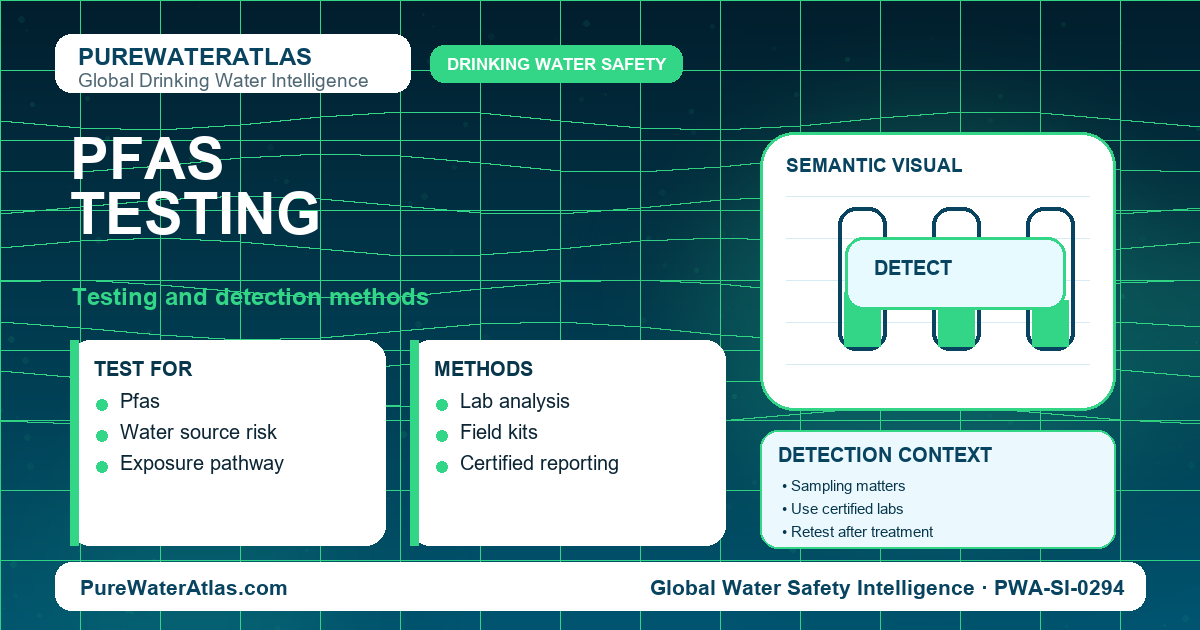
- PFAS and other emerging contaminants
- Radiological parameters where relevant
Health Risks of Contaminated Water Home Testing
Health risks of contaminated water home testing are often discussed in the context of convenience and early screening. Home test kits can be useful for preliminary checks, especially for pH, hardness, chlorine, nitrates, iron, and some bacteria indicators. They can help homeowners decide whether a more comprehensive investigation is needed.
However, home testing has limitations. Some kits rely on color changes that are difficult to interpret accurately. Storage conditions, expiration dates, user handling, and the sensitivity of the method all affect results. Many home kits are better at screening than confirming. They may indicate that a problem exists, but they usually cannot provide the level of certainty needed for regulatory, medical, real-estate, or remediation decisions.
Home testing is most useful when:
- Used as an initial screening tool
- Followed carefully according to instructions
- Applied to contaminants the kit is specifically designed to detect
- Confirmed by laboratory testing when results are positive, borderline, or unexpected
Health Risks of Contaminated Water Lab Analysis
Health risks of contaminated water lab analysis are best addressed through certified laboratories because lab methods offer greater precision, lower detection limits, standardized procedures, and formal reporting. Laboratories may use microbiological culture methods, polymerase chain reaction techniques, spectrometry, chromatography, and other analytical technologies depending on the target contaminant.
Lab analysis is especially important for:
- Lead, arsenic, and other metals
- Low-level pesticide or solvent detection
- PFAS and emerging contaminants
- Regulatory compliance testing
- Investigation after illness, flooding, or treatment failure
- Private well baseline and periodic monitoring
Certified laboratory reports also improve traceability. They typically include the analytical method, reporting limit, sample identification, collection date, and quality control information, making the findings more actionable.
Health Risks of Contaminated Water Sampling Methods
Health risks of contaminated water sampling methods are often underestimated. A highly accurate laboratory test can still produce misleading results if the sample is collected incorrectly. Sampling method affects whether the test reflects the source water, the plumbing system, or a temporary contamination event.
Important sampling considerations include:
- First-draw samples: often used for lead testing because they reflect water sitting in plumbing.
- Flushed samples: collected after running water for a specified time to assess source or service-line conditions.
- Sterile containers: required for microbiological sampling to avoid false positives.
- Preservatives and temperature control: needed for many chemical analyses.
- Chain of custody: important for compliance and legal documentation.
- Timing: recent rainfall, seasonal changes, flooding, or treatment maintenance can affect results.
For example, testing a private well immediately after chlorination may temporarily suppress bacteria and create a false sense of security. Likewise, collecting a metal sample after extensive flushing may underestimate the consumer’s actual exposure at the tap. Proper sampling is therefore not a technical detail; it is central to obtaining meaningful results.
Microbiological Testing Methods
Microbiological testing often begins with indicator organisms such as total coliforms and E. coli. Total coliforms suggest that contamination pathways may exist, while E. coli is a stronger indicator of fecal contamination. Methods may include membrane filtration, presence-absence tests, enzyme substrate methods, and molecular techniques.
These tests do not always identify every possible pathogen directly, but they are practical tools for assessing sanitary integrity. In outbreak or special-risk settings, additional organism-specific testing may be needed.
Chemical Testing Methods
Chemical analysis depends on the contaminant. Metals are often measured using spectrometric methods, while organic compounds may require gas or liquid chromatography coupled with sensitive detectors. Field meters can provide rapid information on pH, conductivity, and chlorine residual, but many health-relevant chemicals require laboratory analysis to detect concentrations at meaningful levels.
Health Risks of Contaminated Water Accuracy
Health risks of contaminated water accuracy should be considered whenever interpreting results. Accuracy depends on the reliability of the test method, the condition of the sample, and the skill of the person collecting it. Precision, detection limits, interferences, calibration, and contamination during handling all influence confidence in the result.
Several factors can reduce accuracy:
- Using expired or poorly stored home kits
- Improperly cleaned containers
- Delay in getting the sample to the lab
- Incorrect preservation or refrigeration
- Cross-contamination from taps, hands, or nearby surfaces
- Testing the wrong location or wrong time
To improve accuracy, users should follow collection instructions exactly, use accredited laboratories where possible, and repeat testing when results are inconsistent with known conditions or health concerns.
Health Risks of Contaminated Water Test Results
Health risks of contaminated water test results depend on interpretation, not just measurement. A report may show a number, but that number must be compared with a relevant health guideline, regulatory maximum, or action level. It is also necessary to understand whether “not detected” means truly absent or simply below the reporting limit.
When reviewing test results, ask:
- What contaminant was tested?
- What method was used?
- What is the reporting or detection limit?
- What benchmark applies to this result?
- Does the sample represent routine exposure?
- Is follow-up sampling needed?
A single result can be informative, but trends are often more meaningful. Repeated testing may show whether contamination is persistent, seasonal, worsening, or linked to a specific event.
Prevention and Treatment
Testing identifies problems, but prevention and treatment reduce exposure. The right solution depends on the contaminant source, severity, and the water system involved.
Preventive Measures
- Test private wells regularly, especially for bacteria, nitrates, and region-specific contaminants.
- Inspect and maintain wells, caps, seals, and surrounding drainage.
- Keep septic systems properly located, pumped, and maintained.
- Avoid storing chemicals, fuel, or pesticides near water sources.
- Respond quickly to floods, pressure loss, or visible plumbing deterioration.
- Use backflow prevention where cross-connection risks exist.
- Replace lead-containing plumbing components where identified.
Treatment Options
Treatment should be matched to the contaminant:
- Boiling: useful for many microbial hazards during emergency advisories, but not effective for metals or many chemicals.
- Chlorination or UV disinfection: useful for microbial control when designed and maintained properly.
- Reverse osmosis: effective for many dissolved contaminants including some metals and nitrates, depending on system design.
- Activated carbon: can reduce certain organic chemicals and improve taste and odor, but performance varies by contaminant.
- Ion exchange and specialized media: often used for hardness, nitrate, arsenic, or metal reduction.
- Aeration and oxidation-filtration: may help with iron, manganese, sulfur compounds, and some volatile contaminants.
No treatment device should be selected based only on marketing claims. Post-treatment testing is essential to verify performance. Filters also require maintenance; neglected systems can lose effectiveness or even become contamination points.
Common Misconceptions
Misunderstandings about contaminated water often delay action or create false reassurance. Several common myths deserve correction.
If Water Looks Clear, It Must Be Safe
This is false. Many dangerous contaminants are invisible. Lead, nitrates, viruses, and some solvents may be present without affecting clarity.
Boiling Solves All Water Problems
Boiling can inactivate many pathogens, but it does not remove heavy metals, nitrates, or most chemical pollutants. In some cases, boiling may slightly concentrate nonvolatile contaminants as water evaporates.
Municipal Water Never Needs Additional Testing
Public systems are regulated, but contamination can still occur in building plumbing, service lines, storage tanks, or during infrastructure disruptions. Site-specific testing may still be necessary.
Home Test Kits Are Always Enough
Home kits can be useful screening tools, but many water quality questions require certified lab confirmation, especially when health risks, property transactions, compliance, or vulnerable populations are involved.
A Single Safe Result Means the Problem Is Gone Forever
Water quality changes over time. Seasonal rainfall, well conditions, pipe corrosion, land use, and maintenance activities can all alter results. Periodic monitoring remains important.
Regulations and Standards
Water regulations and health benchmarks vary by country and jurisdiction, but the general purpose is the same: to establish contaminant limits, monitoring rules, and treatment requirements that protect public health. Public water systems are usually subject to routine testing and reporting obligations, while private wells often place more responsibility on the owner.
Public Water Systems
Municipal and community water systems are commonly required to monitor for microbiological contaminants, disinfectant levels, treatment performance, and specific chemical contaminants according to population served and source type. Action levels and maximum contaminant levels help trigger investigation, public notification, or treatment upgrades.
Private Wells
Private wells are often not regulated to the same routine standard as public supplies, which means owners must arrange testing themselves. This makes awareness of health risks of contaminated water testing particularly important for rural households, small facilities, and remote properties.
Guidelines, Action Levels, and Risk-Based Decisions
Not every standard functions in the same way. Some values are enforceable legal limits, while others are health-based guidelines or recommended action thresholds. Interpretation must consider the intended use of the water and the population exposed. In settings involving children, healthcare, or food preparation, more conservative decisions may be appropriate.
Regulations are also evolving as new contaminants are studied and detection methods improve. That means periodic review of local water advisories, laboratory capabilities, and updated guidance is a sensible part of long-term water safety management.
Conclusion
Water contamination is a serious public health issue because harmful substances and pathogens are often impossible to detect without testing. The most important lesson is that water safety cannot be judged by appearance alone. Reliable assessment depends on understanding likely contamination sources, using appropriate sampling techniques, selecting the right test method, and interpreting results against valid health benchmarks.
For households, businesses, and institutions, the practical path is clear: identify risks, test regularly when warranted, confirm important findings with laboratory analysis, and use treatment methods that match the actual contaminant. This is especially true for private wells, older plumbing systems, flood-affected properties, and locations near agricultural or industrial activity.
By paying attention to health risks of contaminated water home testing, health risks of contaminated water lab analysis, health risks of contaminated water sampling methods, health risks of contaminated water accuracy, and health risks of contaminated water test results, individuals and organizations can make better decisions and reduce preventable exposure. Sound testing is not just a technical exercise; it is a key part of protecting health, preventing outbreaks, and maintaining confidence in the water people use every day.
Read the full guide: Drinking Water Safety Guide
Explore more in this category: Drinking Water Safety Articles