
Introduction
The who drinking water guidelines are among the most widely referenced public health resources for understanding what makes water safe to drink. Developed by the World Health Organization, these guidelines help governments, utilities, engineers, laboratories, health professionals, and communities evaluate drinking water quality and manage risks from contaminants. Rather than serving as a single universal law, they provide a science-based framework that countries and local authorities can adapt to their own environmental conditions, infrastructure, and public health priorities.
A practical who drinking water guidelines overview begins with one central idea: safe drinking water is not defined only by taste or appearance. Water can look clear and still contain microorganisms, chemicals, heavy metals, or by-products that affect health over time. The WHO approach therefore emphasizes preventive risk management, routine monitoring, source protection, treatment performance, and distribution system integrity.
These guidelines matter because drinking water safety is connected to nearly every aspect of public health. Unsafe water can contribute to outbreaks of gastrointestinal disease, long-term exposure to toxic chemicals, child development problems, and broader community impacts on healthcare systems and economic productivity. The WHO framework helps decision-makers move beyond reacting to contamination after it occurs and instead build systems that prevent contamination in the first place.
For readers trying to understand broader topics in household and municipal water safety, it may also be useful to explore related resources on drinking water safety and water contamination. These topics connect closely with the principles described in the WHO guidance.
This article explains what the WHO drinking water guidelines are, where common contaminants come from, how they affect health, how water is tested, what treatment and prevention strategies are effective, and how these guidelines relate to laws and standards in different countries. It is designed to give a clear educational foundation for anyone researching drinking water quality, public health, or water system management.
What It Is
The WHO drinking water guidelines are a set of evidence-based recommendations for protecting public health through safe drinking water management. They address microbiological hazards, chemical contaminants, radiological concerns, and operational issues that influence water quality from source to consumer. Their purpose is not simply to provide a long list of numbers, but to support a full risk-based approach to ensuring that drinking water is consistently safe.
At the heart of the guidelines is the concept of health-based targets. These targets are meant to keep exposure to harmful contaminants below levels that present unacceptable risk. In practice, this means setting benchmark values or performance goals for things such as pathogens, arsenic, lead, nitrate, fluoride, pesticides, disinfection by-products, and other substances that may be found in water.
The WHO framework is often organized around several major components:
- Microbiological safety, including bacteria, viruses, and protozoa that can cause acute illness.
- Chemical safety, including naturally occurring substances and man-made pollutants with short-term or long-term health effects.
- Radiological safety, covering radioactive materials that may enter water from natural geology or industrial activities.
- Acceptability factors, such as taste, odor, and appearance, which do not always indicate health risk but strongly influence consumer confidence.
- Management practices, especially preventive planning, treatment validation, and ongoing monitoring.
One of the most important ideas in the WHO approach is the Water Safety Plan. A Water Safety Plan is a systematic method for identifying hazards, evaluating risks, controlling contamination points, and verifying that treatment and distribution systems are performing effectively. This makes the guidelines especially useful not only for regulators but also for utilities and facility managers.
Another key point in any who drinking water guidelines overview is that the recommendations are adaptable. The WHO recognizes that not all countries have the same climate, hydrogeology, infrastructure, or technical capacity. For that reason, the guidelines are intended to be used as a basis for national standards rather than as a rigid one-size-fits-all rulebook.
Readers interested in a more focused explanation of contaminant pathways can review causes and sources of drinking water contamination, which helps show how these guidelines are applied in real-world systems.
Main Causes or Sources
Understanding contamination sources is essential to applying the WHO framework effectively. Drinking water can become unsafe at the source, during treatment, in storage, or while moving through distribution systems and household plumbing. The guidelines therefore look at the entire water supply chain rather than treating contamination as a single-point problem.
Natural Sources
Many contaminants occur naturally in groundwater and surface water. Geological formations can release arsenic, fluoride, manganese, iron, uranium, or other minerals into water. In some regions, natural contamination is the dominant water safety challenge. For example, arsenic contamination in groundwater has become a major public health issue in parts of South Asia and other regions, while elevated fluoride may be beneficial at low levels but harmful at higher concentrations.
Natural organic matter is another important source concern. While it is not always dangerous on its own, it can react with disinfectants such as chlorine to form disinfection by-products, some of which carry health concerns when exposure is prolonged.
Microbial Contamination
Microorganisms remain one of the most immediate and serious threats to drinking water safety. Fecal contamination from human sewage, septic failures, animal waste, stormwater runoff, or inadequate sanitation can introduce pathogens such as:
- Escherichia coli and other indicator bacteria
- Salmonella
- Campylobacter
- Norovirus and rotavirus
- Giardia
- Cryptosporidium
These hazards are especially important because they can cause rapid outbreaks. The WHO guidelines place major emphasis on preventing fecal contamination through source protection, treatment barriers, and system maintenance.
Agricultural and Industrial Sources
Modern agriculture can affect water quality through fertilizer runoff, pesticide residues, animal waste, and sediment transport. Nitrate is one of the most well-known agricultural contaminants and can be especially dangerous for infants at elevated concentrations. Pesticides vary in persistence and toxicity, but some may remain in water sources long enough to warrant monitoring and risk management.
Industrial activities can contribute solvents, petroleum compounds, heavy metals, PFAS-related substances, chemical by-products, and other pollutants. Mining operations may release acidic drainage and metals. Manufacturing sites may discharge complex contaminant mixtures that require targeted investigation and advanced treatment.
Infrastructure and Distribution System Sources
Water may leave a treatment plant in acceptable condition and still become contaminated before it reaches the tap. Common infrastructure-related sources include:
- Corrosion of pipes and plumbing fixtures, which can release lead, copper, iron, or other metals
- Pipe breaks or pressure loss, allowing contaminants to enter the system
- Biofilm formation within distribution networks
- Poorly maintained storage tanks or rooftop tanks
- Cross-connections between drinking water and non-potable systems
This source-to-tap perspective is fundamental to the WHO model. It is not enough to test only raw water or only treated water. The entire system must be considered.
For a deeper discussion of these pathways, see this guide to causes and sources, which aligns closely with the risk-management principles recommended by WHO.
Health and Safety Implications
The who drinking water guidelines health effects discussion covers both immediate illness and long-term chronic disease. Different contaminants affect the body in very different ways, and the level of concern depends on concentration, duration of exposure, age, nutrition, health status, and whether multiple contaminants are present at once.
Microbiological Health Effects
Microbial contamination often causes acute symptoms such as diarrhea, vomiting, abdominal pain, fever, and dehydration. In severe cases, especially among infants, older adults, pregnant women, and immunocompromised individuals, waterborne infections can become life-threatening. Some pathogens also cause complications beyond the digestive system, including kidney damage, neurological effects, or chronic intestinal issues.
The WHO places very high priority on microbiological safety because pathogens can trigger outbreaks quickly and affect many people at once. Even a short-term treatment failure or contamination event may lead to significant illness if not detected promptly.
Chemical Health Effects
Chemical contaminants often produce less obvious effects because exposure tends to occur over months or years rather than days. Examples include:
- Arsenic: associated with skin lesions, cardiovascular effects, developmental concerns, and increased cancer risk with long-term exposure.
- Lead: linked to neurodevelopmental harm in children, reduced cognitive function, and cardiovascular effects in adults.
- Nitrate: can contribute to methemoglobinemia in infants, impairing oxygen transport in the blood.
- Fluoride: low levels may help dental health, but excessive levels can lead to dental fluorosis and, in some cases, skeletal fluorosis.
- Disinfection by-products: some have been associated with elevated long-term health risks when present above recommended levels.
One reason the WHO guidelines are so valuable is that they consider both toxicology and exposure assessment. A contaminant is not evaluated only by whether it can be harmful, but also by whether people are likely to consume enough of it over time to create meaningful risk.
Vulnerable Populations
The same water quality may not pose the same risk to everyone. Infants and young children drink more water relative to body weight and are often more vulnerable to contaminants such as nitrate and lead. Pregnant women may face added risks from certain chemicals or infections. People with weakened immune systems may be more susceptible to opportunistic pathogens and may require additional precautions even when water generally meets standards.
Public health professionals often use the WHO guidance to account for these sensitive groups when developing local standards and advisories. The goal is not merely average protection, but adequate protection for the population as a whole.
For more detail on risk pathways and health outcomes, readers can review health effects and risks associated with drinking water contaminants.
Testing and Detection
The who drinking water guidelines testing framework emphasizes that testing is only one part of water safety. Laboratory analysis is crucial, but it works best when combined with sanitary inspections, treatment performance monitoring, source assessments, and distribution system surveillance. In other words, safe water management depends on both measurement and prevention.
Why Testing Matters
Water contaminants are often invisible, tasteless, and odorless. A clear glass of water can still contain pathogens, arsenic, lead, or nitrate. Testing provides the evidence needed to determine whether a water supply is performing as intended and whether changes in source conditions, treatment processes, or infrastructure are introducing risk.
Testing also helps answer different kinds of questions:
- Is the source water vulnerable to seasonal or ongoing contamination?
- Is treatment removing or inactivating contaminants effectively?
- Is the distribution system maintaining water quality to the point of use?
- Are household plumbing materials contributing metals or other contaminants?
Common Testing Categories
WHO-based monitoring programs often include several categories of analysis:
- Microbiological testing, including E. coli and other indicators of fecal contamination
- Chemical testing, such as metals, nitrate, fluoride, pesticides, and industrial chemicals
- Operational monitoring, including chlorine residual, turbidity, pH, and conductivity
- Radiological testing, where local geology or activities make it relevant
Operational testing is especially important because it can provide rapid warning signs. For example, rising turbidity may indicate filtration problems, while low disinfectant residual may suggest reduced protection in the distribution system.
Sampling Considerations
Good sampling design is essential. A single sample rarely tells the full story. Water quality may vary by season, rainfall, temperature, source condition, treatment performance, or time of day. Sampling locations also matter greatly. Results from a treatment plant outlet may differ from results at a distant household tap, particularly in aging pipe networks.
Routine programs often include:
- Source water sampling
- Post-treatment sampling
- Distribution system sampling
- Consumer tap sampling
- Targeted investigative sampling after unusual results or complaints
Field Tests and Laboratory Analysis
Some parameters can be measured quickly in the field, such as pH, temperature, free chlorine, conductivity, and turbidity. These are useful for operational control but do not replace laboratory testing for more complex contaminants. Certified laboratories may use microbiological culturing, spectrometry, chromatography, molecular methods, and other analytical tools depending on the contaminant of concern.
The best programs match the method to the risk. Pathogen monitoring may require rapid operational indicators and periodic confirmation, while metal contamination may require targeted lab sampling from specific plumbing conditions.
Readers seeking a more technical explanation can visit testing and detection methods for drinking water contaminants. Additional resources on water purification also help connect testing data with treatment decisions.
Prevention and Treatment
The who drinking water guidelines removal topic is best understood through the WHO principle of multiple barriers. No single action guarantees safe water under all conditions. Instead, protection comes from combining source protection, treatment, secure storage, and careful distribution management so that if one barrier fails, others continue to reduce risk.
Source Protection
The first line of defense is preventing contamination before it reaches the water supply. Source protection strategies may include:
- Managing sanitation systems and wastewater discharge
- Reducing agricultural runoff through buffer zones and nutrient management
- Restricting high-risk industrial activities near water sources
- Protecting wellheads and recharge areas
- Monitoring land use changes and stormwater impacts
Source protection is often more sustainable and cost-effective than relying solely on increasingly complex treatment after contamination occurs.
Treatment Technologies
Different contaminants require different treatment approaches. Common options include:
- Coagulation, flocculation, and sedimentation for removing suspended particles and some associated contaminants
- Filtration for reducing turbidity and removing microorganisms or particulate matter
- Disinfection using chlorine, chloramine, ozone, or ultraviolet light to control pathogens
- Activated carbon for improving taste and odor and reducing certain organic chemicals
- Ion exchange for nitrate, hardness, and some metals
- Reverse osmosis for dissolved salts, arsenic, fluoride, nitrate, and many other contaminants
- Adsorptive media for specific contaminants such as arsenic or fluoride
Selection depends on source water quality, treatment goals, technical capacity, cost, maintenance needs, and waste disposal considerations. The WHO emphasizes that treatment should be validated to show that it actually performs as intended under local conditions.
Distribution and Household Control
Even excellent treatment can be undermined if water is recontaminated later. Key preventive steps include maintaining positive pressure in distribution systems, preventing leaks and cross-connections, cleaning storage facilities, managing corrosion, and preserving disinfectant residual where appropriate.
At the household level, point-of-use options may help where centralized systems are limited or during emergencies. These include boiling, certified filters, UV devices, chlorination, and safe storage containers. However, household treatment is not a substitute for strong source and system management whenever centralized supply is available.
Monitoring Treatment Effectiveness
The WHO framework stresses verification and operational control. It is not enough to install treatment equipment. Operators need to monitor whether filters are functioning properly, whether disinfectant levels are adequate, whether membranes are intact, and whether finished water consistently meets health-based targets.
In practical terms, the best prevention strategy is one that integrates risk assessment, routine inspections, staff training, emergency response planning, and consumer communication alongside treatment technology.
Common Misconceptions
Drinking water quality is often misunderstood, and misconceptions can make risk communication harder. The WHO guidelines help correct several common assumptions.
If Water Looks Clean, It Is Safe
This is false. Many dangerous contaminants cannot be seen, smelled, or tasted. Microorganisms, nitrate, arsenic, and lead may all be present in water that appears perfectly clear.
Boiling Solves Every Water Problem
Boiling is effective against many pathogens, but it does not remove most dissolved chemicals, metals, or salts. In fact, boiling can sometimes slightly concentrate non-volatile contaminants as water evaporates.
One Test Result Proves Ongoing Safety
A single sample only reflects conditions at one time and place. Water quality can change because of rainfall, seasonal shifts, infrastructure damage, source changes, or treatment problems. Ongoing monitoring is necessary.
All Chlorine in Water Is Harmful
Chlorine has drawbacks and must be managed carefully, but it is also one of the most effective and widely used defenses against microbial disease. The WHO approach balances the benefits of disinfection against the risks of disinfection by-products, generally recognizing that uncontrolled pathogens present a more immediate danger than properly managed disinfectant use.
Bottled Water Always Meets a Higher Standard
Not necessarily. Bottled water quality depends on the source, treatment, storage, transport, and oversight in the relevant market. In many places, well-managed municipal water can be as safe as or safer than bottled alternatives.
Filters Remove Everything
No single filter removes all contaminants. Some devices are designed mainly for taste and odor, while others target pathogens, sediment, metals, or dissolved chemicals. Choosing the wrong technology can create false confidence. Effective treatment must match the contaminant.
Regulations and Standards
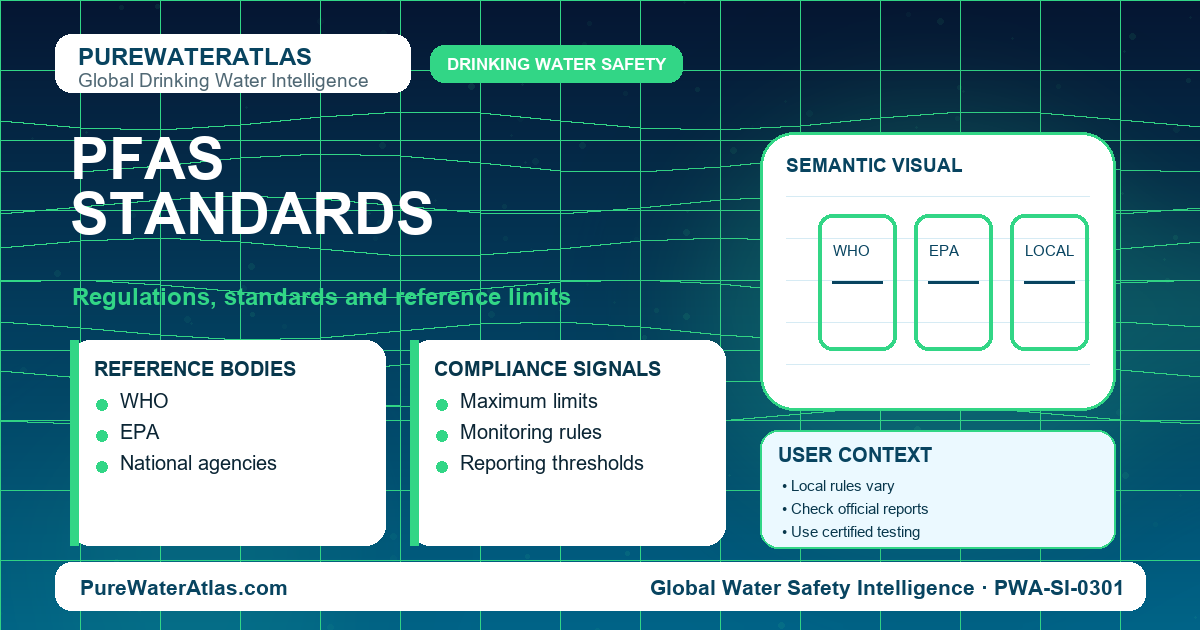
The who drinking water guidelines regulations topic can be confusing because WHO guidelines themselves are not automatically enforceable laws. Instead, they serve as a scientific and public health foundation that national and regional authorities often use when creating their own standards, regulations, and monitoring requirements.
How WHO Guidelines Are Used
Governments may adopt WHO recommendations directly, adapt them to local conditions, or use them as a reference when updating existing rules. This flexibility is important because countries differ in climate, water sources, technological capacity, baseline disease burden, economic constraints, and institutional resources.
For example, a country facing widespread microbial contamination may prioritize rapid expansion of disinfection and sanitary protection, while another may focus heavily on naturally occurring arsenic or fluoride. WHO guidance helps both contexts by providing a risk-based framework rather than a purely fixed checklist.
Relationship to National Standards
In many jurisdictions, legal drinking water standards are set by national ministries, environmental agencies, health departments, or regional regulators. These enforceable standards typically define:
- Maximum allowable concentrations for specific contaminants
- Required treatment performance levels
- Monitoring frequency and sampling locations
- Reporting and public notification obligations
- Corrective actions after exceedances or treatment failures
National standards may be stricter, equivalent to, or somewhat different from WHO values depending on local evidence and policy choices. The WHO role is to support scientifically sound decision-making and consistent public health protection.
Water Safety Plans and Compliance
A major contribution of the WHO framework is its support for preventive compliance. Traditional regulation often focused on end-product testing alone. While important, this can miss problems that occur between tests. WHO encourages regulatory systems to adopt Water Safety Plans so utilities actively identify hazards, establish control measures, and verify performance continuously.
This preventive model is particularly useful in complex systems where contamination may result from changing weather patterns, aging infrastructure, or mixed source waters. It also supports a more resilient response to emergencies, including floods, droughts, and infrastructure disruptions.
Small Systems and Rural Supplies
One of the practical challenges in implementing standards is the diversity of water systems. Large urban utilities may have sophisticated treatment plants and laboratories, while small rural systems may depend on wells, basic chlorination, or community-scale treatment. WHO guidance recognizes these differences and supports graduated risk management approaches that remain focused on health protection even where resources are limited.
This is one reason the WHO guidelines remain globally relevant. They are not useful only for large cities or wealthy countries; they are also designed to support safer water in low-resource settings through practical, risk-based prioritization.
Conclusion
The WHO drinking water guidelines provide a comprehensive public health framework for understanding, monitoring, and managing drinking water safety. They explain that safe water depends on more than clear appearance or occasional testing. True protection requires attention to contamination sources, treatment performance, distribution integrity, and ongoing risk management from source to tap.
A strong who drinking water guidelines overview shows that the guidelines are both scientific and practical. They address microbiological, chemical, and radiological risks; explain the importance of health-based targets; and promote preventive systems such as Water Safety Plans. They also help clarify the most important who drinking water guidelines health effects, from acute gastrointestinal illness to long-term toxic exposure, especially among vulnerable populations.
Equally important, the WHO framework supports effective who drinking water guidelines testing by linking laboratory analysis with operational monitoring and sanitary assessment. It informs who drinking water guidelines removal strategies by emphasizing source protection, multiple treatment barriers, and verification of treatment performance. And in the context of who drinking water guidelines regulations, it serves as a globally respected foundation for national laws and local standards.
Whether you are a homeowner, student, public health professional, utility operator, or policymaker, the main lesson is the same: safe drinking water is achieved through prevention, evidence, and system-wide management. Continued learning through resources on drinking water safety, water contamination, and water purification can help turn these guidelines into practical action for healthier communities.
Read the full guide: Drinking Water Safety Guide
Explore more in this category: Drinking Water Safety Articles
1 thought on “WHO Drinking Water Guidelines: Complete Guide”