Introduction
Safe drinking water is one of the foundations of public health, yet water quality can be affected by a wide range of natural and human-made influences. Understanding who drinking water guidelines causes and sources helps households, communities, building managers, and policymakers make informed decisions about water safety. The World Health Organization (WHO) provides globally respected guidance on drinking water quality, emphasizing a preventive, risk-based approach that considers contamination from source to consumer.
Rather than focusing only on whether water looks clear or tastes acceptable, WHO guidance examines the full chain of water safety: where water comes from, how it is treated, how it is stored, and how it is delivered to the point of use. Contaminants can enter water through environmental pollution, inadequate sanitation, industrial activity, agricultural runoff, poor infrastructure, and even household plumbing. Some hazards are microbial, such as bacteria, viruses, and parasites. Others are chemical, including arsenic, nitrate, lead, fluoride, and industrial pollutants. Physical and radiological concerns may also be relevant in specific settings.
This article explains the major causes and sources of drinking water contamination through the lens of WHO guidance. It also explores health effects, who drinking water guidelines detection methods, prevention strategies, common misunderstandings, and the role of regulations and standards. Readers seeking broader context may also find useful background in this complete guide to WHO drinking water guidance and additional resources in the drinking water safety category.
What It Is
The WHO Guidelines for Drinking-water Quality are international recommendations designed to protect public health by defining safe approaches to managing drinking water hazards. They are not simply a list of numbers or maximum concentrations. Instead, they present a framework for assessing risks, prioritizing control measures, and maintaining water safety throughout the entire supply system.
At the core of WHO guidance is the idea that drinking water quality should be managed proactively. This means identifying possible contamination sources before illness occurs, controlling hazards during treatment and distribution, and verifying that water remains safe when consumed. This framework is often described as a water safety plan approach.
When discussing who drinking water guidelines common sources, it is important to understand that WHO categorizes hazards into several broad groups:
- Microbial hazards: Bacteria, viruses, protozoa, and helminths that can cause infectious disease.
- Chemical hazards: Naturally occurring elements, industrial chemicals, agricultural chemicals, treatment by-products, and materials that leach from plumbing.
- Physical and aesthetic concerns: Turbidity, color, taste, odor, and particulates, which may affect acceptability and sometimes signal deeper safety problems.
- Radiological hazards: Radon, uranium, and other radioactive substances in certain geological areas.
The guidelines also recognize that risk varies by location. A rural groundwater source may face different hazards than a large urban utility drawing from a river. Household exposure may differ depending on whether water is piped, stored in containers, or treated at the point of use. For this reason, WHO guidance is adaptable and intended to support local risk assessment.
Another key point is that contamination can occur at multiple stages. Source water may be contaminated before collection, treatment may be inadequate or poorly maintained, and distribution systems may introduce additional hazards through leaks, cross-connections, or old plumbing. In some settings, water that leaves a treatment plant in safe condition can still become unsafe before it reaches the tap.
WHO guidance therefore treats drinking water quality as a system issue. It links sanitation, watershed protection, infrastructure design, treatment performance, routine monitoring, and public health surveillance. This broader perspective is especially helpful when considering who drinking water guidelines household exposure, because exposure often depends not just on source contamination but also on storage practices, plumbing materials, and consumer behavior.
Main Causes or Sources
The main causes and sources of drinking water contamination can be grouped into natural, agricultural, industrial, sanitation-related, infrastructure-related, and household-level pathways. Understanding these pathways is central to interpreting who drinking water guidelines causes and sources in practical terms.
Natural Geological Sources
Some contaminants occur naturally in soil and rock and may dissolve into groundwater or surface water. Common examples include arsenic, fluoride, manganese, iron, uranium, and salinity-related minerals. In some regions, geological conditions create persistent contamination even where there is little industrial development.
Natural contamination can be difficult to detect without testing because water may appear clear and normal. Arsenic is a major example: it can be present at harmful levels with no obvious taste, smell, or color. Excess fluoride can also occur naturally, benefiting dental health at lower concentrations but causing fluorosis at higher levels.
WHO guidance highlights the need to assess local geology, aquifer characteristics, and seasonal changes. Wells drawing from deep groundwater may be at risk from naturally occurring chemicals, while shallow wells may face both geological and microbial hazards.
Microbial Contamination from Human and Animal Waste
One of the most urgent water safety concerns worldwide is contamination from fecal matter. This is a major driver of waterborne disease and a central concern in WHO risk assessment. Pathogens can enter drinking water from open defecation, failing septic systems, sewer leaks, livestock operations, wildlife activity, and flood events.
Common microbial hazards include:
- Bacteria: Such as E. coli, Salmonella, Vibrio cholerae, and Campylobacter.
- Viruses: Such as norovirus, hepatitis A, and rotavirus.
- Protozoa: Such as Giardia and Cryptosporidium.
- Parasitic worms: In settings with poor sanitation and untreated water use.
Surface water sources are often more vulnerable than protected groundwater, but groundwater is not automatically safe. Shallow wells, damaged wellheads, and fractured rock formations can permit rapid movement of contaminated runoff or sewage into drinking water sources.
Agricultural Runoff
Agriculture can significantly affect water quality. Fertilizers contribute nitrate and phosphate to water bodies, while pesticides and herbicides may contaminate both surface water and groundwater. Animal waste from farms can introduce pathogens, nutrients, and pharmaceutical residues.
Nitrate is especially important in WHO guidance because elevated concentrations can pose serious risks to infants, including methemoglobinemia, sometimes called blue baby syndrome. Nutrient pollution can also trigger algal blooms, some of which produce toxins that threaten both human and ecosystem health.
The degree of risk depends on land use intensity, rainfall, irrigation methods, soil conditions, and how close farming activities are to water sources. WHO frameworks encourage catchment management and source protection to reduce these upstream risks.
Industrial and Commercial Activities
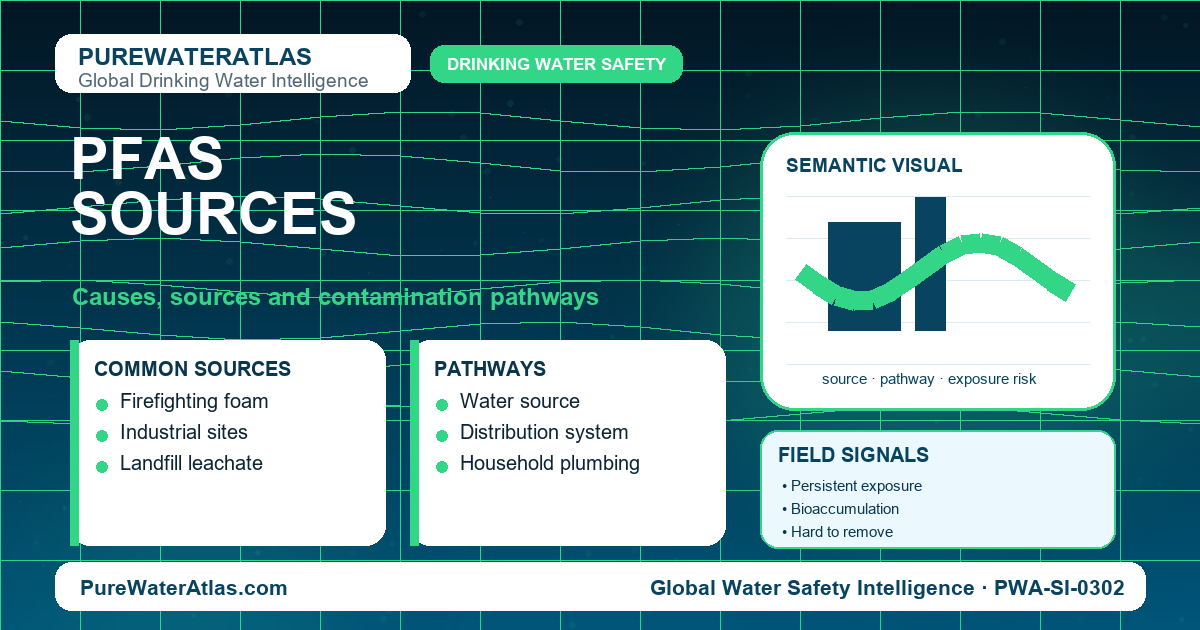
Factories, mining operations, fuel storage sites, landfills, and workshops may release a wide range of contaminants into water sources. These can include heavy metals, solvents, petroleum hydrocarbons, PFAS and other persistent chemicals, cyanide, acids, and manufacturing by-products.
Industrial contamination may arise from accidental spills, poor waste disposal, leaking storage tanks, or inadequate regulation and oversight. In mining areas, acid mine drainage and metal contamination can affect both surface water and groundwater. In urban and peri-urban zones, mixed industrial discharges may create complex chemical exposure patterns.
WHO guidance stresses that chemical risks often involve long-term exposure rather than immediate illness, though some contaminants can produce acute toxicity under certain conditions. The persistence of some industrial chemicals also means that contamination may remain in the environment long after the original source has been controlled.
Water Treatment Failures
Even when source water is contaminated, effective treatment can often make it safe. However, treatment failures are a major source of risk. Problems may include inadequate filtration, insufficient disinfection, equipment breakdowns, poor operator training, lack of maintenance, or interruptions in power supply.
Microbial contamination is especially dangerous when treatment barriers fail, because disease outbreaks can occur quickly. Chemical problems can also arise when treatment processes are not suited to the specific contaminants present. In some cases, treatment itself can create by-products, such as trihalomethanes, when disinfectants react with organic matter in water.
WHO therefore promotes multiple barriers rather than reliance on a single step. Source protection, treatment optimization, secure storage, and distribution system integrity all work together to reduce risk.
Distribution System and Plumbing Issues
Water quality can deteriorate after treatment as water moves through pipes, tanks, and building plumbing. Leaks and pressure loss can allow contaminants to enter the distribution system. Stagnation can encourage microbial growth. Old materials may leach chemicals or metals into water.
This is a major area of concern for who drinking water guidelines household exposure. Lead can leach from old service lines, brass fixtures, solder, or plumbing components, especially when water is corrosive. Copper and nickel may also leach under certain conditions. In large buildings, poorly maintained water systems can support Legionella growth, though this is often addressed within broader water management rather than standard drinking-water ingestion risk alone.
Households may assume piped water remains unchanged from treatment plant to tap, but infrastructure conditions matter greatly. Aging networks, intermittent supply, rooftop storage tanks, and premise plumbing all influence final water quality.
Household Storage and Handling
In many parts of the world, water is collected, carried, and stored before use. Even if collected from a relatively safe source, it can become contaminated during transport or storage. Unclean containers, hand contact, dipping utensils into storage vessels, and exposure to dust or animals can reintroduce pathogens.
WHO recognizes that household-level contamination is a major factor in disease transmission, particularly where people rely on untreated or partially treated supplies. Safe storage containers, regular cleaning, and point-of-use treatment can reduce this risk substantially.
Health and Safety Implications
The health impact of contaminated drinking water depends on the type of contaminant, concentration, duration of exposure, age and health status of the person exposed, and the total amount consumed. WHO guidance distinguishes between hazards causing immediate infectious disease and those causing chronic effects over time.
Acute Microbial Risks
Microbial contamination is often the highest priority because it can cause rapid and widespread illness. Symptoms may include diarrhea, vomiting, fever, abdominal pain, dehydration, and, in severe cases, death. Children, older adults, pregnant women, and immunocompromised individuals are especially vulnerable.
Waterborne outbreaks can spread quickly in communities when disinfection fails or fecal contamination enters the water supply. Cholera, typhoid, hepatitis A, dysentery, and protozoal infections remain major concerns in many regions. Even less severe diarrheal disease can contribute to malnutrition, school absence, and economic hardship.
Chronic Chemical Exposure
Chemical contaminants are more likely to cause long-term health effects after repeated exposure. Examples include:
- Arsenic: Skin lesions, cardiovascular effects, and increased cancer risk.
- Lead: Neurodevelopmental harm in children, cardiovascular and kidney effects in adults.
- Nitrate: Infant methemoglobinemia and possible broader health concerns in certain contexts.
- Fluoride: Dental or skeletal fluorosis at excessive levels.
- Uranium and some metals: Kidney-related toxicity and other systemic effects depending on exposure level.
These risks are a key part of who drinking water guidelines risk factors, because harm may develop quietly over time. Water can be consumed daily for years, making low-to-moderate contamination highly significant from a public health standpoint.
Indirect and Community-Level Impacts
Unsafe water affects more than individual health. It can strain healthcare systems, reduce school attendance, lower workplace productivity, and increase household expenses through medical costs and alternative water purchases. Communities with unreliable or unsafe water may also face social inequality, as lower-income households often have fewer treatment options and less ability to install filtration systems.
For a deeper look at outcomes associated with contaminated supplies, readers may consult this overview of health effects and risks.
Testing and Detection
Testing is essential because many harmful contaminants cannot be seen, smelled, or tasted. WHO guidance supports a combination of sanitary inspection, operational monitoring, and laboratory verification. In practice, who drinking water guidelines detection involves both identifying hazards and confirming whether control measures are working.
Sanitary Inspection and Risk Assessment
Sanitary inspection is often the first step. It involves examining the water source, treatment process, storage conditions, and distribution system for vulnerabilities. Inspectors may look for nearby latrines, livestock access, damaged well seals, poor drainage, cross-connections, corrosion issues, or insecure storage tanks.
This preventive approach is especially valuable where laboratory capacity is limited. It helps identify contamination risks before they result in poor water quality data or illness.
Microbiological Testing
Routine microbiological testing often uses indicator organisms, particularly E. coli, to assess fecal contamination. While not every pathogen is measured directly, indicator bacteria provide practical evidence that fecal pollution may be present.
Other testing approaches may include total coliform monitoring, heterotrophic plate counts in some system assessments, and specialized pathogen testing during outbreaks or investigations. Turbidity is also important, because cloudy water can reduce disinfection effectiveness and suggest treatment failure.
Chemical Analysis
Chemical testing depends on local risk factors. Water systems may test for arsenic, fluoride, nitrate, lead, pesticides, industrial chemicals, hardness, pH, manganese, iron, or disinfection by-products depending on source characteristics and infrastructure conditions.
Targeted testing is often more useful than broad screening when informed by geology, land use, and known contamination threats. For example:
- Areas with volcanic or sedimentary geology may prioritize arsenic or fluoride.
- Farming regions may emphasize nitrate and pesticide monitoring.
- Older buildings may require lead and copper testing at the tap.
- Industrial corridors may need solvent or metal testing.
Household and Point-of-Use Testing
For private wells and household systems, testing should be performed regularly and after flooding, repairs, changes in taste or color, or local contamination events. Home test kits can be useful for screening certain parameters, but laboratory analysis is usually needed for reliable confirmation, especially for metals and complex chemicals.
Consumers interested in methods and monitoring strategies can learn more from this guide to testing and detection methods.
Prevention and Treatment
The most effective way to ensure safe drinking water is to prevent contamination before it reaches consumers. WHO emphasizes preventive management rather than relying only on end-point testing. This section addresses who drinking water guidelines prevention in practical terms.
Source Protection
Protecting the water source is the first barrier. This may include watershed management, controlling industrial discharge, regulating agricultural runoff, securing wellheads, improving sanitation, and creating buffer zones around critical water sources. Preventing pollution upstream is often more effective and less expensive than removing contaminants later.
Appropriate Water Treatment
Treatment should match the hazards present. Common methods include:
- Coagulation, flocculation, and filtration: Remove particles and improve clarity.
- Disinfection: Chlorine, chloramine, ozone, or ultraviolet treatment to control microbes.
- Activated carbon: Reduces some organic chemicals, taste, and odor compounds.
- Reverse osmosis or ion exchange: Used for certain dissolved chemicals such as nitrate, fluoride, or salts.
- Specialized media: For arsenic, iron, manganese, and other specific contaminants.
No single treatment method works for every contaminant. Selection should be based on water testing, technical feasibility, cost, and maintenance capacity. More information on options can be found in the water purification category and the water treatment systems category.
Distribution System Maintenance
Maintaining pressure, preventing leaks, cleaning storage tanks, replacing deteriorating pipes, and controlling corrosion are all essential. Corrosion control is especially important in reducing metal leaching from plumbing. Utilities and building owners must treat distribution and premise plumbing as active parts of water safety management.
Household-Level Prevention
At the household level, prevention includes safe storage, regular cleaning of containers, proper handling practices, and point-of-use treatment where needed. Depending on the risk, options may include boiling, chlorination, certified filters, ultraviolet devices, or reverse osmosis systems. However, each method has limitations. Boiling is effective against microbes but does not remove metals. Basic carbon filters may improve taste but not eliminate nitrate or arsenic. Consumers should choose treatment methods based on identified contaminants.
Monitoring and Public Communication
Prevention also depends on routine monitoring and transparent communication. Water suppliers should track operational indicators such as disinfectant residual, turbidity, and system pressure. They should also communicate advisories promptly during contamination events, treatment failures, or boil-water notices.
Common Misconceptions
Misunderstandings about drinking water safety can lead to preventable exposure. WHO-aligned water safety education often addresses the following common misconceptions.
“Clear water is safe water.”
Many dangerous contaminants are invisible. Arsenic, nitrate, lead, and many pathogens may be present in water that looks perfectly clean. Appearance alone is not a reliable indicator of safety.
“Groundwater is always pure.”
Groundwater is often better protected than surface water, but it can still contain pathogens, arsenic, fluoride, nitrate, uranium, and other contaminants. Well construction, local geology, and nearby sanitation conditions all matter.
“Boiling solves every water problem.”
Boiling can inactivate most microbes, but it does not remove heavy metals, nitrate, salts, or many industrial chemicals. In fact, boiling may slightly concentrate dissolved contaminants as water evaporates.
“Bad taste or odor always means danger, and no taste means no risk.”
Unusual taste or odor can signal a problem, but some aesthetic issues are not severe health threats. Conversely, some high-risk contaminants have no noticeable taste, smell, or color.
“If a city treats water, household plumbing does not matter.”
Treated water can become contaminated in service lines, building pipes, tanks, and fixtures. Lead and copper exposure often occurs after water leaves the treatment plant. This is why who drinking water guidelines household exposure includes plumbing conditions as a major consideration.
Regulations and Standards
WHO guidelines are internationally influential, but they are guidance rather than legally binding law. Countries and local authorities use them to develop standards, regulations, and compliance frameworks suited to national circumstances, available resources, and local risks.
In many jurisdictions, regulations establish maximum allowable concentrations for specific contaminants, monitoring frequencies, reporting duties, and treatment requirements. WHO guidance supports this process by offering health-based values, risk management principles, and practical recommendations for implementation.
A key strength of the WHO approach is that it balances numerical guideline values with system-wide prevention. A water supply should not be considered safe merely because occasional tests meet a standard. Safety depends on consistent control of hazards through source protection, treatment reliability, infrastructure maintenance, and surveillance.
Regulatory systems may differ in how they classify public systems, private wells, bottled water, and small community supplies. Private wells often receive less formal oversight, which means owners must take greater responsibility for testing and maintenance. Small systems may face special challenges related to technical capacity, funding, and access to laboratories.
WHO guidance also supports adaptation to emerging issues. As scientific understanding evolves, water quality management must address new contaminants, changing climate patterns, population growth, and infrastructure aging. Flooding, drought, and extreme weather can all alter contaminant pathways and place greater stress on treatment and distribution systems.
Ultimately, regulations work best when paired with public education, reliable monitoring, clear accountability, and investment in infrastructure. The WHO framework helps align these efforts around prevention and health protection.
Conclusion
Understanding who drinking water guidelines causes and sources is essential for protecting public health. Drinking water contamination may begin in the natural environment, result from poor sanitation, arise from agriculture or industry, develop through treatment failures, or occur within pipes and household storage containers. Because risks vary by location and water system type, WHO promotes a preventive, risk-based approach rather than relying only on occasional end-point testing.
The most important lesson is that safe water depends on the entire chain of control. Source protection, effective treatment, secure distribution, careful household handling, and regular monitoring all play important roles. Microbial contamination can cause immediate disease, while chemical contamination may produce long-term harm that is easy to overlook without testing.
By understanding who drinking water guidelines common sources, recognizing who drinking water guidelines risk factors, applying appropriate who drinking water guidelines detection strategies, and following strong who drinking water guidelines prevention practices, communities and households can reduce exposure and improve safety. Whether the concern is a municipal supply, a private well, or stored household water, informed action is the key to healthier outcomes.
Read the full guide: Drinking Water Safety Guide
Explore more in this category: Drinking Water Safety Articles