
Introduction
Understanding epa drinking water rules warning signs is an important part of protecting household health, maintaining confidence in tap water, and knowing when to seek further testing or professional help. The U.S. Environmental Protection Agency establishes national standards for public drinking water under the Safe Drinking Water Act, but many consumers are not sure how those rules translate into practical, everyday observations at the tap. People often ask whether a metallic taste, chlorine smell, cloudiness, staining, or sudden stomach upset could indicate a water-quality issue. The answer is sometimes yes, but not always. Some warning signs reflect harmless aesthetic issues, while others may point to contaminants, treatment failures, plumbing corrosion, or local distribution-system problems.
This article explains how to recognize possible indicators of water-quality problems through a practical, educational lens. It covers visible, sensory, and health-related clues; common contamination sources; and how these signs relate to federal drinking water standards. It also clarifies a critical point: many dangerous contaminants have no taste, smell, or color at all. That is why awareness of symptoms and red flags should be paired with informed testing, especially in homes with private wells, older plumbing, or vulnerable occupants such as infants, pregnant individuals, older adults, and people with weakened immune systems.
If you are exploring broader tap-water protection topics, resources in drinking water safety can provide helpful background. Readers who want a broader overview of rule categories, contaminant types, and compliance frameworks may also benefit from this complete guide to EPA drinking water rules. In the sections below, the focus is on what warning signs can and cannot tell you, what the most common risk indicators are, and when professional testing is the safest next step.
What It Is
In practical terms, epa drinking water rules warning signs refers to observable clues or circumstances that may suggest drinking water does not meet expected safety or quality standards. These signs do not replace laboratory analysis or utility reporting, but they can alert consumers to problems that deserve attention. EPA rules regulate many contaminants in public water systems, including microbial pathogens, disinfectant byproducts, metals, nitrates, certain chemicals, and radionuclides. They also require monitoring, treatment, reporting, and public notification when standards are exceeded.
From a consumer perspective, warning signs generally fall into several categories:
- Taste and odor changes, such as chlorine, sulfur, musty, earthy, metallic, or chemical notes.
- Visible signs, including discoloration, sediment, oily sheen, scale, staining, or unusual cloudiness.
- Household patterns, such as only hot water being affected, problems appearing after plumbing repairs, or issues isolated to one faucet.
- Health symptoms that may coincide with water exposure, including gastrointestinal illness, skin irritation, or concerns about long-term contaminant exposure.
- Risk indicators in the surrounding environment, such as flooding, nearby industry, agricultural runoff, or aging distribution infrastructure.
It is important to distinguish between EPA-regulated safety violations and aesthetic concerns. Some water characteristics, such as hardness or harmless mineral taste, may be unpleasant but not dangerous. Conversely, lead, nitrates, arsenic, PFAS, and many microbial contaminants may be present without obvious sensory clues. That is why epa drinking water rules taste and odor concerns should be treated as useful indicators, not definitive proof of safety or danger.
Another important distinction is between public water systems and private wells. EPA drinking water rules apply directly to public systems, not most private wells. However, homeowners with wells can still use the same concepts of warning signs, health symptoms, and routine testing to manage risk. In both cases, understanding signs at the tap helps consumers ask better questions, interpret water-quality reports more effectively, and respond more quickly when something changes.
Main Causes or Sources
Water-quality warning signs can come from the source water itself, treatment processes, distribution systems, or plumbing inside the building. When evaluating epa drinking water rules risk indicators, it helps to think of water as moving through several stages, each with its own vulnerabilities.
Source Water Contamination
Lakes, rivers, reservoirs, and groundwater aquifers can be affected by both natural and human-made contaminants. Common source-related factors include:
- Agricultural runoff, which may introduce nitrates, pesticides, sediment, and microbial contamination from livestock operations.
- Industrial discharges, which can contribute solvents, metals, PFAS, petroleum compounds, and other chemicals.
- Urban stormwater runoff, often carrying oils, salts, debris, and pathogens.
- Natural geology, which may contribute arsenic, manganese, iron, sulfur compounds, or radionuclides.
- Wildfire or land disturbance, which can alter source-water chemistry and increase sediment or organic matter.
For a more targeted discussion of contamination pathways, readers may find this overview of causes and sources useful.
Treatment Problems
Public water systems rely on treatment barriers such as coagulation, filtration, disinfection, corrosion control, and ongoing monitoring. If treatment is disrupted or inadequately optimized, problems may emerge. These can include microbial breakthrough, excessive disinfectant residuals, elevated disinfection byproducts, or particles escaping filtration. Treatment changes can also affect taste, odor, and the stability of metals in the system.
Distribution System Issues
Even if treated water leaves the plant in compliance, it may encounter problems in storage tanks and distribution pipes. Main breaks, pressure losses, biofilm development, dead-end lines, and pipe corrosion can all influence water quality. Sediment disturbances may cause temporary brown or cloudy water. Low pressure events can increase the risk of contamination entering the system. Stagnation in underused buildings can change disinfectant levels and encourage microbial growth.
Premise Plumbing and Household Factors
Sometimes the red flags are not caused by the utility at all, but by the building’s own plumbing. Corroded galvanized pipes, lead service lines, lead solder, brass fixtures, water heaters, filters that are not maintained, and cross-connections can all create localized issues. If discoloration or odor occurs at only one tap, the problem is often within the home rather than in the public supply.
Common examples include:
- Metallic taste from corrosion releasing iron, copper, or other metals.
- Rotten egg odor from hydrogen sulfide, sulfur bacteria, or reactions in a water heater.
- Blue-green staining from copper corrosion.
- Brown or orange water from disturbed iron rust or old piping.
- Persistent cloudiness from air, sediment, or treatment inefficiency.
Environmental and Situational Risk Indicators
Some warning signs are circumstantial rather than sensory. These epa drinking water rules risk indicators include recent flooding, nearby construction, chemical spills, drought conditions, frequent water main repairs, agricultural activity near a well, or a sudden change in utility notices. Such conditions do not prove contamination, but they strengthen the case for caution and timely testing.
Health and Safety Implications
One of the most common concerns is whether unusual water characteristics can cause illness. EPA drinking water rules health symptoms can be considered in two categories: acute effects that occur quickly and chronic effects associated with long-term exposure. It is essential to remember that symptoms alone cannot diagnose a contaminant. Many illnesses have multiple possible causes, and many water contaminants do not produce immediate noticeable effects.
Acute Health Symptoms
Short-term exposure to contaminated water can sometimes lead to:
- Nausea
- Vomiting
- Diarrhea
- Stomach cramps
- Headaches
- Skin irritation
- Eye irritation
These symptoms are often associated with microbial contamination, elevated nitrates in vulnerable populations, certain chemicals, or excessive disinfectant exposure in unusual circumstances. Bacteria, viruses, and protozoa are especially important when there has been a boil-water advisory, flooding, low water pressure, or compromised treatment.
Chronic and Long-Term Risks
Long-term exposure concerns are often more serious because they may occur without immediate symptoms. Examples include:
- Lead, associated with developmental effects in children, cardiovascular impacts, and neurological concerns.
- Arsenic, associated with cancer and other systemic health effects over time.
- Nitrate, particularly dangerous for infants because of the risk of methemoglobinemia.
- Disinfection byproducts, which may present long-term risk when elevated over regulatory thresholds.
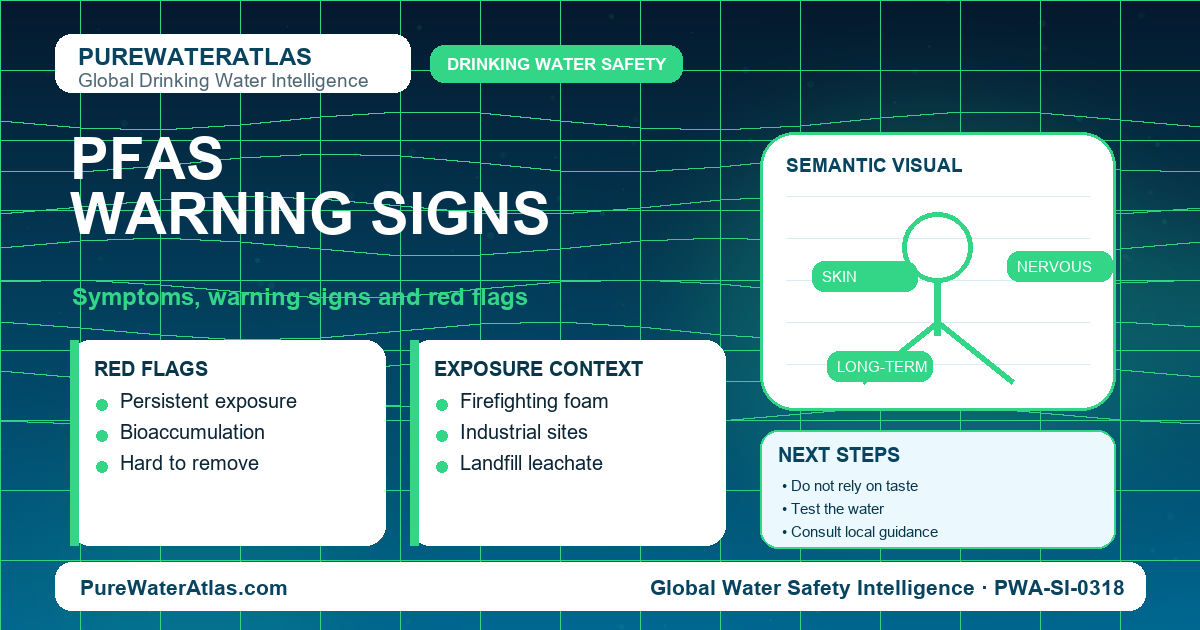
- PFAS and other persistent chemicals, increasingly monitored because of links to multiple health concerns.
These risks underscore why sensory impressions alone are not enough. Water can look, taste, and smell normal while still containing contaminants of concern.
Who Is Most Vulnerable
Certain groups may be more sensitive to water-quality problems:
- Infants and young children
- Pregnant individuals
- Older adults
- People with kidney disease or liver disease
- People with weakened immune systems
For these populations, even low or moderate contamination levels may warrant faster action, especially where microbial contamination, nitrates, or metals are suspected.
When Symptoms Should Raise Concern
Health symptoms become more meaningful as warning signs when they occur alongside water-quality changes or risk events. For example, concern is higher if stomach illness appears shortly after a boil-water notice, if tap water suddenly develops an unusual odor and multiple household members become ill, or if an infant in a private-well home is consuming formula prepared with high-nitrate water. More information on contaminant health concerns can be found at health effects and risks.
Testing and Detection
The most reliable way to respond to epa drinking water rules warning signs is through testing and verification. Consumers often want to know epa drinking water rules when to test, and the answer depends on both symptoms and circumstances. Testing may be recommended even when no obvious problem is present, especially for private wells or homes with older plumbing.
Signs That Suggest Testing Is Needed
You should strongly consider water testing if you notice:
- A sudden change in color, taste, or smell
- Recurring sediment or unexplained cloudiness
- Staining of sinks, laundry, or fixtures
- Water-quality changes after flooding, construction, or plumbing work
- A boil-water advisory or public notice from the utility
- Corrosion indicators such as metallic taste or blue-green stains
- Household illness that appears linked to water use
- Use of a private well, especially if routine testing has been neglected
What Taste, Odor, and Visible Signs Can Suggest
EPA drinking water rules taste and odor issues can sometimes point to specific categories of problems:
- Chlorine smell: often reflects disinfection residual; not automatically unsafe, though a sudden strong change merits inquiry.
- Rotten egg smell: may indicate hydrogen sulfide, sulfur bacteria, or water-heater-related issues.
- Musty or earthy odor: can result from algal compounds, organic matter, or microbial activity.
- Metallic taste: may suggest corrosion, iron, manganese, or copper-related issues.
- Chemical or solvent-like odor: should be taken seriously and may justify immediate reporting and testing.
EPA drinking water rules visible signs can also help narrow possibilities:
- Brown, orange, or reddish water: often linked to iron, rust, or disturbed sediment.
- Black staining: can be associated with manganese.
- Blue-green staining: may indicate copper corrosion.
- Milky or cloudy water: can be trapped air, but persistent turbidity requires attention.
- Particles or sediment: may signal pipe scale, source-water disturbance, or filtration issues.
Types of Testing
Different warning signs call for different tests. Depending on the situation, useful analyses may include:
- Microbial testing for coliform bacteria, E. coli, or other indicators
- Metals testing for lead, copper, iron, manganese, or arsenic
- Chemical testing for nitrates, volatile organic compounds, pesticides, or PFAS
- General water-quality tests for pH, hardness, total dissolved solids, and turbidity
For microbiological concerns and indicators of pathogen risk, readers may want to explore materials under water microbiology. Broader contamination topics are also covered in water contamination.
Consumer Confidence Reports and Utility Communication
If you are served by a public water system, a key first step is reviewing the system’s annual Consumer Confidence Report, sometimes called a water-quality report. This document summarizes detected contaminants, regulatory compliance, treatment information, and source details. If a warning sign appears suddenly, contacting the utility can clarify whether there has been a main break, hydrant flushing, treatment change, or known distribution issue.
Certified Laboratory Testing
Home test strips can be useful for screening certain parameters, but they are not a substitute for certified laboratory testing when health is at stake. A state-certified lab can guide sample collection and the correct contaminant panel. This matters because a poorly chosen test may miss the actual problem. For example, testing for hardness will not reveal lead, and a standard bacteria screen will not identify many chemical contaminants.
Prevention and Treatment
Preventing drinking water problems requires a combination of infrastructure protection, household maintenance, and informed decision-making. Once a warning sign has been identified, the right response depends on whether the issue is aesthetic, operational, or clearly health-related.
Household Prevention Steps
- Flush taps after long periods of nonuse, especially in older buildings.
- Use only cold water for cooking and drinking, since hot water can dissolve metals more readily from plumbing.
- Maintain water heaters and point-of-use devices according to manufacturer instructions.
- Replace refrigerator, pitcher, or under-sink filters on schedule.
- Clean faucet aerators if sediment accumulates.
- Know whether your home has a lead service line or older plumbing materials.
Public System Response Measures
Utilities use multiple strategies to prevent regulated violations and address red flags, including source-water protection, filtration, disinfection control, corrosion control treatment, distribution flushing, storage maintenance, and continuous monitoring. Public notification rules are especially important because consumers may need to boil water, avoid certain uses, or seek an alternative water source when a serious event occurs.
Private Well Protection
Private well owners must take a more active role because they are not directly covered by EPA public-water monitoring requirements. Good practice includes annual bacteria and nitrate testing, periodic testing for local contaminants of concern, inspection of the well cap and casing, keeping contaminants away from the wellhead, and testing after floods, repairs, or land-use changes.
Treatment Options
Treatment should be chosen based on confirmed contaminants rather than guesswork. Common options include:
- Activated carbon for improving some taste and odor issues and reducing certain organic chemicals.
- Reverse osmosis for reducing many dissolved contaminants, depending on system design.
- Ion exchange or specialized media for nitrate, arsenic, or other specific contaminants.
- UV disinfection for microbial control when appropriately sized and maintained.
- Oxidation and filtration for iron, manganese, or sulfur-related problems.
It is important not to assume that any single filter solves every problem. Some filters improve odor but do little for lead or nitrates. Others require maintenance; if neglected, they can lose effectiveness or even worsen microbial issues.
When Immediate Action Is Warranted
If water has a fuel-like or chemical solvent odor, if there is a boil-water advisory, or if there is reason to suspect sewage intrusion, flooding-related contamination, or dangerously high nitrates for infant use, do not wait for routine convenience. Use bottled or otherwise safe water, notify the utility or local health department, and arrange prompt testing or professional guidance.
Common Misconceptions
Misunderstandings about water quality can delay appropriate action. Several common myths are worth correcting.
If Water Looks Clear, It Must Be Safe
This is false. Many serious contaminants are invisible. Lead, arsenic, nitrates, and numerous synthetic chemicals may not affect appearance at all. Clear water can still fail health-based standards.
Bad Taste Always Means Dangerous Water
Not necessarily. Taste and odor changes can reflect harmless minerals, disinfectant residuals, or temporary aesthetic conditions. However, they should not be ignored, especially if the change is sudden, severe, or accompanied by other warning signs.
Boiling Water Fixes Every Problem
Boiling is useful for many microbial concerns, especially during certain advisories, but it does not remove metals like lead and may concentrate some dissolved chemicals as water evaporates. The correct response depends on the contaminant.
Filters Make Any Water Safe
No filter works for everything. Some reduce chlorine taste but not pathogens. Others reduce certain metals but not volatile compounds. Effective treatment depends on correct technology, certification, installation, and maintenance.
EPA Rules Cover Every Tap and Every Home Equally
EPA rules primarily govern public water systems. Private wells generally fall outside direct EPA enforcement. In addition, a public system may deliver compliant water to the property line, while building plumbing still contributes metals or localized contamination.
Symptoms Prove the Water Is the Cause
Health symptoms can be an important clue, but they are not a diagnosis. Illness can have many sources. At the same time, the absence of symptoms does not prove water is safe. Testing and professional evaluation remain essential.
Regulations and Standards
To understand epa drinking water rules warning signs, it helps to know how EPA regulations are structured. Under the Safe Drinking Water Act, EPA sets enforceable standards for many contaminants in public water systems. These standards include Maximum Contaminant Levels, treatment technique requirements, monitoring schedules, and public notification obligations.
Health-Based Standards and Practical Enforcement
EPA’s framework generally involves two related concepts:
- Maximum Contaminant Level Goals, which are health-based targets and may be set at zero for contaminants with no known safe exposure level.
- Maximum Contaminant Levels, which are enforceable limits that reflect both health protection and treatment feasibility.
Some contaminants are regulated through treatment techniques instead of a numeric limit, especially where treatment performance is more practical than end-point measurement alone.
Action Levels and Corrosion Control
Lead and copper rules are especially relevant to household warning signs because contamination often comes from plumbing, not source water. Instead of a standard maximum contaminant level at the treatment plant, these rules rely heavily on tap sampling, corrosion control requirements, public education, and corrective measures when action levels are exceeded.
Monitoring and Notification
Public systems must monitor for regulated contaminants on established schedules and report certain violations. When serious acute risks are identified, consumers must be notified promptly. This is why paying attention to utility notices, local health alerts, and annual water reports is an important part of recognizing red flags.
Secondary Standards and Aesthetic Issues
Not all water-quality characteristics are regulated the same way. Some substances have secondary standards related to taste, odor, staining, or appearance rather than direct health effects. Iron, manganese, and total dissolved solids often fall into this category, though elevated levels can still create operational, sensory, or indirect health concerns in some contexts. This explains why some noticeable problems may be unpleasant but not necessarily a violation of a primary health standard.
Why Warning Signs Still Matter in a Regulated System
Even with strong regulations, warning signs remain important because water conditions can change between monitoring cycles, local plumbing can create site-specific issues, and some risks are not obvious from routine sensory observation. In other words, EPA standards provide the regulatory backbone, while consumer awareness provides an additional layer of practical protection.
Conclusion
Recognizing epa drinking water rules warning signs means learning how to interpret what you see, smell, taste, and experience without jumping to conclusions. Unusual taste, odor, discoloration, sediment, staining, or household illness may indicate a water problem, but none of these signs alone is definitive. Some noticeable changes are aesthetic and temporary. Others point to corrosion, microbial risk, plumbing issues, or contamination that deserves immediate attention. Just as importantly, some of the most serious contaminants may have no obvious signs at all.
The safest approach is balanced and evidence-based. Pay attention to epa drinking water rules visible signs, epa drinking water rules taste and odor changes, and possible epa drinking water rules health symptoms, but confirm concerns through certified testing, utility communication, and review of official water-quality reports. Know the specific epa drinking water rules when to test scenarios that apply to your home, especially after flooding, plumbing changes, boil-water advisories, or any persistent change in water quality. By combining practical awareness with accurate testing and knowledge of epa drinking water rules risk indicators, households can respond earlier, reduce exposure, and make better decisions about drinking water safety.
Read the full guide: Drinking Water Safety Guide
Explore more in this category: Drinking Water Safety Articles