
Introduction
Parents and caregivers often assume that if water looks clear, it must be safe. In reality, water quality problems are not always visible, and infants and children are often more vulnerable than adults to contaminants, microbes, and chemical imbalances in drinking water. Understanding safe water for babies and children warning signs is essential for protecting hydration, feeding, formula preparation, and overall health.
Young children have developing immune systems, smaller bodies, and higher water intake relative to body weight. That means a contaminant level that causes mild or no symptoms in an adult may have a more serious effect in a baby or toddler. In some cases, warning signs come from the water itself, such as unusual color, cloudiness, staining, or a strange smell. In other cases, the earliest clues show up in the child, including stomach upset, skin irritation, or recurrent illness.
This article explains how to recognize water-related concerns, what causes them, how they can affect children, and when testing is appropriate. It also clarifies the difference between immediate red flags and longer-term risk indicators. If you are looking for broader background, see this complete guide and additional resources in drinking water safety and water science.
What It Is
Safe water for babies and children means water that is microbiologically safe, chemically acceptable, and suitable for drinking, cooking, and preparing infant formula. It should not contain harmful levels of bacteria, viruses, parasites, lead, nitrates, arsenic, or other contaminants that can affect health. It should also be reasonably free of objectionable tastes, odors, and visible abnormalities that may signal a problem.
When discussing safe water for babies and children warning signs, it helps to divide them into three practical categories:
- Sensory warning signs: things you notice with your eyes, nose, or taste, such as discoloration, sediment, metallic taste, sulfur smell, or oily sheen.
- Environmental risk indicators: conditions around the home or water system that increase the chance of contamination, such as private wells, old plumbing, flooding, nearby agriculture, or recent plumbing work.
- Health symptoms: changes in the child that may be linked to unsafe water, including diarrhea, vomiting, poor feeding, unusual fatigue, or skin reactions.
These categories matter because no single sign can confirm water safety on its own. For example, some dangerous contaminants have no taste, smell, or color at all. Lead is a classic example: water may appear perfectly normal while still posing risk. On the other hand, unpleasant taste or odor does not always mean severe danger, but it should prompt attention, especially where babies are concerned.
Safe water for babies and children visible signs are useful but incomplete. Cloudiness, particles, rust-colored water, black specks, or slimy buildup around faucets may indicate corrosion, sediment, microbial growth, or plumbing issues. However, many serious contaminants are invisible. Likewise, safe water for babies and children taste and odor concerns such as chlorine smell, rotten egg odor, musty flavor, or metallic taste may signal treatment chemicals, sulfur bacteria, algal compounds, pipe corrosion, or source-water changes.
The concept of water safety for children also includes suitability for specific uses. Water that seems acceptable for bathing may still be inappropriate for formula mixing. Water that is acceptable for healthy older children may not be ideal for newborns, especially if nitrate levels are elevated or if the source has not been recently tested. This is why pediatricians and public health authorities often recommend extra caution for infants under six months.
Main Causes or Sources
The causes of unsafe water vary by geography, water source, infrastructure, and household conditions. Municipal water systems and private wells face different challenges. Homes with old plumbing may also introduce risks even when the public supply meets treatment standards.
Microbial contamination
Microorganisms are among the most immediate threats to babies and children. Bacteria, viruses, and parasites can enter water through sewage leaks, failing septic systems, flooding, agricultural runoff, wildlife activity, or inadequate treatment. Common concerns include E. coli, coliform bacteria, Giardia, and Cryptosporidium.
Microbial contamination is especially important after storms, boil-water advisories, pressure loss events, and well flooding. In infants and young children, gastrointestinal infections can lead to rapid dehydration. If a child develops sudden vomiting or diarrhea and there has been a recent disruption in water service or storm event, water should be considered as one possible source.
Lead and plumbing-related contamination
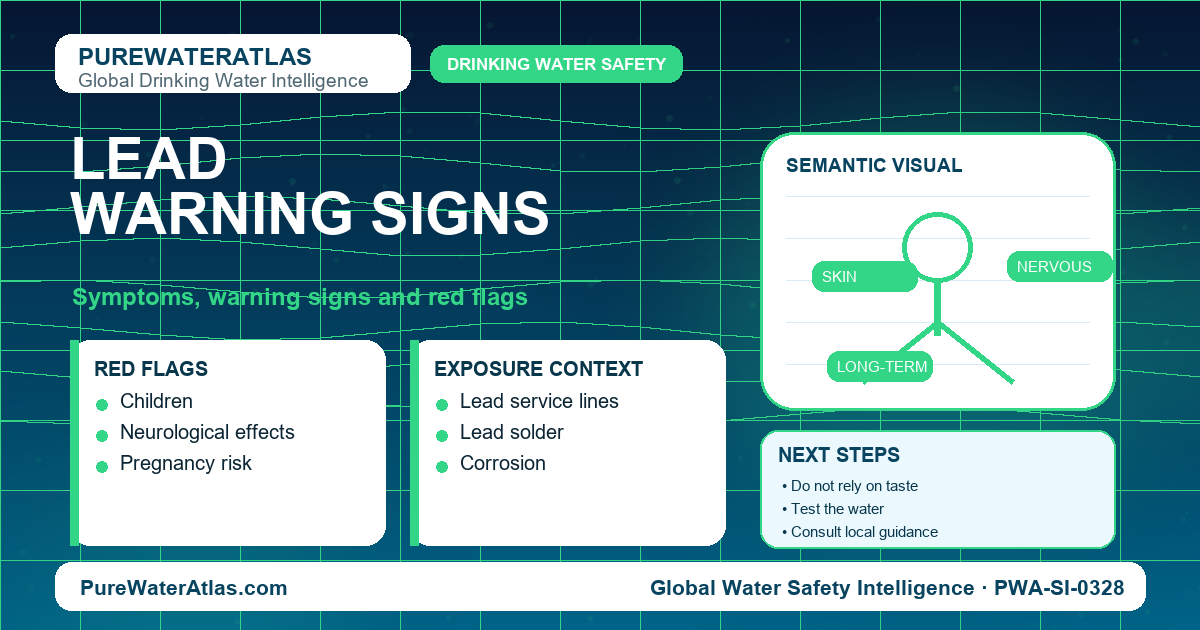
Lead is one of the most significant household water hazards for children. It usually does not come from the water source itself but from lead service lines, solder, brass fixtures, or older plumbing. Homes built before modern plumbing restrictions are at greater risk. Because children’s brains and nervous systems are still developing, even low-level lead exposure is a serious concern.
Corrosion can also release copper and other metals. Blue-green staining, metallic taste, or plumbing corrosion may suggest water chemistry issues that increase metal leaching. Still, lead often gives no sensory clues at all, making testing crucial where plumbing age or materials raise concern.
Nitrates and agricultural influence
Nitrates are especially dangerous for young infants, particularly those under six months. Elevated nitrate in drinking water can interfere with oxygen transport in the blood and contribute to methemoglobinemia, sometimes called “blue baby syndrome.” Common sources include fertilizer runoff, manure, septic leakage, and shallow well contamination.
Private wells in agricultural or rural areas are more vulnerable. For families using well water to prepare infant formula, nitrate testing is a high priority even if the water appears clean and tastes normal.
Arsenic, fluoride, and naturally occurring contaminants
Some contaminants occur naturally in groundwater. Arsenic is a major concern in certain regions and can be present without any visible or sensory sign. Excess fluoride may also occur naturally or from other sources and can be harmful at high levels over time. Other naturally occurring substances, such as manganese, iron, sulfur compounds, or hardness minerals, may affect aesthetics and sometimes signal broader water chemistry issues.
These source-related issues are particularly relevant for private wells, which are not continuously monitored by utilities. Families using wells should learn about local groundwater conditions and regional contaminant patterns through public health or environmental agencies.
Distribution system and home plumbing problems
Even treated water can become compromised after it leaves the treatment plant. Problems may arise from water main breaks, low pressure, cross-connections, biofilm growth in pipes, stagnant plumbing, water heaters, and neglected household filters. New plumbing installation or repairs can temporarily disturb sediment and scale.
Stagnant water is a common issue in homes where water sits in pipes for many hours, such as overnight or during vacations. This can increase metal pickup from plumbing. In buildings with complex plumbing or lower water use, stagnation may also create conditions that support microbial growth.
For a deeper overview of origins and pathways, see causes and sources of unsafe water for babies and children and related information in global water quality.
Health and Safety Implications
The health consequences of unsafe water depend on the contaminant, dose, duration, and the child’s age and health status. In general, infants are at highest risk because of their small size, immature organ systems, and dependence on water for formula preparation.
Short-term symptoms to watch for
Safe water for babies and children health symptoms may include:
- Diarrhea
- Vomiting
- Stomach cramps
- Poor feeding or refusal to drink formula
- Unusual fussiness or lethargy
- Fever associated with gastrointestinal illness
- Skin rashes or irritation after bathing
- Worsening eczema or dryness in some cases
These symptoms are not unique to water exposure, but recurring illness within a household or symptoms that appear after a water disruption should raise suspicion. If multiple family members become sick, especially after drinking tap water or using it for food preparation, prompt evaluation is important.
Serious red flags in infants
Some red flags require urgent medical attention. These include:
- Signs of dehydration, such as few wet diapers, dry mouth, or sunken eyes
- Blue or grayish skin tone, especially around the lips, which may suggest oxygen-related problems
- Persistent vomiting or severe diarrhea
- Blood in stool
- Unusual sleepiness, weakness, or poor responsiveness
- Rapid breathing or trouble breathing
These signs are medical emergencies regardless of the cause. If unsafe water is a possibility, stop using the suspected source for drinking and formula preparation until guidance and testing are obtained.
Long-term risks
Not all water-related harm is immediate. Some contaminants are associated with long-term developmental or organ-related effects. Lead exposure can impair learning, behavior, and neurological development. Arsenic has been linked to chronic health problems with long-term exposure. Ongoing nitrate, manganese, or other contaminant exposure may also be concerning depending on level and duration.
Because chronic exposures may not produce obvious early symptoms, relying only on a child’s appearance or behavior can be misleading. This is why safe water for babies and children risk indicators are so important. The absence of visible illness does not guarantee safety.
Taste, odor, and visible changes as practical alerts
Changes in water quality can sometimes serve as useful early warnings. Safe water for babies and children taste and odor problems may include:
- Metallic taste: possible pipe corrosion, iron, copper, or other metal issues
- Rotten egg smell: often associated with hydrogen sulfide or sulfur bacteria
- Musty or earthy odor: possible algae-related compounds or source-water changes
- Strong chlorine smell: often related to treatment changes; not always dangerous, but worth checking if unusual
- Gasoline or chemical odor: a serious red flag requiring immediate avoidance and reporting
Safe water for babies and children visible signs may include:
- Brown, orange, or red water
- Black particles or flakes
- Cloudiness or turbidity
- Floating sediment
- Oily sheen
- Blue-green staining around fixtures
- Slime or biofilm around faucets, aerators, or containers
These do not diagnose the exact problem, but they are clear reasons not to ignore the issue, especially in homes with infants or medically vulnerable children. More on health outcomes can be found in health effects and risks.
Testing and Detection
Testing is the only reliable way to identify many water contaminants. Sight, smell, and taste can help flag concerns, but they cannot confirm safety. This is especially true for lead, nitrates, arsenic, and many microbial hazards.
When to test
Safe water for babies and children when to test is a critical question. Testing is strongly recommended in the following situations:
- If your home uses a private well
- If you are preparing infant formula with tap or well water
- If the home has old plumbing, lead service lines, or brass fixtures of uncertain composition
- If there is a pregnant person, infant, or young child in the home
- After flooding, major storms, or wildfire impacts
- After a boil-water advisory, water main break, or pressure loss event
- When water changes color, taste, smell, or clarity
- After plumbing repairs, renovations, or long periods of stagnation
- If nearby land use includes farming, septic systems, industrial activity, or fuel storage
- If a child has unexplained recurring gastrointestinal symptoms and water exposure is plausible
For private wells, annual testing is often recommended at minimum, with more frequent testing for specific contaminants depending on local conditions and household vulnerability.
What to test for
The best test panel depends on the water source and risk factors, but common priorities include:
- Coliform bacteria and E. coli
- Nitrate and nitrite
- Lead
- Arsenic
- Copper
- pH and corrosivity indicators
- Iron, manganese, and sulfur-related issues where aesthetics are a concern
- Region-specific contaminants identified by local health authorities
Municipal customers can begin by reviewing the utility’s annual water quality report, but household testing may still be needed, particularly for lead and plumbing-related contamination that occurs inside the home.
Home kits versus certified labs
Basic home kits can be useful for initial screening, but certified laboratory testing is generally more reliable for decisions affecting infant and child health. Sampling must follow instructions carefully. For example, lead testing may require a first-draw sample that captures water sitting in pipes, while microbial tests require sterile handling and timely delivery.
If results show contamination, interpretation matters. Some results indicate immediate action is needed, while others suggest a need for follow-up, retesting, or treatment changes. Pediatricians, local health departments, environmental agencies, and certified water professionals can help families understand what the results mean for a child’s exposure risk.
Prevention and Treatment
Prevention begins with knowing your water source, understanding household vulnerabilities, and responding quickly to warning signs. For families with babies and young children, the goal is not only acceptable water quality but a margin of safety appropriate for a sensitive population.
Practical prevention steps
- Use only tested, reliable water for infant formula preparation.
- If you use a private well, follow a regular testing schedule.
- Learn the age and plumbing materials of your home.
- Flush stagnant water from taps when appropriate, especially after water has been sitting for hours.
- Clean faucet aerators periodically to remove sediment and biofilm.
- Respond promptly to unusual taste, odor, or visible changes.
- Follow boil-water advisories and public health notices exactly.
- Protect wells from surface runoff, flooding, and nearby contamination sources.
- Maintain septic systems properly to reduce groundwater contamination risk.
Choosing treatment options
No single filter removes every contaminant. Treatment should match the actual problem identified by testing.
- For lead: certified point-of-use filters designed for lead reduction, along with addressing plumbing sources where possible.
- For microbes: boiling when advised, ultraviolet disinfection, or other validated microbial treatment systems.
- For nitrates: specialized treatment such as reverse osmosis, ion exchange, or distillation; ordinary carbon filters are generally not enough.
- For arsenic: treatment technology selected specifically for arsenic type and concentration, often with professional guidance.
- For taste and odor issues: activated carbon may help some compounds, but testing should come first if the cause is unknown.
Parents should be careful not to rely on generic “purifier” claims. Certification, contaminant-specific performance, maintenance requirements, and replacement schedules all matter. A neglected filter can lose effectiveness or even become a source of microbial growth.
Boiling water: useful, but not universal
Boiling is effective against many microbes, but it does not remove lead, nitrates, arsenic, or most dissolved chemicals. In fact, boiling can concentrate some contaminants as water evaporates. This is an important misconception for families with infants. If the concern is chemical contamination, use an alternative safe source or the appropriate treatment method rather than boiling alone.
Safer temporary alternatives
If your water is under investigation or fails testing, use a known safe alternative for drinking, cooking, and formula mixing. Depending on local guidance, this may include bottled water that is suitable for infant use or another approved source. Always verify whether the alternative source is appropriate for newborns and formula preparation.
Common Misconceptions
If water is clear, it is safe
This is false. Many hazardous contaminants are invisible. Lead, nitrates, and arsenic often have no obvious appearance, smell, or taste. Clear water can still be unsafe.
If adults are fine, the baby is fine
Not necessarily. Infants and young children are more sensitive to many contaminants. Their smaller body size and developing organs make them more vulnerable, and they may consume more water relative to body weight than adults.
Boiling solves any water problem
Boiling helps with many microbial hazards but does not remove metals or nitrates. It should not be assumed to make chemically contaminated water safe for infant feeding.
Municipal water never needs household testing
Public water systems are monitored, but contamination can still occur within home plumbing. Lead is the most important example. Even if the utility meets regulations, water can pick up lead after it enters the building.
Bad-tasting water is always dangerous
Not always. Some taste or odor issues are mainly aesthetic, while others point to more serious problems. The correct response is not panic, but evaluation. Any persistent or unusual change deserves attention when babies and children are involved.
Bottled water is always safer
Bottled water is not automatically superior in every situation. Its quality depends on source, handling, storage, and intended use. Some bottled water may still be unsuitable for certain infant needs unless it meets relevant standards and is handled safely.
Regulations and Standards
Water safety is governed by a mix of national regulations, public health guidance, and technical standards. In many countries, public water systems must meet contaminant limits and monitoring requirements. These rules are essential, but they do not eliminate all household risk, particularly from aging plumbing or private sources outside regulated municipal systems.
Private wells are a major gap in many regulatory frameworks. The well owner is usually responsible for testing, maintenance, and treatment. This makes education especially important for families with infants and children in rural or semi-rural areas.
Standards may address:
- Microbial indicators such as coliform bacteria
- Chemical contaminants such as lead, arsenic, and nitrates
- Treatment technique requirements for public systems
- Corrosion control to reduce plumbing-related contamination
- Reporting obligations through consumer confidence or water quality reports
Parents should remember that compliance with standards does not mean every tap in every home is equally safe for infant use under all conditions. Regulations are foundational, but household conditions, plumbing materials, and special vulnerabilities still matter. For this reason, pediatric advice, local health department recommendations, and targeted home testing remain important complements to public regulation.
Conclusion
Recognizing safe water for babies and children warning signs means paying attention to the full picture: the water’s appearance, smell, and taste; the age and condition of the plumbing; environmental risk factors; and any symptoms in the child. Unusual color, sediment, metallic or chemical odor, repeated stomach illness, recent flooding, old pipes, and private well use are all meaningful red flags that should never be dismissed.
The most important takeaway is simple: water that seems normal is not always safe, and water that looks or smells unusual deserves prompt attention. Testing is the best way to move from suspicion to clear action. For infants, especially those using formula, that step can be crucial.
By understanding safe water for babies and children visible signs, safe water for babies and children taste and odor, safe water for babies and children health symptoms, safe water for babies and children when to test, and safe water for babies and children risk indicators, families can make more informed decisions and reduce preventable exposure. Continued learning through drinking water safety resources, comprehensive guidance for families, and broader water quality information can help parents stay prepared and confident.
Read the full guide: Drinking Water Safety Guide
Explore more in this category: Drinking Water Safety Articles