
Introduction
Water is essential for life, but for infants and children, water safety deserves especially close attention. Babies have developing organs, lower body weight, immature immune systems, and unique nutritional needs that can make them more vulnerable to contaminants than healthy adults. Parents, caregivers, and health professionals often focus on food safety, sleep, and vaccinations, yet water quality is just as important because it affects drinking, infant formula preparation, cooking, bathing, and overall household hygiene.
The topic of safe water for babies and children causes and sources includes far more than whether water looks clear or tastes normal. Water can contain microbes, chemicals, metals, nitrates, and other pollutants that are invisible, odorless, and difficult to detect without proper testing. In some homes, water becomes contaminated at the source. In others, the source may be acceptable, but contamination occurs during storage, transport, or after water passes through old plumbing. Even household practices such as using the wrong filtration system, storing water in dirty containers, or preparing infant formula with untreated well water can increase risk.
Understanding where unsafe water comes from is the first step toward prevention. Caregivers benefit from knowing the broader principles of safe water for infants and children, as well as how contaminants affect health, how to test water, and what actions reduce exposure. Readers looking for broader public education resources may also explore drinking water safety topics and foundational information in water science.
This article explains what safe water means for children, the most important contamination sources, the major safe water for babies and children risk factors, practical approaches to safe water for babies and children detection, and evidence-based methods for safe water for babies and children prevention. It also addresses safe water for babies and children household exposure, common myths, and the role of regulations and standards in protecting young families.
What It Is
Safe water for babies and children is water that is suitable for drinking, preparing infant formula, making food, cleaning feeding items, and supporting healthy hygiene without causing avoidable health harm. This does not simply mean water that is clear or pleasant-tasting. Water safety is defined by microbiological, chemical, and physical quality.
For infants and children, safe water should be free from harmful levels of disease-causing microorganisms such as bacteria, viruses, and parasites. It should also contain contaminants such as lead, arsenic, nitrates, fluoride, pesticides, and industrial chemicals only at levels considered safe by health authorities, if present at all. In addition, it should be sourced, handled, stored, and distributed in ways that prevent recontamination.
Babies are not just smaller adults. Their bodies process water and toxins differently. A contaminant level that may produce no immediate symptoms in an adult can pose a greater threat to a newborn or toddler. For example:
- Infants drink more water relative to body weight than adults, especially when formula-fed.
- Developing brains and nervous systems are more sensitive to toxic metals such as lead.
- Immature immune systems make babies more susceptible to diarrheal disease from contaminated water.
- Rapid growth increases the impact of chronic low-level chemical exposure.
Safe water also depends on use. Water that is acceptable for bathing may not always be acceptable for drinking or preparing infant formula if contamination concerns exist. Likewise, a family may receive safe municipal water, but if it is stored in dirty containers, mixed with unsafe water, or run through contaminated pipes, the water that reaches the child may no longer be safe.
When discussing safe water for babies and children common sources, it is useful to think in terms of the entire pathway: source water, treatment, distribution, household plumbing, storage, and point-of-use handling. Every step can either protect quality or introduce new hazards.
Main Causes or Sources
The main causes and sources of unsafe water for children can be divided into microbial contamination, chemical contamination, infrastructure-related contamination, environmental pollution, and household handling problems. These categories often overlap.
Microbial contamination
Microorganisms are among the most immediate water hazards for young children. Contamination may come from human sewage, animal waste, septic system failure, surface runoff, flooding, or inadequate treatment. Common pathogens include:
- Bacteria, such as E. coli, Salmonella, and Campylobacter
- Viruses, such as norovirus, rotavirus, and hepatitis A
- Parasites, such as Giardia and Cryptosporidium
These microbes can enter wells, springs, rainwater systems, storage tanks, and distribution lines. Children exposed to them may develop diarrhea, vomiting, fever, dehydration, poor nutrient absorption, and in severe cases hospitalization. Infants are especially vulnerable because diarrheal illness can quickly lead to dangerous fluid loss.
Lead from plumbing
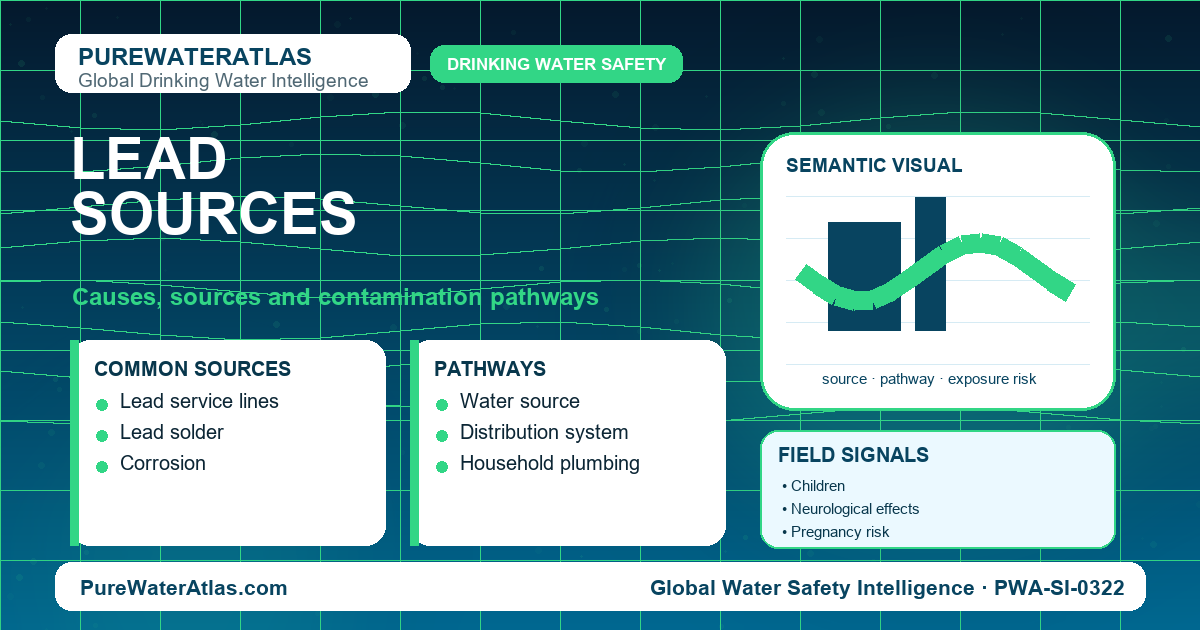
Lead remains one of the most important household water hazards for children. It usually does not come from the water source itself but from the plumbing system. Lead can leach into water from older service lines, lead solder, brass fixtures, and some plumbing components. This is a major example of safe water for babies and children household exposure, because contamination often occurs after treated water enters the home.
Lead is particularly harmful to infants and children because even low exposure can affect brain development, behavior, attention, and learning. It may not change the taste, smell, or appearance of water, so families cannot identify it without testing.
Nitrates and nitrites
Nitrates are a serious concern for infants, especially those under six months of age. They commonly enter groundwater from agricultural fertilizer runoff, manure, septic leakage, and natural soil conditions. Private wells are particularly vulnerable.
High nitrate levels can interfere with the blood’s ability to carry oxygen and may contribute to methemoglobinemia, sometimes called “blue baby syndrome.” This risk is one reason formula should never be prepared with untested well water in areas where nitrate contamination is possible.
Arsenic and naturally occurring contaminants
Some water contaminants are naturally present in soil and bedrock. Arsenic is a well-known example. In certain regions, groundwater may contain elevated arsenic levels without any visible warning signs. Long-term arsenic exposure has been associated with cancer, cardiovascular effects, developmental harm, and other chronic health concerns.
Other naturally occurring substances that may affect water safety include manganese, fluoride, uranium, radon, and excessive hardness or salinity. The significance depends on local geology, water source, and concentration.
Agricultural runoff
Farming areas can affect nearby water quality through runoff carrying fertilizers, pesticides, sediment, manure, and pathogens. After heavy rain, these pollutants may wash into streams, reservoirs, and shallow groundwater. Babies and children in rural communities may face increased exposure if household wells are shallow, poorly sealed, or located near livestock operations or fertilized fields.
Industrial and urban pollution
Industrial sites, landfills, mining operations, fuel spills, and urban stormwater can contaminate water with solvents, heavy metals, petroleum compounds, and other hazardous chemicals. Some contaminants persist for long periods and travel through groundwater. Others enter surface water used for public supply. Even if municipal treatment reduces many risks, certain chemicals may remain a concern if source water protection is weak or emerging contaminants are not fully addressed.
Aging water infrastructure
Old pipes, corroded distribution systems, water main breaks, and poor maintenance can all compromise water safety. Aging infrastructure may allow contaminants to enter the water system, reduce disinfectant effectiveness, or increase the release of metals from plumbing. This issue affects both urban and rural communities and is especially important when evaluating safe water for babies and children common sources of exposure in homes, schools, and childcare settings.
Private wells and small systems
Families who rely on private wells often assume their water is pure because it comes from underground. In reality, well water quality can vary widely. Unlike public water systems, private wells are often not monitored routinely by government agencies. Well contamination can result from:
- Nearby septic systems
- Agricultural runoff
- Flooding
- Poor well construction or damaged well caps
- Natural arsenic, manganese, iron, or nitrate contamination
Small community systems may also face challenges with treatment capacity, maintenance, and regular testing.
Household storage and handling
Even when source water is safe, it can become unsafe through poor household practices. Dirty bottles, improperly cleaned formula-preparation areas, uncovered containers, and contact with hands or utensils can introduce contamination. If water is collected from a public tap or delivered source and then stored improperly, microbial contamination may occur before a child drinks it.
Household water treatment devices can also create risk if they are not maintained. Old filters may stop working effectively or become sources of bacterial growth. This is a practical but often overlooked aspect of safe water for babies and children household exposure.
Health and Safety Implications
The health effects of unsafe water in children depend on the type of contaminant, concentration, duration of exposure, and the child’s age and overall health. Some effects are immediate and obvious, while others are subtle and develop over time. Families can learn more in this related overview of health effects and risks associated with unsafe water exposure.
Short-term effects
Microbial contamination often causes the most immediate illness. Common short-term symptoms include:
- Diarrhea
- Vomiting
- Stomach cramps
- Fever
- Dehydration
- Poor feeding
- Lethargy
For infants, these conditions can become serious quickly. Repeated gastrointestinal infections may also affect weight gain and nutrient absorption during critical growth periods.
Developmental risks
Chemical contaminants such as lead are especially concerning because of their impact on development. Exposure during infancy and early childhood can contribute to learning difficulties, lower IQ, attention problems, and behavioral changes. These outcomes may occur even when there are no clear early symptoms.
Other contaminants, depending on dose and timing, may affect kidney function, endocrine balance, bone health, or neurological development. Because children’s bodies are growing rapidly, small disruptions can have outsized consequences.
Formula preparation concerns
Water safety matters greatly for formula-fed infants. Formula preparation can significantly increase exposure because infants consume formula frequently and in predictable amounts. Unsafe water used in bottles may expose them repeatedly to microbes, nitrates, or metals. This is one reason healthcare providers emphasize using tested and appropriate water sources, especially for newborns and infants under six months.
Skin and respiratory exposure
Although drinking is the main concern, bathing and household use can also matter. Contaminated water may irritate sensitive skin, and some volatile chemicals can enter the air during showering or hot water use. While these pathways are often less significant than ingestion, they may contribute to total household exposure in some situations.
Disproportionate impact on vulnerable households
The burden of unsafe water is not evenly distributed. Important safe water for babies and children risk factors include:
- Living in older housing with legacy plumbing
- Using private wells without routine testing
- Living in agricultural or industrial areas
- Experiencing flooding, drought, or infrastructure failure
- Limited access to maintenance, filtration, or replacement plumbing
- Poverty, housing instability, or limited public health support
Globally, families in low-resource settings may face additional risks from untreated surface water, weak sanitation systems, and inconsistent access to safe storage containers. Broader international context can be found through resources on global water quality.
Testing and Detection
Because many contaminants cannot be seen, smelled, or tasted, testing is essential. Safe water for babies and children detection relies on identifying likely hazards based on the water source, the home environment, and local contamination patterns. It is not enough to assume water is safe because no one has become visibly ill.
Families interested in practical testing details can review this guide to testing and detection methods for children’s water safety.
What to test for
The ideal testing panel depends on location and source. Common parameters include:
- Microbial indicators, such as total coliforms and E. coli
- Lead, especially in older homes
- Nitrate and nitrite, especially for private wells
- Arsenic, where geologic risk exists
- Fluoride, if excessive or unknown
- Manganese and iron, if staining or regional concerns exist
- pH and corrosivity, which influence metal leaching
- Region-specific contaminants, such as pesticides or industrial chemicals
Public water versus private well testing
Public water systems are usually required to conduct regular monitoring and provide consumer confidence reports or similar information. Even so, home-specific issues such as lead from plumbing may require additional testing at the tap.
Private wells are the responsibility of the owner. Experts generally recommend routine testing at least annually for bacteria and nitrates, with periodic testing for arsenic and other regionally relevant contaminants. Additional testing should be done after flooding, changes in taste or odor, nearby construction, or any repairs to the well.
How lead testing differs
Lead testing often requires special sampling procedures because contamination can depend on water sitting in pipes. A first-draw sample may show what accumulates in stagnant water, while flushed samples help identify whether the source is interior plumbing or service lines. Because interpretation can be complex, families may need guidance from local health departments, pediatricians, or certified laboratories.
Signs that suggest a problem
Although unsafe water is often invisible, some warning signs should prompt investigation:
- Repeated stomach illness in household members
- Recent flooding or sewage backup
- Cloudiness, unusual odor, or unusual taste
- Blue-green staining or metallic taste suggesting corrosion
- Nearby farming, industrial activity, or landfill operations
- Use of an old private well with unknown maintenance history
- Older home plumbing materials
However, the absence of these signs does not guarantee safety. Testing remains the most reliable approach.
Home test kits and laboratory testing
Home test kits may be useful for quick screening, but they vary in quality and may not provide the accuracy needed for health decisions involving infants. Certified laboratory analysis is generally preferred for contaminants such as lead, nitrates, arsenic, and bacteria. Laboratory testing provides quantitative results that can be compared against official standards and can guide the correct treatment response.
Prevention and Treatment
Safe water for babies and children prevention depends on matching the solution to the source of contamination. No single treatment works for every hazard, and some approaches may solve one problem while leaving another unchanged.
Use the safest available source
For most families, properly treated municipal water is a reliable source. For those using a private well, regular testing is essential before using the water for infant formula or routine drinking. If contamination is detected, families may need to use bottled water temporarily or rely on another verified safe source until corrective measures are in place.
Address household plumbing risks
If lead is a concern, practical steps may include:
- Using cold water for drinking, cooking, and formula preparation
- Flushing taps after water has sat in pipes
- Cleaning faucet aerators
- Testing water from the specific taps used for children
- Installing certified lead-reducing filters when appropriate
- Replacing lead-containing service lines, fixtures, or plumbing materials
Boiling water does not remove lead and can concentrate some chemical contaminants if water evaporates.
Microbial risk reduction
When microbial contamination is suspected or confirmed, boiling can be effective in emergencies if done according to public health recommendations. However, boiling does not remove nitrates, lead, arsenic, or many chemicals. In some cases, point-of-use treatment such as ultraviolet disinfection, chlorination, or properly selected filtration may be appropriate, but these systems must be installed and maintained correctly.
Nitrate and arsenic treatment
Nitrates and arsenic require specific treatment methods. Effective options may include reverse osmosis, ion exchange, distillation, or source replacement, depending on the contaminant. Standard carbon filters usually do not remove nitrates effectively, and not all filters remove arsenic. Families should verify that any device is certified for the contaminant of concern.
Safe storage and formula preparation
Prevention also includes everyday handling practices:
- Store water in clean, food-grade containers with lids
- Wash hands before preparing bottles or food
- Clean and sanitize bottles, nipples, and feeding equipment as recommended
- Do not mix treated and untreated water in storage containers
- Follow formula preparation instructions carefully
- Use freshly prepared water from a safe source when possible
Well maintenance
For private well owners, prevention includes structural upkeep and environmental protection:
- Inspect the well cap and casing regularly
- Keep surface runoff away from the wellhead
- Maintain proper distance from septic systems and animal enclosures
- Test after flooding, repairs, or major weather events
- Keep records of all tests and treatments
When to seek professional help
Families should seek expert advice if testing finds contamination, if a child has symptoms that may be linked to water exposure, or if there is uncertainty about treatment choices. Pediatricians, local health departments, certified water testing laboratories, and qualified water treatment professionals can help interpret results and recommend the most appropriate next steps.
Common Misconceptions
Several common myths can create a false sense of security about children’s water safety.
If water looks clean, it is safe
This is incorrect. Many dangerous contaminants, including lead, nitrates, arsenic, and microbes, may be present in water that appears perfectly clear.
Boiling fixes all water problems
Boiling kills many pathogens, but it does not remove metals or most chemical contaminants. In some cases, boiling can worsen chemical concentration by reducing water volume.
Bottled water is always safer for babies
Not necessarily. Bottled water quality varies, and it may not be sterile or ideal for formula preparation in every circumstance. It should come from a trustworthy source and be used according to pediatric and public health guidance.
Public water is always safe, so testing is unnecessary
Public water systems often provide strong protection, but contamination can still occur in household plumbing. Tap-specific issues such as lead may require home testing even when utility reports meet standards.
Private well water is naturally pure
This is one of the most persistent myths. Well water can contain microbes, nitrates, arsenic, and other pollutants, and regular testing is essential.
Filters are all the same
Different filters address different contaminants. A pitcher filter that improves taste may not remove lead, nitrates, or bacteria. Families should use products certified for the specific hazard identified.
Regulations and Standards
Water safety for children depends not only on household action but also on strong public systems. Regulations help set acceptable limits for contaminants, require monitoring, and establish treatment and reporting responsibilities. These standards vary by country, but they generally aim to protect public health across the lifespan, including vulnerable populations such as infants.
Public drinking water standards
In many countries, public water systems must monitor for microbial contamination, disinfect water, control treatment processes, and test for a list of regulated chemicals and metals. They may also be required to notify the public about violations or health advisories. These standards create a baseline of protection, though they may not cover every emerging contaminant and do not always account for contamination within private household plumbing.
Lead and corrosion control
Lead rules often focus on corrosion control, service line replacement, and tap monitoring. Because lead exposure can occur after water leaves the treatment plant, regulations increasingly emphasize infrastructure modernization and targeted sampling in higher-risk homes and facilities, including schools and childcare centers.
Private wells and regulatory gaps
Private wells are often regulated much less strictly than public systems, leaving households largely responsible for testing and maintenance. This gap is important because families using wells may incorrectly assume the same routine oversight exists. In practice, preventing safe water for babies and children household exposure from private wells requires informed homeowner action and local public health support.
Global differences
Water safety regulation differs widely across regions. High-income countries may have strong standards but still face challenges from aging infrastructure and environmental contamination. Low- and middle-income settings may face additional barriers including limited treatment capacity, intermittent service, weak monitoring systems, and inadequate sanitation. International organizations and national governments continue to work toward safer and more equitable water access for children worldwide.
Conclusion
Protecting infants and children from unsafe water begins with understanding causes and sources rather than relying on appearance or assumptions. The issue of safe water for babies and children causes and sources includes microbial hazards, lead from plumbing, nitrates in groundwater, naturally occurring arsenic, agricultural and industrial pollution, aging infrastructure, and contamination introduced during household storage or handling. Because children are physiologically more vulnerable, exposure that seems minor can carry meaningful consequences.
The most effective protection combines awareness, testing, and practical prevention. Families should identify their water source, understand local risks, test when appropriate, and use treatment methods that match the actual contaminant. Public water users should pay attention to home plumbing risks, while private well users should commit to regular testing and maintenance. Safe storage, careful formula preparation, and proper use of certified filters also play important roles.
Ultimately, safe water for children is both a household responsibility and a public health priority. Informed caregivers, strong regulations, reliable infrastructure, and accessible testing all work together to reduce exposure and support healthy development from the earliest stages of life.
Read the full guide: Drinking Water Safety Guide
Explore more in this category: Drinking Water Safety Articles