Introduction
People often assume that living in one of the many countries with safe drinking water means every tap in every home is automatically safe all the time. In reality, strong national water systems greatly reduce risk, but they do not eliminate every household-level problem. Water can leave a well-managed treatment plant in excellent condition and still pick up contaminants, lose disinfectant residual, or develop quality issues before it reaches a glass in the kitchen. That is why a practical countries with safe drinking water home safety checklist matters even in places with advanced infrastructure, regular monitoring, and strict public standards.
This article explains how household water safety works in countries where public water systems are generally reliable. It focuses on the gap between community-wide water quality and in-home safety. It also covers warning signs, inspection priorities, testing options, maintenance practices, and protection steps that help homeowners and renters reduce risk. If you want broader background, you can explore /countries-with-safe-drinking-water-complete-guide/ and the resources in /category/drinking-water-safety/.
The goal is educational: to help households understand what they can reasonably trust, what they should still verify, and how to respond if something seems wrong. Safe water at the national level depends on treatment plants, source water protection, distribution systems, and regulations. Safe water at the household level also depends on plumbing condition, fixture materials, water heater management, point-of-use devices, storage practices, and informed daily habits. A strong home checklist bridges these two levels.
Whether you are a homeowner, tenant, property manager, or simply someone trying to improve everyday drinking water safety, the following sections provide a clear framework. They explain what “safe drinking water” means, where household risks come from, why those risks matter, and what actions are most effective.
What It Is
In practical terms, the phrase countries with safe drinking water home safety checklist refers to a structured way of evaluating whether water that is generally safe at the municipal or national level remains safe when it enters, moves through, and is used inside a specific building. It is not a replacement for public water oversight. Instead, it is a home-focused layer of protection.
Safe drinking water is usually defined by microbiological, chemical, physical, and radiological standards. Public systems monitor for pathogens, disinfectant levels, metals, industrial chemicals, agricultural contaminants, and other substances according to national rules. In many higher-performing countries, these systems are robust and transparent. However, “safe on average” does not always mean “safe in every building at every moment.”
A home safety checklist looks at issues such as:
- The age and material of the building’s plumbing
- Whether lead-bearing components may still be present
- Signs of corrosion, leaks, or stagnation
- The condition of taps, aerators, filters, and appliances
- Changes in taste, odor, clarity, or pressure
- The water heater setting and maintenance history
- Any household-specific treatment devices and whether they are maintained correctly
- Whether vulnerable occupants, such as infants, older adults, or immunocompromised individuals, need extra precautions
This type of checklist is especially useful after moving into a new property, returning after a prolonged vacancy, completing plumbing work, replacing fixtures, experiencing a utility interruption, or noticing a change in water quality. It is also useful as a routine annual review.
The key idea is simple: national safety reduces baseline risk, but local and household factors still determine what comes out of the tap. For a broader discussion of contamination pathways, see /countries-with-safe-drinking-water-causes-and-sources/ and related resources under /category/global-water-quality/.
Main Causes or Sources
In countries with strong drinking water systems, household water problems usually arise not because the entire national supply is unsafe, but because of localized issues. Understanding these causes is the foundation of any effective checklist.
Old Plumbing and Lead-Containing Materials
One of the most important risks in older buildings is lead. Even in countries that have banned or sharply restricted lead in plumbing materials, older homes and apartment buildings may still contain lead service lines, lead solder, or brass fixtures that leach small amounts of lead into water. This risk is often higher when water has been sitting in pipes for many hours, when the water is corrosive, or when plumbing has been disturbed.
A proper countries with safe drinking water inspection should identify the age of the property, known plumbing upgrades, and the possible presence of lead-bearing components. If this history is unknown, testing becomes more important.
Corrosion Inside Household Plumbing
Corrosion can release metals such as copper, iron, and lead from pipes and fixtures. It may also cause discoloration, metallic taste, pinhole leaks, and staining. Corrosion risk depends on both the water chemistry supplied by the utility and the materials inside the home. Public systems often manage corrosion at the distribution level, but individual homes can still be affected, especially if plumbing is old or poorly maintained.
Stagnation and Low Water Use
When water remains in pipes for extended periods, disinfectant residual can decline and metals can accumulate. This often happens in vacation homes, newly purchased but unoccupied properties, guest bathrooms, unused taps, schools during breaks, or homes with irregular occupancy. After stagnation, flushing may be necessary before consumption.
Stagnation is also one of the most important countries with safe drinking water risk signs because it can increase both chemical and microbial concerns.
Biofilm and Opportunistic Pathogens
Even where treated water leaves the utility in a safe condition, microorganisms can grow in household plumbing systems under the right conditions. Biofilm can form on pipe surfaces, inside aerators, in showerheads, and in water heaters. Opportunistic pathogens such as Legionella are linked more to building plumbing conditions than to source water quality alone. Warm temperatures, stagnation, poor maintenance, and inadequate hot water management increase risk.
Water Heater Problems
Water heaters can contribute to water quality issues if temperatures are too low, sediment accumulates, or maintenance is neglected. Inadequate hot water temperatures may support microbial growth, while aging anode rods or corrosion can affect taste and odor. Sediment in the tank may also reduce performance and complicate inspection.
Improperly Maintained Filters and Treatment Devices
Point-of-use and point-of-entry treatment systems can improve water quality, but only if they are chosen correctly and maintained according to manufacturer instructions. Filters left in place too long can clog, reduce flow, or in some cases become sites for microbial growth. Water softeners, reverse osmosis systems, activated carbon filters, and UV units all require specific service schedules.
This is why countries with safe drinking water maintenance tips should always include filter replacement logs, cartridge checks, sanitation steps, and confirmation that devices are certified for the contaminants they are intended to address. Additional treatment information is available at /category/water-treatment-systems/.
Cross-Connections and Backflow
A cross-connection occurs when potable water may come into contact with a non-potable source. Examples include hoses submerged in buckets, irrigation systems without proper backflow prevention, or plumbing configurations that allow contaminated water to flow backward during pressure changes. These issues are less common than corrosion or stagnation but can create serious acute risks.
Private Wells and Mixed Supply Situations
Some homes in otherwise well-regulated countries rely on private wells or blended supply arrangements. In these cases, the national reputation for safe drinking water may not reflect the actual risk at the property. Private well owners are typically responsible for their own testing, treatment, and maintenance. The home checklist becomes even more important because oversight is decentralized.
Local Source Events and Infrastructure Disturbances
Construction, main breaks, heavy rainfall, flooding, wildfire impacts, agricultural runoff, industrial spills, and utility maintenance can temporarily affect water quality. Utilities often respond rapidly and issue notices when needed, but households should still know how to recognize short-term warning signs and what actions to take.
Health and Safety Implications
The consequences of unsafe drinking water range from minor nuisance concerns to serious health outcomes. In countries with generally reliable systems, severe events may be less common, but the household-level impacts can still be significant, especially for vulnerable people.
Microbiological Risks
Pathogens such as bacteria, viruses, and parasites can cause gastrointestinal illness, fever, vomiting, and diarrhea. In healthy adults, some exposures may resolve without severe complications, but in infants, pregnant people, older adults, and immunocompromised individuals, the same contamination can be much more dangerous. Opportunistic pathogens associated with plumbing systems can also lead to respiratory or systemic infections under the wrong conditions.
Chemical Exposure
Chemical contaminants may create acute or chronic health concerns depending on the substance, concentration, and duration of exposure. Lead is especially important because there is no safe level of lead exposure for children, and even low levels are associated with developmental and neurological harm. Copper can cause gastrointestinal symptoms at higher levels. Nitrates are especially concerning for infants. Other contaminants, including industrial chemicals or byproducts, may carry long-term health risks.
For more detail on outcomes associated with contaminated drinking water, see /countries-with-safe-drinking-water-health-effects-and-risks/.
Aesthetic Changes as Early Warnings
Not every water quality issue causes immediate illness, and not every health-relevant issue is visible. However, changes in taste, odor, color, and clarity should never be dismissed without consideration. Brown, orange, or reddish water may indicate rust or sediment. Blue-green staining may point to copper corrosion. Rotten egg smell can suggest sulfur compounds or heater issues. Musty or earthy tastes can reflect source changes or biofilm-related issues.
These are useful countries with safe drinking water risk signs, though they are not diagnostic by themselves. Some dangerous contaminants have no taste, smell, or color at all. That is why observation should be paired with appropriate testing and follow-up.
Plumbing and Property Damage
Water quality problems can also damage the home. Corrosion shortens the life of plumbing, fixtures, and appliances. Scale reduces efficiency in water heaters and kettles. Sediment can clog aerators, valves, and filters. Leaks linked to corrosion may increase moisture and mold risk. A household checklist therefore supports both health and property protection.
Psychological and Practical Impacts
When residents lose confidence in their tap water, they may switch to less sustainable or more expensive alternatives, including bottled water. While bottled water may be useful during a verified emergency, long-term dependence often creates unnecessary cost and plastic waste if the underlying issue could be identified and corrected. Reliable household inspection and testing help people make informed decisions instead of acting from uncertainty alone.
Testing and Detection
A strong checklist relies on evidence. The best approach combines observation, record review, and targeted testing. This section outlines practical methods for countries with safe drinking water household testing and detection.
Review the Utility’s Water Quality Information
If the home is on a public supply, start with the local utility’s water quality report or equivalent consumer confidence information. This tells you what the utility monitors, how the water performed against standards, and whether there were any recent violations or advisories. It does not replace household testing, but it establishes the broader context.
Inspect the Home’s Plumbing Profile
A basic countries with safe drinking water inspection should answer these questions:
- When was the building constructed?
- Has the plumbing ever been replaced or upgraded?
- Is there any known lead service line or older solder?
- What materials are present: copper, galvanized steel, plastic, brass, or mixed systems?
- Are there signs of leaks, corrosion, staining, or low flow?
- Are there unused taps or low-use sections of plumbing?
- What treatment devices are installed, and when were they last serviced?
Look for Risk Signs During Everyday Use
Households should note any recurring or sudden changes such as:
- Discoloration after water has been standing
- Metallic, bitter, or unusual taste
- Rotten egg, musty, chlorine, or chemical odor that seems abnormal
- Cloudiness that does not clear quickly
- Visible sediment or particles
- Reduced pressure at specific fixtures
- Frequent clogging of aerators
- Blue, green, orange, or black staining on sinks and fixtures
These countries with safe drinking water risk signs help determine whether testing should focus on metals, microbial indicators, nuisance parameters, or treatment device performance.
Use Certified Laboratory Testing When Needed
Laboratory testing is the most reliable option for many concerns. It is particularly advisable when:
- The building is older and lead exposure is possible
- There are infants, pregnant individuals, or immunocompromised residents in the home
- Water quality has changed unexpectedly
- A property has been vacant for a long period
- There has been recent plumbing work or a service line replacement
- The home uses a private well
- There has been flooding, wildfire, or local contamination news
Common test targets may include lead, copper, coliform bacteria, E. coli, nitrates, pH, hardness, iron, manganese, and contaminant-specific analyses based on local conditions. Sampling instructions matter. First-draw samples may be needed for lead, while flushed samples may answer different questions about distribution versus premise plumbing.
Use Home Test Kits Carefully
Home kits can be helpful for screening, but their accuracy varies. They are best used as a preliminary tool, not the final word on safety. If a home kit indicates a possible problem, or if the issue involves a serious contaminant like lead or bacteria, confirm with a certified laboratory.
Check Water Treatment Devices
Testing should not focus only on raw tap water. If the home uses filtration or treatment, compare influent and effluent water where appropriate. A device may improve quality, fail silently, or underperform due to overdue maintenance. Flow rate changes, cartridge age, unusual taste after treatment, or bypass issues may indicate problems.
Document Results Over Time
One of the most overlooked countries with safe drinking water protection steps is recordkeeping. Save test reports, filter replacement dates, plumbing repair receipts, utility notices, and notes about unusual water events. Trends over time often reveal whether a problem is isolated, seasonal, or progressive.
Prevention and Treatment
Prevention is usually more effective and less expensive than reacting after contamination or plumbing damage occurs. A good checklist turns observations into action and prioritizes the highest-value interventions.
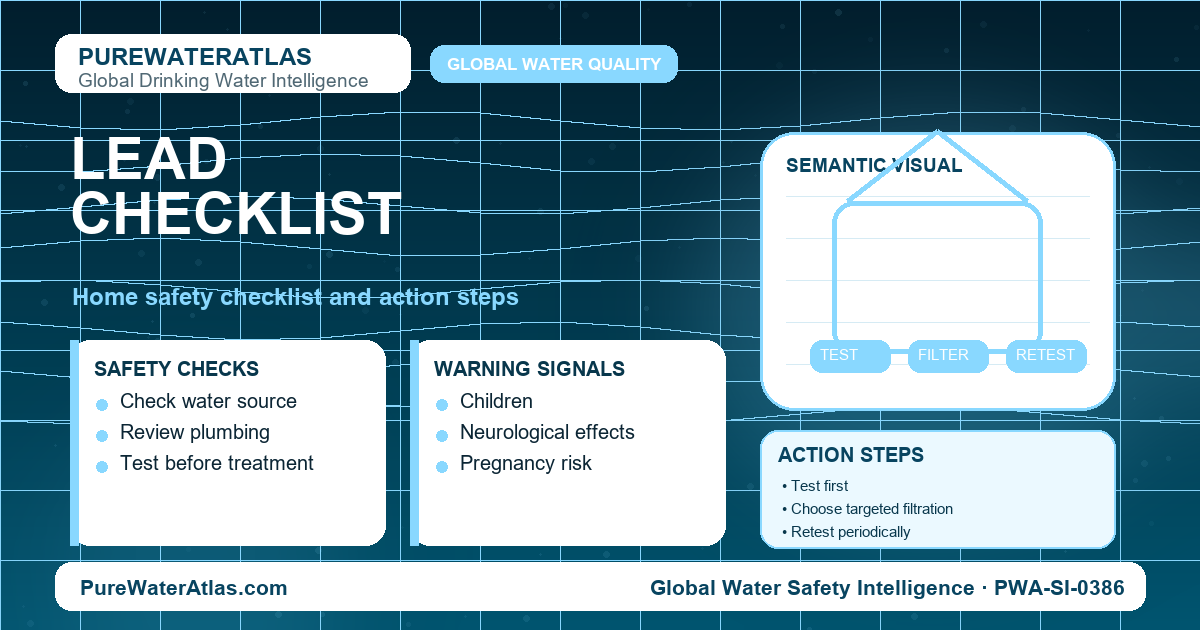
Home Safety Checklist
- Identify the type of water supply: public system, private well, or mixed source.
- Find out the age of the building and plumbing materials.
- Check for any known lead service line, lead solder, or older brass fixtures.
- Inspect visible pipes, shutoff valves, and fixtures for leaks or corrosion.
- Clean faucet aerators and showerheads regularly.
- Flush taps after long periods of non-use, especially before drinking or cooking.
- Use only cold water from the tap for drinking, cooking, and infant formula preparation unless you have verified otherwise.
- Maintain the water heater, including temperature review and sediment management.
- Service all filters and treatment devices on schedule.
- Review local water quality reports and notices at least annually.
- Arrange laboratory testing when risk factors or warning signs are present.
- Keep a written maintenance and testing log.
Flushing After Stagnation
Flushing is one of the simplest and most effective immediate actions after water has sat in pipes. If a home has been vacant or a tap has not been used for hours, run cold water until it becomes noticeably colder and fresh. The appropriate duration depends on the plumbing layout, but the principle is to clear water that has been in prolonged contact with household pipes. This is especially important in older homes where lead or copper exposure may be a concern.
Reduce Lead Exposure
Use cold water for consumption because hot water can dissolve metals more readily from plumbing. If testing identifies lead, the long-term solution is usually removal of the lead source, such as service line replacement or fixture upgrades. Certified filters rated for lead reduction can be useful as an interim or supplemental measure, but they require proper maintenance and cartridge replacement.
Manage Household Plumbing Proactively
Replace deteriorating fixtures, address leaks promptly, and avoid leaving little-used branches of plumbing untouched for long periods. During renovations, use materials compliant with current drinking water standards. If a section of the plumbing system is obsolete or corroded, partial repairs may not always solve the whole problem; a more systematic assessment may be necessary.
Maintain Water Heaters Safely
Water heater management supports both water quality and device longevity. Sediment flushing, inspection for corrosion, and professional servicing when needed are sensible practices. Hot water temperature should be managed with both microbial control and scald prevention in mind. If there are concerns about Legionella or system design, professional advice is appropriate.
Keep Treatment Systems Effective
Among the best countries with safe drinking water maintenance tips is to avoid treating filters as permanent fixtures. Every treatment system has a service life. Follow certified performance claims, install devices sized for actual demand, and sanitize or replace components on time. Never assume a filter treats all contaminants; each technology has limits.
Protect Against Backflow and Cross-Connections
Do not leave hose ends submerged in pools, tubs, buckets, or chemical solutions. Use proper vacuum breakers and backflow prevention devices where required. Irrigation systems, boilers, and auxiliary water connections deserve special attention in any countries with safe drinking water protection steps plan.
Respond Correctly to Advisories
If a utility issues a boil water notice, do not ignore it simply because your country usually has safe drinking water. Follow the notice exactly. Boiling may address microbiological concerns, but it does not solve every chemical issue. In some contamination events, alternative water sources may be recommended instead. Always read the specific guidance from the local authority.
Common Misconceptions
Household water safety is often undermined by incorrect assumptions. Clearing up these misconceptions is essential for effective prevention.
“If My Country Has Safe Water, My Tap Water Is Always Safe”
This is the most common misunderstanding. National or regional water safety reflects system-wide performance, not the exact condition of every building’s plumbing. Household-specific problems can still occur.
“Clear Water Is Safe Water”
Many harmful contaminants are invisible. Lead, nitrates, and some pathogens may not change the water’s appearance. Clarity is reassuring, but it is not proof of safety.
“Bad-Tasting Water Is Always Dangerous”
Not necessarily. Some taste or odor changes are aesthetic rather than harmful. However, they should still be investigated because they may signal corrosion, treatment changes, or plumbing issues. Sensory changes are alerts, not conclusions.
“Bottled Water Is Always Safer”
Bottled water is not automatically safer than well-managed tap water, and it is not a substitute for identifying a household plumbing problem. In many places, tap water is more closely monitored than bottled water. Use bottled water strategically when advised, not by default.
“Filters Solve Everything”
No single filter removes all contaminants. Some filters target chlorine and taste, others reduce lead, and others address dissolved solids or microorganisms. Wrong selection or poor maintenance can create false confidence.
“Only Old Homes Need Testing”
Older buildings deserve special attention, but newer homes can also have issues. New plumbing may leach materials temporarily, treatment devices may be misinstalled, and stagnation can occur in any building. Testing is risk-based, not age-based alone.
Regulations and Standards
Countries known for safe drinking water usually rely on strong legal and technical frameworks. These generally include source protection, treatment requirements, operator certification, routine monitoring, contaminant limits, reporting obligations, and enforcement mechanisms. However, the division of responsibility matters.
What Public Systems Usually Cover
Utilities and regulators typically oversee:
- Source water monitoring and protection
- Treatment performance and disinfection
- Distribution system quality
- Routine compliance sampling
- Public notification of violations or advisories
- Corrective action when standards are not met
What Homeowners and Building Managers Usually Cover
Household responsibility often includes:
- Maintaining premise plumbing
- Replacing unsafe fixtures or aging components
- Managing private wells where applicable
- Servicing water heaters and in-home treatment devices
- Preventing backflow and cross-connections
- Testing when the property’s specific risk factors warrant it
Lead and Plumbing Standards
Many countries have tightened standards for lead in drinking water and restricted lead-containing plumbing products. Even so, legacy infrastructure remains a challenge. A home safety checklist should align with current local guidance on lead testing, service line replacement, and filter certification.
Certification and Product Standards
When choosing filters, treatment devices, replacement fixtures, or plumbing materials, look for recognized certification to relevant drinking water performance and safety standards. Certification helps verify that products have been evaluated for both structural safety and contaminant reduction claims.
Local Context Still Matters
Regulations differ across countries and even between regions or municipalities. Water hardness, corrosion control practices, source types, infrastructure age, and local environmental pressures all shape household risk. That is why a smart checklist combines general best practices with local utility information and property-specific inspection.
Conclusion
Living in one of the many places recognized among the countries with safe drinking water is a major public health advantage, but it should not lead to complacency at the household level. The safest approach is to understand that public water quality and in-home water quality are connected but not identical. National treatment and regulation create the foundation. Household inspection, maintenance, and targeted testing complete the safety chain.
An effective countries with safe drinking water home safety checklist includes reviewing utility information, identifying plumbing materials, watching for risk signs, flushing after stagnation, maintaining water heaters and filters, preventing cross-connections, and testing when building age, occupant vulnerability, or unusual changes justify it. These actions are practical, evidence-based, and relevant even in countries with strong overall water systems.
In short, the most reliable way to protect drinking water at home is to combine trust in public systems with informed household stewardship. If you want to continue learning, explore /category/global-water-quality/, /countries-with-safe-drinking-water-complete-guide/, /countries-with-safe-drinking-water-causes-and-sources/, /countries-with-safe-drinking-water-health-effects-and-risks/, /category/water-treatment-systems/, and /category/drinking-water-safety/.
Safe drinking water is not just a national achievement. It is also a household practice.
Read the full guide: Global Water Quality Guide
Explore more in this category: Global Water Quality Articles