Introduction
Safe drinking water is one of the most basic requirements for a healthy home, yet many households do not think about microbial water quality until a problem appears. A practical bacteria in drinking water home safety checklist helps homeowners, renters, and property managers identify warning signs, reduce contamination risks, and respond quickly when water safety is in doubt. Whether your home uses a municipal supply, a private well, or a rainwater collection system, understanding how bacteria can enter drinking water is an important part of everyday health protection.
Bacteria are microscopic organisms found naturally in soil, water, plants, animals, and the human environment. Many bacteria are harmless, and some are even beneficial. However, certain types in drinking water can signal fecal contamination, poor system maintenance, treatment failures, or unsafe storage conditions. In some cases, harmful bacteria themselves cause illness. In other cases, the presence of indicator organisms such as total coliforms or Escherichia coli suggests that disease-causing microbes may also be present.
This article explains what bacteria in drinking water are, where they come from, how they affect health, how they are tested, and what households can do to prevent contamination. It also provides clear guidance on bacteria in drinking water risk signs, bacteria in drinking water inspection, bacteria in drinking water household testing, and practical bacteria in drinking water maintenance tips. If you want broader background information, see this complete guide and explore additional resources in water microbiology.
What It Is
Bacteria in drinking water refers to the presence of microbial organisms in water intended for consumption, cooking, brushing teeth, food preparation, and other household uses. Not all bacteria in water are dangerous, but their presence may indicate that the water system is vulnerable to contamination. Public health professionals often distinguish between harmless environmental bacteria, indicator bacteria, and pathogenic bacteria.
Types of bacteria relevant to drinking water
- Total coliform bacteria: A broad group of bacteria commonly found in soil, vegetation, and surface water. Their presence in a water sample does not always mean the water is dangerous, but it can indicate that the system is open to contamination.
- Fecal coliforms and E. coli: These bacteria are associated with the intestines of humans and warm-blooded animals. Their presence is more serious because it suggests fecal contamination and a greater likelihood that disease-causing microorganisms may be present.
- Opportunistic bacteria: Organisms such as Legionella, Pseudomonas, and non-tuberculous mycobacteria may grow within plumbing systems under certain conditions, especially in stagnant water or warm temperatures.
- Pathogenic bacteria: These are bacteria that can directly cause disease, such as Salmonella, Shigella, Campylobacter, or toxigenic strains of E. coli.
Indicator organisms versus disease-causing organisms
Water testing often looks for indicator bacteria rather than every possible pathogen. This is because pathogens can be difficult and expensive to detect individually, and some may be present intermittently. Indicator organisms are useful because they help determine whether the water system has been exposed to contamination. For example, a positive test for E. coli is a strong signal that the water is unsafe and should not be consumed without proper treatment.
Why household systems matter
Even if source water is treated, contamination can occur after water enters the distribution network or home plumbing. Cracked well caps, cross-connections, poorly maintained filters, old pipes, pressure losses, and unused plumbing lines can all create bacterial risks. A good safety checklist therefore looks beyond the water source itself and includes inspection of the full pathway from source to tap. For more background on contamination pathways, visit causes and sources of bacteria in drinking water and the broader water contamination category.
Main Causes or Sources
Understanding the source of contamination is essential for choosing the right corrective action. Bacteria can enter or grow in drinking water systems through environmental exposure, infrastructure failures, poor maintenance, or treatment breakdowns.
Private wells and groundwater vulnerabilities
Private wells are especially vulnerable because homeowners are usually responsible for system monitoring and maintenance. Common contamination sources include:
- Septic system leakage or failure near the well
- Surface runoff carrying animal waste, manure, or soil into the wellhead area
- Flooding that submerges the well cap or casing
- Cracks in the well casing or damaged seals
- Improper well construction or inadequate setback distance from contamination sources
Municipal supply issues
Public water systems are regulated and routinely monitored, but bacteria can still become a concern when treatment barriers fail or distribution systems are compromised. Possible issues include:
- Treatment plant failures or disinfection interruptions
- Water main breaks or repairs that introduce contamination
- Pressure loss in distribution lines
- Cross-connections with non-potable water systems
- Biofilm growth within aging infrastructure
Household plumbing and storage contamination
In-home conditions can also contribute to bacterial problems. Stagnant water in unused pipes, dead-end plumbing sections, water heaters set at unsafe temperatures, dirty faucet aerators, and neglected storage tanks can all support microbial growth. Homes left vacant for long periods may have elevated risks due to stagnation and disinfectant loss.
Point-of-use devices and treatment units
Filters, softeners, reverse osmosis systems, and other water treatment devices can improve water quality, but if they are not maintained properly they may become contamination points. Saturated cartridges, overdue membrane replacement, poor sanitation during servicing, and standing water in system housings can encourage bacterial growth. This is why bacteria in drinking water maintenance tips are such an important part of a household checklist.
Environmental and seasonal factors
Heavy rain, snowmelt, drought, wildfire damage, and nearby agricultural activity can change water quality conditions. After storms or floods, contamination risk often rises sharply. Seasonal occupancy patterns, such as vacation homes opening in spring, can also increase bacterial risks if plumbing is not flushed and inspected before use.
Health and Safety Implications
The health effects of bacteria in drinking water depend on the type of bacteria present, the amount consumed, the health of the exposed person, and the route of exposure. Drinking contaminated water is the most obvious risk, but bacteria can also spread during food preparation, ice making, tooth brushing, and in some cases aerosol-producing activities such as showering.
Common symptoms of exposure
Bacterial contamination may cause gastrointestinal illness and other infections. Symptoms can include:
- Diarrhea
- Nausea and vomiting
- Abdominal cramps
- Fever
- Headache
- Fatigue
Some infections are mild and short-lived, while others can become severe. In young children, older adults, pregnant individuals, and people with weakened immune systems, the risks are higher.
High-risk groups in the home
- Infants and young children
- Elderly household members
- People undergoing chemotherapy or living with immune suppression
- Individuals with chronic illness
- Pregnant people
Bacteria in drinking water risk signs
One challenge is that bacteria are invisible and often odorless. Water can look clear and still be unsafe. However, some bacteria in drinking water risk signs may suggest the need for immediate testing or precautionary action:
- Recent flooding near a well or water source
- Sudden changes in taste, odor, or color
- Repeated stomach illness affecting multiple household members
- Low water pressure or a recent plumbing repair
- A damaged well cap, cracked casing, or open vent
- Standing water around the wellhead
- Long periods of vacancy followed by immediate water use
- Boil water advisories from the local utility
Safety beyond drinking
If bacterial contamination is suspected, the concern may extend beyond direct consumption. Contaminated water can affect:
- Washing fruits and vegetables
- Preparing infant formula
- Making ice
- Cleaning dishes by hand
- Brushing teeth
- Bathing vulnerable individuals
For a more detailed review of possible outcomes, see health effects and risks of bacteria in drinking water.
Testing and Detection
Testing is the most reliable way to determine whether bacteria are present. Because bacterial contamination cannot usually be confirmed by sight, smell, or taste alone, households should use certified laboratory testing and routine inspections as part of their safety strategy.
Bacteria in drinking water household testing
Bacteria in drinking water household testing generally includes total coliform and E. coli analysis. For private wells, annual testing is commonly recommended at minimum, with additional testing after flooding, repairs, changes in taste or odor, or any event that could introduce contamination. Households with infants, medically vulnerable occupants, or recurring water problems may choose more frequent testing.
When to test
- At least once a year for private wells
- After a flood, storm, or wildfire event
- After well repairs, pump replacement, or plumbing changes
- After a positive bacterial result and corrective action
- When a home has been vacant for an extended period
- When illness suggests a possible waterborne source
How sampling works
Proper sampling technique matters. A poor collection method can contaminate the sample and produce misleading results. In general, households should:
- Use the sterile sample bottle provided by the lab
- Follow all lab instructions exactly
- Choose the correct tap as directed
- Remove faucet attachments if instructed
- Avoid touching the inside of the cap or bottle
- Keep the sample cool and return it to the lab within the required time frame
Interpreting results
A negative result for total coliform and E. coli is reassuring, but it does not guarantee future safety. Conditions can change rapidly. A positive total coliform result suggests the system may be vulnerable and requires follow-up. A positive E. coli result is more urgent and usually means the water should not be consumed unless properly disinfected or boiled according to public health guidance.
Bacteria in drinking water inspection
Laboratory testing should be combined with bacteria in drinking water inspection of the source and plumbing system. A useful home inspection checklist includes:
- Check that the well cap is secure, screened, and above ground level
- Look for cracks, corrosion, or settlement around the well casing
- Confirm that surface water drains away from the wellhead
- Inspect nearby septic systems for signs of failure
- Review the age and service history of filters and treatment devices
- Look for leaks, dead-end lines, and rarely used fixtures
- Clean faucet aerators and showerheads periodically
- Verify that storage tanks are covered and sanitary
Advanced and specialized testing
In some situations, additional testing may be appropriate. This may include heterotrophic plate count testing, specific pathogen testing, or sampling for Legionella in buildings with complex plumbing and high-risk occupants. Professional advice from a local health department, certified lab, or water treatment specialist is helpful when contamination is persistent or the source is unclear.
Prevention and Treatment
The best approach to bacterial safety is prevention first, followed by prompt correction when contamination is found. Effective bacteria in drinking water protection steps combine source protection, routine maintenance, proper testing, and suitable treatment.
Home safety checklist
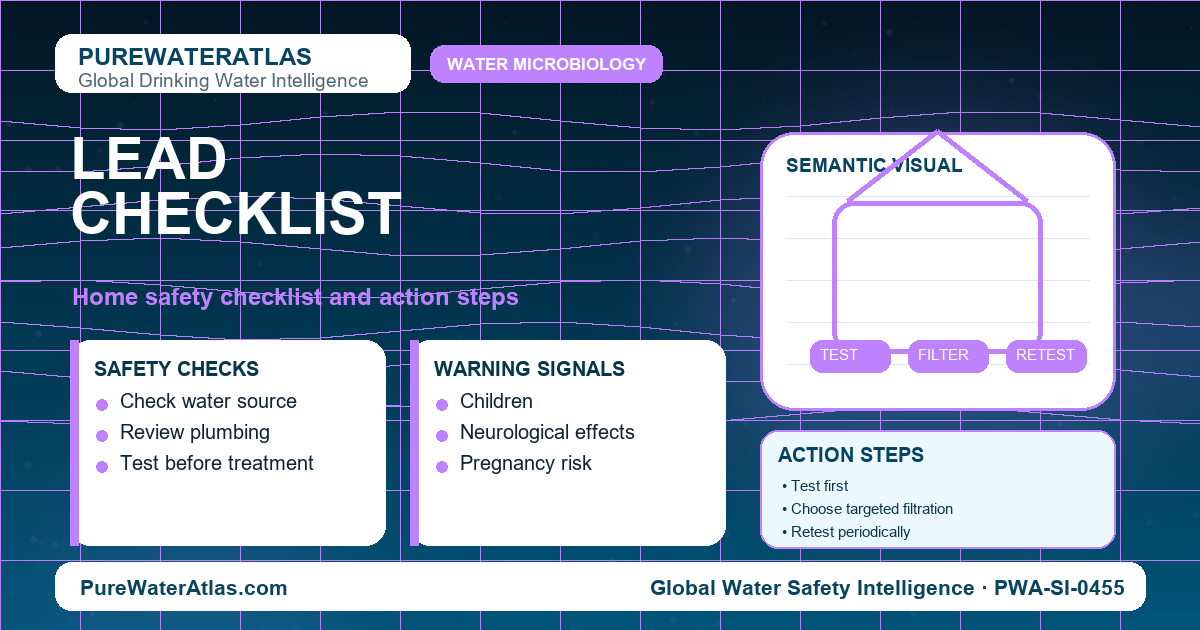
The following bacteria in drinking water home safety checklist can be used as a practical routine:
- Test private well water for total coliform and E. coli at least annually
- Retest after floods, repairs, pressure loss, or contamination events
- Inspect the wellhead, cap, casing, and surrounding drainage regularly
- Keep septic systems maintained and properly located away from wells
- Replace filter cartridges and service treatment devices on schedule
- Flush taps after periods of non-use
- Clean faucet aerators, refrigerator dispensers, and ice makers
- Set water heater temperatures appropriately to reduce bacterial growth risk while considering scald prevention guidance
- Disinfect wells or plumbing when contamination is confirmed and a qualified professional recommends it
- Use only certified treatment technologies appropriate for the specific contamination problem
Bacteria in drinking water maintenance tips
Good routine care reduces the chance of contamination. Important bacteria in drinking water maintenance tips include keeping maintenance records, labeling service dates on filters, avoiding makeshift well repairs, and scheduling periodic professional inspections. Any treatment system should be maintained according to manufacturer instructions, and replacement parts should be compatible and certified where applicable.
Immediate response to a positive bacterial test
If a water sample tests positive, do not ignore the result. The appropriate response depends on the organism detected and local health guidance, but common steps include:
- Stop using the water for drinking, cooking, and brushing teeth if advised
- Use bottled water or boil water as directed by authorities
- Investigate the likely contamination source
- Inspect the well, plumbing, and treatment equipment
- Perform shock disinfection or another corrective action if recommended
- Retest the water to confirm that the problem has been resolved
Boiling water
Boiling can be an effective temporary measure for many bacterial contaminants. Public health agencies often advise bringing water to a rolling boil for a specified time before use. However, boiling is not a permanent fix and does not address the underlying source of contamination. It is also not equally suitable for every water quality issue.
Disinfection and treatment options
Treatment choices depend on the contamination source and system design. Common options include:
- Shock chlorination: Often used for wells and plumbing after confirmed bacterial contamination, flooding, or repairs. It must be done correctly and followed by retesting.
- Continuous chlorination: Useful where bacterial contamination is recurring or source conditions remain vulnerable.
- Ultraviolet disinfection: Effective against many microorganisms when the water is sufficiently clear and the unit is properly maintained.
- Filtration combined with disinfection: Needed when turbidity or sediment interferes with treatment performance.
- System redesign or repair: Sometimes the real solution is replacing damaged components, improving well construction, correcting drainage, or separating contamination sources.
For more on treatment technologies, see resources in water purification.
Protection steps for everyday households
Effective bacteria in drinking water protection steps do not need to be complicated. Households can reduce risk by keeping contamination sources away from water supplies, preventing standing water around wells, avoiding unapproved plumbing connections, and using certified professionals for well and treatment work. Families should also have an emergency plan for safe drinking water during disasters, outages, and boil water advisories.
Common Misconceptions
Misunderstandings about water safety can delay action and increase health risks. Several myths are especially common.
Myth: Clear water is safe water
Many bacterial contaminants cannot be seen, smelled, or tasted. A glass of clear, cold water may still contain harmful organisms. Visual appearance is not a reliable indicator of microbiological safety.
Myth: Municipal water never has bacterial problems
Public water systems are generally monitored and treated, but no system is immune to contamination events. Main breaks, pressure loss, treatment failures, and infrastructure issues can all create temporary risks.
Myth: A single negative test means the problem is gone forever
Water quality changes over time. Seasonal conditions, repairs, flooding, and system deterioration can all alter bacterial risk. Ongoing testing and inspection remain important, especially for private wells.
Myth: Home filters automatically remove bacteria
Not all filters are designed to remove or inactivate bacteria. Some improve taste or remove chlorine, sediment, or certain chemicals but do not provide microbiological protection. In fact, an improperly maintained filter may contribute to bacterial growth.
Myth: Chlorine smell means the water is contaminated
A chlorine odor often reflects disinfection rather than contamination. While strong tastes or odors may justify investigation, smell alone does not identify bacteria. Testing is still needed.
Myth: Boiling solves every water problem permanently
Boiling is a temporary protective measure for many microbial issues, but it does not repair a broken well cap, failing septic system, or contaminated plumbing. Long-term safety requires source correction and follow-up testing.
Regulations and Standards
Drinking water standards vary by country and jurisdiction, but most regulatory systems place strong emphasis on microbiological safety. Public water supplies are typically required to monitor for indicator bacteria and take corrective action when contamination is detected. Private wells, however, often fall outside the same routine regulatory framework, leaving responsibility largely with the property owner.
Public water systems
In many regions, public suppliers must regularly test distribution systems for total coliforms and respond to positive results. Detection of E. coli in treated drinking water is treated as a serious violation requiring immediate action, public notification, and corrective measures. Utilities may issue boil water advisories when they cannot guarantee microbiological safety.
Private wells
Private well owners are generally responsible for testing, inspection, maintenance, and treatment. This is one reason educational outreach is so important. Without routine oversight, bacterial contamination can go unnoticed for long periods. A documented household testing schedule and maintenance log can help reduce this risk.
Standards and best practices
Although exact legal requirements differ, several broad principles are widely recognized:
- E. coli should not be present in drinking water
- Total coliform results require evaluation and possible corrective action
- Sampling must follow approved procedures
- Treatment equipment should be appropriately certified and maintained
- Corrective actions should be verified by repeat testing
Role of local authorities
Health departments, environmental agencies, and water utilities are key sources of guidance during contamination events. They may provide sampling instructions, interpret lab results, recommend disinfection procedures, and issue emergency public notices. Households should know how to contact local authorities before an emergency occurs.
Conclusion
Protecting household water from microbial contamination requires awareness, routine testing, and practical maintenance. A strong bacteria in drinking water home safety checklist is not just a list of tasks; it is a preventive health tool that helps households identify vulnerabilities before illness occurs. By understanding likely sources, recognizing bacteria in drinking water risk signs, carrying out regular bacteria in drinking water inspection, and following sensible bacteria in drinking water maintenance tips, homeowners can greatly reduce the chance of unsafe water reaching the tap.
The most important takeaway is simple: do not rely on appearance alone. Use certified bacteria in drinking water household testing, inspect your system after storms and repairs, maintain any treatment devices carefully, and take immediate bacteria in drinking water protection steps if contamination is suspected or confirmed. For households using private wells especially, staying proactive is essential. With consistent attention and informed action, safer drinking water at home is an achievable goal.
Read the full guide: Water Microbiology Guide
Explore more in this category: Water Microbiology Articles