Hard water and soft water are everyday terms for a simple but consequential difference in water chemistry. Hard water contains higher concentrations of dissolved calcium and magnesium. Soft water contains lower concentrations of these hardness minerals, either naturally or after treatment. This difference does not usually determine whether water is microbiologically safe to drink, but it can strongly affect taste, scale formation, plumbing durability, soap performance, appliance efficiency, and the choice of purification methods.
The question of hard water vs soft water is often framed as a household comfort issue: spotted glasses, dry-feeling skin, kettle scale, or the slippery feel of softened water. Those observations are real, but hardness also sits inside the larger science of water quality. Hardness interacts with alkalinity, pH, temperature, dissolved solids, corrosion control, and treatment design. A well that produces very hard water may be free of pathogens yet costly for plumbing. A very soft, low-mineral water may taste clean but can be more corrosive to metal pipes if alkalinity and pH are not properly managed.
This complete guide explains what hard and soft water mean, how hardness is measured, whether either is safer, how to test your water, and which treatment options are appropriate. It is written for households, building managers, well owners, and water professionals who want practical guidance without losing the underlying science.
What Hard Water and Soft Water Mean
Water hardness refers mainly to the concentration of calcium ions and magnesium ions dissolved in water. These minerals enter water as it moves through soil, rock, aquifers, limestone, dolomite, gypsum, and other mineral formations. Groundwater is often harder than surface water because it spends more time in contact with mineral-bearing geology.
Hard water contains enough calcium and magnesium to produce visible or functional effects, such as mineral scale, soap scum, deposits on fixtures, reduced lathering, and accumulation inside water heaters. Soft water contains relatively low amounts of calcium and magnesium. It may be naturally soft, as in some rain-fed surface waters, or it may be softened through treatment.
The phrase hard water vs soft water can be misleading if it suggests a strict safety ranking. Hardness itself is not usually a primary health hazard. The WHO Drinking Water overview emphasizes that safe drinking water is defined by protection from microbial and chemical risks. Hardness minerals are common natural constituents, not typical acute contaminants. Still, hardness matters because it can affect infrastructure, treatment performance, acceptability, and the behavior of other substances in the plumbing system.
Hardness is also different from total dissolved solids, or TDS. TDS includes many dissolved substances: calcium, magnesium, sodium, chloride, sulfate, bicarbonate, silica, nitrate, and others. A water sample can have moderate TDS but high hardness if calcium and magnesium dominate. Another sample may have high TDS but low hardness if sodium and chloride dominate. This distinction is essential when choosing treatment.
The Chemistry of Water Hardness
Most hardness comes from calcium carbonate chemistry. Carbon dioxide from air, soil respiration, and organic matter dissolves in water and forms weak carbonic acid. That slightly acidic water can dissolve limestone and other carbonate minerals. The result is water containing calcium, magnesium, bicarbonate, and carbonate species. When the water is heated or when carbon dioxide escapes, calcium carbonate can precipitate as scale.
Hardness is often separated into two practical categories: carbonate hardness and non-carbonate hardness. Carbonate hardness is associated with bicarbonate and carbonate alkalinity and is sometimes called temporary hardness because boiling can remove part of it by precipitating calcium carbonate. Non-carbonate hardness is associated with ions such as sulfate, chloride, and nitrate. It is sometimes called permanent hardness because boiling does not remove it effectively.
In real water systems, the chemistry is more nuanced. Temperature, pH, alkalinity, calcium concentration, dissolved carbon dioxide, ionic strength, and contact time all influence whether water deposits scale, remains stable, or corrodes surfaces. A simple hardness number is useful, but it does not fully predict scale or corrosion without additional water chemistry data.
The USGS Water Science School provides accessible background on how geology and the water cycle shape natural water chemistry. In regions with limestone or dolomite bedrock, hard groundwater is common. In regions dominated by granitic rocks, peatlands, or rainfall-driven surface sources, water is often softer and may have lower alkalinity.
How Hardness Is Measured and Classified
Hardness is commonly reported as milligrams per liter as calcium carbonate, written as mg/L as CaCO3. This reporting convention allows calcium and magnesium contributions to be expressed on a common scale. You may also see grains per gallon, abbreviated gpg, especially in water softener settings in the United States. One grain per gallon is approximately 17.1 mg/L as CaCO3.
General hardness categories vary slightly among agencies and laboratories, but the following ranges are widely used for practical interpretation.
| Hardness category | mg/L as CaCO3 | Grains per gallon | Typical household observations |
|---|---|---|---|
| Soft | 0 to 60 | 0 to 3.5 | Good soap lather, little mineral scale, possible corrosivity if alkalinity is also low |
| Moderately hard | 61 to 120 | 3.6 to 7.0 | Some spotting and scale, usually manageable without whole-house softening |
| Hard | 121 to 180 | 7.1 to 10.5 | Noticeable scale, soap scum, appliance deposits, frequent cleaning |
| Very hard | More than 180 | More than 10.5 | Rapid scale buildup, water heater inefficiency, strong case for treatment |
These categories are not legal safety limits. They are operational and aesthetic categories. A water sample at 250 mg/L hardness may be safe from a mineral standpoint but can produce scale quickly. A sample at 20 mg/L may feel pleasant to some users but may need corrosion control in a distribution system if pH and alkalinity are low.
Hardness can be measured by laboratory titration, field titration kits, colorimetric test strips, or calculated from calcium and magnesium results. For high-stakes decisions, such as sizing a softener for a well system or diagnosing building-wide scaling, a certified laboratory result is better than a simple strip. For routine household screening, strips can be useful if you understand their limits.
Hard Water vs Soft Water: Which Is Safer?
Hardness alone does not determine drinking water safety. Safe water must be free from harmful levels of pathogens and chemical contaminants. Calcium and magnesium are essential minerals in human nutrition, and drinking water can contribute modestly to intake, especially in hard-water regions. However, water hardness is not a reliable substitute for diet, and the health significance of hardness varies with total exposure, individual health, and local water chemistry.
For most healthy adults, hard water is not dangerous simply because it is hard. Its main disadvantages are technical and aesthetic: scale, soap consumption, spots, deposits, and appliance wear. Soft water is also not automatically unsafe. Many communities distribute naturally soft water, and many homes use ion exchange softeners. The safety question depends on what else is in the water and how treatment changes the chemistry.
The more serious risks in drinking water usually involve microbial contamination, arsenic, lead, nitrate, disinfection byproducts, industrial chemicals, pesticides, radionuclides, or other site-specific contaminants. For a broader discussion of contaminant categories, see the PureWaterAtlas Water Contamination Guide.
Where hardness can affect safety indirectly is through plumbing chemistry. Very soft, low-alkalinity water can be more corrosive to metals if not properly stabilized. Corrosive water can contribute to lead, copper, iron, or zinc release from pipes, fixtures, solder, or brass components. Conversely, moderately hard water can form protective mineral films under some conditions. Yet excessive scale can shelter biofilms, reduce disinfectant contact, clog fixtures, and impair water heater function. Neither extreme should be evaluated in isolation.
The EPA Drinking Water resources explain how public water systems are regulated for contaminants with health-based standards. Hardness is generally treated as an aesthetic or operational parameter rather than a primary maximum contaminant level. Private wells, however, are usually the owner’s responsibility, and hardness testing should be part of a broader water quality assessment.
Household Effects of Hard Water
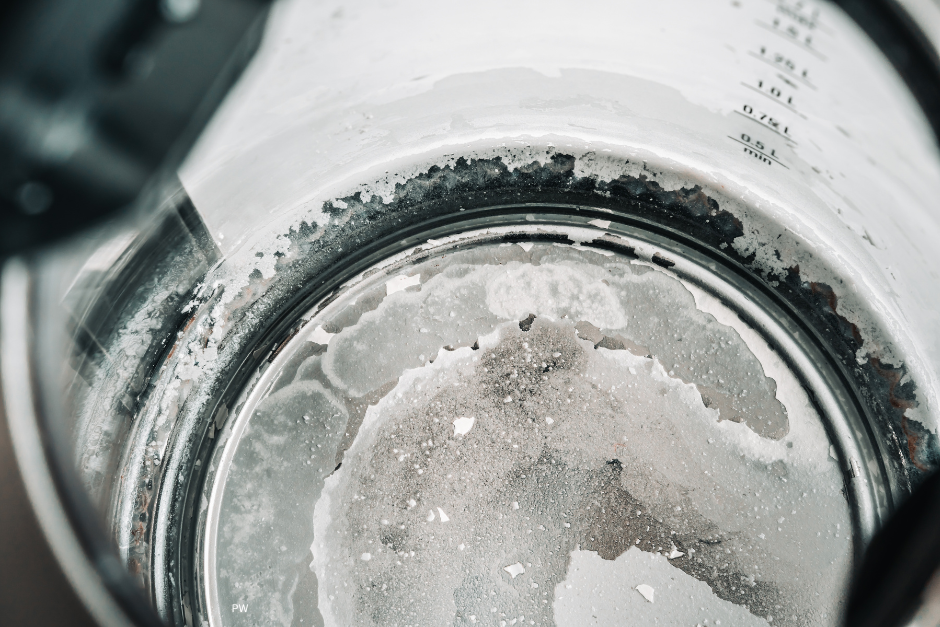
Hard water is often first noticed through small daily annoyances. White crust around faucets, cloudy spots on glassware, rough laundry, dull hair, or a kettle that needs descaling are common signs. These effects occur because calcium and magnesium react with soap, precipitate when heated, and leave mineral residues as water evaporates.
Scale in pipes, heaters, and appliances
Scale forms when dissolved minerals, especially calcium carbonate, leave solution and attach to surfaces. Heating accelerates this process, which is why water heaters, boilers, kettles, coffee makers, dishwashers, and humidifiers often show the heaviest deposits. A thin layer of scale may be mostly cosmetic. A thick layer acts as insulation in water heaters, reducing heat transfer and increasing energy use. In tankless heaters and small appliance channels, scale can reduce flow and trigger maintenance problems.
In plumbing, scale can narrow pipe diameter over time, especially in hot-water lines. It can also accumulate on aerators, showerheads, valves, and appliance inlets. These deposits are usually not toxic, but they can be costly and inconvenient.
Soap scum and cleaning performance
Calcium and magnesium react with traditional soaps to form insoluble compounds. This is soap scum: a sticky film that clings to sinks, tubs, tile, fabrics, and skin. Synthetic detergents are less sensitive to hardness than old-fashioned soaps, but hard water can still increase detergent demand and reduce cleaning efficiency.
Laundry washed in hard water may feel stiff, look dull, or retain residues. Dishwashers may leave spots or film on glassware. Cleaning products formulated for hard water can help, but at very high hardness levels the underlying mineral load often needs treatment.
Taste and mouthfeel
Many people can taste differences between hard and soft water. Hard water may taste mineral-rich, crisp, chalky, or slightly bitter depending on the balance of calcium, magnesium, sulfate, bicarbonate, and other ions. Soft water may taste smoother or flatter. Taste preference is personal and is influenced by temperature, chlorine, dissolved gases, and familiar local water chemistry.
A sudden change in taste should not be dismissed as hardness alone. New metallic, earthy, rotten-egg, salty, chemical, or fuel-like tastes can indicate other water quality problems. In those cases, testing is more appropriate than guessing.
Skin and hair
Many users report that hard water leaves skin dry or hair less manageable. The cause may include soap residue, altered lathering, and mineral deposition on hair fibers. Softened water often allows soaps and shampoos to lather more readily and rinse differently. Some people describe softened water as slippery because soap is not being consumed by hardness minerals and because the skin surface feels less stripped by residue.
Skin reactions should be interpreted cautiously. Dryness, eczema, irritation, or itching can have many causes, including detergents, fragrances, chlorine, indoor humidity, bathing frequency, water temperature, and medical conditions. Water softening may help some households, but it is not a medical treatment.
Soft Water: Benefits, Trade-Offs, and Misunderstandings
Soft water has clear advantages in many homes. It reduces scale, improves soap efficiency, protects appliances, and can lower maintenance burdens. In industrial and institutional settings, softening may be essential for boilers, laundries, cooling systems, laboratories, food service equipment, and process water applications.
The most common residential softening technology is ion exchange. In a conventional sodium-cycle softener, calcium and magnesium ions in the water are exchanged for sodium ions on a resin bed. The resin is periodically regenerated with brine. Potassium chloride can be used instead of sodium chloride in some systems, exchanging hardness minerals for potassium rather than sodium, although cost and performance considerations vary.
Soft water is not the same as purified water. A softener removes calcium and magnesium effectively, but it does not reliably remove microbes, nitrate, arsenic, lead, many organic chemicals, pesticides, PFAS, or dissolved salts overall. In fact, sodium-cycle softening increases sodium concentration and does not lower TDS significantly. This is a frequent source of misunderstanding. Softened water may be better for plumbing and cleaning while still requiring additional treatment for specific contaminants.
Sodium in softened water
Sodium added by softening depends on the hardness removed. The harder the incoming water, the more sodium is added during sodium-cycle ion exchange. For many people, the contribution is small compared with dietary sodium from food. For people on strict sodium-restricted diets, infants in certain circumstances, or users with medical concerns, softened water sodium may matter. A common approach is to soften only hot water or to provide an unsoftened cold-water tap for drinking and cooking. Another option is reverse osmosis at the kitchen tap, which can reduce sodium along with many other dissolved ions.
Potassium chloride regeneration may reduce sodium addition, but it adds potassium and is not appropriate for everyone, especially people with kidney disease or those taking medications that affect potassium balance. Medical questions should be handled with a qualified clinician.
Corrosion and very soft water
Naturally soft water can be low in hardness and low in alkalinity. If pH is also low, it may be corrosive. Corrosive water can dissolve metals from plumbing materials. This is why water utilities do not evaluate softness alone; they manage pH, alkalinity, corrosion inhibitors, disinfectant residuals, and distribution conditions.
Home ion exchange softening does not necessarily make water corrosive in the same way that naturally low-alkalinity water can be, because alkalinity may remain. However, softened water may alter scaling tendencies and can interact differently with plumbing. If a home has lead service lines, lead solder, old brass fixtures, blue-green copper staining, pinhole leaks, or metallic taste, testing for metals and corrosion indicators is prudent.
Testing Hard Water at Home and Professionally
Testing should match the decision you need to make. If you only want to know whether hardness explains spots on dishes, a simple hardness strip may be sufficient. If you are sizing a softener, diagnosing corrosion, evaluating a private well, or choosing drinking water treatment, a more complete analysis is advisable.
For a household water quality baseline, consider testing hardness, pH, alkalinity, TDS or conductivity, iron, manganese, chloride, sulfate, nitrate, fluoride where relevant, and any local contaminants of concern. Private wells should also be tested for total coliform and E. coli, especially after flooding, repairs, changes in taste, or long periods of nonuse. The PureWaterAtlas Water Testing Guide explains how to select tests, collect samples, and interpret results without overreading a single number.
Common testing methods
- Test strips: Fast and inexpensive. Useful for screening, but less precise and affected by color interpretation, expiration, and technique.
- Drop-count titration kits: Better for practical hardness measurement. A color change indicates the endpoint, and the number of drops converts to hardness.
- Certified laboratory testing: Best for accurate hardness values and broader water quality data. Laboratories may measure calcium and magnesium directly and calculate hardness.
- Utility water quality reports: Public water systems often report hardness or related minerals in consumer confidence reports or technical water quality summaries.
When testing, take note of whether the sample is collected before or after any treatment equipment. A kitchen tap connected to a reverse osmosis unit will not represent raw well water. A hose bib may bypass a softener. Hot water can show scale-related changes and should not be used for standard drinking water sampling unless the test specifically targets hot-water plumbing.
Purification Methods and Treatment Choices
The right treatment depends on the problem. Hardness treatment is not identical to drinking water purification, and purification methods should be selected based on tested contaminants. The PureWaterAtlas guide to Water Purification Methods provides a broader overview of technologies for microbial, chemical, and aesthetic concerns.
Ion exchange water softeners
Ion exchange softeners are the standard solution for high hardness in whole-house applications. They are effective, mature, and widely available. Correct sizing is crucial. A softener should be sized based on hardness, household water use, flow rate, iron and manganese presence, regeneration frequency, and desired capacity. Undersized systems waste salt and regenerate too often. Oversized systems may stagnate if poorly configured.
Softeners require salt or potassium chloride, periodic maintenance, brine management, and occasional resin cleaning or replacement. In areas with brine discharge restrictions, local rules should be checked. Septic system interactions are debated and site-specific; high brine discharge may affect some systems, especially if water use and regeneration are poorly managed.
Reverse osmosis
Reverse osmosis, or RO, uses a semi-permeable membrane to reduce many dissolved ions, including hardness minerals, sodium, nitrate, arsenic species under appropriate conditions, fluoride, and many other contaminants. RO is commonly installed at a kitchen sink for drinking and cooking water rather than as a whole-house system. Whole-house RO is more complex and requires careful post-treatment because low-mineral RO water can be corrosive.
RO can help when softened water has elevated sodium or when the household needs drinking water treatment for multiple dissolved contaminants. However, RO membranes can foul or scale if feedwater is very hard, so pretreatment with a softener is often used.
Distillation
Distillation boils water and condenses the vapor, leaving many dissolved minerals behind. It can reduce hardness and many inorganic contaminants. Distillers are usually point-of-use devices because they are slow and energy-intensive. They also require cleaning to remove mineral scale from the boiling chamber.
Template-assisted crystallization and scale control devices
Some systems are marketed as salt-free conditioners rather than softeners. Technologies such as template-assisted crystallization may reduce scale adhesion by encouraging hardness minerals to form microscopic crystals that remain suspended instead of depositing on surfaces. These systems do not remove calcium and magnesium, so hardness test results usually remain high. They may help with scale control in some conditions but will not provide the soap benefits of true softening.
Magnetic and electronic scale devices are also sold for hard water. Evidence and performance vary, and results are often highly dependent on water chemistry, flow, temperature, and system design. Buyers should ask for independent performance data relevant to their hardness level and use case.
Lime softening
Lime softening is used in municipal and industrial treatment. Adding lime raises pH and precipitates calcium carbonate and magnesium hydroxide, reducing hardness. It requires chemical handling, solids separation, pH control, and operational expertise. It is not a typical household method, but it is important in large-scale water treatment.
Boiling
Boiling can remove some temporary hardness by precipitating carbonate scale, but it is not a practical whole-house treatment and does not remove non-carbonate hardness effectively. Boiling can disinfect water under emergency conditions when properly done, but it concentrates many dissolved chemicals as water evaporates. It should not be used as a general solution for hard water.
Hard Water vs Soft Water Comparison Table
The following table summarizes the main practical differences. Actual outcomes depend on the full water chemistry, plumbing materials, temperature, treatment history, and user preferences.
| Feature | Hard water | Soft water |
|---|---|---|
| Main chemistry | Higher calcium and magnesium | Lower calcium and magnesium, naturally or after treatment |
| Drinking safety | Usually not unsafe due to hardness alone | Usually not unsafe due to softness alone, but low alkalinity water may be corrosive |
| Scale formation | More likely, especially in hot water systems | Less likely |
| Soap and detergent use | More soap scum, reduced lather, higher detergent demand | Better lathering, less soap scum |
| Taste | Mineral, crisp, chalky, or bitter depending on ions | Smoother or flatter; softened water may taste slightly salty to some users |
| Appliance impact | Can shorten life of heaters, dishwashers, coffee makers, humidifiers | Generally reduces scale-related maintenance |
| Potential concerns | Scale, clogged fixtures, lower heating efficiency | Sodium or potassium addition if ion-exchange softened; possible corrosion issues in naturally soft low-alkalinity water |
| Best treatment fit | Ion exchange softening, scale control, RO for drinking water when needed | Corrosion control if low pH or low alkalinity; contaminant-specific treatment if needed |
Special Considerations for Private Wells
Private wells often show stronger hardness variation than municipal systems because each well reflects local geology and construction. A well in carbonate bedrock may produce very hard water with high alkalinity. A shallow well in sandy or acidic terrain may produce soft, corrosive water. Hardness can also coexist with iron, manganese, sulfur odors, methane, arsenic, nitrate, or microbial contamination depending on local conditions.
Well owners should avoid assuming that a softener solves all well water problems. If iron or manganese are present, they may foul softener resin or cause staining even after hardness treatment. If bacteria are present, softening does not disinfect the water. If arsenic or nitrate are present, specialized treatment is required. For microbial topics, see PureWaterAtlas Water Microbiology.
A sensible well water plan starts with testing raw water, then selecting treatment in the correct order. Typical treatment trains may include sediment filtration, oxidation and filtration for iron or manganese, softening for hardness, activated carbon for taste and certain organic chemicals, ultraviolet disinfection for microbial control, and reverse osmosis for drinking water contaminants. The order matters because one process can protect or impair another.
Special Considerations for Municipal Water
Municipal water hardness is shaped by source water and treatment policy. Some utilities soften water centrally; others distribute naturally hard water because it is safe and stable, even if customers experience scale. Utilities also manage corrosion control to comply with drinking water regulations and protect distribution infrastructure.
If you receive municipal water, start with the annual water quality report and the utility’s published hardness data. Hardness may vary seasonally if sources change. A home test can still be useful, especially if you live in a building with treatment equipment, storage tanks, old plumbing, or a shared softener.
Adding a home softener to municipal water can improve comfort and reduce scale, but it may not be needed if hardness is moderate. Before installing whole-house treatment, consider the hardness level, hot water system, appliance history, sodium concerns, wastewater discharge rules, and whether a point-of-use drinking water system would better address your goals.
Hardness in Large Buildings and Institutional Systems
In apartment buildings, hospitals, schools, hotels, laboratories, and food service facilities, water hardness is not just a comfort issue. Scale can reduce heat exchange efficiency, increase maintenance costs, clog mixing valves, disrupt dishwashing, affect steam systems, and create uneven water temperatures. Softening can be economically justified even when the water is safe to drink.
Large buildings also have more complex water age, temperature, and plumbing conditions. Scale and corrosion control must be considered alongside microbial risk management, especially in hot water systems, cooling towers, decorative fountains, and low-use fixtures. Over-softening without attention to corrosion and disinfectant residual can create unintended consequences. Building water management should use measured data, documented maintenance, and qualified professionals.
How to Decide Whether You Need a Water Softener
A water softener is most justified when hardness is high and the household has clear scale or soap-related problems. The decision should not be based only on a salesperson’s demonstration. Use a hardness test, inspect appliances, review maintenance history, and consider the full chemistry.
Consider a softener if your hardness is above about 120 mg/L as CaCO3 and you see recurring scale, poor soap performance, water heater deposits, dishwasher film, or fixture clogging. It becomes more compelling above 180 mg/L, especially with hot water scale. If hardness is below 100 mg/L, whole-house softening may still be chosen for preference, but the cost-benefit case is weaker.
Before buying, ask for the system’s capacity, salt efficiency, flow rate, regeneration method, warranty, service requirements, bypass options, and third-party certifications where available. Make sure outdoor irrigation is not softened unless there is a specific reason; softened irrigation water wastes salt and may affect sodium-sensitive plants. Many homes benefit from softening only indoor hot water and selected cold lines, while keeping an unsoftened drinking tap or adding RO at the kitchen sink.
Environmental and Wastewater Considerations
Water softening has environmental trade-offs. Ion exchange softeners consume salt or potassium chloride and discharge brine during regeneration. Brine can increase chloride loading to wastewater systems, septic systems, and receiving waters. Chloride is difficult and expensive to remove once it enters wastewater. Some communities restrict or discourage self-regenerating softeners because of chloride impacts.
High-efficiency demand-initiated softeners reduce salt and water use compared with older timer-based units. Proper sizing and settings also matter. Setting hardness correctly, avoiding unnecessary regeneration, repairing leaks, and using efficient fixtures can reduce brine discharge. Where regulations allow, cartridge exchange services may regenerate resin off-site under controlled conditions, although transport and service impacts should be considered.
Salt-free scale control devices may reduce chloride discharge, but they do not deliver all benefits of softening. The best environmental choice depends on local water hardness, wastewater sensitivity, available technologies, and the actual need for treatment.
Practical Maintenance Tips
- Test before treatment: Know hardness, iron, manganese, pH, alkalinity, TDS, and contaminants of concern before selecting equipment.
- Set the softener correctly: Program hardness based on measured raw water, adjusting for iron if the manufacturer recommends it.
- Use the right salt: High-purity evaporated salt often reduces brine tank residue. Follow manufacturer guidance.
- Clean the brine tank: Remove salt bridges, sludge, or mush that can interfere with regeneration.
- Check bypass valves: Confirm which taps are softened and which are not.
- Maintain water heaters: Hard water areas may require more frequent flushing or descaling, depending on heater type and warranty guidance.
- Retest periodically: Water chemistry can change, especially in private wells, after plumbing work, drought, flooding, or treatment modifications.
Common Myths About Hard and Soft Water
Myth: Hard water is contaminated water
Hard water is not necessarily contaminated. It contains higher levels of calcium and magnesium, which are naturally occurring minerals. It can still contain contaminants, but hardness itself is not proof of unsafe water.
Myth: Soft water is always pure
Soft water is not the same as purified water. A softener may leave nitrate, arsenic, microbes, lead, disinfection byproducts, or many organic chemicals unchanged. Treatment must match the contaminant.
Myth: A water softener removes chlorine
Standard ion exchange softeners are not designed for chlorine removal. Activated carbon is commonly used for chlorine taste and odor, but carbon has its own maintenance requirements and should be selected carefully.
Myth: Scale means the water is unsafe to drink
Scale is usually calcium carbonate or related mineral deposits. It is a maintenance concern, not automatic evidence of a health hazard. Still, heavy scale can signal the need for broader testing and appliance maintenance.
The Bottom Line
Hard water vs soft water is not a simple contest where one is always safer or better. Hard water contains more calcium and magnesium. It commonly causes scale, soap scum, spotting, and appliance maintenance problems. Soft water reduces those issues, but ion exchange softening can add sodium or potassium and does not remove many health-related contaminants. Naturally soft, low-alkalinity water may also require corrosion control.
The best decision is evidence-based: test the water, identify the actual problem, and choose treatment that matches the chemistry. For drinking water safety, hardness is only one part of the larger picture. Pathogens, metals, nitrate, arsenic, industrial chemicals, and plumbing conditions may matter more. For a broader foundation in water chemistry and treatment, explore the PureWaterAtlas Water Science pillar page and the Water Science category.
FAQ
Is hard water safe to drink?
In most cases, hard water is safe to drink if it is free from harmful microbes and chemical contaminants. Calcium and magnesium are not usually health hazards at normal drinking water levels. The main problems are scale, taste, soap performance, and appliance maintenance. Private wells and older plumbing should still be tested for contaminants beyond hardness.
Is soft water better than hard water?
Soft water is better for reducing scale, improving soap lather, limiting spots, and protecting many appliances. Hard water may be preferred for taste and can contribute calcium and magnesium. Neither is automatically better for every use. The right choice depends on hardness level, plumbing, health considerations, treatment goals, and local water chemistry.
Does a water softener make water safe?
A standard water softener removes hardness minerals but does not make unsafe water safe. It is not a disinfectant and does not reliably remove nitrate, arsenic, lead, PFAS, pesticides, or many other contaminants. If safety is the concern, test the water and select contaminant-specific treatment.
Why does softened water feel slippery?
Softened water often feels slippery because soap lathers more readily and rinses without forming as much insoluble soap scum. The sensation is usually not residue from the softener. It is the absence of hardness minerals interfering with soap.
Can hard water damage appliances?
Yes. Hard water can form scale in water heaters, dishwashers, coffee makers, humidifiers, boilers, and tankless heater coils. Scale reduces heat transfer, restricts flow, and increases maintenance. The risk rises with higher hardness and higher operating temperatures.
Should I drink softened water?
Many people drink softened water without issue. Sodium-cycle softening adds sodium in proportion to the hardness removed, which may matter for people on sodium-restricted diets. Some households keep an unsoftened cold tap for drinking or install reverse osmosis for drinking and cooking water.
How often should I test water hardness?
Municipal users can check hardness when sources change, after installing treatment, or when scale problems appear. Private well owners should include hardness in periodic water testing, especially after well repairs, flooding, drought, or noticeable changes in taste, staining, or scale. Annual basic testing is a sensible routine for many wells.
Read the full guide: Water Science Guide
Explore more in this category: Water Science Articles