Introduction
The municipal water treatment process regulations that govern public drinking water systems are designed to protect human health, maintain public confidence, and ensure that water delivered to homes, schools, hospitals, and businesses is consistently safe. Municipal treatment is not just a technical sequence of filtration and disinfection. It is also a highly regulated public service shaped by legal requirements, scientific risk assessment, engineering standards, operational monitoring, and transparent reporting.
Modern water utilities operate within a framework that connects source-water protection, treatment performance, distribution-system integrity, and ongoing compliance. In practical terms, this means water providers must do more than make water look clear. They must control microbial pathogens, reduce chemical contaminants, manage disinfection byproducts, prevent corrosion, and demonstrate that finished water remains within established safety thresholds.
Understanding these rules is important for utility professionals, policymakers, students, facility managers, and informed residents. Regulations influence every step of treatment, from source selection and raw-water testing to final disinfection residuals and customer notification. For broader background, readers may also explore this complete guide to municipal treatment and related resources in water treatment systems.
This article explains how regulatory oversight applies to the treatment train, why certain contaminants receive special attention, how utilities verify safety, and how national and international guidance such as municipal water treatment process epa standards and municipal water treatment process who guidelines influence water quality targets. It also clarifies the concept of municipal water treatment process safe limits and shows how utilities maintain municipal water treatment process compliance under evolving municipal water treatment process water rules.
What It Is
The municipal water treatment process is the organized set of physical, chemical, and biological operations used by public water systems to convert raw water into potable water that meets regulatory requirements. The exact treatment sequence depends on source water quality, plant design, climate, watershed conditions, and applicable standards. Surface water drawn from rivers, lakes, or reservoirs usually requires more extensive treatment than protected groundwater, though both sources are regulated.
A typical municipal treatment train may include the following stages:
- Source water intake: Water is withdrawn from a river, lake, reservoir, or aquifer.
- Screening: Large debris such as sticks, leaves, and trash are removed.
- Coagulation and flocculation: Chemicals are added to destabilize suspended particles so they can form larger clumps.
- Sedimentation or clarification: Heavy floc settles out or is separated by clarification systems.
- Filtration: Water passes through media such as sand, anthracite, membranes, or other barriers to remove fine particles and microorganisms.
- Disinfection: Chlorine, chloramine, ozone, ultraviolet light, or combinations are used to inactivate pathogens.
- Corrosion control and stabilization: pH, alkalinity, and corrosion inhibitors may be adjusted to protect pipes and reduce lead or copper release.
- Storage and distribution: Treated water enters tanks and pipelines, where quality must still be maintained.
From a regulatory perspective, treatment is not evaluated only by whether a facility has these steps in place. Regulators also consider whether each stage achieves measurable performance objectives. For example, turbidity targets help confirm filtration effectiveness, and disinfectant residual requirements help confirm microbial control in the distribution system.
The system is therefore both a treatment process and a compliance process. Plant operators, laboratory staff, engineers, and administrators all contribute to meeting health-based standards, operational benchmarks, and reporting obligations. Readers seeking more detail on source conditions can refer to this discussion of causes and sources.
Main Causes or Sources
Municipal regulations exist because raw water is naturally vulnerable to contamination from many sources. These sources may be environmental, agricultural, industrial, urban, or infrastructure-related. Treatment plants must be designed around the risks presented by the source water and surrounding watershed.
Common causes and sources of concern include:
- Microbial contamination: Bacteria, viruses, and protozoa can enter water through sewage discharges, failing septic systems, animal waste, and stormwater runoff.
- Natural organic matter: Leaves, soil humics, algae, and decaying vegetation can affect color, taste, and disinfection byproduct formation.
- Sediment and turbidity: Erosion, heavy rain, construction, and watershed disturbance can increase suspended solids and shield microorganisms from disinfection.
- Agricultural runoff: Fertilizers, pesticides, nutrients, and manure can contaminate surface and groundwater sources.
- Industrial inputs: Solvents, metals, process chemicals, and accidental spills may affect source-water quality.
- Naturally occurring contaminants: Arsenic, fluoride, iron, manganese, radionuclides, and other substances may occur in local geology.
- Distribution-system contamination: Pipe breaks, pressure loss, biofilm growth, corrosion, and cross-connections can impair water quality after treatment.
Regulations recognize that not every utility faces the same risks. A system using pristine groundwater may focus more on well protection, disinfection, and corrosion control. A system using surface water influenced by upstream wastewater discharges may need enhanced coagulation, advanced filtration, and stringent microbial monitoring. The regulatory framework is therefore partly uniform and partly risk-based.
Source-water assessments are a key regulatory tool. Utilities often evaluate watershed activities, land use patterns, upstream dischargers, storm events, and seasonal changes in raw-water quality. This information supports decisions about treatment upgrades and operational changes. It also helps explain why municipal water treatment process water rules often include both mandatory limits and source-specific planning requirements.
Many of these contamination pathways overlap with broader public health topics covered in water contamination and microbial concerns discussed in water microbiology.
Health and Safety Implications
The central purpose of municipal drinking water regulation is health protection. Unsafe drinking water can cause immediate infectious disease outbreaks, long-term toxic exposure, or chronic infrastructure-related problems. Because people consume water daily and also use it for cooking, hygiene, and medical care, even low contaminant concentrations can matter when exposure is repeated over time.
Microbial hazards are among the most urgent concerns. Pathogens such as Escherichia coli, Giardia, Cryptosporidium, and enteric viruses can cause gastrointestinal illness, dehydration, hospitalization, and in some cases death. Children, older adults, pregnant individuals, and immunocompromised people may face greater risks. This is why treatment regulations place strong emphasis on filtration performance, disinfection effectiveness, and distribution-system integrity.
Chemical hazards may have different timelines of harm. Some chemicals are associated with cancer risk, organ damage, reproductive effects, developmental impacts, or neurological impairment. Examples include arsenic, nitrate, lead, disinfection byproducts, and certain industrial contaminants. Chemical standards are often based on toxicological studies, exposure modeling, and feasibility considerations.
Corrosion-related exposure is another major safety issue. Water may leave the plant within compliance targets but pick up lead or copper from plumbing materials if chemistry is not properly controlled. Regulations addressing corrosion control are therefore essential to the overall treatment framework, even though the contamination may occur after central treatment.
Operational failures also create risk. Inadequate coagulation can allow particles and microorganisms to pass through filters. Poor disinfection can leave pathogens viable. Excessive disinfectant dose can create taste problems and increase byproduct formation. Low system pressure can allow contaminants to enter through leaks. For this reason, regulations focus not only on end-product testing but also on process control.
Health-based standards are often expressed as maximum contaminant levels, treatment techniques, action levels, or operational thresholds. These are the practical expression of municipal water treatment process safe limits. A safe limit is not simply a number chosen at random. It usually reflects scientific evidence, risk assessment, analytical capability, and the need to maintain protection across large and diverse populations.
For more on the public health dimension, readers can review health effects and risks in municipal water treatment.
Testing and Detection
Testing and detection are the backbone of regulatory assurance. A water treatment plant cannot demonstrate safety or compliance without reliable monitoring. Municipal systems are typically required to test raw water, in-process water, finished water, and distribution-system samples at frequencies determined by source type, system size, treatment method, and prior compliance history.
Monitoring usually falls into several categories:
- Microbiological monitoring: Total coliform, E. coli, heterotrophic bacteria, and pathogen-related indicators help verify sanitary integrity and treatment performance.
- Physical monitoring: Turbidity, temperature, conductivity, and color provide rapid operational information.
- Chemical monitoring: pH, alkalinity, hardness, disinfectant residuals, metals, nitrate, fluoride, disinfection byproducts, and other regulated compounds are measured according to standard methods.
- Process monitoring: Coagulant dose, filter run time, particle counts, membrane integrity, and contact time are tracked to confirm treatment effectiveness.
- Distribution-system monitoring: Residual disinfectant, microbiological quality, corrosion indicators, and customer tap samples help determine whether water remains compliant after leaving the plant.
Regulations often specify where samples must be collected, how they must be preserved, what analytical methods are acceptable, and when results must be reported. Certified laboratories are typically required for many compliance parameters. Continuous online instruments may be used for turbidity, chlorine residual, pH, and flow, while grab samples may be collected for microbiology, metals, or organics.
The use of indicator parameters is especially important. Utilities do not always measure every pathogen directly because some are difficult, expensive, or impractical to analyze routinely. Instead, regulations may rely on treatment technique requirements and surrogate indicators such as turbidity or disinfectant contact time to demonstrate likely pathogen control. This reflects a preventive approach: control the process continuously rather than wait for disease evidence.
Data review is also part of compliance. Monitoring results can identify trends such as rising source-water turbidity after storms, seasonal increases in organic matter, filter breakthrough, nitrification in chloraminated systems, or corrosion shifts linked to chemical changes. Effective utilities use data not just for reporting, but for proactive risk management.
Public communication is another testing-related requirement. Many systems publish annual water quality reports summarizing detected contaminants, treatment methods, compliance status, and explanatory context. These reports help translate technical compliance into public accountability.
Prevention and Treatment
Prevention is more effective and often less costly than relying solely on treatment after contamination occurs. Regulatory frameworks therefore promote a multiple-barrier approach. This means protecting water quality at several stages rather than depending on a single intervention.
Key prevention strategies include:
- Source-water protection: Watershed management, wellhead protection, land-use controls, spill prevention, and upstream monitoring reduce raw-water contamination risks.
- Infrastructure maintenance: Proper upkeep of intakes, basins, filters, disinfection systems, storage tanks, and distribution pipes reduces failure risk.
- Operator training and certification: Competent personnel are essential for process adjustment, emergency response, and routine compliance.
- Cross-connection control: Backflow prevention programs protect the distribution system from contamination events.
- Emergency planning: Utilities need response plans for floods, chemical spills, algal blooms, power outages, and contamination incidents.
Treatment itself is selected to address identified contaminants and meet required performance targets. Conventional treatment remains common for surface water, but advanced approaches are increasingly important. Depending on water quality and regulations, utilities may use granular activated carbon, ion exchange, membrane filtration, advanced oxidation, biologically active filtration, or specialized adsorption media.
Disinfection choices illustrate the balance between protection and regulatory complexity. Chlorine provides a persistent residual in the distribution system, which supports microbial safety, but it can react with natural organic matter to form byproducts. Chloramines may reduce some byproducts and maintain residual over longer distances, but they require careful management to prevent nitrification. Ozone and ultraviolet treatment are effective against certain pathogens, but they do not provide the same residual protection in pipes. As a result, utilities often use more than one disinfectant strategy.
Corrosion control is another preventive treatment area. Utilities may adjust pH and alkalinity or add corrosion inhibitors such as orthophosphate to reduce metal release from plumbing. This is a strong example of how compliance extends beyond the plant itself and into the entire water delivery system.
Ultimately, successful municipal water treatment process compliance depends on aligning treatment design, routine operation, preventive maintenance, and ongoing monitoring. Compliance is not a one-time certification. It is continuous performance under changing conditions such as weather, population demand, aging infrastructure, and emerging contaminants.
Common Misconceptions
Public discussion of drinking water regulations often includes misunderstandings about what compliance means and how standards are applied. Clarifying these misconceptions helps people interpret water quality reports and regulatory actions more accurately.
If water looks clear, it must be safe
Clear water can still contain pathogens, nitrate, dissolved metals, or chemical contaminants. Visual appearance alone is not a reliable measure of safety. This is why regulations require laboratory testing and process monitoring rather than simple observation.
Any detectable contaminant means the water is unsafe
Detection does not automatically mean danger. Modern analytical tools can identify extremely small concentrations. Regulatory standards are usually based on health risk and exposure assumptions, so a detected substance may still be below the established threshold. At the same time, some contaminants, especially microbes or lead in certain contexts, require very cautious interpretation.
Disinfection alone solves all water quality problems
Disinfection is essential for pathogen control, but it does not remove all chemicals, particles, tastes, odors, or corrosion risks. Effective treatment usually involves multiple barriers, not just chlorination.
Compliance means zero risk
No public health system can guarantee absolute zero risk under all conditions. Compliance means the utility is meeting established standards and treatment performance expectations designed to keep risk very low. It also means the system is being monitored and managed within a recognized protective framework.
Regulations are identical worldwide
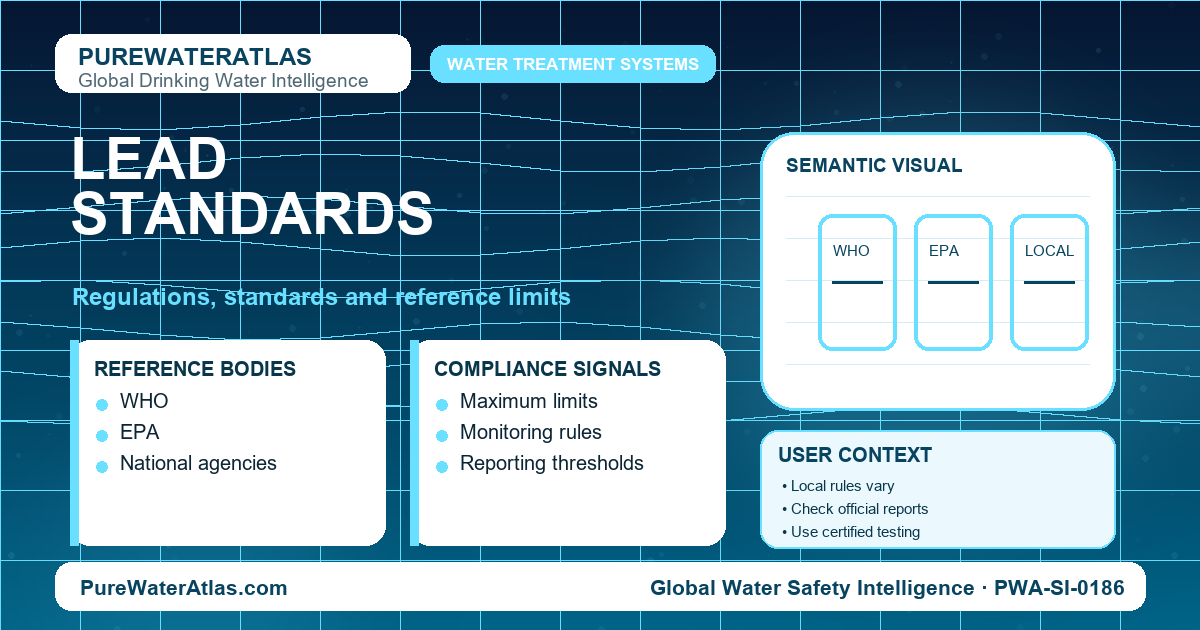
Different countries use different legal structures, enforcement methods, and parameter lists. However, many standards share common scientific principles. For example, both municipal water treatment process epa standards and municipal water treatment process who guidelines emphasize microbial safety, chemical risk management, operational verification, and sanitary integrity.
Once water leaves the treatment plant, the job is finished
Distribution systems are part of the regulated drinking water environment. Pressure maintenance, disinfectant residuals, tank hygiene, pipe condition, and corrosion control all affect final water quality at the tap.
Regulations and Standards
The regulatory landscape for municipal drinking water is built from law, public health science, engineering practice, and operational oversight. Although specific requirements vary by jurisdiction, several core concepts appear in most systems: health-based contaminant limits, treatment technique requirements, monitoring and reporting obligations, operator competency standards, and enforcement mechanisms.
EPA standards in the United States
In the United States, the main legal framework for public drinking water is the Safe Drinking Water Act. Under this law, the Environmental Protection Agency establishes national drinking water regulations, including maximum contaminant levels, treatment techniques, monitoring requirements, and public notification obligations. States may receive primary enforcement authority if they adopt and implement standards at least as stringent as federal requirements.
Municipal water treatment process epa standards commonly address:
- Microbial contaminants: Rules for surface water treatment, filtration, disinfection, and microbial indicators.
- Disinfection byproducts: Limits for compounds such as trihalomethanes and haloacetic acids formed during disinfection.
- Inorganic chemicals: Standards for arsenic, nitrate, fluoride, barium, and other substances.
- Organic chemicals: Limits for pesticides, solvents, and industrial compounds.
- Lead and copper: Action level-based requirements tied to corrosion control and tap sampling.
- Radionuclides: Standards for radioactive contaminants in applicable areas.
EPA rules often use a mix of direct limits and treatment technique requirements. This distinction matters. Some contaminants can be controlled by specifying an exact concentration in finished water, while others are better addressed by requiring treatment performance or operational practices. Cryptosporidium control, for example, relies heavily on treatment barriers and source-based risk classification because routine end-product testing alone may not adequately characterize risk.
WHO guidelines and international influence
Municipal water treatment process who guidelines are widely respected internationally, especially where countries are developing or revising their own national standards. The World Health Organization does not usually enforce drinking water law in the way a national regulator does. Instead, it publishes guideline values and risk-management principles that countries can adapt to local conditions, technical capacity, and public health priorities.
WHO guidance strongly supports a preventive, system-wide approach often referred to as water safety planning. Rather than relying only on end-point testing, water safety plans evaluate hazards from catchment to consumer and establish control measures, critical limits, monitoring, corrective actions, and verification steps. This philosophy aligns closely with modern regulatory practice in many countries.
WHO guideline values are especially influential for:
- Microbial safety targets
- Chemical risk assessment methods
- Risk-based management systems
- Small-system and low-resource implementation strategies
- Public health prioritization where analytical capacity is limited
Safe limits and how they are determined
The idea of municipal water treatment process safe limits is often misunderstood. A limit may represent a legally enforceable maximum, an operational trigger, a health-based target, or an action level that initiates treatment changes. Regulators determine these thresholds using several factors:
- Toxicological or epidemiological evidence
- Expected exposure through drinking water
- Sensitive populations and uncertainty factors
- Analytical detection capability
- Treatment feasibility and reliability
- Cost-benefit and implementation considerations, depending on the jurisdiction
For microbial contaminants, safe limits are often expressed through required log reductions, filtration performance, or absence of certain indicator organisms rather than a simple concentration cap. For chemicals, a numerical concentration may be more practical.
Compliance obligations for utilities
Municipal water treatment process compliance is broader than meeting contaminant numbers at a single moment in time. Utilities are generally expected to:
- Operate approved treatment processes correctly
- Monitor required parameters at specified frequencies
- Use certified laboratories where required
- Keep records and submit reports on time
- Notify regulators and the public when violations occur
- Take corrective actions after operational failures or exceedances
- Maintain qualified operators and safe infrastructure
Enforcement can include notices of violation, mandatory improvements, fines, administrative orders, or in severe cases emergency intervention. However, the regulatory goal is usually not punishment alone. It is sustained protection of public health through reliable system performance.
Evolving water rules and emerging issues
Municipal water treatment process water rules continue to evolve as science advances and new contaminants gain attention. Emerging concerns may include per- and polyfluoroalkyl substances, harmful algal bloom toxins, antimicrobial resistance, and climate-related impacts on source-water quality. Aging infrastructure and cybersecurity also increasingly affect regulatory planning.
Climate variability is especially important because it can alter raw-water temperature, turbidity, drought stress, wildfire runoff, and nutrient loading. Regulators and utilities are therefore moving toward more adaptive, risk-based systems that combine traditional standards with resilience planning.
Even as rules evolve, the core principle remains stable: public drinking water must be managed through preventive barriers, measurable verification, and accountability at every stage from source to tap.
Conclusion
Municipal drinking water regulation is a practical public health system built on science, engineering, and continuous oversight. The treatment plant is only one part of that system. True protection depends on source-water management, robust process control, qualified operators, reliable infrastructure, careful monitoring, and transparent reporting.
The importance of municipal water treatment process regulations lies in their ability to convert complex health risks into enforceable operational requirements. Whether framed through national law, state-level oversight, or international guidance, these standards help utilities control pathogens, chemicals, byproducts, and corrosion while maintaining public confidence in tap water.
Understanding municipal water treatment process epa standards, municipal water treatment process who guidelines, and the meaning of municipal water treatment process safe limits helps clarify why municipal systems test so frequently, document so carefully, and update processes over time. In the end, municipal water treatment process compliance is not just about passing inspections. It is about delivering water that remains protective, dependable, and safe under real-world conditions. As treatment technologies and public health knowledge continue to develop, municipal water treatment process water rules will continue to evolve as well, but their purpose will remain the same: safeguarding communities through reliable drinking water.
Read the full guide: Water Treatment Systems Guide
Explore more in this category: Water Treatment Systems Articles