PFAS water contamination has become one of the defining drinking water safety issues of modern environmental health. The concern is not a single chemical, a single factory, or a single river. PFAS refers to a large family of human-made fluorinated compounds that have been used for decades in industrial processes, firefighting foams, stain-resistant textiles, food packaging, metal plating, electronics manufacturing, and many other applications. Some PFAS persist in the environment for years to decades, move through groundwater, and can accumulate in people and wildlife.
The scientific problem is unusually difficult. PFAS are chemically diverse, highly stable, and often present at extremely low concentrations measured in parts per trillion. Yet some members of the PFAS family have been associated with health effects at low exposure levels. Water utilities, regulators, engineers, toxicologists, and households are now trying to answer practical questions with imperfect but rapidly improving evidence: Is the water safe? Which PFAS are present? What level matters? Which purification methods work? Who should pay for treatment?
This scientific deep dive explains PFAS water contamination from source to tap. It is written for readers who want more than a basic overview but still need clear, usable information. For broader context on contaminant categories, routes of exposure, and prevention strategies, see the PureWaterAtlas Water Contamination Guide.
What PFAS Are and Why They Persist
PFAS stands for per- and polyfluoroalkyl substances. The name describes a large group of synthetic chemicals that contain carbon-fluorine bonds. These bonds are among the strongest in organic chemistry. They help PFAS resist heat, oil, water, stains, and chemical breakdown. Those same properties make many PFAS persistent once released into the environment.
Not all PFAS behave the same way. The family includes thousands of compounds with different chain lengths, functional groups, mobility, volatility, toxicity, and treatability. Two of the most studied PFAS are perfluorooctanoic acid, often called PFOA, and perfluorooctane sulfonic acid, called PFOS. Both are long-chain PFAS that were widely used historically and have been detected in drinking water, blood serum, surface water, groundwater, soil, fish, and wastewater residuals.
Shorter-chain PFAS and replacement chemistries were introduced as older compounds were phased out in some countries. These replacements are sometimes less bioaccumulative in humans than long-chain PFAS, but many are more mobile in water and can be harder to remove with some treatment processes. The phrase forever chemicals is not a precise scientific classification, but it reflects a real issue: many PFAS do not readily degrade into harmless end products under natural environmental conditions.
How PFAS Enter Drinking Water Sources
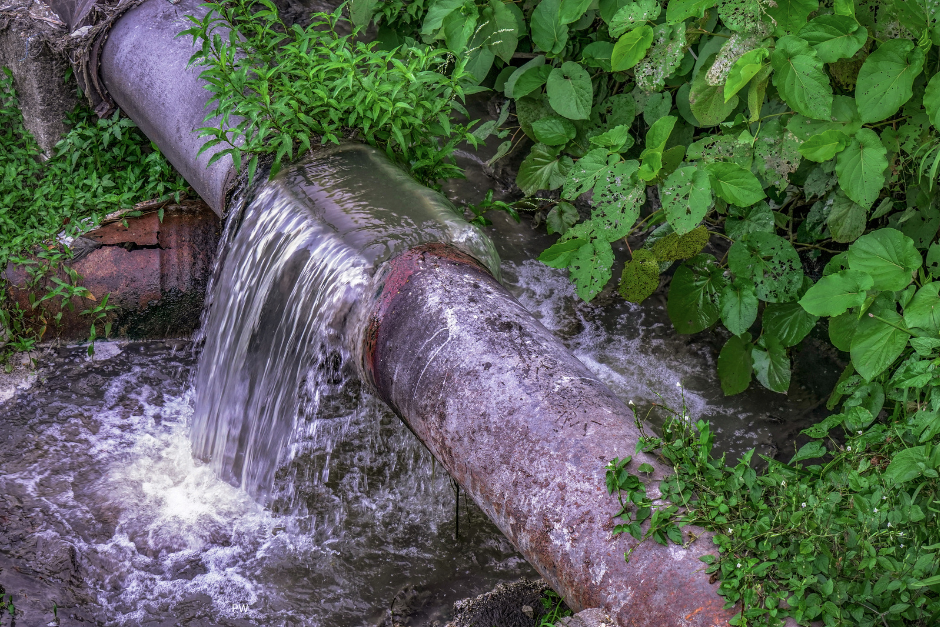
PFAS water contamination usually begins with releases to air, soil, wastewater, surface water, or groundwater. Once in the environment, PFAS can migrate through multiple pathways. Drinking water contamination is often the final point in a long chain of industrial use, product disposal, waste management, and hydrologic transport.
Major PFAS sources include facilities that manufactured PFAS or used them in production, airports and military bases where aqueous film-forming foam was used for fuel fires, landfills that received PFAS-containing products, wastewater treatment plants, biosolids applied to land, metal plating operations, textile and paper facilities, and chemical manufacturing sites. In some watersheds, no single source explains the contamination. Instead, cumulative releases from many diffuse sources create a regional PFAS burden.
Groundwater can be especially vulnerable because PFAS plumes may travel long distances and persist for many years. Private wells near industrial areas, firefighting training sites, landfills, and biosolids application areas may face higher risk. Surface water can also receive PFAS from wastewater discharges, stormwater runoff, landfill leachate, and contaminated groundwater entering streams.
For readers following broader contaminant pathways, the PureWaterAtlas Water Contamination archive provides additional background on chemical, microbial, and infrastructure-related risks.
Why PFAS Chemistry Makes Water Contamination Hard to Control
PFAS molecules often have a water-attracting functional group and a fluorinated carbon tail that repels water and oils. This dual nature gives them surfactant properties. It also affects how they move through water, bind to solids, adsorb to treatment media, and concentrate at interfaces such as air-water boundaries or foam.
Long-chain PFAS such as PFOS tend to adsorb more strongly to activated carbon and organic matter than many short-chain PFAS. Short-chain PFAS often remain more dissolved in water and can pass through treatment systems more readily. Some PFAS precursors can transform into terminal PFAS over time, meaning measured concentrations may change as environmental chemistry evolves.
This matters for sampling and treatment. A water test that measures only a few legacy PFAS may miss other compounds. A treatment system designed around one contaminant may perform differently for another. A source control plan that removes one discharge may not address precursors already present in soil, sludge, or groundwater.
PFAS Exposure Through Drinking Water
Drinking water is not the only PFAS exposure pathway, but it can be a major one in contaminated communities. People may also be exposed through food, indoor dust, consumer products, occupational settings, fish from contaminated waters, and breast milk. The relative contribution of drinking water depends on local water concentrations, water consumption habits, diet, age, occupation, and the specific PFAS mixture.
Infants, pregnant people, people with high water intake, and residents using contaminated private wells may have higher relative exposure from drinking water. Formula-fed infants can receive a higher dose per body weight if formula is prepared with contaminated water. That does not mean every detection creates immediate danger, but it does mean risk assessments often pay close attention to sensitive life stages.
Public water systems are typically monitored and regulated more consistently than private wells. Private well owners are usually responsible for their own testing and treatment. This creates an information gap: some of the households at highest risk may have the least routine monitoring.
Health Effects Linked to PFAS Exposure
PFAS toxicology is an active research field. The strongest evidence exists for a subset of well-studied compounds, particularly PFOA and PFOS. Epidemiological, animal, and mechanistic studies have associated certain PFAS exposures with effects on cholesterol, liver enzymes, immune response, thyroid function, birth weight, kidney cancer, testicular cancer, and pregnancy-induced hypertension. Evidence varies by compound and outcome.
One major concern is immune system effect. Studies have reported reduced antibody response to some vaccines in children exposed to higher PFAS levels. This is significant because immune response is a sensitive biological endpoint and can occur at exposure levels lower than those associated with more obvious toxicity. Another concern is developmental exposure, because early-life stages can be more sensitive to chemical disruption.
PFAS risk is usually assessed over chronic exposure, not from one glass of water. The hazard depends on the compound, concentration, duration of exposure, dose, and individual susceptibility. Blood serum testing can show body burden for some PFAS, but it does not automatically identify the source or predict disease in an individual. For population health, however, serum data have been valuable in linking exposure to outcomes.
The World Health Organization drinking water fact sheet emphasizes that safe drinking water is a foundation of public health. PFAS adds complexity because some chemicals persist long enough that prevention, source control, and treatment must be considered together.
Regulatory Limits and Health Advisories
PFAS regulation is changing quickly. Different jurisdictions use different approaches: enforceable maximum contaminant levels, health advisories, notification levels, action levels, or guideline values. Some focus on individual PFAS such as PFOA and PFOS. Others include groups or sums of selected PFAS. A few use hazard index approaches to account for mixtures.
Regulatory values can differ because agencies use different toxicological assumptions, exposure factors, analytical capabilities, treatment feasibility, and policy frameworks. A legally enforceable drinking water standard is not the same as a health advisory. A standard often considers feasibility, cost, monitoring, and compliance. A health advisory is usually a non-enforceable estimate of a concentration below which adverse health effects are not expected over a specified exposure period, with uncertainty factors included.
Households should avoid comparing numbers without context. Parts per trillion values can appear tiny, but for persistent compounds with low-level health concerns, they can be meaningful. Conversely, a single detection slightly above a guidance value does not describe the full risk without considering duration, mixture, sampling quality, and treatment options.
The U.S. Environmental Protection Agency provides drinking water information through its ground water and drinking water resources. Local health departments and state environmental agencies are often the best sources for site-specific PFAS advisories, fish consumption guidance, and public water system notices.
Common PFAS Found in Water
Water laboratories may test for dozens of PFAS, but a few names appear frequently in monitoring reports. The table below summarizes several common compounds and practical interpretation points. This is not a complete toxicology table, and detection frequency varies by location.
| PFAS compound | Common abbreviation | Typical relevance in water contamination | Treatment considerations |
|---|---|---|---|
| Perfluorooctanoic acid | PFOA | Legacy long-chain PFAS linked to manufacturing and consumer product history | Often removed well by granular activated carbon, ion exchange, and reverse osmosis when systems are properly designed |
| Perfluorooctane sulfonic acid | PFOS | Legacy long-chain PFAS associated with firefighting foam and industrial use | Generally adsorbs strongly to activated carbon; breakthrough must still be monitored |
| Perfluorohexane sulfonic acid | PFHxS | Persistent compound found near some foam-impacted sites | Often treatable with carbon and ion exchange, but performance depends on water chemistry |
| Perfluorononanoic acid | PFNA | Long-chain PFAS detected in some industrially affected watersheds | Typically more removable than many short-chain PFAS by adsorption technologies |
| Perfluorobutane sulfonic acid | PFBS | Short-chain replacement PFAS in some applications | More mobile in water and may break through adsorption media sooner |
| Hexafluoropropylene oxide dimer acid | HFPO-DA | Replacement chemistry associated with certain fluorochemical manufacturing | Treatability varies; advanced treatment and source control may be needed |
Testing Water for PFAS
PFAS testing requires specialized methods, careful sample handling, and laboratories experienced with trace-level analysis. The concentrations of concern are often in parts per trillion, equivalent to nanograms per liter. At these levels, contamination during sampling can distort results. Some waterproof clothing, food packaging, cosmetics, stain-resistant materials, and sampling equipment can contain PFAS or interfere with clean sampling.
Households testing private wells should use a certified laboratory that offers PFAS analysis for drinking water, not a general home screening kit. The laboratory should provide sampling bottles, instructions, detection limits, a list of compounds analyzed, and quality control information. Many labs advise avoiding certain products before sampling, including water-resistant clothing, fast food wrappers, some personal care products, and certain gloves. Instructions vary, so follow the laboratory protocol exactly.
For public water customers, the first step is usually to review the water systemâs consumer confidence report or contact the utility. Some systems have PFAS monitoring results even if not all are included in routine annual summaries. If contamination is known or suspected, state environmental agencies may maintain public databases.
A useful PFAS report should include the individual PFAS measured, reporting limits, units, sample location, sample date, and whether any compounds were detected below reporting limits. A report that simply says PFAS present or PFAS absent is not enough for meaningful risk evaluation.
Interpreting PFAS Results Without Panic
PFAS results can be emotionally difficult because the chemicals are persistent and often associated with industrial pollution. A calm interpretation starts with five questions. Which PFAS were detected? At what concentrations? How do the values compare with current health-based guidance or enforceable standards in the jurisdiction? Is the water used for drinking and cooking, or only for non-potable purposes? Is the result confirmed by repeat sampling?
Units matter. PFAS drinking water results are usually reported in nanograms per liter, which is equivalent to parts per trillion for water. A result of 10 ng/L is not the same as 10 micrograms per liter. Lab reporting limits also matter. If a PFAS is reported as non-detect, it means the compound was not detected above the method reporting limit; it does not prove absolute absence.
Mixtures complicate interpretation. A water sample may contain several PFAS at low concentrations. Some regulations consider individual compounds, while other frameworks evaluate combined exposure. If several PFAS are detected, households should seek guidance from local health authorities, especially if infants, pregnant people, or immunocompromised residents are present.
For a practical household approach to water quality questions beyond PFAS, see PureWaterAtlas on Drinking Water Safety.
PFAS Treatment Technologies for Drinking Water
Three treatment technologies dominate current drinking water PFAS reduction: granular activated carbon, ion exchange resins, and high-pressure membranes such as reverse osmosis and nanofiltration. Each can work, but none should be treated as magic. Performance depends on PFAS type, influent concentration, competing organic matter, water chemistry, flow rate, contact time, system design, maintenance, and waste handling.
Granular Activated Carbon
Granular activated carbon, or GAC, removes PFAS mainly through adsorption. Water flows through a bed of porous carbon, and PFAS accumulate on the carbon surface. GAC has a long history in water treatment and can be effective for long-chain PFAS such as PFOA and PFOS. It may also reduce tastes, odors, chlorine, and some organic contaminants.
The main limitation is breakthrough. Once adsorption sites become saturated, PFAS begin to pass through the bed. Short-chain PFAS often break through earlier than long-chain PFAS. Utilities manage this with lead-lag vessel configurations, routine monitoring, and carbon replacement schedules. Household carbon filters vary widely; a small pitcher filter is not equivalent to a properly certified under-sink or whole-house system designed for PFAS reduction.
Ion Exchange Resins
Ion exchange systems use synthetic resins that attract charged PFAS molecules. Anion exchange resins can be highly effective for many PFAS and may have greater capacity than carbon for certain compounds. They are used in both municipal and point-of-use applications.
Resin selection matters. Some resins are single-use and disposed of or incinerated when exhausted. Others may be regenerated, creating a concentrated waste brine that must be managed. Ion exchange can be sensitive to competing ions, natural organic matter, and system design. As with carbon, performance should be verified by testing treated water.
Reverse Osmosis and Nanofiltration
Reverse osmosis uses pressure to push water through a semi-permeable membrane that rejects many dissolved contaminants, including many PFAS. Under-sink reverse osmosis systems can be effective for drinking and cooking water when certified and maintained. Nanofiltration can also remove PFAS, though rejection varies by membrane and compound.
Membrane systems generate a concentrate stream that contains rejected contaminants. In household systems, this reject water usually goes to the drain. At municipal or industrial scale, concentrate management becomes a major engineering and regulatory issue. Reverse osmosis also removes beneficial minerals and may reduce water flow, so system selection should consider household needs.
Boiling, Distillation, and Simple Filters
Boiling water does not reliably remove PFAS. Because PFAS are not living organisms, heat does not neutralize them the way it can inactivate many microbes. Boiling may reduce water volume and can theoretically concentrate nonvolatile contaminants. Distillation can reduce many PFAS because water is evaporated and condensed, but performance depends on the unit, compound volatility, and maintenance. Simple sediment filters, refrigerator filters, and basic faucet screens are not reliable PFAS solutions unless specifically certified for PFAS reduction.
For households comparing technologies, PureWaterAtlas provides a broader guide to Water Treatment Systems.
Comparing PFAS Purification Methods
| Method | PFAS reduction potential | Best use case | Key limitation |
|---|---|---|---|
| Granular activated carbon | Good for many long-chain PFAS; variable for short-chain PFAS | Municipal treatment, whole-house systems, under-sink certified units | Media breakthrough requires monitoring and replacement |
| Ion exchange resin | High for many charged PFAS when properly designed | Utility treatment, point-of-entry systems, targeted PFAS removal | Spent resin or brine waste must be managed |
| Reverse osmosis | High for many PFAS | Point-of-use drinking and cooking water | Reject water stream, membrane maintenance, lower flow |
| Nanofiltration | Moderate to high depending on membrane and PFAS | Advanced municipal or industrial treatment | Concentrate disposal and compound-specific performance |
| Boiling | Not reliable | Microbial emergency treatment, not PFAS removal | Does not destroy PFAS and may concentrate contaminants |
| Basic sediment filtration | Low for dissolved PFAS | Particulate removal | PFAS are usually dissolved and pass through |
Certification and Performance Claims
When buying a home treatment device for PFAS, look for certification to relevant standards by an accredited third party. Certification is not the same as a marketing claim. It indicates the product was tested under defined conditions for reduction of specified contaminants. The label should state which PFAS were tested, what standard was used, the rated capacity, and maintenance requirements.
Point-of-use devices treat water at one tap, typically the kitchen sink. They are often the most cost-effective approach when the main concern is ingestion through drinking and cooking. Point-of-entry systems treat water as it enters the home. They may be useful when residents want treated water at all taps, but they are more expensive and require careful design. For PFAS, ingestion is usually the primary concern, although some households choose whole-house treatment for additional reassurance.
Filter replacement is not optional. A treatment unit that is not maintained can lose effectiveness. In some cases, exhausted media may release previously captured contaminants. If PFAS levels are high or if vulnerable residents are present, treated water testing is the best way to confirm performance.
Municipal Water System Response
Public water systems respond to PFAS contamination through monitoring, source investigation, blending, treatment installation, alternative water supply, public notification, and long-term compliance planning. The right response depends on contaminant levels, number of wells or intakes affected, available alternative sources, regulatory requirements, and treatment feasibility.
Blending can reduce concentrations by mixing contaminated water with cleaner water, but it does not remove PFAS from the environment. Well shutdowns may protect consumers but can reduce system capacity. Treatment installation can be highly effective but requires capital investment, operator training, media replacement, waste management, and ongoing monitoring. Some systems must also coordinate with upstream dischargers, airports, military installations, industrial facilities, or wastewater plants.
Public communication is a critical part of water safety. Residents need clear information about what was found, what it means, what actions are being taken, and what household steps are recommended. Technical accuracy should not come at the expense of clarity. A public notice that lists chemical names without explaining risk and options can create confusion rather than trust.
Wastewater, Biosolids, and the PFAS Cycle
Wastewater treatment plants are often described as PFAS sources, but most are better understood as receivers and pass-through points. They receive PFAS from households, industries, commercial facilities, landfill leachate, and stormwater infiltration. Conventional wastewater treatment was designed to remove solids, organic matter, nutrients, and pathogens; it was not designed to destroy highly persistent fluorinated chemicals.
Some PFAS partition into sludge, while others remain in treated effluent. When biosolids are applied to land, PFAS can enter soil and potentially leach to groundwater or be taken up by crops under certain conditions. When treated effluent is discharged to rivers, PFAS can contribute to downstream drinking water contamination. Advanced wastewater treatment and source reduction can lower releases, but destruction of PFAS at scale remains challenging.
Technologies under investigation include high-temperature incineration, supercritical water oxidation, electrochemical oxidation, plasma treatment, foam fractionation, and advanced reduction processes. Each has technical, cost, energy, emissions, and residual management questions. For background on how conventional and advanced systems fit together, see the PureWaterAtlas Wastewater Treatment Process guide.
Environmental Transport: From Source Areas to Aquifers
PFAS movement through the environment depends on hydrology, soil chemistry, compound structure, and release history. In groundwater, some PFAS can migrate with the flow of water, forming plumes that extend beyond property boundaries. In surface water, PFAS can travel downstream and mix across watersheds. In air, some volatile or semi-volatile PFAS precursors can travel before depositing onto land or water.
The unsaturated zone between the land surface and groundwater can store PFAS and release them slowly. This creates long-term contamination even after a source is stopped. Foam formation at surface waters can concentrate certain PFAS at the air-water interface. Fish and aquatic food webs can accumulate some PFAS, leading to fish consumption advisories in affected areas.
The USGS Water Science School provides useful background on groundwater, surface water, and the hydrologic cycle. Understanding those basics helps explain why PFAS contamination can be regional rather than confined to a single property.
PFAS Mixtures and the Limits of Chemical-by-Chemical Thinking
Traditional drinking water regulation often evaluates one contaminant at a time. PFAS challenges that model. Real samples may contain multiple PFAS plus other contaminants such as solvents, metals, nitrate, disinfection byproducts, pesticides, or petroleum compounds. A household does not experience exposure chemical by chemical; it experiences the mixture in water, food, air, and dust.
Mixture risk assessment is difficult because toxicological data are incomplete for many PFAS. Some agencies use hazard index approaches for selected compounds with similar endpoints. Others set individual limits while continuing to study cumulative risk. Scientists are also developing total organic fluorine and extractable organic fluorine methods to better understand the portion of fluorinated material not captured by targeted PFAS lists.
Targeted analysis remains essential for compliance and treatment design, but it may underestimate the full PFAS burden if many unmeasured compounds are present. Non-targeted analysis can reveal unknowns, but it is more complex, less standardized, and not usually part of routine household testing.
Practical Steps for Households
If you are concerned about PFAS in drinking water, start with source and data. Public water customers should ask the utility whether PFAS monitoring has been conducted and request results by compound. Private well users should consider PFAS testing if they live near known or suspected sources such as airports, military bases, landfills, industrial facilities, wastewater discharge areas, or land where biosolids have been applied.
If testing confirms PFAS above relevant guidance or standards, consider using an appropriate certified treatment device for drinking and cooking water. Under-sink reverse osmosis and certified carbon or ion exchange systems are common options. Bottled water may be used temporarily, especially for infants or pregnant people, but it is not a perfect long-term solution unless the supplier provides PFAS testing data and quality assurance.
Do not rely on boiling. Do not assume taste, smell, or clarity indicates PFAS safety; PFAS are usually undetectable by human senses. Keep records of water tests, filter changes, and communications with utilities or agencies. If multiple homes in an area use private wells, coordinated testing through a local health department or community group can reduce cost and improve understanding of the contamination pattern.
Risk Reduction Beyond the Tap
Water treatment can reduce exposure, but PFAS prevention requires upstream control. Reducing nonessential PFAS use in products, controlling industrial discharges, treating landfill leachate, replacing PFAS-containing firefighting foams where feasible, and improving wastewater pretreatment can all reduce future contamination. Drinking water treatment alone can become a costly downstream burden if releases continue.
Households can also reduce some non-water exposures by limiting stain-resistant treatments, checking product information where available, avoiding unnecessary grease-resistant food packaging, following fish advisories, and using effective dust control indoors. These steps are not a substitute for clean water policy, but they can reduce cumulative exposure.
For readers interested in the broader science of contaminants, analytical testing, and treatment mechanisms, PureWaterAtlas has an overview of Water Science.
Equity and Community Impact
PFAS contamination is not only a chemistry problem. It is also an environmental justice and public trust issue. Communities near industrial corridors, military installations, airports, landfills, and wastewater discharge points may carry disproportionate exposure burdens. Private well users can face high testing and treatment costs. Small water systems may lack the technical and financial capacity to install advanced treatment without outside assistance.
Risk communication must be culturally appropriate, timely, and specific. Residents need answers about immediate exposure reduction, long-term remediation, health resources, and accountability. Communities also need access to testing, not just advice to test. When contamination is linked to a responsible facility, cleanup and treatment funding should not fall solely on households.
Trust is built when agencies and utilities share data openly, acknowledge uncertainty, explain decisions, and update residents as science evolves. Minimizing concern can damage credibility. So can overstating certainty. PFAS communication works best when it is direct: here is what was found, here is what is known, here is what is still uncertain, and here is what people can do now.
Research Frontiers in PFAS Water Contamination
Several scientific questions are shaping the next phase of PFAS management. One is how to regulate and treat PFAS as a class while still recognizing differences among compounds. Another is how to destroy PFAS safely and economically after they are captured by carbon, resin, membranes, foam fractionation, or other separation technologies. Capturing PFAS is only half the problem; concentrated residuals must be handled responsibly.
Analytical chemistry is also advancing. More laboratories can now measure larger PFAS panels at lower detection limits. Non-targeted methods are revealing previously unrecognized fluorinated compounds. Total fluorine approaches may help estimate the gap between known PFAS and unidentified organofluorine content.
Toxicology is moving toward better understanding of mixture effects, sensitive endpoints, early-life exposure, and differences in biological half-lives across compounds. Epidemiology continues to clarify associations between exposure and health outcomes, though it must account for confounding factors, changing exposure patterns, and long latency for some diseases.
Engineering research is focused on selective adsorbents, regenerable media, low-energy membranes, destructive technologies, and treatment trains that combine separation and destruction. The most effective future systems may not rely on a single method. They may use source reduction, targeted pretreatment, adsorption or membranes, and validated destruction of concentrated waste streams.
Bottom Line
PFAS water contamination is serious because many PFAS persist, move through water systems, and have been linked to health concerns at low exposure levels. The issue is scientifically complex, but practical action is possible. Good decisions start with reliable testing, compound-specific interpretation, awareness of vulnerable populations, and treatment technologies matched to the water chemistry and PFAS profile.
For households, the most useful steps are to identify the water source, obtain credible PFAS data, use certified treatment when needed, maintain filters properly, and follow local health guidance. For utilities and regulators, the priorities are source control, transparent monitoring, effective treatment, waste management, and protection of communities that face disproportionate exposure. For manufacturers and policymakers, prevention remains the most durable solution. Once PFAS enter aquifers and watersheds, removal becomes far more difficult than avoiding release in the first place.
FAQ
What is PFAS water contamination?
PFAS water contamination occurs when per- and polyfluoroalkyl substances enter groundwater, surface water, or drinking water supplies. These chemicals can come from industrial sites, firefighting foams, landfills, wastewater discharges, biosolids, and consumer product waste. Many PFAS are persistent and can travel through water systems for long periods.
Can I taste or smell PFAS in drinking water?
No. PFAS generally do not give water a detectable taste, odor, or color at concentrations relevant to drinking water safety. Clear, good-tasting water can still contain PFAS. Laboratory testing is required to know whether PFAS are present.
Does boiling water remove PFAS?
Boiling is not a reliable PFAS removal method. PFAS are chemical contaminants, not microbes, and ordinary boiling does not destroy them. Boiling can reduce water volume and may increase the concentration of some nonvolatile contaminants in the remaining water.
Which purification methods work best for PFAS?
The most established PFAS purification methods are granular activated carbon, ion exchange resin, and reverse osmosis. The best choice depends on the PFAS present, water chemistry, flow rate, treatment scale, maintenance capacity, and whether treatment is needed at one tap or for the whole building.
Should private well owners test for PFAS?
Private well owners should consider PFAS testing if the well is near a known or suspected source, such as an airport, military base, landfill, industrial facility, firefighting training area, wastewater discharge, or land where biosolids were applied. Testing should be done by a qualified laboratory using PFAS-specific methods.
Are all PFAS equally dangerous?
No. PFAS differ in persistence, mobility, bioaccumulation, toxicity, and treatability. PFOA and PFOS are among the most studied and have strong evidence for health concerns. Many other PFAS have less complete toxicological data, which creates uncertainty for risk assessment.
Is bottled water safer if my tap water has PFAS?
Bottled water can be a temporary option during a contamination response, but it should not be assumed PFAS-free unless the supplier provides credible testing information. A certified point-of-use treatment system may be a more practical long-term option for many households.
What should I do if my water test shows PFAS?
Compare the results with current guidance from your local or national health authority, confirm the sample quality, and consider repeat testing if results are unexpected. If levels exceed relevant standards or advisories, use an appropriate certified treatment system for drinking and cooking water, and consult your water utility, health department, or environmental agency for site-specific recommendations.
Read the full guide: Water Contamination Guide
Explore more in this category: Water Contamination Articles