Introduction
Agriculture is essential to food production, rural economies, and global development, but it also has a major influence on water quality. Rainfall, irrigation return flows, snowmelt, and drainage from fields can carry fertilizers, pesticides, animal waste, sediment, salts, and other pollutants into streams, reservoirs, and groundwater. When these pollutants reach water supplies used for human consumption, they raise an important public health and environmental policy issue: how to manage contamination through effective agricultural runoff drinking water regulations.
Understanding this topic requires more than simply knowing that farms can affect water quality. It involves recognizing how contaminants move through landscapes, which pollutants are most common, what health risks they create, how utilities and regulators monitor them, and which legal standards apply at local, national, and international levels. In many regions, agricultural runoff is considered a diffuse or nonpoint source of pollution, meaning it comes from broad land areas rather than a single discharge pipe. That characteristic makes it especially challenging to regulate and control.
Public concern often focuses on nitrates in rural wells, pesticide residues in rivers, algal blooms in lakes and reservoirs, and microbial contamination linked to livestock operations. These are all part of the broader issue of agricultural impacts on drinking water. For readers seeking a broader overview of contamination pathways, the resources at /category/water-contamination/ and /agricultural-runoff-in-drinking-water-complete-guide/ provide useful background.
This article explains what agricultural runoff in drinking water means, where it comes from, the health and safety implications, how it is tested, and how contamination can be prevented or treated. It also examines the legal framework behind agricultural runoff drinking water epa standards, agricultural runoff drinking water who guidelines, and the broader question of agricultural runoff drinking water safe limits and agricultural runoff drinking water compliance. The goal is to provide a clear, practical, and authoritative guide to the key rules and standards that protect drinking water from agricultural pollution.
What It Is
Agricultural runoff refers to water that moves across or through farmland and carries contaminants into nearby water bodies or underground aquifers. This movement can occur during storms, irrigation events, seasonal snowmelt, or through subsurface drainage systems. Once pollutants leave agricultural land and enter a source used for drinking water, they become part of the drinking water protection challenge.
The term does not describe a single contaminant. Instead, it includes a range of substances commonly associated with farming and livestock production, including:
- Nitrogen compounds, especially nitrate and nitrite from fertilizers and manure
- Phosphorus from fertilizers, manure, and eroded soil
- Pesticides, herbicides, fungicides, and their breakdown products
- Pathogens such as bacteria, viruses, and protozoa from animal waste
- Sediment carrying attached pollutants
- Salts from irrigation and soil management practices
- Metals and veterinary pharmaceuticals in some agricultural settings
Some pollutants mainly affect surface water, while others can move into groundwater. Nitrate is especially important because it is highly soluble and can leach downward into aquifers, making it a frequent concern for private wells in agricultural areas. Pesticides vary widely: some bind tightly to soil, while others persist and migrate into water supplies. Phosphorus tends to attach to soil particles and contributes significantly to eutrophication when sediment reaches lakes and reservoirs.
In regulatory terms, agricultural runoff is often treated differently from industrial discharges because it typically comes from widespread land use rather than a single, continuously monitored outfall. This distinction matters because the legal tools used to control nonpoint pollution often rely more on watershed management, best management practices, land stewardship incentives, source water protection planning, and state or regional programs than on direct discharge permits alone.
For a focused explanation of how agricultural pollutants enter drinking water systems, readers may also find /agricultural-runoff-in-drinking-water-causes-and-sources/ helpful.
Main Causes or Sources
The sources of agricultural runoff are diverse, and they often interact with weather, topography, soil type, and farming practices. The most important categories are fertilizer use, livestock waste, pesticide application, soil erosion, and irrigation-related drainage.
Fertilizers and Nutrient Loss
Commercial fertilizers supply nitrogen and phosphorus to crops, but not all applied nutrients are taken up by plants. Excess nutrients may be washed into ditches, streams, and reservoirs or may infiltrate into groundwater. Nitrate is often the primary drinking water concern because it dissolves easily and can travel long distances below the surface. Phosphorus is more associated with surface runoff and sediment transport, but it can still threaten drinking water indirectly by fueling harmful algal blooms in source waters.
Animal Feeding Operations and Manure Management
Livestock facilities produce large volumes of manure containing nutrients, pathogens, organic matter, and sometimes antibiotics or hormones. If manure is stored improperly, overapplied to fields, or spread before heavy rain, contamination can move quickly into nearby water sources. Runoff from pastures and confined feeding areas can also carry fecal bacteria and protozoa into streams used as drinking water sources.
Pesticides and Crop Protection Chemicals
Herbicides, insecticides, fungicides, and seed treatments are designed to control pests, but some portion may move offsite. Depending on the chemical properties, pesticides can dissolve in water, attach to soil particles, volatilize and redeposit, or degrade into compounds that remain environmentally significant. Seasonal spraying patterns, timing relative to rainfall, and soil conditions all influence the contamination risk.
Soil Erosion and Sediment Transport
Erosion is not just a soil conservation issue. Sediment can act as a carrier for nutrients, pesticides, and microbes. When runoff strips topsoil from fields and deposits it in streams and reservoirs, the suspended particles reduce water quality, increase treatment costs, and contribute to nutrient loading.
Irrigation Return Flow and Drainage
Irrigation can mobilize salts, nutrients, and agricultural chemicals. In some regions, water applied to fields drains away carrying dissolved contaminants into canals, rivers, or groundwater. Tile drainage systems, while beneficial for crop production, can accelerate the transport of nitrates and other soluble pollutants from fields to streams.
Weather and Landscape Factors
Heavy rainfall, rapid snowmelt, drought followed by storm events, and seasonal flooding can all increase runoff losses. Sloped fields, compacted soils, sparse vegetative cover, and proximity to water bodies raise the likelihood that contaminants will reach a drinking water source. Climate variability is intensifying this problem in many watersheds by increasing the frequency of extreme precipitation events.
Health and Safety Implications
The health effects of agricultural runoff in drinking water depend on the type of pollutant, exposure level, duration, and individual vulnerability. Infants, pregnant women, older adults, and people with compromised immune systems may face greater risks from certain contaminants.
Nitrate and Nitrite Risks
Nitrate is one of the best-known agricultural drinking water contaminants. At elevated levels, it can interfere with the blood’s ability to carry oxygen. This is especially dangerous for infants and is associated with methemoglobinemia, sometimes called “blue baby syndrome.” Because of this well-established risk, nitrate is tightly regulated in many countries. Long-term research has also explored possible links between nitrate exposure and certain chronic health outcomes, although these relationships can be complex and depend on total exposure, co-contaminants, and diet.
Microbial Contamination
Animal waste can introduce pathogens such as E. coli, Salmonella, Campylobacter, Cryptosporidium, and Giardia. These organisms can cause gastrointestinal illness and, in severe cases, hospitalization or life-threatening complications. Surface water supplies downstream of livestock operations are especially vulnerable if barriers such as riparian buffers and manure controls are weak.
Pesticide Exposure
Pesticides differ greatly in their toxicity and persistence. Some may cause acute symptoms at high exposure levels, while others are regulated primarily because of potential long-term risks such as endocrine disruption, neurological effects, reproductive concerns, or cancer. Drinking water standards for pesticides are usually chemical-specific and based on toxicological assessments as well as analytical detectability and treatment feasibility.
Algal Toxins and Indirect Effects
Nutrients from agricultural runoff can trigger excessive algal growth in lakes and reservoirs. Some cyanobacteria produce toxins that can contaminate drinking water sources and create serious public health concerns. Even when toxins are absent, algal blooms can create taste and odor problems, reduce oxygen levels, and increase treatment complexity and cost.
Private Well Vulnerability
People who rely on private wells are often at greater risk because private wells may not be monitored as frequently as public systems. In agricultural regions, shallow wells or poorly constructed wells can be particularly susceptible to nitrate, bacteria, and pesticide contamination. More detail on these risks can be found at /agricultural-runoff-in-drinking-water-health-effects-and-risks/ and within broader drinking water resources at /category/drinking-water-safety/.
Testing and Detection
Testing is central to identifying contamination, verifying treatment performance, and demonstrating agricultural runoff drinking water compliance. Monitoring approaches vary depending on whether the water source is a private well, a municipal supply, a watershed monitoring station, or a regulatory sampling program.
Common Parameters Monitored
Water utilities, environmental agencies, and laboratories may analyze for:
- Nitrate and nitrite
- Total coliforms, E. coli, and other microbial indicators
- Specific pesticides and pesticide degradates
- Turbidity and suspended solids
- Phosphorus and nitrogen species in source water studies
- Cyanotoxins in vulnerable surface water systems
- General chemistry indicators such as pH, conductivity, hardness, and alkalinity
Source Water Monitoring
Utilities that draw from rivers, lakes, or reservoirs often maintain source water monitoring programs to track seasonal changes and pollution events. These programs may include raw water sampling upstream and downstream of agricultural areas, storm-event sampling, nutrient trend analysis, and surveillance for pesticides during application seasons.
Finished Water Compliance Testing
Public water systems are typically required to test treated drinking water for regulated contaminants according to national or state rules. This is a core part of agricultural runoff drinking water water rules in practice: although the regulations may not always target farms directly, they establish maximum contaminant levels or treatment requirements that the water supplier must meet before water reaches consumers.
Private Well Testing
Private well owners are usually responsible for their own testing unless local law provides support or mandates certain checks. In agricultural areas, periodic testing for nitrate and bacteria is especially important, and pesticide testing may be recommended where chemical use is intensive or contamination is suspected.
Interpreting Results
Test results need to be interpreted against applicable standards or guideline values. A single detection does not always indicate immediate danger, but repeated findings, increasing trends, or exceedances of enforceable limits should trigger investigation and corrective action. Laboratories and health departments can help explain whether a result reflects a short-term spike, a chronic issue, or a need for treatment changes.
Prevention and Treatment
Protecting drinking water from agricultural runoff requires both upstream prevention and downstream treatment. Prevention is generally more cost-effective and sustainable, but treatment is often necessary where source waters are already impaired or where contamination risks cannot be fully eliminated.
Farm-Level Prevention Measures
Best management practices are widely promoted to reduce runoff and leaching. These may include:
- Nutrient management planning to match fertilizer application to crop needs
- Timing fertilizer and manure applications to avoid storms or frozen ground
- Cover crops to reduce erosion and capture residual nitrogen
- Buffer strips and riparian vegetation to intercept runoff
- Conservation tillage and soil health practices
- Improved manure storage, handling, and land application controls
- Integrated pest management to reduce unnecessary pesticide use
- Controlled drainage and edge-of-field treatment systems
Watershed and Source Water Protection
Because agricultural runoff is often diffuse, watershed-based strategies are especially important. These include source water protection plans, targeted monitoring, land use planning, conservation incentives, and collaboration among farmers, utilities, regulators, and communities. In some jurisdictions, voluntary measures are supported by cost-sharing programs, technical assistance, and regional nutrient reduction goals.
Drinking Water Treatment Options
When contaminants reach source waters, treatment can reduce risk to consumers. Common options include:
- Ion exchange, reverse osmosis, or biological denitrification for nitrate removal
- Activated carbon for many pesticides and taste-and-odor compounds
- Coagulation, filtration, and sedimentation for turbidity and particle-associated pollutants
- Disinfection for microbial contamination
- Advanced oxidation or specialized treatment in complex contamination scenarios
No single treatment method solves every agricultural runoff problem. Utilities must select technologies based on the contaminants present, source water variability, cost, infrastructure, and regulatory obligations. Readers exploring treatment solutions in more detail can visit /category/water-treatment-systems/.
Point-of-Use and Point-of-Entry Systems
For households using private wells, certified treatment systems can provide an additional safeguard. However, treatment should be chosen only after testing identifies the specific contaminants of concern. For example, standard carbon filters are not reliable for nitrate removal, while reverse osmosis may be effective for nitrate but may not address all microbial concerns without additional steps.
Common Misconceptions
Several misconceptions make the issue of agricultural runoff and drinking water harder to understand and manage effectively.
“If water looks clear, it is safe.”
Many agricultural contaminants are invisible. Nitrate, dissolved pesticides, and some pathogens may be present even in water that appears clean, tastes normal, and has no odor.
“Only surface water is affected.”
Groundwater can be highly vulnerable, especially to nitrate and some pesticides. Private wells in farming regions may experience long-term contamination even when no nearby river or pond appears polluted.
“Boiling water removes farm pollutants.”
Boiling can kill many microbes, but it does not remove nitrate, salts, or most chemical contaminants. In fact, boiling may concentrate some dissolved substances as water evaporates.
“All agricultural pollution is illegal.”
In many legal systems, agricultural runoff is regulated differently from direct industrial discharge. The challenge is often not a complete lack of rules, but rather a complex mix of voluntary practices, watershed programs, water quality standards, discharge regulations for certain operations, and drinking water limits that vary by contaminant and jurisdiction.
“Meeting the legal limit means there is zero risk.”
Regulatory standards are risk-management tools, not guarantees of absolute zero risk. They are based on health data, technical feasibility, monitoring capability, and policy judgments. Standards can also change over time as science evolves.
Regulations and Standards
The regulatory landscape for agricultural impacts on drinking water is multilayered. It includes drinking water standards for contaminants, ambient water quality criteria for source waters, agricultural practice requirements, watershed protection programs, and public health guidance values. Understanding agricultural runoff drinking water regulations means looking at both the contaminants in finished drinking water and the rules intended to reduce pollution before it reaches the source.
United States Framework
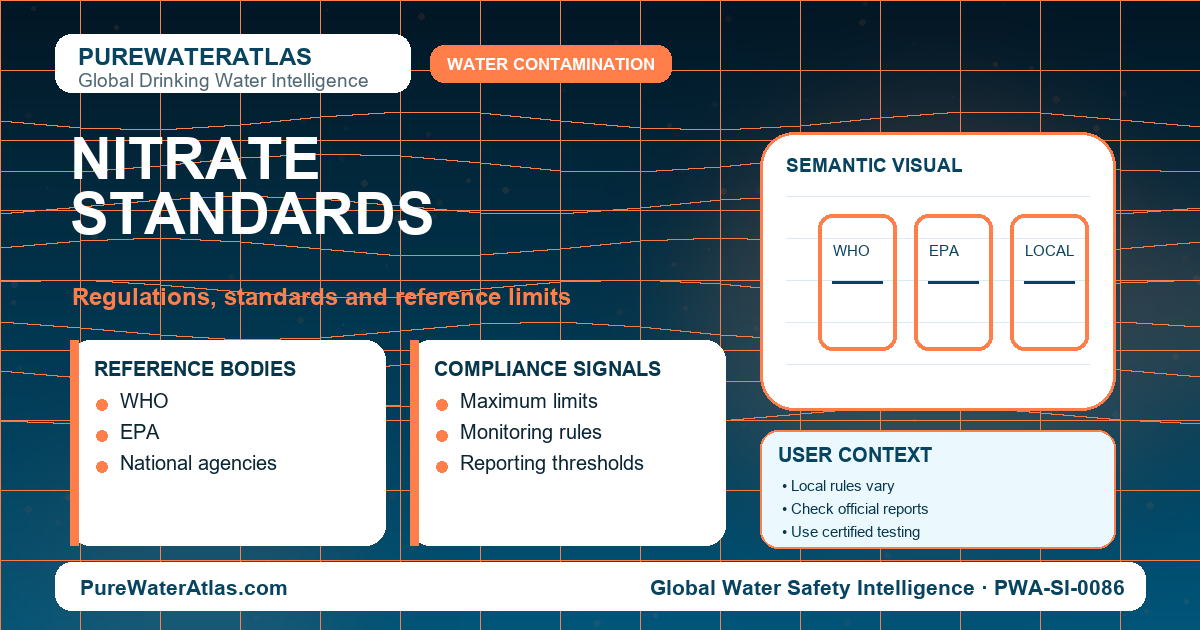
In the United States, the Safe Drinking Water Act is central to protecting public drinking water. Under this law, the U.S. Environmental Protection Agency establishes national standards for contaminants in public water systems. These standards include maximum contaminant levels or treatment techniques for substances that may affect health. Although these are not always farm-specific rules, they are critically relevant to agricultural runoff drinking water epa standards because many contaminants linked to farming are regulated through public water system requirements.
A well-known example is the federal maximum contaminant level for nitrate measured as nitrogen, which is set to protect against infant methemoglobinemia. Nitrite and combined nitrate/nitrite standards also apply. Certain pesticides and herbicides associated with agricultural use are regulated as well, with contaminant-specific limits based on health assessments and practical implementation considerations.
The Clean Water Act also plays a role, particularly through water quality standards, impaired waters listings, total maximum daily loads, and permits for certain concentrated animal feeding operations. However, ordinary nonpoint agricultural runoff is often addressed through state programs, conservation initiatives, and best management practices rather than a universal federal permitting system for every farm field. This is one reason agricultural water protection can vary significantly from one state to another.
State and Local Rules
States may adopt standards, implementation plans, or agricultural management requirements that go beyond federal baselines. They may regulate manure application, nutrient planning, erosion control, wellhead protection, or vulnerable aquifer areas. Some states maintain numeric nutrient criteria for water bodies, while others focus on watershed restoration plans and source water protection. Local ordinances may also apply in certain recharge zones or drinking water watersheds.
For utilities and local governments, agricultural runoff drinking water compliance often means coordinating across agencies rather than simply following one single rulebook. Compliance may involve meeting finished water limits, participating in watershed monitoring, implementing source water assessments, and documenting risk reduction measures.
World Health Organization Guidance
The World Health Organization does not function as a national drinking water regulator, but its guidance is highly influential. The agricultural runoff drinking water who guidelines are reflected in broader WHO Guidelines for Drinking-water Quality, which provide health-based recommendations for microbial hazards, nitrate, nitrite, pesticides, cyanotoxins, and risk management approaches. WHO emphasizes preventive risk management through water safety plans, source protection, treatment barriers, and operational monitoring.
WHO guidance is especially important in countries developing or updating national regulations. Rather than serving as directly enforceable law everywhere, these guidelines provide a scientific foundation that governments can adapt to local conditions, exposure patterns, and treatment capabilities.
European and International Approaches
Many other jurisdictions address agricultural runoff through a combination of drinking water directives, groundwater rules, nitrate management programs, and river basin planning. In Europe, for example, nitrate vulnerability zones, water framework planning, and drinking water quality requirements create a layered approach. The common theme internationally is that regulation tends to combine source protection and finished water quality control rather than relying on only one mechanism.
Safe Limits and Risk Thresholds
The concept of agricultural runoff drinking water safe limits can be misunderstood. There is rarely one universal “safe limit” for agricultural runoff as a whole because runoff contains many different contaminants. Instead, regulators set individual values for specific substances or groups of hazards. These may include:
- Maximum contaminant levels for nitrate, nitrite, and individual pesticides
- Microbiological standards based on indicator organisms and treatment performance
- Health advisory levels or guidance values for emerging concerns such as cyanotoxins
- Ambient water quality criteria for nutrients or toxic substances in source waters
These limits are generally derived from toxicology, epidemiology, exposure assumptions, uncertainty factors, and technical feasibility. Some are enforceable legal limits; others are advisory values used for risk communication and operational decision-making.
Compliance Challenges
Achieving compliance is often difficult because agricultural contamination can be episodic, seasonal, and spatially variable. A water utility may meet all finished water requirements while still facing high treatment costs due to ongoing nutrient or pesticide pressure in the watershed. Similarly, a region may have strong farm conservation participation but still struggle with legacy nutrients stored in soils and groundwater.
Common compliance challenges include:
- Diffuse pollution sources that are hard to trace to one responsible party
- Lag times between land management changes and water quality improvement
- Limited monitoring data in rural and private well settings
- Financial constraints for small utilities and households
- Changing agricultural practices, climate patterns, and emerging contaminants
The Role of Water Rules in Practice
When people search for agricultural runoff drinking water water rules, they are often looking for a simple list. In reality, the rules function as an interconnected system:
- Public drinking water standards define acceptable contaminant levels at the tap
- Source water and watershed programs aim to reduce pollution before treatment is needed
- Agricultural management requirements govern certain practices and facilities
- Monitoring and reporting rules ensure problems are identified and communicated
- Public health advisories address urgent or emerging contamination threats
This layered structure reflects a core principle of modern water policy: prevention at the source, multiple treatment barriers, and regular verification through testing are all necessary to protect public health.
Conclusion
Agricultural runoff remains one of the most important and challenging threats to drinking water quality worldwide. Because it often comes from widespread land areas rather than a single pipe, controlling it requires cooperation among farmers, regulators, water utilities, scientists, and consumers. Nutrients, pesticides, pathogens, and sediment can all move from agricultural landscapes into source waters and wells, creating risks that range from nitrate exposure and gastrointestinal illness to harmful algal blooms and rising treatment costs.
The most effective response combines source protection, testing, treatment, and clear legal standards. In practice, agricultural runoff drinking water regulations include national drinking water limits, state watershed programs, operational monitoring requirements, and internationally recognized health guidance. The details vary by jurisdiction, but the objective is consistent: keep contaminants below levels that threaten human health and ensure that communities have reliable access to safe water.
For the public, the key lessons are straightforward. Clear water is not always clean water. Private wells require regular testing. Public water systems depend on both treatment and upstream land management. And compliance is not just a paperwork exercise; it is the process by which scientific standards become real-world protection for families and communities.
As agricultural systems and climate conditions continue to change, regulations and standards will also need to evolve. Better monitoring, stronger watershed planning, improved farm practices, and continued investment in treatment and public health oversight will remain essential to protecting drinking water now and in the future.
Read the full guide: Water Contamination Guide
Explore more in this category: Water Contamination Articles