
Introduction
Clean water is essential for drinking, cooking, bathing, cleaning, and overall household health. Yet many families assume that if water looks clear and tastes normal, it must be safe. In reality, contaminated water can carry bacteria, viruses, parasites, heavy metals, industrial chemicals, agricultural runoff, and byproducts from aging plumbing. Understanding the health risks of contaminated water home safety checklist is an important step in protecting everyone in the household, especially infants, older adults, pregnant women, and people with weakened immune systems.
Water contamination can happen at many points between the source and the tap. Problems may begin in groundwater, reservoirs, municipal treatment systems, private wells, household plumbing, water heaters, or storage containers. Some risks are sudden, such as sewage intrusion after flooding. Others build slowly over time, such as lead leaching from old pipes or nitrate accumulation from nearby farming activity. Because of this, home water safety is not just about reacting to obvious problems. It also requires routine awareness, inspection, testing, and preventive maintenance.
This article provides a practical and educational overview of common contaminants, where they come from, what warning signs to watch for, and how to reduce exposure at home. If you want a broader overview, visit /health-risks-of-contaminated-water-complete-guide/. Readers looking for related resources on safe drinking practices can also explore /category/drinking-water-safety/.
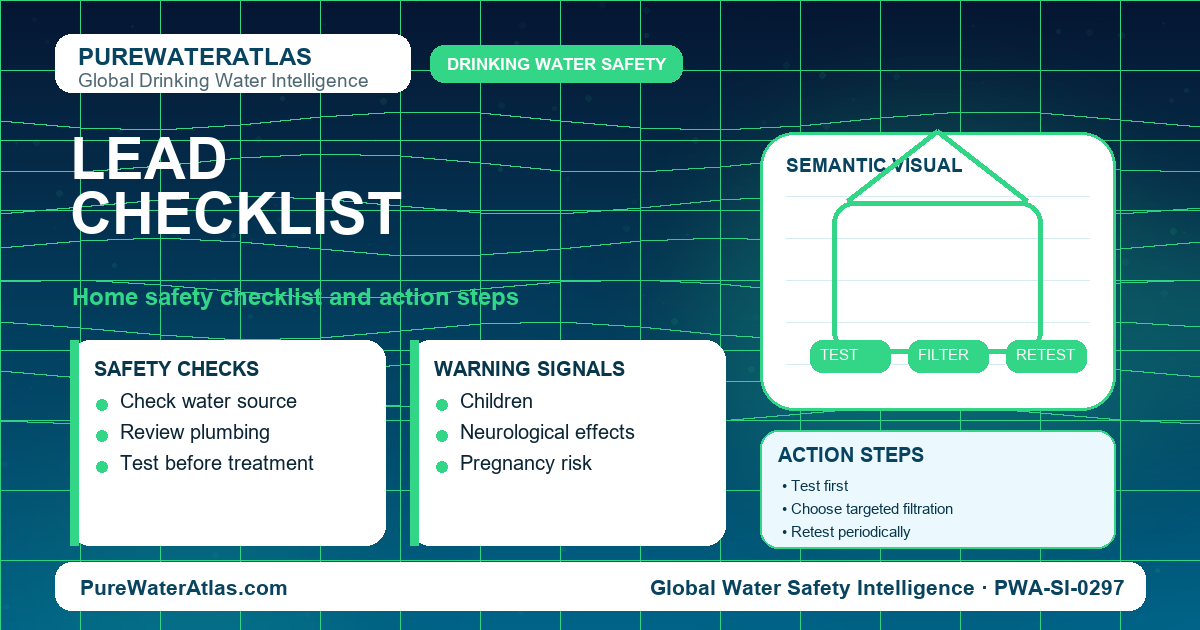
A good household checklist starts with several basic questions:
- Do you know where your water comes from?
- Have you noticed changes in taste, smell, or appearance?
- Has your water been tested recently for local contaminants of concern?
- Are your pipes, fixtures, filters, and appliances properly maintained?
- Do you know what to do during a boil-water advisory or contamination event?
By answering these questions and building consistent safety habits, households can greatly reduce water-related health risks.
What It Is
Contaminated water is water that contains substances or organisms that make it unsafe or less safe for human use. These contaminants can be biological, chemical, physical, or radiological. The danger depends on what is present, how much is present, how long exposure continues, and how the water is used. Drinking contaminated water is the most direct route of exposure, but harmful substances may also affect health through cooking, brushing teeth, inhaling steam, or skin contact in certain cases.
The term contamination does not always mean the water looks dirty. In many homes, dangerous water appears completely normal. For example, lead has no taste or smell, and many microorganisms cannot be detected without laboratory testing. This is why the topic of health risks of contaminated water household testing is so important. Visual checks are useful, but they are not enough on their own.
Common categories of contaminants include:
- Biological contaminants: bacteria such as E. coli, viruses, protozoa, and parasites.
- Chemical contaminants: pesticides, solvents, nitrates, chlorine byproducts, and industrial waste compounds.
- Heavy metals: lead, arsenic, mercury, and cadmium.
- Physical contaminants: sediment, rust, and suspended particles.
- Radiological contaminants: radon, uranium, and other naturally occurring radioactive materials in some regions.
Water quality issues may be temporary or long term. Temporary contamination may follow storms, broken water mains, or construction work near pipes. Long-term contamination may stem from regional geology, nearby industry, agricultural activity, or old plumbing infrastructure. Households with private wells often carry greater responsibility because they must manage testing and treatment directly rather than relying on a municipal utility.
Understanding contamination also means understanding exposure pathways. A family may face risk if:
- They drink untested well water.
- They use tap water for infant formula without checking nitrate or lead levels.
- They ignore recurring discoloration or sulfur odors.
- They fail to replace water filters on schedule.
- They use contaminated floodwater-affected plumbing without disinfection.
In practical terms, a home safety checklist should combine observation, health risks of contaminated water inspection, regular testing, and treatment planning. For more detail on source pathways, see /health-risks-of-contaminated-water-causes-and-sources/.
Main Causes or Sources
Household water contamination can originate from outside the home, within the plumbing system, or both. Identifying likely sources is one of the most important parts of prevention.
Municipal System Problems
Public water systems are treated and monitored, but contamination can still occur. Main breaks, low pressure events, treatment failures, infrastructure deterioration, and contamination in source waters can all affect quality. In older cities, lead service lines and aging pipes remain major concerns even when water utilities meet many regulatory requirements overall.
Private Wells
Private wells are vulnerable to contamination from septic systems, livestock waste, fertilizers, pesticides, storm runoff, and naturally occurring minerals. Unlike municipal supplies, private wells are generally not monitored continuously by a utility. This means the homeowner is responsible for regular health risks of contaminated water household testing and maintenance.
Plumbing and Fixture Corrosion
Even if water enters the home safely, internal plumbing may introduce contaminants. Corrosion in old pipes, solder, faucets, and fittings can release lead, copper, iron, and other metals. Stagnant water sitting overnight in pipes often increases the chance of leaching.
Flooding and Storm Damage
Floods can overwhelm sewage systems, carry chemicals into wells, and damage pumps or treatment equipment. Heavy rain can also wash surface contaminants into shallow groundwater. After any flood or major storm event, water should be considered at risk until it has been properly inspected and tested.
Agricultural Runoff
In rural and suburban areas, fertilizers and animal waste can seep into groundwater or wash into rivers and reservoirs. Nitrates are a common concern, especially for infants, because high levels can interfere with oxygen delivery in the blood. Pesticides and herbicides may also persist in water sources.
Industrial and Commercial Activity
Factories, dry cleaners, mining operations, gas stations, and waste disposal sites may release solvents, petroleum products, metals, and other hazardous substances. Some contaminants travel far underground and may not be obvious for years.
Water Storage and Appliances
Water heaters, refrigerator dispensers, filtration units, humidifiers, and storage tanks can become contamination points if not cleaned and maintained properly. Biofilm buildup can support bacterial growth, while deteriorating filters may reduce effectiveness or harbor microbes.
Natural Geologic Sources
Some contaminants occur naturally in local rock and soil. Arsenic, fluoride, manganese, sulfur, and uranium are examples. These substances can enter groundwater without any nearby industrial pollution, which is why local knowledge and testing matter.
Useful health risks of contaminated water risk signs connected to these sources include:
- Brown, reddish, cloudy, or milky water
- Metallic, bitter, salty, or chemical taste
- Rotten egg odor, gasoline odor, or chlorine levels that seem unusually strong
- Blue-green staining around fixtures, suggesting copper issues
- Frequent plumbing corrosion or sediment buildup
- Stomach illness that seems linked to water use
- Nearby flooding, new construction, agricultural activity, or industrial discharge concerns
More background on contamination sources is available at /health-risks-of-contaminated-water-causes-and-sources/ and broader regional issues can be explored through /category/global-water-quality/.
Health and Safety Implications
The health risks of contaminated water home safety checklist matters because contaminated water can affect nearly every system in the body. Some health effects appear quickly, while others develop after months or years of exposure.
Short-Term Health Effects
Acute exposure often involves microorganisms or high levels of certain chemicals. Common short-term symptoms include:
- Nausea
- Vomiting
- Diarrhea
- Stomach cramps
- Fever
- Headaches
- Skin irritation
- Eye irritation
Bacteria, viruses, and parasites are especially dangerous because they can spread gastrointestinal illness quickly. Young children may become dehydrated faster than adults, and people with weakened immune systems may experience more severe complications.
Long-Term Health Effects
Chronic exposure to metals and chemicals is often more difficult to detect. Long-term risks may include:
- Neurological effects, especially from lead exposure in children
- Kidney damage from heavy metals
- Liver stress from chemical contaminants
- Increased cancer risk from certain industrial chemicals or disinfection byproducts
- Hormonal or reproductive effects from some environmental contaminants
- Developmental problems in infants and children
Lead is a major household concern because even low exposure may affect learning, behavior, and development in children. Arsenic has been linked with skin, bladder, and lung health risks in some long-term exposure settings. Nitrate exposure can be particularly dangerous for babies, causing methemoglobinemia, sometimes called blue baby syndrome.
Higher-Risk Groups
Although anyone can be harmed by unsafe water, some people face greater vulnerability:
- Infants: more sensitive to nitrates, lead, and dehydration from diarrhea
- Children: greater developmental risk from toxic metals
- Pregnant women: exposure may affect both mother and fetus
- Older adults: more likely to have underlying health conditions
- Immunocompromised individuals: greater risk from pathogens
Home Safety Checklist for Health Risk Awareness
- Pay attention to recurring stomach illness among household members.
- Do not assume clear water is safe.
- Use extra caution when preparing infant formula.
- Flush taps if water has been sitting in plumbing for several hours, especially in older homes.
- Investigate unusual odors, tastes, or stains promptly.
- Follow public health advisories immediately.
For a deeper review of symptoms and outcomes, see /health-risks-of-contaminated-water-health-effects-and-risks/.
Testing and Detection
Testing is one of the most reliable ways to manage the health risks of contaminated water inspection process at home. Because many dangerous contaminants cannot be seen or smelled, laboratory analysis and approved field tests are essential.
When to Test
Households should consider testing:
- When moving into a new home
- At least annually for private wells, or more often if local conditions warrant
- After flooding, wildfire, or major storms
- After plumbing work or well repairs
- If water changes in taste, color, or odor
- If someone in the home develops unexplained gastrointestinal symptoms
- If there is a local contamination notice or boil-water advisory
What to Test For
The right test panel depends on location, water source, and property age. Common priorities include:
- Total coliform and E. coli bacteria
- Lead and copper
- Nitrates and nitrites
- Arsenic
- pH and hardness
- Iron and manganese
- Volatile organic compounds if industrial contamination is possible
- Pesticides where agricultural runoff is a concern
Household Warning Signs
While testing is the gold standard, homeowners should also monitor health risks of contaminated water risk signs such as:
- Cloudiness or sediment
- Rust-colored water
- Black staining or slime
- Rotten egg odor
- Sharp chemical smell
- Soap that does not lather well, suggesting hardness or mineral imbalance
- Scale buildup on fixtures and appliances
Professional Inspection Steps
A thorough health risks of contaminated water inspection may include:
- Reviewing municipal reports or private well records
- Examining pipe materials and fixture age
- Inspecting well caps, casings, and drainage patterns
- Checking septic system proximity and condition
- Assessing recent environmental events such as flooding or nearby construction
- Evaluating filter systems and maintenance logs
Interpreting Results Carefully
Test results should be compared with national or local health standards, and when necessary reviewed by qualified professionals. A result that is technically below a regulatory threshold may still justify action for sensitive individuals or if multiple contaminants are present. It is also important to repeat tests when recommended, since water quality can change over time.
Households that rely on treatment devices should remember that testing should occur both before and, when appropriate, after treatment to confirm that the system is working effectively.
Prevention and Treatment
Reducing exposure involves both immediate protective actions and long-term system care. The best strategy depends on the contamination source, but most households benefit from a layered approach that includes monitoring, maintenance, and proper treatment technology.
Basic Protection Steps
Practical health risks of contaminated water protection steps include:
- Use only tested water for drinking and cooking.
- Follow boil-water notices exactly as directed.
- Do not use hot tap water for cooking or infant formula, since hot water can increase metal leaching from pipes.
- Flush cold taps after long periods of nonuse.
- Store emergency drinking water for outages or contamination incidents.
- Keep chemicals, fuels, and pesticides away from wells and water storage areas.
Water Treatment Options
Different contaminants require different technologies. No single system removes everything. Common options include:
- Activated carbon filters: useful for improving taste, odor, chlorine, and some organic chemicals.
- Reverse osmosis systems: effective for many dissolved contaminants including lead, arsenic, nitrates, and some salts.
- Ultraviolet disinfection: helps inactivate microorganisms when water is otherwise clear enough for UV treatment.
- Water softeners: reduce hardness minerals but are not designed to remove pathogens or many toxic chemicals.
- Sediment filters: remove particles that may affect clarity and protect other treatment devices.
- Distillation: can reduce many dissolved substances, though system selection depends on the specific contaminant profile.
Homeowners comparing options can explore additional resources at /category/water-treatment-systems/.
Maintenance Tips for Safer Water
Reliable treatment depends on consistent care. Effective health risks of contaminated water maintenance tips include:
- Replace cartridges and membranes according to manufacturer schedules.
- Sanitize dispensers, storage tanks, and appliance lines regularly.
- Clean aerators and showerheads if mineral buildup or debris appears.
- Check water heaters for sediment accumulation.
- Inspect well caps and seals for damage.
- Make sure surface water drains away from wells.
- Service septic systems on schedule to reduce groundwater contamination risk.
Private Well Prevention Checklist
- Test annually for bacteria, nitrates, and locally relevant contaminants.
- Inspect the wellhead for cracks, missing caps, or ponding water nearby.
- Keep livestock, fuel, and chemical storage away from the well area.
- After flooding, do not assume the well is safe until it has been disinfected and tested.
Municipal Water Prevention Checklist
- Read annual consumer confidence reports from your water provider.
- Learn whether your home has lead service lines or older plumbing materials.
- Use certified point-of-use filters when local contaminants are a concern.
- Respond quickly to utility notices about main breaks or pressure loss.
Emergency Actions
If contamination is suspected:
- Stop using the water for drinking and cooking until guidance is available.
- Use bottled or otherwise confirmed safe water.
- Contact the local water utility, health department, or a certified lab.
- Preserve recent test records and note any symptoms or visible changes.
- Seek medical advice if anyone has symptoms consistent with waterborne illness or toxic exposure.
Common Misconceptions
Misunderstandings about water quality can delay action and increase household risk. Several common myths deserve correction.
If Water Is Clear, It Is Safe
This is false. Many harmful contaminants are invisible. Lead, nitrates, and many microorganisms may not change the appearance of water at all.
Boiling Solves Every Problem
Boiling can kill many pathogens, but it does not remove heavy metals, nitrates, or most chemical pollutants. In some cases, boiling may slightly concentrate certain dissolved contaminants as water evaporates.
Municipal Water Never Has Problems
Public utilities provide important treatment and monitoring, but infrastructure failures, source contamination, and household plumbing issues can still create risk. Even with treated municipal water, contamination may occur between the water main and the faucet.
Filters Are Interchangeable
Different filters are designed for different contaminants. A basic pitcher filter may improve taste but may not remove arsenic, nitrates, or microbes. Always verify certification and intended use.
Testing Once Is Enough
Water quality changes. Seasonal runoff, plumbing aging, storms, and nearby land-use changes can alter contamination risks. Regular testing is especially important for well owners and older homes.
Bad Taste Always Means Dangerous Water, and Good Taste Always Means Safe Water
Both assumptions are inaccurate. Some unpleasant tastes come from nuisance minerals that are not highly dangerous, while some harmful contaminants have no taste at all. Taste can be a warning sign, but it is not a complete safety measure.
Regulations and Standards
Water safety is guided by laws, health-based recommendations, and technical standards. Understanding these frameworks helps households make informed decisions, but regulations should be seen as a baseline rather than a reason to ignore local concerns.
Public Water Standards
In many countries, public water systems must meet limits for specific contaminants and follow monitoring requirements. These rules are designed to reduce risk across large populations. Utilities typically test for microbial contaminants, disinfectant levels, and a range of chemicals and metals, depending on the system and region.
Annual water quality reports can provide useful information about source water, detected contaminants, compliance status, and treatment methods. Households should review these reports, especially if they include elevated lead action levels, repeated violations, or source-water vulnerabilities.
Private Well Responsibility
Private wells are often less regulated than public systems. In many areas, there is no routine government testing of private well water. That means homeowners must create their own schedule for health risks of contaminated water inspection, testing, treatment, and maintenance.
Certified Products and Qualified Professionals
When selecting filters, treatment systems, or laboratory services, households should look for recognized certifications and qualified local guidance. Certified products are tested against specific performance claims, which is important because treatment effectiveness varies widely by contaminant.
Why Standards Still Require Household Action
Even where regulations are strong, several factors remain outside broad system control:
- Lead or copper from household plumbing
- Contamination after water enters private property
- Changes caused by neglected filters or appliances
- Vulnerabilities after weather disasters or plumbing repairs
This is why a household checklist remains valuable even when using regulated public water. People who want to understand wider policy and water quality trends may also find helpful context in /category/global-water-quality/.
Conclusion
Protecting a household from unsafe water requires more than a quick look at the tap. The most effective health risks of contaminated water home safety checklist combines awareness of local contamination sources, regular observation of warning signs, targeted testing, careful interpretation of results, and consistent maintenance of plumbing and treatment systems. Whether a home uses municipal water or a private well, the same core principle applies: do not rely on appearance alone.
A practical safety routine should include watching for health risks of contaminated water risk signs, scheduling health risks of contaminated water household testing, carrying out periodic health risks of contaminated water inspection, following health risks of contaminated water maintenance tips, and using clear health risks of contaminated water protection steps when contamination is suspected. These actions can reduce both immediate illness and long-term toxic exposure.
Households that stay informed and proactive are better prepared to protect children, older adults, and other vulnerable family members. For further reading, you can review /health-risks-of-contaminated-water-health-effects-and-risks/, return to /health-risks-of-contaminated-water-complete-guide/, or browse related resources in /category/drinking-water-safety/ and /category/water-treatment-systems/. Clean water is never something to take for granted, and simple home safety habits can make a meaningful difference.
Read the full guide: Drinking Water Safety Guide
Explore more in this category: Drinking Water Safety Articles