
Introduction
Understanding water quality at home is not just a technical subject for laboratories or utility operators. It is a practical part of everyday safety. A clear glass of water can still contain dissolved minerals, metals, disinfectant byproducts, microbes, or other contaminants that affect taste, plumbing, appliances, and health. That is why learning water chemistry basics home safety checklist principles can help homeowners, renters, and families make better decisions about inspection, testing, and prevention.
Water chemistry describes the substances dissolved or suspended in water and how they interact. These include pH, hardness, alkalinity, chlorine, iron, manganese, nitrates, lead, copper, and many other compounds. Even when water meets general standards, chemistry can change as it travels through pipes, storage tanks, filters, heaters, and household fixtures. Private well users, in particular, carry more direct responsibility for routine oversight because they often do not have municipal treatment protections.
A home safety checklist for water chemistry should focus on several questions:
- What is in the water supply at the source?
- How might plumbing materials change that water before use?
- What visible, odor, or taste changes suggest a problem?
- Which tests are most useful for a specific home?
- What treatment methods actually address the identified issue?
This article explains core concepts in an educational and practical way. It covers what household water chemistry is, where common issues come from, how to recognize warning signs, and how to choose sensible testing and treatment steps. For broader background, readers can explore /category/water-science/ and the overview at /water-chemistry-basics-complete-guide/.
What It Is
At the household level, water chemistry refers to the physical and chemical characteristics of water that influence safety, usability, and infrastructure performance. It is not limited to whether water looks clean. Water can be colorless yet still have unsafe levels of certain contaminants. A proper water chemistry basics inspection starts with understanding the most important parameters.
Core Water Chemistry Terms
- pH: Measures how acidic or basic water is. Low pH water can be corrosive, while high pH water can contribute to scale formation and affect disinfection.
- Hardness: Caused mainly by calcium and magnesium. Hard water is not usually a direct health hazard, but it can create scale in pipes and reduce appliance efficiency.
- Alkalinity: Indicates water’s buffering capacity, or its ability to resist pH changes. This affects stability and treatment performance.
- Total dissolved solids (TDS): The combined amount of dissolved substances, including salts and minerals. High TDS can change taste and indicate broader water quality concerns.
- Disinfectants and byproducts: Municipal systems often use chlorine or chloramine. These help control pathogens but can react with organic matter to form byproducts.
- Metals: Lead, copper, iron, manganese, and arsenic may occur from source water or plumbing materials.
- Nutrients: Nitrates and nitrites can enter water from fertilizers, septic systems, or animal waste.
Why Chemistry Matters in the Home
Water chemistry affects more than drinking. It influences:
- Cooking quality and beverage flavor
- Soap performance and cleaning efficiency
- Pipe corrosion and metal leaching
- Staining on sinks, tubs, and laundry
- Water heater performance and energy use
- Filter effectiveness and maintenance schedules
- Skin and hair feel after bathing
In practical terms, water chemistry basics household testing helps identify both immediate health risks and longer-term infrastructure problems. A homeowner who understands pH, hardness, and corrosion potential is better prepared to interpret a water report and choose the correct treatment method instead of relying on guesswork.
Main Causes or Sources
Household water chemistry issues rarely come from one source alone. They are often the result of local geology, agricultural activity, municipal treatment practices, and the materials inside the home itself. A useful water chemistry basics home safety checklist should include both external and internal sources.
Natural Geology
Groundwater and surface water absorb minerals from the surrounding environment. Limestone and similar formations can increase hardness and alkalinity. Iron-bearing rock can contribute iron staining and metallic taste. In some regions, naturally occurring arsenic, fluoride, sulfur compounds, or manganese may be present.
This means that even homes far from industrial activity may still face water chemistry issues because the source water reflects the local geology. Private wells are especially influenced by the specific characteristics of nearby soils and rock layers.
Plumbing Materials
Plumbing can significantly alter water quality after it enters the home. Older service lines, solder, brass fixtures, and corroding pipes may release metals such as lead and copper. Water with low pH or low mineral balance can be more corrosive, which increases the chance of metal leaching.
Hot water can sometimes contain higher levels of certain metals because heat increases reactions within plumbing systems. This is one reason cold water is generally recommended for drinking and cooking.
Municipal Treatment and Distribution
Public water systems treat source water to control microbes and meet regulatory standards, but chemistry may still change in the distribution system. Common factors include:
- Chlorine or chloramine residuals
- Corrosion control additives
- Pipe scale disturbance during maintenance
- Seasonal source changes
- Disinfection byproduct formation
A city water report offers valuable baseline information, but the water reaching a specific faucet may differ because of building plumbing conditions.
Agricultural and Land Use Impacts
Fertilizers, pesticides, manure, and runoff can affect both surface water and groundwater. Nitrates are among the most important examples because they are linked to serious health concerns, especially for infants. Septic systems, if poorly located or inadequately maintained, may also contribute nutrients and microbial contamination.
Household Storage and Fixtures
Water sitting in low-use pipes, storage tanks, or filters that are past replacement intervals can change in quality. Stagnation may increase metal pickup, reduce disinfectant residual, and create conditions that support microbial growth. This is why water chemistry basics maintenance tips often stress flushing and routine filter replacement.
Source-Specific Considerations
Different homes face different priorities:
- Private wells: More likely to require direct monitoring for nitrates, arsenic, bacteria, and naturally occurring minerals.
- Municipal water users: More likely to focus on plumbing-related metals, disinfectant taste, and internal corrosion issues.
- Homes with old plumbing: Greater concern for lead, copper, and water sitting overnight in pipes.
- Rural properties: Greater concern for agricultural runoff, septic influence, and well construction issues.
For a deeper discussion of where problems originate, see /water-chemistry-basics-causes-and-sources/.
Health and Safety Implications
Not every water chemistry issue creates an immediate medical emergency, but many have real health or safety implications. Some affect vulnerable groups more strongly than others. An effective checklist should separate aesthetic issues from true risk factors while still recognizing that taste, odor, and appearance changes can be useful warning signs.
Lead and Copper
Lead is among the most serious household water concerns because even low exposure can be harmful, particularly for children and pregnant women. Lead usually enters water through plumbing rather than the original source. Copper, while an essential nutrient in small amounts, can cause gastrointestinal symptoms at elevated levels and may indicate corrosive water conditions.
Nitrates and Nitrites
Nitrate contamination is an important concern for private wells, especially near agricultural areas or septic systems. High nitrate levels can interfere with the blood’s ability to carry oxygen and are particularly dangerous for infants. Testing is the only reliable way to know whether nitrate concentrations are elevated.
Arsenic and Other Naturally Occurring Contaminants
Arsenic, fluoride, uranium, and manganese can occur naturally in some groundwater systems. Long-term exposure risks depend on concentration, duration, and individual susceptibility. Because these contaminants often have no obvious taste or odor, routine testing is essential where regional geology suggests a possibility.
Corrosive Water and Metal Leaching
Water that is too acidic or otherwise chemically unstable can damage plumbing and increase the release of metals. This is an example of why chemistry and infrastructure are closely linked. A water sample that seems safe at the treatment plant can become more problematic by the time it reaches the tap.
Microbial Connections
Although this article focuses on chemistry, safety also depends on microbiology. Water chemistry influences disinfectant effectiveness, biofilm growth, and system stability. Homes using private wells should be especially aware that bacterial contamination may occur alongside chemical contamination. Readers interested in the biological side can visit /category/water-microbiology/.
Aesthetic Changes as Risk Signals
Many households first notice a problem through appearance, taste, or smell. These are not definitive proof of danger, but they are important water chemistry basics risk signs that should not be ignored. Examples include:
- Metallic taste that may suggest copper, iron, or corrosion
- Rotten egg odor that may indicate hydrogen sulfide or related conditions
- Blue-green staining associated with copper corrosion
- Reddish-brown staining linked to iron
- Black staining that may suggest manganese
- Cloudiness, which may result from air, sediment, or other water quality changes
- Sudden chlorine smell, which may indicate a treatment change or local disturbance
Because these signs have multiple possible causes, they should trigger inspection and testing rather than assumptions.
Who Is Most Vulnerable?
- Infants and young children
- Pregnant individuals
- Older adults
- People with kidney disease or weakened immune systems
- Anyone relying on private wells without recent testing
For more on documented impacts, see /water-chemistry-basics-health-effects-and-risks/ and broader resources at /category/global-water-quality/.
Testing and Detection
Testing is the foundation of any credible home water safety plan. You cannot choose the right treatment without knowing what is actually present. A good water chemistry basics household testing approach combines observation, records review, and laboratory analysis.
Step 1: Review the Water Source
Start by identifying whether the home uses municipal water, a private well, or another source. Municipal customers should review the annual water quality report from their utility. Well owners should gather any prior test results, well construction information, and nearby land use details.
Step 2: Perform a Basic Household Inspection
A practical water chemistry basics inspection should include:
- Checking the age and type of plumbing materials
- Looking for stains around sinks, toilets, tubs, and drains
- Noting unusual tastes, odors, or color changes
- Observing scale buildup on faucets, kettles, and water heaters
- Reviewing filter installation dates and maintenance logs
- Identifying low-use taps where water stagnates
- Examining the area around wells for runoff or structural risks
Step 3: Use Screening Tools Carefully
Home test strips and handheld meters can provide useful screening information for pH, hardness, chlorine, and some other basic parameters. However, they are not a substitute for certified laboratory testing when health-related contaminants are involved. They work best as a first check or a way to monitor a known issue over time.
Step 4: Order Laboratory Testing
Certified laboratory testing is the most reliable method for identifying contaminants such as lead, copper, nitrates, arsenic, and other regulated or locally relevant substances. The correct sampling method matters. For example, first-draw samples may be used to assess metal exposure from plumbing, while flushed samples may help distinguish pipe-related contamination from source-related contamination.
Recommended Testing Priorities
The right panel depends on the home, but many households should consider these categories:
- Basic chemistry: pH, hardness, alkalinity, TDS, iron, manganese
- Corrosion-related metals: lead, copper
- Regional contaminants: arsenic, fluoride, uranium, radon where applicable
- Agricultural indicators: nitrate, nitrite
- Microbial indicators: coliform bacteria for wells and other high-risk situations
When to Test
- When moving into a new home
- After plumbing renovations or service line replacement
- After flooding, storms, or nearby construction
- When taste, odor, or color changes appear
- When a child, infant, or pregnant person lives in the home
- On a routine schedule for private well owners
Interpreting Results
Test results should be compared with health-based standards, aesthetic guidelines, and appliance-related considerations. A high iron level may mainly affect staining and taste, while lead or nitrate results require more urgent action. It is also important to understand whether contamination is likely coming from the source, the plumbing, or a treatment system failure.
Keep all water reports in one household file. Trend data is extremely useful. A single safe result does not guarantee future safety, especially in changing seasonal or plumbing conditions.
Prevention and Treatment
Once water chemistry is understood, the next step is choosing effective water chemistry basics protection steps. Prevention begins with source protection and plumbing awareness. Treatment should be selected only after testing confirms the problem.
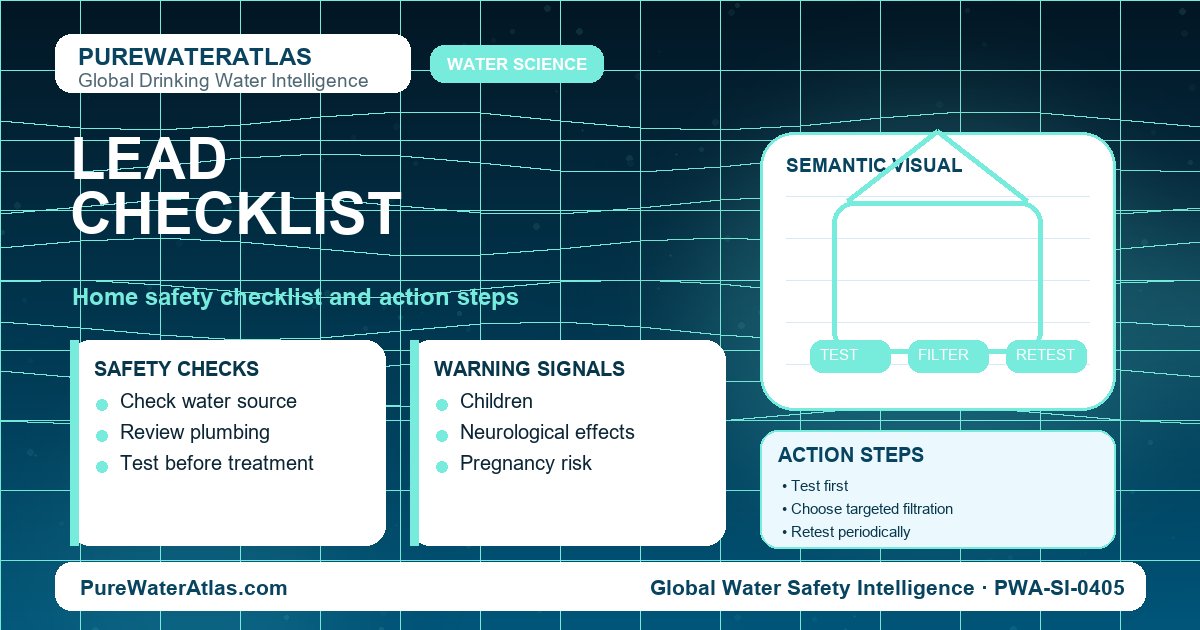
Home Safety Checklist
- Identify the water source and review any available reports.
- Test for key contaminants based on source type, region, and plumbing age.
- Use cold water for drinking and cooking, especially after water has sat in pipes.
- Flush taps after periods of nonuse.
- Replace filters on schedule and according to manufacturer instructions.
- Inspect for corrosion, staining, scaling, and odor changes.
- Protect private wells from runoff, flooding, and nearby contamination sources.
- Keep records of test results, maintenance, and treatment performance.
Source Protection
Private well owners should maintain proper well caps, grading, drainage, and setback distances from septic systems, fuel storage, and chemical use areas. Surface water intrusion and runoff are major preventable risks. Municipal customers can also benefit from understanding local source water issues and utility notices.
Plumbing Management
Reducing stagnation is one of the simplest safety steps. If a tap has not been used for hours, run cold water until it becomes noticeably cooler before drinking or cooking. This can reduce exposure to metals that may have accumulated in plumbing. Homes with known lead service lines or older plumbing should follow local public health recommendations closely.
Treatment Options and Their Uses
No single device fixes every problem. Treatment should match the contaminant.
- Activated carbon filters: Useful for chlorine, some organic compounds, taste, and odor issues. Not reliable for many dissolved metals unless specifically certified.
- Reverse osmosis: Effective for a broad range of dissolved contaminants, including some metals, nitrates, and salts, depending on system design and maintenance.
- Water softeners: Primarily address hardness by removing calcium and magnesium. They do not solve lead or microbial contamination.
- Neutralizing filters or chemical feed systems: Used to correct acidic water and reduce corrosivity.
- Oxidation and filtration systems: Often used for iron, manganese, and hydrogen sulfide problems.
- Distillation: Can remove many dissolved substances but may be slower and more energy-intensive.
Point-of-Use vs. Point-of-Entry
Point-of-use systems treat water at a single tap, often the kitchen sink. Point-of-entry systems treat water as it enters the home. The right choice depends on whether the concern affects only drinking water or all water uses. For example, lead and nitrate are often addressed at drinking taps, while hardness or acidic water may require whole-house treatment.
Maintenance Matters
Many treatment failures happen because equipment is not maintained. Reliable water chemistry basics maintenance tips include:
- Change cartridges on time
- Sanitize systems when recommended
- Inspect seals, housings, and tubing for leaks or damage
- Retest water after installing treatment
- Monitor whether treatment actually improves the target parameter
A neglected filter can become ineffective or even create additional water quality problems. Treatment is not a one-time purchase; it is an ongoing management process.
Common Misconceptions
Water safety decisions are often shaped by myths or oversimplified assumptions. Correcting these misunderstandings is an essential part of household protection.
If Water Looks Clear, It Is Safe
This is false. Many hazardous contaminants, including lead, nitrates, and arsenic, are invisible and may have no noticeable taste or odor. Clear water can still be unsafe.
Boiling Fixes All Water Problems
Boiling can kill many microbes, but it does not remove dissolved metals or most chemical contaminants. In some cases, boiling may even concentrate certain dissolved substances as water evaporates.
All Filters Remove the Same Contaminants
Different filters are designed for different purposes. A basic carbon pitcher may improve taste but not reduce nitrate or arsenic. Treatment claims should be supported by certifications and matched to actual test results.
Municipal Water Means No Further Concern
Public water systems provide important protections, but household plumbing can still alter water quality. Older pipes, fixtures, and stagnant water may create issues after the water enters the building.
Hard Water Is Always Dangerous
Hard water is mainly an operational and maintenance issue, not usually a direct health threat. It can damage appliances, leave scale, and make soap less effective, but it is different from contaminants with clear toxicological significance.
Taste and Odor Always Mean Serious Health Risk
Not necessarily. Some strong tastes and odors reflect aesthetic issues more than toxic hazards. However, sudden changes should still be investigated because they may signal treatment problems, corrosion, or source changes.
Regulations and Standards
Household water safety is shaped by a mix of public regulation, utility responsibility, and private owner action. Understanding the limits of each is important.
Public Water Systems
Municipal systems are generally regulated under national and regional drinking water rules that set standards for contaminants, monitoring, treatment, and public reporting. These rules typically define maximum allowable levels for specific health-related contaminants and secondary guidelines for aesthetic concerns such as taste, odor, and staining.
Private Wells
Private wells are often not regulated in the same way as public systems. In many places, the owner is responsible for testing, maintenance, and corrective action. This makes routine sampling especially important. A lack of legal oversight does not mean the water is safer; it means responsibility falls more directly on the household.
Health-Based vs. Aesthetic Standards
Not all standards serve the same purpose. Some are health-based, meaning the contaminant poses direct medical concern at certain levels. Others are secondary or aesthetic, intended to address taste, staining, odor, or plumbing performance. Both matter in home management, but they guide urgency differently.
Product Certification
When selecting treatment devices, look for certification against recognized performance standards for the specific contaminant of concern. Marketing language alone is not enough. A credible filter should clearly state what it reduces and under what operating conditions.
Local Guidance
Water risks vary by region. Households should consult local health departments, utilities, extension services, or environmental agencies for area-specific testing recommendations. Local guidance is especially useful for wells, arsenic-prone geology, agricultural nitrate concerns, and older urban plumbing systems.
Conclusion
Safe water at home depends on informed observation, regular testing, and treatment choices based on evidence rather than assumptions. The most useful water chemistry basics home safety checklist is one that connects chemistry, plumbing, source conditions, and maintenance into a single routine. Households should know their water source, recognize changes in taste or appearance, test for priority contaminants, and verify that any treatment system is appropriate and well maintained.
In practical terms, the most important habits are straightforward: review available reports, inspect the home system, test when conditions change, use certified treatment where needed, and keep records over time. Whether the concern is hardness, corrosion, lead, nitrates, or general water quality stability, small preventive steps can reduce both health risks and costly damage.
Water chemistry is not a one-time issue solved by a single filter or a one-page report. It is an ongoing part of household safety. With consistent water chemistry basics protection steps, informed water chemistry basics inspection, and careful water chemistry basics household testing, families can build a more reliable and safer home water system.
Read the full guide: Water Science Guide
Explore more in this category: Water Science Articles