
Introduction
Water is essential to life, but not all water is chemically the same. The composition of drinking water can vary widely depending on its source, treatment history, plumbing materials, and surrounding environment. Understanding water chemistry basics health effects is important for homeowners, renters, public health professionals, and anyone who wants to make informed decisions about water quality. Even when water looks clear and tastes acceptable, dissolved minerals, metals, disinfectants, organic compounds, and microorganisms can influence safety and long-term health outcomes.
Water chemistry refers to the balance of substances dissolved or suspended in water. These include naturally occurring minerals such as calcium and magnesium, disinfectants such as chlorine, nutrients such as nitrates, and contaminants such as lead, arsenic, or industrial chemicals. Some of these compounds are harmless or even beneficial at low levels. Others may cause irritation, digestive symptoms, organ damage, developmental concerns, or chronic disease if exposure is significant or prolonged.
Many people first become interested in water quality because of changes in taste, odor, staining, or scaling. While these signs can be important, the absence of obvious changes does not guarantee safety. Some contaminants have no color, smell, or taste at concentrations that still raise concern. For that reason, learning the basics of water chemistry can help people better understand water chemistry basics symptoms, appropriate testing methods, realistic exposure concerns, and practical ways to reduce risk.
This article explains what water chemistry is, where chemical changes and contamination come from, how different exposures affect health, which groups face greater vulnerability, how testing works, and what prevention or treatment steps may be appropriate. Readers seeking broader context can also explore water science resources or review a more general overview at this complete guide to water chemistry basics.
What It Is
Water chemistry describes the physical and chemical characteristics of water that determine how it behaves in plumbing systems, natural environments, industrial processes, and the human body. Important measures include pH, hardness, alkalinity, dissolved oxygen, conductivity, total dissolved solids, and the presence of specific ions or contaminants. These parameters influence not only taste and appearance but also corrosion, scaling, disinfection efficiency, and toxic exposure.
At a basic level, water is rarely pure H2O. As rain falls and water moves through soil, rock, treatment systems, and distribution pipes, it dissolves and carries other substances. For example, groundwater often contains more minerals because it remains in contact with geologic formations for long periods. Surface water may be more influenced by runoff, agricultural chemicals, algae, industrial discharges, or treatment byproducts.
Several core chemical concepts are especially useful:
- pH: Indicates how acidic or alkaline water is. Very low or high pH can irritate tissues and change how metals dissolve from pipes.
- Hardness: Primarily caused by calcium and magnesium. Hard water is not usually a major health hazard, but it can affect taste, scaling, and appliance efficiency.
- Alkalinity: The water’s ability to resist pH changes. This helps stabilize water chemistry.
- Total dissolved solids: A measure of dissolved minerals, salts, and metals. High levels may affect taste and indicate broader water quality issues.
- Disinfectants and byproducts: Chemicals such as chlorine protect against infection, but their reactions with organic matter can form compounds that may have health implications.
- Metals and inorganic contaminants: Lead, arsenic, mercury, copper, fluoride, nitrate, and others can be beneficial, neutral, or harmful depending on concentration.
- Organic contaminants: Pesticides, solvents, fuel components, and industrial compounds may enter water through runoff, spills, or improper disposal.
When people discuss water chemistry basics medical concerns, they are usually referring to the health consequences of these dissolved substances. That concern depends on several factors: what chemical is present, how much is present, how long exposure lasts, whether the water is used for drinking or bathing, and whether the exposed person belongs to a higher-risk group such as infants, pregnant people, older adults, or individuals with kidney disease.
It is also important to distinguish between aesthetic issues and health hazards. Sulfur odors, iron staining, or hard water deposits may be unpleasant but are not always dangerous. By contrast, lead or nitrate contamination may have no obvious warning signs while posing much more serious risks. Understanding that difference is one of the foundations of responsible water quality management.
Main Causes or Sources
Water chemistry changes for many reasons, and contamination can occur at the source, during treatment, in distribution systems, or inside a building’s plumbing. A good overview of these pathways can be found in this guide to causes and sources, but the most common categories are summarized below.
Natural Geologic Sources
Water dissolves minerals and metals as it passes through soil and rock. Limestone can increase hardness and alkalinity. Arsenic may leach from certain bedrock formations. Fluoride can occur naturally in groundwater in some regions. Radionuclides and manganese can also arise from geologic conditions. These natural sources do not necessarily mean the water is unsafe, but they can influence both taste and health risk.
Agricultural Runoff
Farming activities can introduce nitrates, phosphates, pesticides, herbicides, and animal waste into nearby water supplies. Nitrate contamination is particularly concerning for infants because it may interfere with oxygen delivery in the blood. Surface water and shallow groundwater are often more vulnerable to runoff-related contamination, especially after heavy rains.
Industrial and Commercial Activities
Factories, dry cleaners, mining operations, fuel storage facilities, and waste disposal sites can release solvents, heavy metals, petroleum compounds, and persistent industrial chemicals. Some of these substances remain in the environment for years and can migrate into groundwater. In communities near industrial corridors, understanding water chemistry basics exposure levels is especially important because low-level chronic exposure may continue without obvious signs.
Municipal Treatment and Distribution
Public water systems use disinfectants to reduce infectious disease. This is one of the greatest public health achievements in modern history, but treatment chemistry must be carefully managed. Chlorine and chloramine can react with organic matter to form disinfection byproducts such as trihalomethanes and haloacetic acids. In addition, corrosion in old distribution systems may release lead, copper, or iron if water chemistry is not balanced properly.
Household Plumbing
Even if water leaves the treatment plant in good condition, it can change as it sits in plumbing. Lead service lines, brass fixtures, copper pipes, solder, and aging galvanized components can affect water quality. Corrosive water, especially when low in pH or low in protective mineral content, can increase metal leaching. This is one reason that “first-draw” water from a tap may differ from water after flushing the line.
Private Wells
Private wells can be excellent water sources, but they are not subject to the same routine testing requirements as public systems. Their chemistry may be influenced by septic systems, nearby agriculture, flooding, shallow well construction, or local geology. Well owners are responsible for testing and maintenance, making education especially important for this group.
Environmental Events and Infrastructure Failures
Floods, wildfires, chemical spills, pipe breaks, and treatment disruptions can all alter water chemistry. Wildfires may increase ash, metals, and organic contaminants in watersheds. Flooding can introduce sewage, chemicals, and sediment into wells or treatment intakes. Even temporary disruptions can create short-term spikes in contaminant levels.
Health and Safety Implications
The health effects of water chemistry depend on the contaminant, the dose, and the duration of exposure. Some substances mainly cause short-term irritation or digestive upset. Others are associated with neurological damage, developmental problems, cardiovascular stress, endocrine disruption, kidney injury, or cancer after long-term exposure. This is where the topic of water chemistry basics health effects becomes especially significant.
Short-Term Symptoms
Acute or short-term effects can appear quickly after exposure, although they are often nonspecific. Possible water chemistry basics symptoms may include:
- Nausea or vomiting
- Diarrhea or stomach cramps
- Headaches
- Skin irritation or dryness after bathing
- Eye irritation
- Metallic or bitter taste in the mouth
- Unusual odor-related discomfort, such as from sulfur compounds or high chlorine levels
These symptoms can result from chemical exposure, but they can also arise from microbial contamination, foodborne illness, or unrelated health conditions. Because symptoms are not specific, testing is often the only reliable way to identify whether water chemistry is a contributing factor.
Effects of Specific Chemicals
Lead is one of the most concerning drinking water contaminants because even low exposure can affect the brain and nervous system. Children are particularly vulnerable, and there is broad scientific agreement that no amount of lead exposure is ideal. Lead may contribute to learning problems, developmental delay, behavioral issues, and cardiovascular effects in adults.
Nitrate can reduce the blood’s ability to carry oxygen, especially in infants under six months of age. This can lead to a dangerous condition often called blue baby syndrome. Pregnant people and individuals with certain health conditions may also need to be more cautious about high nitrate water.
Arsenic is linked to skin changes, cardiovascular disease, diabetes, and increased risk of several cancers with long-term exposure. It often occurs in groundwater and usually has no obvious taste or smell.
Copper is an essential nutrient in small amounts, but elevated levels in drinking water can cause gastrointestinal upset and, over longer periods, may contribute to liver or kidney issues in susceptible individuals.
Fluoride at appropriate levels can reduce dental decay, but excessive exposure may contribute to dental fluorosis and, at much higher levels over time, skeletal effects.
Disinfection byproducts such as trihalomethanes and haloacetic acids are formed when disinfectants react with organic matter. Long-term exposure at elevated levels has raised concerns about cancer risk and reproductive effects, which is why utilities monitor these compounds carefully.
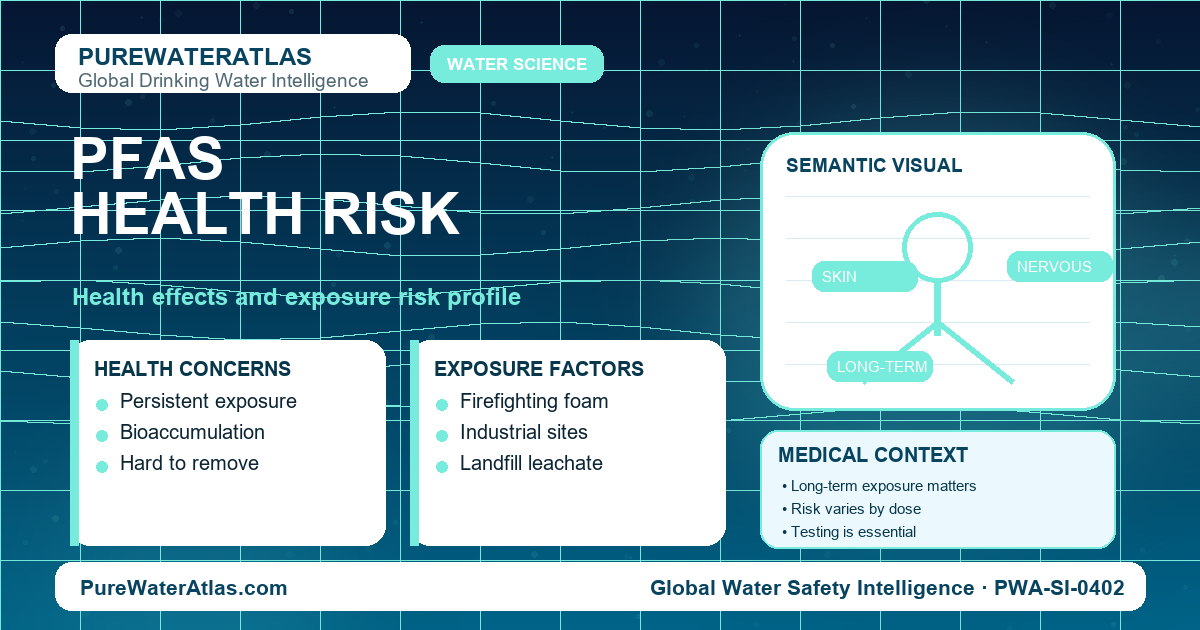
PFAS and other persistent chemicals have received increasing attention due to their environmental persistence and potential links to immune, developmental, hormonal, and metabolic effects. These substances illustrate how evolving science continues to shape water safety standards.
Long-Term Risks
Water chemistry basics long term risks are often more important from a public health perspective than short-lived symptoms because chronic low-dose exposure can continue unnoticed for years. Long-term risks may include:
- Neurological and cognitive effects, especially from lead and certain solvents
- Kidney damage from metals or chronic mineral imbalance in susceptible individuals
- Liver stress from industrial chemicals or chronic toxin exposure
- Increased cancer risk from arsenic, some industrial compounds, and certain disinfection byproducts
- Cardiovascular effects associated with some metals or broader environmental exposures
- Endocrine and reproductive concerns related to specific synthetic chemicals
- Developmental impacts in fetuses, infants, and children
Not every water chemistry issue leads to severe disease, and many public water systems remain well within regulatory limits. However, chronic exposure risk is a key reason why routine testing, infrastructure maintenance, and treatment oversight are necessary.
Exposure Levels and Dose
A central concept in toxicology is that risk depends on dose. Water chemistry basics exposure levels matter because a trace amount of one substance may pose negligible risk, while a higher level or long duration of intake may be significant. Exposure also depends on individual water consumption, body size, and route of contact. Drinking and cooking generally matter most, but inhalation of volatile chemicals during showering and skin contact with certain compounds can also contribute in some cases.
Regulatory limits are designed to reduce risk across populations, often with built-in safety margins. Still, these limits are not the same as a sharp line between “safe” and “dangerous.” Some standards reflect practical treatment limits, evolving evidence, or population-based assumptions. This is why local context and individual vulnerability matter.
Vulnerable Groups
Water chemistry basics vulnerable groups deserve special attention because they may experience harm at lower exposure levels or over shorter time periods. These groups include:
- Infants: Smaller body size and immature systems can increase sensitivity, especially to nitrate and lead.
- Children: Developing brains and organs are more vulnerable to toxic exposures.
- Pregnant people: Some contaminants may affect fetal development or pregnancy outcomes.
- Older adults: Age-related changes in kidney function and overall health can increase risk.
- People with kidney or liver disease: These organs help process and eliminate many substances.
- Immunocompromised individuals: While often discussed in relation to microbes, they may also be more affected by broader water quality issues.
In homes with vulnerable individuals, even modest water concerns may deserve faster investigation and more precautionary treatment decisions.
Testing and Detection
Because many important contaminants cannot be seen, smelled, or tasted, testing is the foundation of good water quality management. Homeowners who rely on private wells should test on a regular schedule and after major environmental events. People using public water should still consider household-specific testing if they live in older buildings, notice changes in water quality, or have special health concerns.
Readers who want deeper technical detail can review testing and detection methods or explore broader issues in water contamination resources.
What to Test For
The right testing panel depends on geography, water source, plumbing age, and local land use. Common targets include:
- pH, hardness, alkalinity, and total dissolved solids
- Lead and copper
- Nitrate and nitrite
- Arsenic
- Iron and manganese
- Fluoride
- Chlorine or chloramine residual
- Disinfection byproducts, where relevant
- Pesticides, solvents, or PFAS in higher-risk areas
- Bacterial testing, especially for private wells
Home Test Kits vs. Certified Laboratory Testing
Home test strips and kits can be useful for screening pH, hardness, chlorine, nitrate, or general dissolved solids. They are convenient and inexpensive, but they are not equally reliable for all contaminants. Metals such as lead and trace industrial chemicals usually require certified laboratory analysis for accurate measurement. If there is a significant medical or regulatory concern, laboratory testing is the better choice.
Sampling Matters
Correct sampling technique is essential. For example, lead testing often uses first-draw water after several hours of stagnation because that sample better reflects plumbing-related leaching. Other tests may require flushed samples, cold-water collection only, sterile containers, or rapid transport to a laboratory. Poor sampling can produce misleading results.
Interpreting Results
Lab reports often list concentrations in milligrams per liter or micrograms per liter, along with a reference standard or action level. Interpreting results should involve more than simply checking whether a value is above or below a limit. Important questions include:
- Is the contaminant likely coming from the source water or the plumbing?
- Was the sample collected correctly?
- Is the level stable, seasonal, or changing over time?
- Are vulnerable individuals present in the home?
- Should confirmatory testing be done?
In some cases, people may wish to discuss results with their water utility, local health department, physician, or a water treatment professional. This is especially true when results involve lead, arsenic, nitrate, or chemicals associated with significant water chemistry basics medical concerns.
Prevention and Treatment
Prevention begins with understanding the source of the problem. Treatment should be tailored to the specific contaminant rather than chosen based solely on marketing claims. For more options, readers can browse water purification resources.
Source Protection
The best long-term strategy is to prevent contamination before it enters drinking water. This may involve agricultural best practices, industrial discharge controls, watershed management, proper waste disposal, septic maintenance, and rapid response to spills or flooding. Municipal systems also use corrosion control and treatment optimization to reduce risks in distribution networks.
Household Practices
- Use cold water for drinking and cooking, since hot water can dissolve metals more readily from plumbing.
- Flush taps after water has been sitting in pipes for several hours.
- Clean faucet aerators periodically to remove accumulated particles.
- Replace old plumbing components if they contain lead or are heavily corroded.
- Test private wells annually and after floods, repairs, or noticeable changes in water quality.
Point-of-Use and Whole-House Treatment
Different technologies address different problems:
- Activated carbon: Often useful for chlorine, tastes, odors, and some organic chemicals.
- Reverse osmosis: Effective for many dissolved contaminants, including some metals, nitrates, and salts, though maintenance is important.
- Ion exchange: Commonly used for hardness and, in some systems, nitrate removal.
- Distillation: Can remove many dissolved substances but is slower and more energy-intensive.
- Specialized media: Used for arsenic, iron, manganese, or PFAS depending on design.
- Neutralizing filters: Help correct acidic water that contributes to corrosion.
No single device removes every contaminant. A filter that improves taste may do little for nitrate or arsenic. A softener that reduces hardness does not necessarily make biologically or chemically unsafe water safe to drink. Matching technology to the problem is critical.
Medical Response and When to Seek Help
If there is known high exposure to a serious contaminant such as lead, nitrate, or an industrial chemical, medical guidance may be appropriate. Clinicians may recommend blood testing, developmental monitoring, symptom evaluation, or referral to specialists depending on the situation. This is especially relevant for children, pregnant people, and individuals with existing organ disease. Water treatment alone does not replace medical follow-up when exposure has already occurred.
Common Misconceptions
“Clear water is safe water.”
Many hazardous contaminants are invisible, odorless, and tasteless. Lead, arsenic, and nitrate often cannot be detected without testing.
“Bottled water is always safer.”
Bottled water is not automatically superior. Quality varies by brand and source, and it may not be tested for every possible concern. It can be useful as a temporary measure, but it is not a universal solution.
“Boiling removes chemical contamination.”
Boiling can kill many microbes, but it does not remove most dissolved chemicals. In fact, it can concentrate some contaminants as water evaporates.
“A water softener purifies water.”
Softening mainly reduces calcium and magnesium hardness. It does not reliably remove lead, nitrate, pesticides, or many industrial chemicals.
“If a contaminant is below the legal limit, there is no risk at all.”
Regulatory compliance is important, but risk is still influenced by vulnerable populations, cumulative exposure, and evolving scientific evidence. Standards are protective tools, not guarantees of zero risk under every circumstance.
“Public water and well water have the same oversight.”
Public systems are regularly monitored under regulatory frameworks. Private wells are largely the owner’s responsibility, which makes routine testing essential.
Regulations and Standards
Drinking water standards are established to reduce the risk of illness and ensure consistent monitoring. In many countries, national or regional agencies set maximum contaminant levels, treatment technique requirements, and monitoring rules for public water systems. These standards often cover microbes, disinfectants, byproducts, metals, inorganic chemicals, and selected organic contaminants.
In the United States, the Environmental Protection Agency sets enforceable standards for public water systems, while states often play a major role in implementation and oversight. Utilities must monitor for regulated contaminants, report certain results, and notify consumers when standards are exceeded. Annual consumer confidence reports provide useful summaries of local water quality.
However, regulations have limits. Not every contaminant is regulated, and some standards lag behind emerging science. New concerns such as PFAS have shown how regulatory systems evolve as evidence improves. In addition, household plumbing issues may occur after water leaves the utility’s control, which means compliant utility water can still pick up contaminants in a building.
Private wells generally fall outside most routine public drinking water regulations. That does not mean well water is unsafe, but it does mean owners must take responsibility for testing and treatment decisions. Local health departments, agricultural extension services, and certified laboratories can often help identify recommended test panels.
Standards also distinguish between health-based goals and enforceable limits. A health goal may represent an ideal concentration with little or no known risk, while an enforceable level may account for testing capability, treatment feasibility, and cost. Understanding that distinction helps explain why some contaminants, especially lead, remain important even at very low levels.
Conclusion
Water chemistry is more than a technical subject for laboratories and utilities. It has direct implications for daily health, household safety, child development, chronic disease prevention, and informed environmental decision-making. A basic understanding of pH, hardness, metals, disinfectants, nutrients, and industrial contaminants helps people ask better questions and respond more effectively to changes in water quality.
The most important lessons are practical. Not all water risks can be detected by appearance or taste. Short-term complaints and water chemistry basics symptoms may be subtle or nonspecific. Water chemistry basics long term risks often matter even more, especially for children and other water chemistry basics vulnerable groups. Accurate testing is essential because water chemistry basics exposure levels determine whether a finding is mostly aesthetic, operational, or a serious health issue. When results raise concern, targeted treatment and appropriate medical follow-up can reduce harm.
Whether water comes from a city supply or a private well, education remains one of the best tools for prevention. By understanding the sources of contamination, the meaning of test results, and the limits of common treatment devices, households and communities can make more confident choices about safe drinking water and broader water chemistry basics medical concerns.
Read the full guide: Water Science Guide
Explore more in this category: Water Science Articles