Constructed wetlands for wastewater are engineered treatment systems that use the same biological, physical, and chemical processes found in natural wetlands, but with controlled flow paths, selected media, designed water depths, and defined treatment goals. They are used to treat municipal sewage, septic tank effluent, agricultural drainage, landfill leachate, stormwater, industrial wastewater, and polishing effluent from conventional treatment plants.
The appeal is clear: a well-designed wetland can reduce organic matter, suspended solids, nutrients, pathogens, metals, and some trace contaminants while using little external energy. It can also provide habitat, landscape value, flood buffering, and climate resilience. Yet constructed wetlands are not simply ponds with plants. They are treatment infrastructure. Their performance depends on loading rates, pretreatment, hydraulic control, soil and media chemistry, microbial activity, vegetation, climate, maintenance, and regulatory oversight.
This guide explains how constructed wetlands work, what types are used, what they can and cannot remove, and how to evaluate them for water safety. It is written for homeowners evaluating decentralized systems, utility staff, engineers, community planners, public health professionals, and readers comparing wastewater options within the broader Wastewater Treatment field.
What Are Constructed Wetlands for Wastewater?
A constructed wetland is a planned treatment basin or channel that receives wastewater and moves it through vegetation, gravel, sand, soil, root zones, and microbial biofilms. Unlike natural wetlands, which should not be used as uncontrolled waste disposal areas, constructed wetlands are deliberately built with design criteria, liners when needed, flow structures, access points, and monitoring locations.
The term covers several system types. Some have visible surface water, similar to a shallow marsh. Others keep wastewater below the surface in gravel or sand beds, reducing odor and human contact. Some use vertical dosing, while others move water horizontally. Hybrid systems combine these layouts to improve nitrogen removal, pathogen reduction, or resilience during seasonal changes.
Constructed wetlands for wastewater are often described as nature-based solutions, but their treatment capacity is not based on plants alone. The most important treatment work is usually done by microbial communities attached to media, roots, and organic surfaces. Plants support the system by stabilizing media, supplying carbon, creating root-zone habitat, influencing oxygen movement, and improving evapotranspiration. The wetland must still be sized and managed like a treatment process.
In a typical municipal or decentralized application, raw sewage first passes through primary treatment such as a septic tank, settling tank, screen, or anaerobic unit. The constructed wetland then treats the clarified wastewater. The final effluent may be discharged to soil, surface water, irrigation areas, or an additional polishing stage, depending on local regulations and the intended use.
Constructed wetlands are part of a larger treatment train. They should be understood alongside conventional activated sludge, trickling filters, lagoons, membrane systems, disinfection, and sludge handling. For a broader overview of how treatment stages fit together, see PureWaterAtlas on the Wastewater Treatment Process.
How Constructed Wetlands Treat Wastewater
Wastewater treatment in a constructed wetland occurs through overlapping mechanisms. No single process removes all contaminants. Effective performance depends on giving wastewater enough contact time with the correct media, oxygen conditions, microbial communities, and flow paths.
Sedimentation and filtration
Suspended solids settle when flow slows and are physically filtered as water moves through gravel, sand, plant litter, and root networks. This is one reason pretreatment is essential. If too many solids enter the wetland, pore spaces clog, water bypasses the intended treatment zone, and performance declines.
Filtration is especially important in subsurface flow wetlands. As wastewater moves through the media, particles are trapped and gradually degraded. Fine media can improve filtration but increases clogging risk. Coarse media reduces clogging but may provide less surface area for biofilm and less particle capture. Good design balances hydraulic reliability with treatment efficiency.
Microbial degradation of organic matter
Organic matter is often measured as biochemical oxygen demand, or BOD. In wetlands, microorganisms use organic compounds as food and energy sources. Some microbes work in oxygen-rich microzones, while others work under low-oxygen or anaerobic conditions. The result is conversion of complex organic matter into carbon dioxide, methane under some anaerobic conditions, microbial biomass, and more stable organic residues.
Because microbial activity is temperature-sensitive, wetlands usually perform better in warm seasons and more slowly in cold seasons. Design in cold climates often requires larger surface area, deeper insulation, subsurface flow, recirculation, or hybrid systems.
Nitrogen transformation
Nitrogen removal is more complex than BOD and solids removal. Wastewater nitrogen is often present as organic nitrogen and ammonium. First, organic nitrogen is converted to ammonium through mineralization. Then, under aerobic conditions, nitrifying bacteria convert ammonium to nitrate. Finally, under anoxic conditions, denitrifying bacteria convert nitrate to nitrogen gas, which leaves the water.
This sequence requires both oxygenated and low-oxygen zones. Vertical flow wetlands are often good at nitrification because dosing draws air into the bed. Horizontal subsurface wetlands are often better at denitrification because they contain more anoxic zones and organic carbon. Hybrid systems combine both strengths.
Phosphorus retention
Phosphorus removal occurs through plant uptake, microbial assimilation, sedimentation of particulate phosphorus, adsorption to media, and chemical precipitation with iron, aluminum, calcium, or magnesium compounds. Plant uptake alone is usually not enough for long-term phosphorus control unless plants are harvested regularly and the loading is low.
Phosphorus capacity can decline as media becomes saturated. Systems designed for phosphorus removal may use special reactive media such as steel slag, alum-treated materials, limestone, zeolite, or engineered sorbents. These materials need monitoring and eventual replacement or regeneration.
Pathogen reduction
Constructed wetlands can reduce bacteria, viruses, protozoa, and helminth eggs through sedimentation, filtration, predation, natural die-off, sunlight exposure in surface flow systems, adsorption, and unfavorable environmental conditions. However, wetland effluent should not be assumed safe for drinking. If the effluent will be reused where human exposure is possible, disinfection and regulatory testing are normally required.
For drinking water safety context, the WHO drinking water fact sheet emphasizes that safe drinking water requires protection from microbial and chemical hazards across the full supply chain. Wastewater wetlands can be valuable public health infrastructure, but they do not replace potable water treatment.
Metals and trace contaminants
Metals may be removed by sedimentation, adsorption, sulfide precipitation, plant uptake, and binding to organic matter. Removal varies widely by pH, redox conditions, media type, and metal species. Some industrial wastewaters require source control or specialized pretreatment before wetland treatment is safe.
Trace organic contaminants such as pharmaceuticals, personal care products, pesticides, solvents, and endocrine-active compounds may be partially transformed or retained. Removal is compound-specific. Wetlands can improve effluent quality, but they should not be treated as a universal barrier for emerging contaminants.
Main Types of Constructed Wetlands
The best wetland type depends on wastewater strength, climate, land availability, discharge standards, odor requirements, mosquito control, and maintenance capacity. Most designs fall into the following categories.
Free water surface wetlands
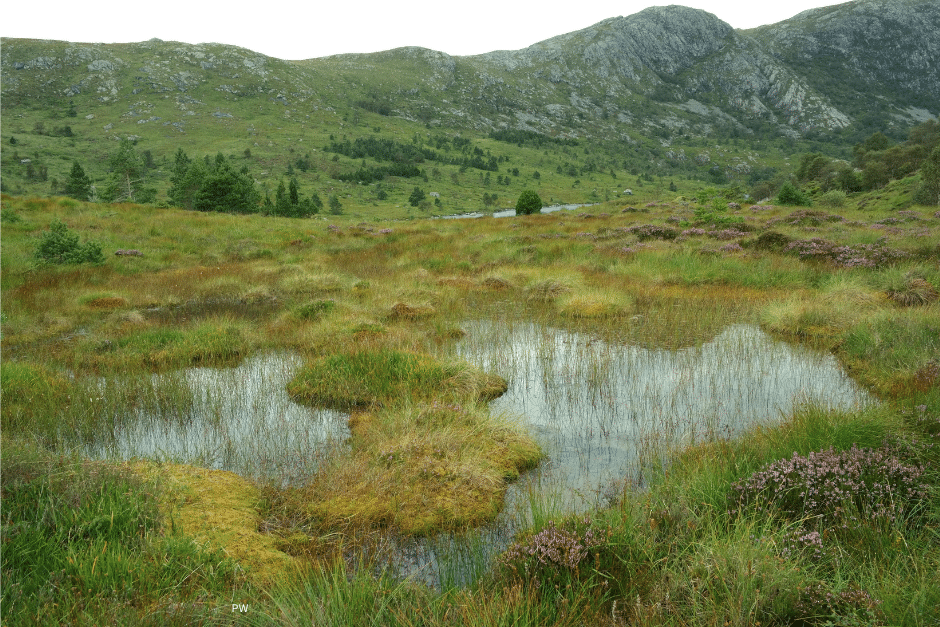
Free water surface wetlands have shallow water flowing above soil or sediment, often through emergent plants such as cattails, reeds, bulrushes, sedges, or rushes. They resemble marshes and are commonly used for polishing secondary effluent, treating stormwater, or improving habitat.
Advantages include simple hydraulics, high ecological value, sunlight exposure, and relatively low construction complexity. Limitations include greater land demand, possible mosquito breeding if poorly managed, higher exposure risk, seasonal vegetation changes, and potential odor if overloaded. Because wastewater is visible, they are less suitable for strong untreated wastewater near homes or public areas.
Horizontal subsurface flow wetlands
Horizontal subsurface flow wetlands move wastewater laterally through gravel or coarse media below the surface. The water level is kept beneath the top of the bed, which reduces odor, mosquito access, and direct contact. These systems are widely used for small communities, septic effluent, schools, rural institutions, and some industrial applications.
They are robust for BOD and suspended solids reduction when properly pretreated. They also provide anoxic conditions favorable for denitrification. However, nitrification may be limited unless oxygen supply is enhanced. Clogging near the inlet is a common risk if pretreatment is inadequate or hydraulic loading is too high.
Vertical flow wetlands
Vertical flow wetlands are dosed intermittently from the top. Wastewater percolates downward through sand, gravel, or layered media and is collected by an underdrain. The wetting and resting cycles pull air into the pore spaces, supporting aerobic degradation and nitrification.
Vertical flow systems can provide high treatment rates in a smaller footprint than horizontal systems, but they need reliable dosing, distribution, and resting cycles. Pumps, siphons, or gravity dosing structures may be used. They can clog if distribution is uneven or solids loading is excessive.
Hybrid wetlands
Hybrid systems combine wetland types in sequence. A common design uses a vertical flow wetland first for BOD removal and nitrification, followed by a horizontal subsurface wetland for denitrification. Other designs combine surface flow cells, aerated cells, recirculation, or polishing ponds.
Hybrid wetlands are often selected when effluent standards include nitrogen limits, pathogen reduction goals, or cold-climate reliability. They are more complex than single-cell systems but can deliver more consistent performance.
Aerated and intensified wetlands
Aerated wetlands use blowers or air distribution lines to increase oxygen in the bed. Other intensified designs may use tidal flow, recirculation, reactive media, step feeding, or engineered plant-media combinations. These systems can reduce footprint and improve nitrogen removal, but they require more equipment and maintenance.
Intensified wetlands blur the boundary between passive treatment and mechanical treatment. They can be useful where land is limited but may sacrifice some of the simplicity that makes conventional wetlands attractive.
Floating treatment wetlands
Floating treatment wetlands use buoyant mats that support plant roots in ponds, lagoons, reservoirs, or stormwater basins. The roots provide surface area for biofilms and help remove nutrients and suspended particles. They are usually used for polishing or water quality improvement rather than primary wastewater treatment.
They can be retrofitted into existing basins, but performance depends strongly on hydraulic contact, root density, plant health, and loading. They should not be relied on as the only treatment barrier for high-strength wastewater.
Performance: What Can Constructed Wetlands Remove?
Treatment performance varies widely because constructed wetlands are site-specific. Wastewater strength, temperature, hydraulic retention time, wetland type, media, plant maturity, and maintenance all influence results. The table below summarizes typical performance expectations rather than guarantees.
| Parameter | Common removal mechanisms | Typical performance pattern | Key caution |
|---|---|---|---|
| BOD and organic matter | Microbial degradation, sedimentation, filtration | Often good to very good with adequate pretreatment and retention time | Cold temperatures and organic overloading reduce performance |
| Total suspended solids | Settling, filtration, plant litter trapping | Often good, especially in subsurface systems | Excess solids cause clogging and short-circuiting |
| Ammonium | Nitrification in aerobic zones, plant uptake | Good in vertical flow or aerated systems; variable in horizontal systems | Requires oxygen and temperature-sensitive microbial activity |
| Total nitrogen | Nitrification followed by denitrification | Moderate to good in hybrid systems | Single-cell systems may lack both aerobic and anoxic conditions |
| Phosphorus | Adsorption, precipitation, sedimentation, uptake | Variable; may decline over time | Media saturation is a long-term limitation |
| Pathogens | Filtration, die-off, predation, sunlight, sedimentation | Moderate to high reduction possible | Effluent usually still needs disinfection for high-contact reuse |
| Metals | Adsorption, precipitation, sediment binding, plant uptake | Highly variable by metal and chemistry | Accumulated metals may create sediment or biomass management issues |
| Pharmaceuticals and trace organics | Biodegradation, photolysis, sorption, plant interactions | Compound-specific and inconsistent | Not a stand-alone barrier for all emerging contaminants |
For households and communities, the most reliable benefits are usually reduction of BOD, suspended solids, and some nutrients when the system is properly designed. Pathogen reduction can be substantial, but final water safety depends on exposure route and end use. Discharge to a wetland outlet is different from reuse on food crops, groundwater recharge, recreational water, or potable supply.
Readers comparing wastewater effluent to drinking water risks should keep treatment goals separate. Wastewater treatment protects receiving waters and public health by reducing pollutant loads. Drinking water treatment must meet potable standards and usually requires multiple barriers. PureWaterAtlas covers household and municipal treatment barriers in the guide to Water Purification Methods.
Design Factors That Control Performance
A constructed wetland should begin with a clear design basis. The designer needs to know the wastewater source, daily flow, peak flow, pollutant concentrations, temperature range, target effluent limits, soil and groundwater conditions, available land, maintenance capacity, and regulatory requirements. Guesswork leads to undersizing, clogging, odors, and permit failure.
Hydraulic loading rate
Hydraulic loading rate is the volume of water applied per unit wetland area per day. If loading is too high, wastewater moves too quickly and has insufficient contact time. High loading can also flood subsurface beds, wash out solids, reduce oxygen transfer, and create short-circuiting.
Low loading is not automatically ideal. Very low flows can create stagnant zones, vegetation stress, and uneven distribution. Designs should consider average flow, peak flow, seasonal occupancy, stormwater intrusion, and infiltration into sewers.
Organic loading rate
Organic loading rate refers to the mass of BOD or chemical oxygen demand applied per unit area. A wetland receiving septic tank effluent has very different needs from a wetland receiving secondary effluent or food-processing wastewater. High-strength wastewater often requires anaerobic pretreatment, settling, equalization, or staged wetlands.
Organic overload can deplete oxygen, produce odors, increase sludge accumulation, and favor anaerobic conditions where aerobic treatment is needed. It also accelerates clogging near inlets.
Hydraulic retention time
Hydraulic retention time is the estimated time water spends in the wetland. Longer retention generally improves treatment, but only if the water actually moves through the treatment zone. Short-circuiting can allow some wastewater to pass rapidly from inlet to outlet while other areas remain stagnant.
Good inlet and outlet structures, level grading, compartmentalization, baffles, distribution manifolds, and regular inspections help maintain effective retention time.
Media selection
Gravel, sand, soil, and engineered media provide filtration, microbial surface area, and chemical adsorption sites. Media must be durable, clean, appropriately graded, and compatible with wastewater chemistry. Fine sand improves filtration but clogs more easily. Coarse gravel improves hydraulic conductivity but may reduce treatment surface area.
For phosphorus removal, media chemistry is critical. Calcium-rich, iron-rich, aluminum-rich, or alkaline materials may bind phosphorus, but performance changes as sorption sites fill. Designers should evaluate media lifespan, leaching risks, replacement access, and disposal requirements.
Vegetation
Common wetland plants include Phragmites, cattails, bulrushes, reeds, sedges, rushes, and locally adapted emergent species. Plant selection should consider climate, root depth, tolerance to wastewater, invasive species rules, habitat goals, and maintenance needs. Native species are often preferred where feasible.
Plants are useful, but they are not magic filters. Their direct nutrient uptake is usually a minor fraction of total pollutant removal unless biomass is harvested. Their larger contribution is structural and ecological: roots and rhizomes create biofilm habitat, stabilize beds, influence oxygen microzones, reduce erosion, and help maintain evapotranspiration.
Water depth and oxygen conditions
Surface flow wetlands commonly use shallow water depths that support emergent vegetation and sunlight penetration. Subsurface wetlands keep water below the media surface. Vertical systems depend on intermittent dosing and drainage to restore air-filled pore space.
Oxygen conditions shape treatment pathways. Aerobic zones support nitrification and rapid BOD removal. Anoxic zones support denitrification. Anaerobic zones support fermentation, sulfate reduction, and some metal precipitation. A design that ignores redox conditions may remove one pollutant while failing on another.
Climate and seasonality
Wetlands can operate in cold climates, but sizing and configuration must account for reduced microbial rates, ice cover, dormant vegetation, and snowmelt hydraulics. Subsurface flow beds often perform better in winter than free water surface systems because media provides insulation and reduces exposure.
Hot climates bring different concerns: evapotranspiration, salinity concentration, algal growth in open water, mosquito control, and plant stress. Climate resilience may require flexible water-level control, bypass management, shading, deeper media, or robust pretreatment.
Liners and groundwater protection
If untreated or partially treated wastewater can infiltrate into groundwater, a liner may be required. Liners may be compacted clay, geomembrane, concrete, or composite systems. The need depends on wastewater strength, soil permeability, groundwater depth, nearby wells, and regulatory classification.
Protecting groundwater is central to water safety. The EPA groundwater and drinking water resources highlight the importance of preventing contamination before it reaches drinking water sources. A constructed wetland that leaks in the wrong location can become a contamination pathway rather than a protective barrier.
Pretreatment, Post-Treatment, and Water Safety
Constructed wetlands work best as part of a treatment train. Pretreatment protects the wetland. Post-treatment protects people and receiving environments when higher-quality effluent is required.
Pretreatment before the wetland
Raw sewage should rarely enter a constructed wetland without primary treatment. Screens, grit removal, septic tanks, Imhoff tanks, settling basins, anaerobic baffled reactors, grease traps, or primary clarifiers reduce solids, fats, oils, grease, and shock loads. For industrial wastewater, pretreatment may also include pH adjustment, oil-water separation, metals removal, equalization, or source substitution.
Good pretreatment prevents clogging and protects plant and microbial communities from toxic spikes. It also makes performance more predictable. Many failed wetlands are not failed because wetlands are weak treatment technologies; they fail because they are asked to receive the wrong waste at the wrong loading rate.
Post-treatment and disinfection
When wetland effluent is discharged to sensitive waters, reused for irrigation, or likely to contact people, additional treatment may be needed. Options include maturation ponds, sand filters, cloth filters, ultraviolet disinfection, chlorination, ozonation, membrane filtration, or soil infiltration systems.
Disinfection is especially important for high-contact reuse. Even when indicator bacteria are reduced, viruses and protozoa may persist. Public health decisions should be based on sampling, local regulations, and risk assessment, not visual clarity.
Testing and monitoring
Monitoring should match the treatment goal. Common parameters include flow, water level, BOD, chemical oxygen demand, total suspended solids, ammonium, nitrate, total nitrogen, total phosphorus, pH, dissolved oxygen, temperature, electrical conductivity, turbidity, E. coli, fecal coliforms, and site-specific contaminants such as metals or industrial chemicals.
For homeowners and small systems, periodic professional sampling is often required by permits. Field observations also matter: odors, standing water on subsurface beds, dead vegetation, inlet ponding, erosion, animal burrows, and unusual color can signal problems. For broader principles of sampling and interpreting results, see the PureWaterAtlas Water Testing Guide.
Wastewater reuse and exposure control
Wetland-treated effluent may be suitable for restricted irrigation, landscape watering, groundwater recharge, industrial reuse, or environmental flow support if it meets applicable standards. The intended use determines the required quality. Irrigating non-food landscaping has different risks than irrigating leafy vegetables or recharging an aquifer used for drinking water.
Reuse planning should consider pathogens, salinity, nutrients, trace chemicals, soil accumulation, worker exposure, aerosol formation, crop type, setback distances, and public access. Where potable reuse is considered, constructed wetlands may serve as one ecological treatment step, but advanced purification and strict monitoring are required.
Operation and Maintenance
Constructed wetlands are often called low-maintenance, but they are not no-maintenance. They require fewer mechanical inputs than many conventional treatment systems, yet they still need routine inspection, vegetation management, hydraulic adjustment, sediment control, and performance monitoring.
Routine inspection tasks
- Check inlet and outlet structures for blockage, erosion, corrosion, or damage.
- Measure water levels and confirm that flow is distributed evenly.
- Look for surface ponding on subsurface beds, which may indicate clogging.
- Inspect vegetation health, invasive plants, bare patches, and excessive shading.
- Remove trash, floating debris, and accumulated screenings.
- Check pumps, siphons, valves, manifolds, and blowers if present.
- Inspect berms, liners, fences, access roads, and animal damage.
- Record odors, unusual colors, algal blooms, mosquito activity, and wildlife issues.
Vegetation management
Vegetation usually needs establishment time. New wetlands may require planting density control, protection from grazing, water-level adjustment, and invasive species removal. Once mature, plants may need periodic harvesting or thinning depending on nutrient goals and hydraulic function.
Harvesting removes some nutrients stored in plant tissue, but it also removes habitat and can disturb the bed. In cold climates, standing dead vegetation may provide insulation and should not always be removed before winter. Management should be based on system goals rather than aesthetics alone.
Clogging prevention
Clogging is one of the most common operational problems in subsurface wetlands. It may be caused by excessive suspended solids, biofilm growth, root accumulation, chemical precipitation, fine media migration, or grease. Prevention begins with pretreatment and good inlet design.
Corrective actions may include resting cells, alternating flow paths, flushing distribution pipes, removing accumulated solids near the inlet, replacing clogged media, improving pretreatment, or reducing loading. Severe clogging can require partial reconstruction.
Mosquito and odor control
Subsurface systems usually have lower mosquito and odor risk because wastewater is not exposed. Free water surface wetlands need careful water-level management, predator habitat, vegetation spacing, and avoidance of stagnant pockets. Mosquito control should prioritize ecological and hydraulic methods before chemical control.
Odors often indicate anaerobic overload, stagnant zones, septic influent problems, or blocked outlets. Occasional earthy smells may occur, but persistent sewage or sulfur odors deserve investigation.
Costs, Benefits, and Limitations
Costs vary with land price, excavation, liners, media, plants, pretreatment, engineering, permitting, pumps, access roads, monitoring, and discharge requirements. Constructed wetlands can be cost-effective where land is available and energy or skilled mechanical maintenance is limited. They may be less economical where land is expensive, effluent limits are very strict, or winter performance requires large areas.
Major benefits
- Low energy demand: Many systems use gravity flow or intermittent pumping, reducing operating energy compared with intensive mechanical plants.
- Operational simplicity: Wetlands can be managed by trained local operators without highly complex equipment, though professional oversight remains necessary.
- Ecological value: They can provide habitat, green space, carbon storage in soils, and landscape integration.
- Resilience: Wetlands can buffer flow variation when designed with adequate hydraulic capacity.
- Community acceptance: A well-landscaped wetland may be more acceptable than visible industrial infrastructure, especially for small communities.
- Multiple pollutant pathways: Physical, biological, and chemical mechanisms operate at the same time.
Key limitations
- Land requirement: Passive wetlands often need more area than mechanical treatment systems.
- Variable performance: Temperature, loading, hydraulics, and seasonal changes affect treatment.
- Phosphorus saturation: Long-term phosphorus removal may decline unless reactive media is renewed.
- Clogging risk: Subsurface systems can fail hydraulically if solids and grease are not controlled.
- Regulatory constraints: Some discharge standards require post-treatment or disinfection.
- Not potable treatment: Wetland-treated wastewater is not drinking water without advanced purification and verification.
- Special waste concerns: Industrial toxicants, high salinity, solvents, or extreme pH can damage the system or contaminate sediments.
These limitations do not make constructed wetlands unsuitable. They mean the technology must be matched to the wastewater and the regulatory target. The same principle applies across all Water Treatment Systems: performance depends on contaminant profile, design, operation, and monitoring.
Where Constructed Wetlands Are Most Appropriate
Constructed wetlands for wastewater are especially useful in small communities, rural institutions, parks, campgrounds, eco-lodges, schools, decentralized housing clusters, agricultural operations, mine drainage sites, landfill leachate polishing, stormwater systems, and municipal effluent polishing. They are also used in urban water-sensitive design when space and public access can be managed safely.
They are less suitable where land is extremely limited, influent quality is highly toxic or variable without pretreatment, effluent limits are exceptionally tight, groundwater is shallow and vulnerable without liners, or the owner cannot commit to maintenance and monitoring.
Households and decentralized properties
For individual homes, constructed wetlands are usually paired with septic tanks or other primary units. The wetland may be followed by soil dispersal, disinfection, or irrigation depending on local rules. Homeowners should not build informal wetlands for sewage without permits. Incorrect siting can contaminate wells, expose children and pets to pathogens, or create nuisance conditions.
A professional site assessment should evaluate soil, slope, flood risk, setback from wells and streams, groundwater depth, seasonal flows, and maintenance access. In many jurisdictions, constructed wetlands for household wastewater are regulated like other onsite wastewater systems.
Small communities and institutions
Small communities often struggle with the cost and technical demands of conventional treatment plants. Wetlands can offer a practical option where land is available. They may be designed as modular cells so one cell can rest while another operates. This improves maintenance flexibility and resilience.
Schools, clinics, parks, and community buildings can benefit from systems that also serve as educational landscapes. However, public sites need fencing, signage, safe access design, and clear separation between wastewater treatment areas and recreational areas.
Agriculture and food processing
Agricultural wastewater may contain nutrients, sediment, organic matter, pesticides, pathogens, and veterinary pharmaceuticals. Constructed wetlands can treat dairy runoff, feedlot runoff, aquaculture water, drainage water, and some processing effluents after proper solids management.
High organic strength, fats, and variable flows from food processing often require equalization and pretreatment. Salinity and cleaning chemicals can affect plant and microbial health. For farms, nutrient recovery and reuse planning should be integrated with soil testing and crop nutrient budgets.
Industrial and mine water applications
Wetlands have been used for acid mine drainage, metals removal, landfill leachate polishing, petroleum site runoff, and some industrial wastewaters. These applications require specialized chemistry knowledge. pH, alkalinity, redox potential, sulfide generation, metal speciation, and sediment management become central design issues.
Industrial constructed wetlands should include source control, monitoring wells when needed, clear contingency plans, and safe handling of contaminated sediments or plant biomass. A wetland that accumulates metals can become a hazardous material management site.
Regulation, Standards, and Public Health Context
Wastewater wetlands are regulated differently across countries, states, provinces, and municipalities. Requirements may cover permits, design approval, setbacks, liners, effluent limits, operator certification, sampling frequency, reporting, reuse restrictions, mosquito control, and decommissioning.
International water policy increasingly recognizes safe wastewater management as part of public health, ecosystem protection, and water security. UN-Water emphasizes that sanitation, wastewater management, and water quality are connected to sustainable development and human health. Constructed wetlands can contribute to those goals when used appropriately.
Water science also matters at the local scale. Flow paths, groundwater interactions, sediment chemistry, evapotranspiration, and contaminant transport determine whether a system protects or threatens nearby water resources. The USGS Water Science School provides useful background on hydrology and water movement, while PureWaterAtlas explains related concepts in its Water Science resource.
Planning Checklist for a Constructed Wetland Project
Before selecting a wetland, project owners should define the treatment problem carefully. A beautiful design that misses the pollutant target is still a failed treatment system. The following checklist can guide early planning.
- Characterize the wastewater: Measure flow, BOD, suspended solids, nutrients, pH, salinity, pathogens, and site-specific chemicals.
- Define the effluent goal: Identify discharge limits, reuse standards, receiving water sensitivity, and public exposure pathways.
- Assess the site: Evaluate land area, slope, soil, flood risk, groundwater, climate, access, and setbacks.
- Choose pretreatment: Select screens, settling, septic tanks, equalization, grease removal, or industrial pretreatment as needed.
- Select wetland type: Compare surface flow, horizontal subsurface, vertical flow, hybrid, aerated, or floating systems.
- Design hydraulics: Plan distribution, retention time, water-level control, bypasses, overflow protection, and sampling points.
- Plan media and vegetation: Match media size and chemistry to treatment goals; use suitable plant species.
- Address safety: Include liners, fencing, signage, mosquito control, disinfection, and exposure restrictions where needed.
- Budget for maintenance: Include inspections, sampling, vegetation management, media replacement, pump repair, and recordkeeping.
- Confirm permits: Engage regulators before construction and document compliance responsibilities.
This planning approach helps avoid two common errors: treating wetlands as decorative ponds and treating them as universal purification methods. They are neither. They are engineered biological treatment systems with specific strengths and boundaries.
Common Design Mistakes
Skipping influent data
Designing from generic assumptions can lead to undersizing or wrong process selection. Restaurant wastewater, septic effluent, dairy wash water, school wastewater, and secondary municipal effluent have different pollutant profiles. Sampling is less expensive than rebuilding a failed bed.
Using inadequate pretreatment
A wetland overloaded with solids may clog long before its expected lifespan. Grease, grit, wipes, hair, sludge, and food particles should be removed before the wetland. Pretreatment is not optional housekeeping; it is part of the treatment process.
Ignoring peak flows
Average daily flow does not capture storm inflow, seasonal tourism, school schedules, festival use, or industrial batch discharges. Peak flows can flush contaminants through the wetland and damage hydraulic control. Equalization may be needed.
Choosing plants for appearance only
Plants must tolerate water depth, pollutant load, climate, and maintenance conditions. Ornamental species may fail or become invasive. Local ecological guidance is useful, especially near natural wetlands or protected habitats.
Assuming clear water is safe water
Wetland effluent can look clear while still containing pathogens, nitrate, dissolved chemicals, or trace contaminants. Water safety requires testing and appropriate barriers. Visual inspection is valuable but not sufficient.
The Bottom Line
Constructed wetlands for wastewater can be reliable, elegant, and resource-efficient treatment systems when they are designed as infrastructure rather than scenery. Their strength lies in combining microbial treatment, filtration, sedimentation, plant-root interactions, and media chemistry in a controlled landscape.
They are especially valuable where land is available, energy conservation matters, ecological co-benefits are desired, and treatment goals match the technology. They are not a substitute for pretreatment, disinfection, potable purification, or professional design. The safest projects begin with wastewater testing, realistic effluent goals, good hydraulics, and long-term maintenance planning.
For communities and property owners, the practical question is not whether wetlands work. They do. The better question is whether a specific wetland design, in a specific location, treating a specific wastewater, can meet the required standard year after year. That answer comes from science, site assessment, monitoring, and responsible operation.
FAQ
Are constructed wetlands for wastewater safe?
They can be safe when properly designed, permitted, lined if needed, maintained, and monitored. Safety depends on preventing human contact with untreated wastewater, protecting groundwater, controlling mosquitoes and odors, and meeting effluent limits. Wetland-treated wastewater should not be considered drinking water unless it receives advanced potable treatment and verification.
Can a constructed wetland treat household sewage?
Yes, in some locations. Household systems usually require a septic tank or other primary treatment before the wetland, followed by soil dispersal, disinfection, or another approved outlet. Homeowners should follow local onsite wastewater regulations and use qualified designers because poor siting can contaminate wells or surface water.
Do constructed wetlands smell bad?
A well-designed and properly loaded wetland should not have persistent sewage odors. Subsurface flow systems have lower odor risk because wastewater remains below the media surface. Strong odors may indicate organic overload, blocked outlets, stagnant zones, poor pretreatment, or hydraulic failure.
How much land does a constructed wetland need?
Land requirements vary by wetland type, wastewater strength, climate, and effluent target. Passive surface flow systems often need more land than vertical flow or aerated systems. A small household system may require a modest dedicated area, while community systems may need substantial acreage. Accurate sizing requires flow and contaminant data.
Do plants remove most of the pollution?
No. Plants help, but microorganisms, filtration, sedimentation, adsorption, and chemical reactions usually do most of the treatment. Plant uptake can remove some nutrients, especially if biomass is harvested, but roots and rhizomes are often more important because they support biofilms and stabilize the wetland environment.
Can constructed wetlands remove pharmaceuticals?
Some pharmaceuticals and trace organic chemicals may be reduced through biodegradation, sunlight exposure, sorption, and plant-associated processes. Removal is highly compound-specific and not guaranteed. If these contaminants are a regulatory or health concern, targeted monitoring and additional treatment barriers may be needed.
What maintenance does a constructed wetland need?
Maintenance includes checking inlets and outlets, monitoring water levels, preventing clogging, managing vegetation, removing debris, inspecting berms and liners, sampling effluent, and servicing pumps or aeration equipment if present. Maintenance demand is often lower than mechanical plants, but neglect can still cause failure.
Can wetland-treated wastewater be reused for irrigation?
Sometimes, if it meets local reuse standards and the exposure risk is controlled. Restricted landscape irrigation may be easier to approve than food crop irrigation. Reuse planning should consider pathogens, salinity, nutrients, soil accumulation, setbacks, public access, and whether disinfection or filtration is required.